


Photo: Haselburg-müller · CC BY-SA 3.0 · Commons
Annexkastell Osterburken, Kastell Osterburken
fort · Baden-Württemberg, Germany
1 place to see, the best preserved and best known first.
Photo: Haselburg-müller · CC BY-SA 3.0 · Commons
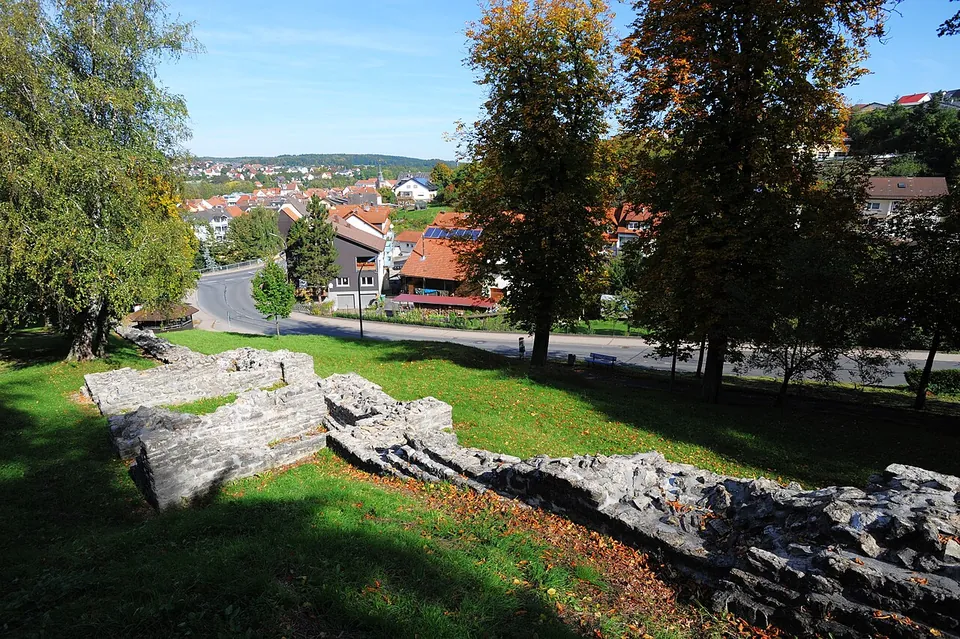
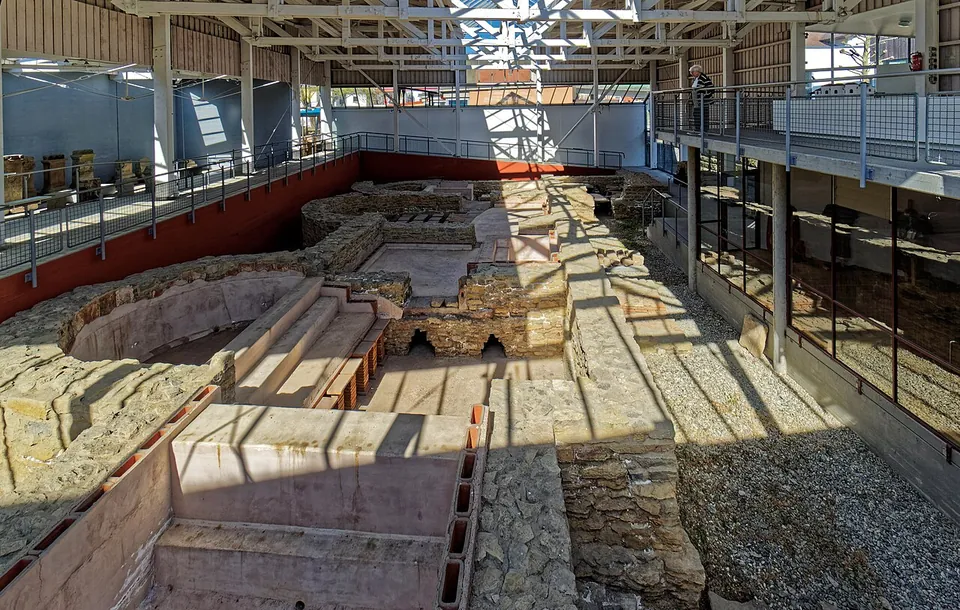
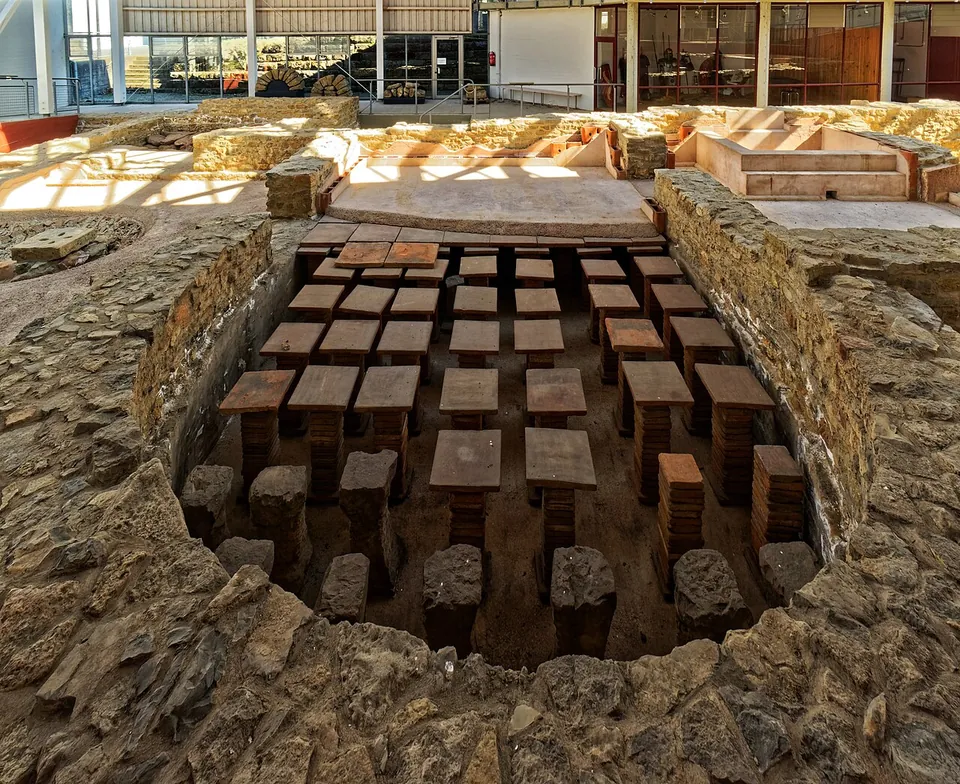
Osterburken is a small town in Baden-Württemberg on the site of a Roman garrison on the Limes, the empire’s frontier, and one of the richest Roman find-spots in south-west Germany (de.wikipedia). What a visitor sees is the walls of a fort on the hillside, a bath house preserved under a museum roof, and a full-size replica of a Limes watchtower outside the town.
The Roman places are spread across the town; the museum’s own three-hour tour takes in the museum, the fort and the Limes tower.
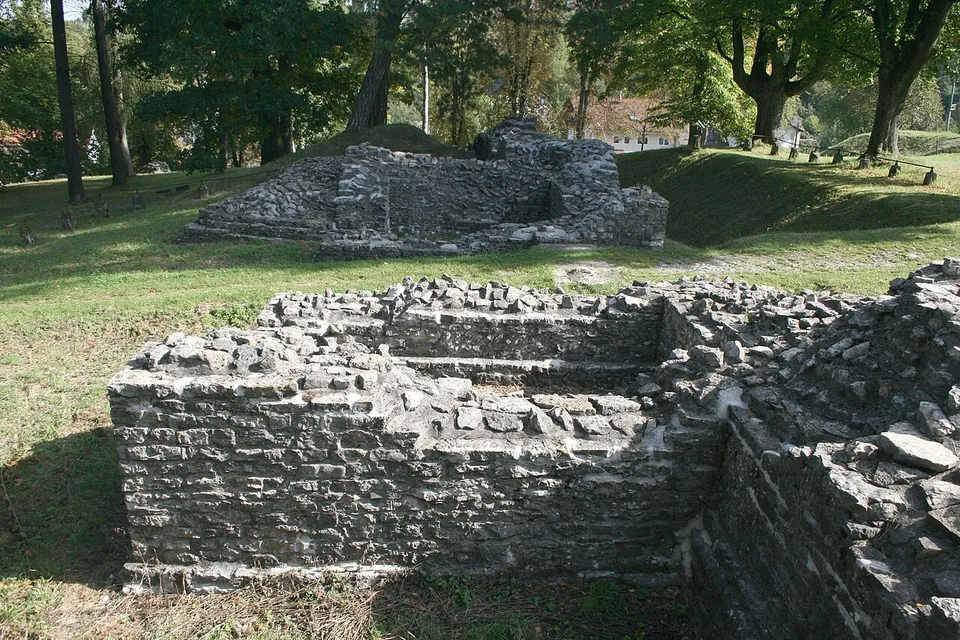
If the Roman frontier in Germany interests you, yes: de.wikipedia counts the museum, with the Limesmuseum in Aalen, as one of the two most important museums on the Limes in Baden-Württemberg, and here a fort, its baths and the frontier itself lie within walking distance of each other. Be clear about what you will see, though. Out of doors the Roman masonry is low - the annex’s foundations, conserved and capped with concrete in the 19th century (OpenStreetMap), not standing buildings - and the tower is a modern replica. The bath under the museum roof is the most complete Roman building on show. Come for a half day with the museum at its centre; it is not a place to cross the country for on its own.
Osterburken is on the railway: hourly S-Bahn trains (line S1) run from Heidelberg and Mannheim, and regional trains from Stuttgart and Würzburg (de.wikipedia), and the museum is about 5 minutes from the station (the museum). By car, the town has its own junction on the A 81, about 4 km away (de.wikipedia). The museum is at Römerstraße 4.
The Römermuseum opens Tuesday to Sunday and on public holidays from 10.00 to 17.00, until 18.00 while summer time is in force, and is closed on Mondays. A ticket is €4, €2 reduced, €10 for a family; groups of ten or more pay €3 a head. Guided tours for groups cost €30 for the museum and bath, €40 with the fort and €60 with the fort and the Limes tower, plus admission (roemermuseum-osterburken.de, read 31 October 2026). The fort is laid out as a park crossed by public paths (OpenStreetMap), and the museum lists no charge for it.
Hours and prices checked 31 October 2026 on the operator's own site. Confirm before travelling.
The fort was set up around AD 160, when the frontier was moved forward to the line known as the Vorderer Limes; the exact date is debated, and the earliest timbers dated here were felled between 159/160 and 164 (de.wikipedia). Its garrison was the Cohors III Aquitanorum equitata, a part-mounted cohort of Aquitanians, in a stone fort of 2.14 ha in the valley floor. Under the emperor Commodus, between 185 and 192 according to its building inscriptions, the Legio VIII Augusta from Strasbourg added the annex fort of 1.35 ha up the slope, probably for a unit of Britons that had served with the cohort at Neckarburken (de.wikipedia).
Around the forts grew a large civilian settlement with several sanctuaries. Two finds stand out. The Mithras relief came out of the ground in 1861 while a cellar was being dug; in 1982 work on the piers of a new bridge over the Kirnau uncovered a sanctuary of the beneficiarii, soldiers of the governor’s staff, whose earliest datable timbers were felled in the winter of 159/160. Of the two baths, the larger served the cohort; the smaller one under the museum is thought to have been built for the annex garrison (de.wikipedia).
A hoard of 327 silver coins found in the ditch between the two forts, its latest coins struck under Severus Alexander (222-235), matches the time of the first great Alamannic attack on the Limes in 233. The latest dated inscription of the cohort falls between 244 and 249, weapons and skeletons found at the fort point to a violent end in the middle of the 3rd century, and by the fall of the Limes in 259/260 at the latest the frontier posts here had been lost or abandoned (de.wikipedia). What the Romans called the place is not known: Augusta Nova, a civitas named by the Ravenna Cosmographer, has been suggested, but the identification is not secure (de.wikipedia). The fort is part of the Upper German-Raetian Limes, on UNESCO’s World Heritage list since 2005.
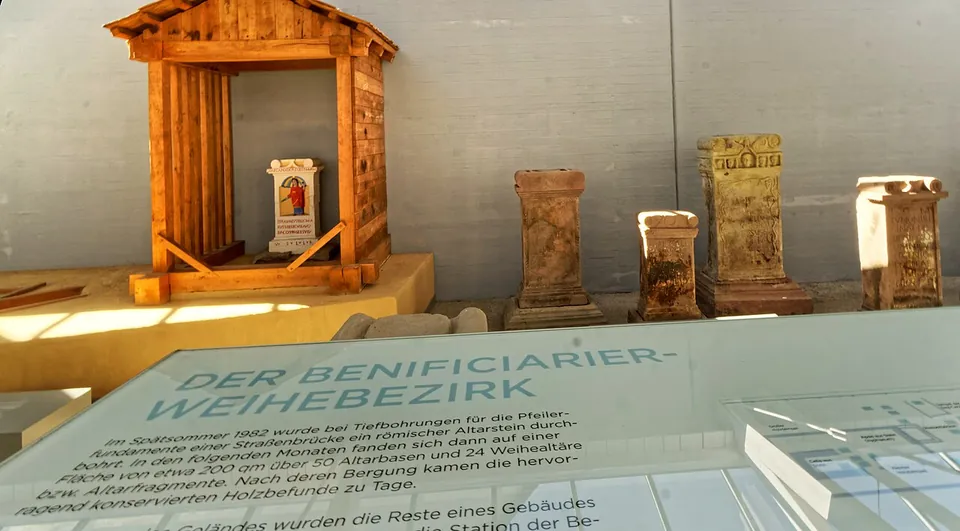
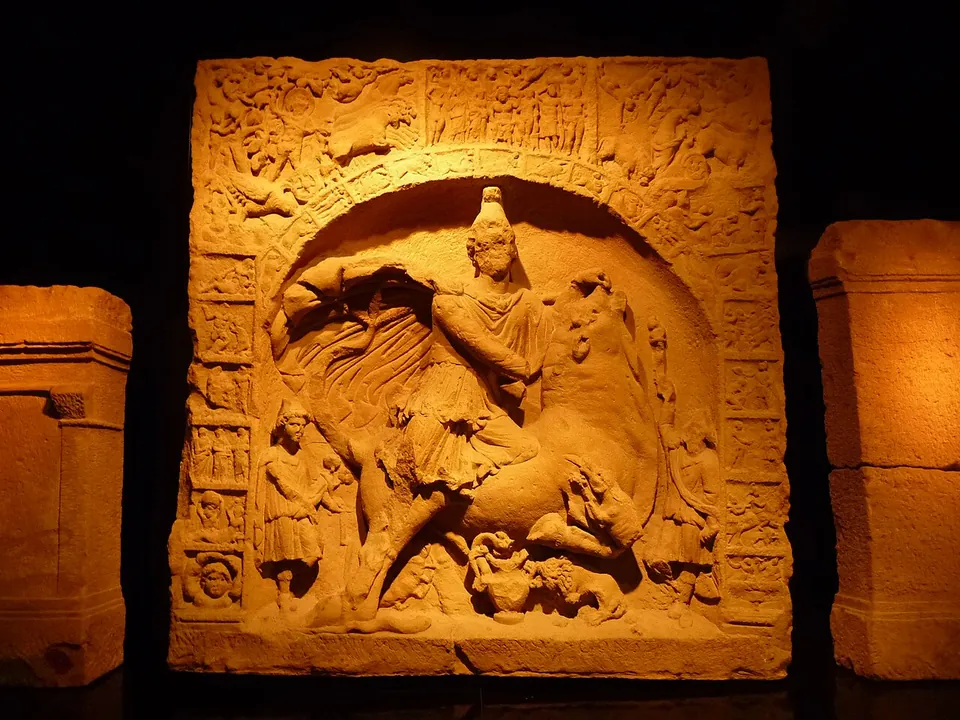
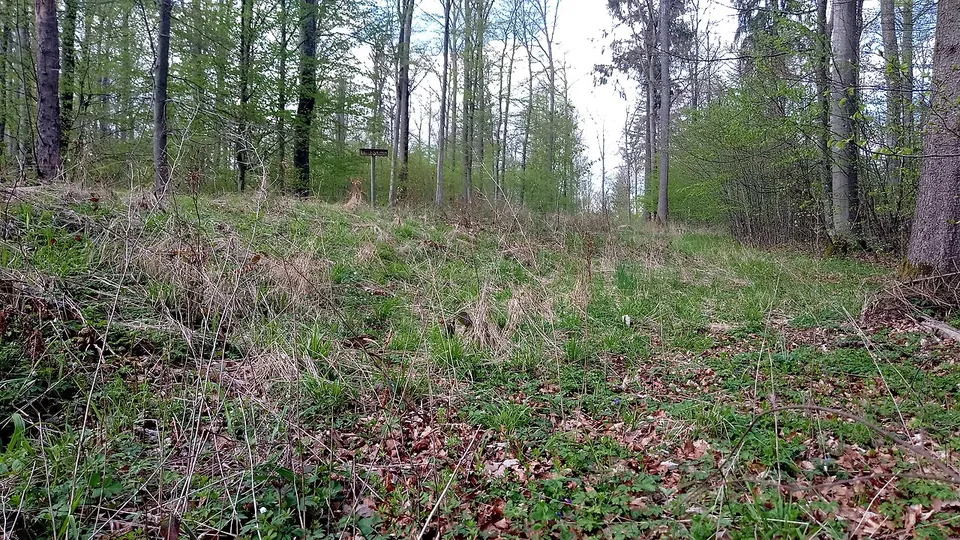
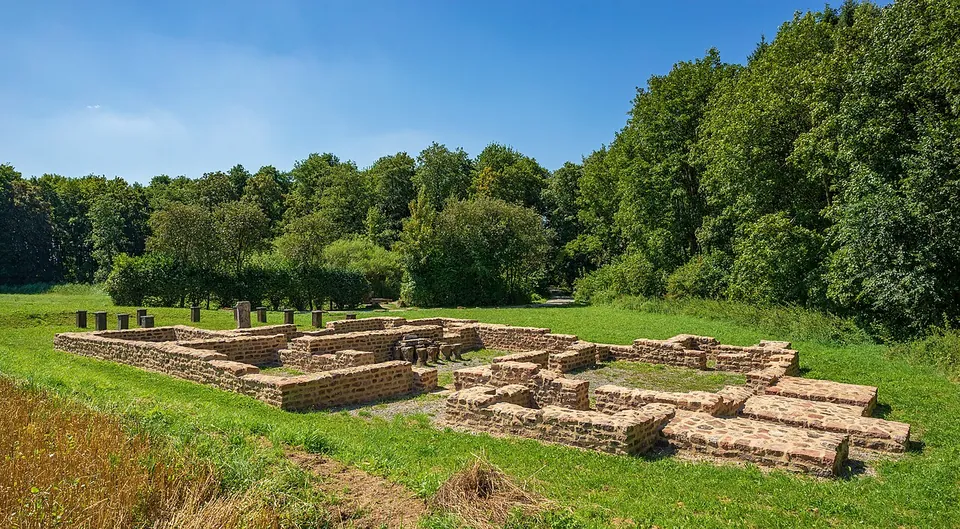
Photo: Roman Eisele · CC BY-SA 4.0 · Commons
17 km · fort · Baden-Württemberg
Be clear about this before you go: the fort itself has gone.
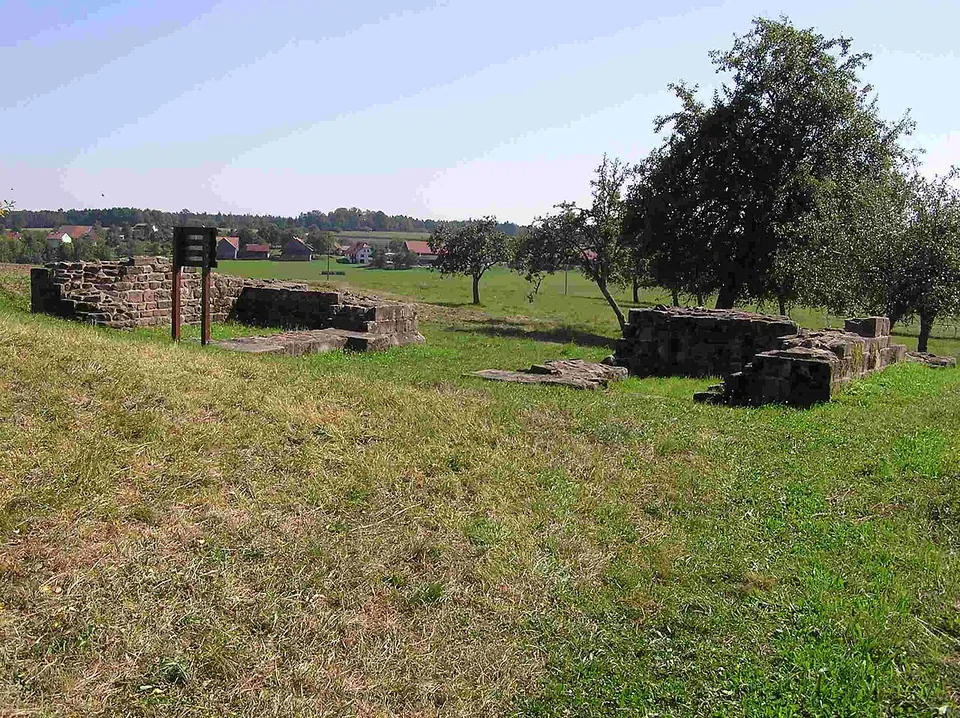
Photo: Schwing · Public domain · Commons
22 km · fort · Baden-Württemberg
The one built thing to look at is the south gate, the porta principalis dextra.
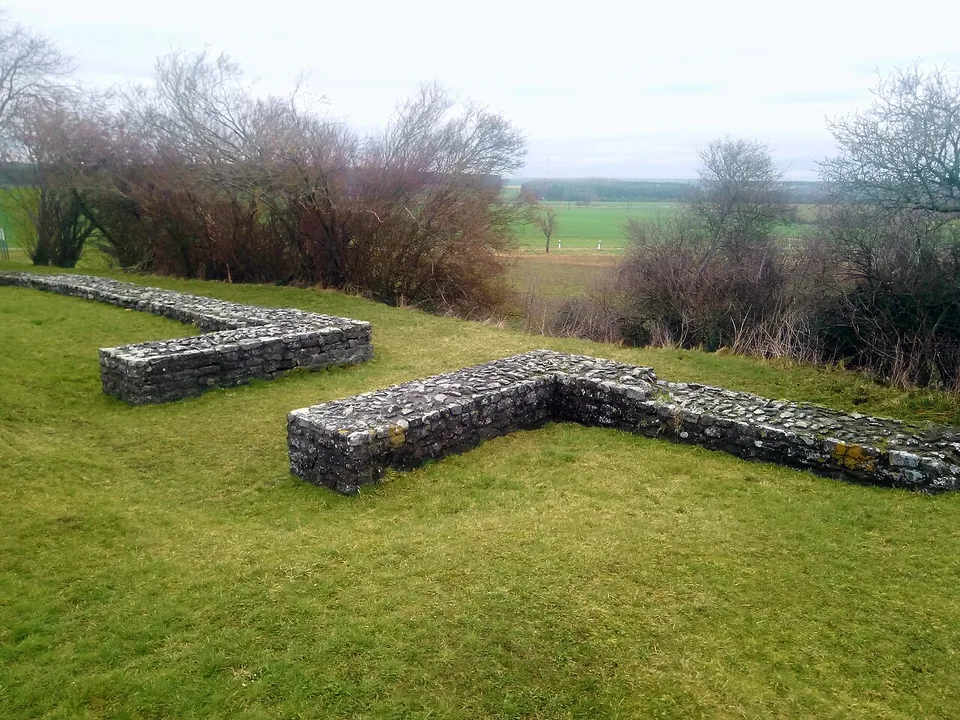
Photo: Granpar · CC BY-SA 4.0 · Commons
24 km · fort · Baden-Württemberg
Kleinkastell Haselburg is the site of a small Roman fort on the Limes, the frontier of the empire, in open farmland between the villages of Reinhardsachsen and Gerolzahn near Walldürn.
Straight-line distances.
Every fact on this page comes from the records below, each used under the licence noted.
| Source | Licence |
|---|---|
| Pleiades 118898 | CC BY |
| Wikidata Q31881480 | CC0 |
| Vici.org 4420 | CC BY-SA (text), CC0 (metadata) |
| OpenStreetMap way/669480243 | ODbL |
| Römermuseum Osterburken — visit, hours, admission and the Limespark (the museum's own site) | licence not recorded |
| Wikipedia (de) — Kastell Osterburken | CC BY-SA 4.0 |
| Wikipedia (de) — Römermuseum Osterburken | CC BY-SA 4.0 |
| Wikipedia (de) — Osterburken | CC BY-SA 4.0 |
| Wikidata — Kastell Osterburken (Q1243550) | licence not recorded |


