Photo: Berthold Werner · Public domain · Commons
Asisium, Aision
city · Umbria, Italy
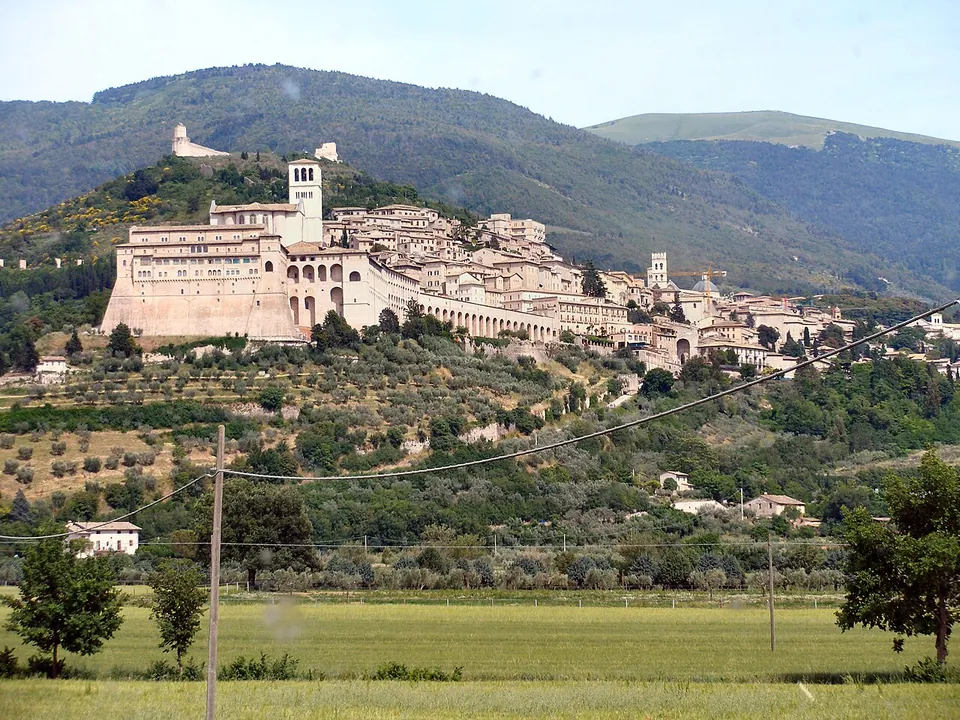
1 place to see, the best preserved and best known first.
Photo: Berthold Werner · Public domain · Commons
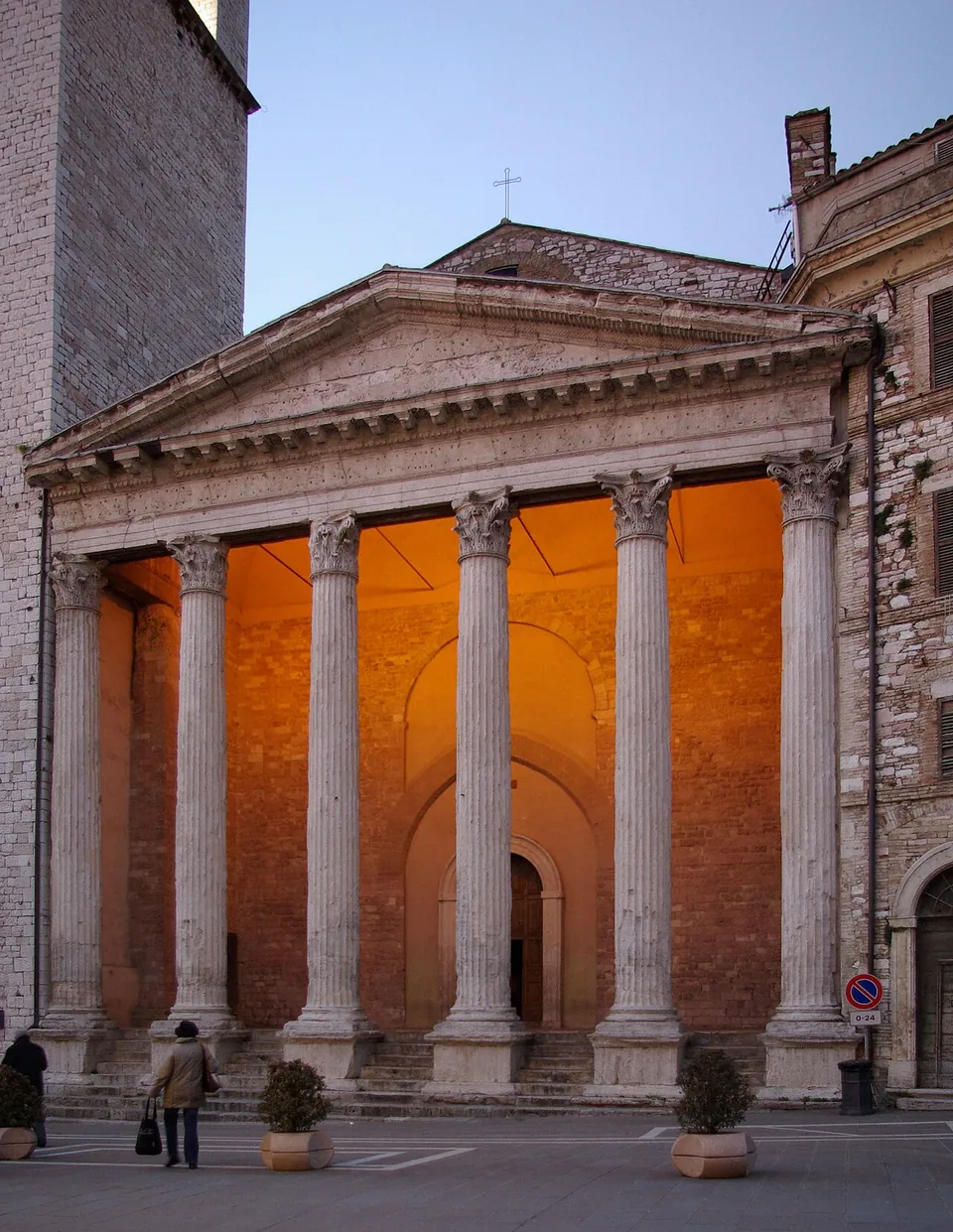
Start on Piazza del Comune. The square stands over the Roman town’s central terrace, and two of the four things worth seeing are here. The front of the so-called Temple of Minerva, built in the second half of the 1st century BC, survives in its original state: six fluted columns with Corinthian capitals, raised on plinths set into the steps (the comune). It is covered in detail on the Domus del Lararium page, with the remains of the Roman theatre.
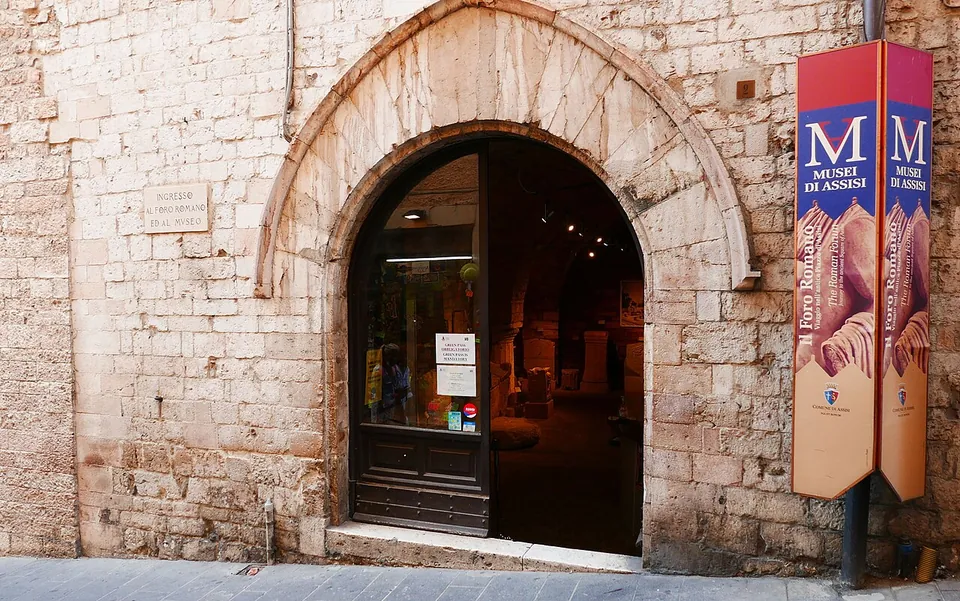
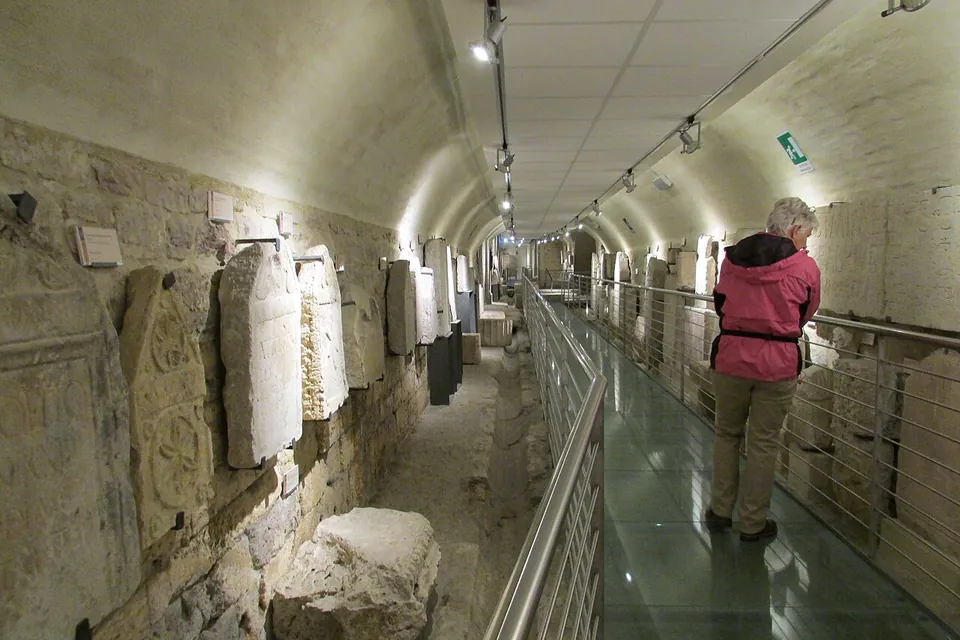
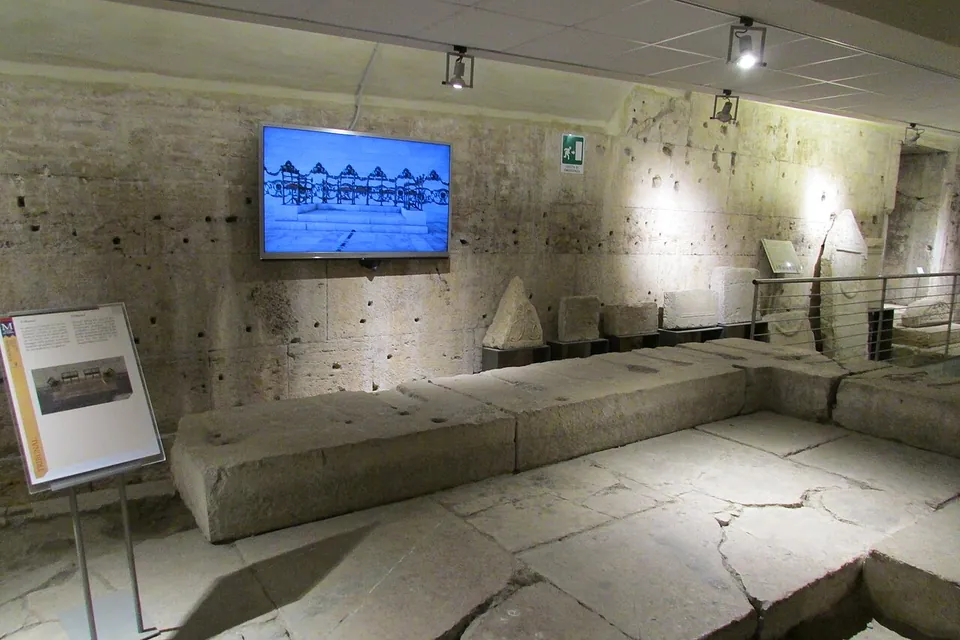
Under the square is the Foro romano e collezione archeologica, the one Roman site in Assisi with a ticket office and regular opening hours. The visit begins in the former crypt of San Nicolò on Via Portica, with inscriptions, urns and tombstones found in and around the town, then follows a glass walkway over the original paving, past the terrace wall of the temple with an inscription recording works by the town’s chief magistrates in 30 BC (Ministero della Cultura). Further on are the remains of a tribunal, the stone platform where the local magistrates sat, what remains of a small temple of Castor and Pollux, a large cistern and rooms that were shops (the comune). The area is traditionally taken to be the forum, though some read it only as a service area for the temple (it.wikipedia).
Two Roman houses, 40 m apart and 150 to 200 m south of the temple, keep their painted walls and open only by booking. The Domus del Lararium has thirteen rooms and a peristyle, with walls more than 4 m high still carrying frescoes in the Third Pompeian Style (the comune). The so-called Casa di Properzio lies beneath the church of Santa Maria Maggiore on Piazza del Vescovado and is entered through the church’s 9th-century crypt: three connecting rooms and a long corridor, part of them built against the walls of Asisium (the comune). It has a floor of marble slabs brought from outside Italy, figures on a sea theme painted on a purplish-brown ground, small mythological scenes with captions scratched in Greek, and a niche painted as a garden full of birds (the comune).
The amphitheatre is up in the Porta Perlici quarter, some 430 m east of the temple and originally outside the walls (the comune). It is a section of this page.
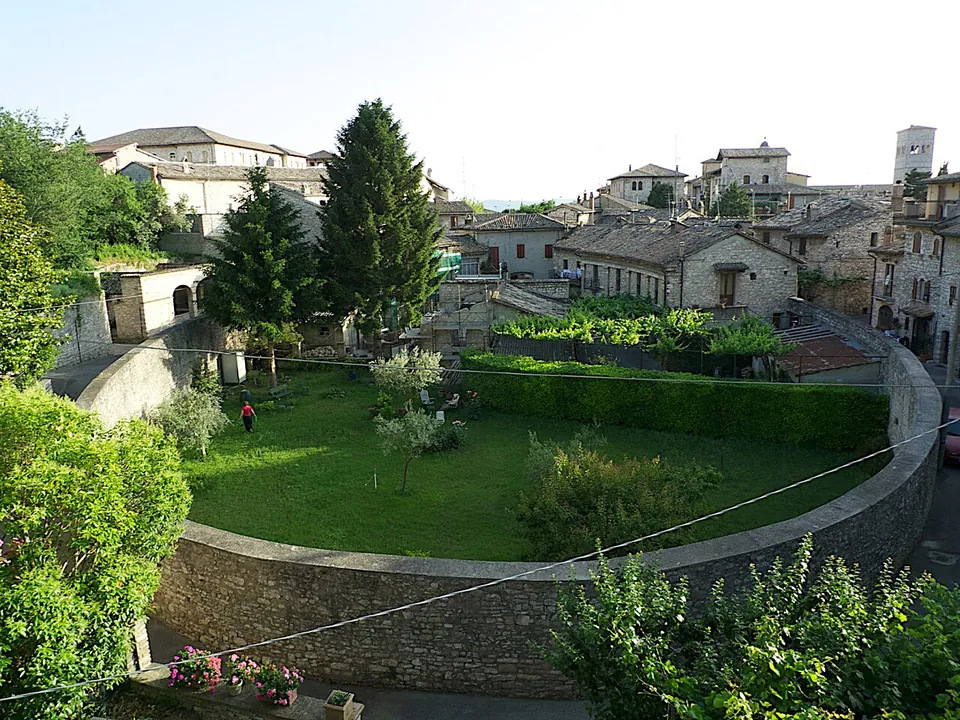
There is not much of the building to see, but its oval can still be read: Via Anfiteatro Romano runs round it between the wall of the old arena, which now encloses a garden, and the medieval houses built on its seating (the comune). An arch of travertine blocks survives (it.wikipedia, en.wikipedia). The seating, in two tiers on concrete walls faced with small blocks of local stone, is partly preserved and visible, and some parts can also be seen beneath the Monastero di Santa Caterina, which now houses a hotel (the comune). It is free and always visible from the street (the comune), and close to the Piazza Matteotti car park (the comune).
If you are going to Assisi anyway, yes: Roman Assisi fills a good half day, and it is the side of the town that Umbria Tourism calls “a lesser-known aspect”. The temple front is counted among the best-preserved Roman temples (it.wikipedia) and costs nothing to see, and the forum under the same square has a glass walkway, a video on the excavation and an audio guide (the comune). The two houses are the best of it, Roman rooms with their paintings in place, but they need booking. The amphitheatre is for the curious: an outline in a street plan, not a ruin to walk into.
As a reason to travel to Assisi on its own, it is thinner. Apart from the temple, everything is underground or embedded in later buildings.
Assisi station, on the Foligno–Terontola line, is in Santa Maria degli Angeli, about 5 km south-west of the centre (en.wikipedia). In town, bus line C stops in Piazza Matteotti near the amphitheatre and lines A and B in Piazza del Comune (the comune). Only authorised vehicles may enter the historic centre; the nearest car park to the Roman sites is the paid one in Piazza Matteotti at the top of the town (the comune). Umbria Tourism suggests starting from there and walking down past the amphitheatre and the theatre arches to Piazza del Comune.
The Foro romano opens daily from 10.00, closing at 18.00 from March to June and in September and October, at 19.00 in July and August, and at 17.00 from November to February, when it is closed on Tuesdays; it is closed on 25 December, and the ticket office shuts half an hour before closing. A ticket is €7, or €5 for university students, schools, ages 9 to 18, over-65s and groups of more than twenty; children up to 8 and Assisi residents go free. A €14 combined ticket (€11 reduced) adds the Rocca Maggiore, the Pinacoteca Comunale and the Torre del Popolo, with an audio guide (the comune, read 20 October 2026).
The two houses open by booking: the Domus del Lararium costs €5, and both houses together €10 (the comune). Book at the tourist office (IAT) on Piazza del Comune, +39 075 8138680, ideally on arrival, so the visit can be fitted round the forum. The temple front can be seen at any hour, and the church inside is open from 08.00 to 20.00 in winter time and to 22.00 in summer time (the comune).
Before you go
Hours and prices checked 20 October 2026 on the operator's own site. Confirm before travelling.
Assisi began as a small village of the Umbri, who traded closely with the neighbouring Etruscans (it.wikipedia). Rome took control of central Italy after the battle of Sentinum in 295 BC (en.wikipedia, it.wikipedia), and the town, under the name Asisium, was given monumental buildings from the 2nd century BC (it.wikipedia). The central terrace under Piazza del Comune was one of the monumental platforms built then, as part of the planning of the Roman town (Ministero della Cultura). Asisium became a municipium in 89 BC (it.wikipedia) and was enrolled in the tribus Sergia (Pleiades); it was built on a series of terraces on the slope of Monte Subasio (en.wikipedia). The poet Propertius is generally held to have been born here, around 50 to 45 BC (en.wikipedia), and the Casa di Properzio takes his name from a reading of a Latin inscription on one of its walls (the comune). Its decoration is dated to the 1st century BC by Pleiades and mostly to the 1st century AD by the comune, which places its walls earlier.
The amphitheatre was built in the first half of the 1st century AD and paid for by a leading local family, the gens Petronia; two fragmentary inscriptions recording it are shown in the forum museum (the comune). Christianity spread in the 3rd century through the bishop and martyr Rufinus (it.wikipedia). In 545 the Goths of Totila sacked the town and destroyed most of it (Pleiades; en/it.wikipedia); it then passed to the Byzantines and, in 568, to the Lombards, as part of the Duchy of Spoleto (it.wikipedia). The medieval town stayed within the Roman walls until the 13th century (en.wikipedia).
The forum was found in excavations by a French architect in the first half of the 19th century (the comune). Around forty Roman inscriptions from the town were set up in the temple’s portico in 1790-1794, the collection moved to the convent of Sant’Antonio da Padova in 1890, and the museum was founded in 1934 after the last remains of the church of San Nicolò were demolished in 1926; the restoration of the archaeological area was completed in 2008 (it.wikipedia). The Casa di Properzio was excavated by the Accademia archeologica del Subasio in the mid-19th and mid-20th centuries (the comune), and the Domus del Lararium came to light by chance in 2001 (the comune).
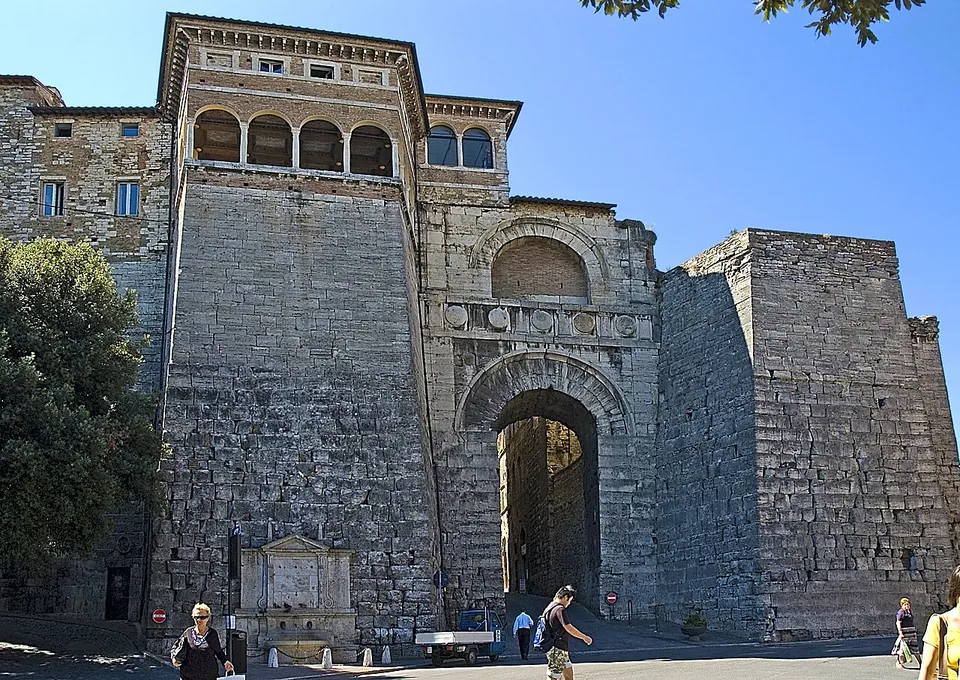
19 km · gate · Umbria
The gate is still built into the Etruscan wall it belonged to, and it is still the main way into the upper town (the Ministry of Culture).
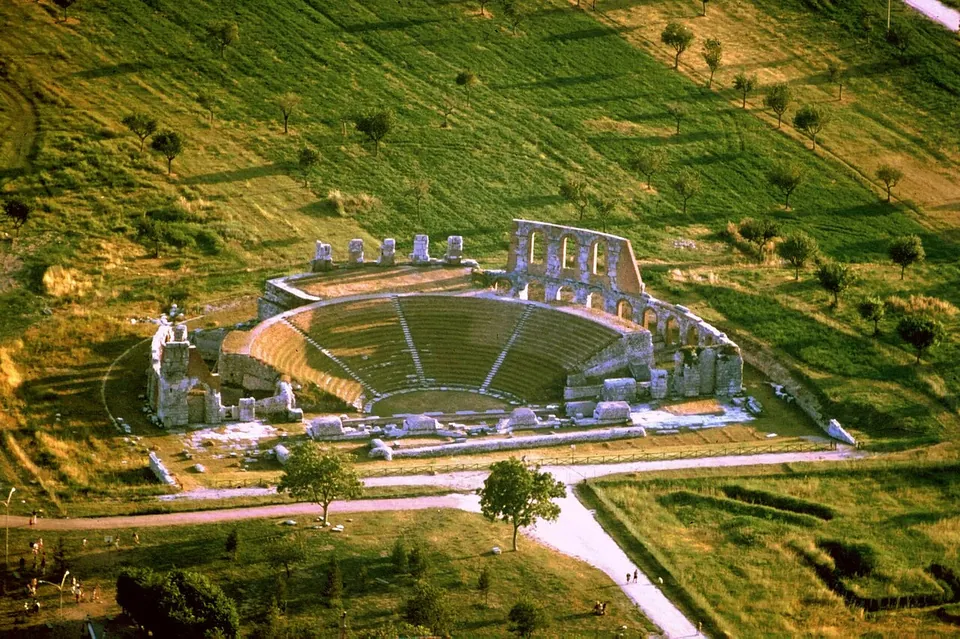
Photo: Celsius1 at Italian Wikipedia · CC BY-SA 3.0 · Commons
31 km · theatre · Umbria
The theatre is built of squared limestone blocks with a rusticated face.
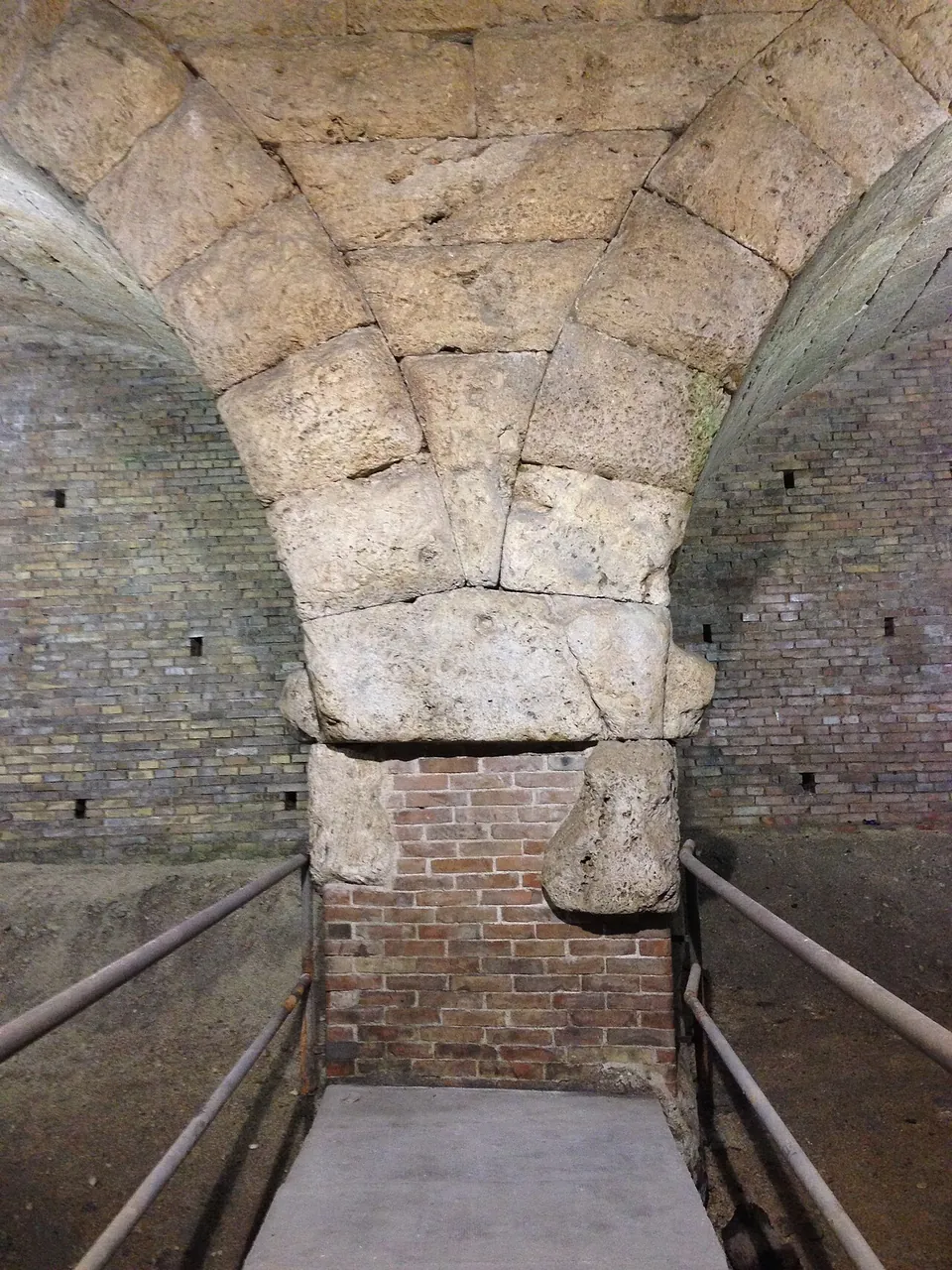
Photo: Manuelarosi · CC BY-SA 3.0 · Commons
38 km · bridge · Umbria
The bridge had three round arches and is about 24 m long, 4.5 m wide and 8 m high; one arch is still buried under the earth bank, and the old town gate of San Gregorio stood on top of it (it.wikipedia).
Straight-line distances.
Every fact on this page comes from the records below, each used under the licence noted.
| Source | Licence |
|---|---|
| Pleiades 413037 | CC BY |
| Comune di Assisi (Visit Assisi) — Foro romano e collezione archeologica, hours and tickets | licence not recorded |
| Comune di Assisi (Visit Assisi) — Anfiteatro | licence not recorded |
| Comune di Assisi (Visit Assisi) — Domus Sesto Properzio | licence not recorded |
| Comune di Assisi (Visit Assisi) — Domus del Lararium | licence not recorded |
| Comune di Assisi (Visit Assisi) — Tempio di Minerva | licence not recorded |
| Ministero della Cultura — Foro romano e collezione archeologica | licence not recorded |
| Umbria Tourism (Regione Umbria) — Roman Assisi | licence not recorded |
| Pleiades — Roman amphitheater of Asisium | licence not recorded |
| Wikidata — Amphitheatre of Assisi (Q28977991) | licence not recorded |
| Pleiades — Casa di Properzio | licence not recorded |
| Wikipedia (it) — Assisi | CC BY-SA 4.0 |
| Wikipedia (en) — Assisi | CC BY-SA 4.0 |
| Wikipedia (it) — Museo civico e Foro romano di Assisi | CC BY-SA 4.0 |