


Photo: F Ceragioli · CC BY-SA 3.0 · Commons
amphitheatre · Piedmont
Roman Amphitheatre of Ivrea
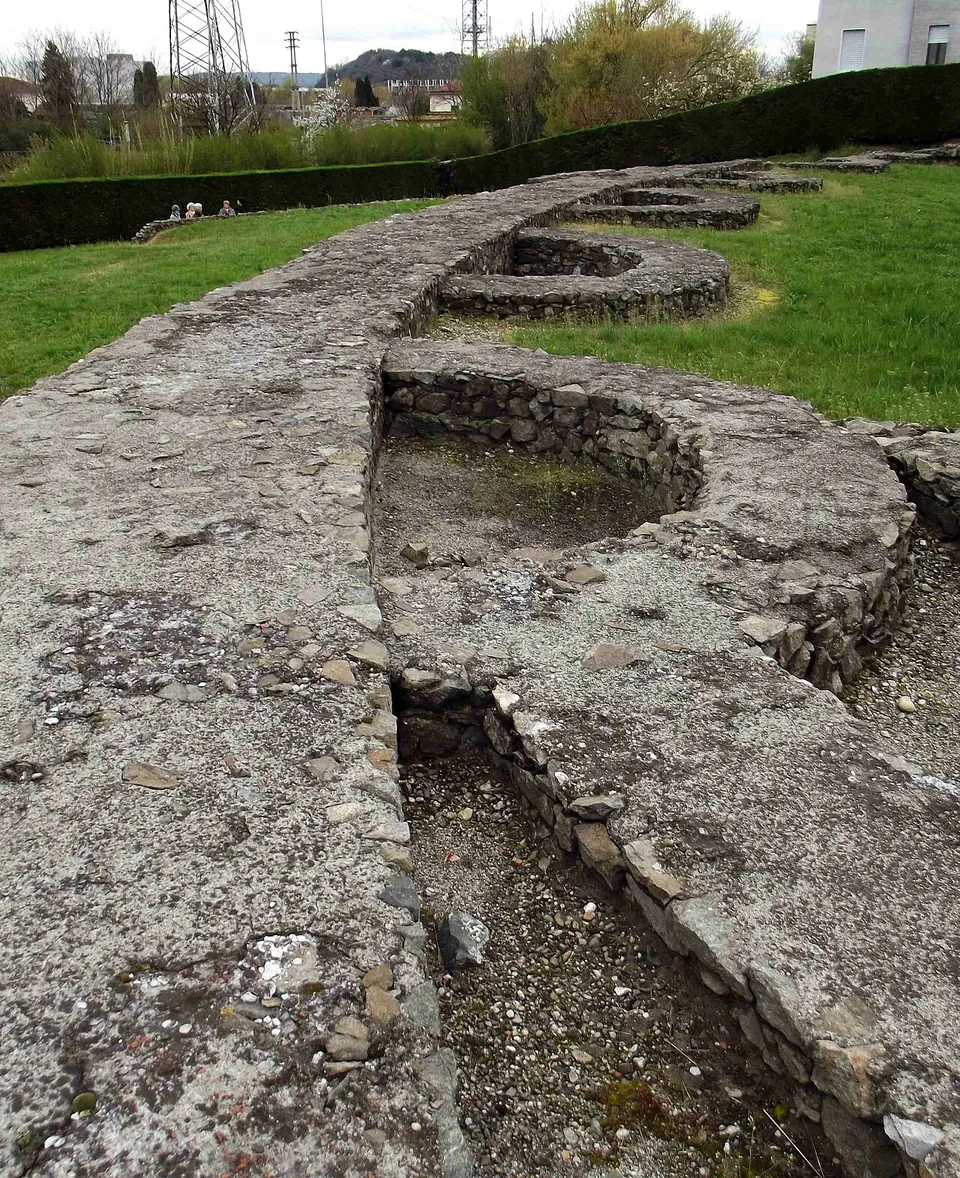
What you see is the plan of the building rather than the building.
Free
Eporedia, Ivrée
city · Piedmont, Italy
1 place to see, the best preserved and best known first.
Photo: F Ceragioli · CC BY-SA 3.0 · Commons
amphitheatre · Piedmont
What you see is the plan of the building rather than the building.
The amphitheatre is the one Roman monument you can stand in front of. It was built around the middle of the 1st century AD, outside the walls beside the road to Vercelli, and it is about 65 m long; what remains are the foundations of its walls, in particular the outer elliptical wall, and some of the underground passages beneath it (Ministero della Cultura). The site is fenced, and you see it from outside the fence, where there are information panels (it.wikipedia). Beside it, some remains are visible of a villa that the Romans partly demolished to make room for the amphitheatre (Ministero della Cultura).
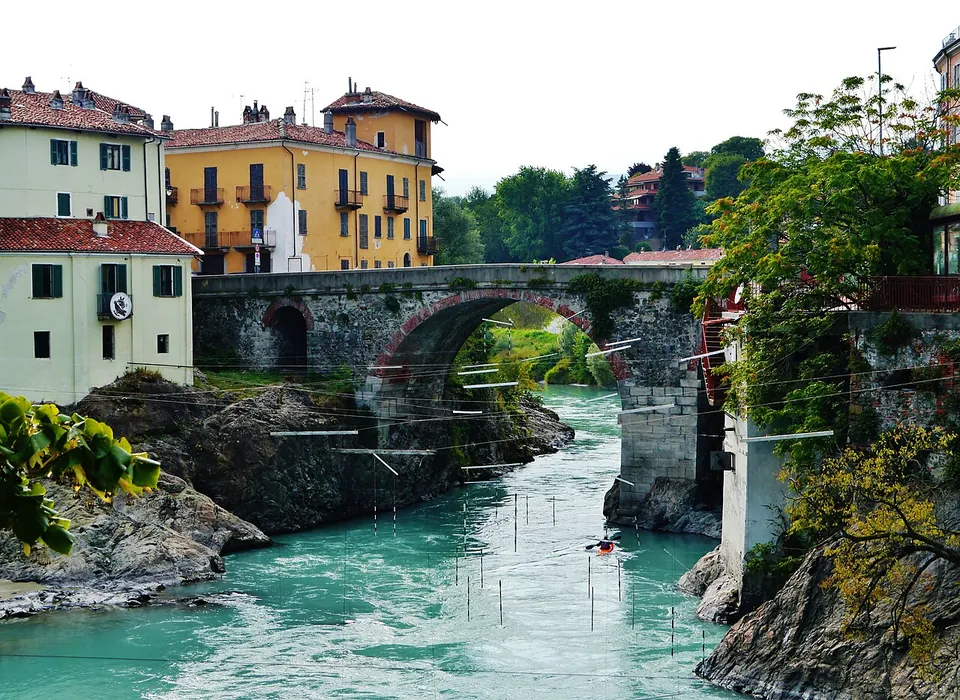
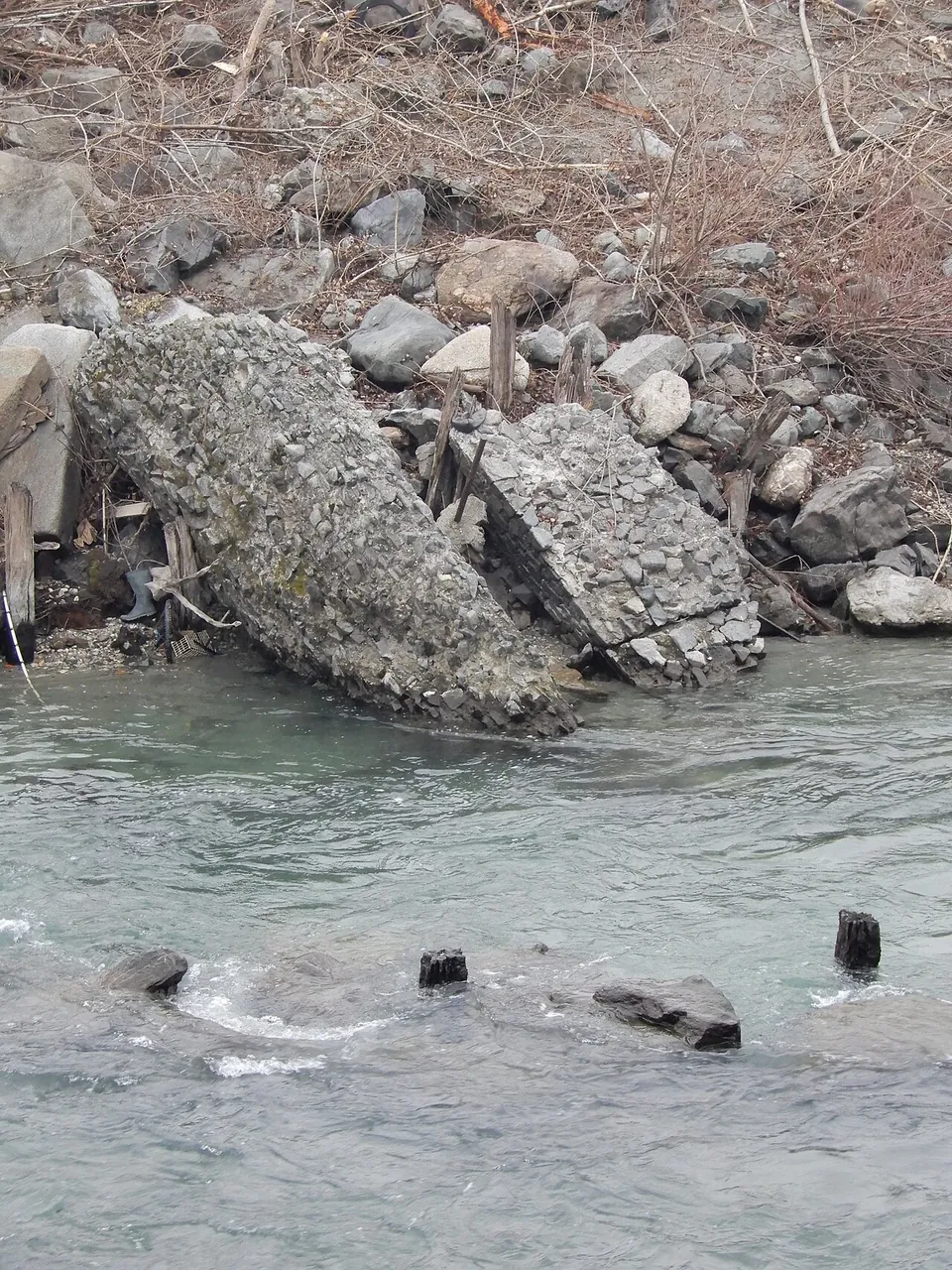
In the middle of town the Ponte Vecchio crosses the Dora Baltea at its narrowest point, where archaeologists have found Roman bricks from an earlier bridge (it.wikipedia). What you walk across today is a three-arched stone and brick bridge rebuilt in 1716 and widened in 1830, not a Roman structure. About 500 m downstream lie the remains of the Pons Major, a monumental Roman bridge of ten arches (it.wikipedia). Published accounts differ on how much of it shows: partly visible in the riverbed, or submerged and seen only when the river is lowered (it.wikipedia, Pons Major and Ivrea), so expect a few blocks at most.
Some of the finds from the amphitheatre excavations, which included coins, pottery and fragments of statues, are on display in the Museo Civico Pier Alessandro Garda (it.wikipedia), which has rooms given to archaeology; excavations were under way in its courtyard in 2026 (Ministero della Cultura). The remains of the Roman theatre survive beneath the historic centre (it.wikipedia), and the cathedral’s crypt holds an ancient Roman sarcophagus (en.wikipedia).
Not on its own. Ivrea’s Roman remains are low foundations seen through a fence and a few blocks in a river, and a visitor who comes only for them will be done within an hour or two. As a stop for someone already in the area or on the way to the Aosta Valley it is pleasant: the remains are free to look at, the amphitheatre and the bridges are within walking distance of the centre, and the museum puts the finds next to them. Ivrea’s own fame lies elsewhere, in the Olivetti industrial town (a UNESCO World Heritage Site since 2018) and in the carnival’s Battle of the Oranges (en.wikipedia).
Ivrea is on the Chivasso–Aosta railway, with trains to Turin and Aosta, and on the A5 Turin–Aosta motorway (it.wikipedia). The town’s buses are run by GTT (it.wikipedia), and a bus stop and a tourist information office are mapped within 200 m of the centre (OpenStreetMap). Drivers can use the paid car park in Piazza Nuovo Quartiere Vittorio Emanuele, about 100 m from the centre (OpenStreetMap).
The amphitheatre lies about 900 m from the centre; the entrance used for guided visits is on Via dei Cappuccini (Ministero della Cultura). Its interior is listed as closed every day (Ministero della Cultura); it can be entered on special days or by arrangement with the comune or the Soprintendenza (it.wikipedia). For the European Heritage Days on 13 June 2026 the Soprintendenza’s archaeologists and the museum offered a guided visit, which presented restoration work at the amphitheatre that was then about to start (Ministero della Cultura).
The Museo Garda in Piazza Ottinetti opens Tuesday to Sunday, 09.00 to 13.00 and 15.00 to 18.00, closed on Mondays and public holidays, with last entry half an hour before closing. A ticket is €8, or €6 for over-65s, university students up to 25 and groups of twenty or more; under-18s enter free, as do holders of the Abbonamento Musei or the Torino+Piemonte Card (museogardaivrea.it, read 19 October 2026).
Before you go
Hours and prices checked 19 October 2026 on the operator's own site. Confirm before travelling.
Before Rome, the main settlement of the Celtic Salassi in the area stood on the Brich Appareglio near Pavone Canavese, about 3 km south of the centre (it.wikipedia). Eporedia was founded in 100 BC, during Marius’s sixth consulship, as a colony of Roman citizens on the left bank of the Dora Baltea, at the mouth of the Aosta Valley and on the route to the Alpine passes; its task was to hold the Salassi, whom Rome finally subdued in 25 BC (en/it.wikipedia, citing Velleius Paterculus). The name is Celtic: Pliny the Elder explained it as the Gauls’ word for good horse-tamers (it.wikipedia). The town was assigned to Regio XI (Pleiades).
The street from the amphitheatre into the old town keeps the line of the road that linked Rome with the lands beyond the Alps; Eporedia was a necessary stage on it and grew into a trading centre, and in the imperial period new quarters spread east of the walls, between the Porta Praetoria and the amphitheatre (Ministero della Cultura). The Pons Major was probably built in the 1st century AD, about 150 m long on eleven piers, and seems to have been brought down by a flood not long after it was finished; a Roman quay more than 100 m long ran along the left bank beside it (it.wikipedia). Its remains first came to light in the flood of 1977 and were documented during the bank repairs after the flood of 1993 (it.wikipedia).
The amphitheatre has been known since the early 20th century and was excavated systematically between 1955 and 1964, the adjoining villa in the early 1980s (it.wikipedia). The excavators found fragments of frescoes and a long stretch of the bronze facing of the backs of the podium seats (Ministero della Cultura). Its capacity is estimated at between 10,000 and 15,000 spectators (it.wikipedia; Ministero della Cultura).
After the Gothic War, Ivrea may have been part of the Byzantine defences of north-western Italy - some scholars identify it with the kástron Eourías named by George of Cyprus - and by 772 it was the seat of a Lombard duchy (en/it.wikipedia).
Photo: dacolje · CC BY-SA 2.5 · Commons
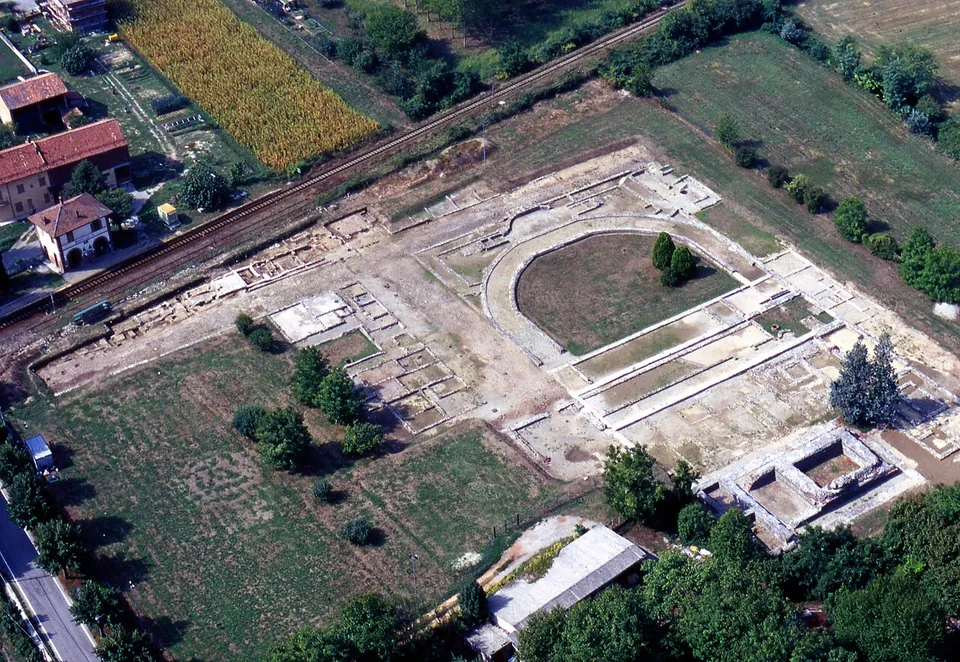
Photo: Soprintendenza per i Beni Archeologici del Piemonte e del Museo Antichità Egizie · CC BY-SA 3.0 · Commons
36 km · city · Piedmont
The archaeological area covers 2.65 hectares (the Soprintendenza), of which about 1.5 hectares has been excavated, roughly a tenth of the ancient town (it.wikipedia).
Photo: rene boulay · CC BY-SA 3.0 · Commons
Straight-line distances.
Every fact on this page comes from the records below, each used under the licence noted.
| Source | Licence |
|---|---|
| Pleiades 383642 | CC BY |
| Wikidata — Ivrea (Q9409, the modern town, which carries the Pleiades link) | licence not recorded |
| Wikipedia (it) — Ivrea | CC BY-SA 4.0 |
| Wikipedia (en) — Ivrea | CC BY-SA 4.0 |
| Wikipedia (it) — Anfiteatro romano di Ivrea | CC BY-SA 4.0 |
| Wikipedia (en) — Ivrea Roman Amphitheatre | CC BY-SA 4.0 |
| Wikipedia (it) — Pons Major | CC BY-SA 4.0 |
| Wikipedia (it) — Ponte Vecchio (Ivrea) | CC BY-SA 4.0 |
| Wikipedia (en) — Ponte Vecchio, Ivrea | CC BY-SA 4.0 |
| Ministero della Cultura — Anfiteatro romano di Ivrea | licence not recorded |
| Ministero della Cultura — guided visit to the amphitheatre and Museo Garda, 13 June 2026 | licence not recorded |
| Museo Civico P.A. Garda — hours and prices 2026 (the museum's own site) | licence not recorded |


