

What is there today
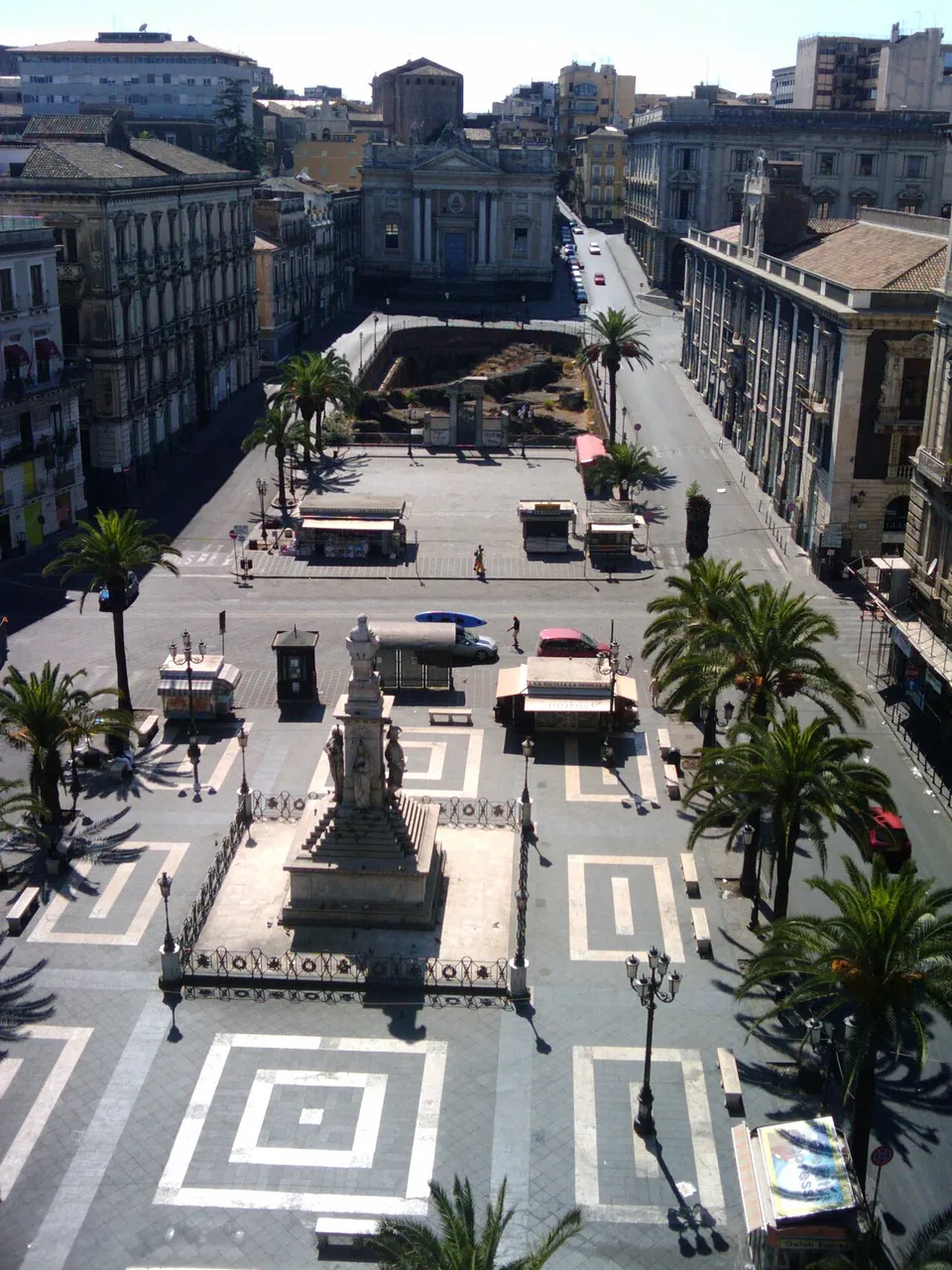
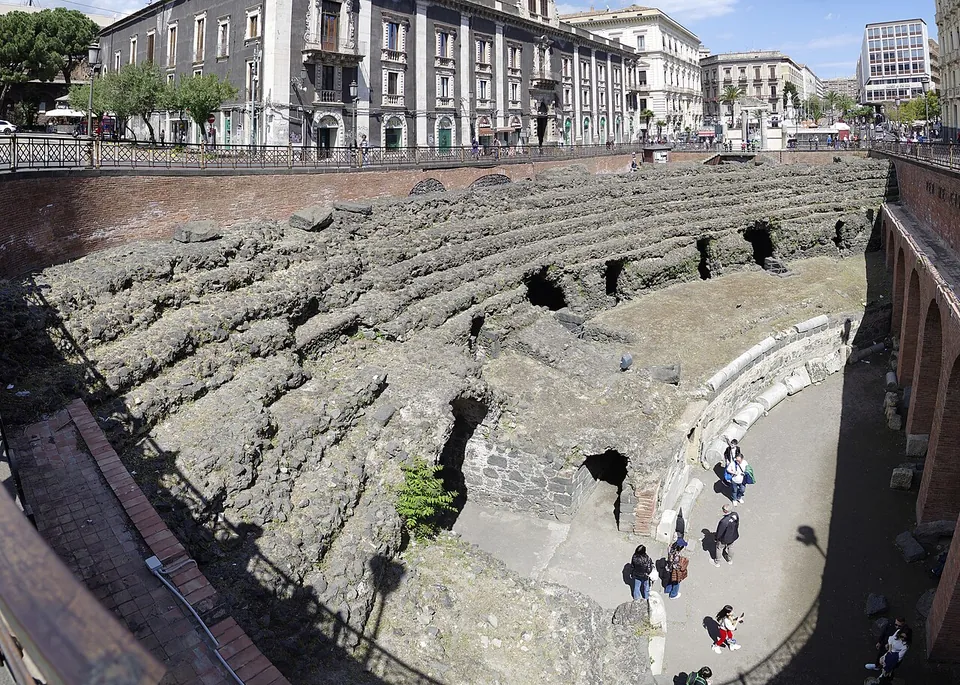
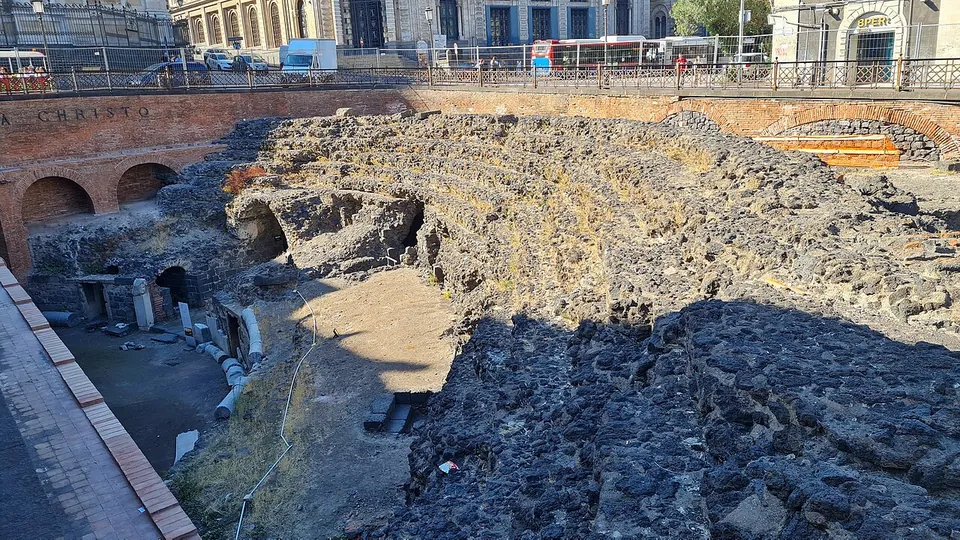
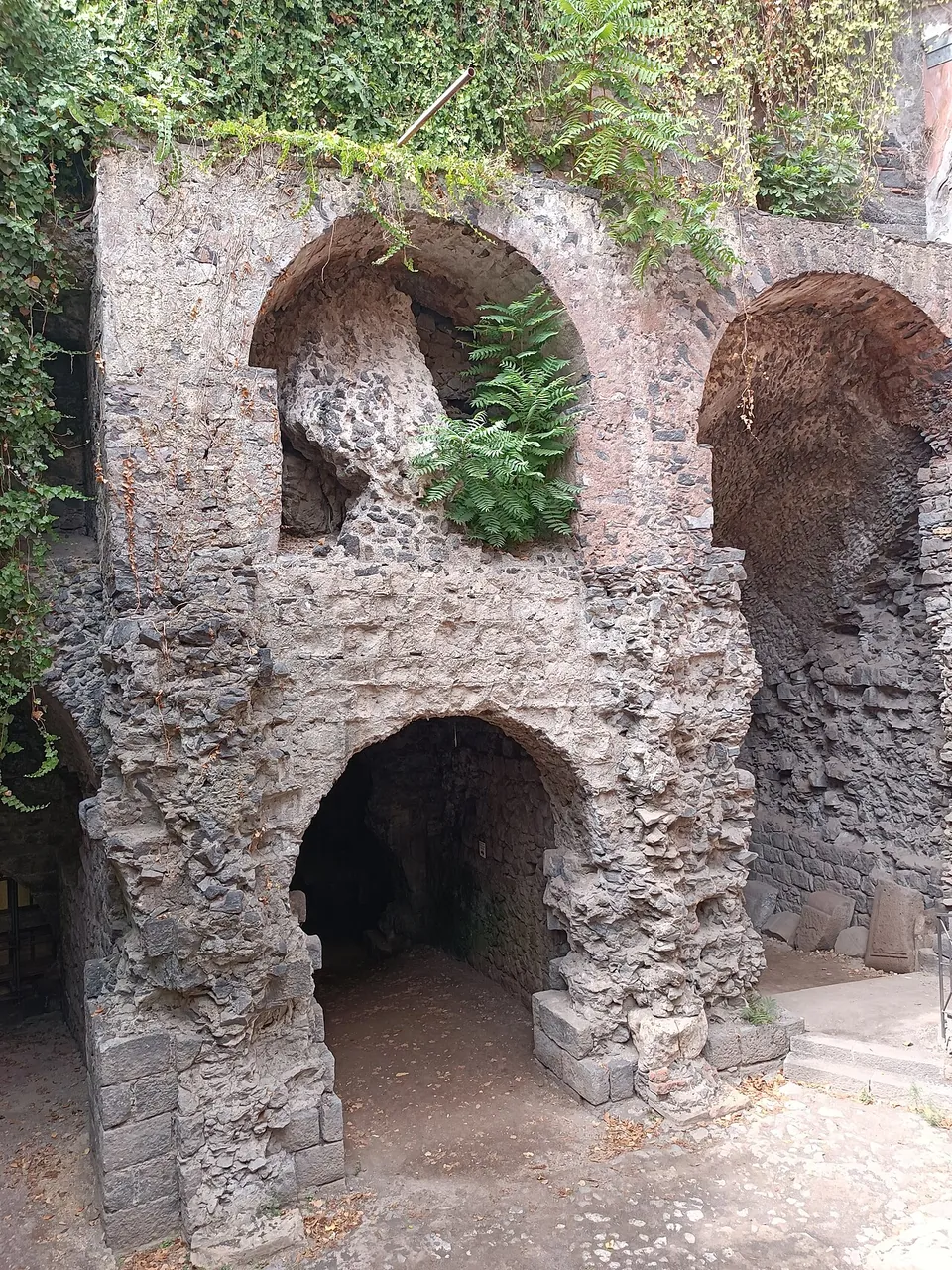
The exposed part is the north-western section (the operator): the curving lava-stone structure that carried the seating, and arches whose red brick stands out against the dark stone (it.wikipedia). It can be visited from the entrance on the square, and from Vico Anfiteatro the walls can be seen standing to part of their third storey (it.wikipedia). The rest of the building is still buried under Via Neve, Via Manzoni and Via Penninello; houses and the façade of the church of San Biagio were built on its surviving galleries (it.wikipedia).
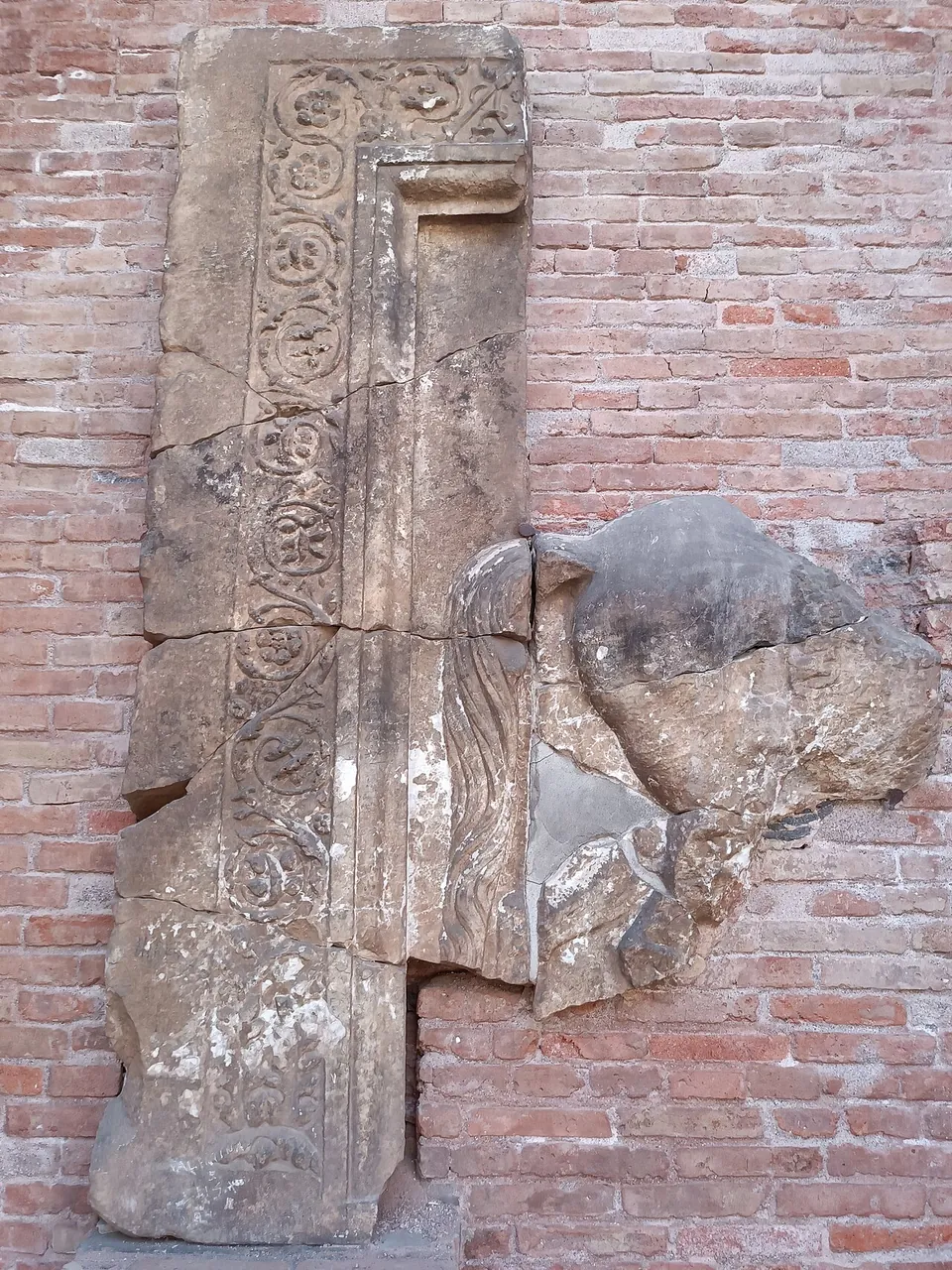
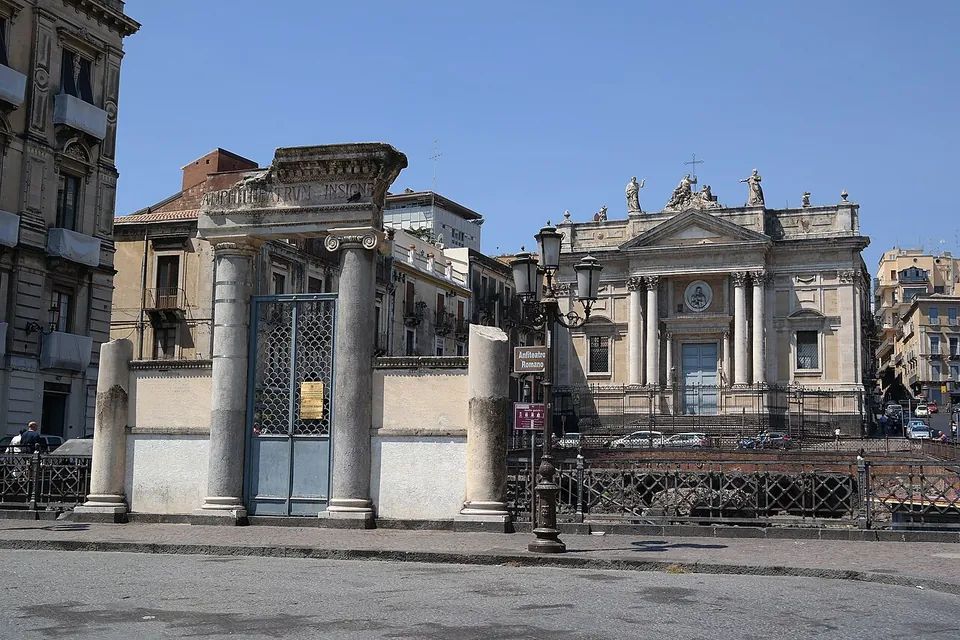
The entrance gate on the square was decorated in 1906 with recovered fragments: pieces of marble columns that probably belonged to the amphitheatre’s upper loggia, two broken Ionic capitals and part of an architrave, on which AMPHITHEATRVM INSIGNE was carved. Between the columns are two stone panels with symbolic epitaphs, composed by the poet Mario Rapisardi, for two famous Greeks of the area, Charondas and Stesichorus, whom tradition buries nearby (it.wikipedia).
Is it worth the trip?
If you are in Catania, yes. It is in the historic centre, roughly 600 m from the cathedral square, open every day, and €4 to go down; from the railings above you can look into it for nothing. The whole building measured 125 by 105 m, with an arena about 70 by 50 m, and held 15,000 to 16,000 seated spectators (published figures differ), which puts it among the great amphitheatres alongside the Colosseum, Capua and Verona (it.wikipedia; de.wikipedia; the operator).
Know what you are getting, though. This is a slice of a monument, not an arena you can stand in the middle of and see whole, and it sits in a busy square with traffic above. It pairs well with the theatre and Odeon about half a kilometre away; see Catane – Catania for the other Roman stops in town.
Getting there
The amphitheatre is on the western side of Piazza Stesicoro (it.wikipedia). The Borsa bus terminal is about 60 m away; no public car park is mapped next to the square (OpenStreetMap).
It opens daily from 09.00 to 19.00 between 1 April and 31 October (last entry 18.30) and from 09.00 to 17.00 between 1 November and 31 March (last entry 16.30), and is closed on Christmas Day. A ticket is €4; over-65s, university students under 26, groups of more than ten and residents of Catania, among others, pay €3, and children under 10 go free. The site is run by the city council together with the regional archaeological park, and its tickets are sold by CoopCulture (the operator’s page, read 20 October 2026). The operator says the site is not accessible to wheelchair users.
Visiting details
- Opening hours
- Daily 09.00–19.00 from 1 April to 31 October (last entry 18.30) and 09.00–17.00 from 1 November to 31 March (last entry 16.30). Closed on 25 December.
- Tickets
- €4; reduced €3 for, among others, over-65s, university students under 26, groups of more than ten and residents of Catania; school groups €2; free for children under 10, disabled visitors and their companions, and licensed tourist guides.
- Parking
- No public car park is mapped next to the square; the Borsa bus terminal is about 60 m away (OpenStreetMap).
Before you go
- The operator states that the site is not accessible to wheelchair users; the visit goes down into a trench below street level.
Hours and prices checked 20 October 2026 on the operator's own site. Confirm before travelling.
History
The amphitheatre was probably built in the 2nd century AD on what was then the northern edge of the city, against the Montevergine hill, in an area also used as a cemetery. Its style points to the years between Hadrian and Antoninus Pius (117–161), and around the 3rd century it was enlarged (it.wikipedia). It was built of Etna lava stone faced with marble (it.wikipedia). A popular story that Etna’s lava reached it in 252 is a legend drawn from the life of Saint Agatha; dating studies have shown that the flow stopped at Mascalucia and never reached the city (it.wikipedia).
By the time of Theodoric, king of the Ostrogoths, the building had long been abandoned, and, according to Cassiodorus, he let the citizens take its stone for building (it.wikipedia; de.wikipedia). Stone and columns from it are said to have gone into Catania’s cathedral under the Normans (it.wikipedia; de.wikipedia), and the obelisk on the city’s elephant fountain probably stood in the amphitheatre’s arena (de.wikipedia). The ruin was built into the Aragonese fortifications of 1302; when the city walls were built in the 1550s its first and second storeys were knocked down and the galleries filled with the rubble, and after the earthquake of 1693 it was buried completely and the square became a parade ground (it.wikipedia).
In the 18th century Ignazio Paternò Castello, prince of Biscari, paid for excavations to prove the amphitheatre had existed at all, which some foreign visitors had denied. The present trench was dug between 1904 and 1906 under the architect Filadelfo Fichera and opened in 1907 in the presence of King Victor Emmanuel III (it.wikipedia). It served as an air-raid shelter in 1943 and then went through decades of closures; in 2014 a question in parliament warned that the structure was at risk of collapse (it.wikipedia). It reopened to the public for good on 3 July 2024, run by the city council (the operator).
More photographs



Nearby
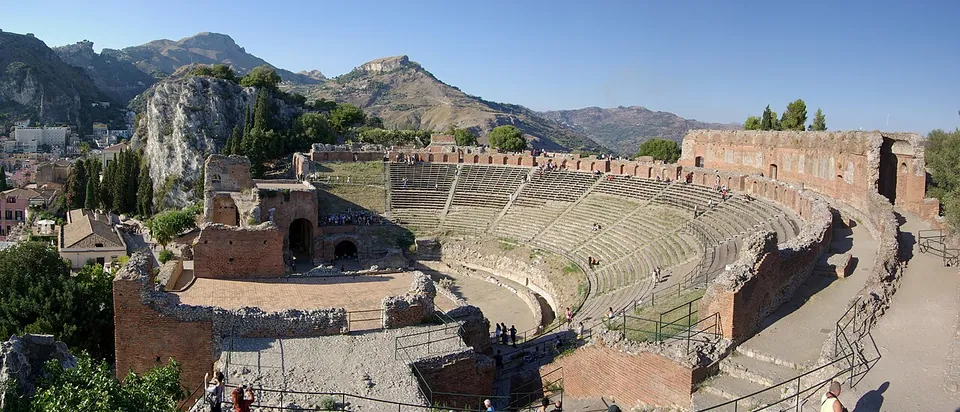
Photo: Berthold Werner · CC BY-SA 3.0 · Commons
42 km · theatre · Sicily
Ancient theatre of Taormina
Despite the name Teatro Greco, what stands is Roman: the operator states that everything visible belongs to the Roman rebuilding, above all the work of the first half of the 2nd century AD.

Straight-line distances.
Sources
Every fact on this page comes from the records below, each used under the licence noted.
| Source | Licence |
|---|---|
| Pleiades 540685097 | CC BY |
| Wikidata Q2844406 | CC0 |
| Vici.org 4217 | CC BY-SA (text), CC0 (metadata) |
| OpenStreetMap way/25380983 | ODbL |
| Wikipedia (it) — Anfiteatro romano di Catania | CC BY-SA 4.0 |
| Wikipedia (en) — Amphitheatre of Catania | CC BY-SA 4.0 |
| Wikipedia (de) — Amphitheater (Catania) | CC BY-SA 4.0 |
| Wikipedia (fr) — Amphithéâtre de Catane | CC BY-SA 4.0 |
| Pleiades — Katane/Catina | licence not recorded |
| CoopCulture — Anfiteatro Romano di Catania (hours and tickets; ticket office for the Comune di Catania) | licence not recorded |
| Comune di Catania, tourism office — Anfiteatro Romano | licence not recorded |