

What is there today
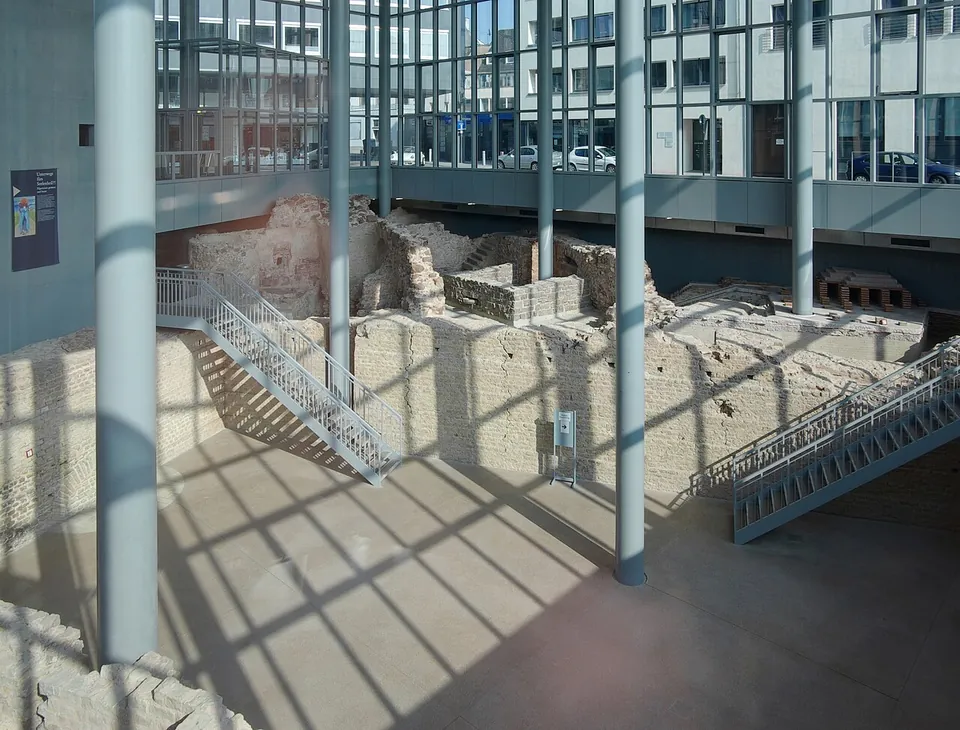
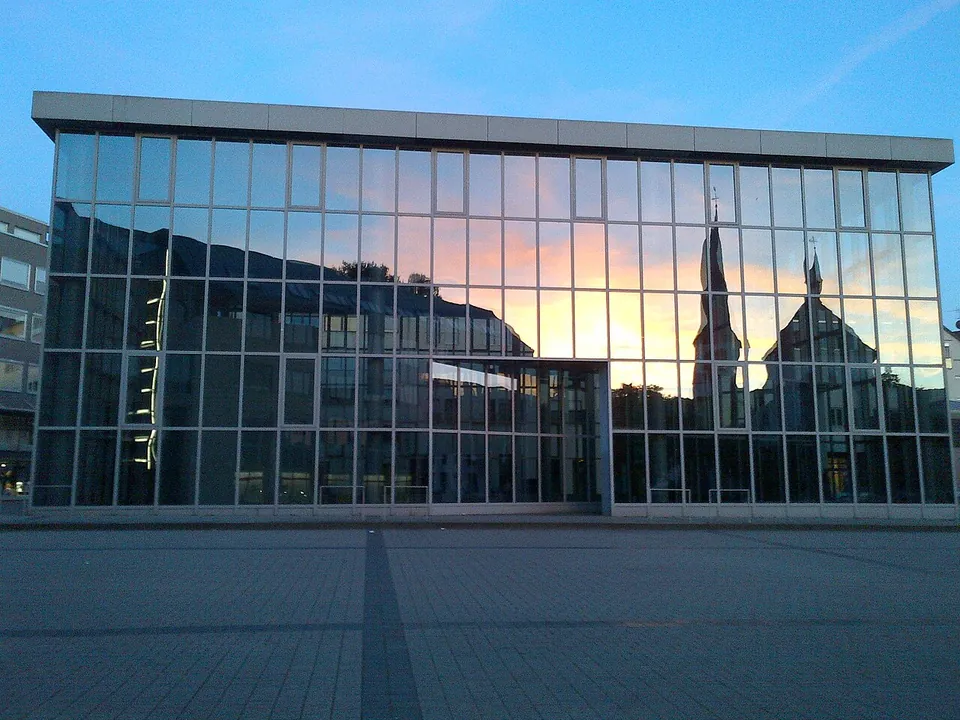
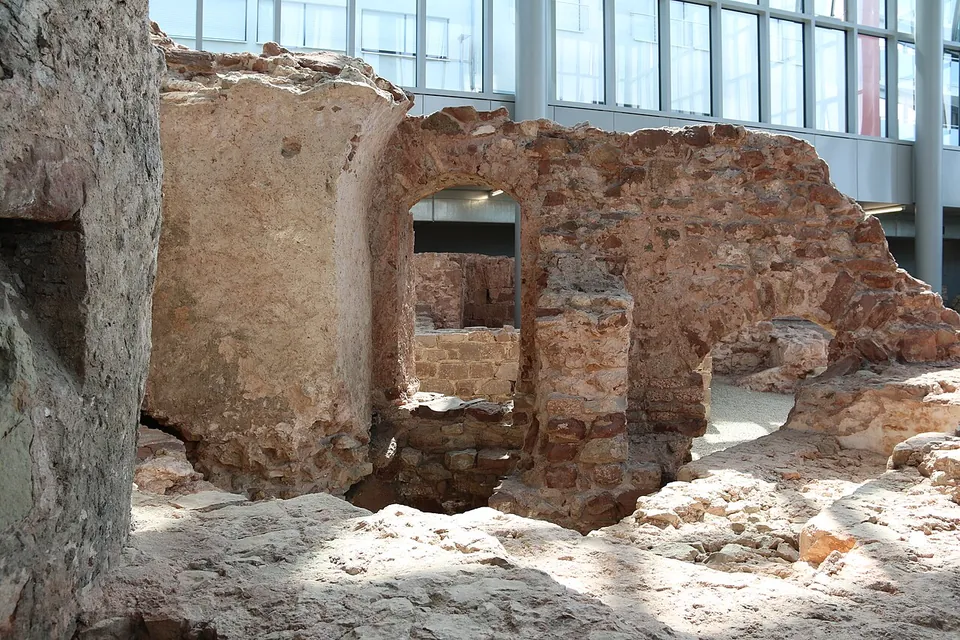
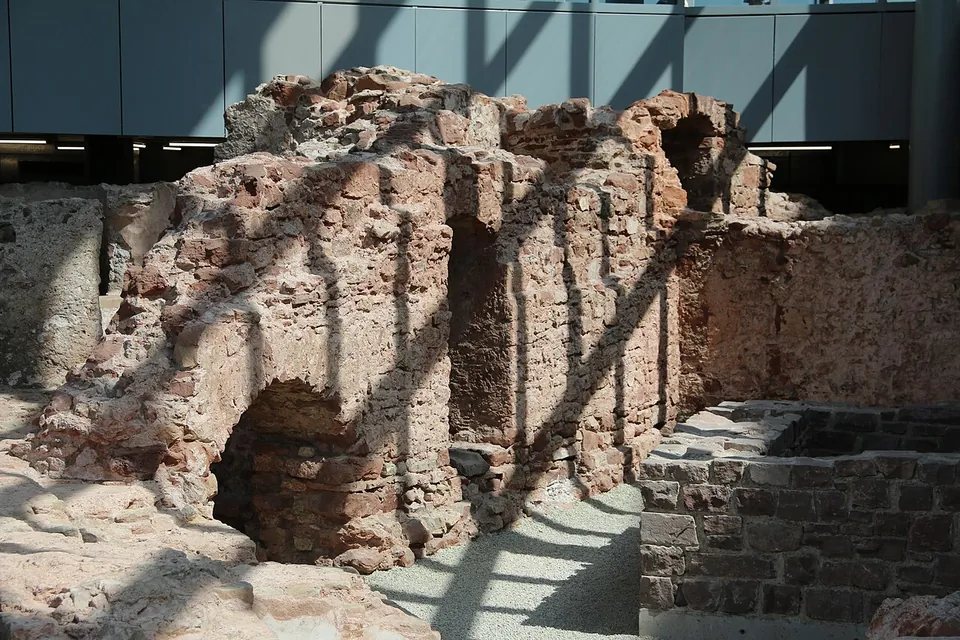
You walk among walls, not over a lawn. The ruins of the baths, together with remains of the Capuchin monastery later built over them, sit inside a protective building with glass walls by the architect Oswald Mathias Ungers, which Trier people often call the “Ungers-Vitrine” (de.wikipedia). Stairs lead down from the hall into the excavation, where walls of stone and brick still stand in places, some with arched doorways (Commons photographs).
The operator presents the hall as a showcase of the town’s whole history rather than of the baths alone: the excavations of 1987 to 1994 exposed foundations of Roman houses from the founding of the town, the large building that followed them, Roman streets and drains, a medieval rubbish pit and the cellars of the baroque Capuchin monastery. The hall is also used for exhibitions. Outside, lines of red granite in the paving of the square trace the Roman streets beneath it (the operator). There is an exhibition area on the first basement level, a circuit through the second, and a lookout on the upper floor (the operator).
Is it worth the trip?
Yes, if you are already seeing Roman Trier. It lies about 420 m from the Aula Palatina and 430 m from the Imperial Baths as mapped (OpenStreetMap), so it fits into the same walk, and the remains are under cover in the hall. It is far smaller than the Barbara Baths, about 0.84 hectares against their 4.2 (de.wikipedia), and the ruin was quarried and built over for centuries, so what you get is a dense, layered excavation rather than one legible bath building. It is not part of Trier’s UNESCO World Heritage listing, because it was found only after the other monuments were inscribed in 1986 (de.wikipedia).
Check the day: unlike the operator’s other Roman monuments it opens only at 11.00 and is closed on Mondays. With an AntikenCard Premium it costs nothing extra; on its own a ticket is €6.
Getting there
The baths are at Viehmarktplatz 2, in the centre of Trier. From the main station, bus lines 3 and 13 run to the stop Karl-Marx-Haus (line 3 towards Feyen, line 13 towards Karl-Marx-Haus), about 250 m on foot from the square. The operator also gives line 3 towards Igel and line 13 to the stop Rathaus/Stadttheater, again about 250 m away. By car, the operator names the Tiefgarage Europahalle (100 m) and the Parkplatz Rathaus (150 m), and OpenStreetMap maps the Tiefgarage Viehmarkt about 40 m away.
The hall is open Tuesday to Sunday and on public holidays, 11.00 to 17.00, and closed on Mondays that are not public holidays, on Rosenmontag, 24 to 26 December, 31 December and 1 January. A ticket is €6 for an adult, €5 reduced and €3 for ages 6 to 17; under-sixes go free, and family tickets cost €6 for one adult and €12 for two, each with up to four children. The AntikenCard covers it too: the Basic card, €18, gives two of the four ticketed Roman monuments plus the Rheinisches Landesmuseum, the Premium, €28, all four plus the museum. The entrance is step-free and a lift goes down to the first basement; the lower level is on a circuit without steps but partly over sloping ramps, and the lookout upstairs is reached by stairs. Dogs are not allowed, except guide and assistance dogs (zentrum-der-antike.de, read 30 October 2026; check before travelling, since prices move).
Visiting details
- Opening hours
- Tuesday to Sunday and public holidays 11.00–17.00. Closed on Mondays (unless a public holiday), Rosenmontag, 24–26 and 31 December and 1 January.
- Tickets
- €6 for adults, €5 reduced (students, trainees, pensioners, the unemployed and the severely disabled, among others, with proof), €3 for ages 6–17, free under 6. Family tickets €6 (one adult with up to four children) and €12 (two adults with up to four children). Included in the AntikenCard Basic (€18, two monuments of your choice plus the Rheinisches Landesmuseum) and Premium (€28, all four ticketed monuments plus the museum).
- Parking
- The operator names the Tiefgarage Europahalle (100 m) and the Parkplatz Rathaus (150 m); OpenStreetMap also maps the Tiefgarage Viehmarkt about 40 m away. The nearest bus stops, Karl-Marx-Haus and Rathaus/Stadttheater, are each about 250 m away on foot.
Before you go
- Dogs are not allowed, except guide and assistance dogs.
- The entrance is step-free and a lift serves the first basement level; the circuit on the lower level has no steps but runs partly over sloping ramps, and the lookout on the upper floor is reached only by stairs.
Hours and prices checked 30 October 2026 on the operator's own site. Confirm before travelling.
History
The sources tell two stories. On the account in de.wikipedia, these were the oldest public baths of Augusta Treverorum: built around AD 80 over earlier houses, filling a whole city block north of the forum, and joined to the forum when it was enlarged under Vespasian. By the middle of the 2nd century they were too small for the growing town, and the Barbara Baths were built. The same article says it is disputed whether the complex was purely a bath, and points out that the heating a bath needs was added only in a second building phase, or, on other accounts, only in the 4th century. The operator describes a large building of the 2nd century, raised on top of the founding-period houses, whose purpose is still unexplained, and which was converted into a public bath in the 4th century (the operator; en.wikipedia gives the same sequence). Either way, the complex covered about 0.84 hectares, and its warm rooms faced south for the sun and the cold bath north (de.wikipedia; en.wikipedia).
Coin and pottery finds make it likely that it stayed in use, with several rebuildings, into the 4th century (de.wikipedia), and it fell out of use in the early 5th, when Trier was sacked again and again (en.wikipedia). From the 13th century the ruin was quarried for stone. In the 17th and 18th centuries the Capuchin order put up buildings over its eastern part and made the rest a monastery garden; after the monastery was dissolved in 1802, the garden became the Viehmarkt, the cattle market, and the ruins were forgotten, to the point that Trier was thought to have had only two Roman baths (de.wikipedia).
In 1987 digging for an underground car park struck the remains, and excavation went on until 1994. The car park was built under a part of the square shifted from the original plans, to save most of the ruins, but it was still criticised because its depth destroyed archaeological layers for good. Ungers’s hall is contested among archaeologists too, for cutting and drilling through the Roman masonry it was built to protect. The ruins have been open to visitors since June 1998, and in the evenings especially the hall is also used for concerts and other events (de.wikipedia).
More photographs

Nearby
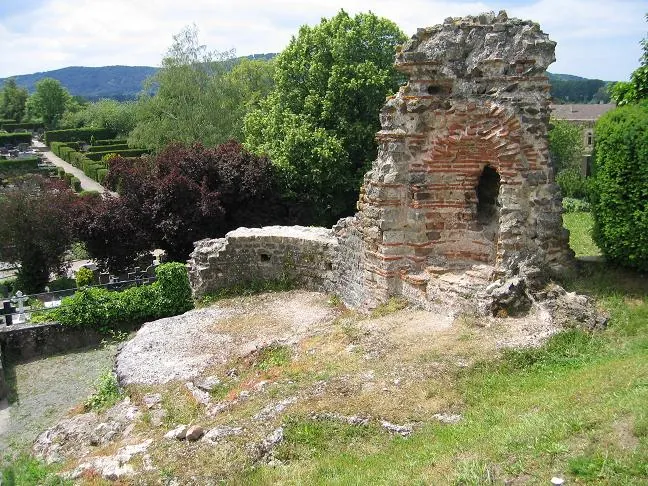
Photo: Johannes Simon · Public domain · Commons
8 km · villa · Rhineland-Palatinate
Kaiservilla Konz
The piece the tourist board points to is part of a cold-water basin, about 4 m high.
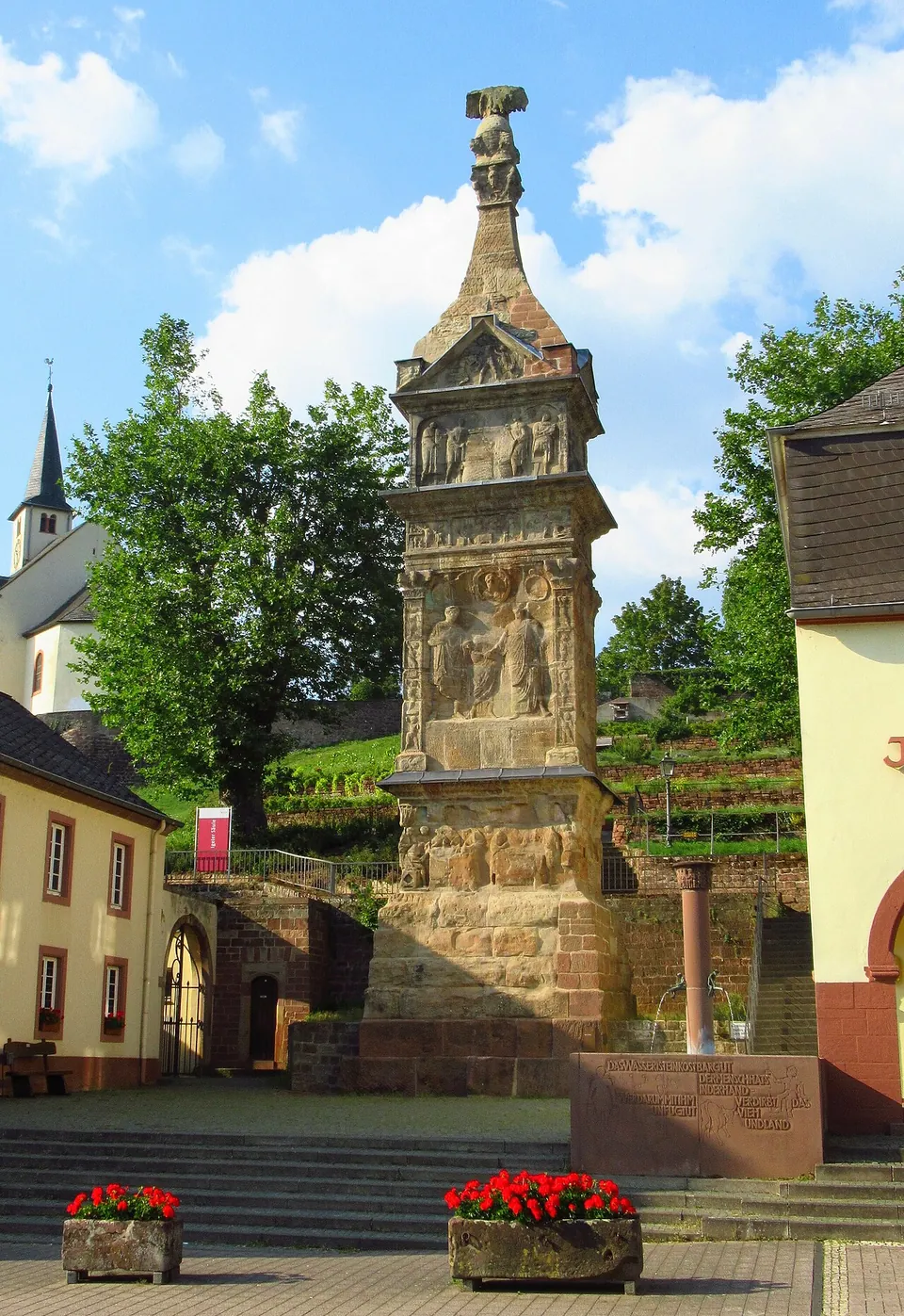
Photo: Dkvtig · CC BY-SA 4.0 · Commons
8 km · tomb · Rhineland-Palatinate
Igel Column
The monument itself, still standing where the Romans built it.
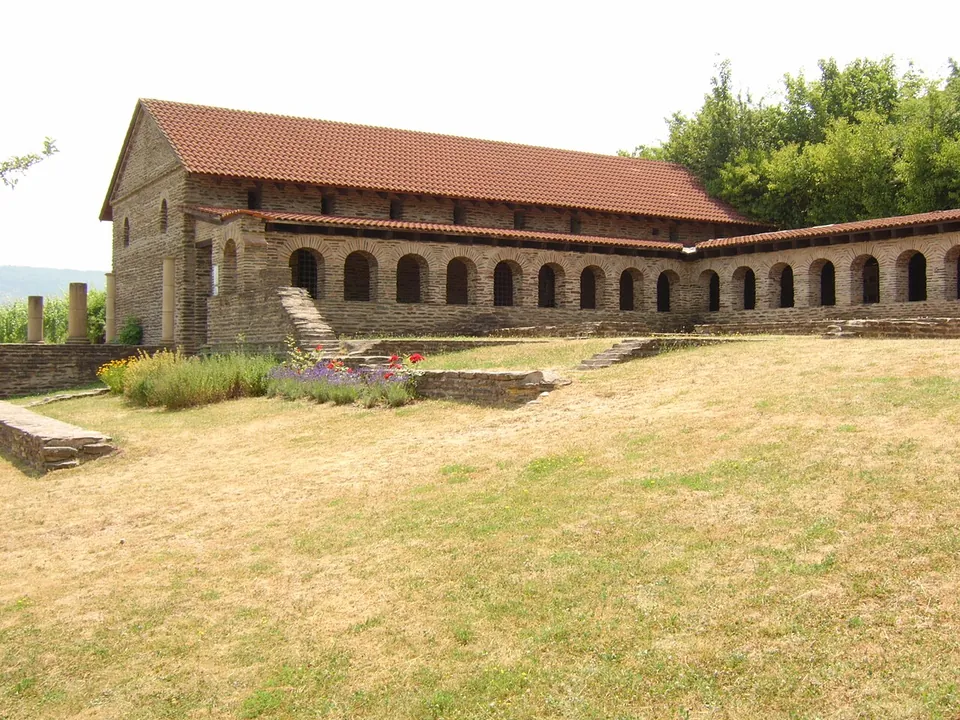
Photo: Areks · CC BY-SA 3.0 · Commons
11 km · villa · Rhineland-Palatinate
Villa urbana of Longuich
What you see first is a long stone building with a tiled roof and an arcade of round arches.


Straight-line distances.
Sources
Every fact on this page comes from the records below, each used under the licence noted.
| Source | Licence |
|---|---|
| Wikidata Q885314 | CC0 |
| OpenStreetMap way/30281083 | ODbL |
| Wikipedia (de) — Thermen am Viehmarkt | CC BY-SA 4.0 |
| Wikipedia (de) — Augusta Treverorum | CC BY-SA 4.0 |
| Wikipedia (en) — Forum Baths, Trier | CC BY-SA 4.0 |
| Zentrum der Antike (GDKE Rheinland-Pfalz, the operator) — Thermen am Viehmarkt, hours, admission and getting there | licence not recorded |
| Zentrum der Antike — AntikenCard | licence not recorded |