

What is there today
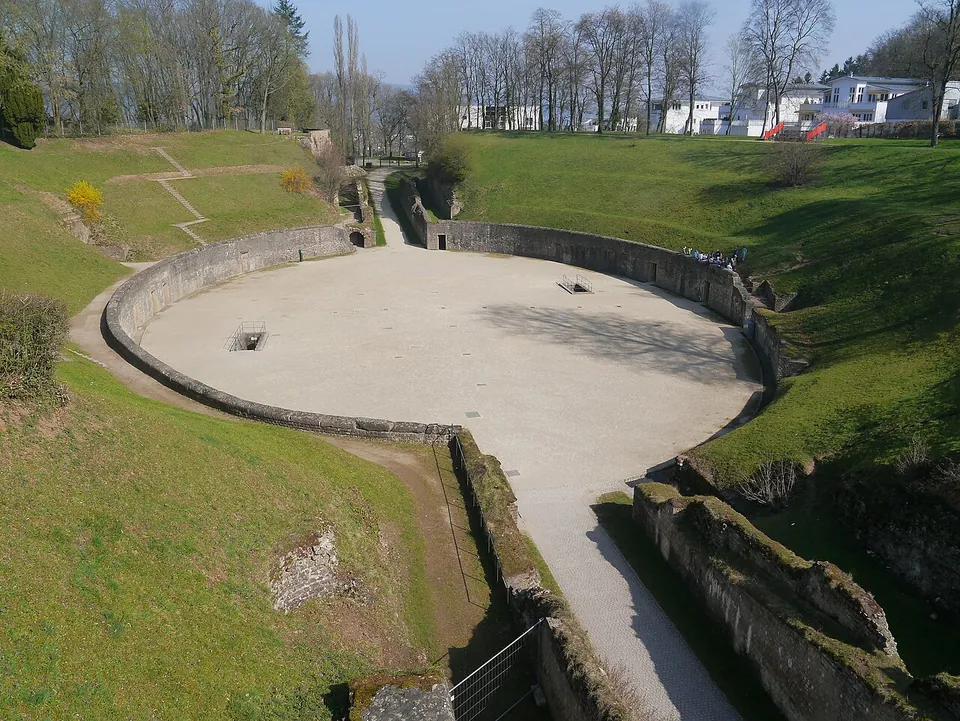
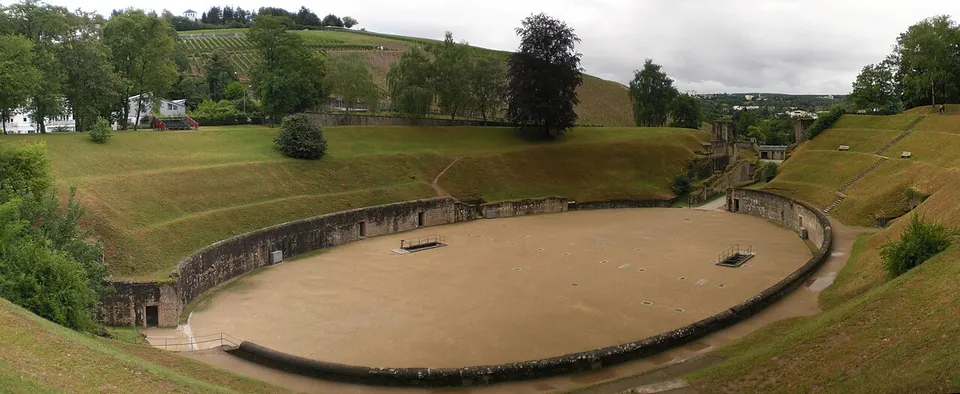
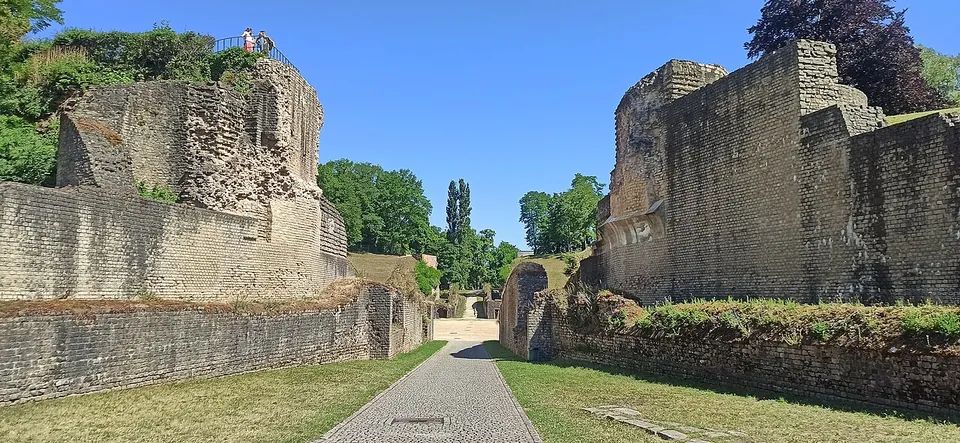
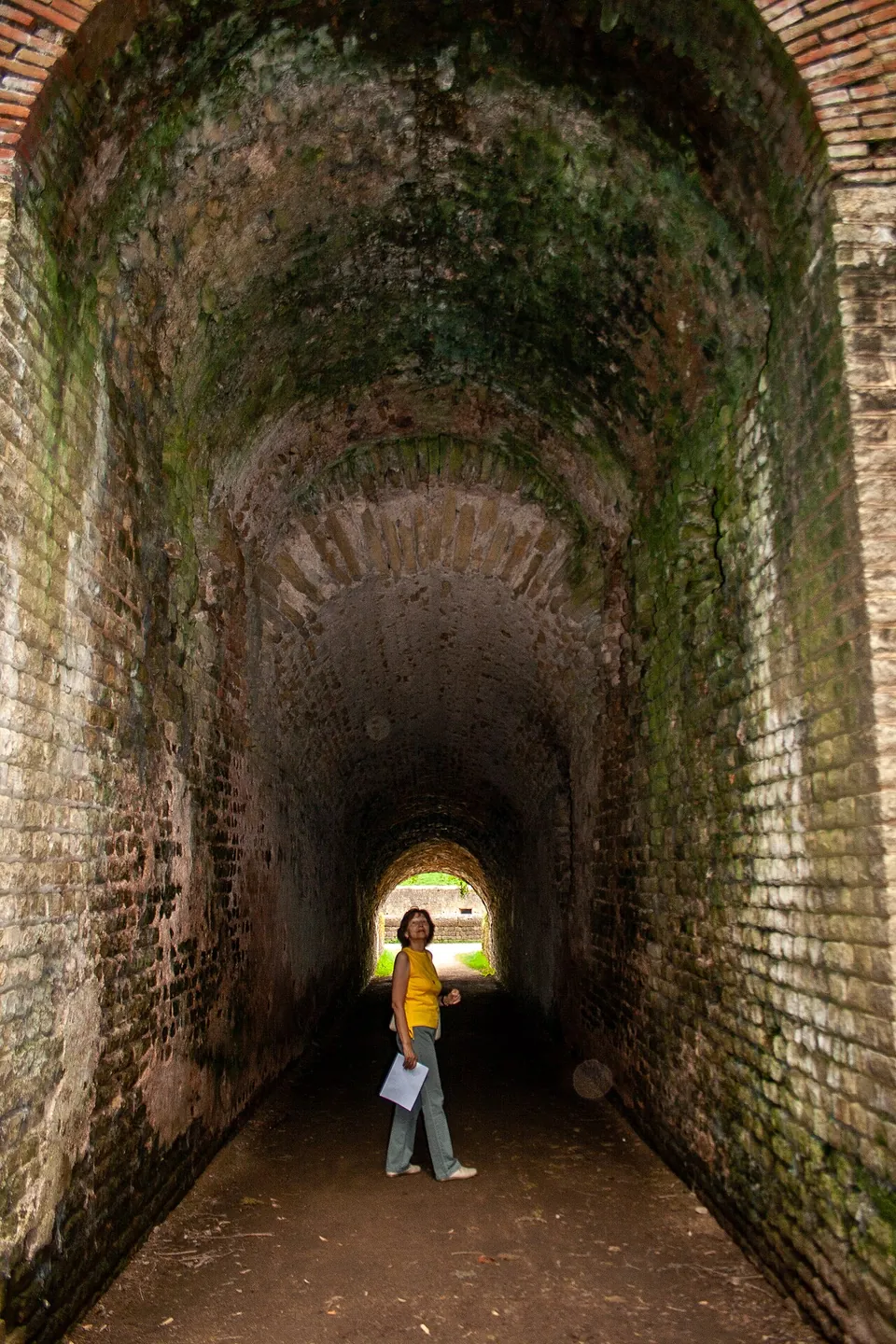
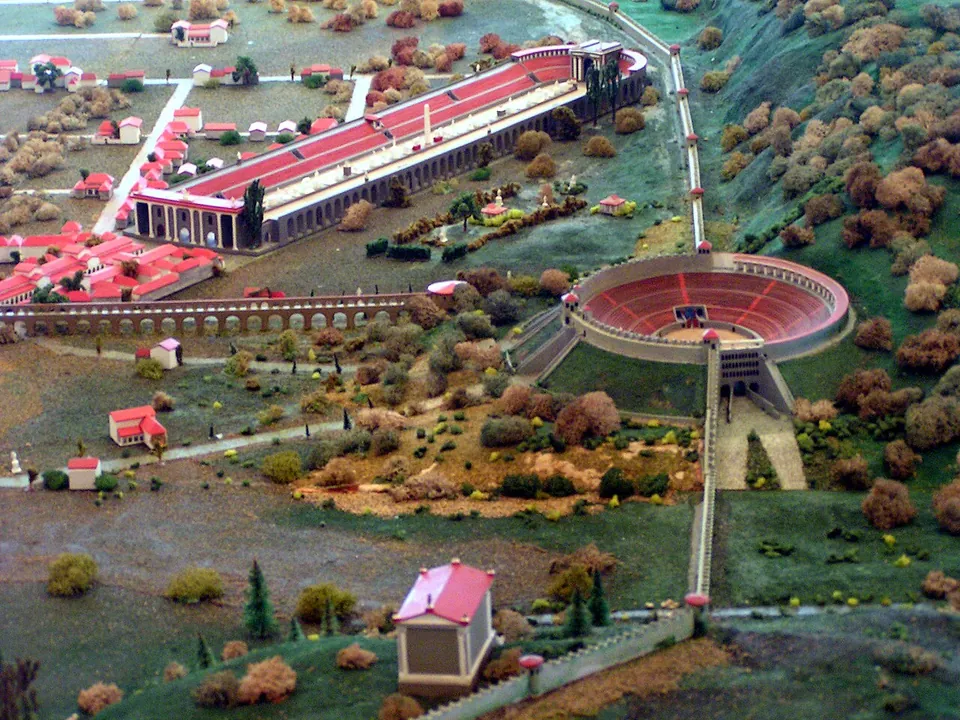
The arena is the centrepiece: an oval about 71 m long and 47.5 to 49 m wide (Pleiades; de.wikipedia), enclosed by what the operator describes as a protective parapet wall four metres high. The seating itself has gone. The tiers, once about 22 m high (the operator), were dug into the hillside on one side and heaped up from the spoil on the other (de.wikipedia), and today they are grassed slopes rising all round the arena. You come in through passages between high walls of Roman masonry; the building is aligned north–south, with an entrance at each end, and some of its underground vaulted passages survive (de.wikipedia).
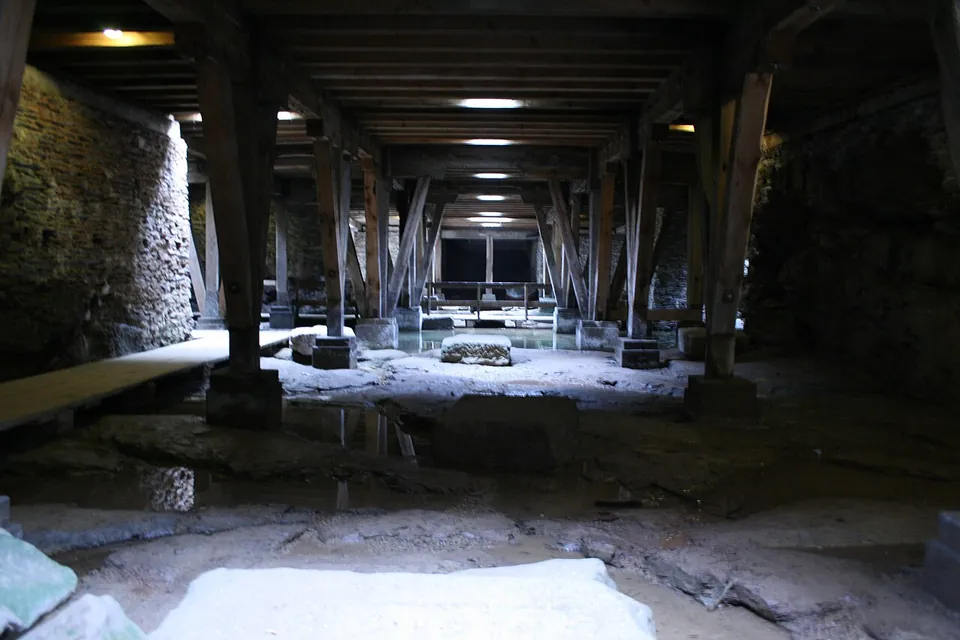
Under the arena is the cellar, which you can go down into. It held the stage machinery, a kind of lift that brought performers and animals up into the arena, and the operator also shows the cages and the spaces at the edge of the arena where people and animals waited for their fight (the operator; de.wikipedia). The amphitheatre has been laid out as a museum, with a small model at the entrance for blind visitors (de.wikipedia). The entrance and the arena floor are step-free; the cellar and the slopes are reached by steps (the operator).
At the moment parts of the building are under scaffolding while the Roman core masonry and the remains of plaster in the entrance passages are secured (the operator).
Is it worth the trip?
Yes, as one of the main stops in Roman Trier. It is the one place in the town where you can stand on an arena floor and then go down into the cellar where its machinery worked, and it is about 550 m from the Imperial Baths (OpenStreetMap), so the two make an easy pair. Families are catered for: a quiz rally is handed out and a bag of gladiator kit to try on is lent at the ticket desk, both at no extra charge (the operator).
Know what you are coming to see. This is an arena in a grassy bowl, not tiers of stone seats: from the Middle Ages the building was used as a quarry (de.wikipedia), and what stands above ground are the arena wall and the masonry of the entrances. If you plan to see several of Trier’s ticketed monuments and the Rheinisches Landesmuseum, look at the AntikenCard below.
Getting there
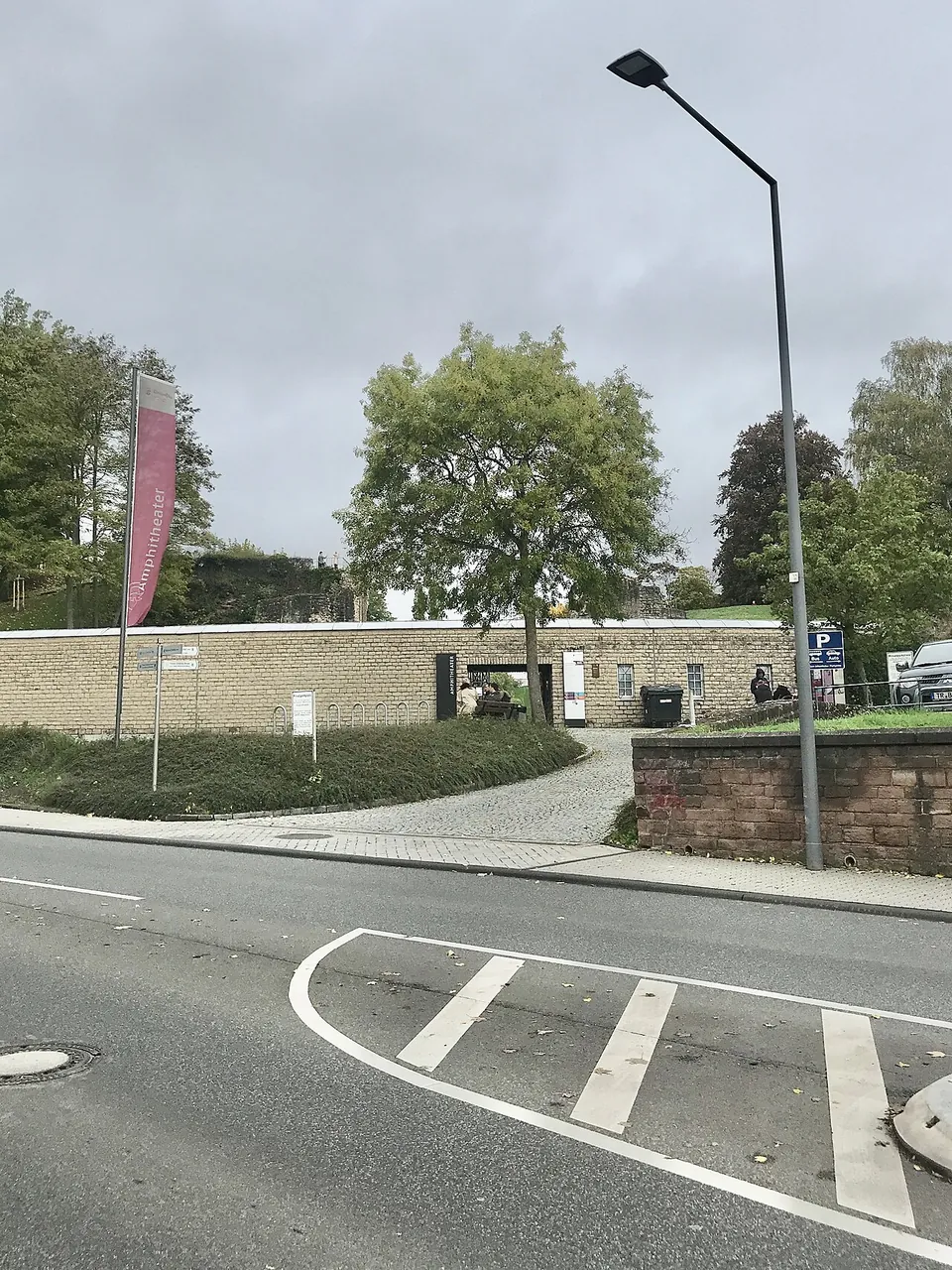
The amphitheatre is at Olewiger Straße 25 (the operator), east of the old town (de.wikipedia). The bus stop “Amphitheater” is served by lines 6, 7 and 16; from the main station, line 30 towards Ruwerstr./Pluwig stops at Charlottenstraße, about 400 m on foot. There is a limited number of parking spaces directly in front of the entrance (the operator).
It is open every day: 09.00 to 18.00 from April to September, 09.00 to 17.00 in March and October, and 09.00 to 16.00 from November to February, with last entry half an hour before closing. It is closed on Rosenmontag, 24 to 26 December, 31 December and 1 January. A ticket is €6 for an adult, €5 reduced and €3 for ages 6 to 17; under-sixes go free, and a family ticket is €6 for one adult or €12 for two, each with up to four children aged 6 or over. The AntikenCard Basic, €18, covers two of Trier’s four ticketed Roman monuments plus the Rheinisches Landesmuseum; the Premium card, €28, covers all four plus the museum. The operator warns that its Roman monuments can close at short notice in bad weather (zentrum-der-antike.de, read 30 October 2026; check before travelling, since prices move).
In summer an actor playing the gladiator Valerius leads tours through the cellars and channels under the arena (the operator; de.wikipedia), and the arena is occasionally used for concerts and other events (de.wikipedia).
Visiting details
- Opening hours
- Daily 09.00–16.00 in January, February, November and December, 09.00–17.00 in March and October, 09.00–18.00 from April to September; last entry 30 minutes before closing. Closed on Rosenmontag, 24–26 December, 31 December and 1 January.
- Tickets
- €6 adults, €5 reduced (pupils over 18, students, trainees, volunteers in a voluntary social year, pensioners, the unemployed and the severely disabled, with proof), €3 ages 6–17, free under 6. Family ticket €6 for one adult with up to four children aged 6 or over, €12 for two adults. Also covered by the AntikenCard: Basic €18 (two of Trier's four ticketed Roman monuments plus the Rheinisches Landesmuseum), Premium €28 (all four plus the museum).
- Parking
- A limited number of parking spaces directly in front of the amphitheatre (the operator); OpenStreetMap maps the visitors' car park about 140 m from the arena, tagged as charging a fee.
Before you go
- Parts of the amphitheatre are under scaffolding while the Roman masonry and the remains of plaster in the entrance passages are conserved.
- The cellar and the slopes of the seating are reached only by steps; the entrance and the arena floor are step-free.
- The operator warns that its Roman monuments can close at short notice in bad weather.
Hours and prices checked 30 October 2026 on the operator's own site. Confirm before travelling.
History
When the amphitheatre was built is not settled: published dates run from around AD 100 to the end of the 2nd century. de.wikipedia’s article on Roman Trier gives around 100, perhaps replacing a smaller timber predecessor; Pleiades and en.wikipedia date it to the reign of Antoninus Pius; de.wikipedia’s article on the amphitheatre says the second half of the 2nd century; and the operator says the end of the 2nd century, noting that recent investigations at the building have produced new evidence for its date. Constantius Chlorus, who made Trier his residence in the 290s, had it renovated (Pleiades; en.wikipedia).
It was more than a place for games. When the city wall was built, the amphitheatre was made part of it and served as the eastern way into the city (de.wikipedia); the operator thinks it was probably built into the wall as a gate from the start. Local dignitaries, imperial officials and, in late antiquity, some emperors in person put on shows here: wild-animal hunts and gladiator fights to the death; executions were carried out and important announcements made here (de.wikipedia). It was also used for assemblies and religious festivals (the operator). Bloody games are still recorded here in Constantine’s time. The finds are in the Rheinisches Landesmuseum: stone monuments, a group of curse tablets left here in antiquity, and other material dating mostly from the 4th century (de.wikipedia). In the cellar, remains of wood and 1,200 coins dating from the late 3rd century onwards have been found, which suggests the cellar and the other underground galleries were added after the amphitheatre was first built (en.wikipedia).
In the early 5th century, after the court and the administration had left, the remaining population barricaded itself inside the amphitheatre ahead of the Vandal attack that followed the Rhine crossing of 406 (de.wikipedia). The arena stayed in use until the end of the Western Roman Empire. In the Middle Ages it was quarried for stone; at the beginning of the 13th century monks used it as a store and a quarry, and the arena gradually silted up; later the slopes of the seating were planted with vines (de.wikipedia; the operator). Until the 19th century the people of Trier called it the “Kaskeller”, a name also marked on town plans, probably because its underground rooms served as storage cellars (de.wikipedia).
Excavation began in the 19th century, and the cellar under the arena was cleared around 1908 (the operator). A small burial ground with 46 graves was found on the eastern bank in 1996 (en.wikipedia). Since 1986 the amphitheatre has been part of the UNESCO World Heritage Site of Trier’s Roman monuments, cathedral and Church of Our Lady (de.wikipedia).
More photographs




Nearby
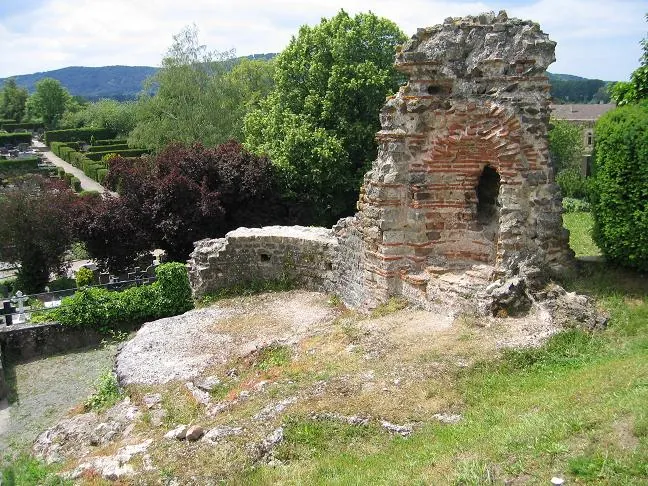
Photo: Johannes Simon · Public domain · Commons
8 km · villa · Rhineland-Palatinate
Kaiservilla Konz
The piece the tourist board points to is part of a cold-water basin, about 4 m high.
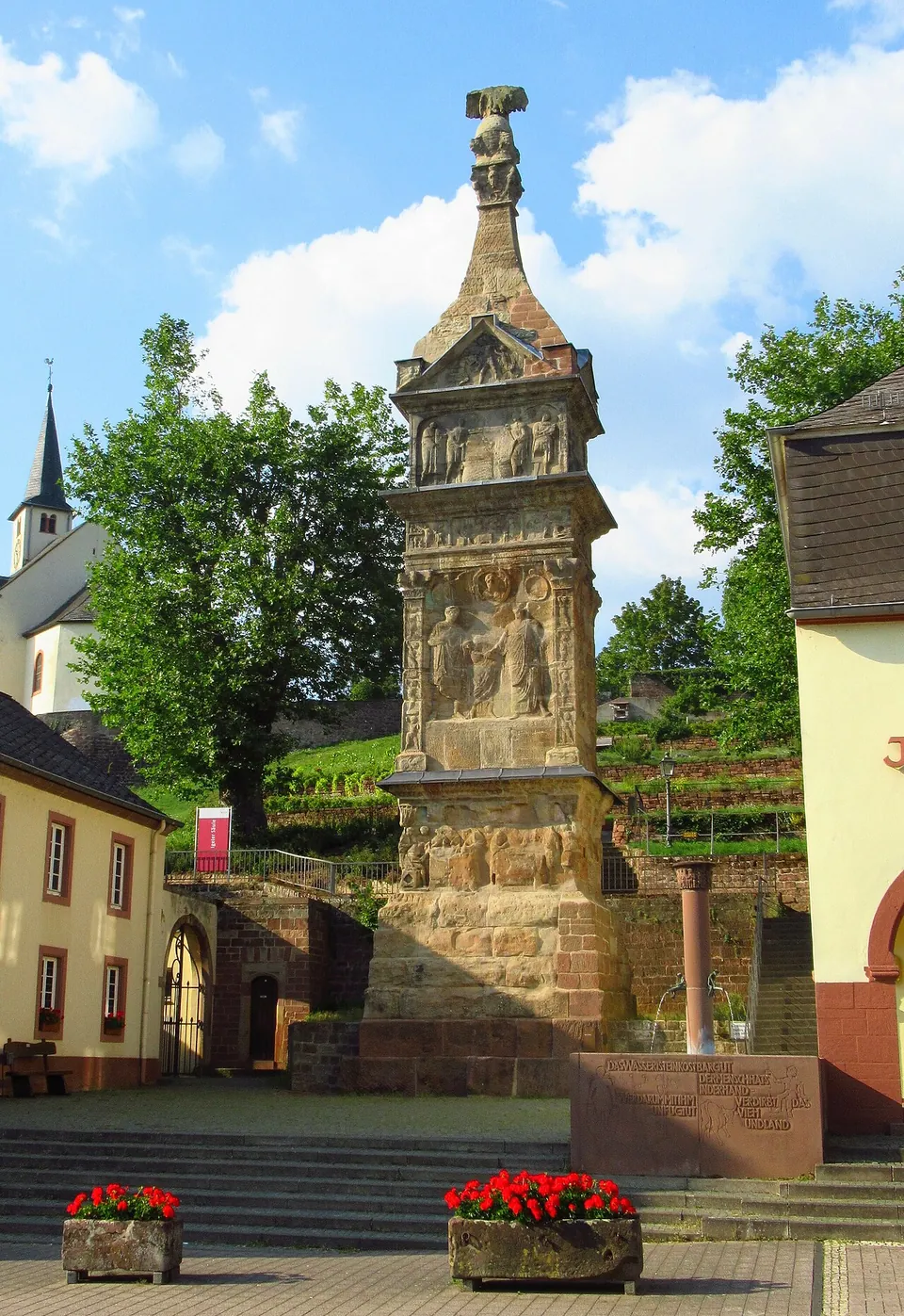
Photo: Dkvtig · CC BY-SA 4.0 · Commons
8 km · tomb · Rhineland-Palatinate
Igel Column
The monument itself, still standing where the Romans built it.
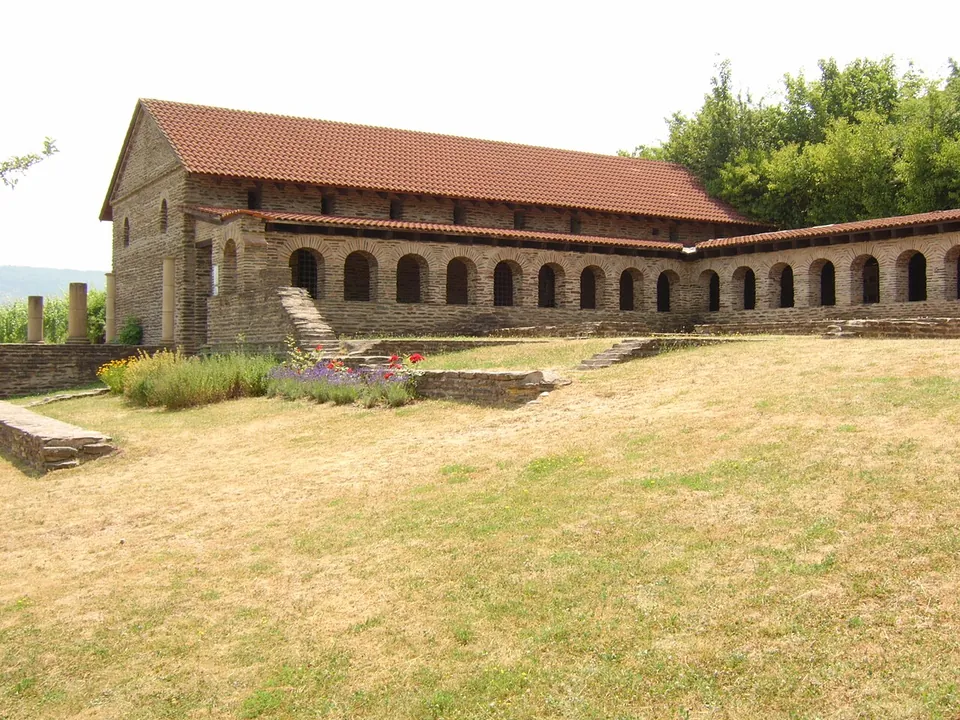
Photo: Areks · CC BY-SA 3.0 · Commons
10 km · villa · Rhineland-Palatinate
Villa urbana of Longuich
What you see first is a long stone building with a tiled roof and an arcade of round arches.


Straight-line distances.
Sources
Every fact on this page comes from the records below, each used under the licence noted.
| Source | Licence |
|---|---|
| Pleiades 588236457 | CC BY |
| Wikidata Q474982 | CC0 |
| Vici.org 80 | CC BY-SA (text), CC0 (metadata) |
| OpenStreetMap relation/4614126 | ODbL |
| Wikipedia (de) — Amphitheater (Trier) | CC BY-SA 4.0 |
| Wikipedia (en) — Trier Amphitheater | CC BY-SA 4.0 |
| Wikipedia (de) — Augusta Treverorum (section "Amphitheater") | CC BY-SA 4.0 |
| Zentrum der Antike (GDKE Rheinland-Pfalz, the operator) — Amphitheater, hours, admission and getting there | licence not recorded |
| Zentrum der Antike — AntikenCard | licence not recorded |