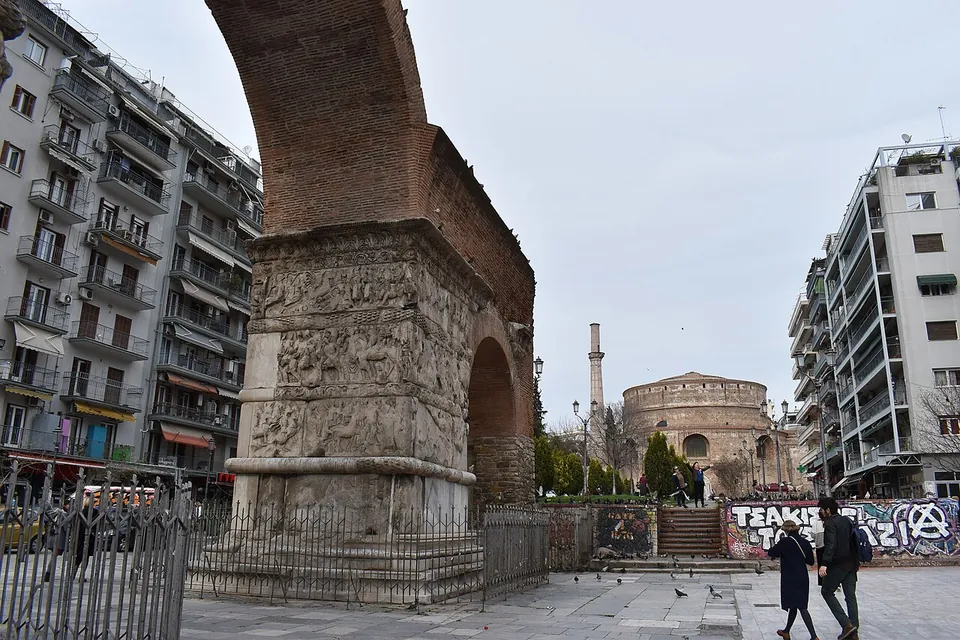
Thessaloniki is Thessalonica, the capital of the Roman province of Macedonia and, at the end of the
3rd century, the seat of the emperor Galerius. His palace, his triumphal arch and his Rotunda stand
in the modern city centre, with the Roman forum and early Christian churches a short walk away.
What is there today
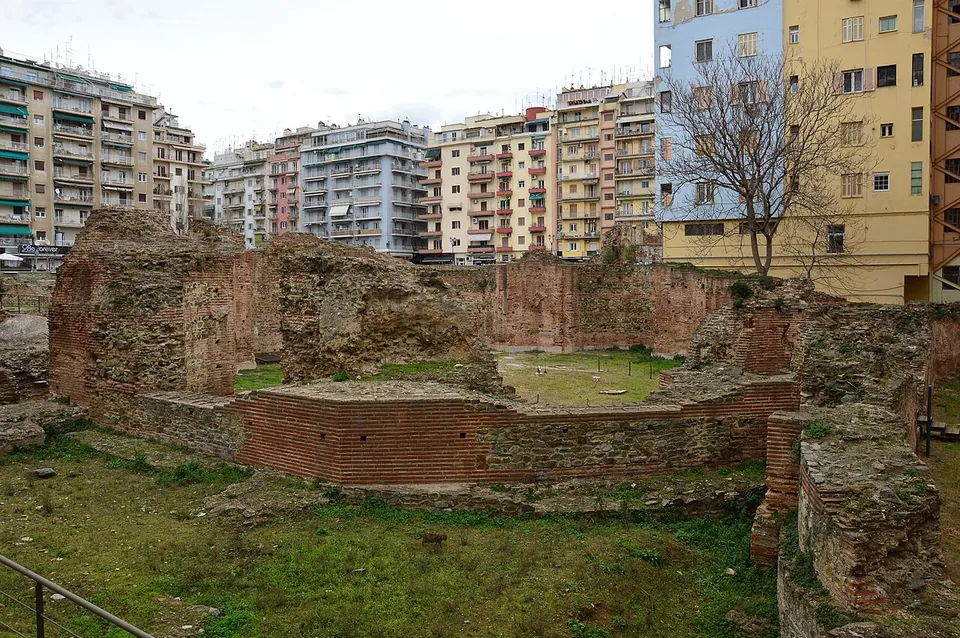
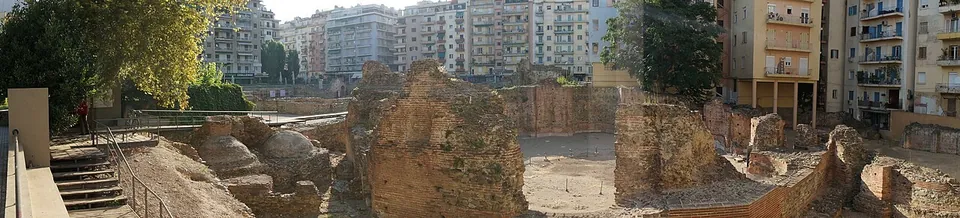
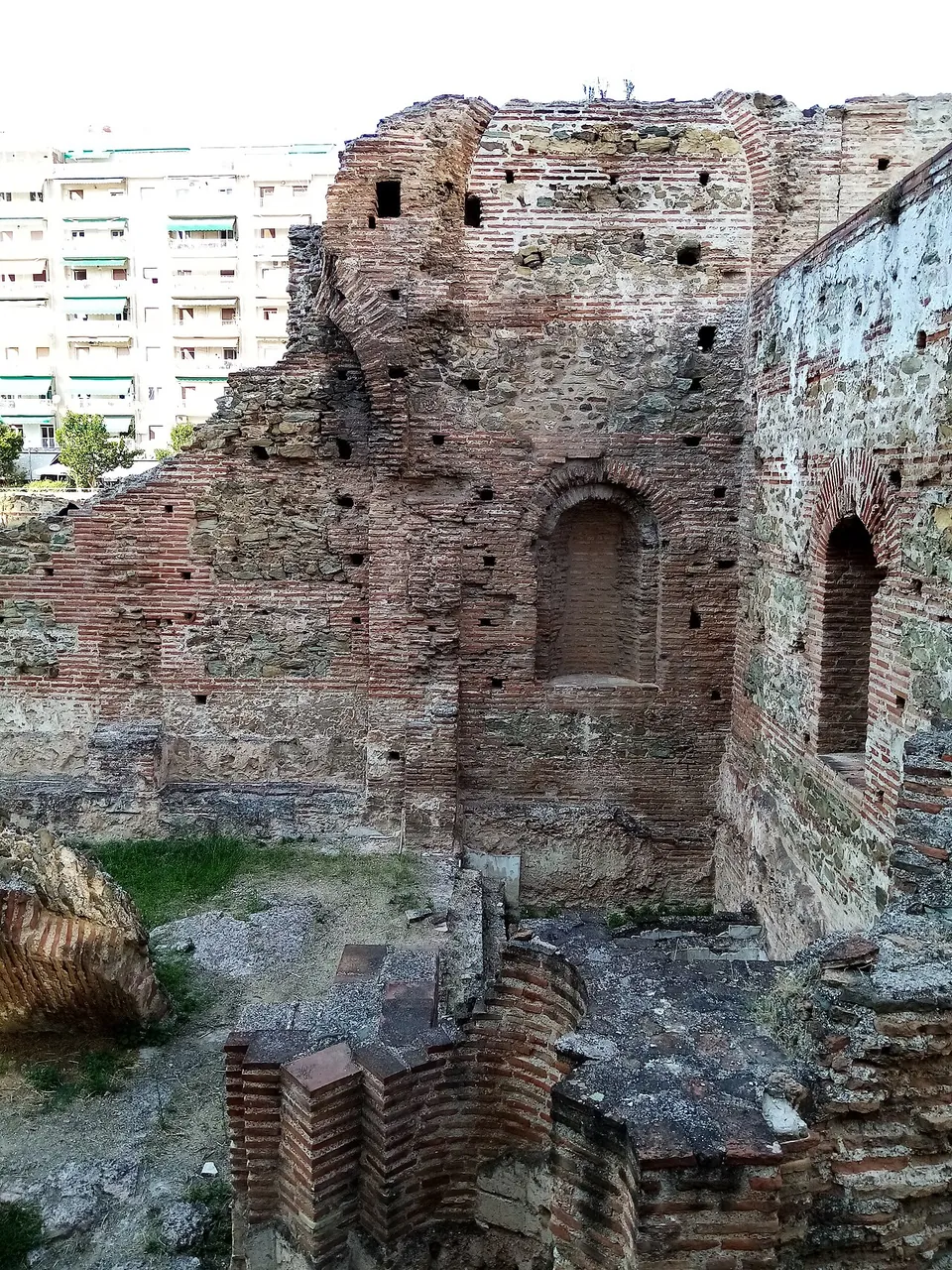
Galerius’s palace was the core of a monumental complex begun on his orders in 298–299, when he was
Caesar of the East under Diocletian (de.wikipedia). The complex covered more than 15 hectares and took
in the Rotunda, the triumphal arch, the palace itself, an octagonal hall and a hippodrome (the
operator). The palace is open to visitors in Navarinou Square, and its restoration has won awards
from the European Union and Europa Nostra (the operator).
The stops each have their own page:
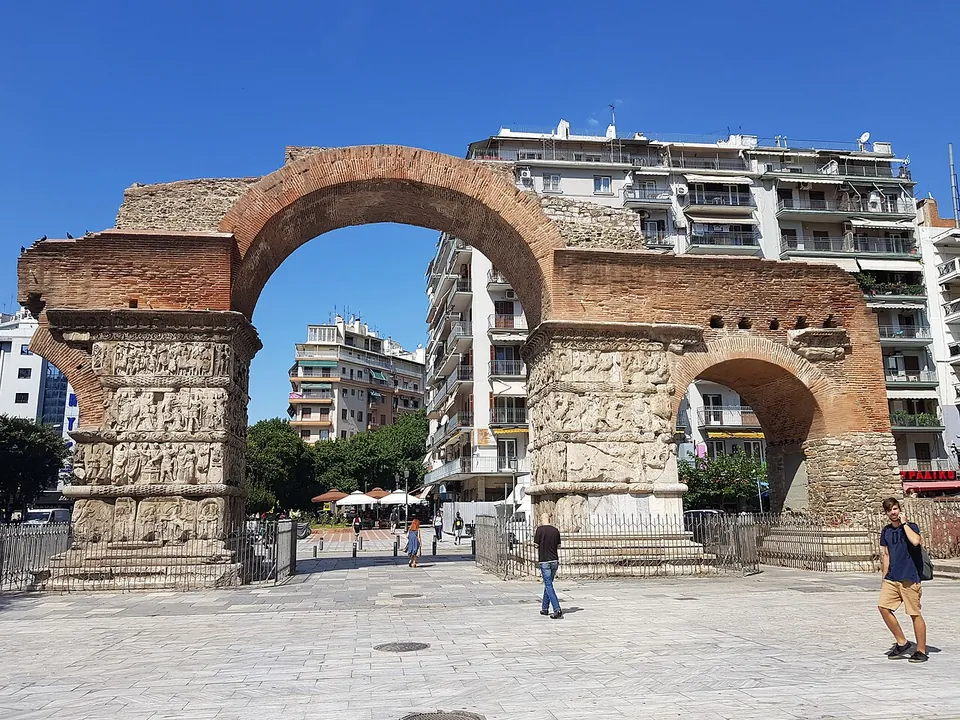
- The Arch of Galerius, built in 298–299 and dedicated in 303, commemorates the capture of
Ctesiphon from the Sassanids and formed part of a monumental entrance to the palace (Pleiades).
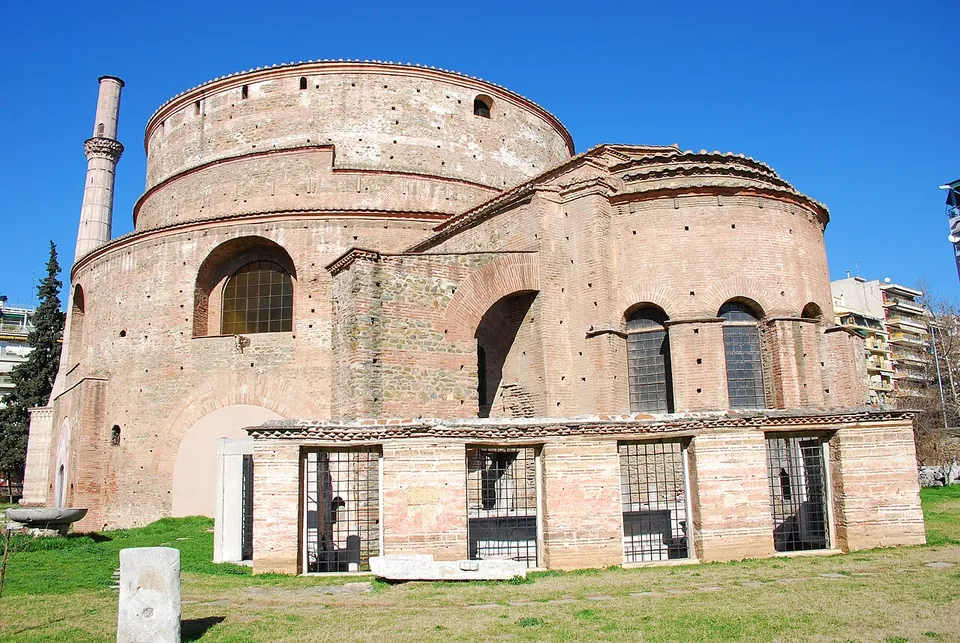
- The Rotunda, a brick rotunda of the early 4th century that Galerius ordered as a tomb or a
temple, later became the church of Agios Georgios (Pleiades). The Arch and the Rotunda have been
on UNESCO’s World Heritage List since 1988 (en.wikipedia).
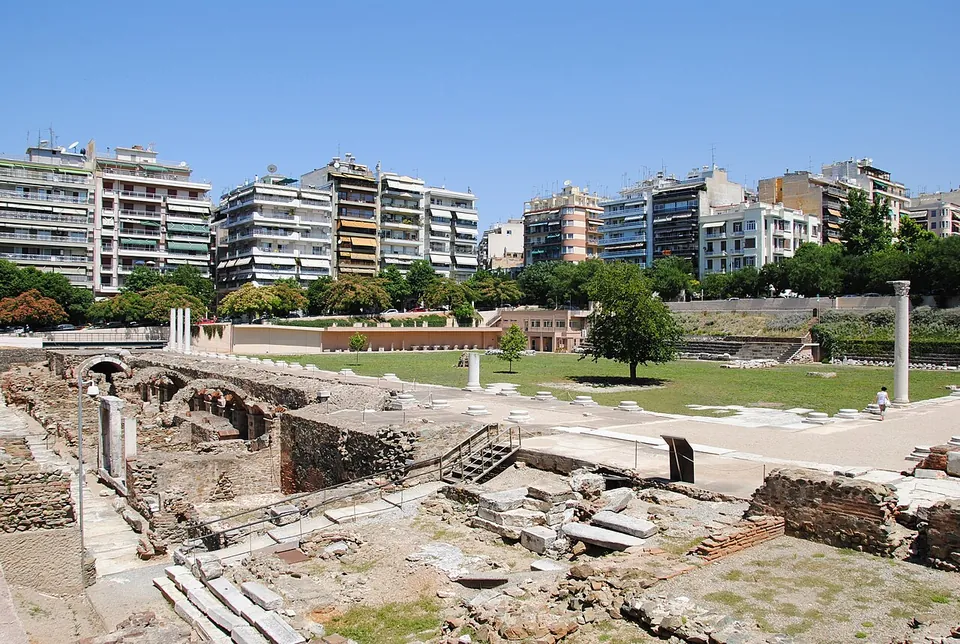
- The Roman forum, at the top of Aristotelous Square, is a large two-terraced square with
two-storey colonnades, found by chance in the 1960s; it has an excavated bath house and a small
theatre also used for gladiatorial games, was largely rebuilt in the 2nd century and stayed in use until at least the
6th (en.wikipedia).
- The Church of the Acheiropoietos is a 5th-century church in the city centre (en.wikipedia).
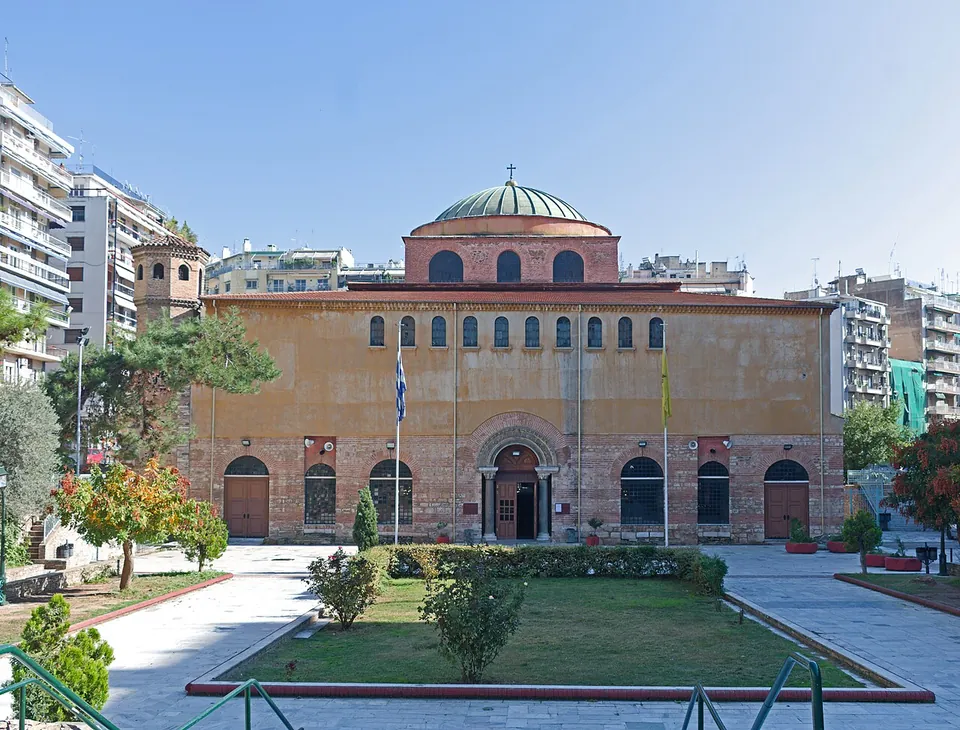
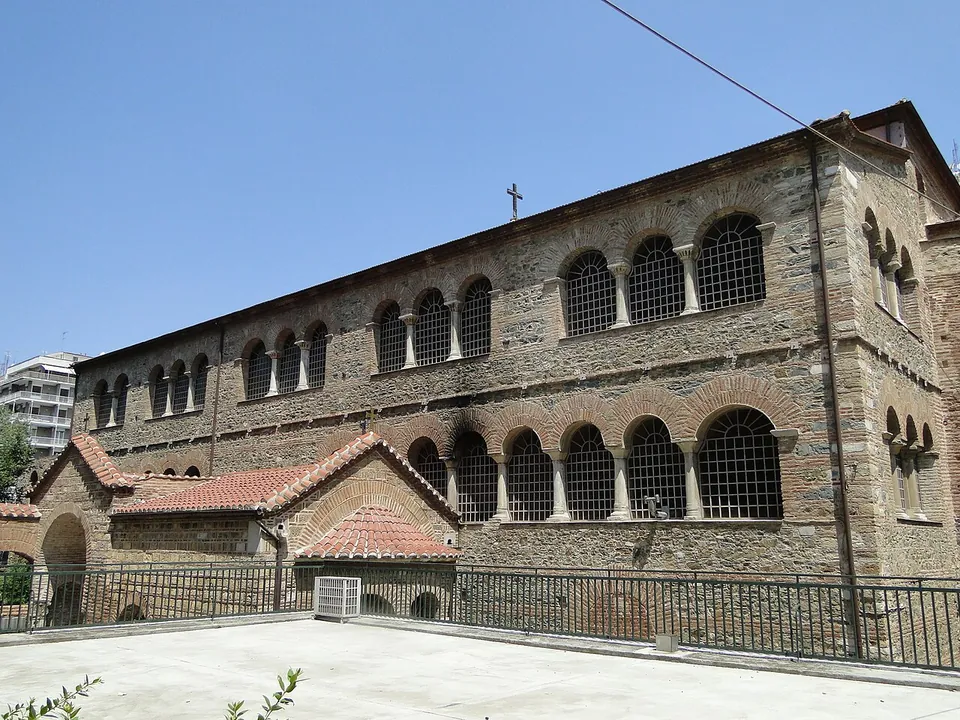
- Hagia Sophia, whose present building dates from the 7th century, is one of the oldest churches
still standing in the city (en.wikipedia); it sits at the late edge of the period this atlas covers.
Is it worth the trip?
Yes. The Arch and the Rotunda are on UNESCO’s list as outstanding examples of early Byzantine art and
architecture (en.wikipedia), and they are in the middle of a living city: the Arch stands in a pedestrian street, and the Rotunda is at the end of it. The palace
ticket is €5, the Rotunda’s €10 and the forum’s €10, the last including its museum (the operator).
Several sites close on Tuesdays, so plan around that.
Getting there
Thessaloniki is the second-largest city in Greece (en.wikipedia). The palace is in Navarinou Square,
15 minutes on foot from Aristotelous Square; metro line 1 stops at Sintrivani, and city buses at
“Kamara” (the operator). The Rotunda is 18 minutes on foot from Aristotelous Square and the forum 8
(the operator).
The palace opens daily except Tuesday. From 1 April to 31 August it is open 08.00–20.00, closing
earlier through September and October (18.00 by the second half of October), and from 1 November to
31 March 08.30–15.30. Last entry is 20 minutes before closing; it is shut on 1 January, 25 March,
1 May, Easter Sunday and 25–26 December. A ticket is €5, reduced €3, and entry is free on 6 March,
18 April, 18 May, the last weekend of September, 28 October, and on the first and third Sunday of
each month from November to March (hh.gr, read 9 October 2026 — check before travelling).
History
Cassander of Macedon founded the city in 315 BC and named it after his wife Thessalonike, a sister of
Alexander the Great (en.wikipedia). Rome conquered Macedonia in 168 BC and made it a province in 146
BC; the Via Egnatia crossed the province from west to east, reaching the Aegean at Thessalonica, and
under the empire Thessalonica was one of the province’s thriving cities (en.wikipedia, Macedonia;
Via Egnatia).
Galerius chose the city as his seat in 299 and set out to make it the administrative capital of his
part of the empire (the operator); it.wikipedia calls it his second capital of Illyricum, alongside
Sirmium. In late antiquity Thessalonica became the regional centre of the Balkans and was briefly an
imperial capital under Licinius (en.wikipedia, Macedonia). It went on to be the second-largest and
wealthiest city of the Byzantine Empire (en.wikipedia). The palace was probably destroyed by an
earthquake in the 8th century (el.wikipedia).