

What is there today
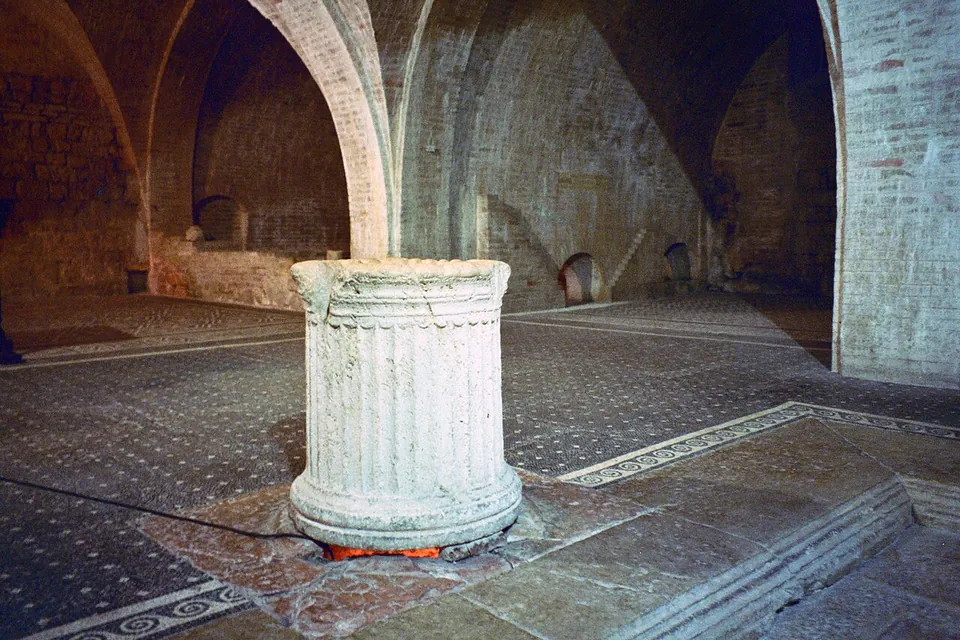
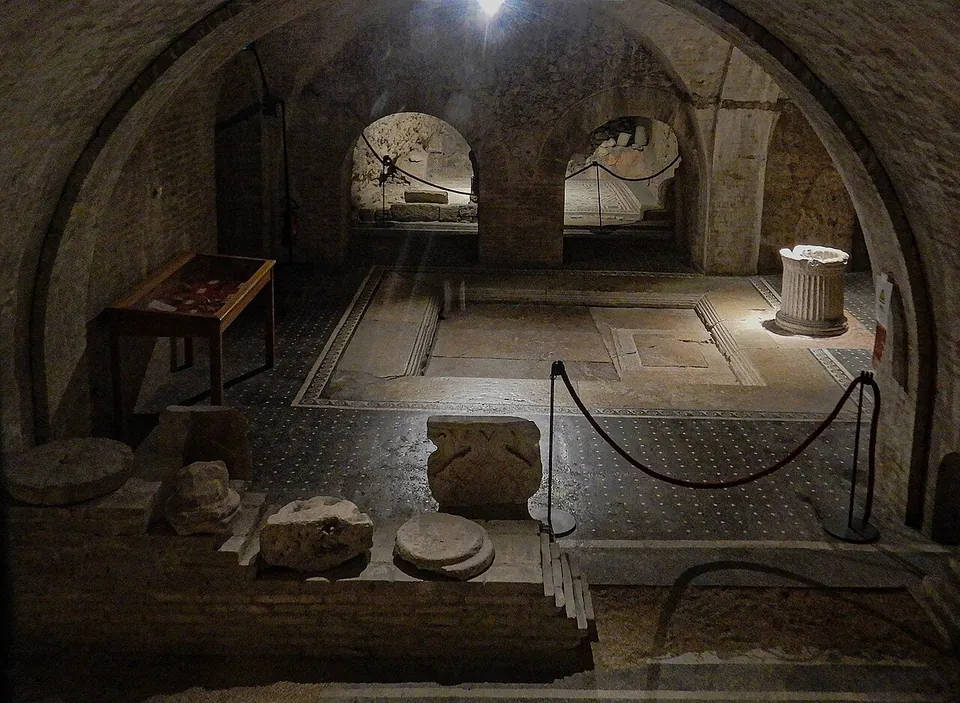
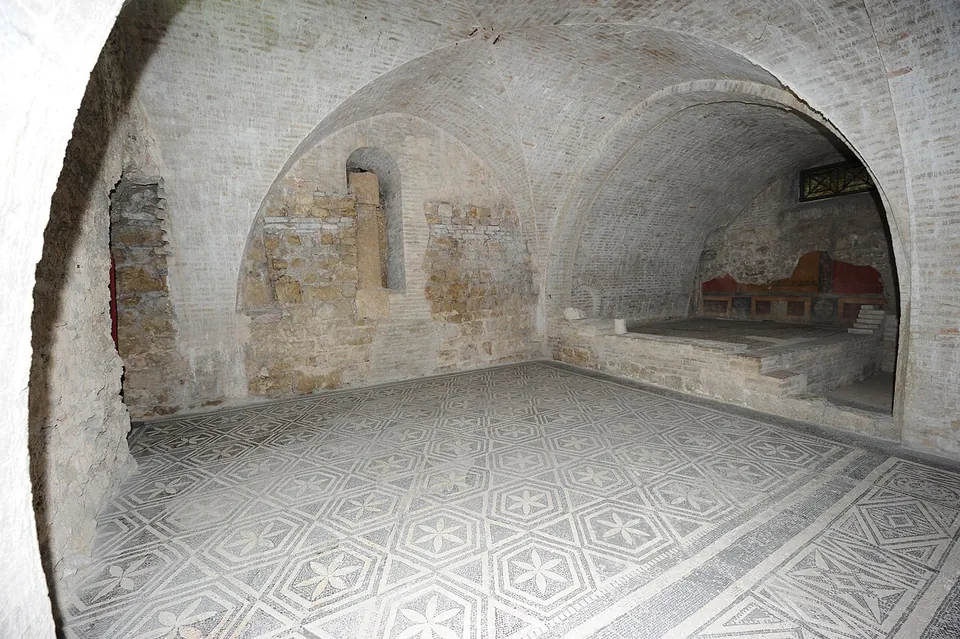
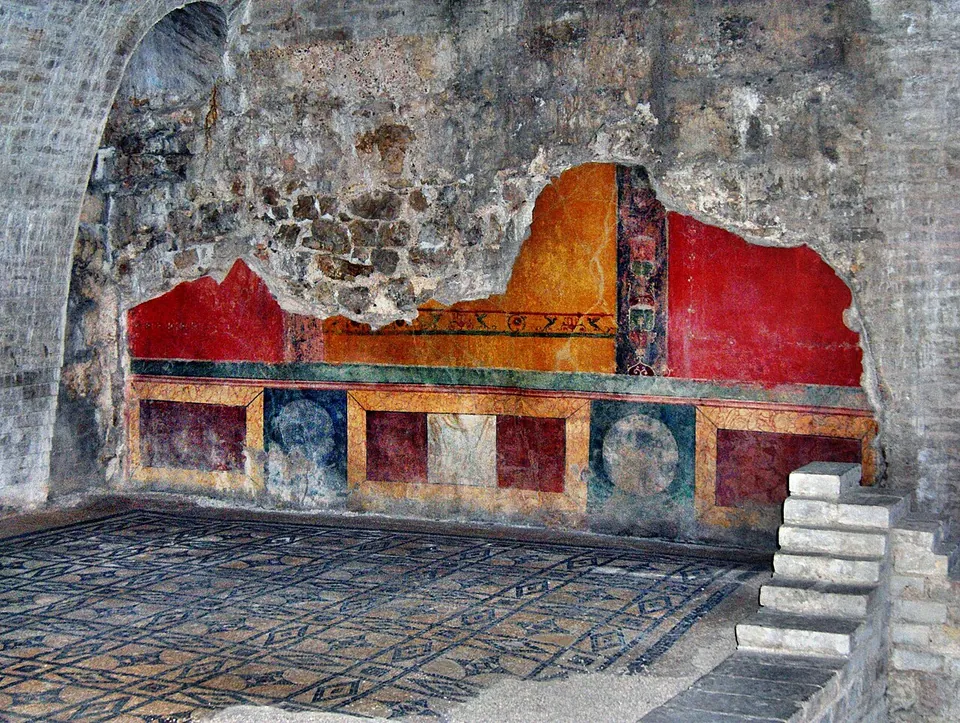
The house lies partly under Piazza del Municipio and partly under the Palazzo comunale, in the space of its foundations. Some rooms and the original entrance were destroyed, so you come straight into the atrium, the central hall, with the square basin of its impluvium that once caught rainwater from an opening in the roof, a cistern beneath it, and a well (it.wikipedia; en.wikipedia). Around it lie the bedrooms (cubicula) and two side rooms (alae), secondary rooms that nonetheless have remarkable mosaics (Comune di Spoleto). On the main axis is the tablinum, the reception room where the owner received his clients; to its right, on a raised floor, the triclinium, the dining room, still keeps fragments of its painted walls (it.wikipedia; Comune di Spoleto). Of the peristyle, the colonnaded garden, only a few pieces of columns remain, and the most important finds are displayed in cases inside the house (it.wikipedia).
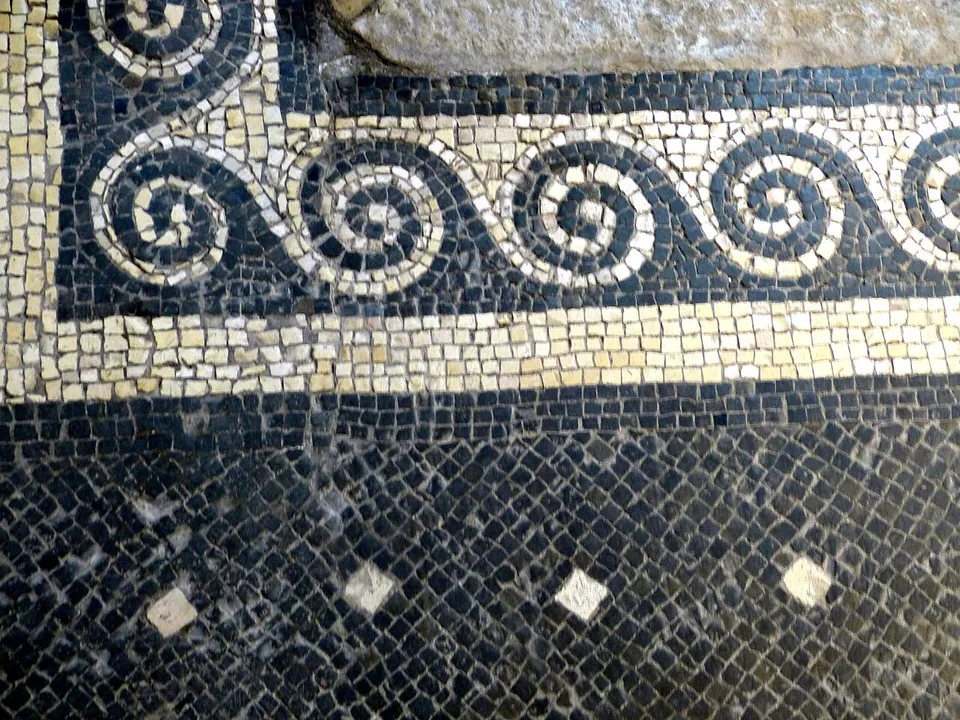
The house was decorated throughout, with mosaics on floors and thresholds, painted walls, stucco ceilings and coloured terracotta on the roof; of all this, the floors and fragments of the wall painting are what remain to be seen. After about ten years of restoration that ended in 2002, all the mosaic floors were described in 2014 as in excellent condition (it.wikipedia).
Is it worth the trip?
If you are in Spoleto, yes. It is a small site, a single house seen in the vaulted cellars of a later building rather than a ruin field open to the sky, and the house was small for someone of high rank, so it may once have had an upper floor (it.wikipedia). But it gives a clear picture of how a Roman town house was laid out, from atrium to dining room, with its floors still in place. It sits about 150 m from the Arch of Drusus and Germanicus and about 280 m from the Roman theatre, and the Spoleto Card covers both the house and the theatre with its museum, so it fits easily into a walk round the Roman upper town. On its own it is not a reason to travel to Spoleto.
The name needs a caveat. The link to Vespasia Polla, mother of the emperor Vespasian, rests on a fragment of an inscription to Caligula dedicated by someone named Polla, found in the house’s well; it is a hypothesis, not an established fact (it.wikipedia; Comune di Spoleto).
Getting there
The entrance is at via Visiale 9, between via del Municipio and via Saffi (Comune di Spoleto). The moving walkway that climbs to Piazza del Mercato, the site of the Roman forum, comes out about 40 m away, and a bus stop is mapped about 130 m away. Spoleto station is about 1.5 km away. Drivers can use a paid car park about 320 m away, or the larger Parcheggio Posterna about 440 m away at the foot of the Posterna–Piazza Campiello walkway (OpenStreetMap).
In October 2026 the house opens Wednesday to Monday, 11.00–16.00, and is closed on Tuesdays; the town publishes its hours a month at a time. A ticket is €5, or €3 for ages 18 to 25, and under-18s go free. The seven-day Spoleto Card, €12 or €8 for ages 18 to 25, covers the house, the archaeological museum and Roman theatre, and five other museums and monuments in and around the town (spoletocultura.it, read 19 October 2026). Check before travelling, since hours and prices change.
Visiting details
- Opening hours
- In October, Wednesday to Monday 11.00–16.00, closed Tuesday. The town's museum site gives the hours one month at a time.
- Tickets
- €5, €3 for ages 18–25, free under 18. The seven-day Spoleto Card (€12, or €8 for ages 18–25) covers the house together with the archaeological museum and Roman theatre and five other museums and monuments in and around Spoleto.
- Parking
- A paid car park lies about 320 m away (OSM way/205180161), and the larger Parcheggio Posterna about 440 m away (OSM way/391787715), at the foot of the Posterna–Piazza Campiello moving walkway (OSM way/391787714).
Before you go
- Hours are published month by month, so check the town's museum site for the month you travel.
Hours and prices checked 19 October 2026 on the operator's own site. Confirm before travelling.
History
The house was built against an embankment cut back by about 3 m to make a level platform, close to the forum (it.wikipedia). Its plan is the classic one of a patrician house, a long axis from entrance through atrium to tablinum, and its position and rich decoration suggest that its owner belonged to the town’s ruling class (it.wikipedia; en.wikipedia). The inscription to Caligula led epigraphers of the German Archaeological Institute to suggest that it belonged to Vespasia Polla, who came from Norcia and owned land between Nursia and Spoletium at a place called Vespasiae (it.wikipedia).
It was restored in the century after it was built (it.wikipedia). Accounts of its end differ: one attributes its destruction by fire to the time of the emperors Arcadius and Honorius, possibly to Alaric’s incursions in the early 5th century (en.wikipedia), the other has it in use into the early Middle Ages before it was half destroyed, probably by fire (it.wikipedia). In the 15th century what was left of its front part was sacrificed to the building of the Brancaleoni family’s palace, and some rooms came briefly to light in 1784 when the town hall above was renovated (it.wikipedia).
The Spoleto archaeologist Giuseppe Sordini found the house in 1885–1886, digging in the square in front of the town hall with a modest contribution from the British ambassador; he showed that the rooms could be freed without endangering the building above. The work went on in stages until 1914, and the rooms by the peristyle were recovered only in 1912. The excavated rooms were roofed over in 1890, with an entrance from via Visiale, and in 1943 the Opificio delle pietre dure of Florence restored mosaics that water seeping from the square had lifted (it.wikipedia).
More photographs


Nearby
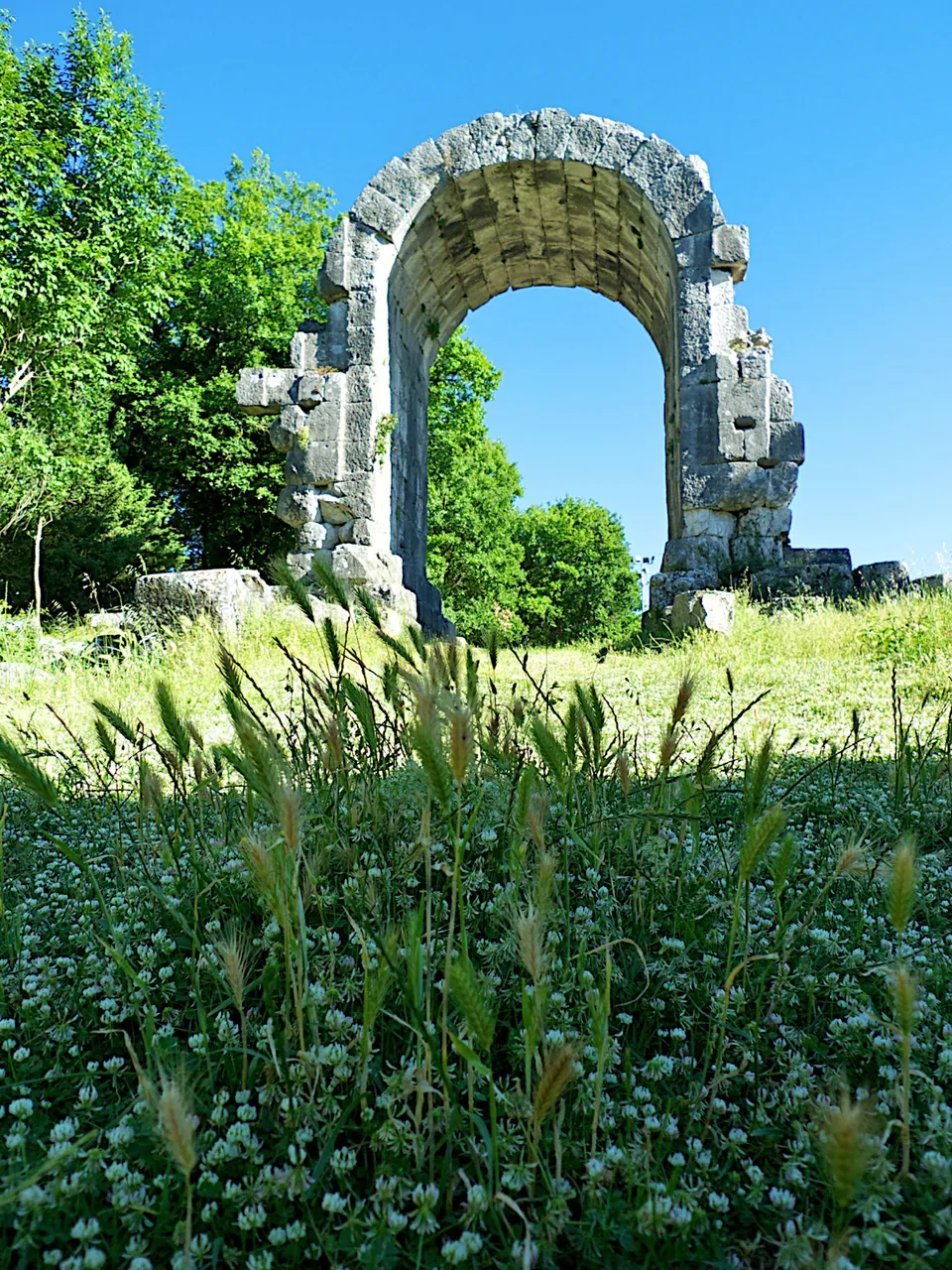
Photo: Jan Hazevoet · CC BY 3.0 · Commons
18 km · city · Umbria
Carsulae
The ticketed area is a fenced expanse of meadow and trees of 22 hectares (it.wikipedia).
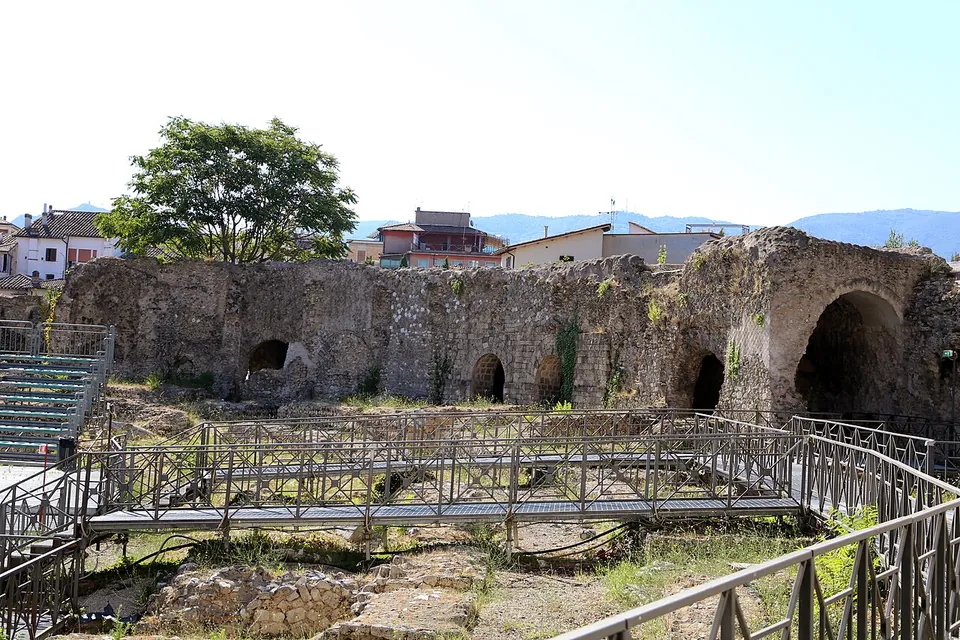
Photo: Sailko · CC BY-SA 4.0 · Commons
21 km · amphitheatre · Umbria
Anfiteatro Fausto
The oval is still easy to read on the ground, about 97.5 by 73 m overall (it.wikipedia).
Photo: ImagoAnimae · CC BY-SA 3.0 · Commons


Straight-line distances.
Sources
Every fact on this page comes from the records below, each used under the licence noted.
| Source | Licence |
|---|---|
| Pleiades 533786623 | CC BY |
| Wikidata Q18709981 | CC0 |
| OpenStreetMap node/2151540144 | ODbL |
| Wikipedia (it) — Casa romana (Spoleto) | CC BY-SA 4.0 |
| Wikipedia (en) — Spoleto (section "Roman house under piazza del Municipio") | CC BY-SA 4.0 |
| Comune di Spoleto — Casa Romana (archived copy of 5 May 2024) | licence not recorded |
| Spoleto Cultura — hours and tickets of the town's museum circuit, Casa Romana and Spoleto Card (the operator) | licence not recorded |