


Photo: Silvio sorcini · CC BY-SA 4.0 · Commons

town house · Umbria
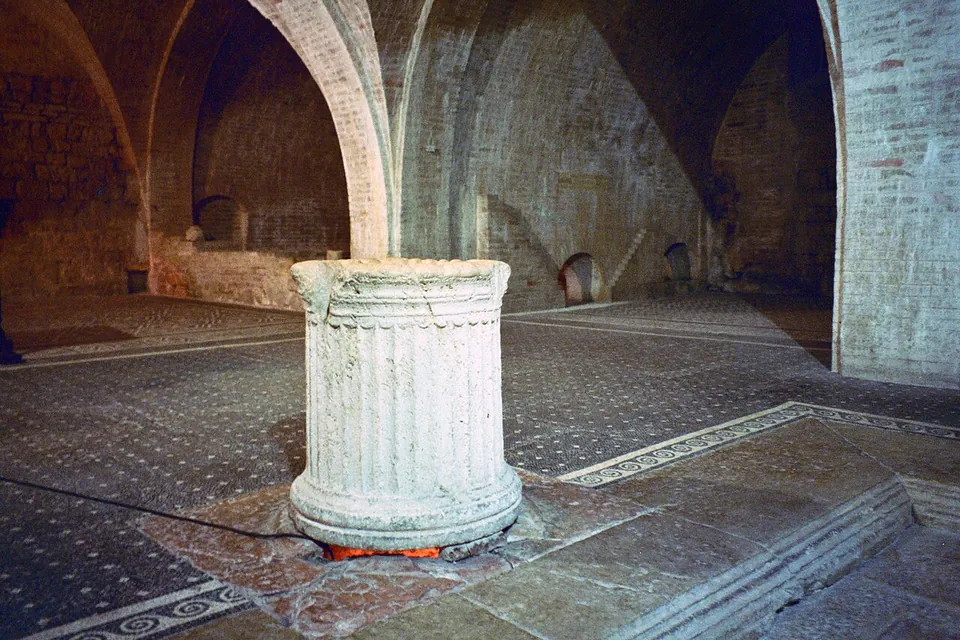
Ancient Roman house of Vespasia Polla
The house lies partly under Piazza del Municipio and partly under the Palazzo comunale, in the space of its foundations.
Ticketed
Spoletum
city · Umbria, Italy
3 places to see, the best preserved and best known first.
Photo: Silvio sorcini · CC BY-SA 4.0 · Commons
town house · Umbria
The house lies partly under Piazza del Municipio and partly under the Palazzo comunale, in the space of its foundations.
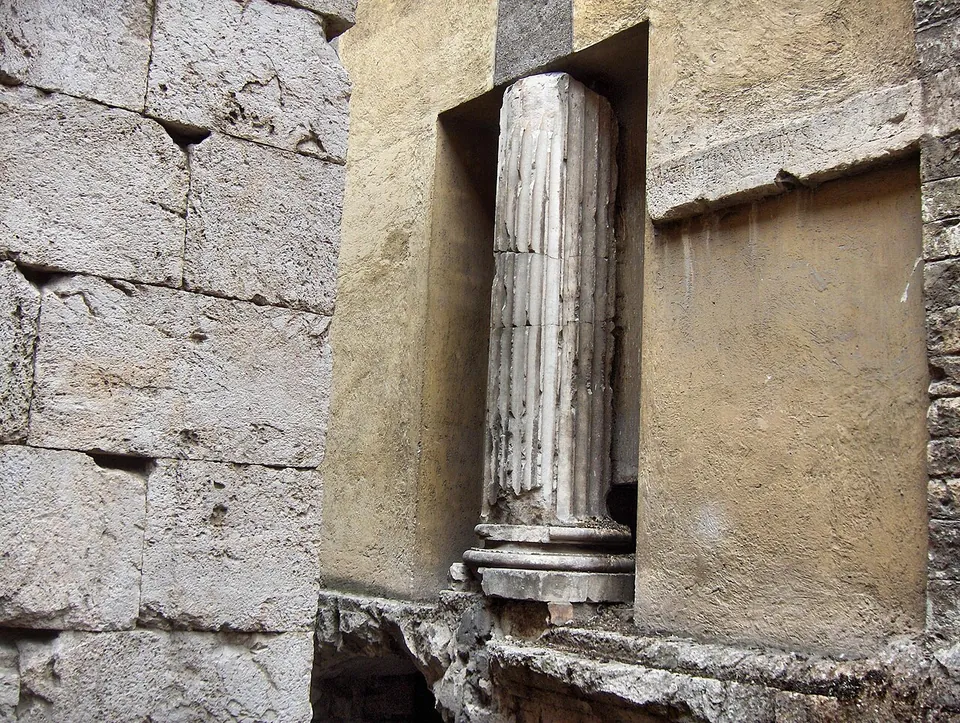
Photo: JoJan · CC BY 3.0 · Commons
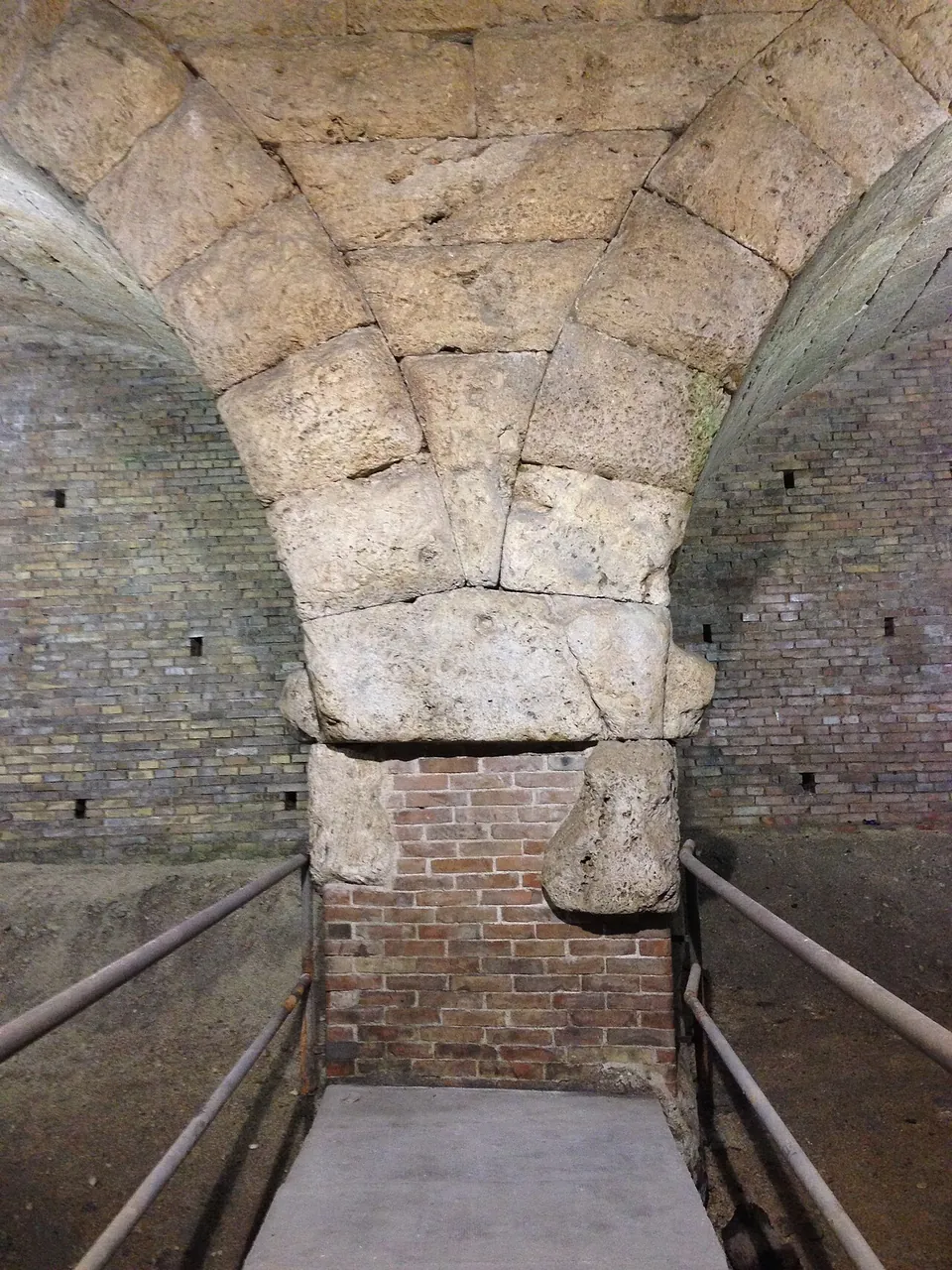
Photo: Manuelarosi · CC BY-SA 3.0 · Commons
bridge · Umbria
The bridge had three round arches and is about 24 m long, 4.5 m wide and 8 m high; one arch is still buried under the earth bank, and the old town gate of San Gregorio stood on top of it (it.wikipedia).
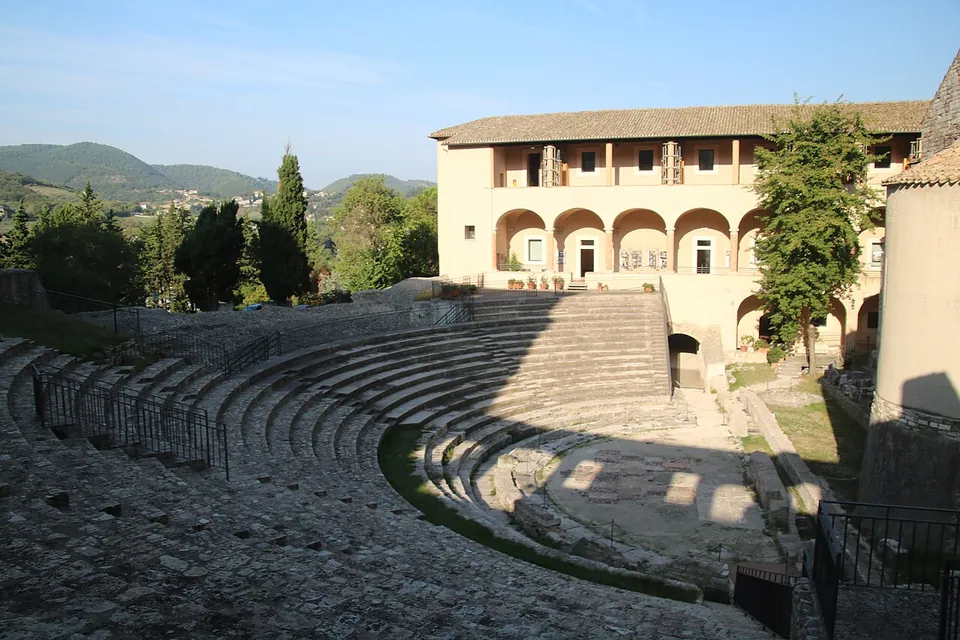
The Roman theatre of the 1st century BC is the largest thing to see. Its stepped seating, about 70 m across, rests partly on a vaulted semicircular corridor, and the orchestra keeps its floor of coloured marble slabs; the holes for the curtain poles can still be seen in the front of the stage (it.wikipedia). The seating was restored in work begun in the 1950s, and the lower level is well preserved, its corridor still open to walk through (the operator). The theatre lies within the Sant’Agata complex, whose former convent now houses the Museo archeologico nazionale, and it is part of the museum visit: the museum covers the town from its first inhabitants through the Umbrian settlement to the Latin colony of 241 BC and the Roman town, and one section shows the sculptures found in the theatre’s excavations of the 1950s (the operator). The theatre is still used for concerts and performances, including during the Festival dei Due Mondi (it.wikipedia; the operator).
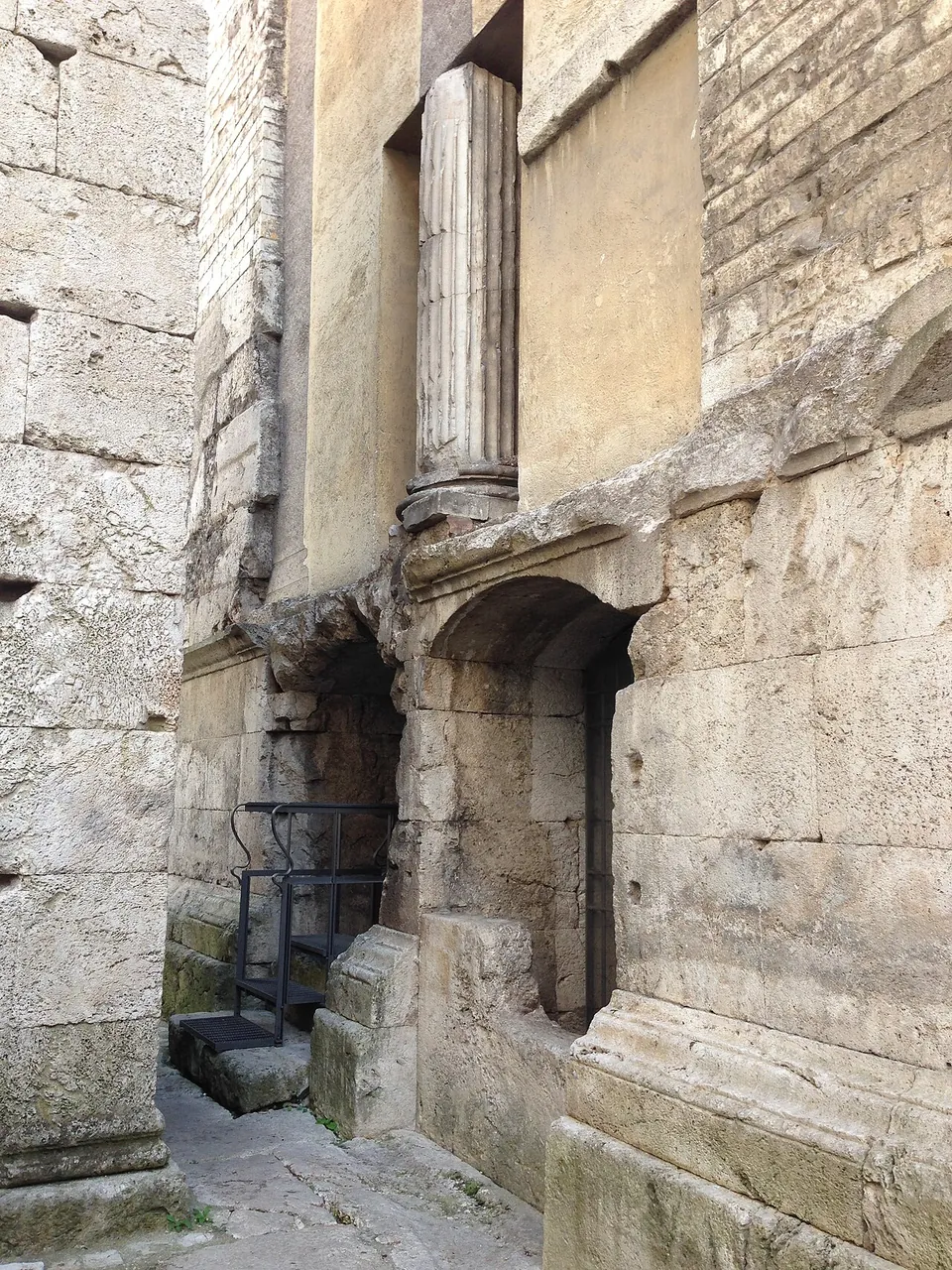
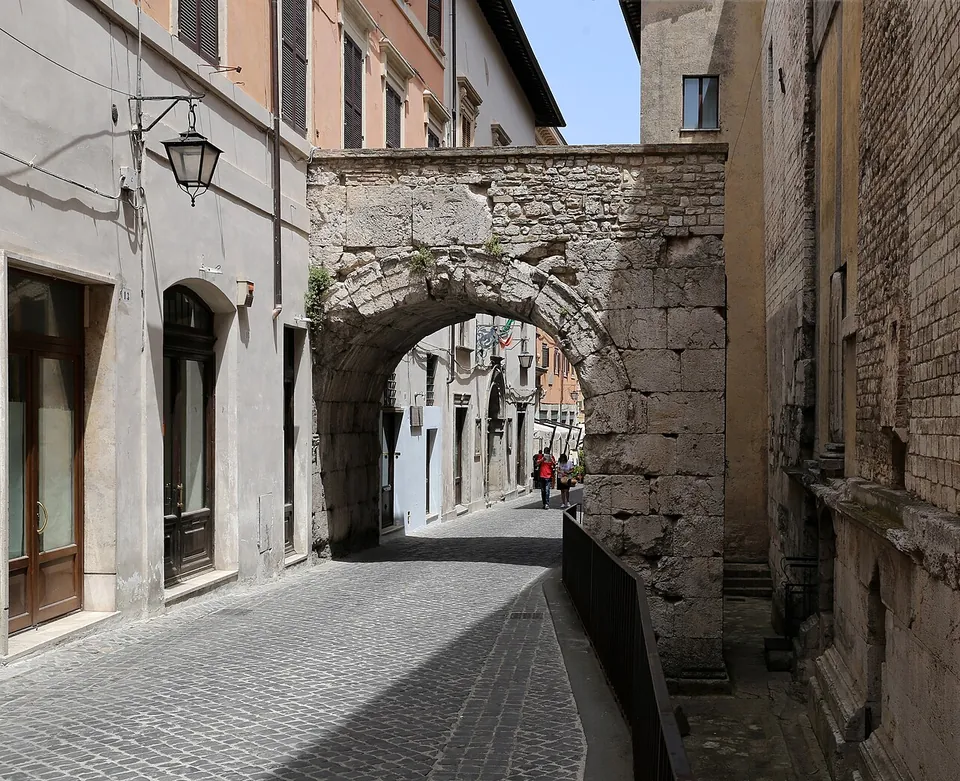
A few minutes away, at the old entrance to the forum, the Arch of Drusus and Germanicus of AD 23 spans a street beside the church of Sant’Ansano, which is built on and into a Roman temple of the 1st century AD (it.wikipedia). Both are seen from the street and are described on the Sant’Ansano, Spoleto page.
The Casa Romana, an upper-class house of the early 1st century AD with mosaic floors, lies under Piazza del Municipio and the town hall (it.wikipedia); it has its own page, with its hours and tickets: Ancient Roman house of Vespasia Polla.
Under Piazza della Vittoria a short stair leads down to the Ponte Sanguinario, the Roman bridge that carried the Via Flaminia over the Tessino and is now buried below the square (it.wikipedia); it has its own page, with what is known about getting in: Ponte Sanguinario. Nearby, remains of the amphitheatre stand in the area of the former Stella barracks, now the Complesso monumentale dell’Anfiteatro (en.wikipedia; it.wikipedia), and stretches of the older polygonal town wall, built in the Umbrian period and kept up under Rome, are visible in via Cecili and round the castle (it.wikipedia).
Two further stops sit on the edge of the Roman story. Villa Redenta, a 16th-century villa in a public park north of the old town, was built over a Roman settlement; one of its halls has a Roman mosaic floor, and the garden has a mock-ruined stage front that incorporates genuine Roman fragments (it.wikipedia). East of the town, Roman drainage and water works built of large travertine blocks, mixed with medieval rebuilding, were found at the Cortaccione springs in 1823 and 1893; the springs probably supplied the Roman town, and their water later crossed the valley on the Ponte delle Torri, a bridge about 230 m long that was probably built in the 13th or 14th century, though the foundations of its two central piers may be earlier, Roman or 12th century (it.wikipedia; en.wikipedia).
Yes, if you are in Umbria. None of these monuments is a vast ruin field, but together they make a good half day: the theatre and its museum, the arch and the temple at the old forum, and the mosaics of the Casa Romana are all in the upper town, and a single seven-day Spoleto Card covers both ticketed sites. Be clear about what kind of place this is: Spoleto is above all a medieval hill town, and its Roman remains are pieces embedded in later streets and buildings, not a separate archaeological park. Villa Redenta’s park and the Ponte delle Torri are later works with a Roman past rather than Roman monuments, so treat them as extras.
Spoleto has a station on the Rome–Ancona railway (it.wikipedia), about 1.6 km from the arch, down in the lower town. The town has three mechanised walkways up into the centre (it.wikipedia), and one exits at Piazza del Mercato, the site of the forum, about 150 m from the arch; the Casa Romana and the theatre are each within about 170 m of it, the Ponte Sanguinario about 770 m in a straight line. Drivers can use a paid car park about 180 m from the arch, or the larger one at Posterna, about 500 m away at the foot of the Posterna–Piazza Campiello walkway (OpenStreetMap).
The Museo archeologico nazionale and the theatre open Thursday to Sunday, 08.30–19.30, and are closed Monday to Wednesday; last entry is an hour before closing. A ticket is €4, reduced €2, and free for EU citizens under 18 (the operator, read 20 October 2026). The seven-day Spoleto Card also covers them; it and the Casa Romana’s own hours and prices are on the Casa Romana’s page. Check before travelling, since hours and prices change.
Hours and prices checked 20 October 2026 on the operator's own site. Confirm before travelling.
The place is far older than the colony. People lived on the hill of Sant’Elia from at least the final Bronze Age, in the 12th–11th century BC; in the Iron Age Spoleto was one of the main Umbrian centres, with rich burials of the 8th–6th century BC, and its polygonal walls date from the 5th–4th century BC (it.wikipedia). How it came under Rome is not recorded: the first historical notice of Spoletium is the founding of a Roman colony there in 241 BC, shortly after the First Punic War. In 217 BC, straight after his victory at Lake Trasimene, Hannibal attacked the walls and was beaten off by the colonists. The town suffered in Sulla’s civil war, when its territory was confiscated, but recovered: Cicero called it a most firm and illustrious Latin colony, and under the Empire it continued as a flourishing municipality. The original Via Flaminia passed nearby rather than through it; after Vespasian a line through Interamna and Spoleto was preferred (en.wikipedia).
Constantine issued an imperial rescript at Spoleto in 326 and Julian one in 362, and in the 4th century the town became a bishop’s seat (en.wikipedia). Accounts of the Casa Romana’s end differ: it was wrecked by a fire that one places in the early 5th century, perhaps during Alaric’s incursions, and another after a period of use lasting into the early Middle Ages (en.wikipedia; it.wikipedia). Theodoric restored the town between 507 and 511; in the Gothic War the Goths turned the amphitheatre into a fortress in 545, the year Totila took the town, and Narses restored its walls after 553 (en.wikipedia; it.wikipedia).
The theatre was already damaged in antiquity by a landslide, perhaps after an earthquake, and restored. Later it was quarried for stone; in the 12th century the church of Sant’Agata was built over part of the stage, and the Benedictine convent that grew up round it from the late 14th century became a women’s prison in 1870 and now houses the museum (it.wikipedia).
Much of what is visible was found again only from the 19th century, largely through the local archaeologist Giuseppe Sordini: he excavated the Casa Romana from 1885, identified the theatre in 1891, whose ruins Baldassarre Peruzzi had drawn in the 16th century, and in 1900 found the first remains of the temple at Sant’Ansano (it.wikipedia). Systematic excavation of the theatre began in 1933, and the most significant campaigns ran from 1954 to 1960 (it.wikipedia).
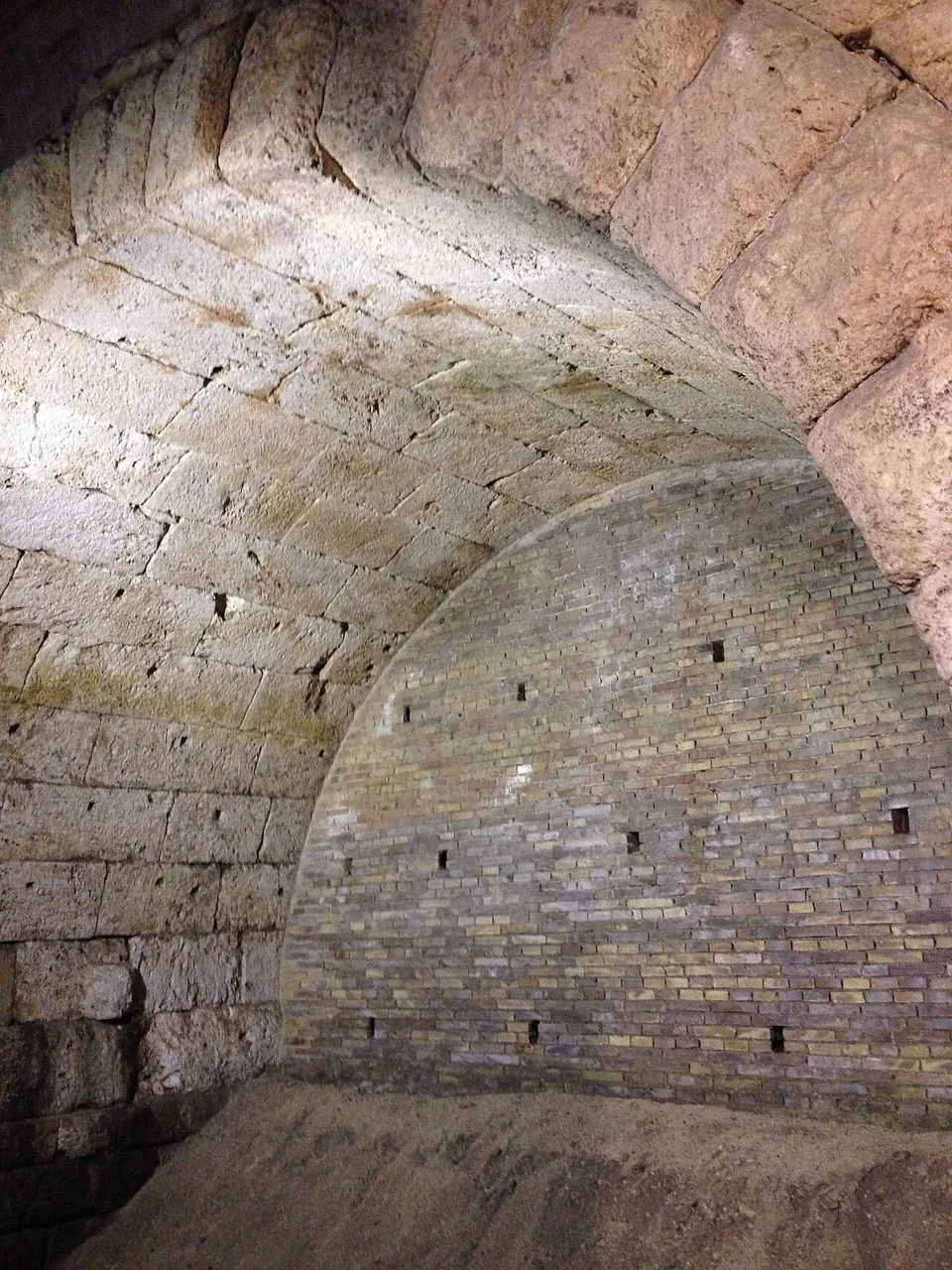
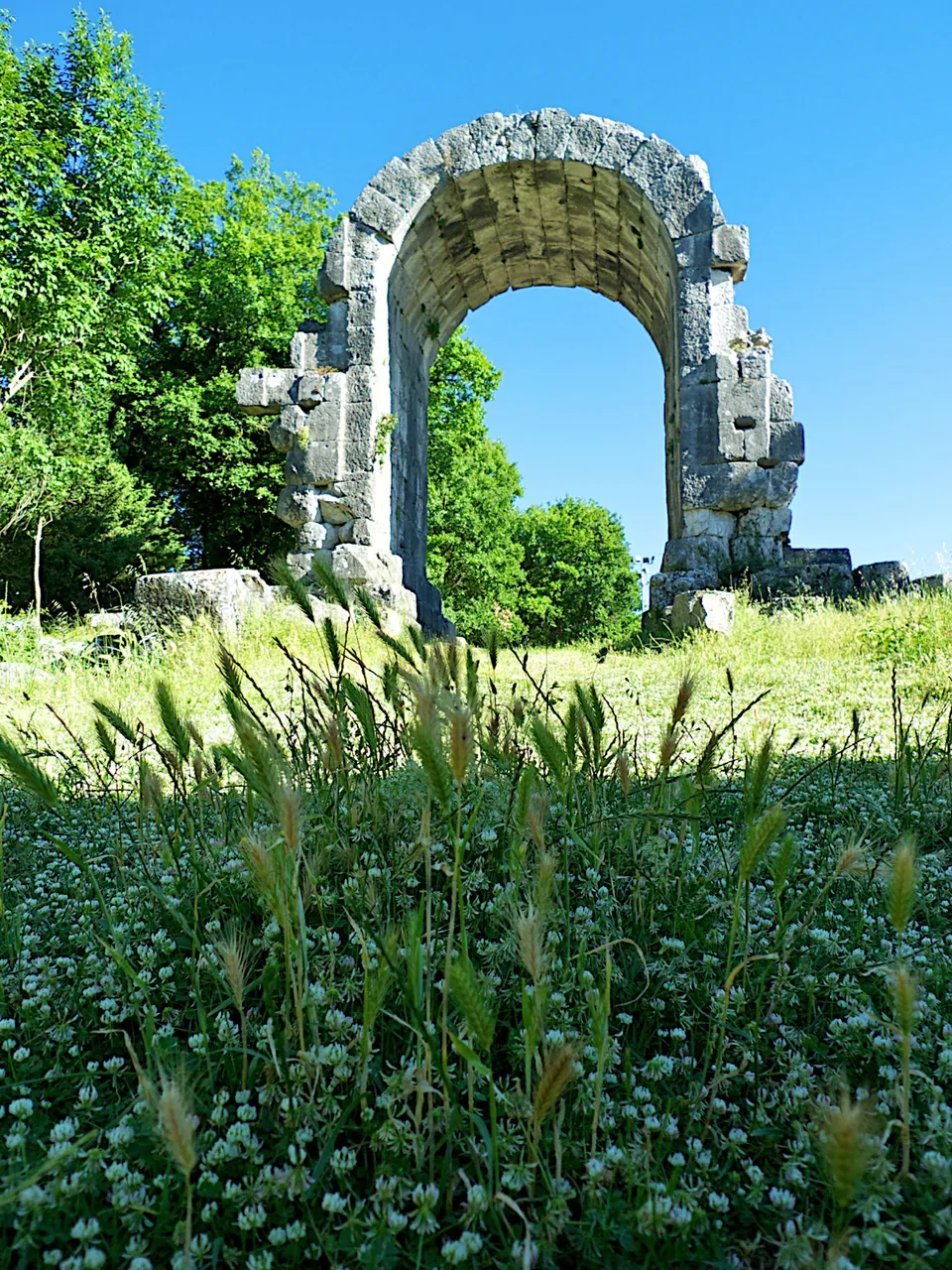
Photo: Jan Hazevoet · CC BY 3.0 · Commons
18 km · city · Umbria
The ticketed area is a fenced expanse of meadow and trees of 22 hectares (it.wikipedia).
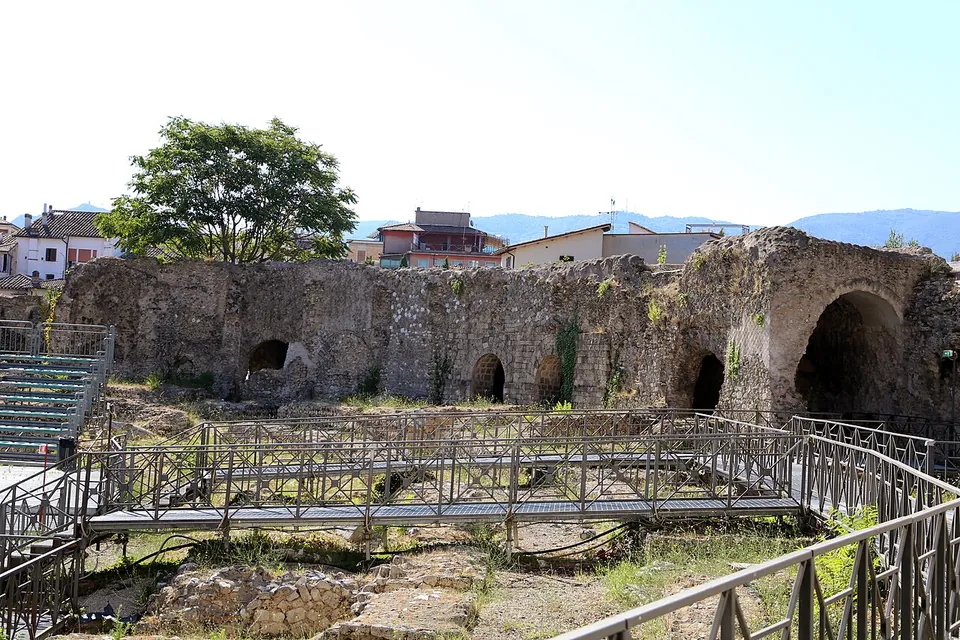
Photo: Sailko · CC BY-SA 4.0 · Commons
21 km · amphitheatre · Umbria
The oval is still easy to read on the ground, about 97.5 by 73 m overall (it.wikipedia).
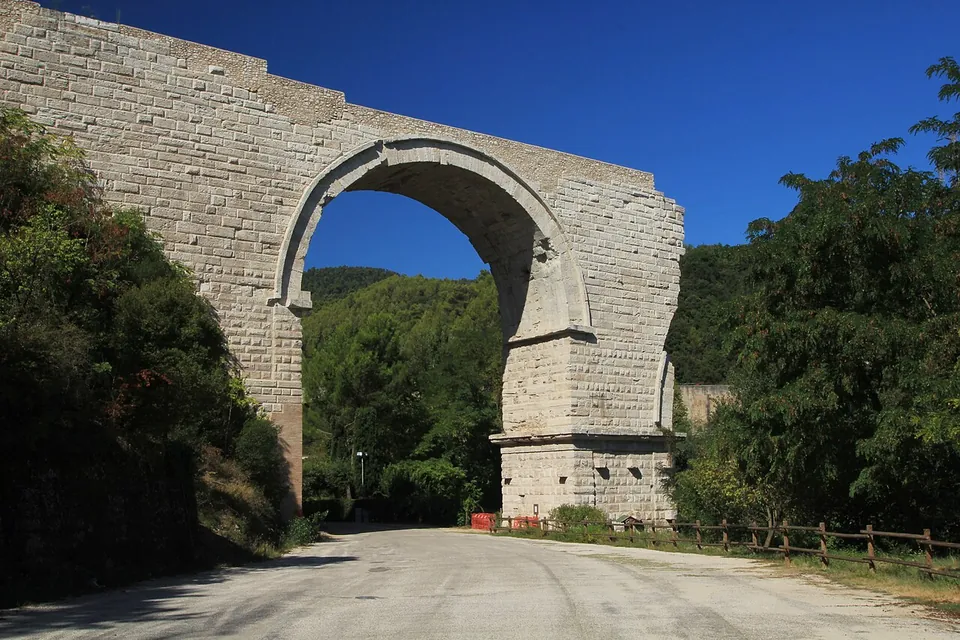
Photo: ImagoAnimae · CC BY-SA 3.0 · Commons
Straight-line distances.
Every fact on this page comes from the records below, each used under the licence noted.
| Source | Licence |
|---|---|
| Pleiades 413320 | CC BY |
| Vici.org 1698 | CC BY-SA (text), CC0 (metadata) |
| Wikipedia (en) — Spoleto | CC BY-SA 4.0 |
| Wikipedia (it) — Spoleto | CC BY-SA 4.0 |
| Wikipedia (it) — Teatro romano di Spoleto | CC BY-SA 4.0 |
| Wikipedia (it) — Arco di Druso e Germanico | CC BY-SA 4.0 |
| Wikipedia (it) — Chiesa di Sant'Ansano (Spoleto) | CC BY-SA 4.0 |
| Wikipedia (it) — Casa romana (Spoleto) | CC BY-SA 4.0 |
| Wikipedia (it) — Ponte Sanguinario | CC BY-SA 4.0 |
| Wikipedia (it) — Villa Redenta | CC BY-SA 4.0 |
| Wikipedia (it) — Acquedotto di Cortaccione | CC BY-SA 4.0 |
| Museo archeologico nazionale e Teatro romano di Spoleto — hours and tickets (Direzione regionale Musei nazionali Umbria, the operator) | licence not recorded |
| Spoleto Cultura — hours and tickets of the town's museum circuit, Casa Romana and Spoleto Card (the operator) | licence not recorded |


