Asculum, today's Ascoli Piceno in the southern Marche, was the chief town of the Piceni and then a Roman town on the Via Salaria, and what Rome left here is a set of pieces spread through the historic centre: two Roman bridges still in use over the river gorges, a double-arched gate, a theatre on the hillside and the great vaulted terraces of the Annunziata hill.
What you’ll see
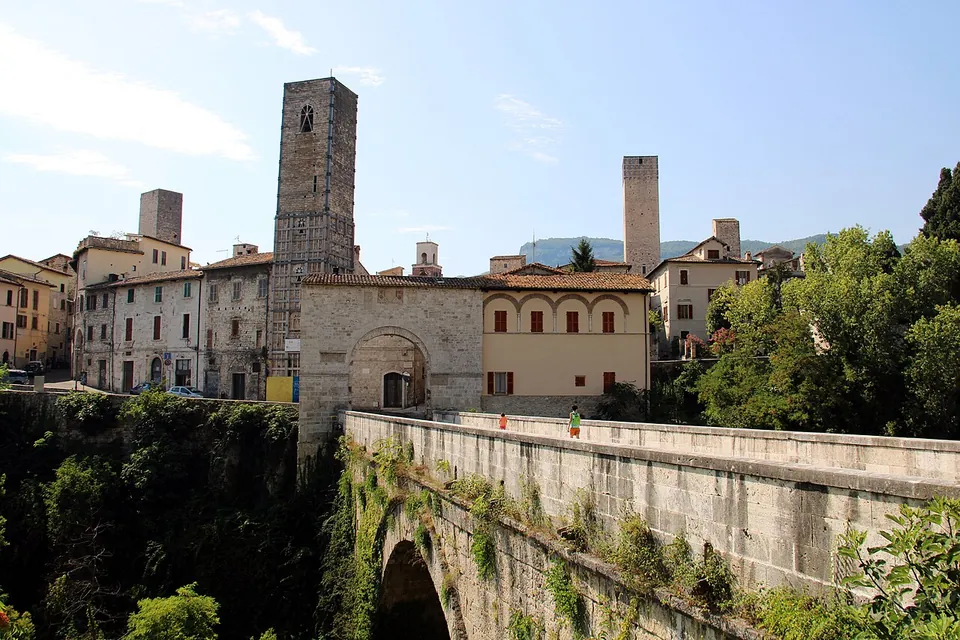
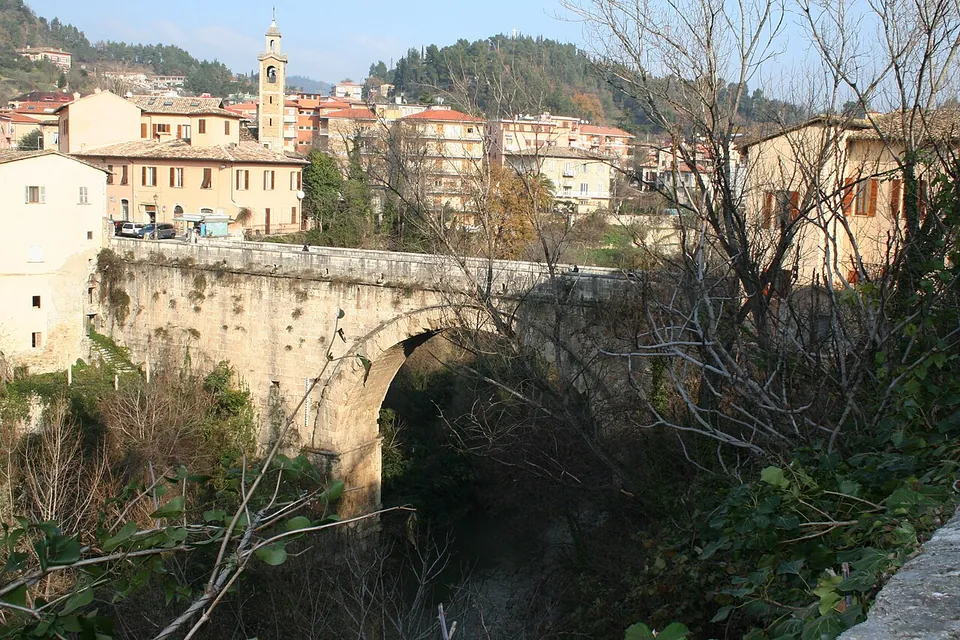
The showpiece is the Ponte di Solestà, an Augustan bridge that crosses the Tronto in a single arch of travertine blocks with a span of about 22 m; it stands 25 m high to the roadway, which is 62 m long.
Worth the trip?
Yes, if you like your Roman remains mixed into a living town.
Getting there & cost
All the stops are within about a kilometre of Piazza del Popolo: the Grotte dell'Annunziata about 0.4 km, the Ponte di Solestà and its gate about 0.5 km, the theatre 0.6 km, Porta Romana 0.7 km and the Ponte di Cecco 0.9 km (straight-line distances).Free · Free to walk round · checked 19 October 2026Hours, tickets and parking
The Roman bridge of Solestà leads across the Tronto gorge to Porta Solestà and the towers of the old town. · Photo: Mongolo1984 · CC BY-SA 4.0 · Wikimedia Commons
The single arch of the Ponte di Solestà, still carrying the road across the Tronto. · Photo: Infinitispazi at Italian Wikipedia · CC BY-SA 3.0 · Wikimedia Commons
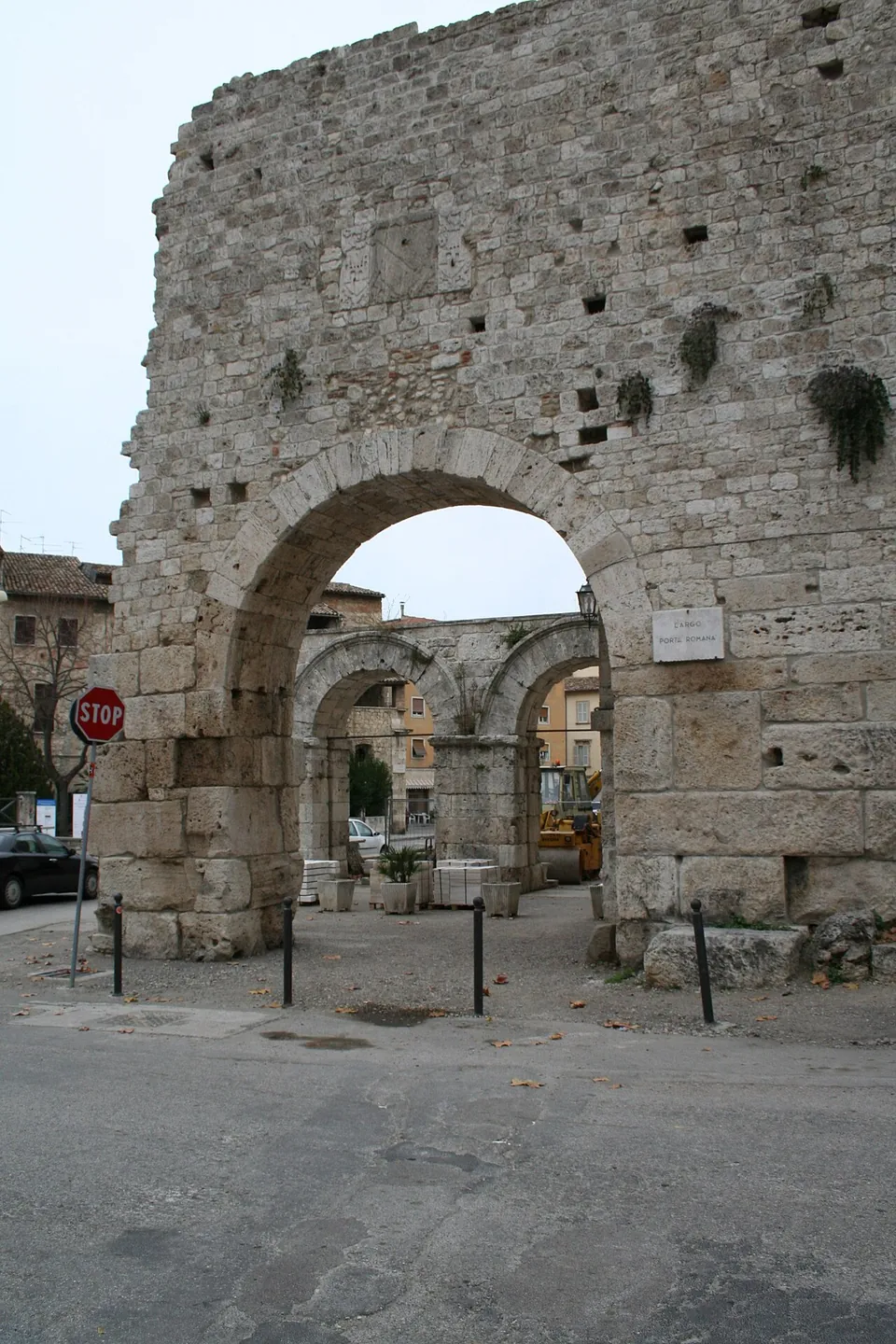
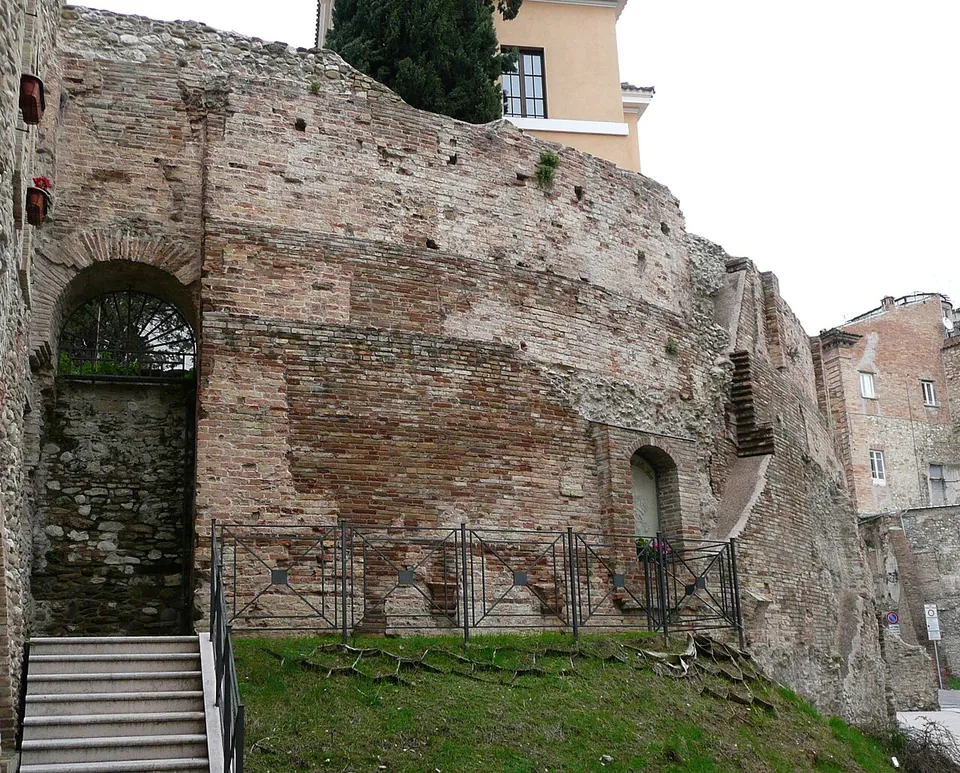
Porta Romana, also called Porta Gemina, where the Via Salaria entered the town. · Photo: Sibilla.io at Italian Wikipedia · CC BY-SA 3.0 · Wikimedia Commons
The stops
2 places to see, the best preserved and best known first.
The bridge is one round arch of squared travertine blocks with a span of 22.20 m, standing 25 m high to the roadway, which is 62 m long and 6.50 m wide (it.wikipedia; de.wikipedia and the city's tourism site give the same span and length).
Free
Photo: Sibilla.io at Italian Wikipedia · CC BY-SA 3.0 · Commons
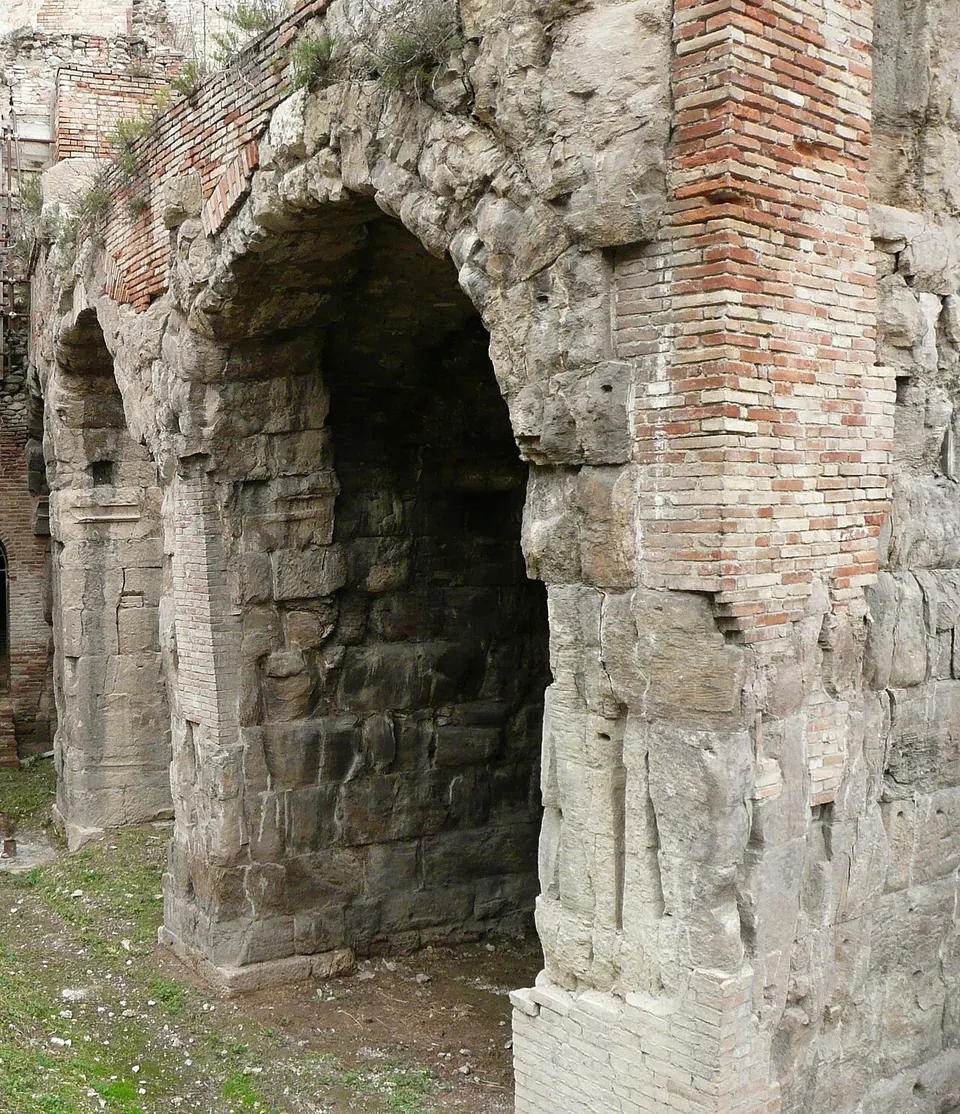
The gate is two arches carried on three massive travertine piers, built of large squared blocks laid without mortar.
Free
What is there today
The showpiece is the Ponte di Solestà, an Augustan bridge that crosses the Tronto in a single
arch of travertine blocks with a span of about 22 m; it stands 25 m high to the roadway, which is
62 m long. It still links the centre with the Porta Cappuccina quarter and is regarded as one
of the most representative Roman bridges, having kept its construction features intact, though
in the 1930s its core was emptied and a concrete bridge, visible nowhere, cast inside it
(it.wikipedia). A stair in the left abutment leads into the bridge, up along the arch to the
keystone and over a walkway between the Roman walls (FAI); no source found says when that
interior is open. At the town end of the bridge stands Porta Solestà, a gate built in 1230,
probably from the stones of an earlier Roman one (it.wikipedia).
Porta Romana, also called Porta Gemina, between the slope of the Annunziata hill and the Tronto,
is a Roman gate of
the 1st century BC with two arches on three travertine piers, 6.75 m high; the grooves for its
portcullises are still visible inside the arches. The Via Salaria entered the town through it
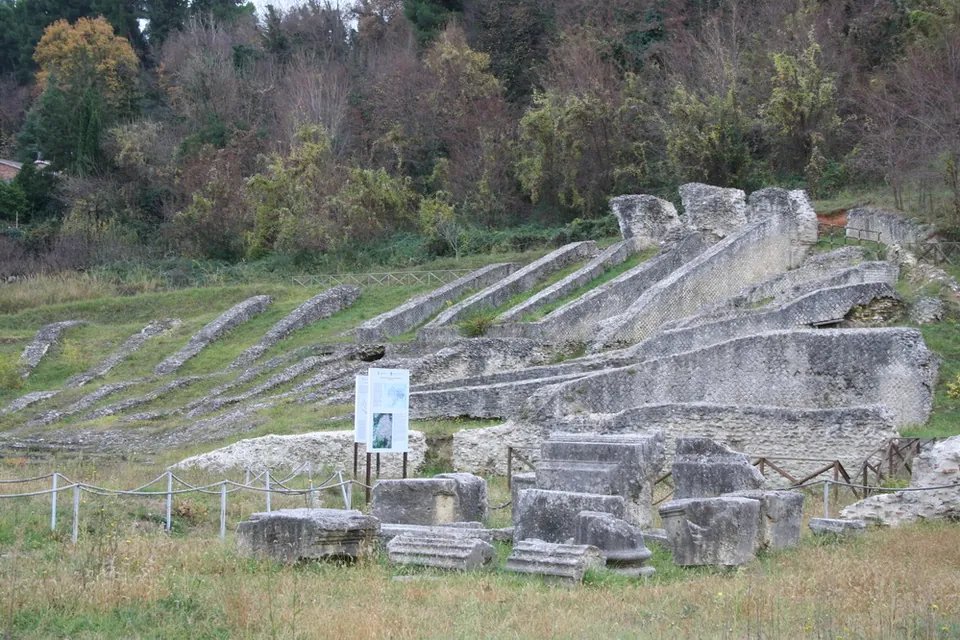
(it.wikipedia). Against the same slope are the excavated remains of the theatre, built in the 1st century BC, with 32 radial walls of the seating visible and the stage
building mostly under the church of Santa Croce (it.wikipedia). On the east flank of the same
hill, the Grotte dell’Annunziata are rows of barrel-vaulted chambers built against the rock,
rising 18 m from the ancient ground level; current studies date them to the 2nd-1st century BC
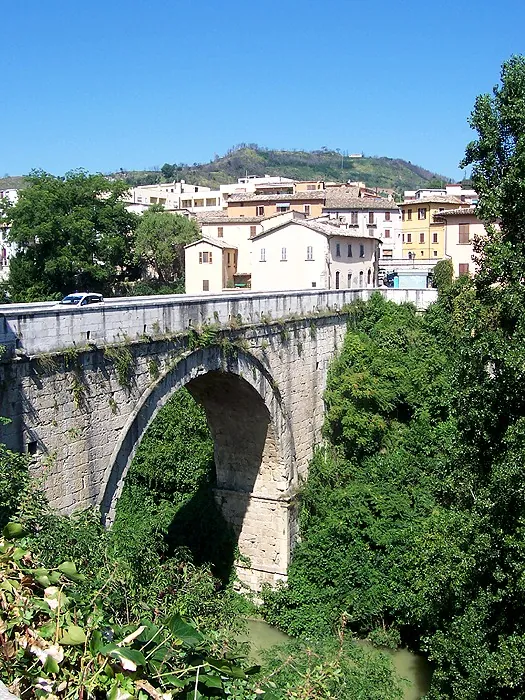
and take them for the substructure of a large temple, plausibly the Capitolium (it.wikipedia). On the east side, the two-arched Ponte di
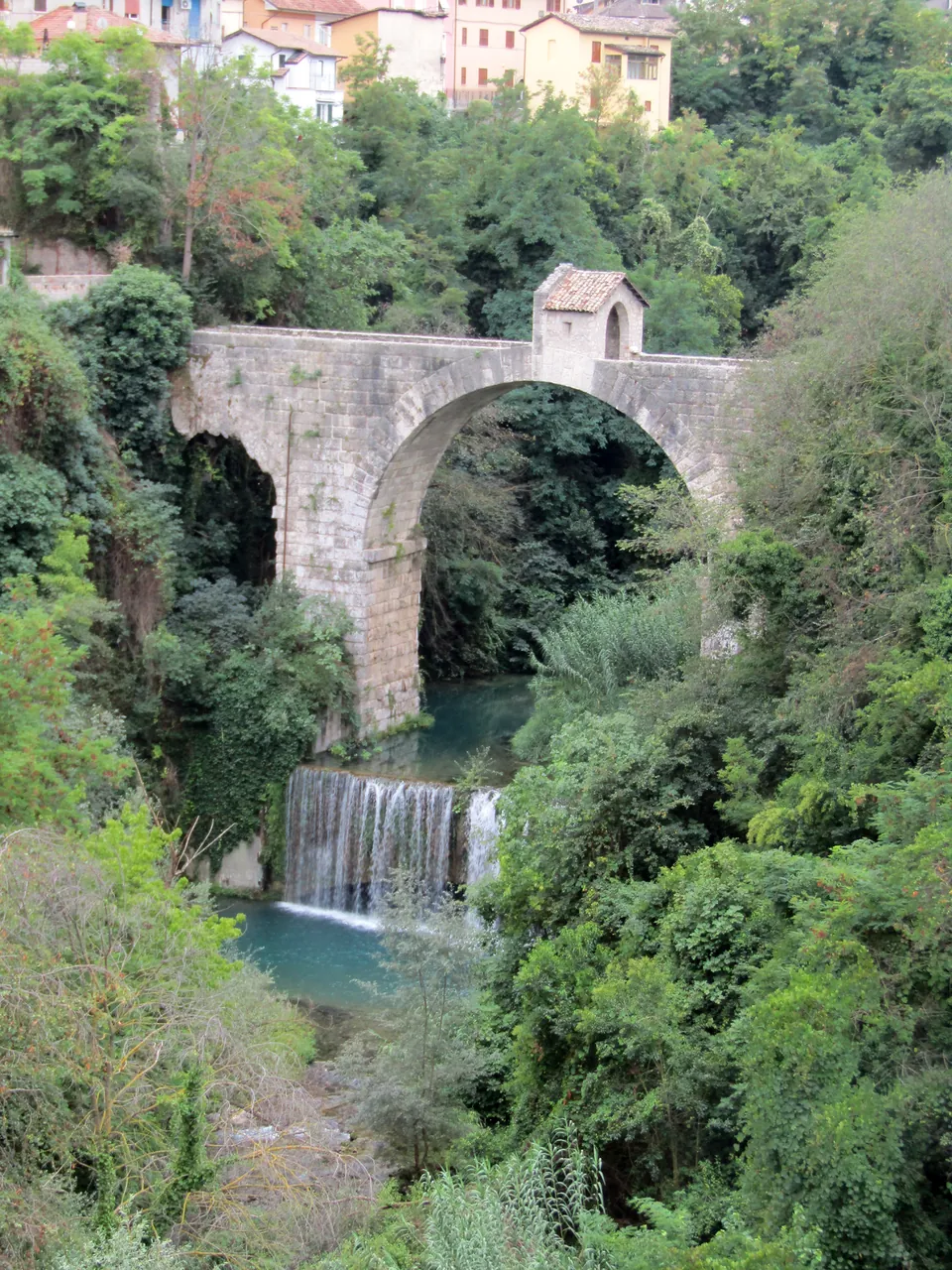
Cecco crosses the Castellano gorge 25 m above the water; blown up in 1944, it was rebuilt in the
1960s from its own stones recovered from the stream (it.wikipedia).
Finds from the town are in the Archaeological Museum on Piazza Arringo, whose ground floor
holds the remains of Roman Asculum, from inscribed travertine monuments to a mosaic with a
two-faced mask at its centre (the operator).
Is it worth the trip?
Yes, if you like your Roman remains mixed into a living town. Nothing here is a single great
site you pay to enter: everything lies within about a kilometre of Piazza del Popolo, taking in a Roman bridge that is still a working road bridge after two thousand years, a second
bridge in a green ravine, a Roman gate and a hillside theatre. Anyone who wants a large excavated city should go
elsewhere; anyone spending a day in Ascoli gets a lot of Rome for free. Budget for the museum,
and do not count on getting inside the theatre without arranging it first.
Getting there
All the stops are within about a kilometre of Piazza del Popolo: the Grotte dell’Annunziata about
0.4 km, the Ponte di Solestà and its gate about 0.5 km, the theatre 0.6 km, Porta Romana 0.7 km and the
Ponte di Cecco 0.9 km (straight-line distances). The square itself is pedestrian; paid car parks
are mapped about 200 m from the square, and buses stop on Via Trieste nearby (OpenStreetMap).
The gates and bridges are in the street and free. The Archaeological Museum is open Tuesday to
Sunday from 08.30 to 19.30 and closed on Mondays; a ticket is €4, €2 for EU citizens aged 18 to
25, and free for EU citizens under 18 (the operator, read 19 October 2026). The city’s tourism
site lists the theatre as open on request only, and its page still carries a notice of a
temporary closure, so contact it before travelling for the theatre.
Visiting details
Opening hours
The gates and bridges stand in the town's streets and can be seen at any time. The Archaeological Museum on Piazza Arringo opens Tuesday to Sunday 08.30–19.30 and is closed on Mondays.
Tickets
Free to walk round. The Archaeological Museum is €4; €2 for EU citizens aged 18 to 25; free for EU citizens under 18.
Parking
Paid parking is mapped about 190 m and 245 m from Piazza del Popolo (OSM way/1223098259 and way/1223103628). Buses stop on Via Trieste, about 90 m from the square, and a shuttle at Piazza Roma, about 120 m away.
Before you go
The Roman theatre opens only on request, according to the city's tourism site, whose page still carries a notice of a temporary closure; arrange a visit before travelling for it.
Hours and prices checked 19 October 2026 on the operator's own site. Confirm before travelling.
History
Asculum was the principal town of the Piceni (Pleiades). Contact with Rome came through trade
along what became the Via Salaria, the route between the Tyrrhenian and the Adriatic; after its
defeat by Rome in 268 BC it became an allied city, a civitas foederata. In 90 BC it was the first
city to rise against Rome, the revolt that began the Social War; Gnaeus Pompeius Strabo took and
sacked it in 89 BC, and it became a Roman municipium. Under Augustus, who made Picenum the fifth
region of Italy, the town prospered and gained temples, theatres, houses, bridges and
fortifications (it.wikipedia).
The theatre fell out of use after the Lombard sack of the town in 578 and was then quarried for
stone and burnt for lime, as kilns found nearby show, before landslides buried it; it was
excavated in 1932, 1951 and 1959 and restored for summer performances in 2010 (it.wikipedia).
Porta Romana was repaired after Frederick II’s army damaged the town, gaining a second set of
medieval arches in front of the Roman ones, and was later opened up in full again. The Ponte di
Cecco was long taken for medieval work until the architect and archaeologist Giambattista
Carducci recognised it as Roman, of the republican period (it.wikipedia).
More photographs
The remains of the Roman theatre at the foot of the Annunziata hill. · Photo: Infinitispazi · CC BY-SA 3.0 · Wikimedia Commons
Ponte di Cecco over the Castellano, rebuilt in the 1960s from its own stones. · Photo: Pampuco · CC BY-SA 4.0 · Wikimedia Commons
The theatre and the amphitheatre stand side by side next to the cathedral, in what was the western quarter of the Roman town; a theatre and an amphitheatre a few metres apart is described as almost unique (it.wikipedia).