


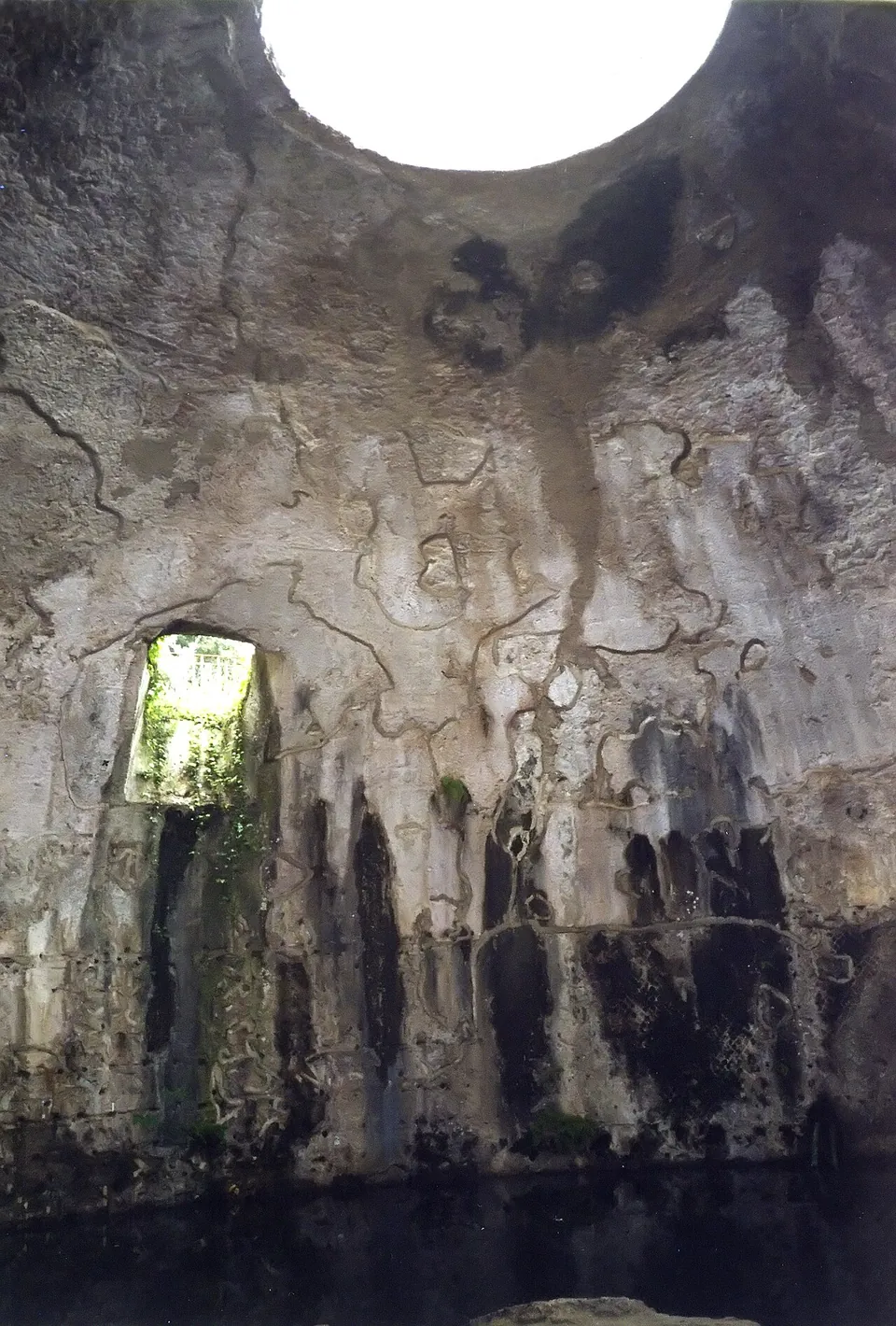
Photo: AM · CC BY-SA 2.5 · Commons
bath · Campania
Parco Archeologico delle Terme di Baia
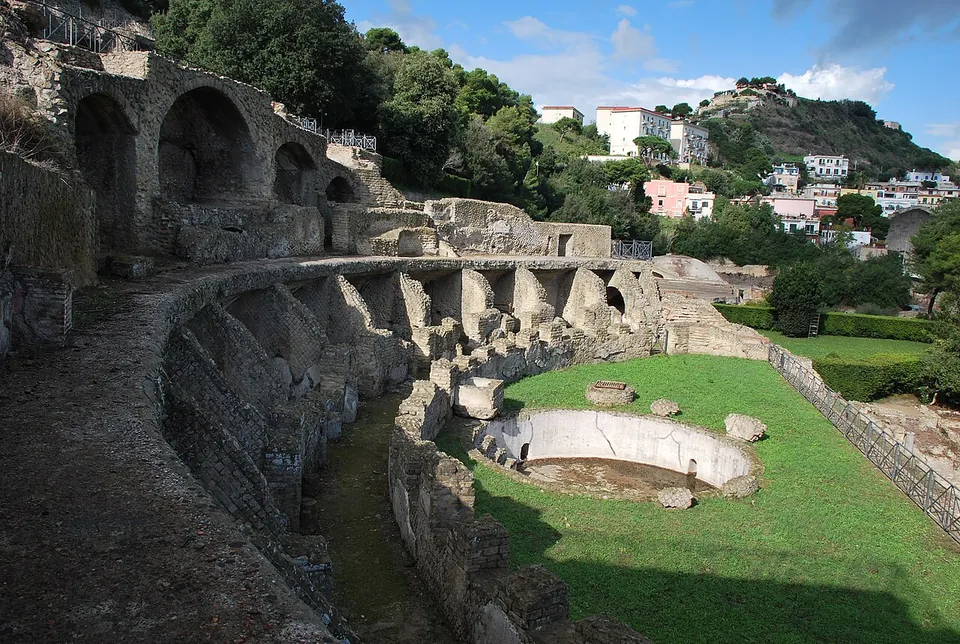
The remains step down the slope in terraces along a front of about 450 m.
Ticketed
Baia, Aquae Cumanae
city · Campania, Italy
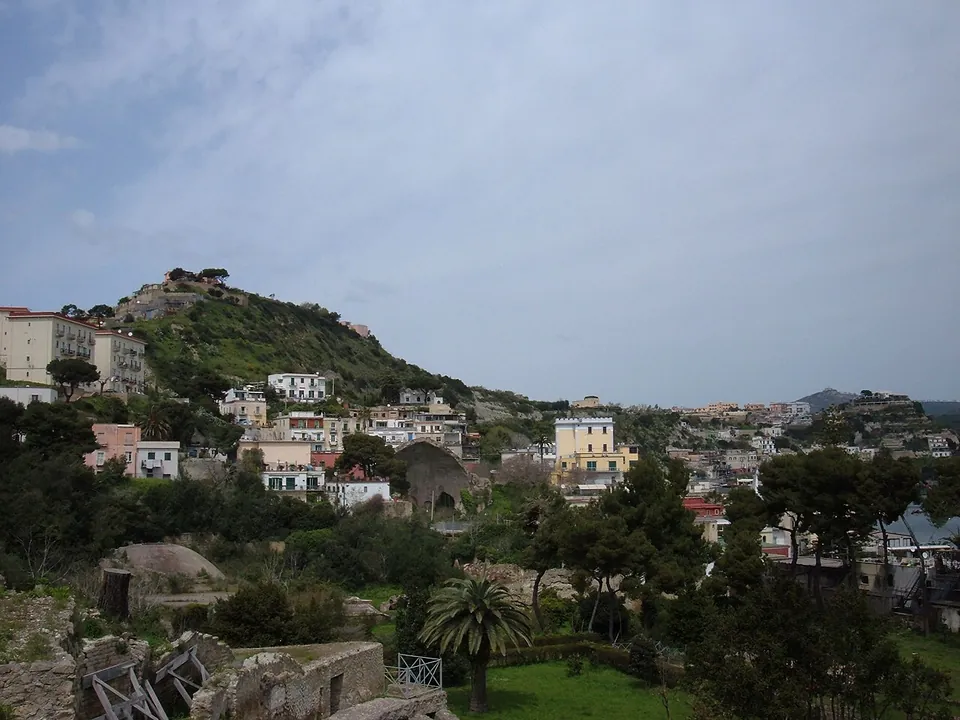
2 places to see, the best preserved and best known first.
Photo: AM · CC BY-SA 2.5 · Commons
bath · Campania
The remains step down the slope in terraces along a front of about 450 m.
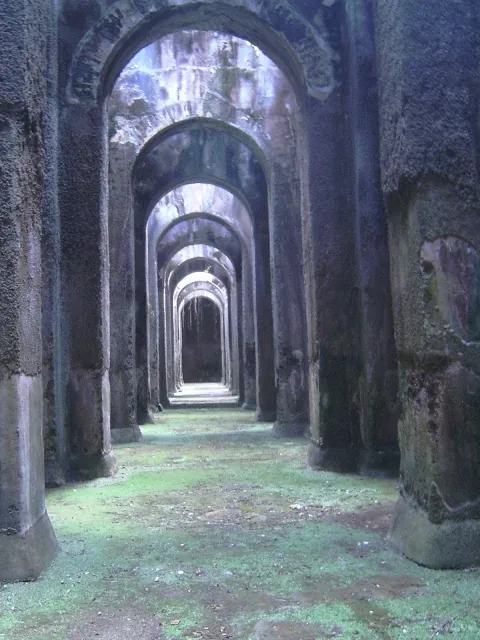
Photo: Vernetto at it.wikipedia · Public domain · Commons
Three places make up a visit to Roman Baiae and Bacoli:
Two more things belong to the same story. The Archaeological Museum of the Campi Flegrei in the Castello di Baia holds the sculptures found on the seabed in a nymphaeum identified as part of the emperor Claudius’s villa, with a reconstruction of the room. Out in the bay, the underwater archaeological park protects ports, villas, mosaics and roads lying about 5 m below the surface (en.wikipedia).
Yes, for anyone staying around Naples with a day to give it. The baths park gives a whole hillside of a Roman luxury resort, terraced villas and bath halls under their domes, and the Piscina Mirabilis is the kind of space that stays with you. The two sit about 2.7 km apart, so plan on moving between them.
Three things need planning. The Piscina opens only three days a week, by booking, with an attendant. The Baia park and the castle museum close on Mondays. And this is an active volcanic area: the operator refunds tickets when a site has to shut because of ground movement, so check on the day.
Bacoli is about 15 km west of Naples (en.wikipedia). Baia has its own station on the Cumana railway, on Via Terme Romane, and EAV buses (it.wikipedia); a bus stop is mapped about 60 m from the baths park, with a car park about 45 m away (OpenStreetMap). For the Piscina Mirabilis, at Via Piscina Mirabile 27, the ticket office gives Line 2 to Campi Flegrei, then bus 101 to Bacoli’s Via Lungolago and a 10-minute walk. There is parking near the entrance.
The Terme di Baia park costs €5 (€2 for EU citizens aged 18–25, free under 18) and is closed on Mondays. On other days it opens at 09.00 and closes at a time that follows the season, from 19.00 between April and August to 15.45 from mid-November through December, with the ticket office closing an hour earlier; the park’s own page has the full timetable. For €10 the Circuito flegreo ticket covers it, the castle museum, Cumae and the amphitheatre at Pozzuoli over three consecutive days, one entry each and booked ahead. The museum opens 09.00–18.30 (last entry 17.30), also closed on Mondays (the operator, read 23 October 2026).
The Piscina Mirabilis costs €5 (€2 from 6 to 17, free under 6), or €8 together with the nearby Cento Camerelle. From October 2026 to March 2027 it opens on Fridays, Saturdays and Sundays, 10.00–15.30, with entry every 30 minutes, a helmet and a booking required (CoopCulture, the ticket office the operator links to, read 18 October 2026).
Before you go
Hours and prices checked 23 October 2026 on the operator's own site. Confirm before travelling.
Baiae lies on the side of an old crater in the Phlegraean Fields, sloping down to the shore, and may have begun as the port of Cumae. It is mentioned in 178 BC as Aquae Cumanae. Around 80 BC it became a fashionable resort, and Marius, Lucullus and Pompey went there. Julius Caesar had a villa, and under Augustus much of the town became imperial property. Nero built a villa here, Hadrian died at his in AD 138, and the place’s name for pleasure-seeking runs from the defence at the trial of Caelius in 56 BC to Seneca’s letters. For all that, it never became a municipality and was run by nearby Cumae (en.wikipedia).
Baiae’s water came from a branch of the Aqua Augusta, built under Augustus, probably from 33 BC. Its main purpose was to supply the fleet at Misenum, and the Piscina Mirabilis was one of its main terminations (en.wikipedia). Whether the cistern served the fleet or one of the area’s great villas is not settled, since it lies about 1 km from the base. Its date is given as the reign of Augustus (en.wikipedia) or the start of the 1st century AD (the ticket office). Bacoli is generally taken to be the Roman Bauli, a resort of villas almost as famous as Baiae, where Symmachus had a villa in the late 4th century; the identification is given as probable rather than certain (en.wikipedia), and the Italian article on Bacoli derives the modern name from another Latin word (it.wikipedia).
The ground then sank. Bradyseism took the coast below sea level in two phases, between the 3rd and 5th centuries and again later, and by the 8th century most of the lower town was under the sea, which is why its villas are now an underwater park. The town was sacked in the barbarian invasions and by Muslim raiders in the 8th century. The remains on land were excavated intensively from 1941 (en.wikipedia).
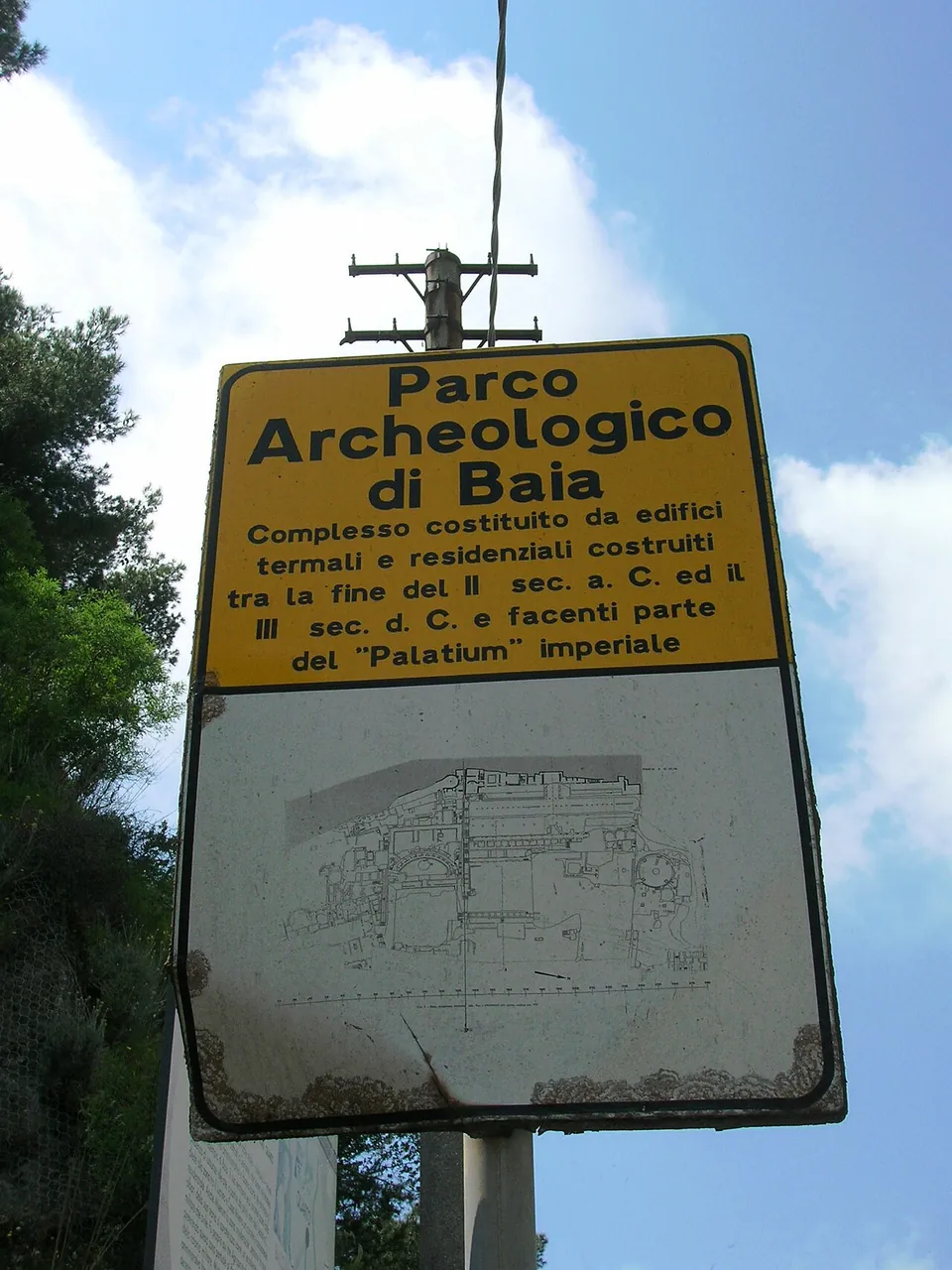
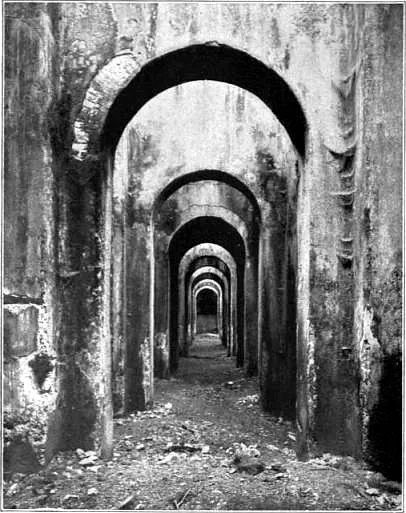
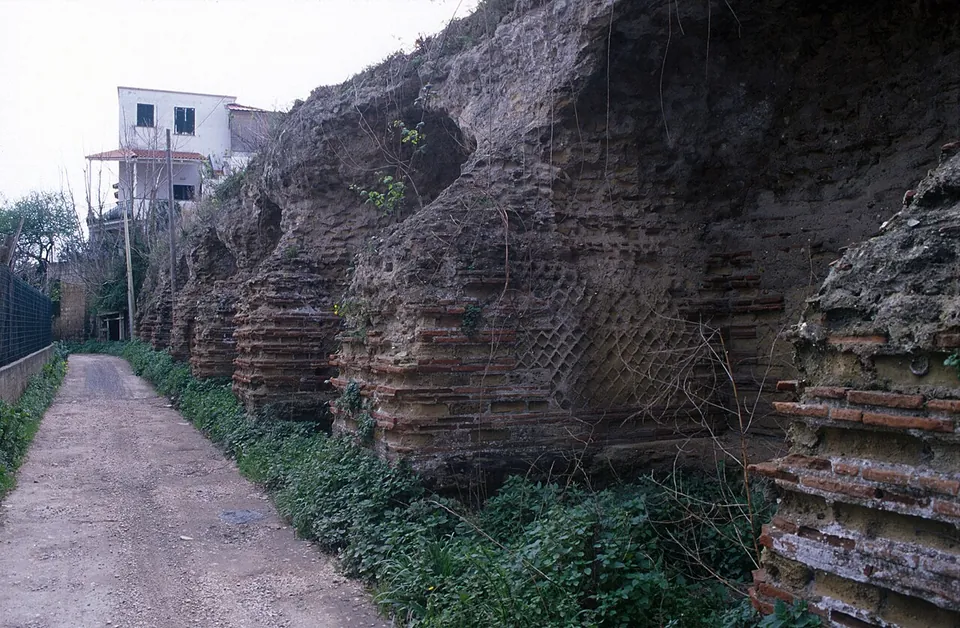
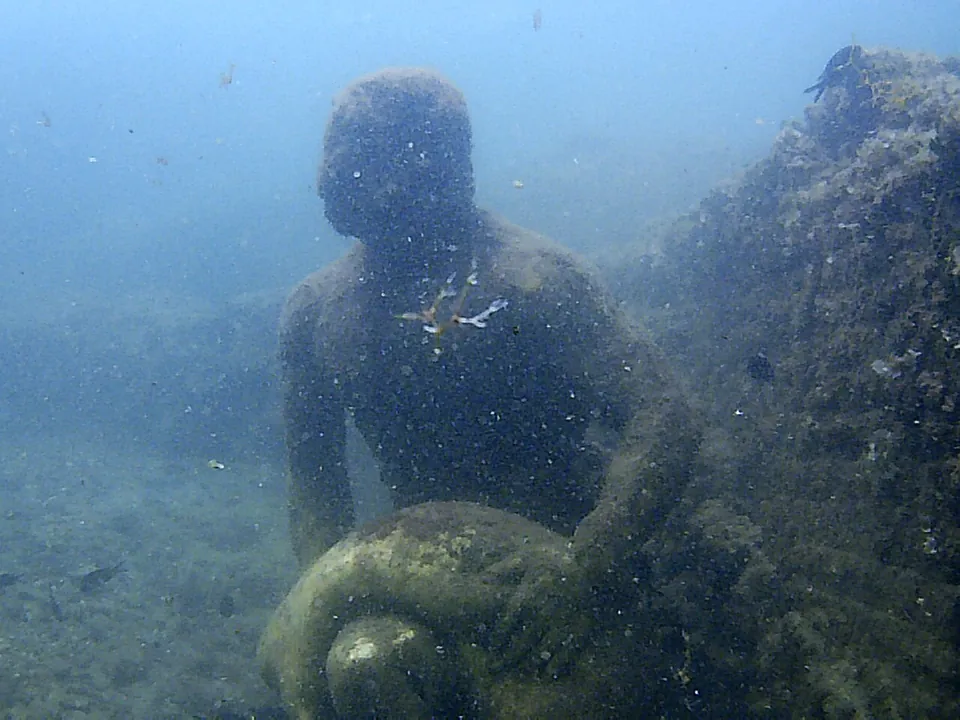
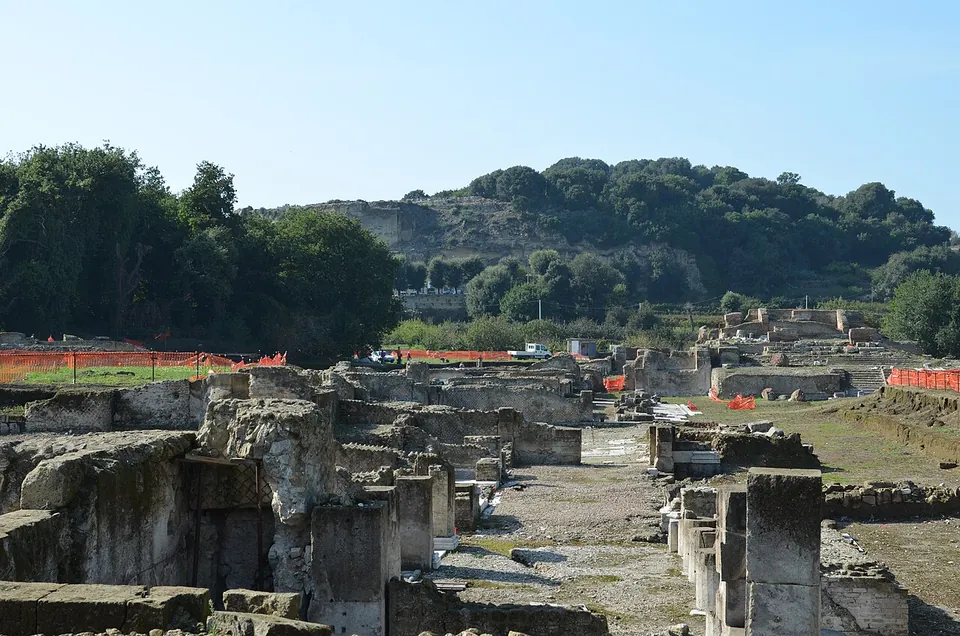
Photo: AlexanderVanLoon · CC BY-SA 3.0 · Commons
4 km · city · Campania
The visit centres on the acropolis, a hill above the coast with remains on two terraces (the operator).
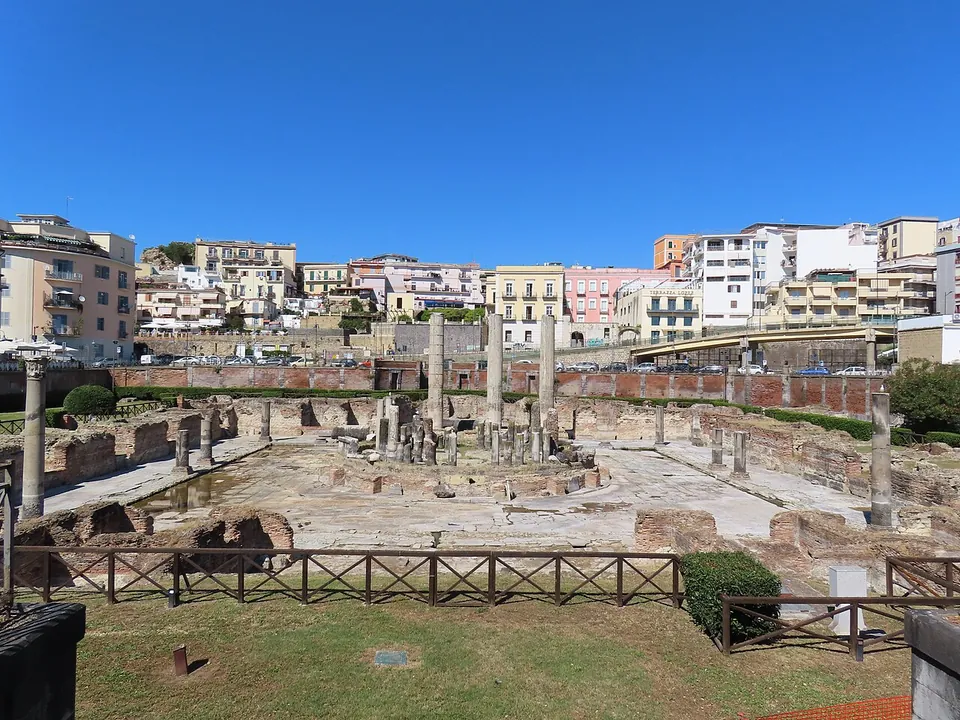
Photo: Superchilum · CC BY-SA 4.0 · Commons
4 km · site · Campania
The whole plan of the market lies open in a sunken square of about 58 by 75 m, a few steps from the harbour quays in the centre of Pozzuoli (the operator).
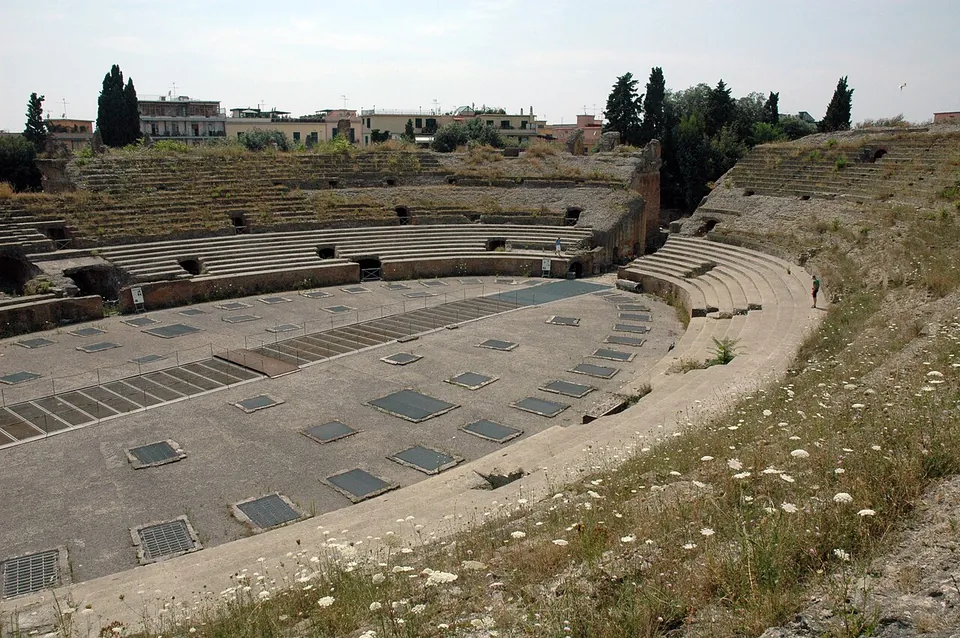
Photo: DimiTalen · CC0 · Commons
5 km · city · Campania
The Flavian Amphitheatre is the set piece: only the Colosseum and the amphitheatre of Capua are larger.
Straight-line distances.
Every fact on this page comes from the records below, each used under the licence noted.
| Source | Licence |
|---|---|
| Pleiades 432716 | CC BY |
| Wikidata Q123158834 | CC0 |
| Wikipedia (en) — Baiae | CC BY-SA 4.0 |
| Wikipedia (it) — Baia (Bacoli) | CC BY-SA 4.0 |
| Wikipedia (it) — Complesso archeologico di Baia | CC BY-SA 4.0 |
| Wikipedia (en) — Piscina Mirabilis | CC BY-SA 4.0 |
| Wikipedia (en) — Aqua Augusta (Naples) | CC BY-SA 4.0 |
| Wikipedia (en) — Bacoli | CC BY-SA 4.0 |
| Wikipedia (it) — Bacoli | CC BY-SA 4.0 |
| Parco Archeologico dei Campi Flegrei — visitor information (the operator) | licence not recorded |
| Parco Archeologico dei Campi Flegrei — opening and closing times of the Terme di Baia and Cuma parks (the operator's timetable, PDF) | licence not recorded |
| Parco Archeologico dei Campi Flegrei — tariffs (the operator) | licence not recorded |
| CoopCulture — Piscina Mirabilis tickets (the ticket office the operator links to) | licence not recorded |


