What is there today
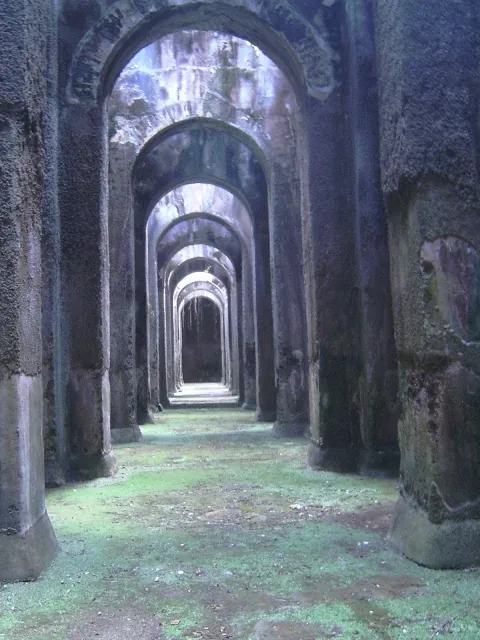
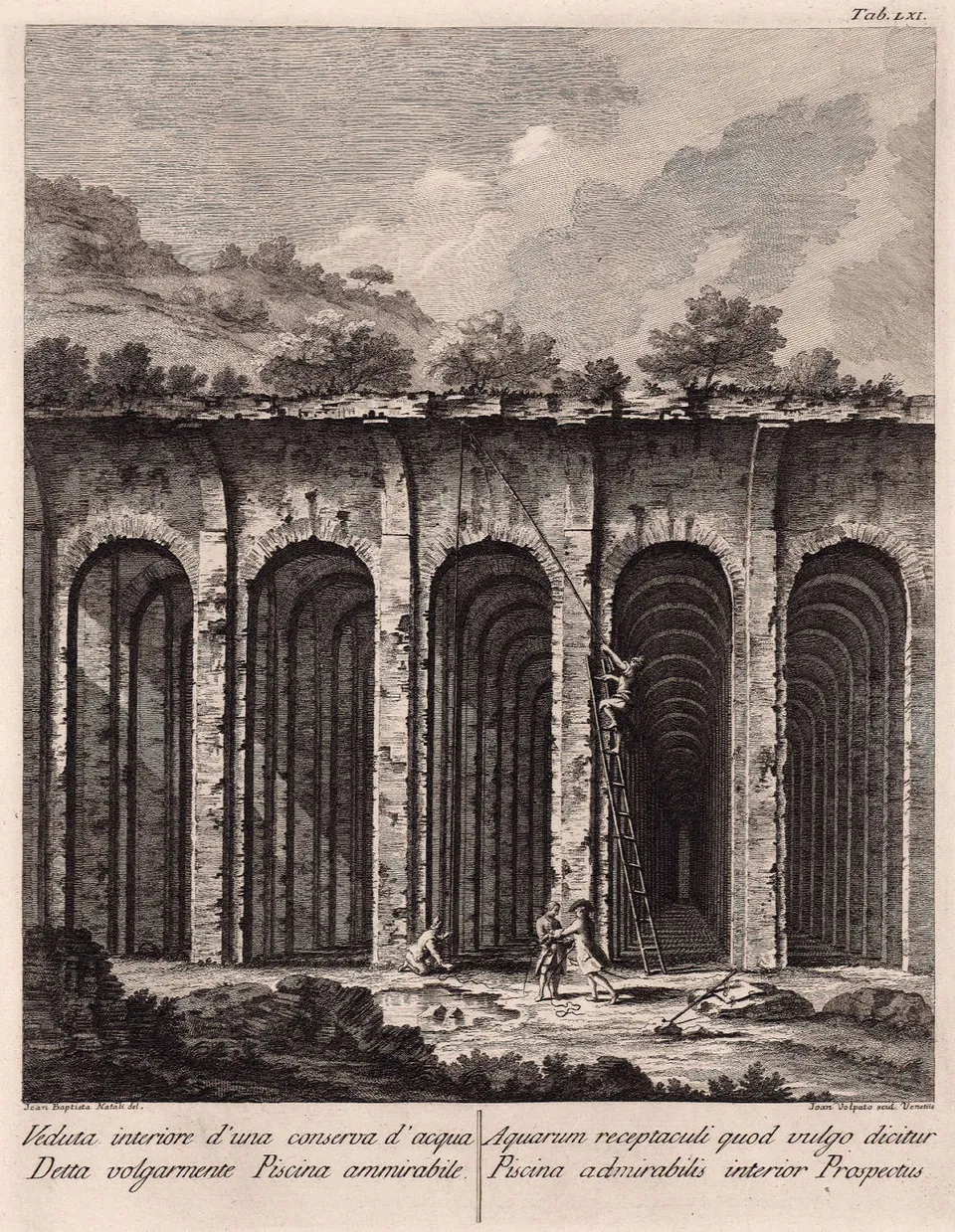
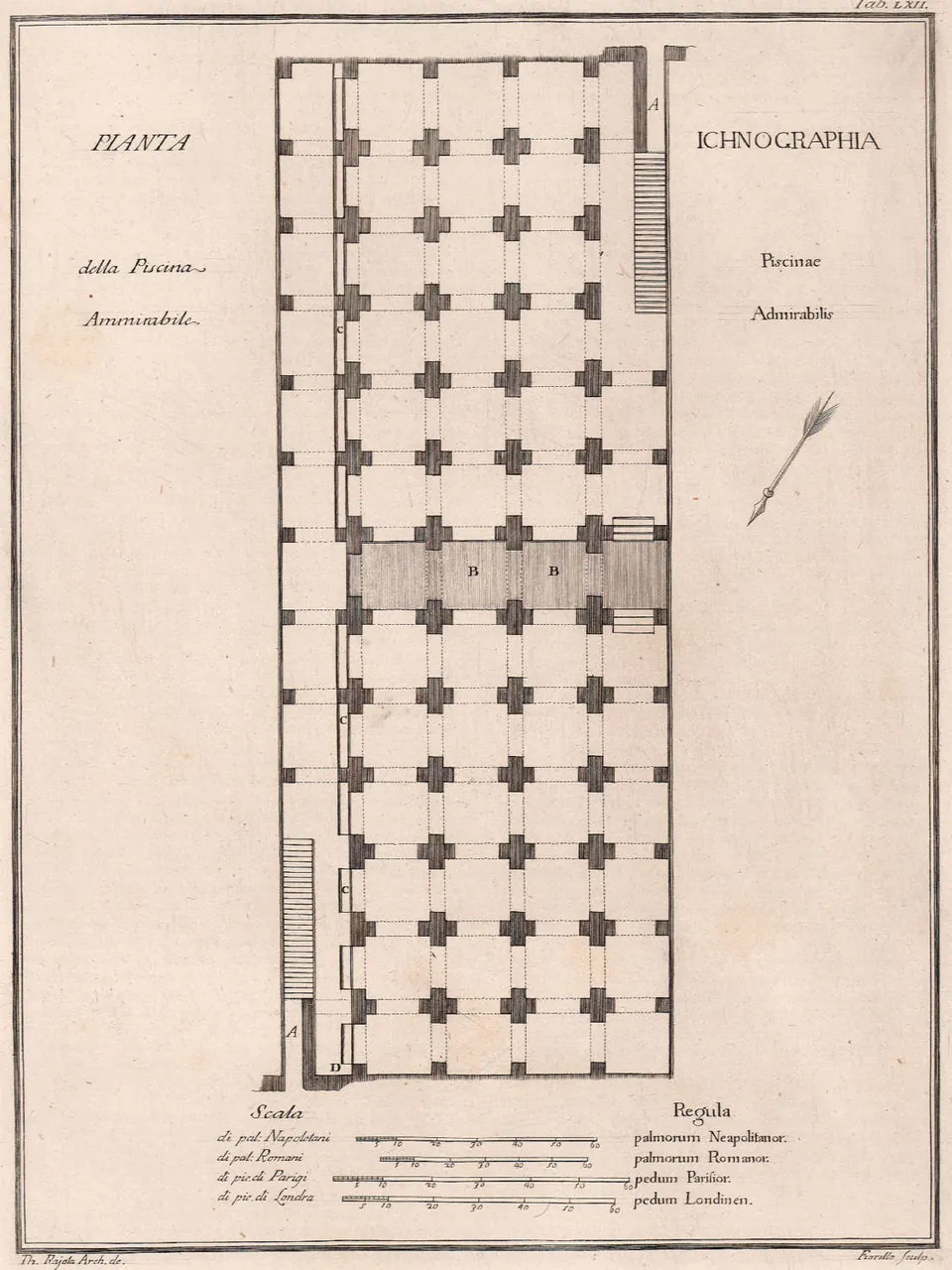
The cistern itself, nearly intact (en.wikipedia). Published figures put it at 70–72 m long, 25–26 m wide and 15 m high, and it held about 12,600 m³ of water (Pleiades; en, it and de.wikipedia; the ticket office). Four rows of twelve cross-shaped pillars divide it into long aisles, under barrel vaults; light and air came in through windows along the top of the side walls and through openings in the roof (it.wikipedia). In the central aisle is a settling basin 1.1 m deep, used to clean and drain the cistern (en and it.wikipedia). The walls and pillars are faced in opus reticulatum and were lined with waterproof plaster. Of the two staircases, only the north-western one still leads down into the main aisle (en.wikipedia).
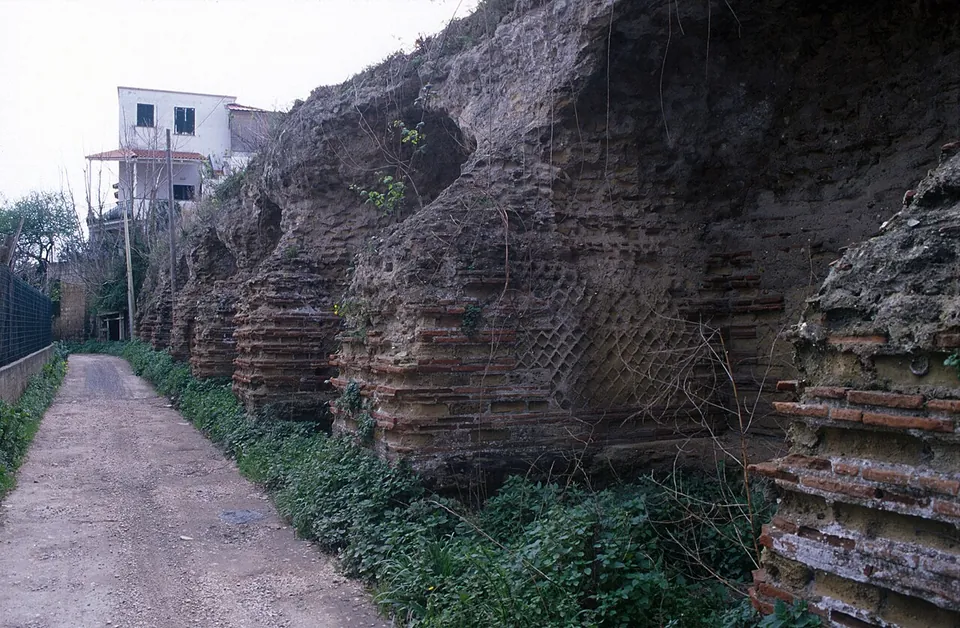
From outside it is far less: a long wall of tufa and brick with buttresses, beside a lane.
Is it worth the trip?
Yes, if you can fit its timetable. This is one of the largest cisterns the Romans built (en.wikipedia), and it is a Roman interior you can walk through, vaults and all, rather than a plan at ground level. The visit is short, about an hour, so it pairs well with the Baia baths park 2.7 km away and with the Cento Camerelle, another cistern complex about 500 m away that has a combined ticket.
The catch is access. It opens only three days a week, entry is accompanied, every 30 minutes, booking is compulsory and you wear a helmet. Visitors who cannot manage stairs should ask the ticket office first.
Getting there and what it costs
The entrance is at Via Piscina Mirabile 27 in Bacoli, a few hundred metres from the town centre. From Naples, the ticket office gives bus 101 from Via Cristoforo Colombo or Molo Beverello to the Via Risorgimento stop in Bacoli, then about 6 minutes on foot; or Line 2 to Campi Flegrei, bus 101 to Via Lungolago and a 10-minute walk; or the Cumana railway to Torregaveta and the bus to Bacoli Centro. Drivers can park near the entrance, at the car park of the Azienda Agricola Piscina Mirabile (CoopCulture). OpenStreetMap maps an EAV bus stop about 260 m away.
A ticket is €5, €2 from 6 to 17, free under 6, and €8 for a one-day ticket that adds the Cento Camerelle. From October 2026 to March 2027 it opens Friday, Saturday and Sunday, 10.00–15.30; from April to September 2027, Friday 10.00–15.30 and Saturday and Sunday 10.00–16.30. The ticket buys accompanied entry, not a guided tour (CoopCulture, the ticket office the Parco Archeologico dei Campi Flegrei links to, read 22 October 2026). The Campi Flegrei are volcanically active, and the park refunds tickets when a site closes because of ground movement, so check on the day.
Visiting details
- Opening hours
- Entry is accompanied, every 30 minutes, and must be booked. From 1 October 2026 to 31 March 2027: Friday, Saturday and Sunday, 10.00–15.30. From 1 April to 30 September 2027: Friday 10.00–15.30, Saturday and Sunday 10.00–16.30. Closed on the other days. A visit takes about an hour.
- Tickets
- €5; €2 from 6 to 17; free under 6, for disabled visitors with a companion and for tour guides. €8 for a one-day combined ticket with the nearby Cento Camerelle. The ticket covers accompanied entry, not a guided tour.
- Parking
- The ticket office points to a car park near the entrance (Parcheggio Azienda Agricola Piscina Mirabile). OpenStreetMap maps surface car parks about 150 m from the cistern.
Before you go
- Booking is compulsory and a helmet must be worn inside.
- The ticket office lists the site as not accessible on one page and as only partly accessible on another; there are stairs down into the cistern.
- The Campi Flegrei are volcanically active, and the park refunds tickets when a site has to close because of ground movement (bradyseism). Check before travelling.
Hours and prices checked 22 October 2026 on the operator's own site. Confirm before travelling.
The Aqua Augusta
The cistern was the end point of the Aqua Augusta, the aqueduct that also carried water to at least eight towns around the Bay of Naples (en.wikipedia). It drew on springs near Serino in the mountains near Avellino, at 376 m above sea level, and reached the Piscina Mirabilis after 96 km; with its ten branches it ran to about 145 km. It is attributed to Marcus Agrippa and dated to the reign of Augustus, between 33 and 12 BC (it.wikipedia). An inscription of AD 324, recording a restoration under Constantine, lists the towns it served: Nola, Acerrae, Atella, Naples, Pozzuoli, Baiae, Cumae and Misenum; Pompeii and Herculaneum had been supplied too before the eruption of AD 79 buried them (en.wikipedia).
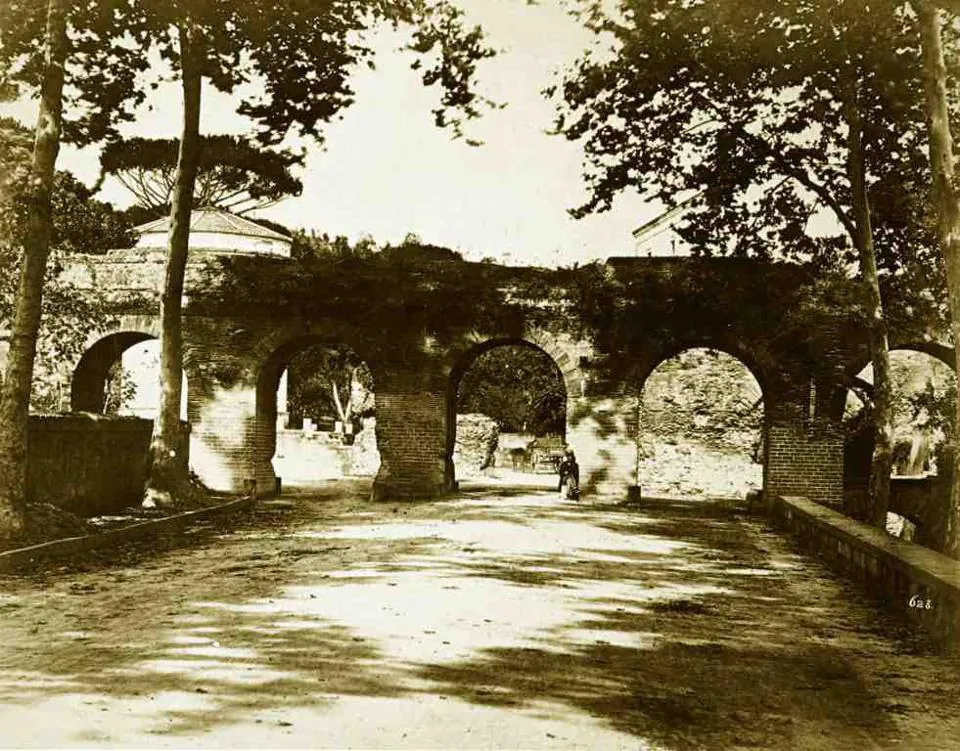
Most of it runs underground and little of it can be seen. Visible stretches include the twin arcades of the Ponti Rossi in Naples, arches in the cellars of Via Arena alla Sanità that are open to the public, a section beside the Crypta Neapolitana, and, around Bacoli, a water-catchment cave near Scalandrone and a stretch next to the entrance of the Baia archaeological park (en.wikipedia).
History
The cistern was built under Augustus (en and it.wikipedia), or at the start of the 1st century AD (the ticket office). It is usually said to have supplied the Roman fleet based at Misenum (it, de and fr.wikipedia; the ticket office), but it lies about 1 km from the base’s quarters, which the aqueduct fed directly, so it may instead have belonged to one of the area’s great villas (en.wikipedia). A row of twelve small vaulted rooms was added along one side in the 1st or early 2nd century (en.wikipedia). The cistern went out of use for good when the Aqua Augusta was destroyed, between the 4th and 5th centuries (en.wikipedia).
In later centuries some of its waterproof plaster was scraped off to make gunpowder (de.wikipedia), and during the Second World War it served as an air-raid shelter (en.wikipedia). The name, “wondrous pool”, is credited to Petrarch in the 14th century (en and de.wikipedia), though the Italian and French articles date it to the 16th or 17th century. Excavation was completed between 1910 and 1926; the pillars were refaced in 1926, missing parts of the vaults were rebuilt in 1936, and the roof terrace was waterproofed in 2007 (en.wikipedia). Eighteenth-century travellers likened it to an underground cathedral, and it has become a favoured setting for performances and films (the ticket office).
More photographs
Nearby
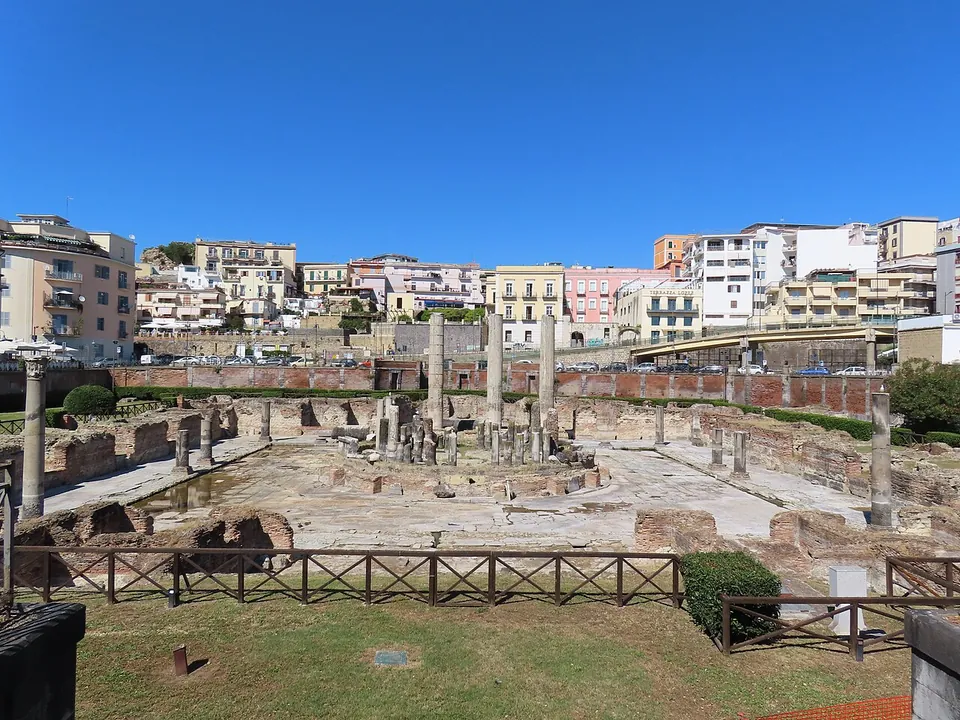
Photo: Superchilum · CC BY-SA 4.0 · Commons
5 km · site · Campania
Macellum of Pozzuoli
The whole plan of the market lies open in a sunken square of about 58 by 75 m, a few steps from the harbour quays in the centre of Pozzuoli (the operator).
5 km · city · Campania
Puteoli – Pozzuoli
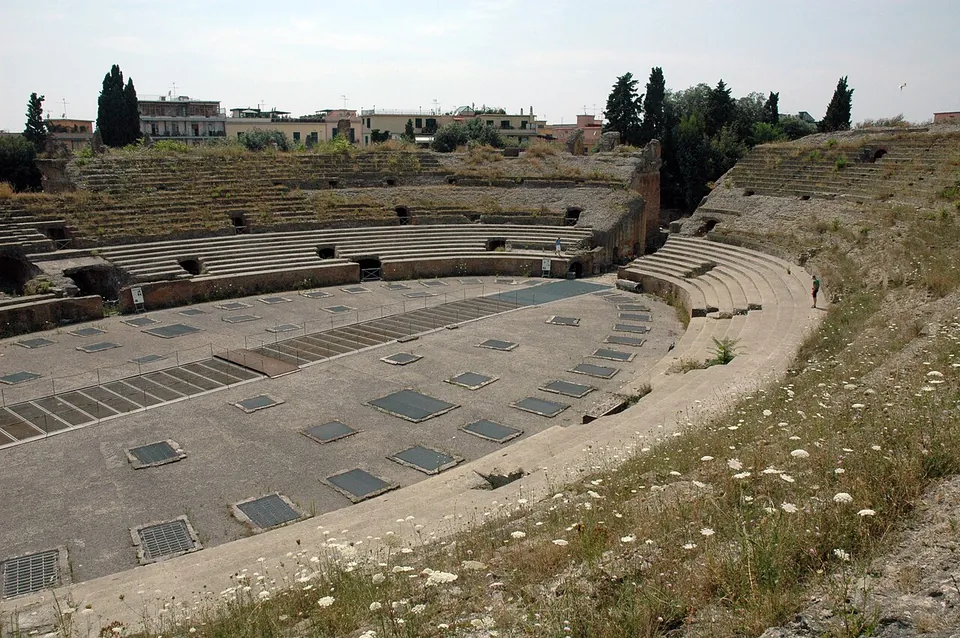
The Flavian Amphitheatre is the set piece: only the Colosseum and the amphitheatre of Capua are larger.
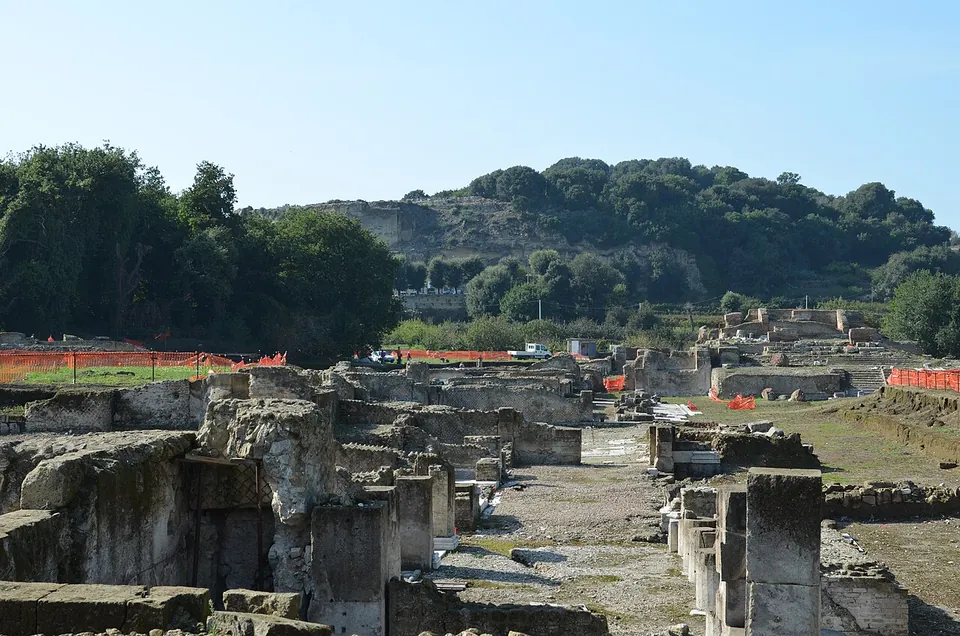
Photo: AlexanderVanLoon · CC BY-SA 3.0 · Commons
6 km · city · Campania
Cumae
The visit centres on the acropolis, a hill above the coast with remains on two terraces (the operator).


Straight-line distances.
Sources
Every fact on this page comes from the records below, each used under the licence noted.
| Source | Licence |
|---|---|
| Pleiades 812127750 | CC BY |
| Wikidata Q222410 | CC0 |
| Vici.org 78062 | CC BY-SA (text), CC0 (metadata) |
| OpenStreetMap way/1241141330 | ODbL |
| Wikipedia (en) — Piscina Mirabilis | CC BY-SA 4.0 |
| Wikipedia (it) — Piscina mirabilis | CC BY-SA 4.0 |
| Wikipedia (de) — Piscina mirabilis | CC BY-SA 4.0 |
| Wikipedia (fr) — Piscina mirabilis | CC BY-SA 4.0 |
| Wikipedia (en) — Aqua Augusta (Naples) | CC BY-SA 4.0 |
| Wikipedia (it) — Acquedotto romano del Serino | CC BY-SA 4.0 |
| Pleiades — Aqua Augusta (Serino aqueduct) | licence not recorded |
| Wikidata — Aqua Augusta (Q631734) | licence not recorded |
| Parco Archeologico dei Campi Flegrei — visitor information (the operator) | licence not recorded |
| CoopCulture — Piscina Mirabilis (the ticket office the operator links to) | licence not recorded |
| CoopCulture — Piscina Mirabilis, accompanied entry for individuals (tickets) | licence not recorded |