

Castel Sant’Angelo is the tomb the emperor Hadrian built for himself and his family on the right bank of the Tiber. It became a fortress in late antiquity and later the popes’ castle. The great round drum at its core and the passages inside it are Roman. Most of what stands on top of the drum and around it is not.
What is there today
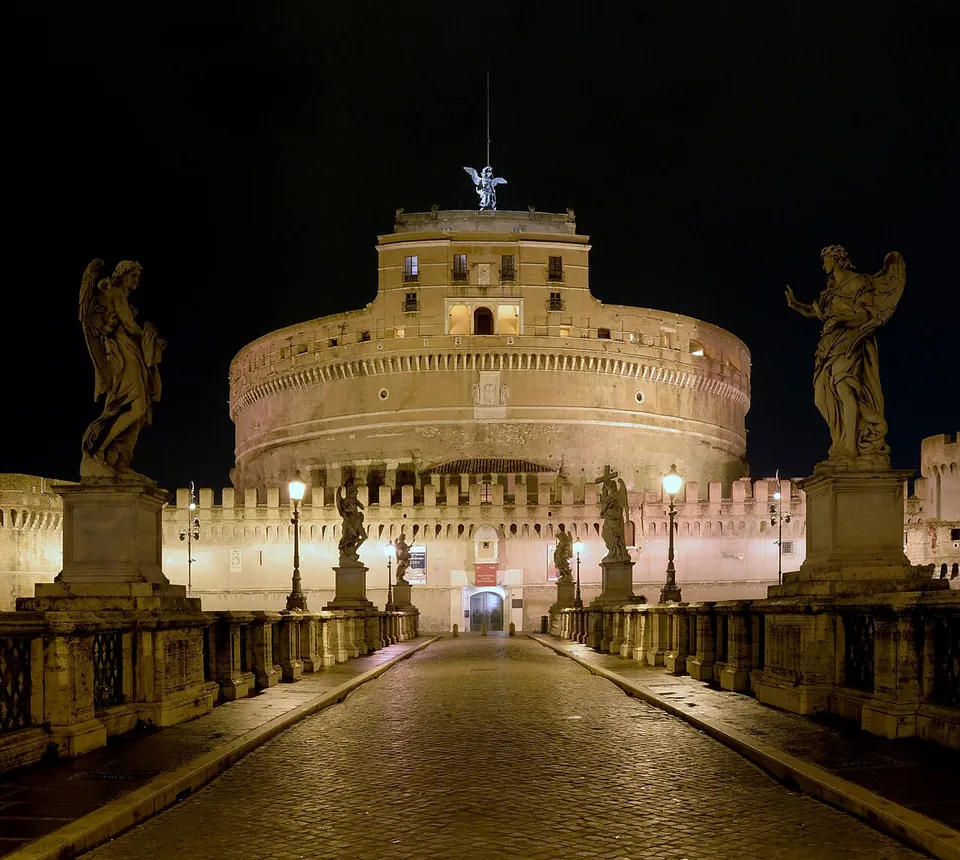
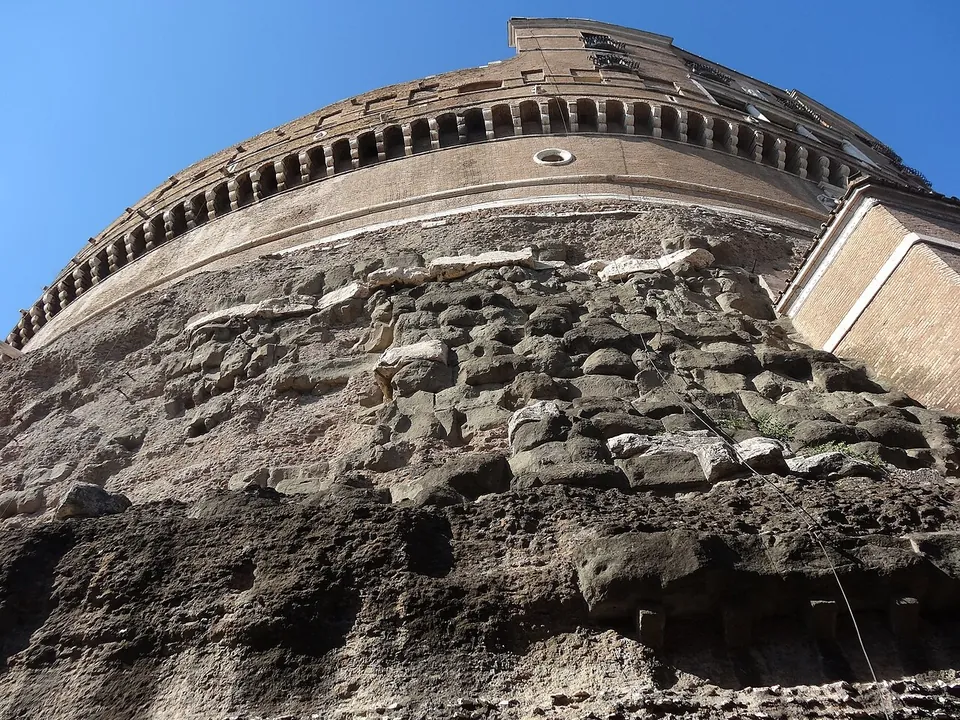
From outside, the Roman part is the massive cylinder: Hadrian’s drum, built of peperino stone and Roman concrete faced with travertine and set on a square base (de.wikipedia). Much of its decoration is lost, including the bronze and stone statues, which defenders threw down on the Goths besieging the city in 537 (en.wikipedia). The bastions, the papal apartments and the bronze archangel on the summit all come from the castle’s later lives, between the 15th and the 18th century (it.wikipedia; en.wikipedia).
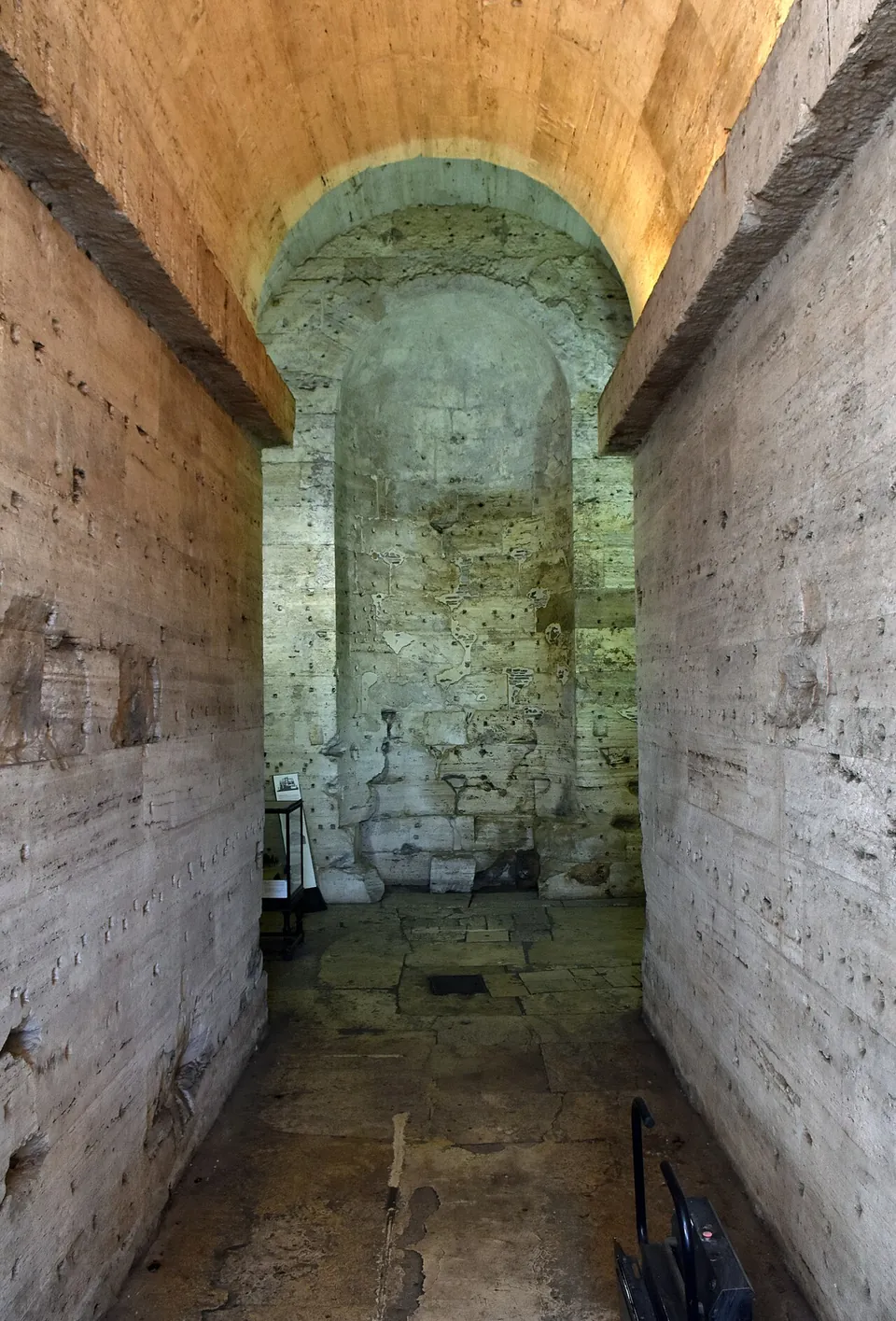
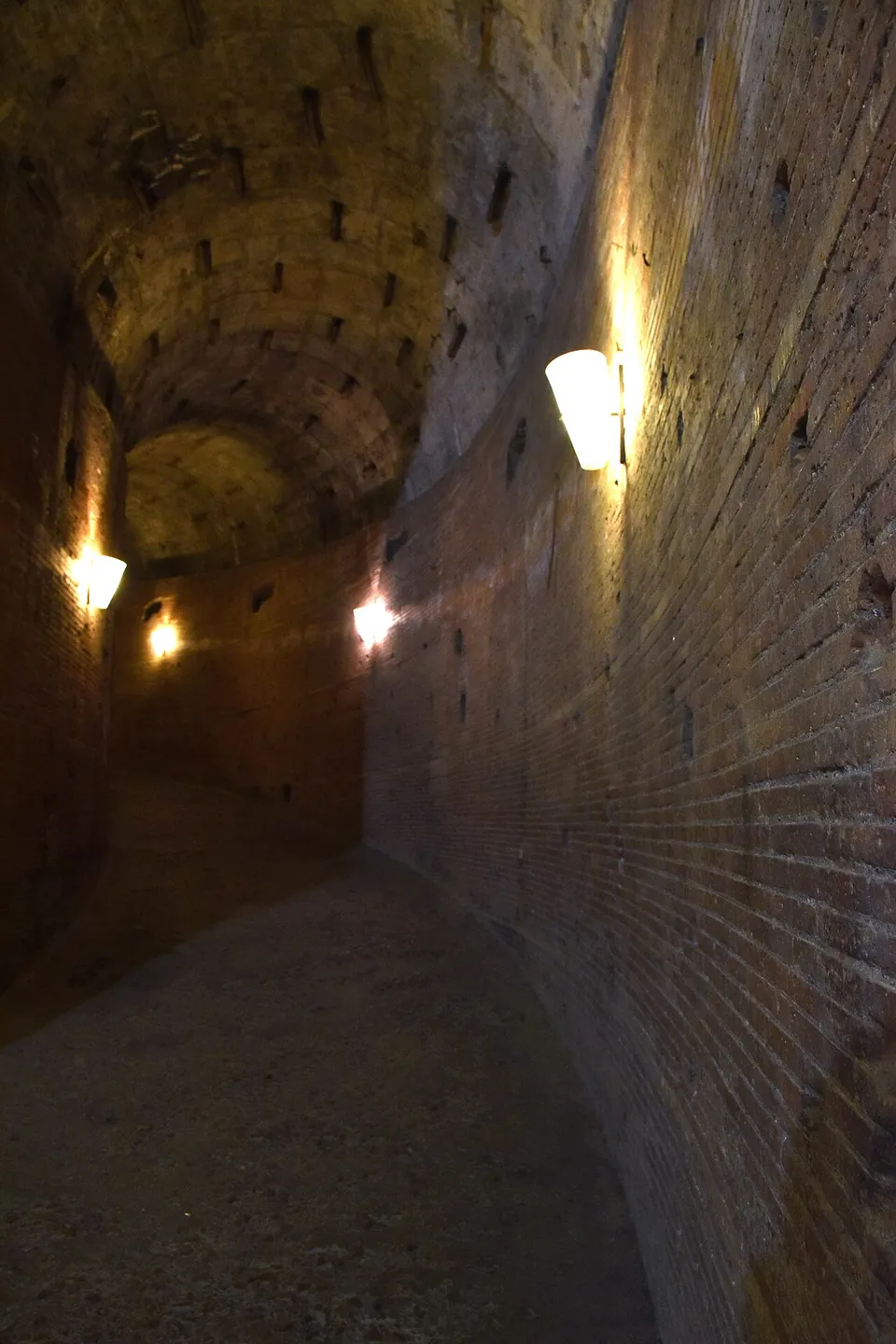
Inside, the visit starts in the Roman tomb. The museum’s route runs through the dromos, the original entrance passage, and up the brick spiral ramp that climbed slowly towards the burial chamber, as far as the hall known as the room of the urns. This route through levels 1 to 3 of the building has been restored to be as close to the original as possible (it.wikipedia). Where exactly the urns stood is debated, and some place the burial chamber in the treasury room higher up (it.wikipedia; en.wikipedia). The emperors’ ashes are long gone: Alaric’s Visigoths scattered them in 410 (Pleiades). Levels 4 to 7 belong to the papal castle: its courtyards, the frescoed apartments of Paul III, the treasury and library, and a terrace beneath the angel with a view over the whole city (it.wikipedia).
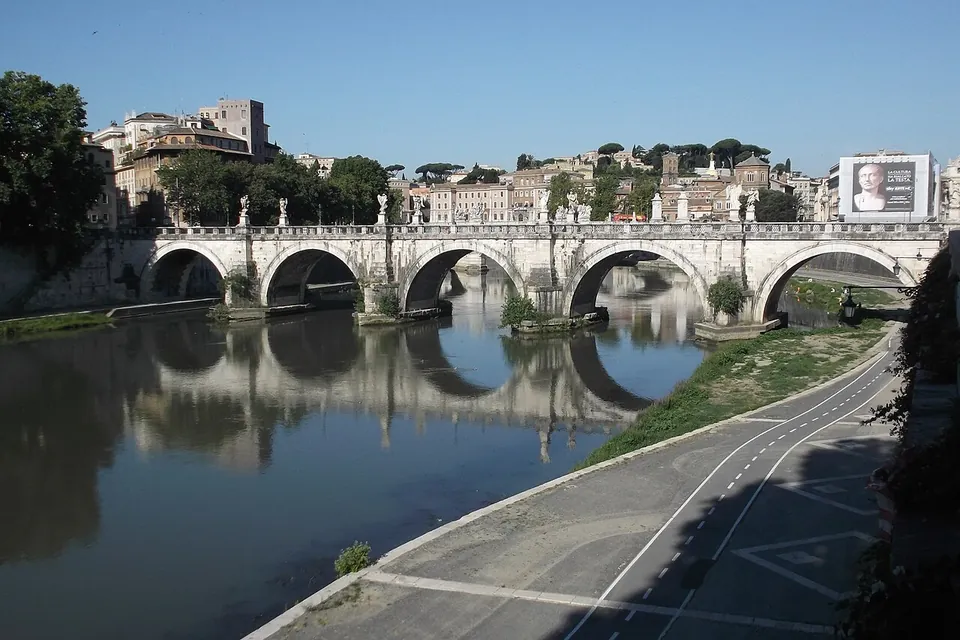
In front of the castle, Hadrian’s own bridge, the Pons Aelius, still crosses the Tiber as Ponte Sant’Angelo, a pedestrian street open to anyone (see below).
Is it worth the trip?
Yes, if you know what the ticket buys. The Roman monument here is the drum and the route inside it. But four of the building’s seven levels are the popes’ castle, so a visitor who has come only for Rome will spend much of the €18 on Renaissance rooms, though they are the most lavish in the building, and the terrace view comes with them (it.wikipedia). Without a ticket, the bridge is Hadrian’s too: three of its arches are Roman, and it has a fine view of the castle (en.wikipedia).
It is busy, with 966,623 visitors in 2022 (it.wikipedia), and the operator recommends booking every day, especially at weekends. Note that it is closed on Mondays.
Getting there and what it costs
The castle stands on the right bank of the Tiber in the Borgo district, about 2 km from the Roman Forum and 1 km from the Pantheon in a straight line. From the historic centre you walk across Ponte Sant’Angelo to the gate. ATAC bus stops lie 245 to 280 m away, and the nearest public car parks mapped are about 270 m away (OpenStreetMap). The Passetto di Borgo, a fortified corridor about 800 m long, links it to the Vatican (de.wikipedia).
Opening hours and tickets (the operator’s page, read 13 October 2026; prices and dates move, so check before going):
- Hours: Tuesday to Sunday 09.00 to 19.30, last entry 18.30. Closed on Mondays, 25 December and 1 January. Through 2026 it also opens on the first Monday of each month, 14.00 to 20.00, on a €5 ticket sold only on site.
- Admission: €18 since 1 July 2026; €2 for EU citizens aged 18 to 25; free for under-18s. On the first Sunday of the month entry is free, with tickets handed out at the box office and no booking. The ticket also gets you into two house museums, the Boncompagni Ludovisi and the Hendrik Christian Andersen, that day and the two days after.
- Bring ID: tickets are issued in your name and checked against an original identity document at the gate.
- Works: while the visitor reception is being rebuilt, tickets are sold from temporary structures outside, and the ground-floor circuit may be diverted, so the visit can begin directly in the dromos.
- Access: for visitors with disabilities, access is limited to part of the outdoor spaces.
- The Passetto di Borgo is open only on guided visits booked separately.
Visiting details
- Opening hours
- Tuesday to Sunday 09.00–19.30, last entry 18.30. Closed on Mondays, 25 December and 1 January. Through 2026 it also opens on the first Monday of each month, 14.00–20.00 (last entry 19.00).
- Tickets
- €18 (since 1 July 2026); €2 for EU citizens aged 18–25; free under 18 and on the first Sunday of the month, when free tickets are collected at the box office and cannot be booked. First-Monday afternoons €5, sold on site only. The ticket also gives free entry to the Casa Museo Boncompagni Ludovisi and the Casa Museo Hendrik Christian Andersen on the day and the two days after. The Passetto di Borgo is seen only on a separately booked guided visit.
- Parking
- The nearest public car parks mapped are about 270 m away (OSM way/128385157 and way/128385158); everything closer is private. ATAC bus stops lie 245–280 m from the castle.
Before you go
- Tickets are issued in the visitor's name and checked against an original identity document at the entrance; if the two do not match, entry is refused without a refund.
- Booking is recommended every day, and especially at weekends and on public holidays.
- For visitors with disabilities, access is limited to part of the outdoor spaces.
- Works on the visitor reception are under way. Tickets are sold from temporary structures outside, and the ground-floor circuit may be diverted, so the visit can start directly in the dromos.
Hours and prices checked 13 October 2026 on the operator's own site. Confirm before travelling.
Ponte Sant’Angelo: the Pons Aelius
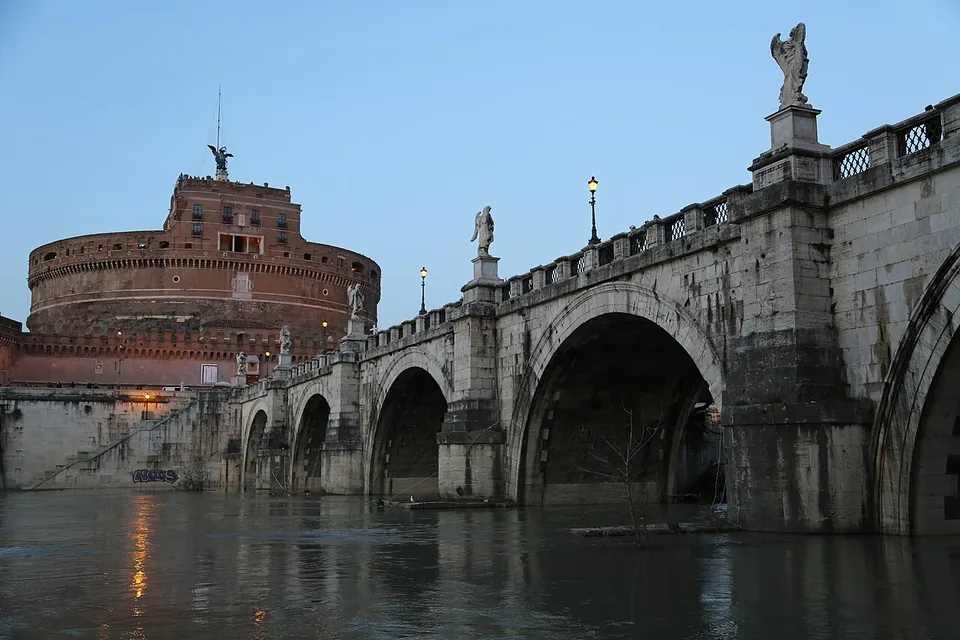
Hadrian completed the bridge in 134 to carry the way from the city centre to his new mausoleum (Pleiades; en.wikipedia); it.wikipedia dates it to 134–135 and names its designer as one Demetriano. It is faced with travertine and crosses the Tiber on five arches, three of which are Roman (en.wikipedia). The other two replaced the Roman ramps that led up from each bank, demolished in the late 19th century when the river embankments were built (en.wikipedia; it.wikipedia). The statues are later additions. Saint Peter and Saint Paul at the city end date from 1535. The ten angels carrying the instruments of the Passion were carved by Bernini’s pupils under his direction and set on the bridge in 1670. Two of the angels on the bridge are copies; Bernini’s own originals are in the church of Sant’Andrea delle Fratte (it.wikipedia). The bridge is now for pedestrians only (en.wikipedia).
The Theatre of Nero
About 500 m west of the castle, under the courtyard of the Renaissance Palazzo della Rovere between Via della Conciliazione and Borgo Santo Spirito, excavations from 2020 to 2023 found what is identified as Nero’s private theatre. Pliny the Elder mentions it, and until then it was known only from such texts (en.wikipedia; Pleiades). Two Julio-Claudian brick buildings were found: one has the half-circle plan of a seating area, the other probably held the scenery and costumes (en.wikipedia). There is nothing to see. The palace is the seat of the Equestrian Order of the Holy Sepulchre, and it.wikipedia reports that the ruins are to be covered over again once they have been recorded, with the finds to be shown in a future museum inside the palace. No visiting arrangement has been published.
History
Hadrian had the mausoleum built for himself and his family between 134 and 139 (Pleiades), on the model of the Mausoleum of Augustus but on a gigantic scale (it.wikipedia). It was finished in 139 under his successor Antoninus Pius (de.wikipedia). Its parts were a square base faced with marble and carrying the names of the emperors buried inside; above it the travertine-faced drum, topped by an earth mound planted with trees and ringed with marble statues; and, at the summit, a bronze chariot group driven by Hadrian (it.wikipedia). The drum is 64 m across and 20 m high, and published figures for the base range from 84 to 89 m a side (de.wikipedia). Reconstructions of the top differ, and some replace the garden with a tall stone cone (de.wikipedia).
Hadrian’s ashes were placed here with those of his wife Sabina and his adopted son Lucius Aelius (en.wikipedia). Emperors went on being buried here, among them Antoninus Pius, Marcus Aurelius, Commodus and Septimius Severus (de.wikipedia), until the last recorded burial, Caracalla, who died in 217 (Pleiades; en.wikipedia).
Rome’s late antique defences then changed the tomb’s role. By 401 it had become a fortress, which Honorius took into the line of the Aurelian Walls; it.wikipedia gives the year as 403. In 410 Alaric’s Visigoths looted it and scattered the urns, and in 537, as Procopius records, the defenders threw its bronze and stone statues down on the Goths besieging the city (Pleiades; en.wikipedia). One statue thrown from the walls, the Barberini Faun, was later found in the castle’s moat (it.wikipedia). Early in the 6th century Theodoric used it as a state prison (it.wikipedia).
Its present name comes from a legend: in 590, during a plague, Pope Gregory the Great saw the archangel Michael on top of the tomb sheathing his sword. de.wikipedia traces the story to the 13th-century Golden Legend and notes that the procession never came near the mausoleum. Through the Middle Ages the castle was the stronghold of Roman noble families and of the popes, who linked it to the Vatican by the Passetto in 1277 (de.wikipedia). The popes rebuilt it as a fortress and a residence in the 15th and 16th centuries and used it as a prison into the 19th (it.wikipedia). It opened to the public as a museum on 13 February 1906 (de.wikipedia) and became the National Museum in 1925 (the operator).
More photographs



Nearby
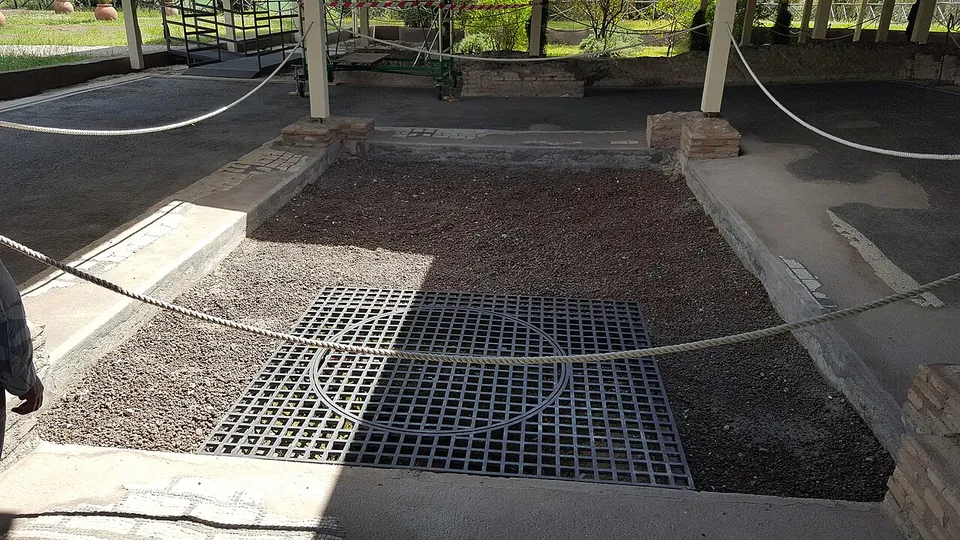
Photo: MumblerJamie · CC BY-SA 2.0 · Commons
11 km · villa · Lazio
Villa of Livia
The operator describes the private wing with the bedrooms of Livia and the emperor, an atrium and a small inner garden, and the large reception rooms that open onto a peristyle; the rooms once had painted walls and floors of mosaic and cut marble (Soprintendenza Speciale di Roma).
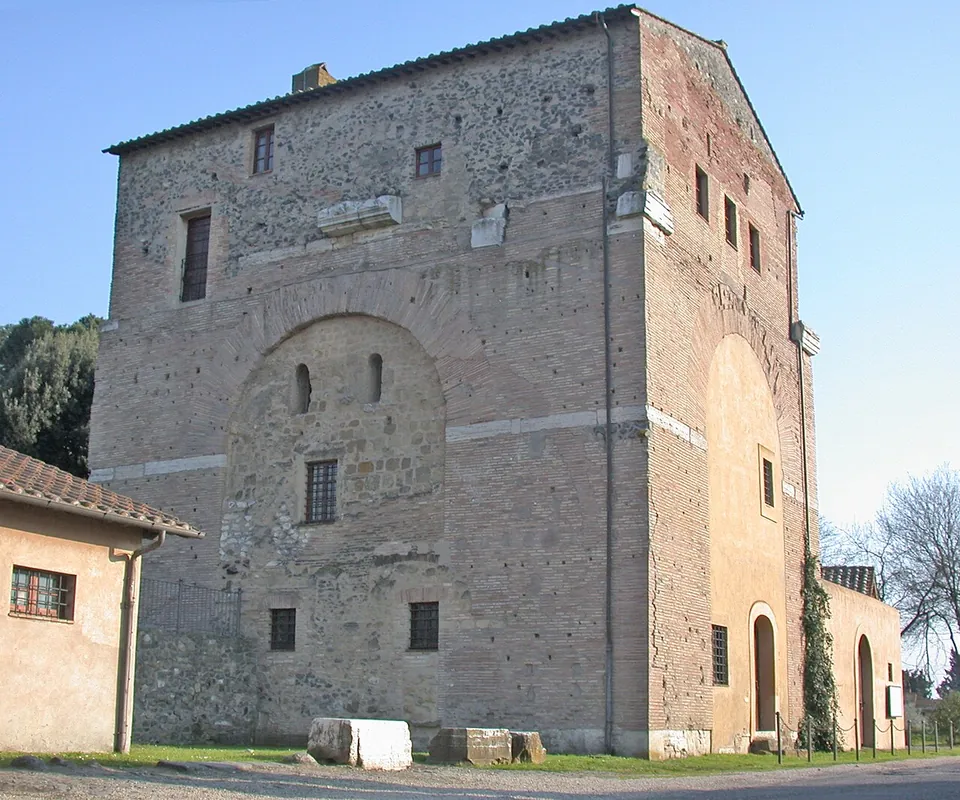
Photo: MM · Public domain · Commons
17 km · arch · Lazio
Arch of Malborghetto
At first sight you see an austere farmhouse rather than an arch (it.wikipedia).
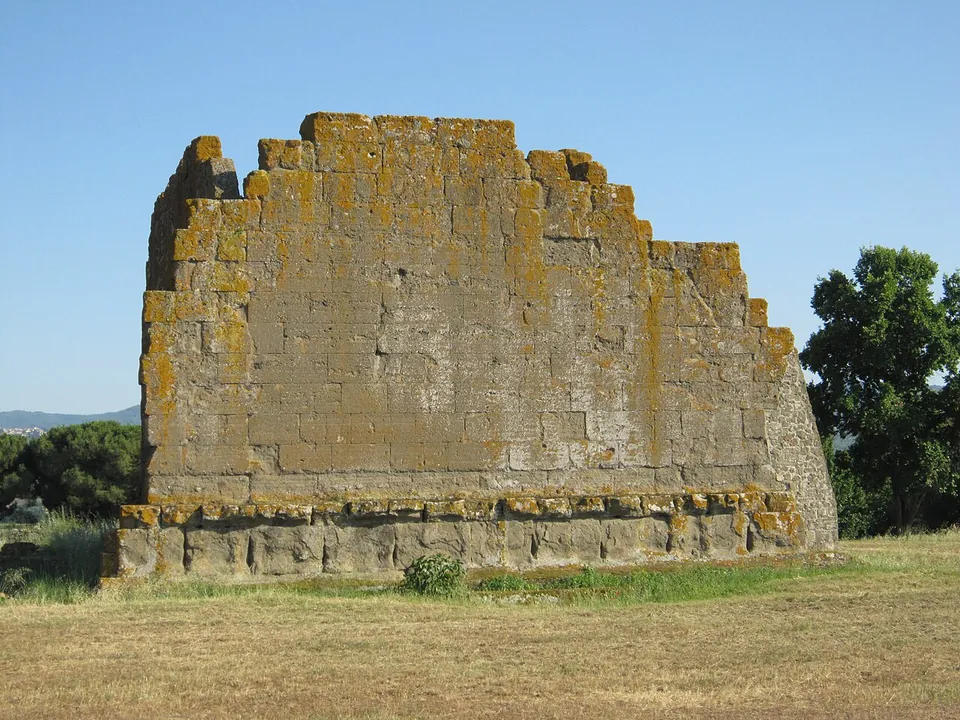
Photo: Carlomorino · CC BY-SA 3.0 · Commons
21 km · city · Lazio
Gabii
The park the state holds covers about 70 hectares on the southern rim of a volcanic crater whose lake was drained in the 19th century (the operator; en.wikipedia).


Straight-line distances.
Sources
Every fact on this page comes from the records below, each used under the licence noted.
| Source | Licence |
|---|---|
| Pleiades 334776904 | CC BY |
| Wikidata Q486382 | CC0 |
| OpenStreetMap relation/2720817 | ODbL |
| Museo Nazionale di Castel Sant'Angelo — hours, tickets and notices (the operator, Direzione Musei nazionali della città di Roma) | licence not recorded |
| Wikipedia (en) — Castel Sant'Angelo | CC BY-SA 4.0 |
| Wikipedia (it) — Castel Sant'Angelo | CC BY-SA 4.0 |
| Wikipedia (de) — Engelsburg | CC BY-SA 4.0 |
| Pleiades — Pons Aelius | licence not recorded |
| Wikidata — Ponte Sant'Angelo (Q870476) | licence not recorded |
| Wikipedia (en) — Ponte Sant'Angelo | CC BY-SA 4.0 |
| Wikipedia (it) — Ponte Sant'Angelo | CC BY-SA 4.0 |
| Pleiades — Theater of Nero | licence not recorded |
| Wikipedia (en) — Theatre of Nero | CC BY-SA 4.0 |
| Wikipedia (it) — Teatro di Nerone | CC BY-SA 4.0 |