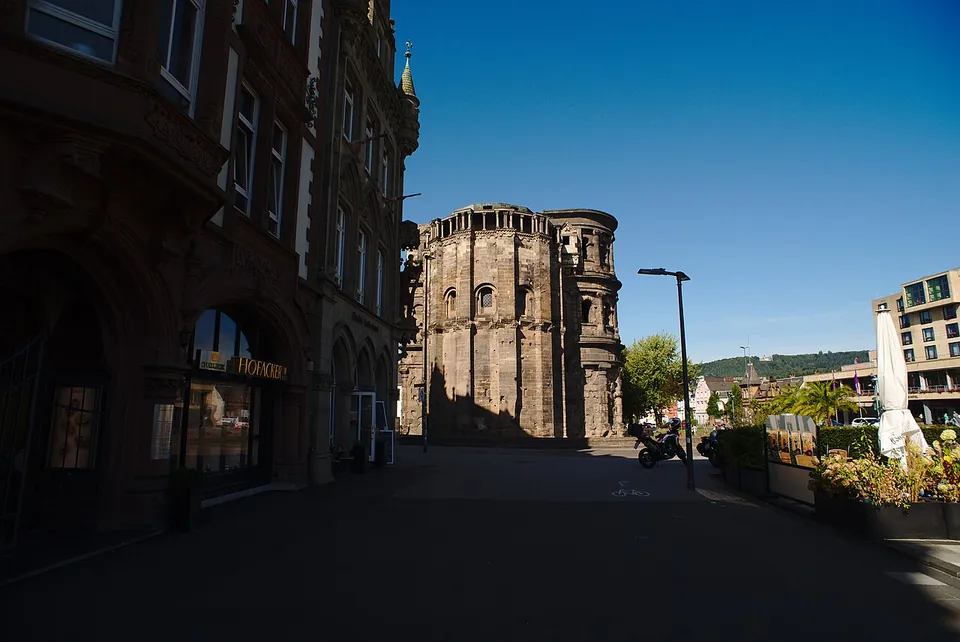
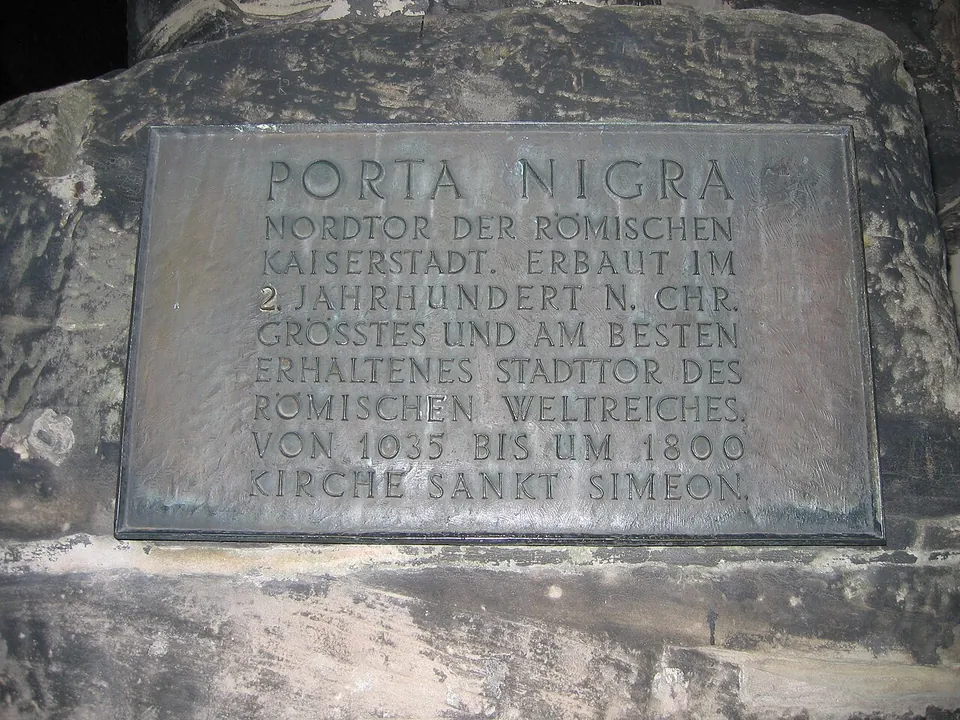


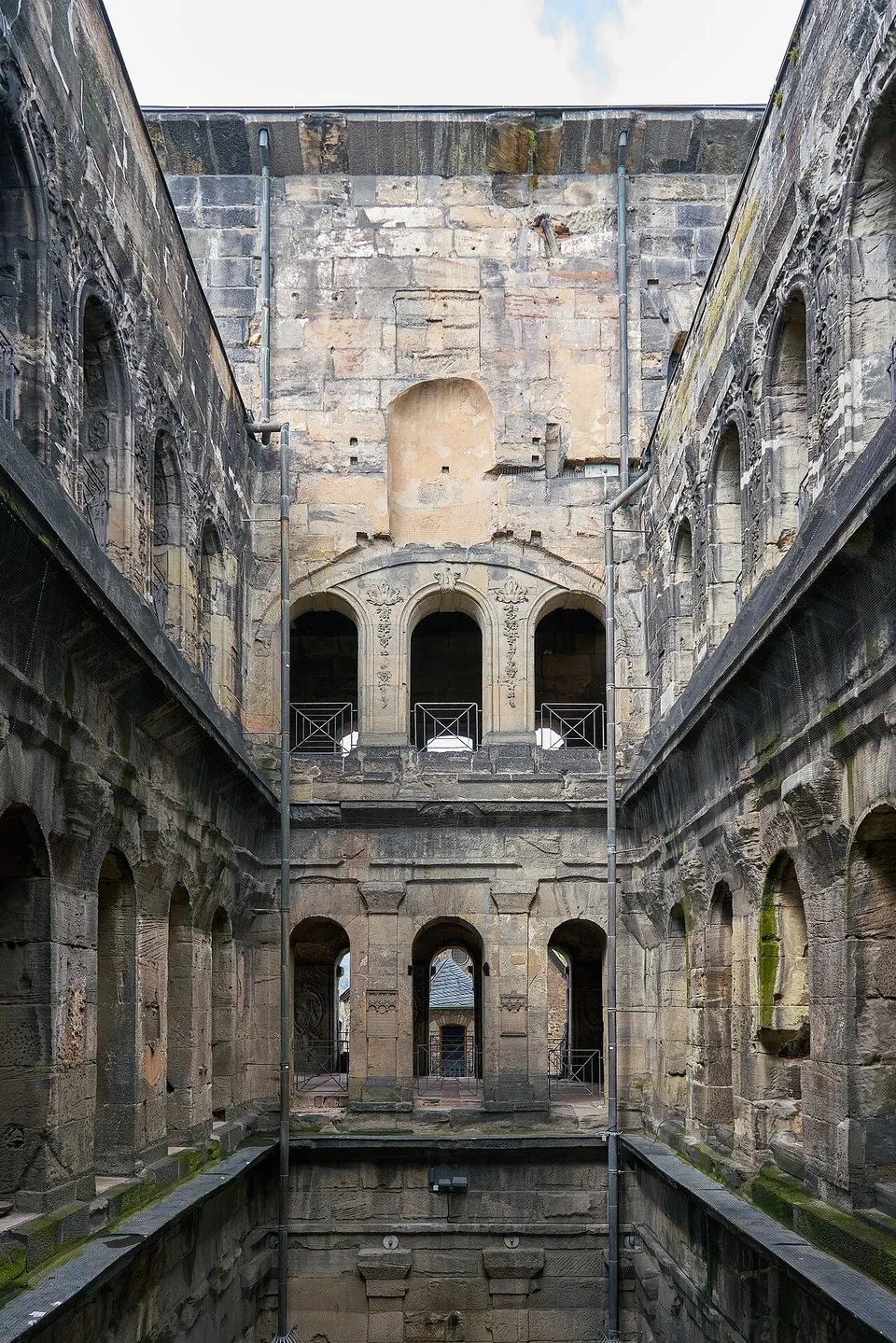
The Porta Nigra is the north gate of Roman Trier, a gatehouse of dark sandstone begun in AD 170 and the best-preserved Roman city gate in Germany (de.wikipedia). It still stands to its upper storeys, and you can walk through it, into its courtyard and up through its floors.
What is there today
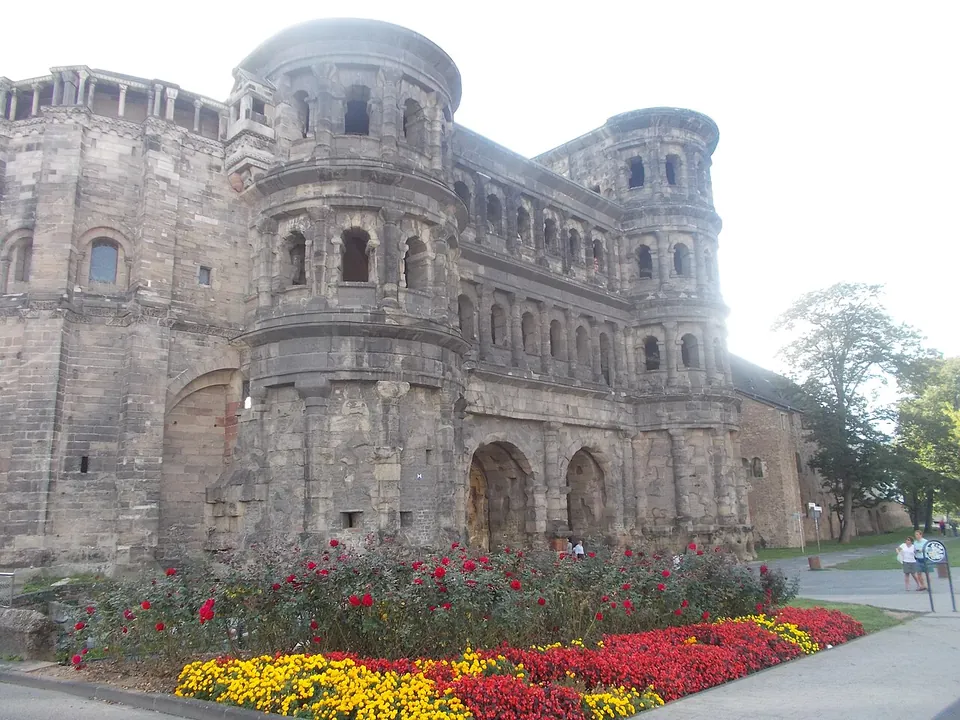
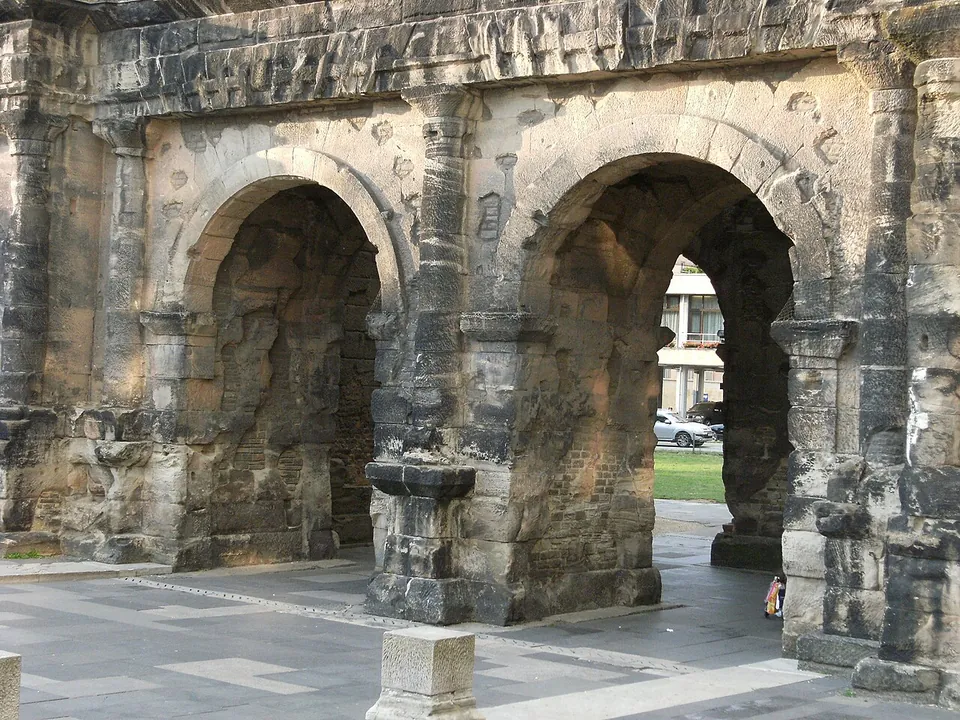
This is a gate standing almost complete, not the foundations of one. Published figures put it at about 36 m long and 27 to 29 m high, built of some 7,200 sandstone blocks, the largest of them up to six tonnes (de.wikipedia; it.wikipedia; the operator). Two passages lead through the ground floor into a narrow inner courtyard open to the sky, and on the outer, north side the two towers project as near-semicircles (en.wikipedia). The top storey of the east tower was taken down in the Middle Ages and never rebuilt, the only serious change to the Roman fabric still visible today (de.wikipedia; en.wikipedia).
Look closely and you can see that it was never finished. The half-columns on the outer facade were left rough, and blocks still carrying their bosses stand in the way of where the gate leaves would have turned, so a movable gate could probably never have been fitted (de.wikipedia). The holes pocking the stone are where medieval scavengers broke out the iron clamps and lead fixings for reuse; the traces are plain to see on the north side (de.wikipedia; en.wikipedia).
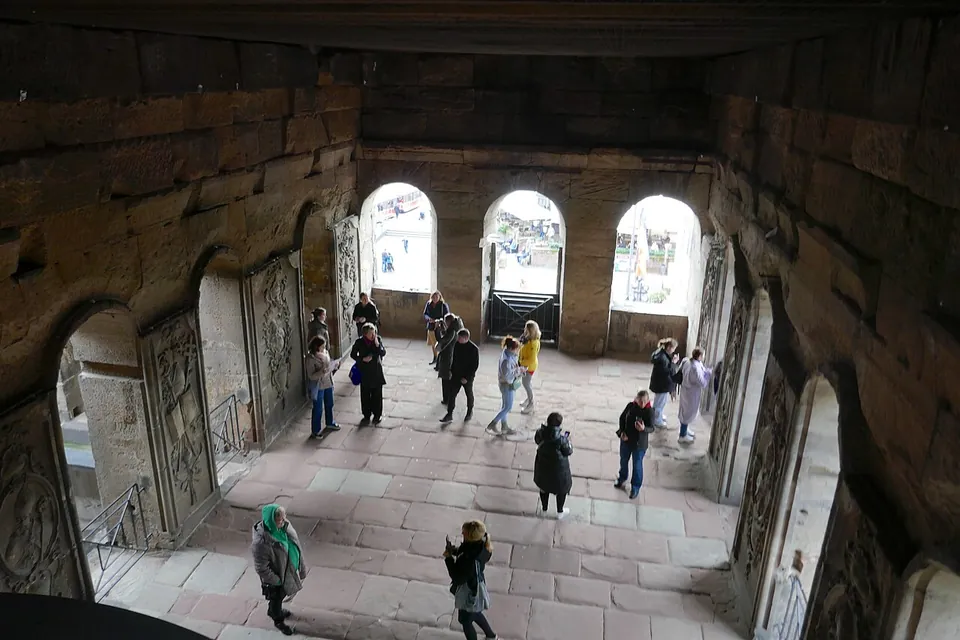
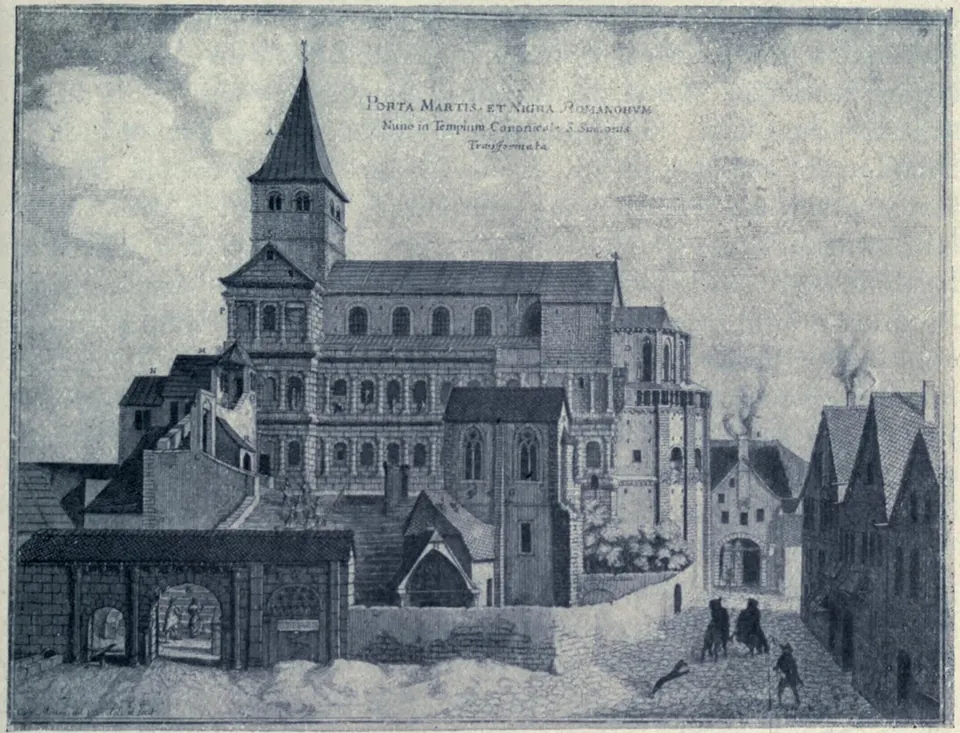
The church the gate became has left its marks too. The lower part of its Romanesque apse still stands against the east tower, and inside, the organ chamber of the upper church can be made out by the west tower, and baroque ornaments and reliefs carved into the Roman sandstone of the upper church in the later 18th century survive (de.wikipedia). Windows of the west tower that were enlarged into entrance doors are still visible (en.wikipedia). The gate is also the operator’s information centre for the Roman city, with a model of it; a multimedia guide, free on your own smartphone over the site’s wifi, tells the story from antiquity to the church, and an installation shows how the gate became a place where a saint was venerated (the operator).
Outside, along the last 100 m of the street running south from the gate, Roman columns have been set up where they stood in antiquity, to give an idea of the colonnade that once lined the way in (en.wikipedia).
Is it worth the trip?
Yes. It is Trier’s landmark, and the operator calls it the best-preserved Roman city gate north of the Alps. The outside costs nothing: the gate stands on a pedestrian square (OpenStreetMap). Inside, the ticket gives the upper floors with their traces of the church, the information centre and the view from the top (de.wikipedia; the operator).
Two things to know before you go. A facade restoration is under way: the south side is partly under scaffolding and routes inside may be restricted, though the gate stays open. The work is to be carried out in stages over several years, and since the scaffolding only ever covers one section, most of the building stays visible (the operator). And the upper floors are reached only by stairs; a ramp gives step-free access to the threshold of the gate, and tactile models at the entrance show its building phases (the operator).
The same operator runs Trier’s amphitheatre, Imperial Baths and Forum Baths, and its AntikenCard combines them with the gate and the Rheinisches Landesmuseum (the operator), so the gate is best combined with them.
Getting there
From Trier’s main railway station a signposted footpath leads to the gate, and buses 2, 3, 4, 12, 13 and 82 run from the station to the Porta Nigra stop, which lines 1, 5, 6, 7, 8 and 16 also serve. By car, the Parkhaus Porta Nigra is 50 m away, the Kaufhof multi-storey 200 m, and there is a car park in Rindertanzstraße 300 m away (the operator).
The gate is open daily: 09.00 to 18.00 from April to September, 09.00 to 17.00 in March and October, and 09.00 to 16.00 from November to February, with last entry half an hour before closing. It is closed on Rosenmontag (the carnival Monday), 24 to 26 December, 31 December and 1 January, and the operator warns that bad weather can close it at short notice. A ticket is €6 for an adult, €5 reduced and €3 for ages 6 to 17; under-sixes go free, and a family ticket is €6 with one adult or €12 with two, each with up to four children. If you are seeing more of Roman Trier, the AntikenCard Basic, €18, covers two of the four ticketed monuments plus the Rheinisches Landesmuseum, and the Premium, €28, all four plus the museum (zentrum-der-antike.de, read 30 October 2026; check before travelling, since prices move). Tickets are also sold online. Dogs are not allowed, except guide and assistance dogs.
Visiting details
- Opening hours
- Daily 09.00–16.00 in January, February, November and December; 09.00–17.00 in March and October; 09.00–18.00 from April to September. Last entry 30 minutes before closing. Closed on Rosenmontag (the carnival Monday), 24–26 and 31 December and 1 January.
- Tickets
- €6 adults, €5 reduced (students, pensioners and some other groups, with proof), €3 ages 6–17, free under 6. Family ticket €6 for one adult with up to four children aged 6 or over, €12 for two adults with up to four children. Groups of 10 or more €5 per adult. Also covered by the AntikenCard: Basic €18 (two of Trier's four ticketed Roman monuments plus the Rheinisches Landesmuseum), Premium €28 (all four plus the museum).
- Parking
- Parkhaus Porta Nigra 50 m from the gate, the Kaufhof multi-storey 200 m and a car park in Rindertanzstraße 300 m (the operator).
Before you go
- The south side is partly under scaffolding for a facade restoration; the gate stays open, but routes inside may be restricted.
- The exhibition rooms on the upper floors are reached only by stairs; a ramp leads to the threshold of the gate.
- The operator warns that its Roman monuments can close at short notice in bad weather.
- No dogs, except guide and assistance dogs.
Hours and prices checked 30 October 2026 on the operator's own site. Confirm before travelling.
History
The gate was the northern entrance to Augusta Treverorum. Building began in AD 170, under Marcus Aurelius: the date was long disputed, with proposals running from the 2nd to the 4th century, until tree-ring dating of timber from the city wall fixed it in 2018 (de.wikipedia). Masons’ marks on the stones suggest the shell went up in two to four years. Historians once saw it as a defensive work of the 3rd century, when northern Gaul was under Germanic attack; most researchers now think it was a prestige building put up in peacetime (de.wikipedia, “Porta Nigra”). Why it was left unfinished is not settled. Most researchers point to a shortage of money (de.wikipedia, “Porta Nigra”), but the unfinished work has also been connected with the siege of Trier by the troops of Clodius Albinus in the civil war of 193 to 197 (de.wikipedia, “Augusta Treverorum”). Unfinished or not, it served as a town entrance until the end of Roman rule in Trier (en.wikipedia). The Roman name of the gate is not known; “Porta Nigra”, the black gate, is a medieval name, probably for the darkened sandstone, first recorded in the 12th century (de.wikipedia; en.wikipedia).
In the early Middle Ages the city’s Roman gates lost their purpose and were quarried for stone (en.wikipedia). This one was probably saved by a hermit, since the church built for him spared it the fate of the city’s other Roman ruins (de.wikipedia). Simeon, a Byzantine monk from Sicily, settled in the gate after 1028 and was buried on its ground floor on his death in 1035. That same year Archbishop Poppo obtained his canonisation from the pope, founded a religious community in his honour beside the gate, the Simeonstift, and turned the gate itself into a double church, one above the other. The Roman passages were filled in, a broad outdoor stair led up to what is now the first floor, and a smaller gate next to the east side took over as the city’s way in (de.wikipedia).
The church was dissolved under Napoleon, who on his visit to Trier in October 1804 ordered the church additions removed. They were stripped out between 1804 and 1809, and the Prussians finished the work in 1816 and 1817, leaving only the lower part of the apse. The gate then housed Trier’s first museum of antiquities, and in 1822 it was given gate leaves and reopened as a city gate (de.wikipedia). It came through the Second World War with light damage, and in 1986 it was listed by UNESCO with Trier’s other Roman monuments, the cathedral and the Church of Our Lady (de.wikipedia; Pleiades).
More photographs




Nearby
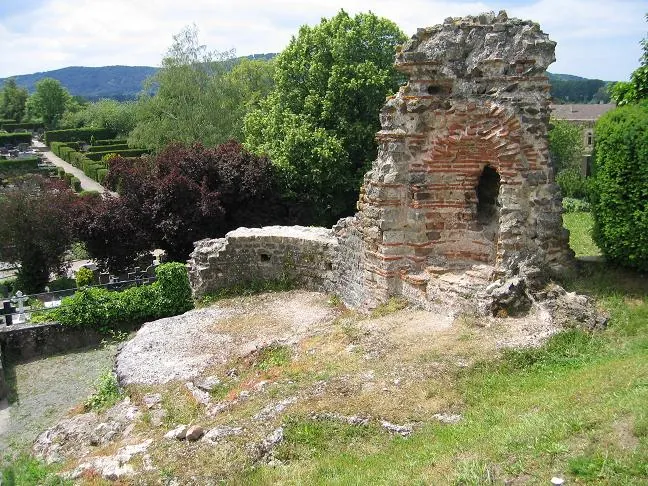
Photo: Johannes Simon · Public domain · Commons
9 km · villa · Rhineland-Palatinate
Kaiservilla Konz
The piece the tourist board points to is part of a cold-water basin, about 4 m high.
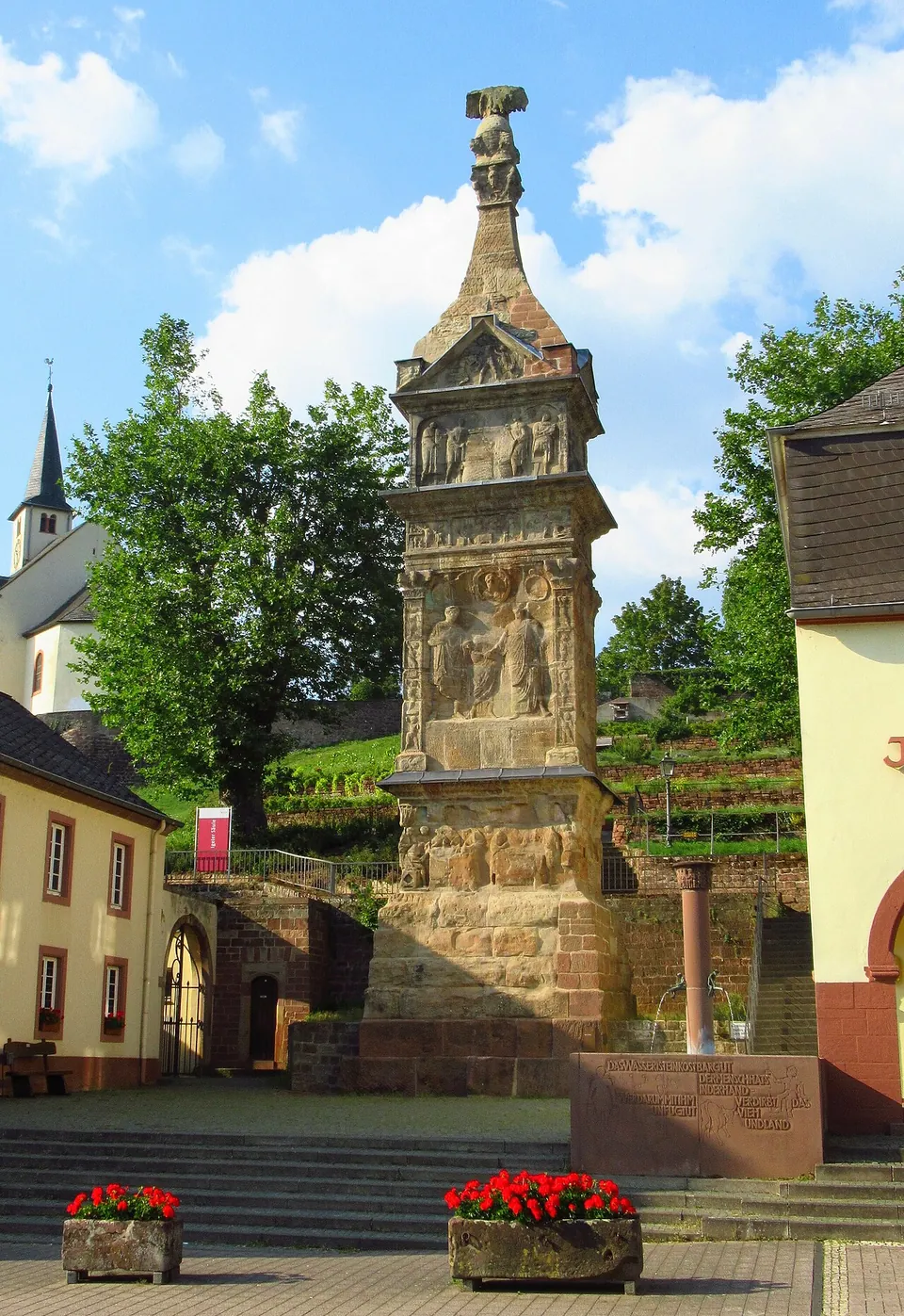
Photo: Dkvtig · CC BY-SA 4.0 · Commons
9 km · tomb · Rhineland-Palatinate
Igel Column
The monument itself, still standing where the Romans built it.
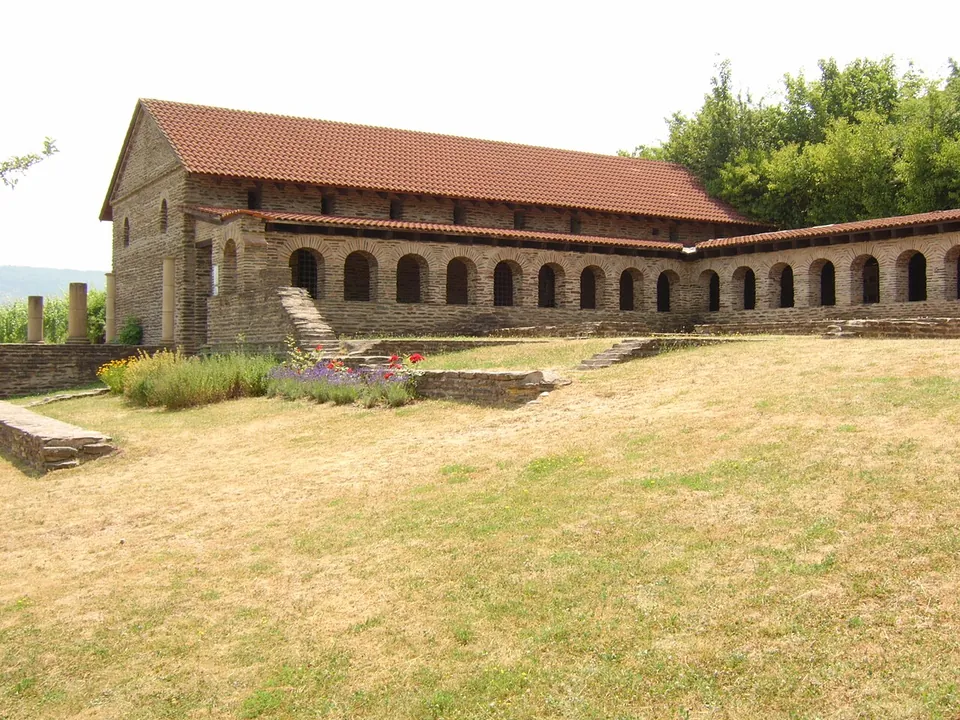
Photo: Areks · CC BY-SA 3.0 · Commons
10 km · villa · Rhineland-Palatinate
Villa urbana of Longuich
What you see first is a long stone building with a tiled roof and an arcade of round arches.


Straight-line distances.
Sources
Every fact on this page comes from the records below, each used under the licence noted.
| Source | Licence |
|---|---|
| Pleiades 151157248 | CC BY |
| Wikidata Q152339 | CC0 |
| OpenStreetMap relation/1739171 | ODbL |
| Wikipedia (de) — Porta Nigra | CC BY-SA 4.0 |
| Wikipedia (en) — Porta Nigra | CC BY-SA 4.0 |
| Wikipedia (it) — Porta Nigra | CC BY-SA 4.0 |
| Wikipedia (de) — Augusta Treverorum (the Roman city) | CC BY-SA 4.0 |
| Zentrum der Antike (GDKE Rheinland-Pfalz, the operator) — Porta Nigra, hours, admission and getting there | licence not recorded |
| Zentrum der Antike — AntikenCard | licence not recorded |