

What is there today
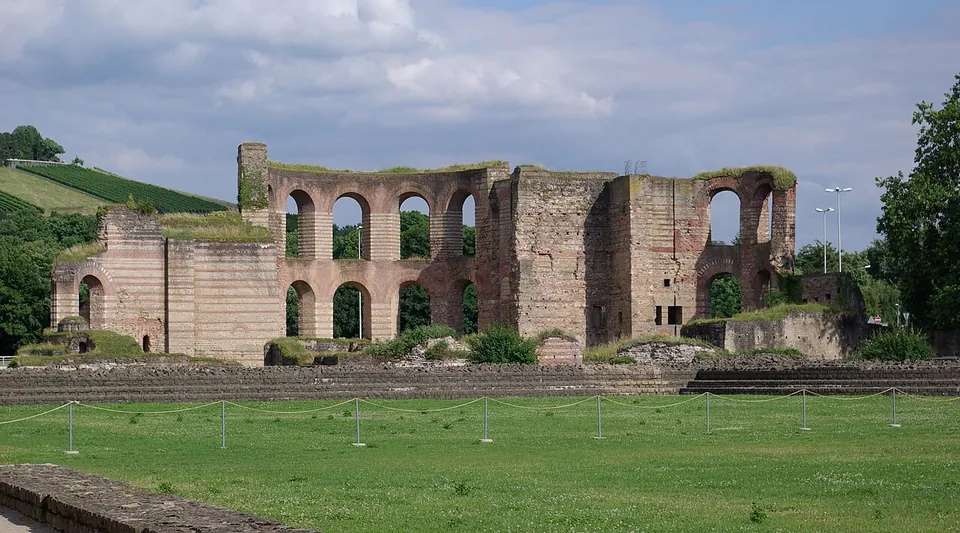
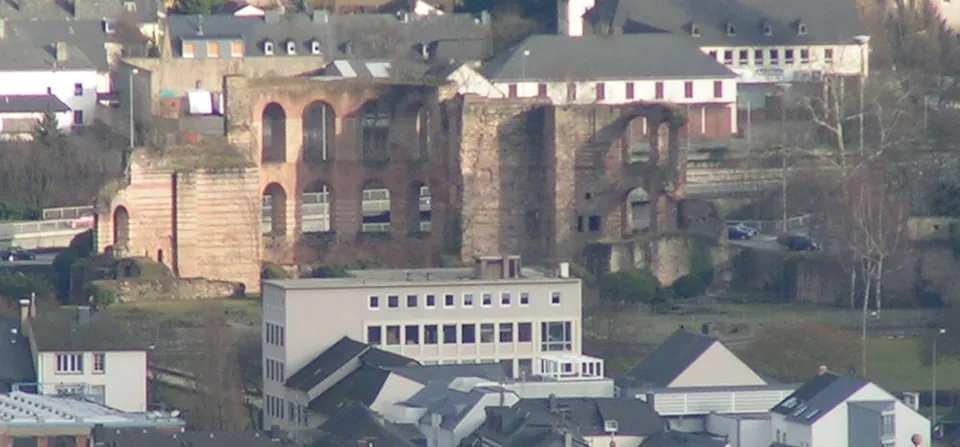
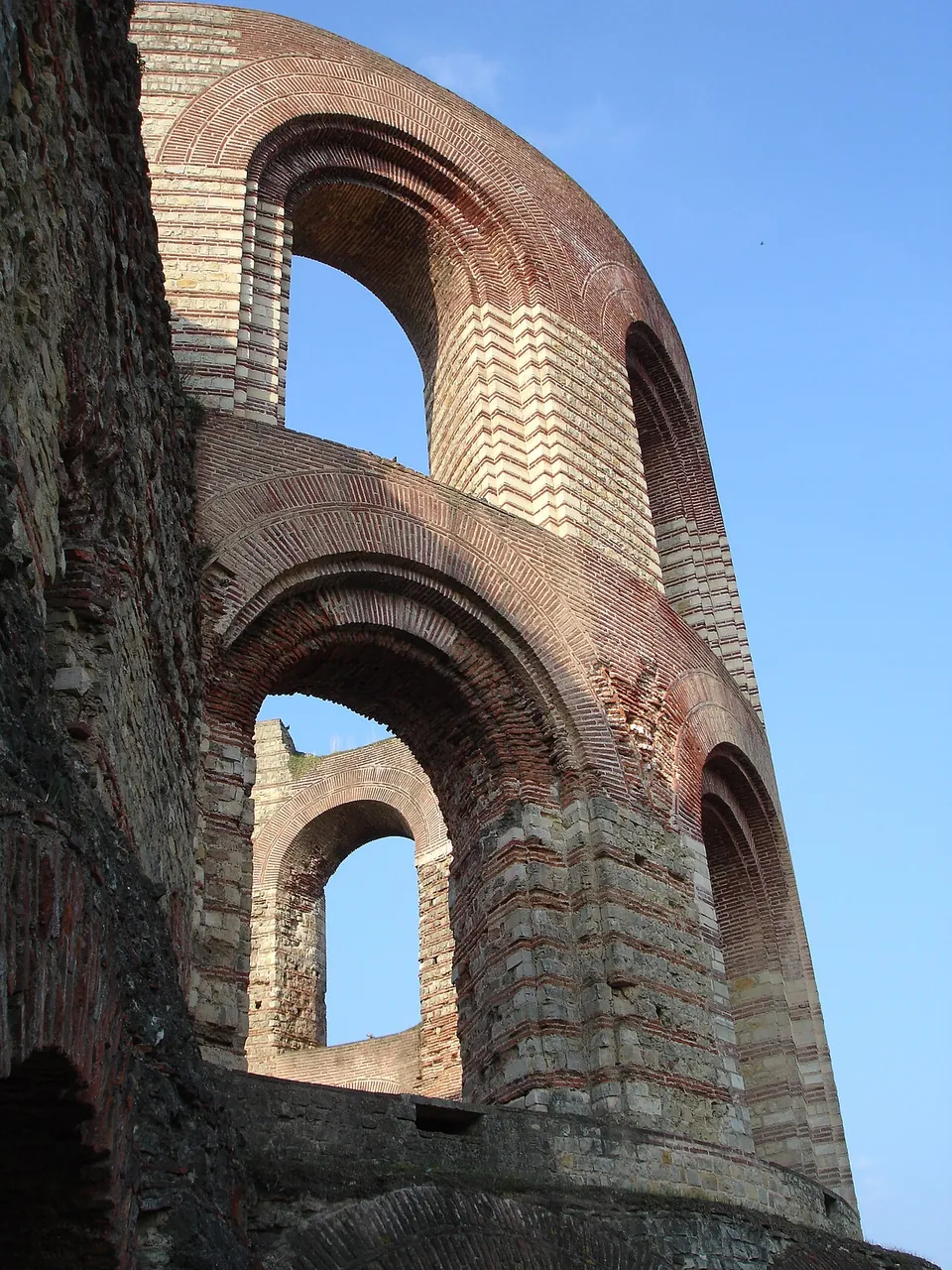
The standing part is the core of the baths around the caldarium, the hot-bath hall, whose apse walls are the best preserved (de.wikipedia; hr.wikipedia). It survived because the medieval town built the ruin into its wall as a corner bastion; everything else was quarried for stone (de.wikipedia). Its walls show the building technique plainly: courses of cut limestone alternating with bands of brick, which faced a core of Roman concrete and would have been plastered and painted over (de.wikipedia). The east apse was partly reconstructed in 1983–84, some of its windows among the rebuilt parts (de.wikipedia; the operator).
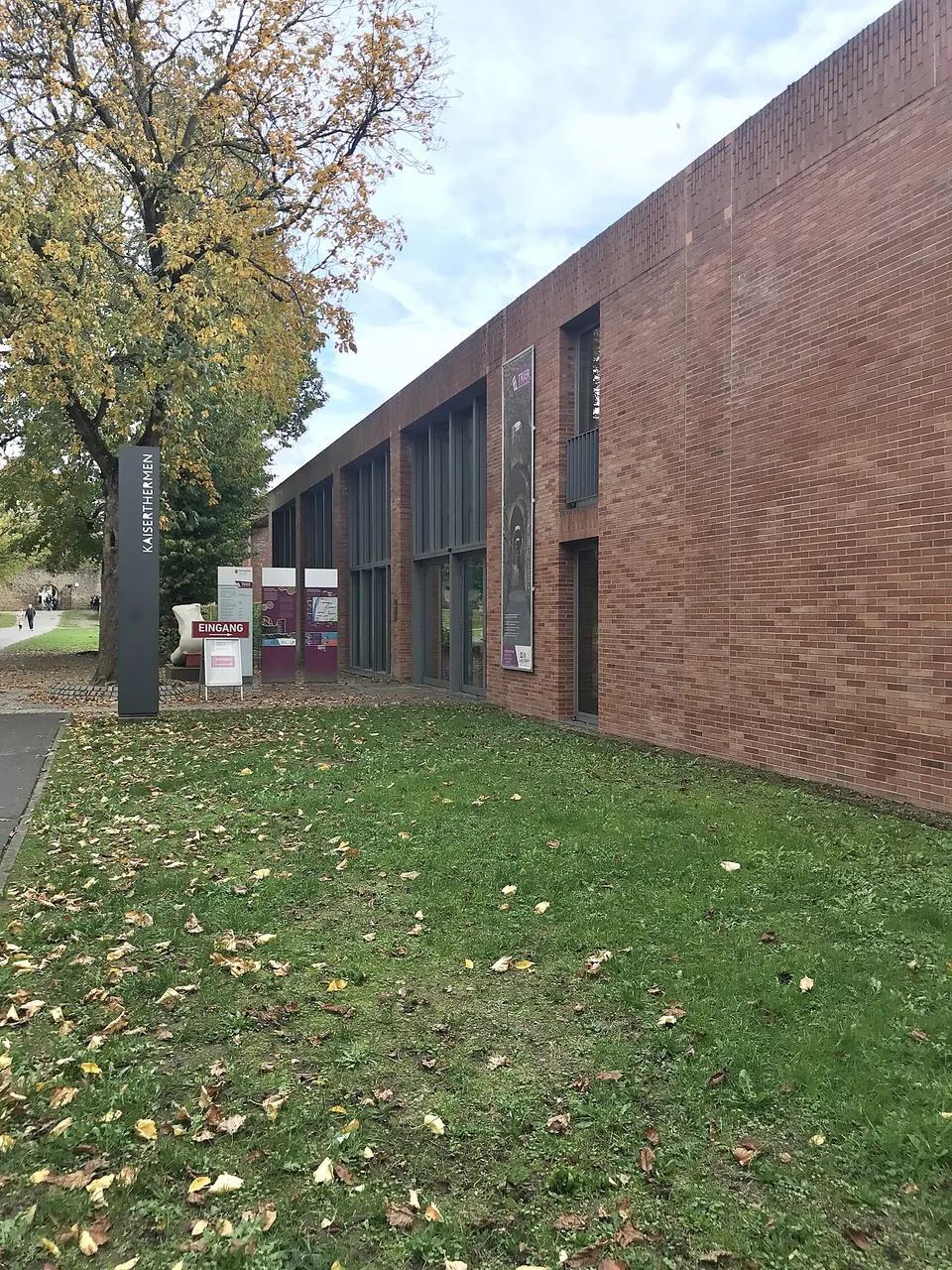
West of the caldarium, the great court of the complex is now a lawn, with the foundations of the western buildings conserved slightly built up, in places almost 1 m high (de.wikipedia; it.wikipedia). Below ground you can walk the service passages from which the furnaces were to be fed, a network that had no connection with the bathing rooms above (de.wikipedia; the operator). A long modern entrance building by the architect Oswald Mathias Ungers holds a small exhibition with a film animation on Trier’s rise to imperial residence, and a viewing tower looks out over what was the imperial palace district (de.wikipedia; the operator).
Is it worth the trip?
Yes. It counts among the largest Roman baths north of the Alps (de.wikipedia), and the walk through the underground passages is something the Barbara Baths, seen only from a walkway, do not offer. It is one of the Roman monuments of Trier on the UNESCO World Heritage list (de.wikipedia), and it sits in the town centre, about 400 m from the Aula Palatina and 250 m from the Rheinisches Landesmuseum as mapped (OpenStreetMap), so it fits easily into a day on foot.
Know what you are seeing. Apart from the caldarium and the passages beneath, the rest of the complex survives as low foundations on a lawn. The southern part of the caldarium is closed while its walls are secured, and parts of the site are under scaffolding (the operator).
Getting there
The baths are in the centre of Trier. From the main station, buses 2 and 30 stop at Kaiserthermen, which lines 6, 7, 8 and 16 also serve; the nearest car park the operator names is behind the Bad an den Kaiserthermen in Gerberstraße, 300 m away.
The site opens daily, 09.00 to 18.00 from April to September, 09.00 to 17.00 in March and October and 09.00 to 16.00 from November to February, with last entry 30 minutes before closing. It is closed on Rosenmontag, 24 to 26 December, 31 December and 1 January. Tickets are €6 for adults, €5 reduced and €3 for ages 6 to 17, with a family ticket at €6 for one adult or €12 for two. The AntikenCard Basic, €18, covers this and one other of Trier’s ticketed Roman monuments plus the Rheinisches Landesmuseum; the Premium card, €28, covers all four monuments plus the museum. A multimedia guide is offered in German, English, French and Dutch (zentrum-der-antike.de, read 30 October 2026; check before travelling, since prices move).
Visiting details
- Opening hours
- Daily 09.00–16.00 in January, February, November and December, 09.00–17.00 in March and October, 09.00–18.00 from April to September; last entry 30 minutes before closing. Closed on Rosenmontag, 24–26 and 31 December and 1 January.
- Tickets
- €6 for adults, €5 reduced (students, trainees, pensioners, the unemployed and the severely disabled, with proof), €3 for ages 6–17, free under 6. Family ticket €6 for one adult or €12 for two, each with up to four children aged 6 or over. Groups of 10 or more €5 per adult. Included in the AntikenCard Basic (€18, two of Trier's four ticketed Roman monuments plus the Rheinisches Landesmuseum) and Premium (€28, all four plus the museum).
- Parking
- The operator names car parks behind the Bad an den Kaiserthermen in Gerberstraße (300 m), in Rahnenstraße (400 m), at the Palastgarten (450 m), at Konstantinplatz and in the Tiefgarage Basilika in Mustorstraße (both 600 m). The bus stop Kaiserthermen is served from the main station by lines 2 and 30, and also by lines 6, 7, 8 and 16.
Before you go
- The southern part of the caldarium is closed to visitors while its walls are secured, and parts of the site are scaffolded for survey and repair; the underground passages and the other standing parts stay open.
- The grounds are reached over steps above and below ground, with ramps only in places; the entrance and the exhibition are step-free, and the viewing tower has a lift.
- The operator warns that the Roman monuments can close at short notice in bad weather.
Hours and prices checked 30 October 2026 on the operator's own site. Confirm before travelling.
History
The ground had been built over long before the baths. The complex took up four street blocks of the Roman town, and excavation of the oldest of them found four building phases, the earliest from the reign of Claudius (41–54); the last was a large peristyle house whose mosaics included charioteers, among them the driver Polydus with his lead horse Compressor. Parts of these houses were made accessible underground in 1970 (de.wikipedia).
Building began shortly before 300. The baths were meant for the public, an imperial gift to the town (the operator), and were to match the prestige of Constantius Chlorus and Constantine; the site was laid out south-west of the imperial palace district. The plan covered 250 × 145 m, symmetrical along its long axis, with a court of about 2.1 hectares, a cold-bath hall that would have been barely smaller than the Aula Palatina, and a round warm-bath room under a concrete dome 16.45 m across (de.wikipedia).
The baths were never finished. Building research found that the interior and the technical fittings were never completed, so bathing either never began or did so only on a very small scale; work probably stopped in 316, when Constantine’s war with Licinius began, and the shell stood unused for decades (de.wikipedia). The operator says new investigations are testing whether the fittings really were left unfinished.
Later in the 4th century the building was turned into a garrison, according to de.wikipedia for the mounted imperial guard, which the operator calls possible. Published dates for the conversion differ: de.wikipedia puts it under Gratian (375–383) or his brother Valentinian II, it.wikipedia in 360 under Valentinian I. The cold-bath hall was pulled down and the western basements filled; the caldarium was kept, perhaps as the shrine of the standards and drill hall, with barracks around the old court and a small bath of the garrison’s own (de.wikipedia).
Trier stopped being an imperial residence in 392, and after the Roman administration left the barracks stayed at least partly in use. The ruin may have served as a castle as early as the 6th century; when the medieval town wall was built in 1102–1124 it became the wall’s south-eastern corner bastion, with a town gate through a window of the south apse, and churches and a convent were built on the old court. The caldarium was cleared from 1816, excavations in 1912–1914 settled that the building was a bath rather than a palace or church, and the underground passages were opened to the public in 1920 (de.wikipedia).
More photographs

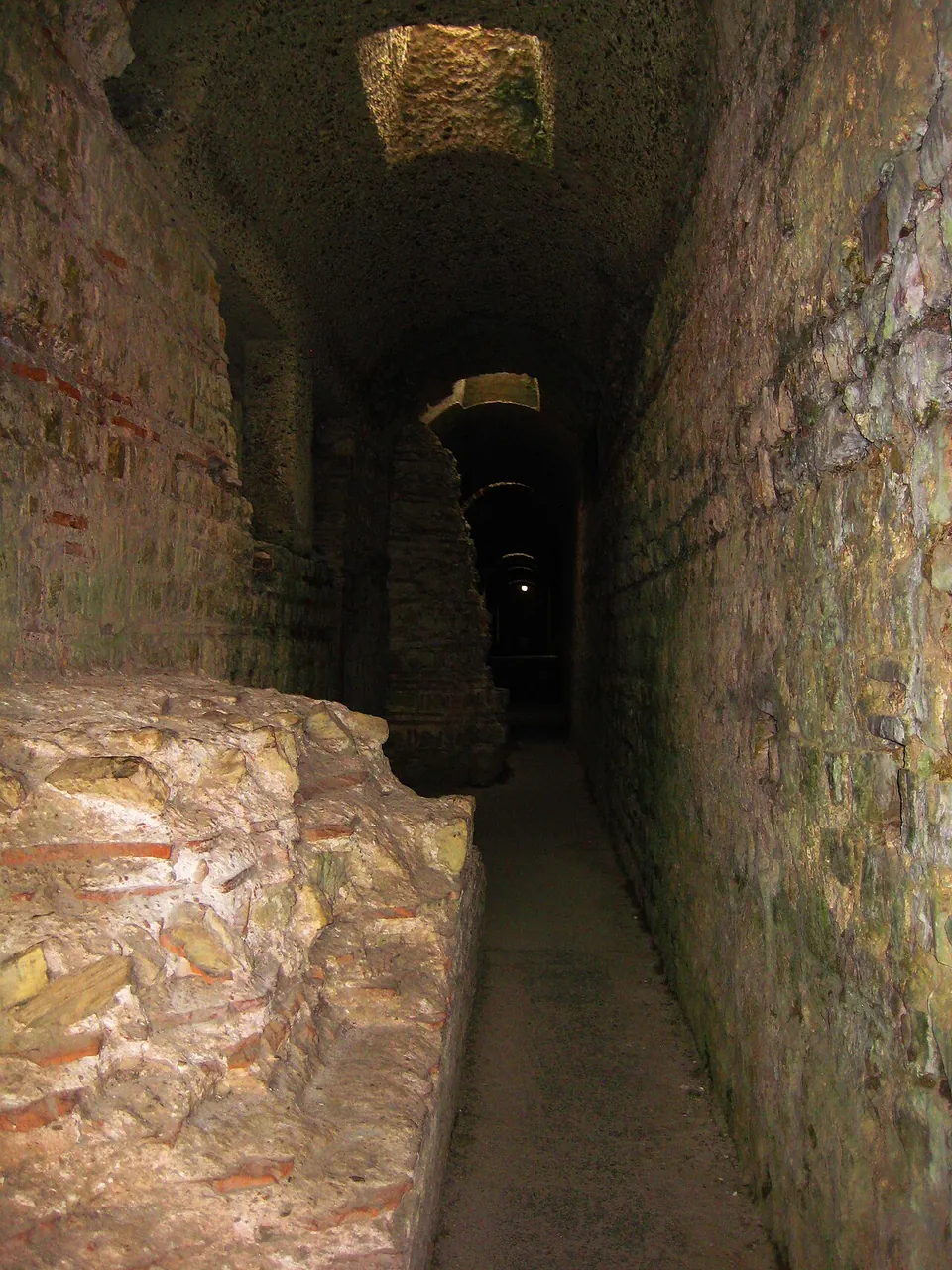

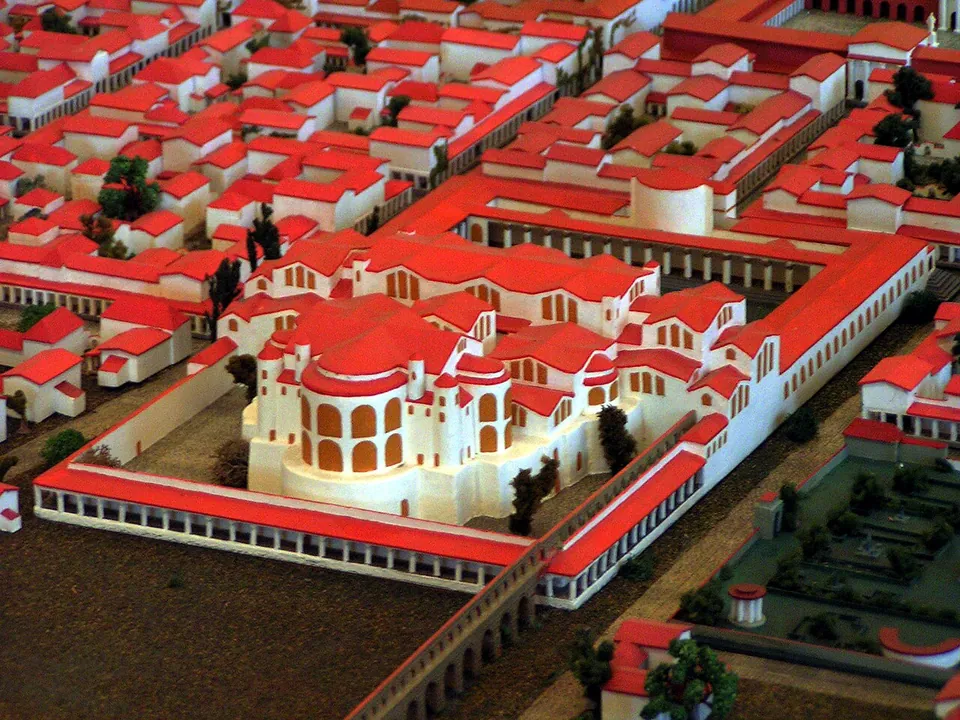

Nearby
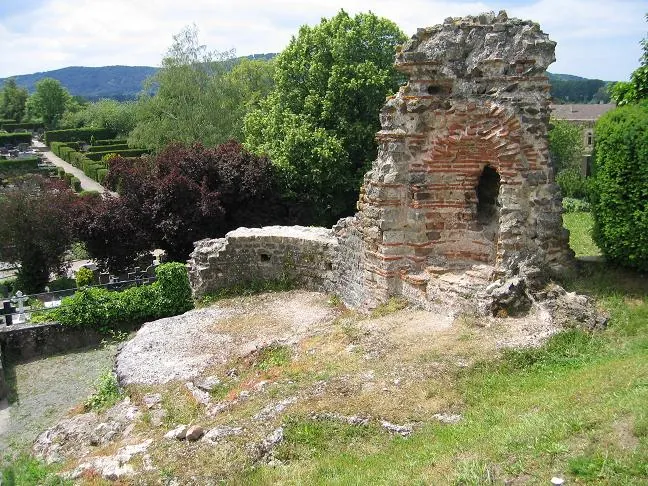
Photo: Johannes Simon · Public domain · Commons
8 km · villa · Rhineland-Palatinate
Kaiservilla Konz
The piece the tourist board points to is part of a cold-water basin, about 4 m high.
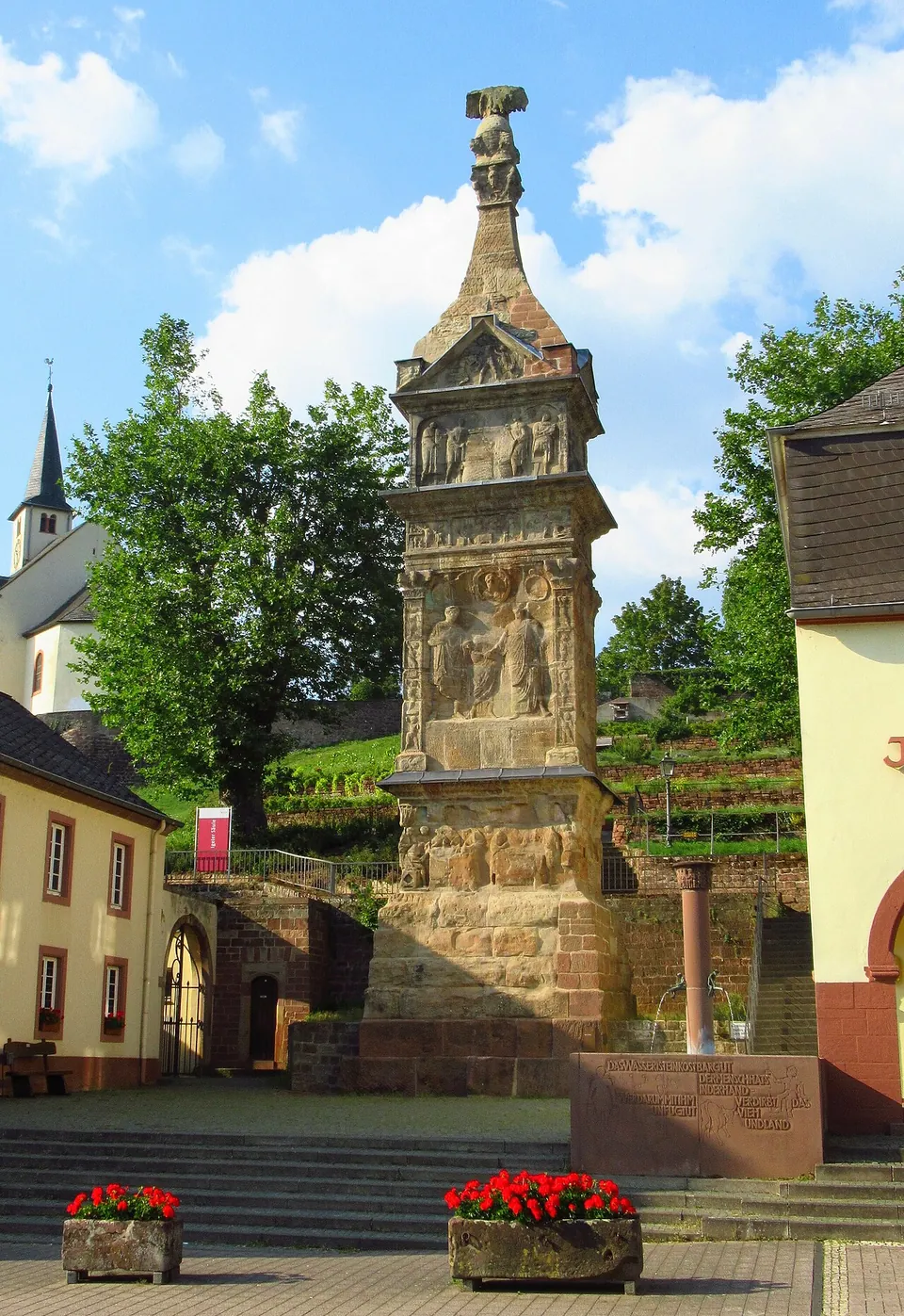
Photo: Dkvtig · CC BY-SA 4.0 · Commons
8 km · tomb · Rhineland-Palatinate
Igel Column
The monument itself, still standing where the Romans built it.
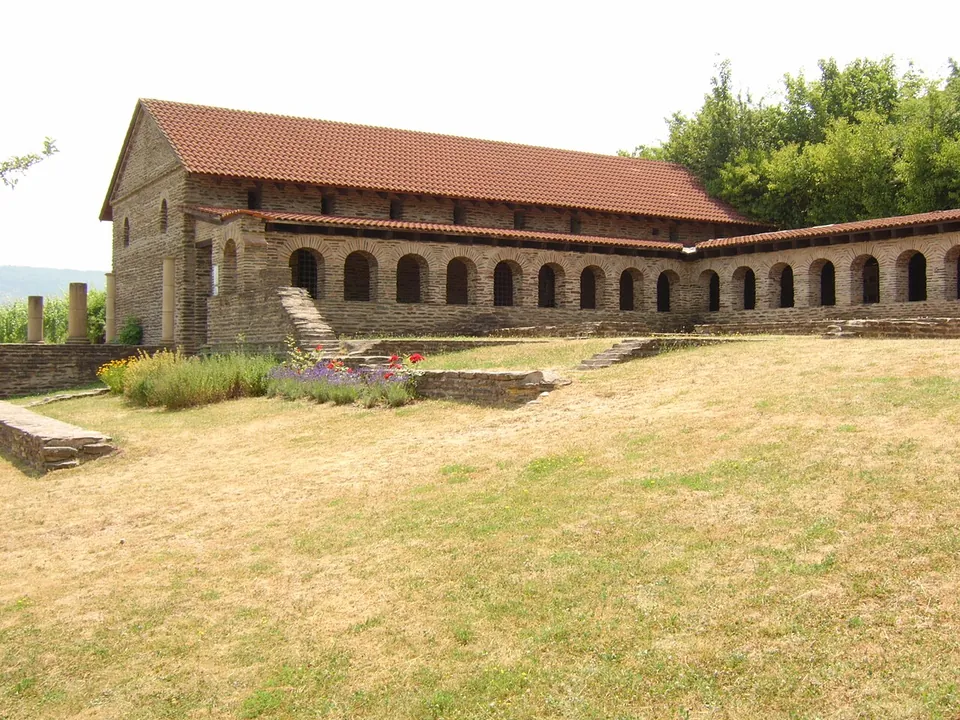
Photo: Areks · CC BY-SA 3.0 · Commons
11 km · villa · Rhineland-Palatinate
Villa urbana of Longuich
What you see first is a long stone building with a tiled roof and an arcade of round arches.


Straight-line distances.
Sources
Every fact on this page comes from the records below, each used under the licence noted.
| Source | Licence |
|---|---|
| Pleiades 423006578 | CC BY |
| Wikidata Q697693 | CC0 |
| OpenStreetMap way/72858762 | ODbL |
| Wikipedia (de) — Kaiserthermen (Trier) | CC BY-SA 4.0 |
| Wikipedia (en) — Trier Imperial Baths | CC BY-SA 4.0 |
| Wikipedia (it) — Terme Imperiali (Treviri) | CC BY-SA 4.0 |
| Wikipedia (hr) — Kaiserthermen | CC BY-SA 4.0 |
| Zentrum der Antike (GDKE Rheinland-Pfalz, the operator) — Kaiserthermen, hours, admission and getting there | licence not recorded |
| Zentrum der Antike — AntikenCard | licence not recorded |