

What is there today
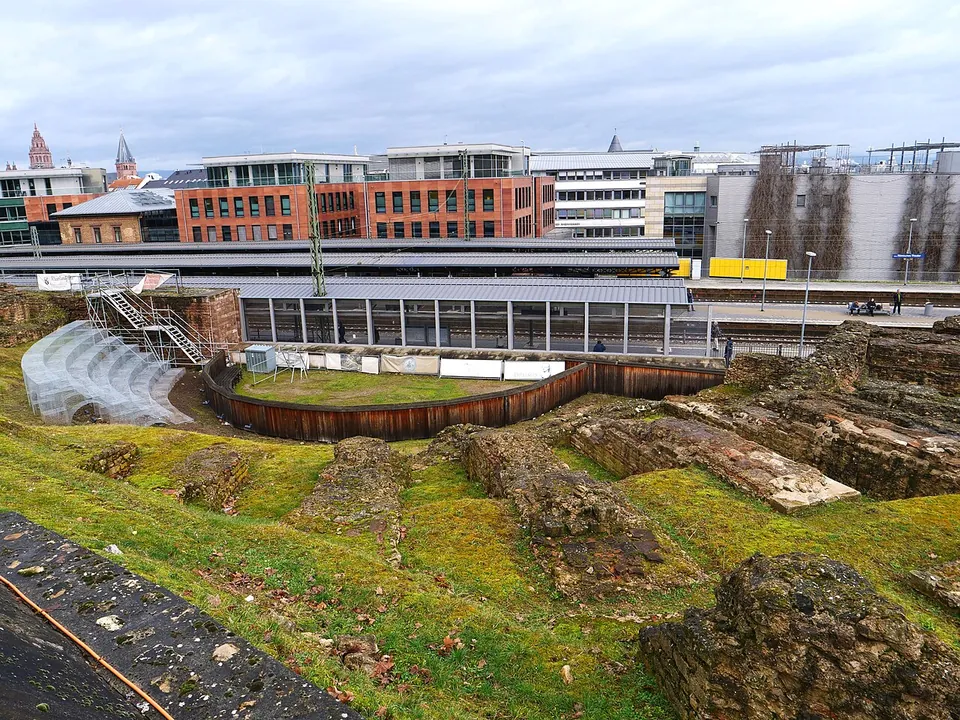
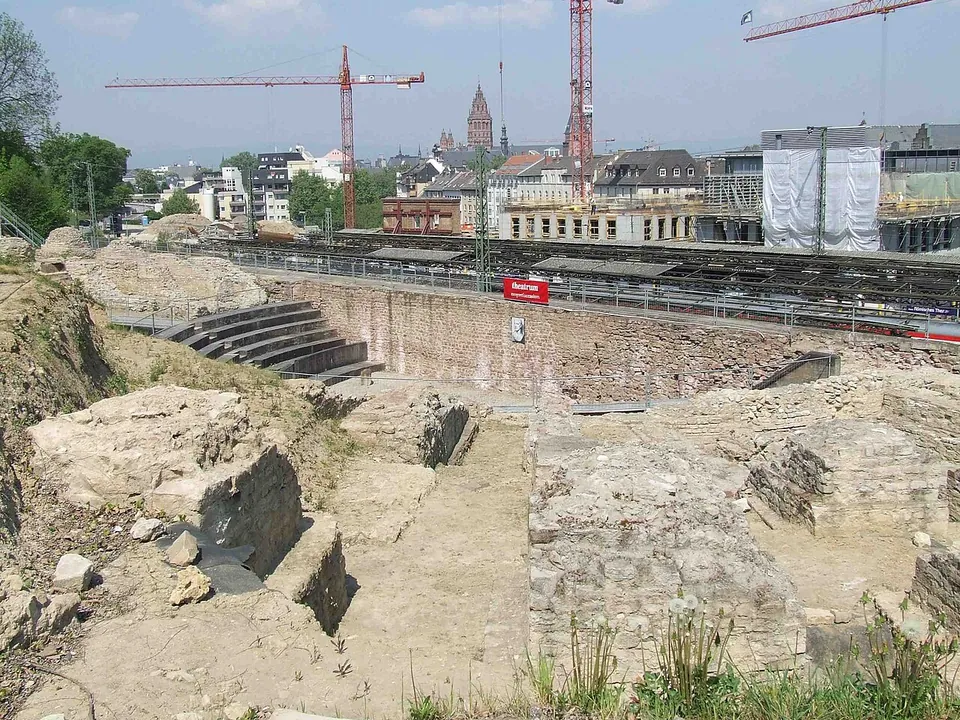
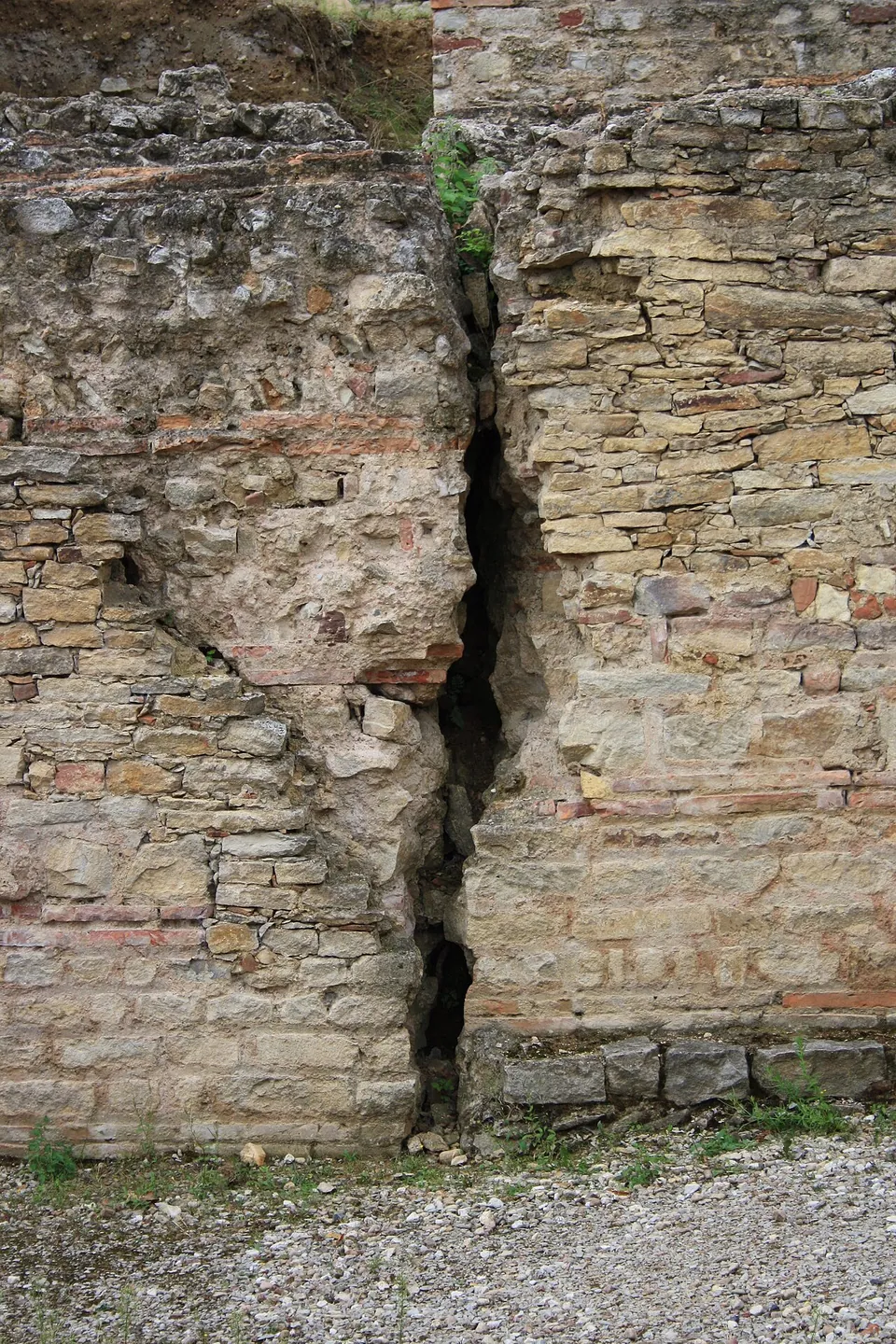
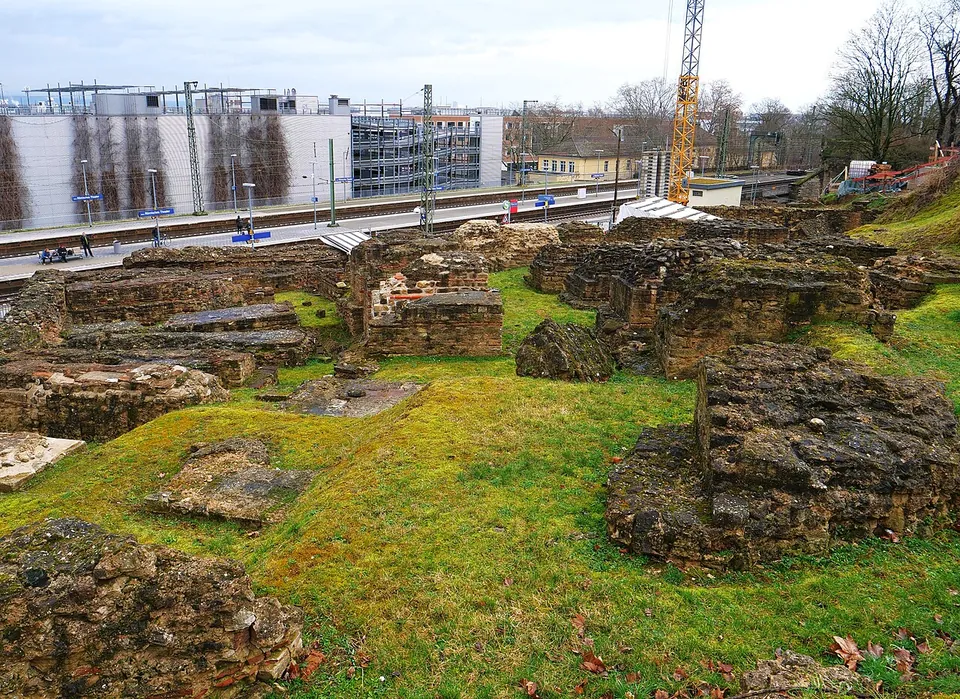
What survives is the theatre’s lower structure on the slope below the citadel: piers and foundations of Roman concrete (opus caementicium), faced on the outside with small squared stones, with double layers of brick slabs laid in to stabilise them (the city of Mainz). In the mid-2000s the first rows of seats were rebuilt as a wooden structure in a semicircle, and their balustrades were renewed in 2017 so that tours and small events could take place again (the city; de.wikipedia). Where the Roman walls stop and the 17th-century Albani bastion begins, built partly from them, is easy to see (the city).
The stage building is gone. Its foundations were found and demolished in 1884 to lay the railway, and the platforms of Mainz Römisches Theater station now run across where it stood (de.wikipedia). Since 2016 a glass wall on platform 4 has replaced the old stone wall, so the theatre is in full view from the platform, and light-coloured paving on platform 2/3 marks the presumed line of the stage wall (the city). Above the theatre a visitor centre holds an exhibition on the theatre, the Drususstein and the citadel, with a panoramic window over the excavation (the city).
Is it worth the trip?
Yes, if you are in Mainz, and it costs almost nothing to see: the theatre is directly above a station, so even a change of trains on platform 4 gives you a look through its glass wall. Set the expectation honestly, though. This is a large plan of foundations and stumps on a grassy slope beside a railway, not a standing auditorium with its tiers of stone seats, and outside the few tour days a year you look at it from the platform or the path rather than walking in. If you can time your visit to one of the tours, do: they take you inside the excavation and explain how it was built and how it is being conserved (the Initiative Römisches Mainz). It is also the natural start for the rest of Roman Mainz: the Drususstein, the monument to Drusus, is about 340 m away in the citadel (de.wikipedia).
Getting there
The theatre lies on the slope directly above Mainz Römisches Theater station, the former Südbahnhof, renamed in 2006 (the city; Rheinhessen-Touristik); its address is Zitadellenweg, 55131 Mainz (the city). The nearest parking OpenStreetMap maps is for bicycles, so the train is the easy way.
No regular opening hours are published. The Initiative Römisches Mainz opens the excavation on guided tours on a few event days a year (in 2026 on 12 April, 31 May and 13 September, Open Monument Day). The April tours started from the steps of the Lutherkirche above the theatre and were free, with donations welcome; on 31 May the visitor centre was open too, and lectures held in the theatre’s orchestra were entered from platform 4 (the Initiative, read 30 October 2026). The city of Mainz takes requests for special tours. On other days the theatre is seen through the glass wall on platform 4 and from the path above it.
Visiting details
- Opening hours
- No regular opening hours are published. The excavation is opened on guided tours run by the Initiative Römisches Mainz on a few event days a year (in 2026 on 12 April, 31 May and 13 September, Open Monument Day); the visitor centre above the theatre was open on 31 May. Outside the tours, the theatre is seen through the glass wall on platform 4 of Mainz Römisches Theater station and from the path above it.
- Tickets
- No tariff is published. Seeing the theatre from the platform and the path costs nothing; the Initiative's tours of 12 April 2026 were free, with donations welcome. The city of Mainz takes requests for special guided tours.
- Parking
- The nearest parking OpenStreetMap maps is for bicycles, 50 to 80 m from the theatre; it is easiest by train, since the station is directly below it.
Before you go
- You can walk inside the excavation only on a guided tour, and tours run on a few announced days a year; check the Initiative Römisches Mainz's events page before planning around one.
Hours and prices checked 30 October 2026 on the operator's own site. Confirm before travelling.
History
Rome founded a double legionary camp at Mainz in 13/12 BC, and the civil settlement that grew up around it became the capital of Germania superior from about AD 80 (de.wikipedia). A theatre in Mogontiacum is already mentioned by Suetonius for AD 39, and the stone theatre was probably preceded by one of timber (de.wikipedia). It was probably tied to the memorial ceremonies for Drusus, who died in 9 BC: military parades in his honour, recorded by AD 19, were probably held at his cenotaph, the Drususstein, and the representatives of the sixty Gallic communities are thought to have used the theatre for their own ceremonies (de.wikipedia; the city).
When the theatre in its present form was built is told differently. De.wikipedia places it in the time of the provincial capital without a date, and Rheinhessen-Touristik says presumably the 1st century AD; the city of Mainz dates the walls visible today to about AD 310, and the Initiative Römisches Mainz puts the building itself then, under Constantine. The titles of the two information boards on site, as OpenStreetMap records them, give the 4th century. Its life as a theatre ended in the middle of the 4th century, when the city wall was rebuilt, probably with its stone, and left it outside the defences (de.wikipedia).
The vaults outlasted the rest. From the 6th century they served as burial vaults for nearby monasteries, and graves of that time turned up in the recent excavations; in the 11th century Gozwin of Mainz still wrote of the theatre’s ruins (de.wikipedia). The building of the citadel in the mid-17th century levelled the ground, and the theatre was forgotten (de.wikipedia). Walls found in 1914 were recognised by the art historian Ernst Neeb as part of a Roman theatre and confirmed by a trial trench in 1916, but the First World War stopped any further work; excavation began only in 1997, by the state archaeology service with donations and local volunteers (de.wikipedia; the city). Since 2019 the city has been working on a long-term conservation plan, with the aim of using the theatre again at least in part (the city).
More photographs

Nearby
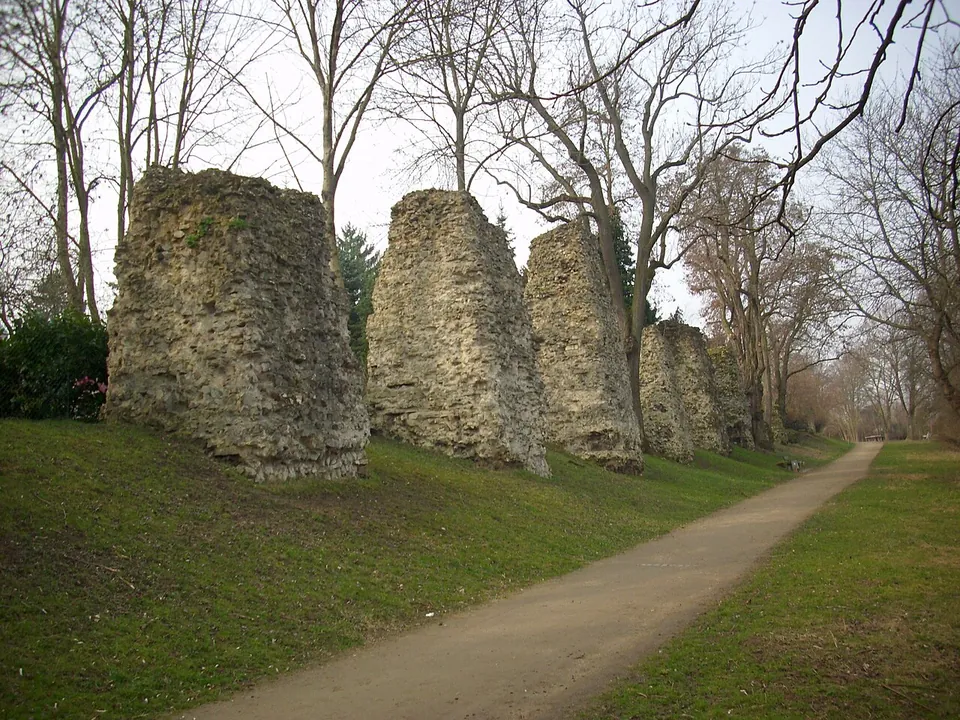
Photo: Nixnubix · CC BY-SA 4.0 · Commons
2 km · aqueduct · Rhineland-Palatinate
Römersteine
Along the path stands a line of rough masonry stumps, the cores of the piers that once carried the water channel across the valley.
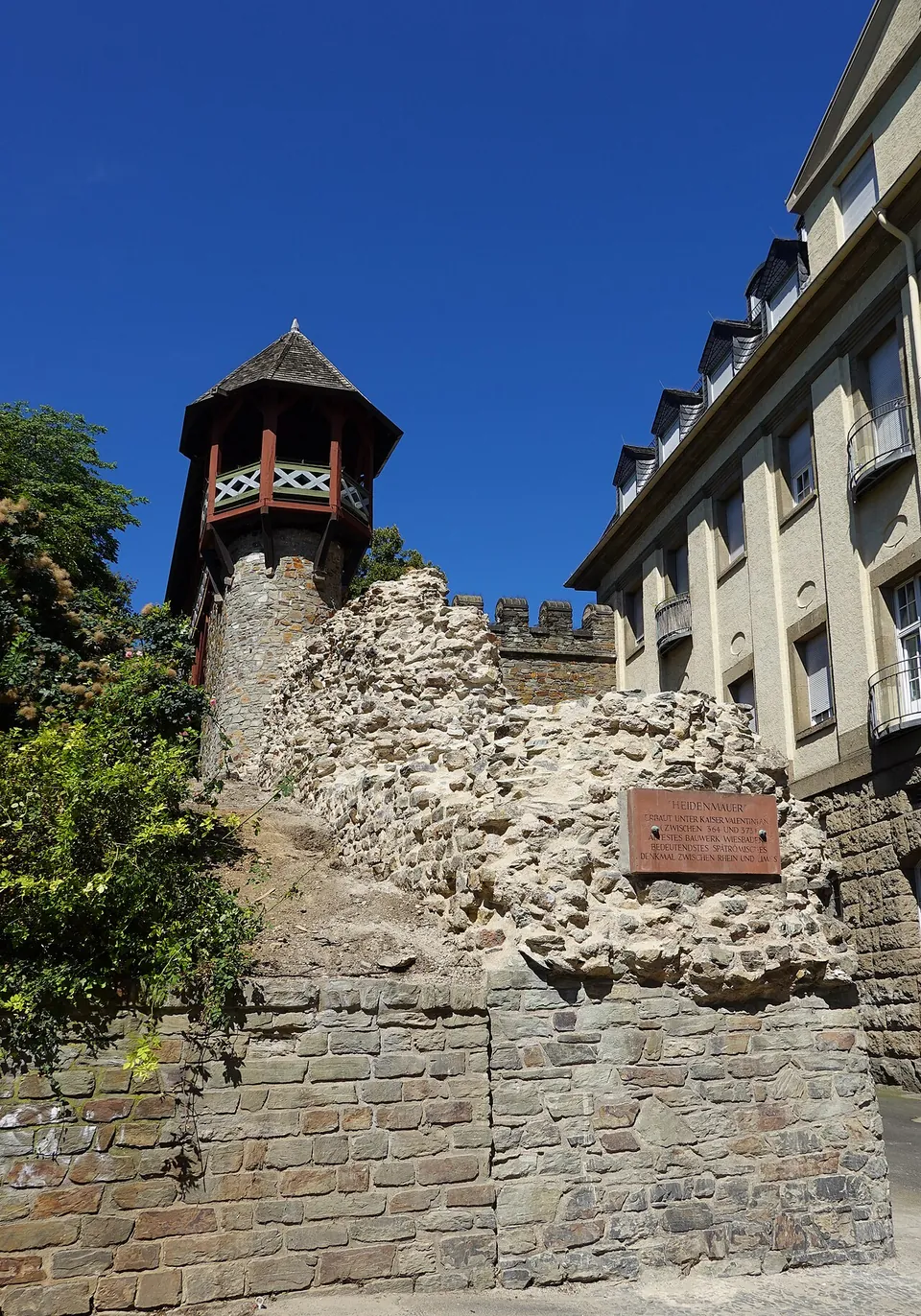
Photo: Geolina163 · CC BY-SA 4.0 · Commons
11 km · city · Hesse
Aquae Mattiacae
The wall has been traced for 520 m through the old town, but only two short stretches stand above ground, one on each side of the Römertor (the city's Stadtlexikon), about 80 m in all (de.wikipedia).
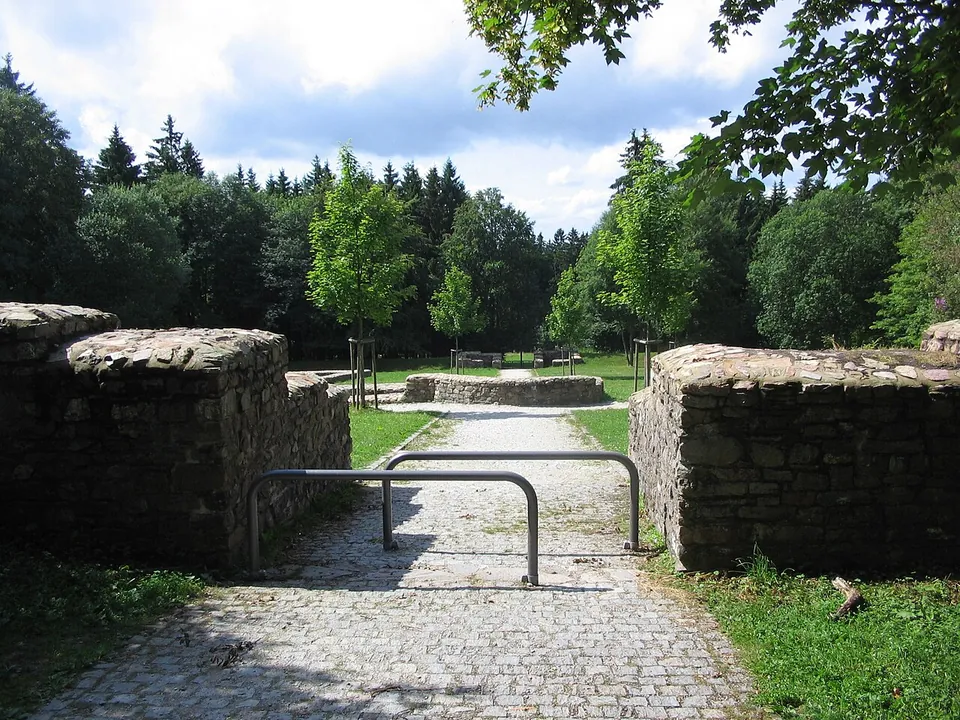
Photo: Brühl · Public domain · Commons
29 km · fort · Hesse
Kastell Kleiner Feldberg
The fort is a clearing in the forest with its complete ground plan laid out in low stone walls: a rectangle of 78 by 93 m with rounded corners and gateways in its sides, and, at the centre, the headquarters building (principia) with the curved apse of its shrine of the standards (de.wikipedia; the operator).


Straight-line distances.
Sources
Every fact on this page comes from the records below, each used under the licence noted.
| Source | Licence |
|---|---|
| Pleiades 365824232 | CC BY |
| Wikidata Q454527 | CC0 |
| OpenStreetMap way/29506176 | ODbL |
| OpenStreetMap — Römisches Theater (the ruins) | licence not recorded |
| Wikipedia (de) — Römisches Theater Mainz | CC BY-SA 4.0 |
| Wikipedia (en) — Roman Theatre (Mainz) | CC BY-SA 4.0 |
| Landeshauptstadt Mainz — Roman stage theater (the city's own page) | licence not recorded |
| Initiative Römisches Mainz — news and events (tours of the theatre) | licence not recorded |
| Rheinhessen-Touristik — Roman stage theatre | licence not recorded |