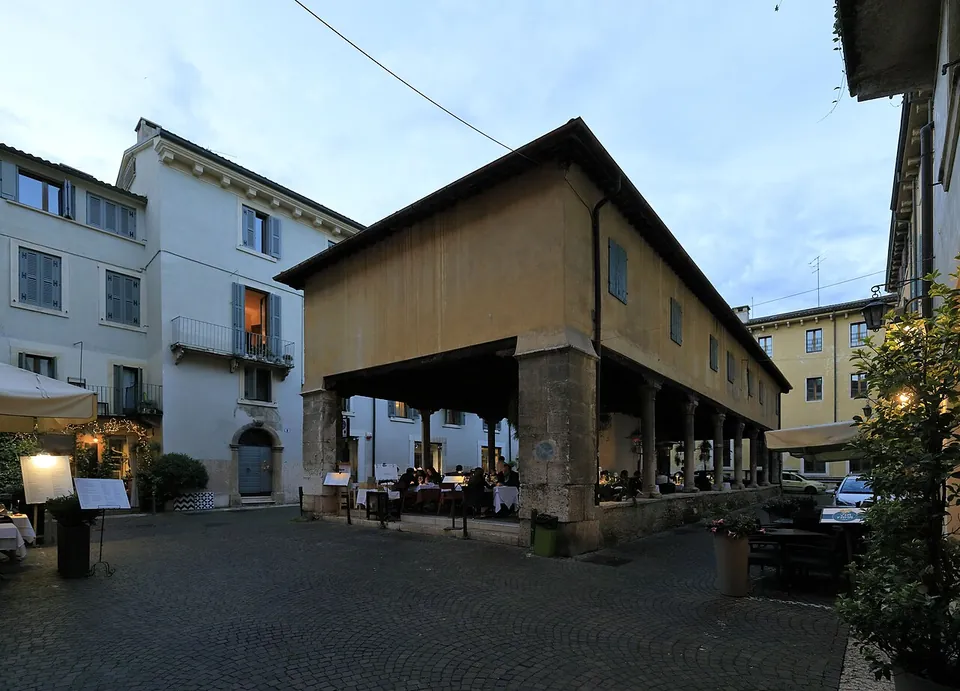


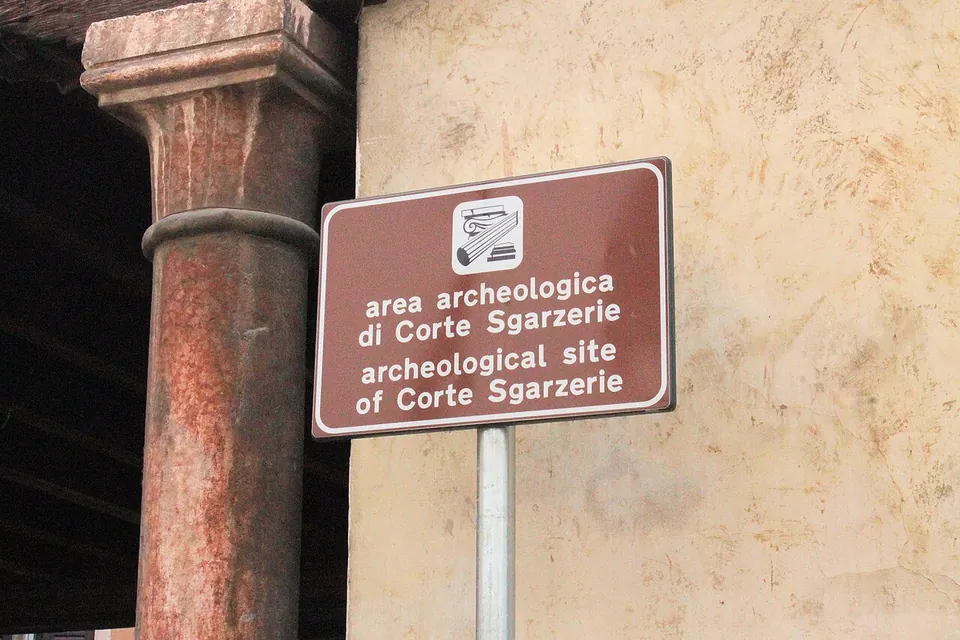
Corte Sgarzerie is a small courtyard just off Piazza delle Erbe, and under its medieval loggia a stair leads down to the only part of Verona’s Capitolium, the Roman town’s principal temple, that is open to the public: a stretch of the vaulted underground gallery, the cryptoporticus, that ran beneath the porticoes around it (it.wikipedia; en.wikipedia). The temple itself is not part of the visit: the gallery is the only part of the complex that can be visited (it.wikipedia). Entry is free on Saturday and Sunday mornings, 09.00 to 13.00, and because the space holds very few people the operator asks visitors to book (Archeonaute).
What is there today
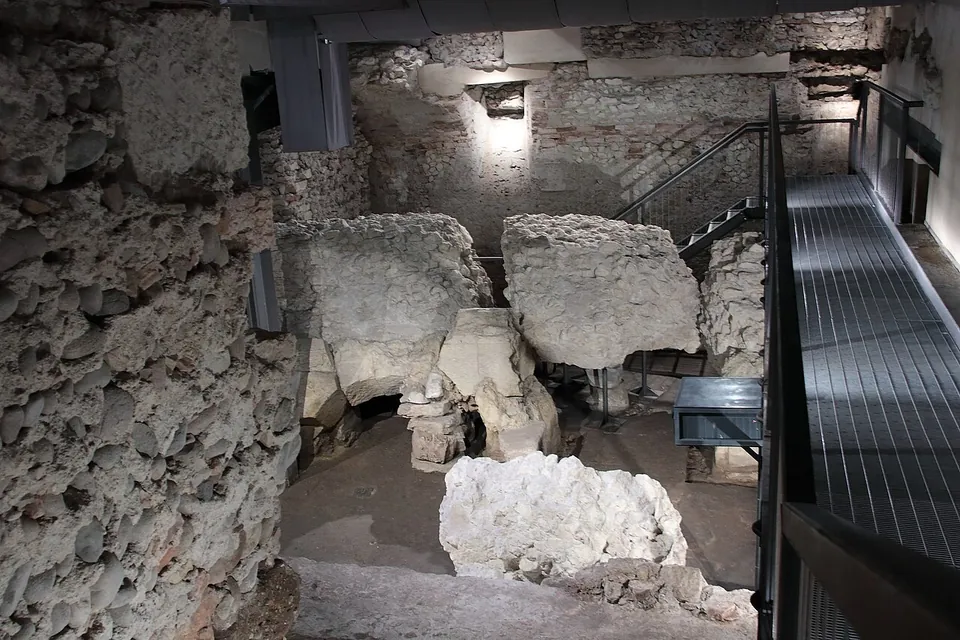
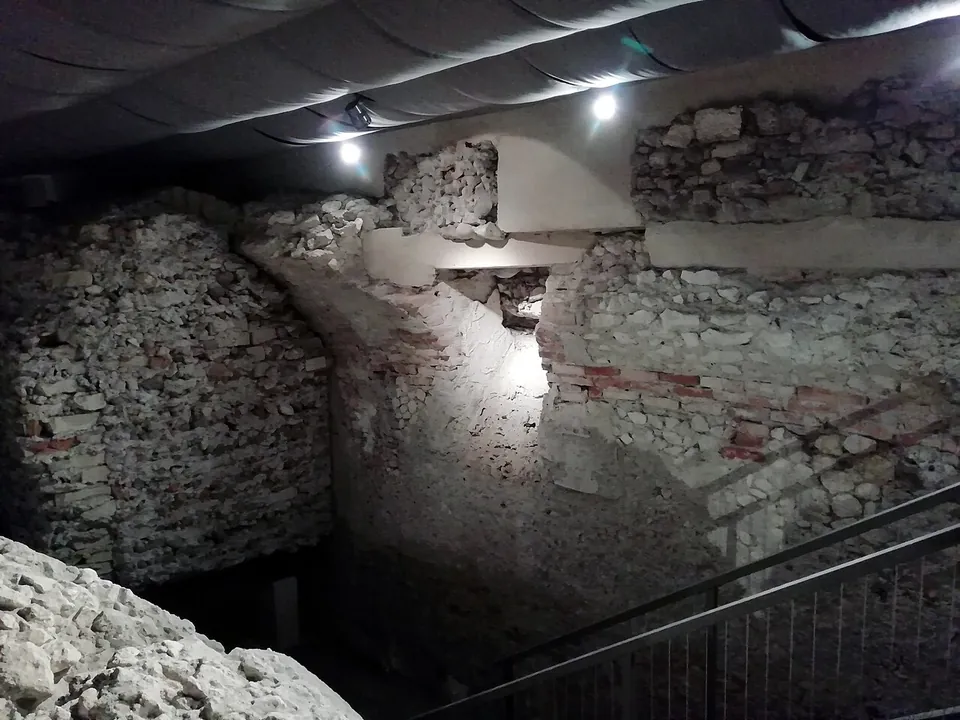
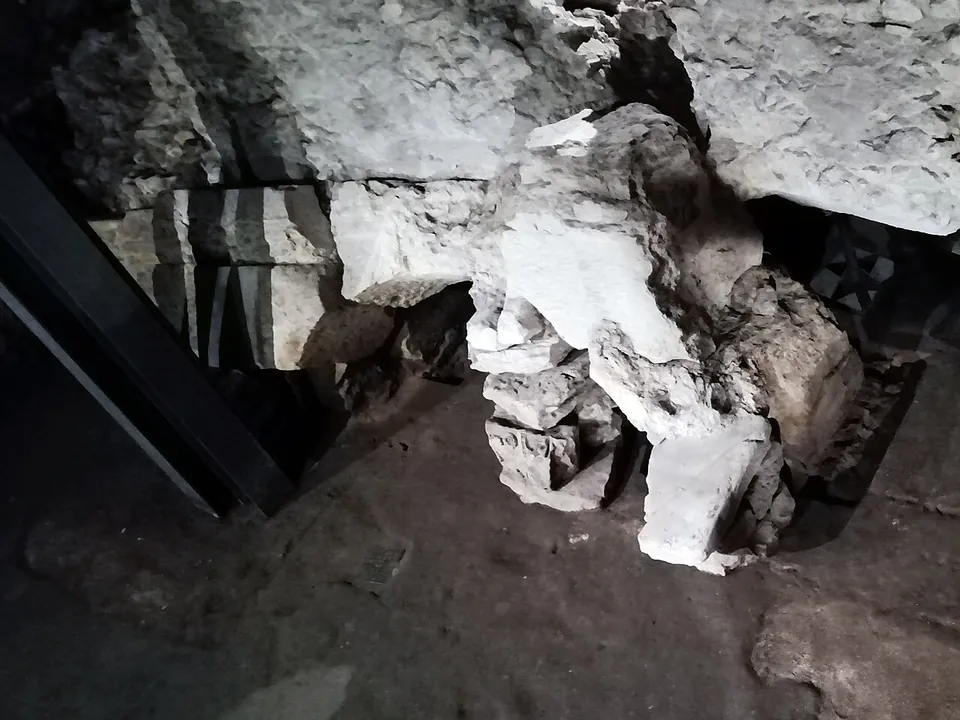
The excavation, carried out by the state archaeological service between 1988 and 2004 under the loggia, exposed part of the cryptoporticus that enclosed the temple on three sides (it.wikipedia; the operator). It is seen from a metal walkway, in a dimly lit space: walls of rough masonry, one of the splayed openings that let light and air into the gallery, and what the operator calls a striking detail of the collapse of its vaults, with fallen blocks of an arch lying in the excavation (the operator; Commons photographs and their descriptions). The gallery had two aisles, each 4.5 m wide and barrel-vaulted, divided by a row of arches (it.wikipedia; the operator); the Corte Sgarzerie excavation showed that the aisles were originally 4.8 m high (it.wikipedia).
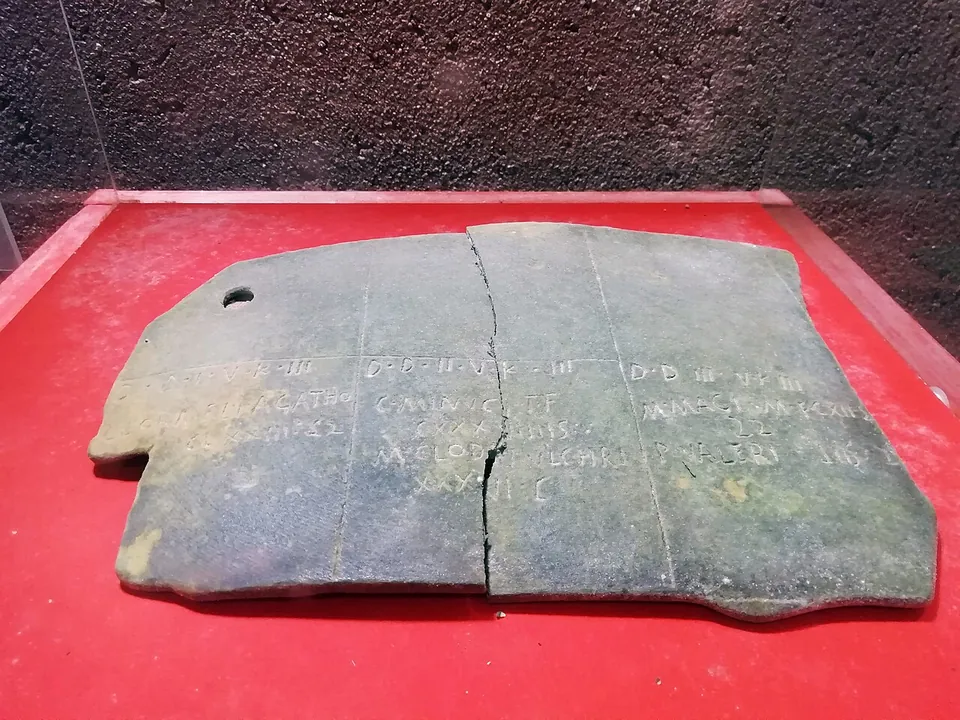
The site is a palimpsest rather than a single Roman room. Over the ruins sit the remains of a medieval underground building, perhaps a cellar, an ice-house and the foundations of a tower house (the operator; it.wikipedia). A resin copy of one of two bronze fragments of the Roman town’s land register, found here, is on show; the originals are not on public display (the operator).
The Curia. About 80 m to the south-east, in the basement of the Dodici Apostoli restaurant in Vicolo Corticella San Marco, are remains from the west side of the forum: part of the podium of the Curia, the council hall of Roman Verona: its moulded western facing, 5.8 m high; a stretch of the paved street that ran west of the forum, with its pavements; and about 37 m of the back wall of a large building probably dedicated to the cult of the emperors (University of Padua’s archeoveneto database). They were found in the late 1980s when the restaurant was renovated, and date from the first half of the 1st century AD (it.wikipedia; archeoveneto). The archeoveneto entry gives entry during the restaurant’s opening hours with no ticket, but the Ministry of Culture’s listing says booking is required; ask the restaurant first.
Is it worth the trip?
If you are in Verona on a weekend morning, yes: it costs nothing, it is a two-minute walk from Piazza delle Erbe, and it is the one place where any part of the forum’s chief temple can be visited. Expect a small underground excavation, not a building: what you see is masonry and rubble that takes explanation to read, so a guide, whom the operator offers for €8, makes much of the difference. On a weekday it can be seen only with a booked visit or tour. It is not worth a journey on its own; it is worth fitting in between the Arena and Porta Borsari.
Getting there and what it costs
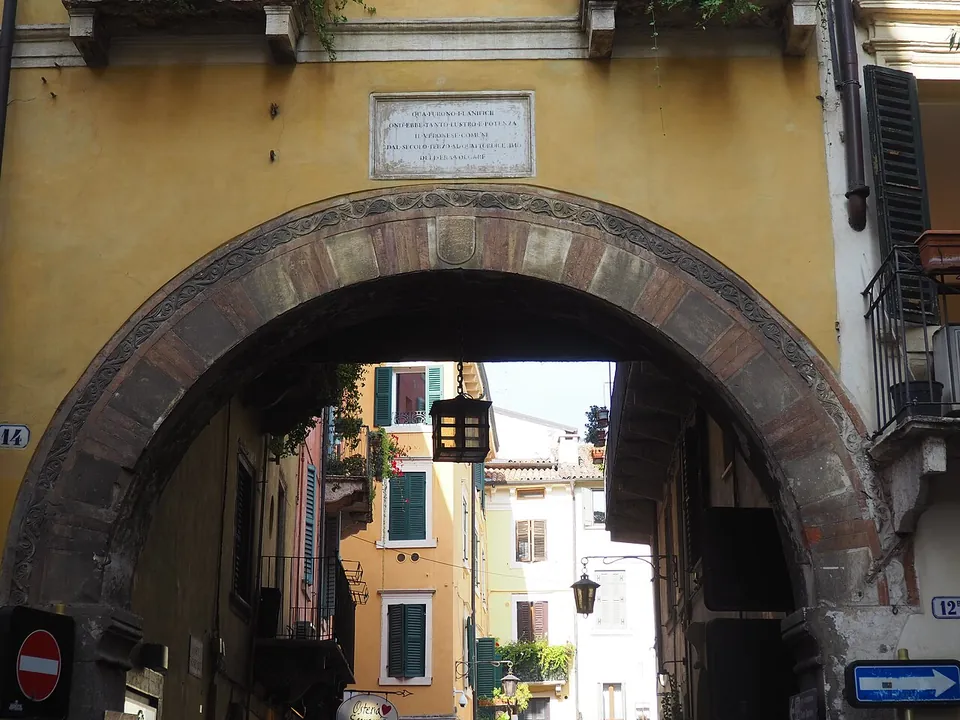
Corte Sgarzerie opens off Corso Porta Borsari through an arch with a plaque recalling the wool mills that once filled the courtyard (en.wikipedia; a Commons photograph’s description); the site’s address is Corte Sgarzerie 8p (the operator). It is about 100 m from Piazza delle Erbe, 300 m from Porta Borsari and 500 m from the Arena. Public transport stops in Via Rosa and Via Garibaldi are about 150 m away (OpenStreetMap). No car park is mapped near the courtyard; the car parks by the Arena are listed on the Verona page.
From the operator’s page, read 23 October 2026:
- Free opening: Saturday and Sunday 09.00–13.00, free. Booking your entry by e-mail is strongly advised, since the site holds few people; a guided visit can be requested for €8 a person.
- Other days: guided visits for individuals or small groups on request, by e-mail a few days ahead; €50 for a private group of up to ten.
- Guided tours: the 90-minute “Verona Sotterranea Express” takes in Corte Sgarzerie and the Via San Cosimo excavation, Monday to Saturday, in Italian, English or Spanish, listed at €20 a person, €15 for ages 7–14 and free under 7. A 90-minute augmented-reality walk through the forum area, “Il Capitolium in realtà aumentata”, ends in the cryptoporticus (€20, in Italian and English, booking required).
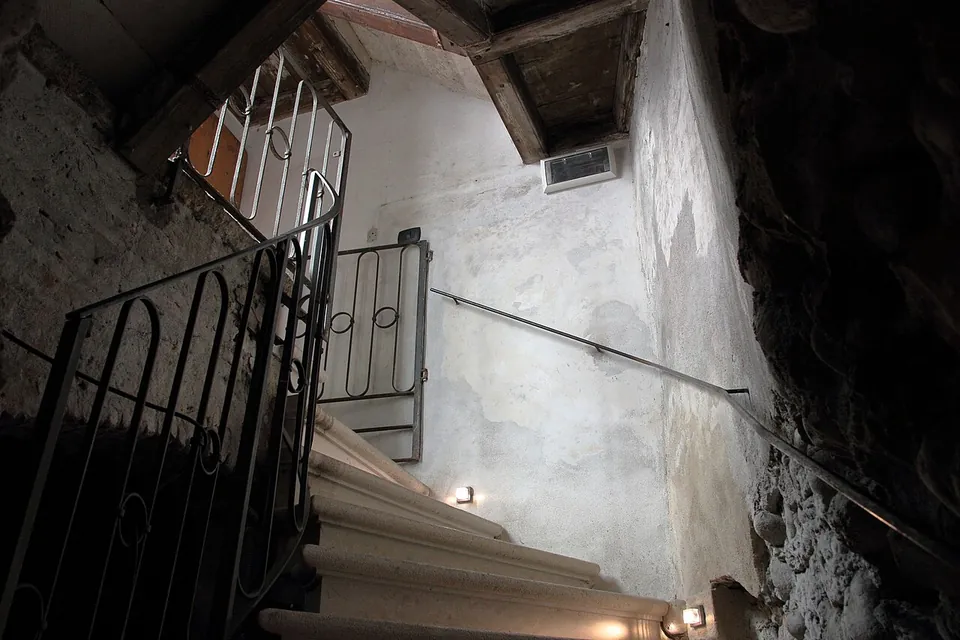
The excavation is underground, reached by a steep stair, poorly lit and unheated, and has no toilets (the operator; the description of a Commons photograph of the stair).
Visiting details
- Opening hours
- Saturday and Sunday 09.00–13.00. On other days the operator opens for booked guided visits on request, by e-mail a few days ahead.
- Tickets
- Free. A guided visit on request costs €8 a person; a private guided visit for a group of up to 10 is €50. The operator's 90-minute guided tour of Corte Sgarzerie and the Via San Cosimo excavation runs Monday to Saturday and is listed at €20 a person (€15 for ages 7–14, free under 7).
- Parking
- No car park is mapped near the courtyard, only city bicycle racks about 55 m away (OpenStreetMap). The underground car parks near the Arena, about 500 m south, are listed on the Verona page.
Before you go
- The site holds very few people at a time; the operator strongly advises booking your entry by e-mail even for the free weekend opening.
- The excavation is underground, reached by a steep stair, dimly lit and unheated, and has no toilets.
Hours and prices checked 23 October 2026 on the operator's own site. Confirm before travelling.
History
The Capitolium, the temple of Jupiter, Juno and Minerva, stood on the north side of the forum, today’s Piazza delle Erbe (the operator; it.wikipedia). It was built in the second half of the 1st century BC and completed in 20 BC, to mark Verona’s promotion to a Roman municipium (it.wikipedia). It was deliberately modelled, in form and decoration, on the temple of Jupiter Optimus Maximus on the Capitol in Rome, though about a third smaller: three cellae, a front 35 m wide with three rows of six columns, and a length of about 42 m (it.wikipedia; the operator). It stood on an artificial terrace about 80 m across, and the cryptoporticus served to retain that terrace (it.wikipedia). An inscription found on the site names the man who paid for the gallery and porticoes: Marcus Magius, “cryptam fecit et porticus reposuit d(e) p(ecunia) s(ua)” (it.wikipedia).
The portico around the temple served as an archive, its walls hung with inscriptions and bronze tablets: laws, decrees, lists of magistrates and emperors, land registers (the operator). The two land-register fragments found in the cryptoporticus are a rare example of an ancient register; one, dated between 40 and 30 BC, records plots of the centuriated countryside with their owners’ names (it.wikipedia).
The complex fell into abandonment in the 4th century, with the spread of Christianity and probably a fire; an inscription of 379–380 already records a bronze statue being moved from the temple to the forum because it lay neglected (the operator; it.wikipedia). From the 5th century the buildings were stripped for building material, under Theodoric according to the operator. The gallery remained in use, but at the end of the 7th century or in the 8th, water and probably earthquakes brought down its west arm and much of the portico above it (the operator; it.wikipedia). It then served as a rubbish dump until the 9th or 10th century. Aristocratic families built their towers here from the 12th century, the loggia was raised in the 14th century for the wool trade, and the Monte di Pietà followed in the 15th (the operator; en.wikipedia).
More photographs





Nearby
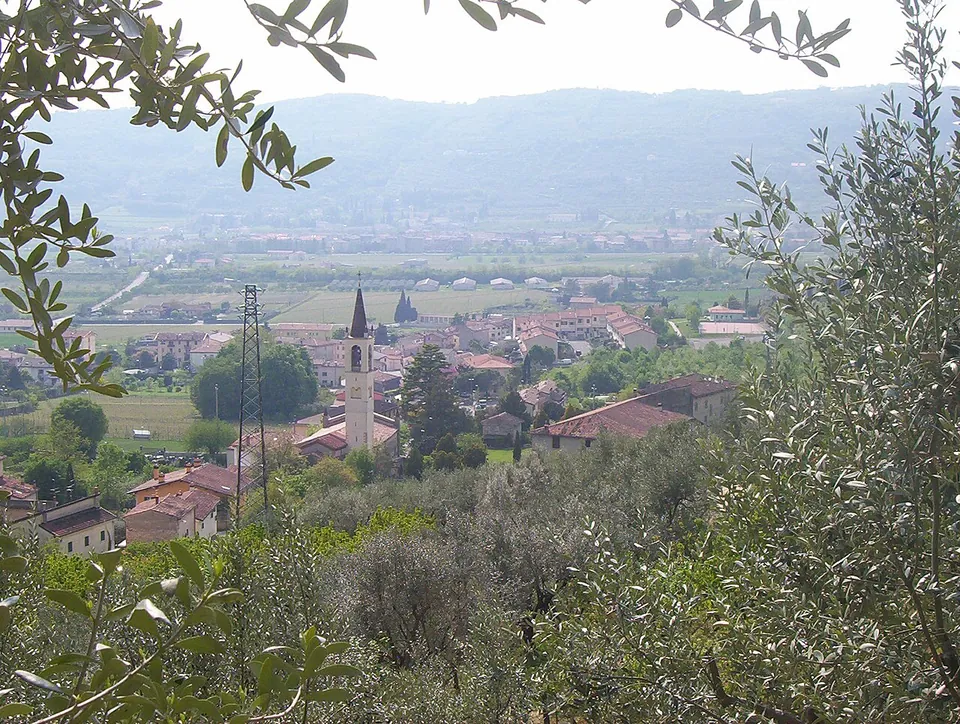
Photo: Adert · CC BY-SA 3.0 · Commons
7 km · site · Veneto
Ipogeo di Santa Maria in Stelle
The water of an underground spring collects in a semicircular settling basin cut in the rock and runs on along a low, narrow, barrel-vaulted channel 100 m long, with four shafts along it.
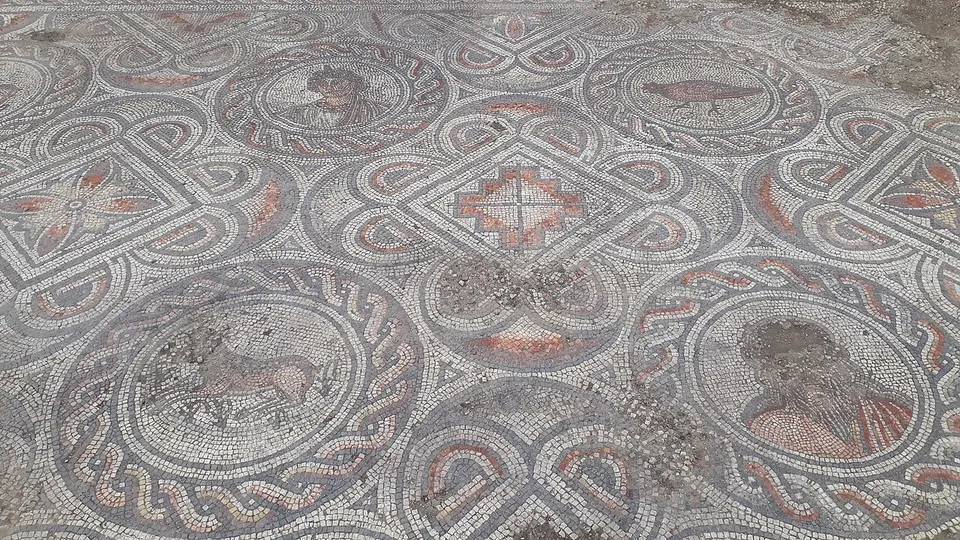
Photo: Piergiovanna Grossi · CC BY-SA 4.0 · Commons
11 km · villa · Veneto
Villa dei Mosaici
The villa has been brought to light almost entirely (it.wikipedia).
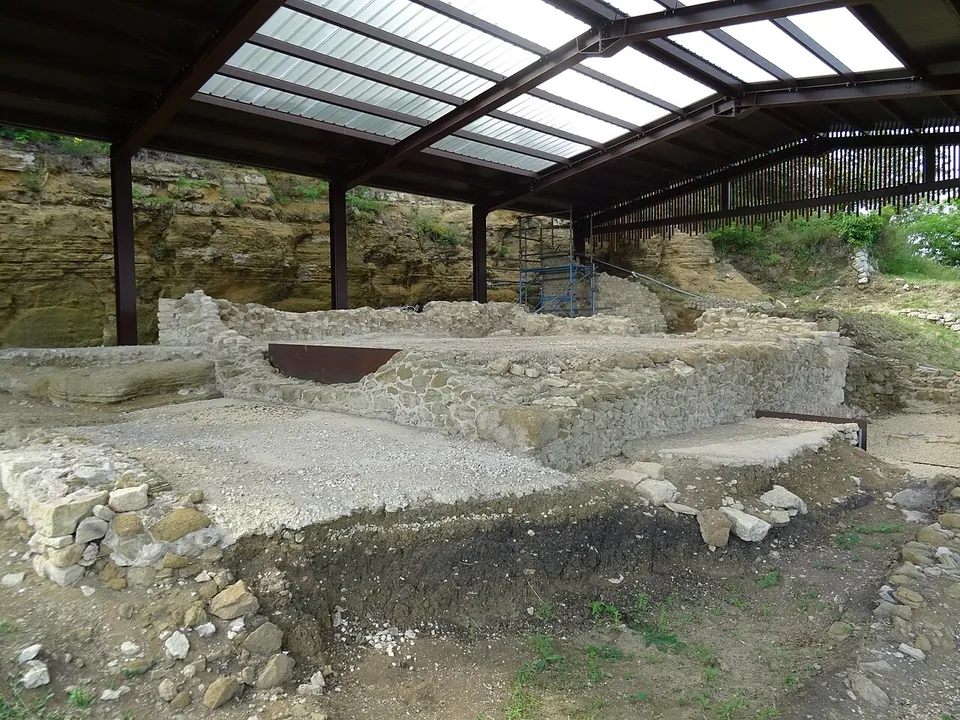
Photo: Syrio · CC BY-SA 4.0 · Commons
15 km · temple · Veneto
Temple of Minerva (Marano di Valpolicella)
What you see are the remains of the temple rebuilt in the Augustan age: the walls of its four-sided central chamber (the cella) and of the galleries that ran round it, under a modern shelter roof set against the rock face of the hill (the operator).


Straight-line distances.
Sources
Every fact on this page comes from the records below, each used under the licence noted.
| Source | Licence |
|---|---|
| Wikidata Q130477698 | CC0 |
| OpenStreetMap node/6233048818 | ODbL |
| Archeonaute — Criptoportico di Corte Sgarzerie (the operator; history and visiting information) | licence not recorded |
| Archeonaute — La Verona Sotterranea (guided tours) | licence not recorded |
| Archeonaute — Il Capitolium in realtà aumentata (guided tour) | licence not recorded |
| Pleiades — Capitolium of Verona | licence not recorded |
| Wikidata — Capitolium of Verona (Q30888026) | licence not recorded |
| Wikipedia (it) — Area archeologica di Corte Sgarzerie | CC BY-SA 4.0 |
| Wikipedia (en) — Corte Sgarzerie | CC BY-SA 4.0 |
| Wikipedia (it) — Capitolium (Verona) | CC BY-SA 4.0 |
| Wikipedia (it) — Curia (Verona) | CC BY-SA 4.0 |
| Università di Padova, archeoveneto — Curia and religious compound at the restaurant "Dodici Apostoli" | licence not recorded |
| Ministero della cultura — Resti della curia e di un complesso cultuale | licence not recorded |