Skip to content
Menu
LandmarkHub · 8 stops1st c. BC – 7th c. ADTicketed

Verona

city · Veneto, Italy

What it is
Verona was a Roman town on the Via Postumia where it crossed the Adige, and it keeps one of the best-preserved amphitheatres of the ancient world: the Arena, built in the 1st century AD and still used for opera in summer.
What you’ll see
The Arena and the south of the old town. The amphitheatre stands on Piazza Bra, outside the walls of the Roman town (Musei Civici).
Worth the trip?
Yes. The Arena alone justifies the visit: a Roman amphitheatre whose arena, seating and inner arcades can still be walked round, in the middle of a town that has kept its Roman street plan (en.wikipedia).
Getting there & cost
Verona Porta Nuova, the main railway station, is about 1.4 km from the Arena (OpenStreetMap), and the airport, 10 km south-west of the city, is linked to it by bus (en.wikipedia).Ticketed · Arena €12 · checked 17 October 2026Hours, tickets and parking
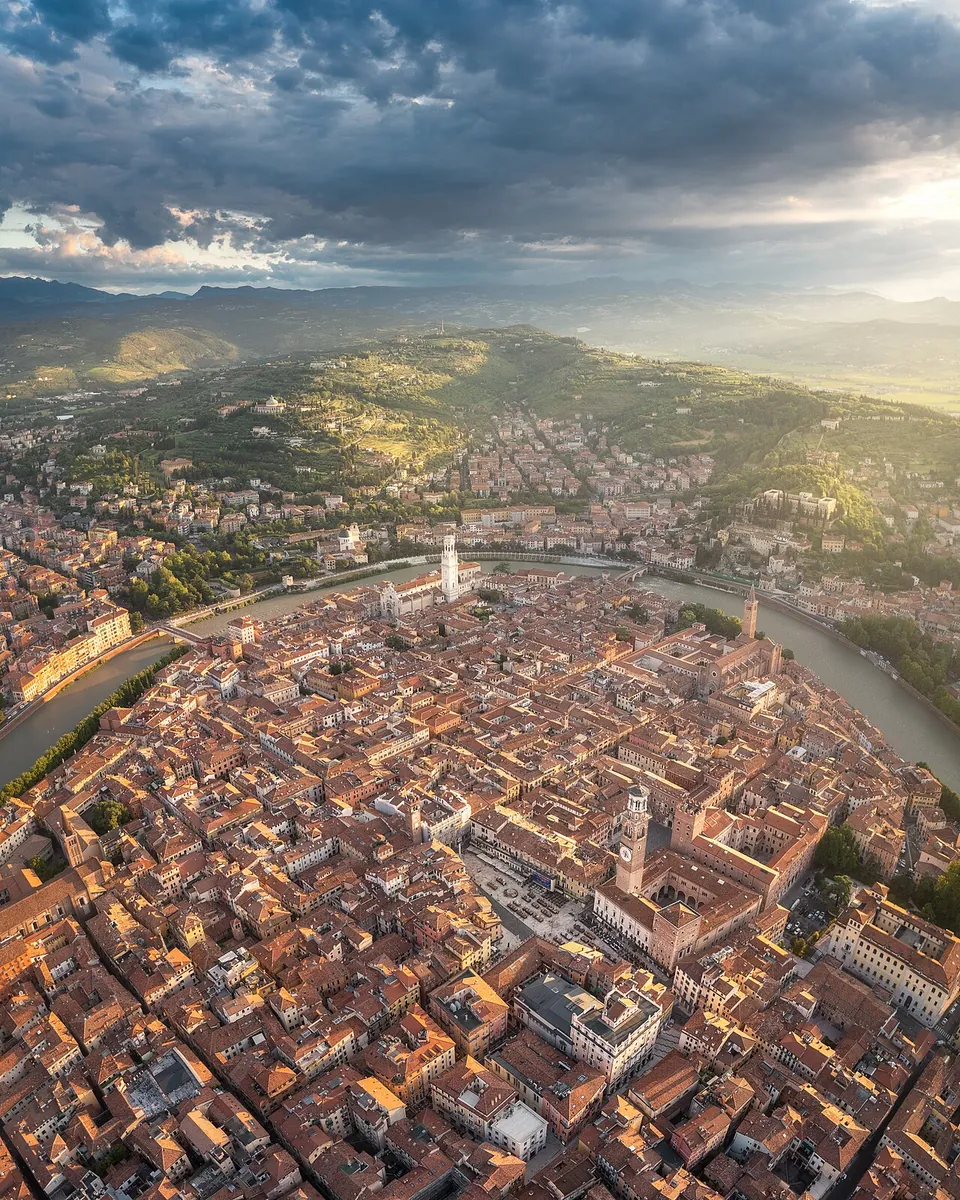
An aerial view at dawn over a dense city of red-tiled roofs inside a tight loop of a river, with bell towers and a large square, wooded hills rising behind and mountains on the horizon.
Verona from the air. The Roman town was laid out inside this bend of the Adige; the theatre lies on the hillside across the river. · Photo: Guglielmo Giambartolomei · CC BY-SA 4.0 · Wikimedia Commons
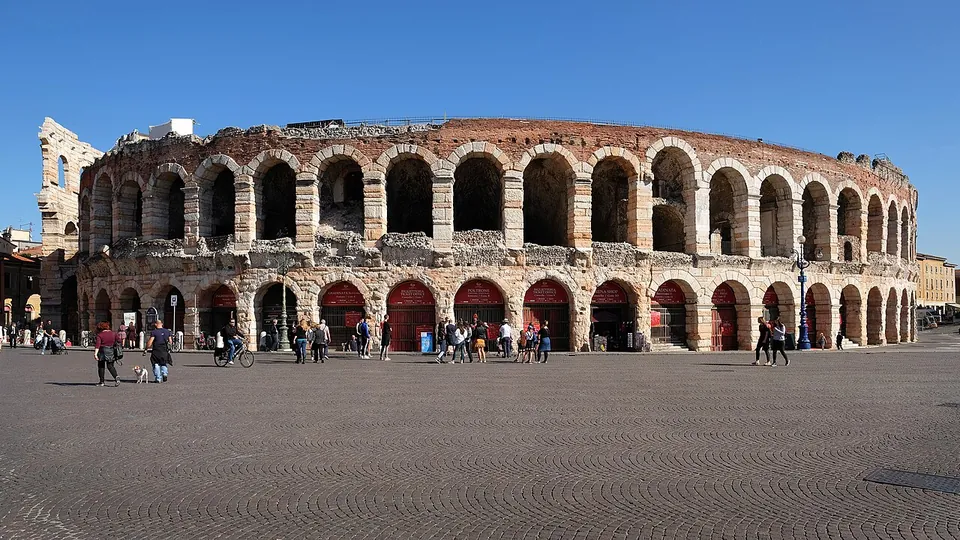
The curved wall of a huge oval amphitheatre in rusticated pinkish stone, two storeys of round arches with red-painted doors at ground level, rising over a wide paved square with people walking across it; a short, taller fragment of wall stands at the left end.
The Arena from Piazza Bra. What faces the square is the inner ring; of the outer facade only a short stretch, the Ala, still stands. · Photo: Claconvr · CC BY-SA 4.0 · Wikimedia Commons
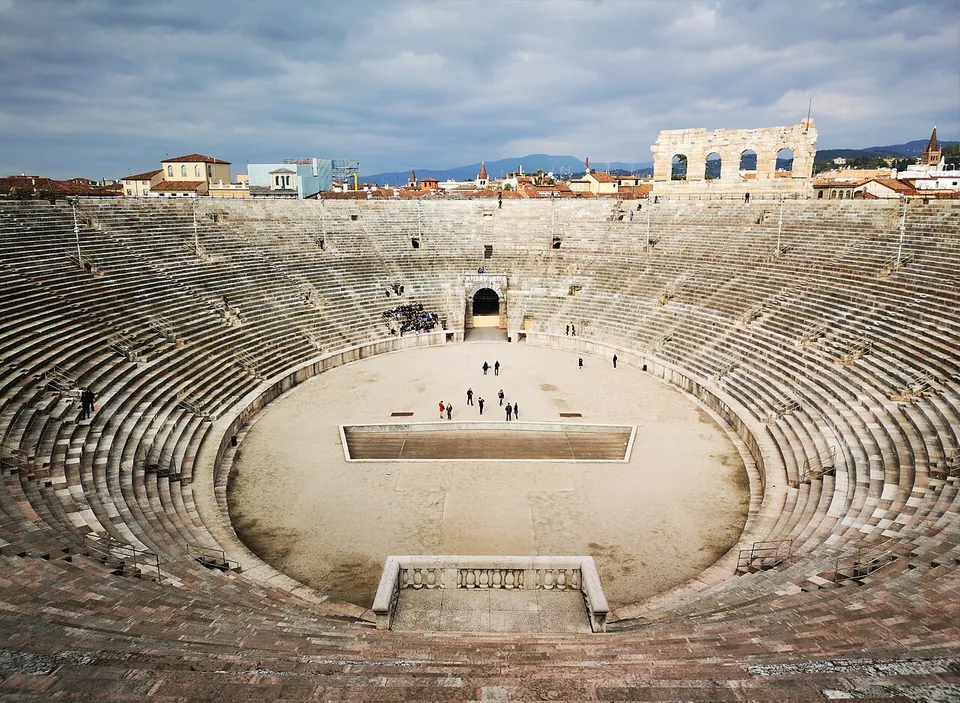
Inside the amphitheatre, rows of stone steps sweep round an oval sand-coloured floor where a few people stand; beyond the top of the seating a fragment of a taller wall with arched openings stands against the sky above the rooftops.
Inside the Arena; the arched fragment rising beyond the seating is the Ala, all that stands of the outer ring. · Photo: Garonzi Stefania · CC BY-SA 4.0 · Wikimedia Commons

The stops

8 places to see, the best preserved and best known first.

See all 8 stops on the mapWhere each one is, so you can plan your own way round.Open the map →
  1. The curved wall of a huge oval amphitheatre in rusticated pinkish stone, two storeys of round arches with red-painted doors at ground level, rising over a wide paved square with people walking across it; a short, taller fragment of wall stands at the left end.

    Photo: Claconvr · CC BY-SA 4.0 · Commons

    amphitheatre · Veneto

    Verona Arena

    From Piazza Bra you see a long oval of two storeys of arches.
    Ticketed
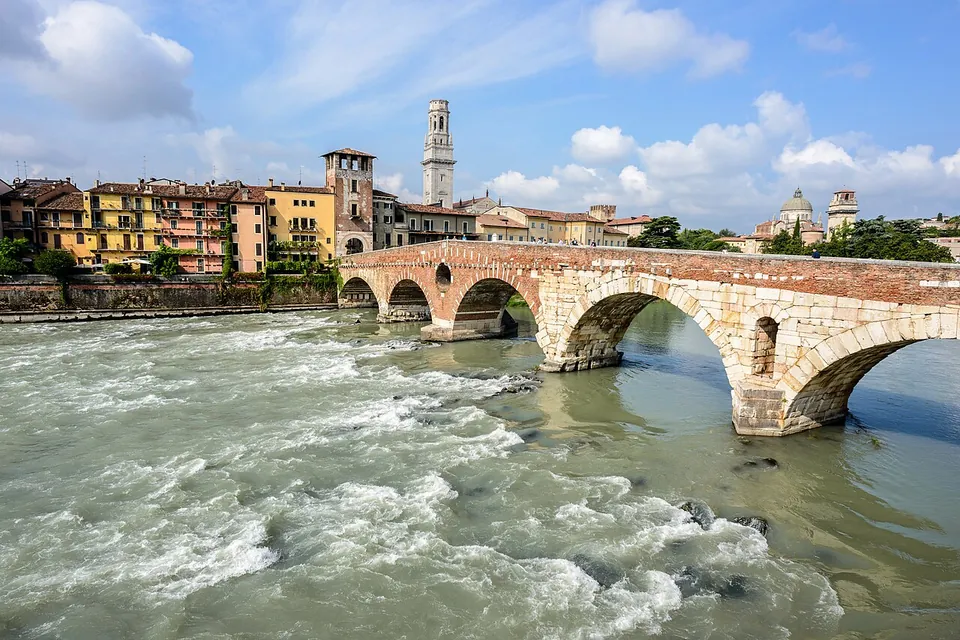
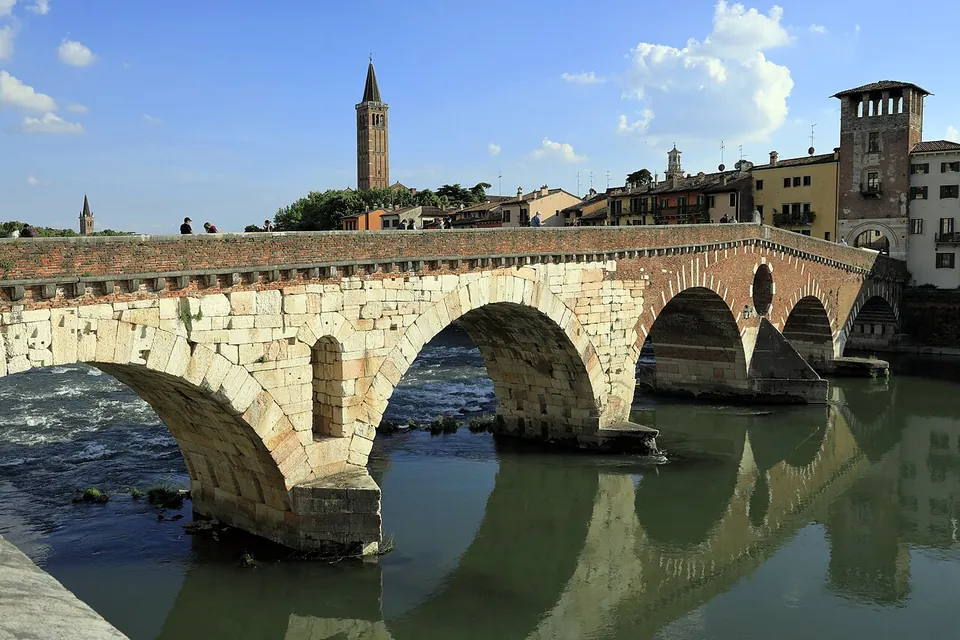
  2. A long bridge of round arches over a fast, foaming green river. The two nearest arches are built of large pale stone blocks, with a small arched opening in the pier between them; the arches beyond are of red brick and end at a brick tower among yellow and ochre houses, with a tall bell tower behind.

    Photo: Nick Savchenko from Kiev, Ukraine · CC BY-SA 2.0 · Commons

    bridge · Veneto

    Ponte Pietra

    A footbridge about 93 to 95 m long on five arches (it.wikipedia; fr.wikipedia), and you read its history from the materials.
    Free
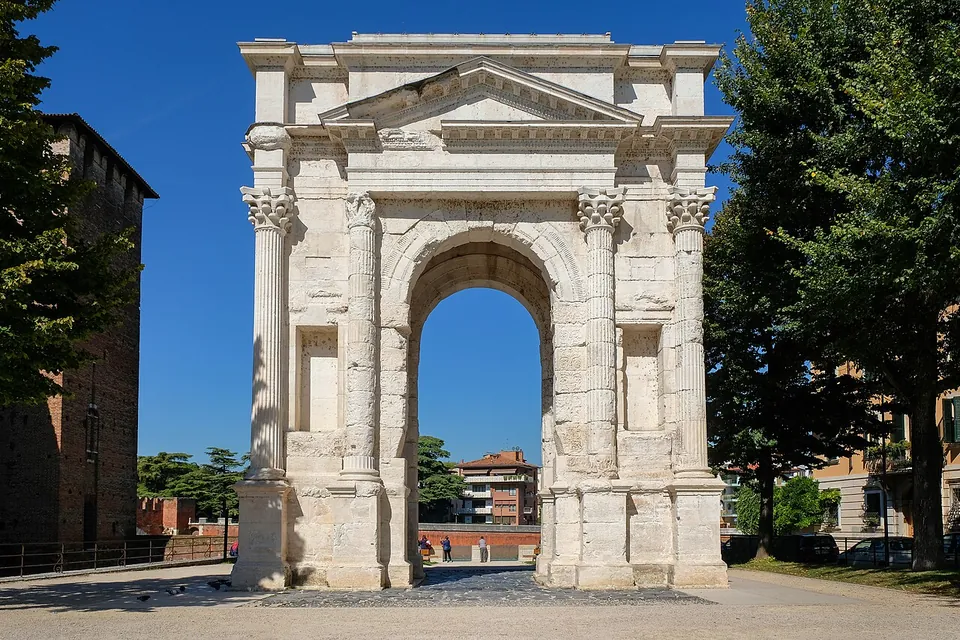
  3. A free-standing arch of pale stone on a paved square under a blue sky, its front framed by four fluted columns with ornate capitals, a pediment over the central opening and a tall narrow niche on each side; trees and a brick castle wall stand beside it.

    Photo: Claconvr · CC BY-SA 4.0 · Commons

    arch · Veneto

    Arco dei Gavi

    A free-standing arch of white local limestone, 12.69 m high, 10.96 m across its two main faces and 6.02 m deep (it.wikipedia).
    Free
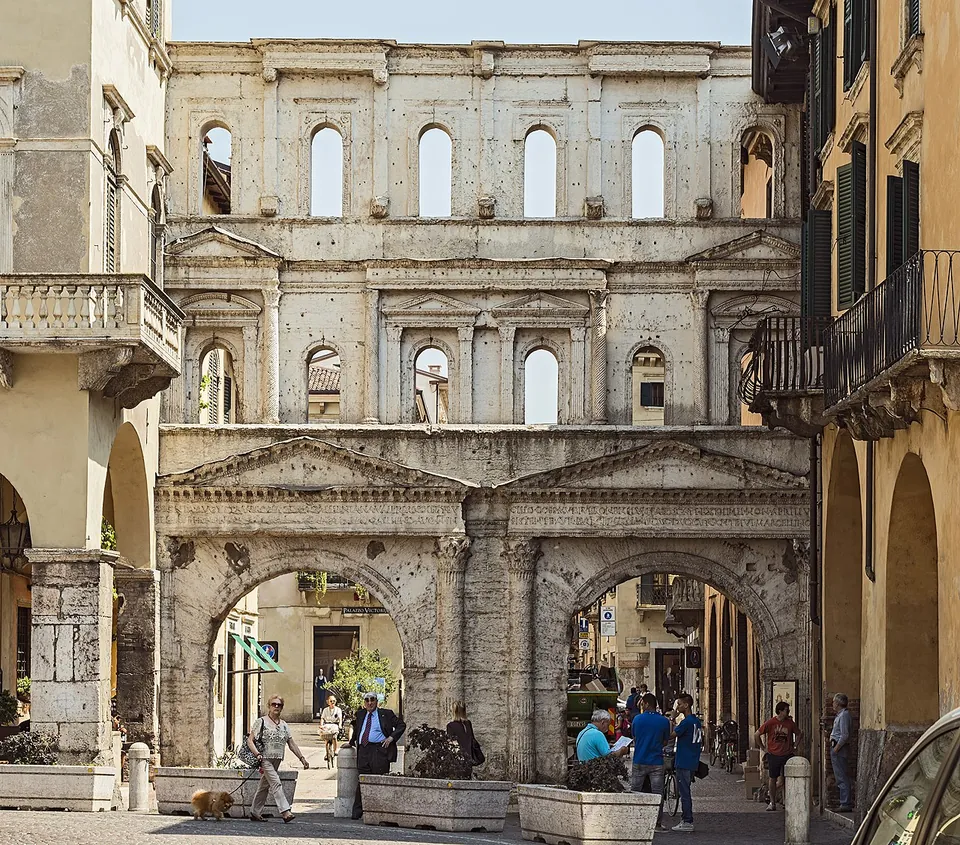
  4. A tall pale stone facade filling the end of a street between later houses with balconies, two round arches at street level each framed by columns and a triangular pediment, and above them two storeys of arched windows open to the sky; people walk through the arches.

    Photo: Didier Descouens · CC BY-SA 4.0 · Commons
    gate · Veneto

    Porta Borsari

    One wall, but an ornate one.

    Free
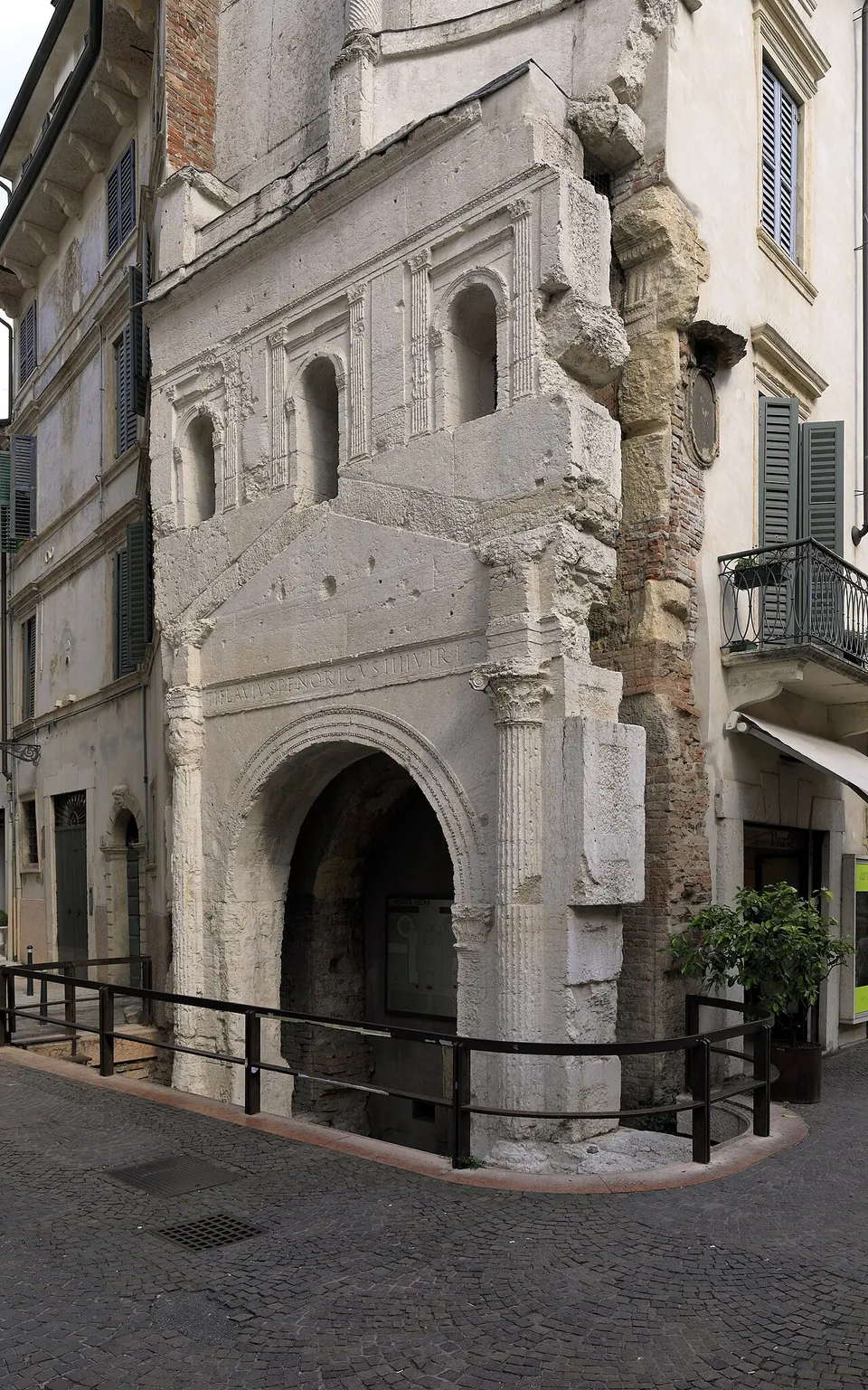
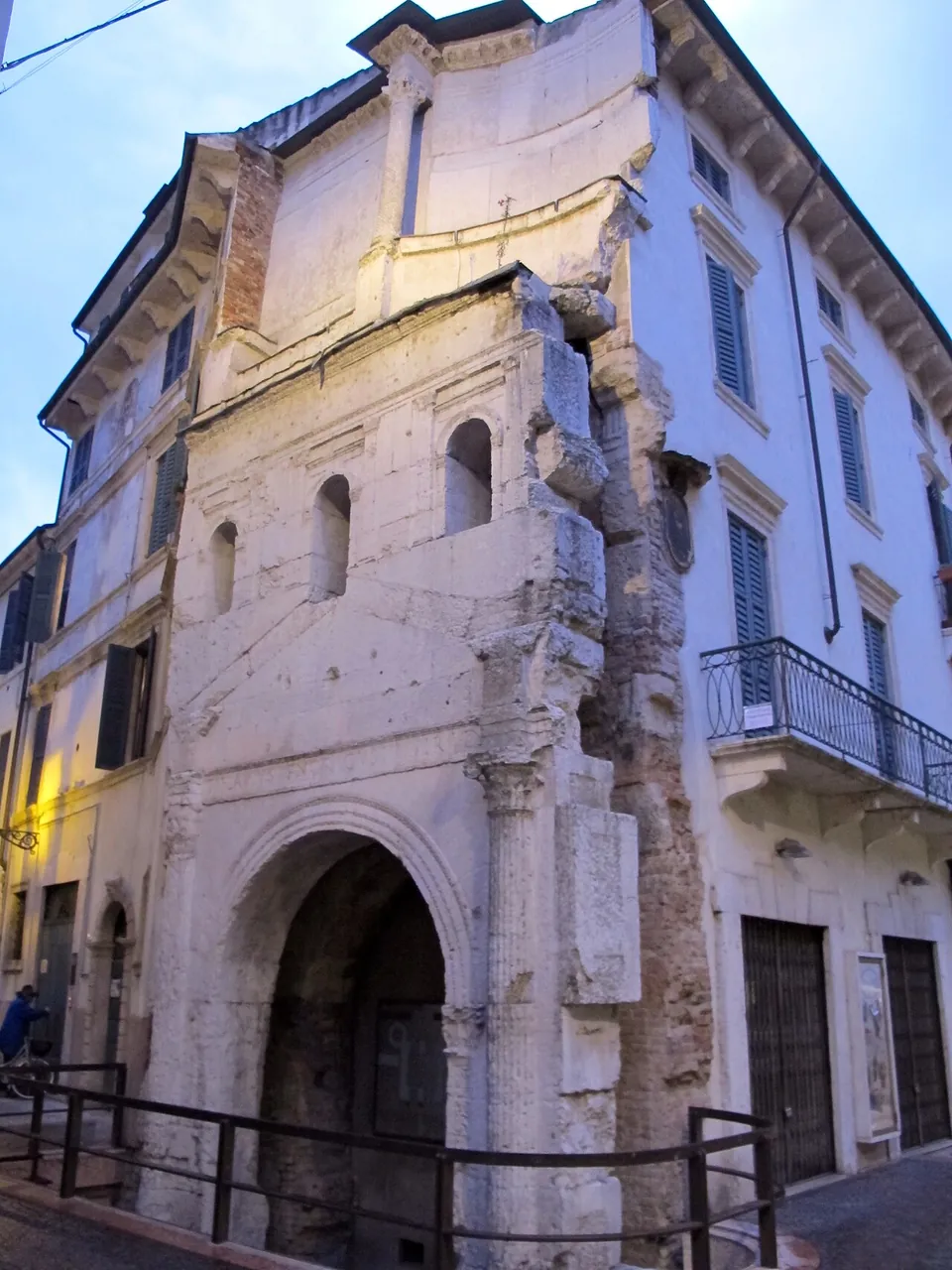
  5. The surviving half of a pale stone gate front built into the corner of a later plastered house. A round arch at street level is framed by fluted half-columns with leafy capitals under a line of carved lettering and a low pediment; above are small arched windows between pilasters and, higher still, a broken upper storey. Along its right-hand edge the rough stone gives way to older red brickwork. A low railing runs round the foot of it on a cobbled street.

    Photo: Falk2 · CC BY-SA 4.0 · Commons

    gate · Veneto

    Porta Leoni

    What stands is the inner face of the gate, the one that looked into the town (it.wikipedia; archeoveneto).
    Free
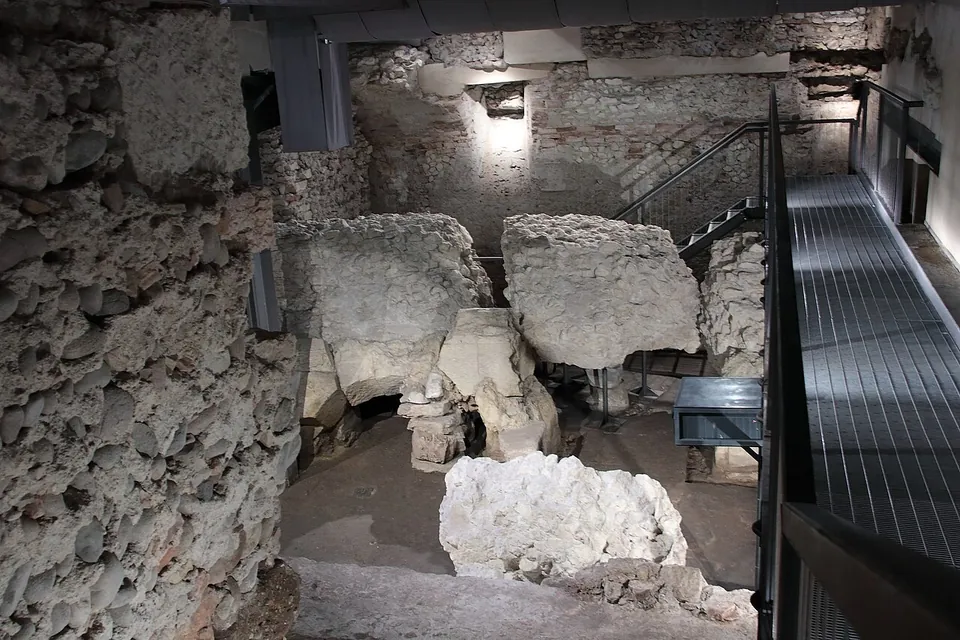
  6. A dim underground excavation seen from above, with walls of rough rubble masonry, large pale blocks of broken masonry lying on an earth floor, and a metal walkway with steps running along the right-hand side.

    Photo: Patafisik · CC BY-SA 4.0 · Commons

    temple · Veneto

    Archaeological area of Corte Sgarzerie

    The excavation, carried out by the state archaeological service between 1988 and 2004 under the loggia, exposed part of the cryptoporticus that enclosed the temple on three sides (it.wikipedia; the operator).
    Free
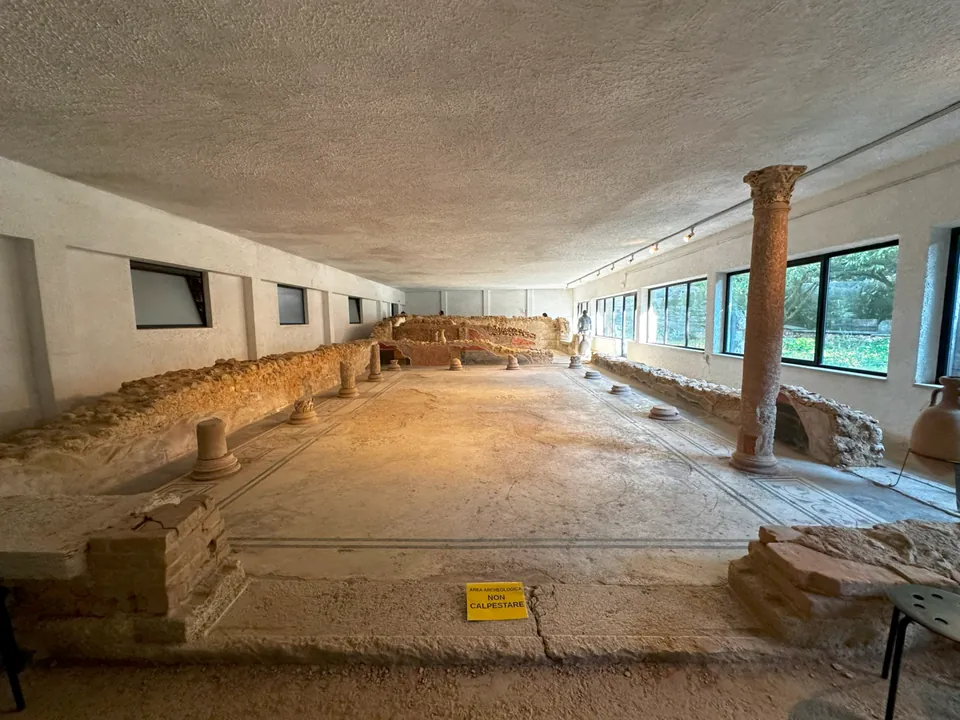
  7. A long, low room under a flat modern ceiling, with large windows down the right-hand side. Low rubble walls and a row of short round column bases run along the edges of a pale mosaic floor edged with dark lines, and one column of pinkish stone with a carved capital stands to full height near the windows.

    Photo: Kia93VR · CC BY-SA 4.0 · Commons

    villa · Veneto

    Valdonega Roman Villa

    The house is small - about 17 by 11 m without its portico (the operator) - and what you see is its rooms at floor level, their walls standing low.

    Restricted access

Verona was a Roman town on the Via Postumia where it crossed the Adige, and it keeps one of the best-preserved amphitheatres of the ancient world: the Arena, built in the 1st century AD and still used for opera in summer. Within a walk of it stand a Roman theatre on the hillside across the river, the Ponte Pietra, the fronts of two Roman gates, the reassembled Arco dei Gavi and a handful of excavations below street level. It is worth the trip, and the main monuments can be seen in a day; the Arena costs €12, the theatre with its museum €9.

What is there today

The Arena and the south of the old town. The amphitheatre stands on Piazza Bra, outside the walls of the Roman town (Musei Civici). Published dates for it run from about AD 30 (Pleiades; it.wikipedia) to the middle of the 1st century (the city’s museums). It held about 30,000 spectators in Roman times; today’s summer performances seat 22,000 (Musei Civici; it.wikipedia). Systematic restoration since the 16th century is largely what kept it in such condition (en.wikipedia), but what you see from the square is the inner ring: of the outer ring, the original facade, only a four-arched stretch called the Ala still stands. The ring was partly pulled down under Theodoric (493–526) to build the city’s second wall, and the Arena served as a quarry until the Renaissance (Musei Civici; it.wikipedia). The whole building measured about 152 by 123 m; without its outer ring it is about 138 by 110 m today (it.wikipedia; hr.wikipedia; fr.wikipedia). The tiers of seats inside have been rebuilt (Musei Civici). Opera seasons have been held here since 1913, interrupted only by wars (en.wikipedia).

A few minutes away are two sites that show the town’s defences. In Via San Cosimo, under the courtyard of the religious institute of the Figlie di Gesù, an excavation shows a stretch of the late-Republican wall of the second half of the 1st century BC, the base of a tower probably added under Gallienus, two rooms of a 1st-century house with mosaic and marble floors, and, about 8 m outside the first wall, a stretch of the second wall built under Theodoric, preserved up to about 10 m high and built partly of blocks taken from the Arena’s outer ring (it.wikipedia). Near by, in the basement of the Banca Popolare di Verona’s headquarters, the house in Piazza Nogara, built at the end of the 1st century BC, keeps mosaic floors laid between the 2nd and 3rd centuries, displayed in a setting designed by Carlo Scarpa (it.wikipedia). At Porta Leoni, a gate built with the walls in the second half of the 1st century BC and refaced in stone in the 1st century AD, half of the stone front on the town side still stands against a later building, and the foundations of the gate can be seen below the street (it.wikipedia; en.wikipedia). An inscription over its central pier, naming the four magistrates who built the walls, gates, towers and sewers, is regarded as the founding record of Roman Verona (it.wikipedia).

The forum and the western gate. Piazza delle Erbe occupies the site of the Roman forum, an open square 168 m long and 56 m wide (it.wikipedia). The Capitolium, the temple of Jupiter, Juno and Minerva on its north-east side, was completed around 20 BC; nothing of it stands above ground, but part of the vaulted gallery (cryptoporticus) that ran beneath its portico can be visited under the loggia of Corte Sgarzerie, and more of it lies under Palazzo Maffei and the church of San Benedetto al Monte (it.wikipedia). Remains of the Curia, the council house, can be seen inside the Dodici Apostoli restaurant (it.wikipedia). From the forum, Corso Porta Borsari follows the main Roman street to Porta Borsari, the Porta Iovia of the Romans and the town’s principal entrance, where the Via Postumia came in: only its outer front survives, a facade about 13 m high in white stone from the first half of the 1st century AD, with two arches below and two storeys of windows above (it.wikipedia). The temple of Jupiter Lustralis that gave the gate its name was excavated beside it in 1930 and demolished in 1932, and the stones of its podium were partly reassembled in the gardens outside Porta Vittoria (it.wikipedia; OpenStreetMap). About 400 m beyond the gate, beside the castle of Castelvecchio, stands the Arco dei Gavi, an arch built for the family of the Gavii at the end of Augustus’s reign or early in Tiberius’s, a very rare privately funded arch, signed by its architect, the freedman Lucio Vitruvio Cerdone (it.wikipedia). French military engineers took it down in 1805, and it was reassembled here in 1932, its missing attic redesigned from Palladio’s drawings and earlier surveys; a marble rectangle in the road in front of the castle marks where it stood (it.wikipedia). Digging round it in 2011–2013 found a 2nd-century house whose mosaic floor is now in the Museo di Castelvecchio, within sight of the arch (it.wikipedia).

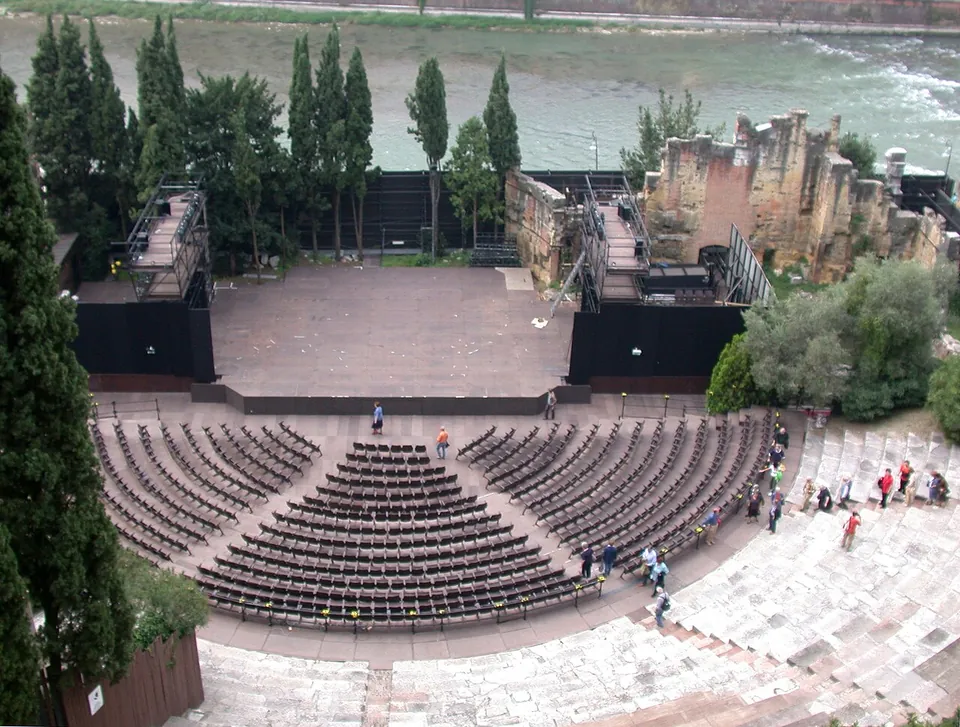
Across the river. The Ponte Pietra is the only Roman bridge left in Verona (it.wikipedia), completed around 100 BC (en.wikipedia). Its two arches on the left bank are Roman work, in large blocks of stone; the arch on the town side was rebuilt in 1298 and the two middle arches in 1520–1521 (it.wikipedia). Retreating German troops blew it up on 24 April 1945, leaving only the town-side arch standing, and it was rebuilt in 1957–1959, largely from stones recovered from the river, so the Roman arches seen today were reassembled, largely from their original blocks (it.wikipedia). Beside the bridge, the Roman Theatre was built at the end of the 1st century BC against the Colle San Pietro, with terraces rising up the hill to a temple at the top (Musei Civici). Houses and churches covered it from at least the 10th century; the merchant Andrea Monga bought the site and excavated it between 1834 and 1844, and the city took over in 1904 (Musei Civici; it.wikipedia). Its seating was largely relaid or rebuilt in the early 20th century and the stage building survives only to a modest height (Musei Civici; it.wikipedia). The archaeological museum, in the 15th-century convent above the seating, is part of the same visit (it.wikipedia), and a funicular runs from near the bridge up to Castel San Pietro (en.wikipedia; OpenStreetMap).

Valdonega. On the hillside about 1.5 km north of Piazza delle Erbe, a 1st-century villa found in 1957 while a block of flats was being built keeps three rooms on an L-shaped portico; the largest, a dining room with columns on three sides, has mosaic floors and was painted with a garden (it.wikipedia).

Is it worth the trip?

Yes. The Arena alone justifies the visit: a Roman amphitheatre whose arena, seating and inner arcades can still be walked round, in the middle of a town that has kept its Roman street plan (en.wikipedia). The theatre and the Ponte Pietra across the river add a second half-day, and the gates and the Arco dei Gavi cost nothing and stand in the street on the way between them.

Know what you are seeing. The Arena’s facade is the inner ring, its seats are rebuilt, and from April to October stage sets fill part of it, and the city publishes no visiting hours for performance days; the theatre too gets a modern stage for its summer festival (Musei Civici). The excavations open free for a few hours a week - Corte Sgarzerie on Saturday and Sunday mornings, Via San Cosimo for two hours on Saturday and Sunday, Valdonega on Sunday and Tuesday afternoons - the last two by booking only (Archeonaute), and the house in Piazza Nogara is seen by booking only (University of Padua’s archeoveneto database). The Arco dei Gavi and the theatre, the two farthest apart, are about 1.3 km from each other, so a day is enough.

Getting there and what it costs

Verona Porta Nuova, the main railway station, is about 1.4 km from the Arena (OpenStreetMap), and the airport, 10 km south-west of the city, is linked to it by bus (en.wikipedia). Drivers will find two underground car parks, Cittadella and Parcheggio Arena, about 290 m and 450 m from the Arena (OpenStreetMap). From the Arena it is about 500 m to Piazza delle Erbe and 1.1 km to the Roman Theatre.

Each operator’s page, read 17 October 2026:

  • Arena (Musei Civici di Verona): €12; €9 for groups of 15 or more and over-65s; €3 for 18–25-year-olds from the EU and a few other countries; free under 18 (under 14 only with an adult) and with the VeronaCard. Tuesday to Sunday 09.00–19.00 except on performance days, for which no hours are published; closed on Mondays.
  • Roman Theatre and archaeological museum (Musei Civici di Verona): €9, reduced €6 and €2 on the same terms. Tuesday to Sunday 10.00–18.00, last entry 17.30, closed on Mondays.
  • Both cost €1 on the first Sunday of the month from November to March. Since the city’s ticketing changed hands on 1 October 2026, its only official online ticket office is verona.coopculture.it.
  • Corte Sgarzerie (Archeonaute, read 23 October 2026): free, Saturday and Sunday 09.00–13.00; the site holds very few people, so booking your entry is strongly advised. A guided visit is €8.
  • Via San Cosimo (Archeonaute, read 23 October 2026): free, Saturday 15.00–17.00 and Sunday 10.00–12.00, booking required. A guided visit is €8.
  • Villa of Valdonega (Archeonaute): free, Sundays and Tuesdays from 16.00, by booking only; the operator’s page gives both 18.00 and 20.00 as the closing time. A guided visit is €8.
  • On other days the operator opens all three for booked guided visits on request, a few days ahead. Its 90-minute tour of Corte Sgarzerie and Via San Cosimo runs Monday to Saturday, and a three-hour tour adding Valdonega on Sundays; it gives €20 a person, €15 for ages 7–14 and free under 7.

Porta Borsari, Porta Leoni, the Arco dei Gavi and the Ponte Pietra stand in the street, with no ticket.

Visiting details

Opening hours
Arena Tuesday–Sunday 09.00–19.00 except on performance days, for which no hours are published; closed on Mondays. Museo Archeologico al Teatro Romano, which includes the Roman Theatre, Tuesday–Sunday 10.00–18.00 (last entry 17.30), closed on Mondays. Villa of Valdonega Sundays and Tuesdays from 16.00, by booking only. Corte Sgarzerie Saturday and Sunday 09.00–13.00, booking strongly advised. Via San Cosimo Saturday 15.00–17.00 and Sunday 10.00–12.00, booking required. On other days the operator opens these three for booked guided visits on request, and runs a guided tour of Corte Sgarzerie and Via San Cosimo Monday to Saturday (with Valdonega on Sundays). Porta Borsari, Porta Leoni, the Arco dei Gavi and the Ponte Pietra stand in the street.
Tickets
Arena €12; €9 for groups of 15 or more and over-65s; €3 for 18–25-year-olds (EU citizens and a few other nationalities); free under 18 (under 14 only with an adult) and with the VeronaCard. Theatre and archaeological museum €9, reduced €6 and €2 on the same terms. Both €1 on the first Sunday of the month from November to March. Corte Sgarzerie, Via San Cosimo and the Villa of Valdonega free, a guided visit at each €8. The guided tour of the underground sites €20, ages 7–14 €15, under 7 free.
Parking
Underground car parks Cittadella (OpenStreetMap way/24895019, 750 spaces, fee) about 290 m from the Arena and Parcheggio Arena (way/138825310, 870 spaces, fee) about 450 m from it.

Before you go

  • From April to October the Arena holds performances and events, carries modern stage sets and cannot be seen in full; the city publishes no visiting hours for performance days.
  • From 31 March 2026 the summer stage was being built in the Roman Theatre, with changes to the visitor route; it hosts the Estate Teatrale Veronese every summer.
  • Ticketing for the city museums changed operator on 1 October 2026; the city names verona.coopculture.it as the only official online ticket office.
  • The excavations open for only a few hours a week. Via San Cosimo and the Villa of Valdonega can be entered only with a booking; Corte Sgarzerie holds very few people, and the operator strongly advises booking even for its free weekend opening. The Valdonega page gives two closing times, 18.00 and 20.00; allow for the earlier one.

Hours and prices checked 17 October 2026 on the operator's own site. Confirm before travelling.

History

The first settlement lay on the slopes of the Colle San Pietro, above the river (it.wikipedia). Contacts with Rome are documented from the 3rd century BC, and the Via Postumia, from Genoa to Aquileia, crossed the Adige here (it.wikipedia). In 89 BC Verona received Latin rights as a colony, and in 49 BC Roman citizenship and the rank of municipium (en.wikipedia; it.wikipedia). The new town was laid out on a grid inside the bend of the Adige, a plan that survives in today’s streets (it.wikipedia; en.wikipedia). Under Augustus it became part of Italy’s tenth region, Venetia et Histria, and in the 1st century AD it was given its public monuments: the forum’s porticoes, Curia and Basilica, the stone fronts of its gates and the Arena (it.wikipedia). The Via Claudia Augusta, the road up the Adige valley to the Brenner Pass, ran through the town (it.wikipedia).

Its position made it a fortress in every crisis. In 69 the forces of Vespasian dug a ditch south of the town; in 265 Gallienus extended the walls to take in the Arena, in seven months, as an inscription on Porta Borsari records; in 312 Constantine besieged Maxentius’s forces in Verona, a siege shown on the Arch of Constantine in Rome (it.wikipedia). Stilicho defeated Alaric’s Visigoths at Verona in the early 5th century (published dates are 402 and 403), and in 489 the city passed to the Ostrogoths: Theodoric was said to have built a palace here, and he gave it its second wall (en.wikipedia; it.wikipedia). The Goths held it through the Gothic War (535–552), and in 569 it was taken by Alboin, king of the Lombards (en.wikipedia). The city was added to UNESCO’s World Heritage list in 2000 for its urban structure and architecture (en.wikipedia).
More photographs

Looking down on a semicircle of stone seating with rows of modern seats set out on its lower part, facing a wide modern stage with lighting towers, ruined stone walls to one side and a fast river behind.
The Roman Theatre seen from the archaeological museum, set up with a modern stage and seats for performances, with the Adige behind. · Photo: MM · Public domain · Wikimedia Commons
A bridge of round arches over a broad green river, the two nearest arches built of large pale stone blocks and those beyond of brick, with a brick bell tower and houses on the far bank.
The Ponte Pietra from the left bank. Its sources date the arches on this side to the Roman bridge, reassembled after 1945; the others were rebuilt in 1298 and in 1520–1521. · Photo: Falk2 · CC BY-SA 4.0 · Wikimedia Commons
A pale stone gateway facade between buildings, two round arches at street level framed by columns and pediments, with two storeys of arched windows above, people walking through the arches.
Porta Borsari, the outer face of the city's main Roman gate, where the Via Postumia entered the town. · Photo: Didier Descouens · CC BY-SA 4.0 · Wikimedia Commons
A fragment of a pale stone gate front attached to the corner of a house, with one round arch at street level, a column and pilaster beside it and small arched windows above; a railing runs in front of it.
Porta Leoni, where half of the gate's stone front on the town side still stands against a later building. · Photo: Sailko · CC BY-SA 3.0 · Wikimedia Commons
A free-standing single arch of pale stone on a paved square under a blue sky, its front framed by fluted columns with ornate capitals carrying a pediment, with trees and a brick castle wall beside it.
The Arco dei Gavi, taken down in 1805 and put back together beside Castelvecchio in 1932. · Photo: Claconvr · CC BY-SA 4.0 · Wikimedia Commons

Nearby

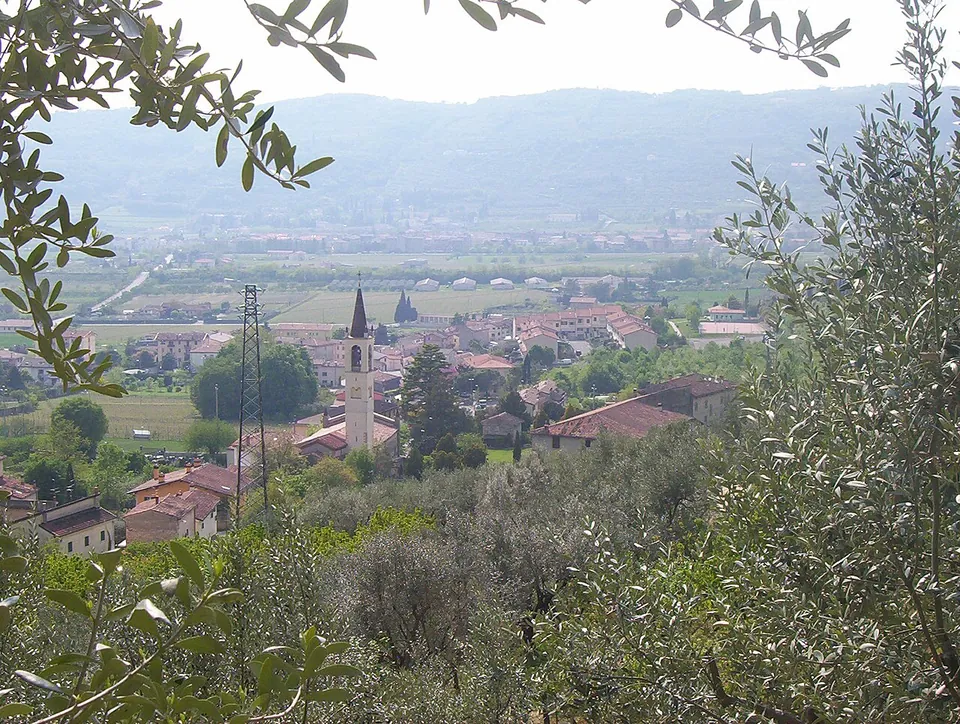
  • A village of red-roofed houses and a slender bell tower with a pointed spire on the valley floor, seen from a hillside through olive branches, with flat farmland and a line of hills beyond.

    Photo: Adert · CC BY-SA 3.0 · Commons

    7 km · site · Veneto

    Ipogeo di Santa Maria in Stelle

    The water of an underground spring collects in a semicircular settling basin cut in the rock and runs on along a low, narrow, barrel-vaulted channel 100 m long, with four shafts along it.
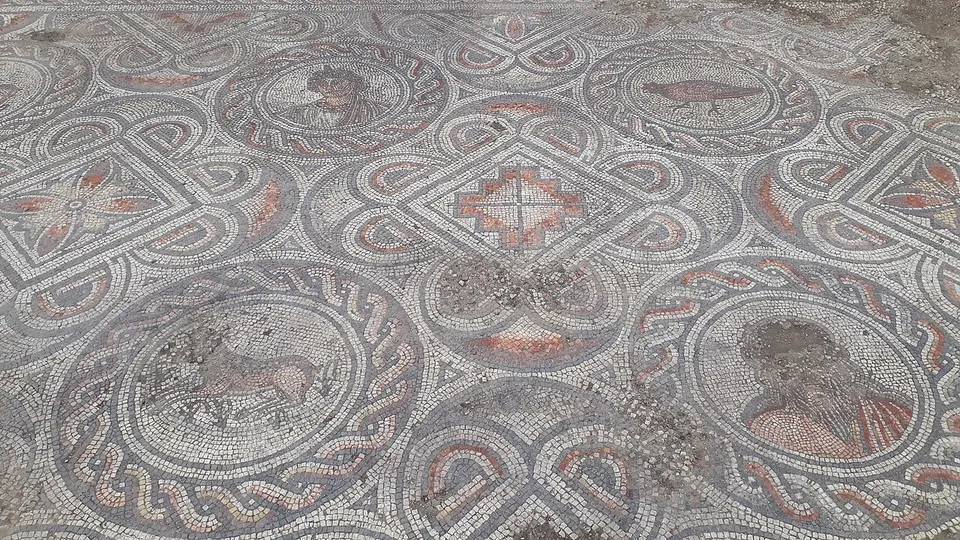
  • A mosaic floor of interlaced grey, white and red bands forming circles and squares; the circles hold small pictures, among them a bird and a bearded head, and the squares hold red geometric stars.

    Photo: Piergiovanna Grossi · CC BY-SA 4.0 · Commons

    11 km · villa · Veneto

    Villa dei Mosaici

    The villa has been brought to light almost entirely (it.wikipedia).
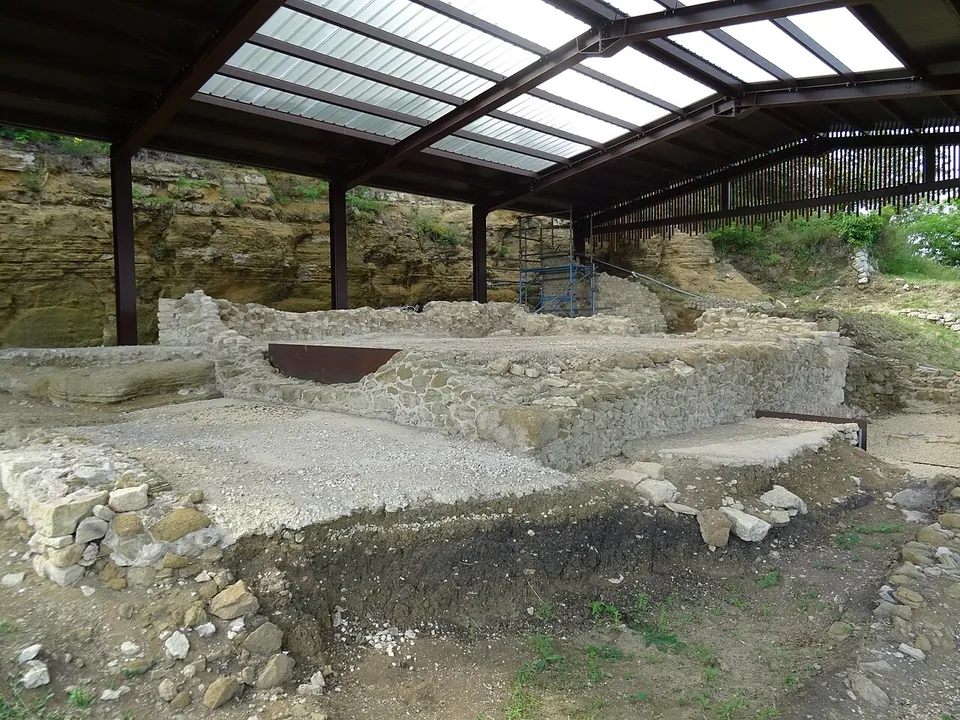
  • Under a translucent roof on steel posts, a raised rectangular platform of rubble-stone walls with a gravelled top, a rusted metal plate set into its face, and exposed rock strata behind.

    Photo: Syrio · CC BY-SA 4.0 · Commons

    15 km · temple · Veneto

    Temple of Minerva (Marano di Valpolicella)

    What you see are the remains of the temple rebuilt in the Augustan age: the walls of its four-sided central chamber (the cella) and of the galleries that ran round it, under a modern shelter roof set against the rock face of the hill (the operator).

Straight-line distances.

Sources

Every fact on this page comes from the records below, each used under the licence noted.

SourceLicence
Pleiades 383816CC BY
Wikidata Q85862860CC0
Wikipedia (en) — VeronaCC BY-SA 4.0
Wikipedia (it) — Storia di VeronaCC BY-SA 4.0
Wikipedia (it) — Foro di VeronaCC BY-SA 4.0
Wikipedia (it) — Arena di VeronaCC BY-SA 4.0
Wikipedia (en) — Verona ArenaCC BY-SA 4.0
Wikipedia (hr) — Arena u VeroniCC BY-SA 4.0
Wikipedia (fr) — Arènes de VéroneCC BY-SA 4.0
Wikipedia (it) — Urbanistica di VeronaCC BY-SA 4.0
Wikipedia (it) — Teatro romano di VeronaCC BY-SA 4.0
Wikipedia (it) — Ponte PietraCC BY-SA 4.0
Wikipedia (en) — Ponte Pietra (Verona)CC BY-SA 4.0
Wikipedia (it) — Porta BorsariCC BY-SA 4.0
Wikipedia (it) — Porta Leoni (Verona)CC BY-SA 4.0
Wikipedia (it) — Arco dei GaviCC BY-SA 4.0
Wikipedia (it) — Domus di CastelvecchioCC BY-SA 4.0
Wikipedia (it) — Capitolium (Verona)CC BY-SA 4.0
Wikipedia (it) — Area archeologica di Corte SgarzerieCC BY-SA 4.0
Wikipedia (it) — Curia (Verona)CC BY-SA 4.0
Wikipedia (it) — Area archeologica di via San CosimoCC BY-SA 4.0
Wikipedia (it) — Domus di piazza NogaraCC BY-SA 4.0
Wikipedia (it) — Tempio di Giove LustraleCC BY-SA 4.0
Wikipedia (it) — Villa romana di ValdonegaCC BY-SA 4.0
Wikipedia (it) — Museo archeologico al teatro romanoCC BY-SA 4.0
Musei Civici di Verona — Anfiteatro Arenalicence not recorded
Musei Civici di Verona — Anfiteatro Arena, visiting information (hours and tickets)licence not recorded
Musei Civici di Verona — Museo Archeologico al Teatro Romano, visiting information (hours and tickets)licence not recorded
Musei Civici di Verona — Il Teatrolicence not recorded
Musei Civici di Verona — new online ticket office (from 1 October 2026)licence not recorded
Archeonaute — La Verona Sotterranea (guided tours of Corte Sgarzerie and Via San Cosimo)licence not recorded
Archeonaute — Criptoportico di Corte Sgarzerie (visiting information)licence not recorded
Archeonaute — Area archeologica di via San Cosimo (visiting information)licence not recorded
Archeonaute — Villa romana di Valdonega (visiting information)licence not recorded
Università di Padova, archeoveneto — Roman house in Piazza Nogaralicence not recorded