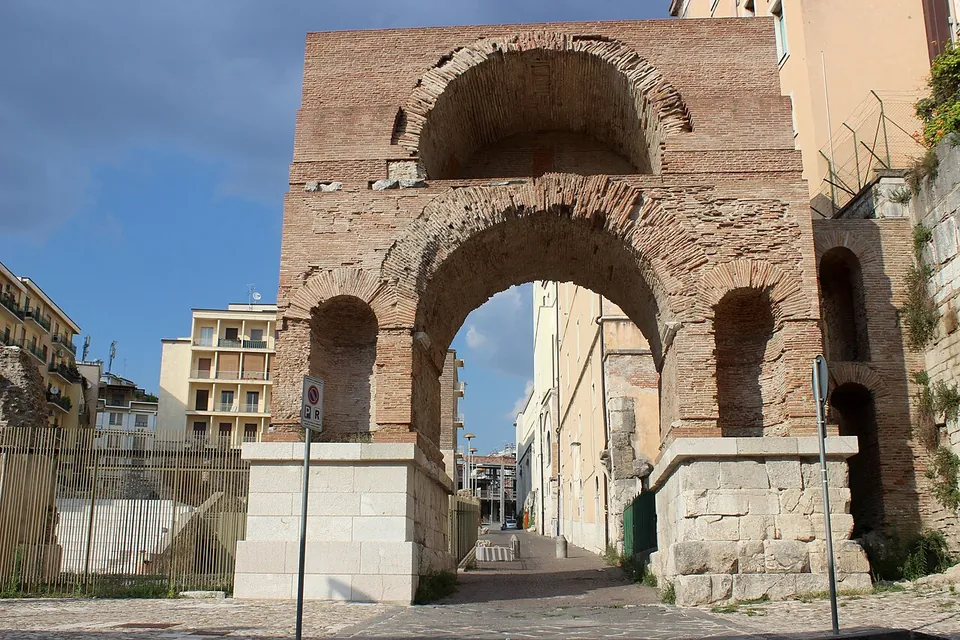
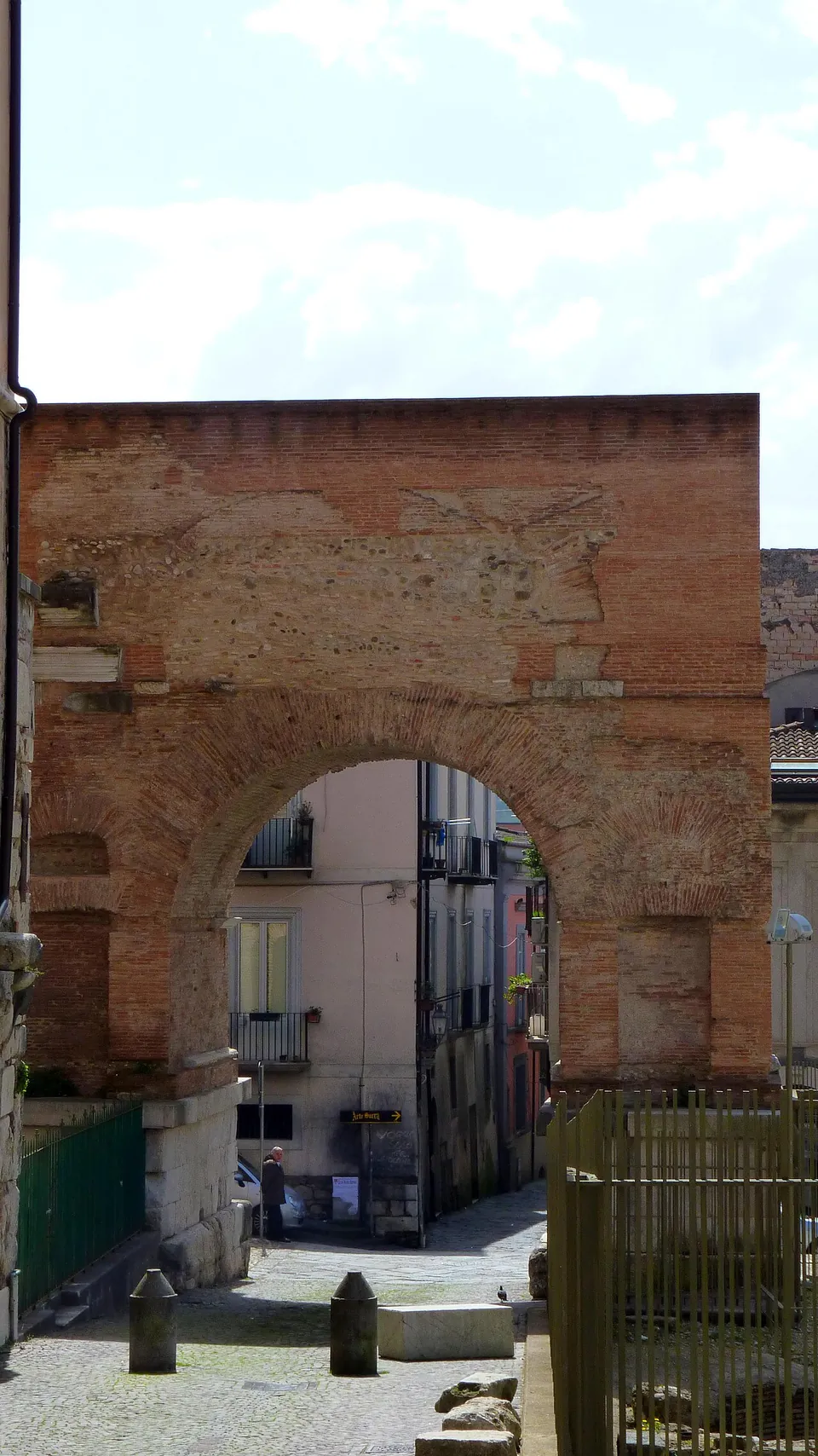
The Arco del Sacramento is a Roman arch of the late 1st or early 2nd century that once led into the forum of Beneventum, and it still spans a street in the old town of Benevento, at the corner of the Archbishop’s Palace (it.wikipedia). What stands is its brick core: the marble facing and the statues have gone. It costs nothing to see and lies about 200 m from the Roman Theatre.
What is there today
The arch stands over Via Carlo Torre: a tall brick structure on two bases of squared stone, with the main opening flanked by an arched niche on each side and a second, recessed arch above it. Its façade has lost its marble facing, of which only a few fragments remain, and the statues that once stood in the niches at the sides of each front (it.wikipedia). A new lighting system for it was inaugurated in July 2021 (Acea).
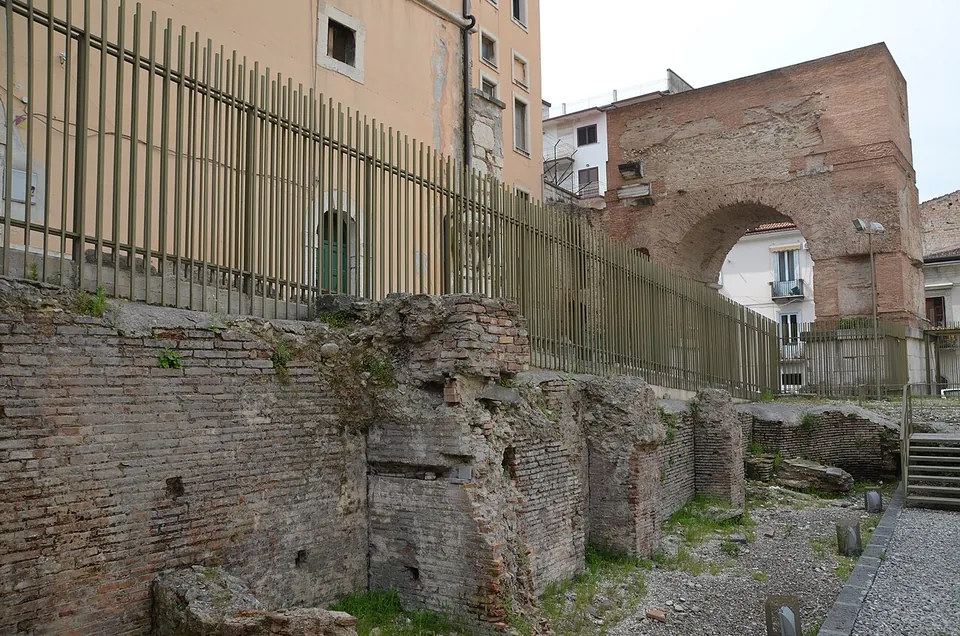
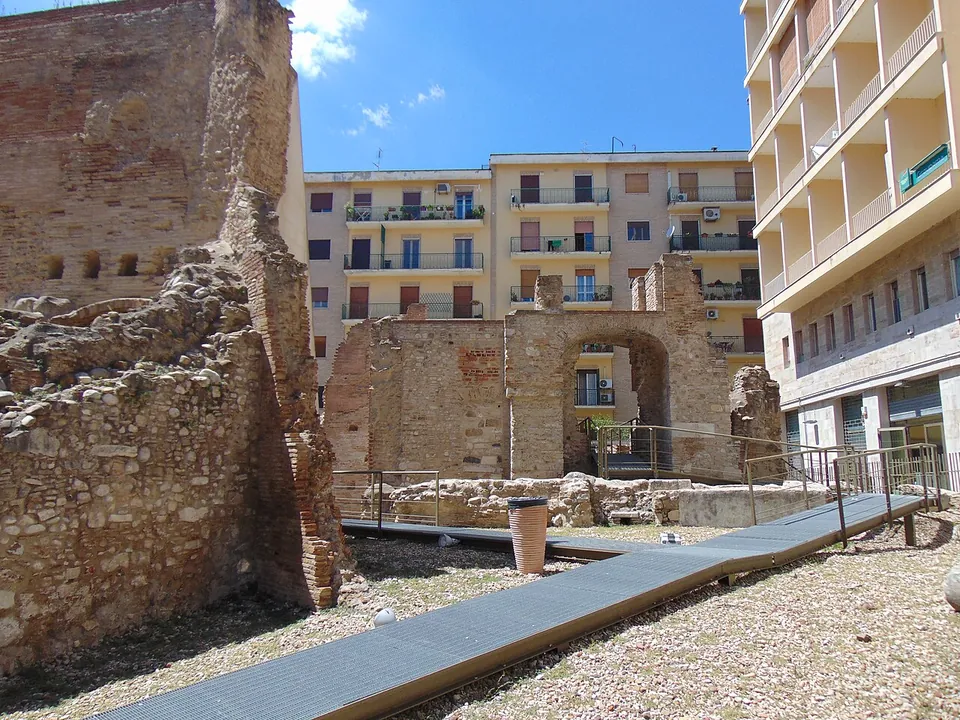
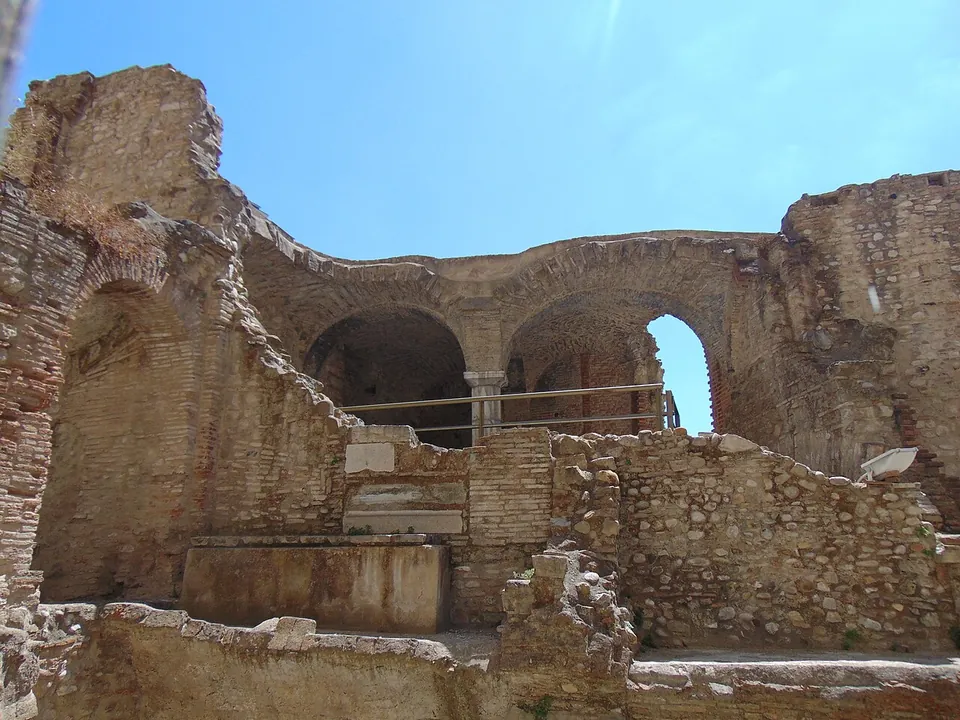
Beside it lies a fenced archaeological area: restoring the arch and the structures next to it exposed a bath complex (it.wikipedia). Photographs show low walls of brick and rubble, brick arches and a metal walkway laid through them. OpenStreetMap maps the excavated area about 100 m north-west of the arch as Roman baths together with the remains of the church of San Pietro delle Monache, and marks a “Foro romano” area about 50 m away.
Is it worth the trip?
Not on its own. This is a stripped brick core rather than a carved monument; the Arch of Trajan, 500 m away, is the one with the reliefs (see the Beneventum page). But it is free, it stands in the street and it is a few minutes’ walk from the Roman Theatre, so it fits into a walk from the theatre without a detour. Whether you can walk into the excavated area beside it is not published: expect to see the ruins over the fence.
Getting there and what it costs
The arch is in the old town, about 200 m from the Roman Theatre and 500 m from the Arch of Trajan (OpenStreetMap). The nearest bus stop, Duomo, is about 90 m away; there is a car park on Piazza Eduardo Baccari, about 90 m away, and the free car park on Piazza Caio Ponzio Telesino by the theatre is about 200 m away (OpenStreetMap).
There is no ticket for the arch, which can be seen at any time. No operator publishes opening hours or admission for the fenced area, which the city of Benevento laid out; in February 2024 the city approved a €300,000 project for new lighting, information panels and a floor that would let its open arena host shows (Il Mattino). No completion had been announced by 23 October 2026.
Visiting details
- Opening hours
- The arch spans Via Carlo Torre, a public street, so it can be seen at any time. No operator publishes opening hours for the fenced archaeological area beside it.
- Tickets
- Free to see from the street. No operator publishes whether the fenced archaeological area can be entered, or at what price.
- Parking
- Car park on Piazza Eduardo Baccari, about 90 m from the arch (OpenStreetMap way/384832664); the free car park on Piazza Caio Ponzio Telesino, by the Roman Theatre, is about 200 m away (way/249343163, fee=no).
Before you go
- Whether you can walk into the excavated area beside the arch is not published. The city approved a project in February 2024 for new lighting, information panels and a floor that would let its open arena host shows (Il Mattino); no completion has been announced. The ruins can be seen over the fence.
Hours and prices checked 23 October 2026. Confirm before travelling.
History
The arch is dated to between the end of the 1st and the beginning of the 2nd century (it.wikipedia; Pleiades says the 2nd century). It gave access to the forum from the southern part of the city, near the Roman Theatre (it.wikipedia); for anyone coming from the theatre it was the way into the forum (Acea).
The area around it was redeveloped under measure 5.1 of the PIT programme, at a cost of almost €5 million. The works were designed and directed by the Comune di Benevento with the archaeological Soprintendenza for Salerno, Avellino and Benevento and the Second University of Naples; restoring the arch and the structures beside it brought the bath complex to light, and the urban archaeological route was inaugurated on 9 July 2009 (it.wikipedia).
More photographs
Nearby
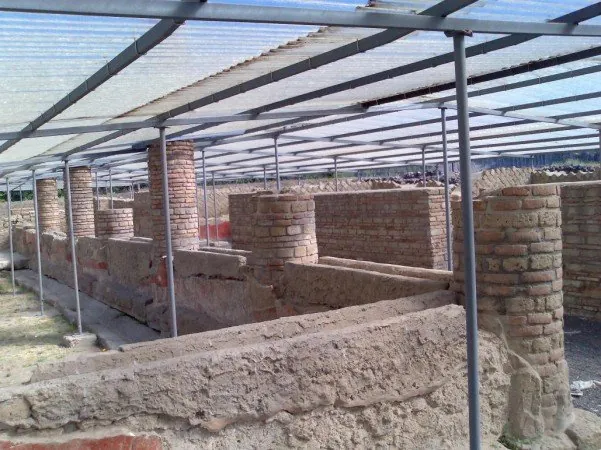
Photo: Razzairpina at Italian Wikipedia · Public domain · Commons
24 km · city · Campania
Abellinum
At the entrance, on the north side of the plateau, part of the Roman town wall still stands, built in opus reticulatum, a facing of small stones set in a diagonal net (the operator).
36 km · city · Molise
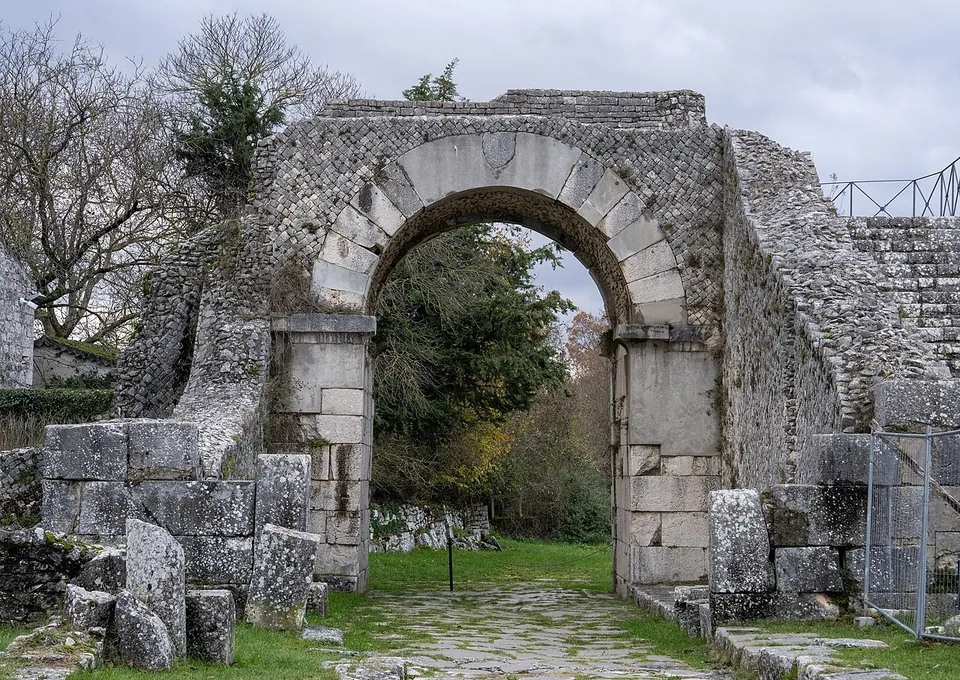
Saepinum
The walls are the first thing you see: a circuit of about 1,270 m in small-stone net-pattern masonry, punctuated by round towers, enclosing about 12 hectares, with a monumental gate at each end of the two main streets (it.wikipedia).
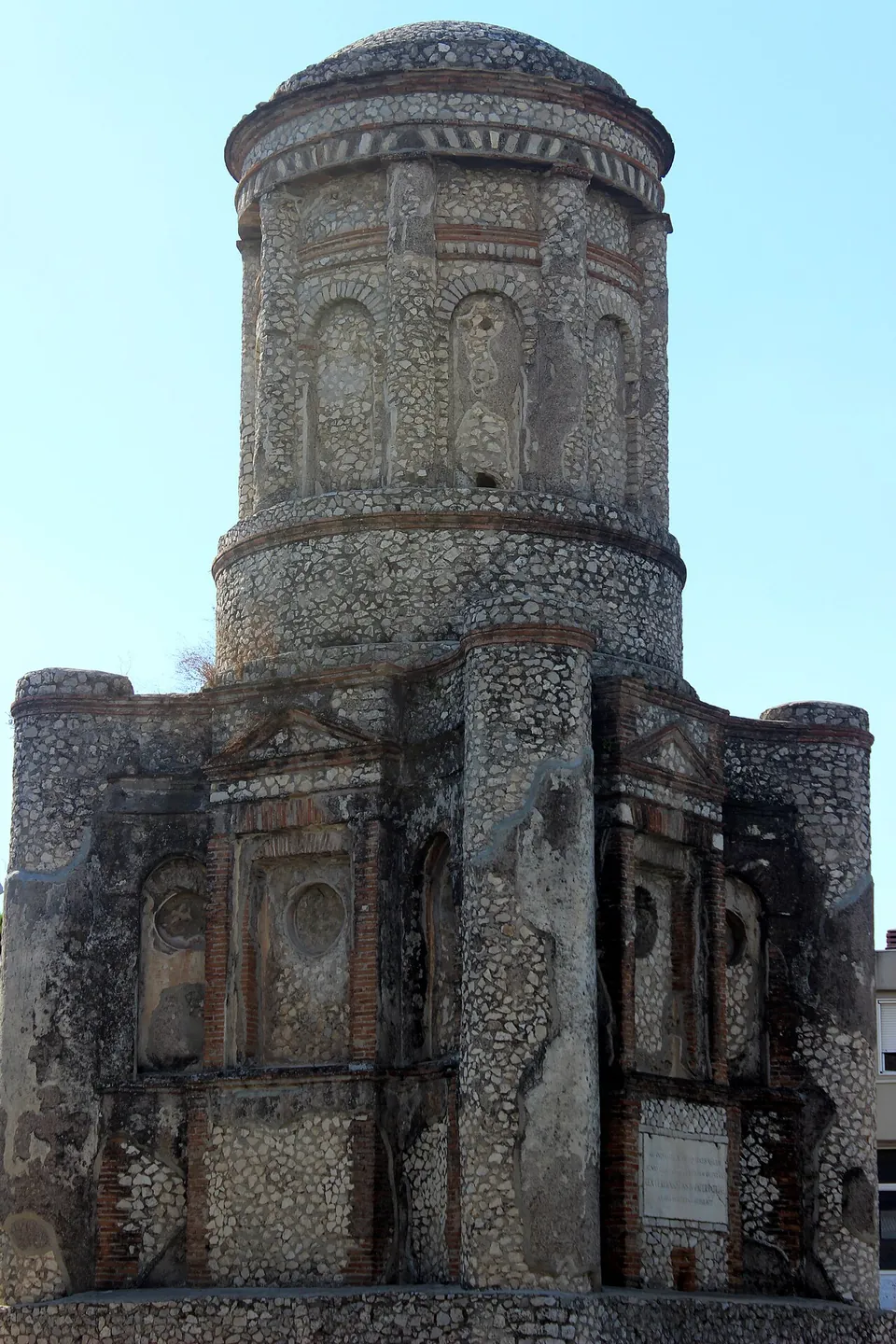
Photo: Miguel Hermoso Cuesta · CC BY-SA 4.0 · Commons
42 km · tomb · Campania
Mausoleum of the Conocchia
What you see is the outside of the tomb, standing on its own by a main road among modern buildings.


Straight-line distances.
Sources
Every fact on this page comes from the records below, each used under the licence noted.
| Source | Licence |
|---|---|
| Pleiades 284782743 | CC BY |
| Wikidata Q3621766 | CC0 |
| Vici.org 11703 | CC BY-SA (text), CC0 (metadata) |
| OpenStreetMap way/228486757 | ODbL |
| Wikipedia (it) — Arco del Sacramento | CC BY-SA 4.0 |
| Il Mattino — Municipality approves project for enhancement of 'Arco del Sacramento' archaeological area (8 February 2024) | licence not recorded |
| Acea — new lighting system for the Arch of Sacramento (29 July 2021) | licence not recorded |