Photo: Decan · CC BY-SA 4.0 · Commons
arch · Campania
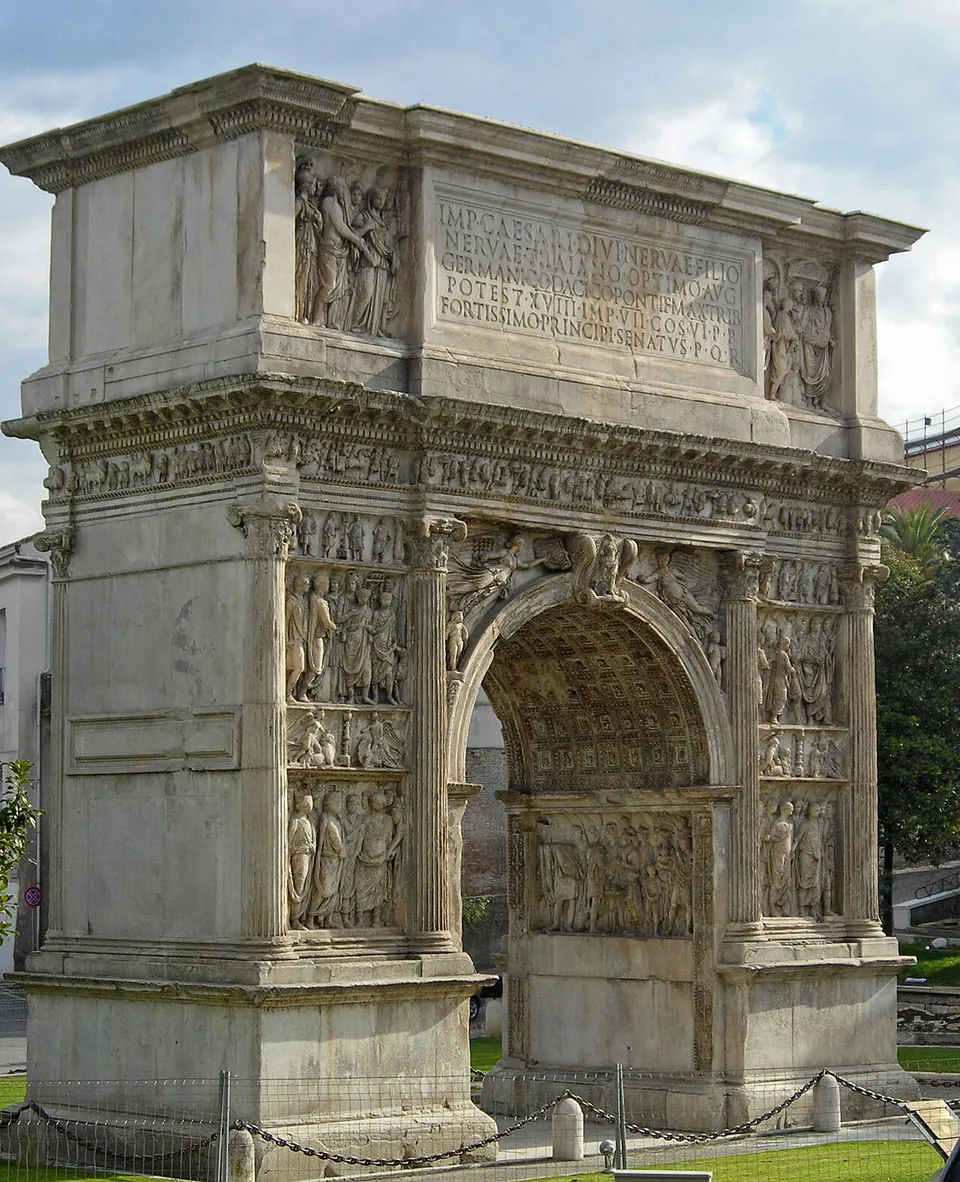
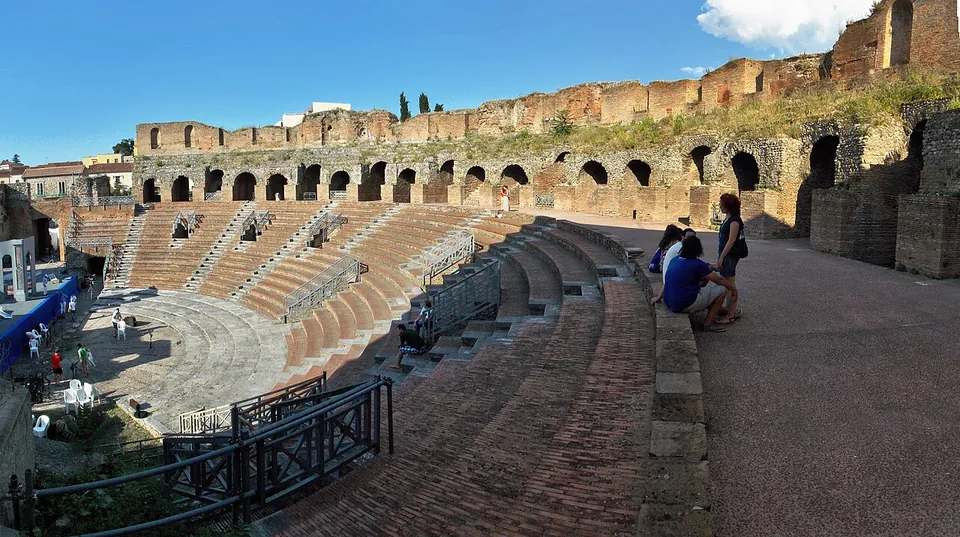
Arch of Trajan
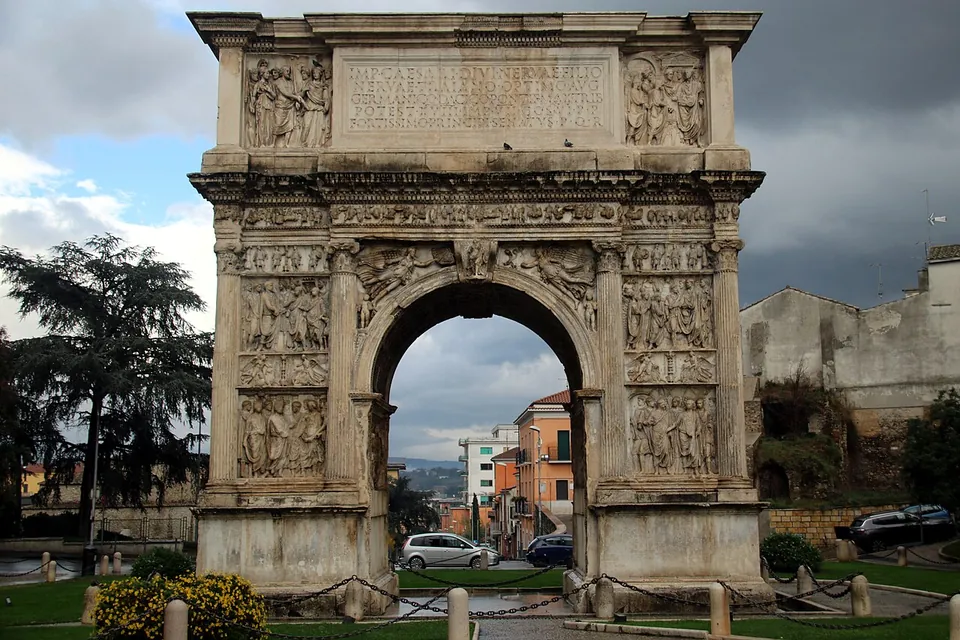
One arch, 15.6 m high and 8.6 m wide, built of limestone blocks faced with Parian marble, and richly carved on both main faces and inside the archway (it.wikipedia).
Free
Maleventum
city · Campania, Italy
4 places to see, the best preserved and best known first.
Photo: Decan · CC BY-SA 4.0 · Commons
arch · Campania
One arch, 15.6 m high and 8.6 m wide, built of limestone blocks faced with Parian marble, and richly carved on both main faces and inside the archway (it.wikipedia).
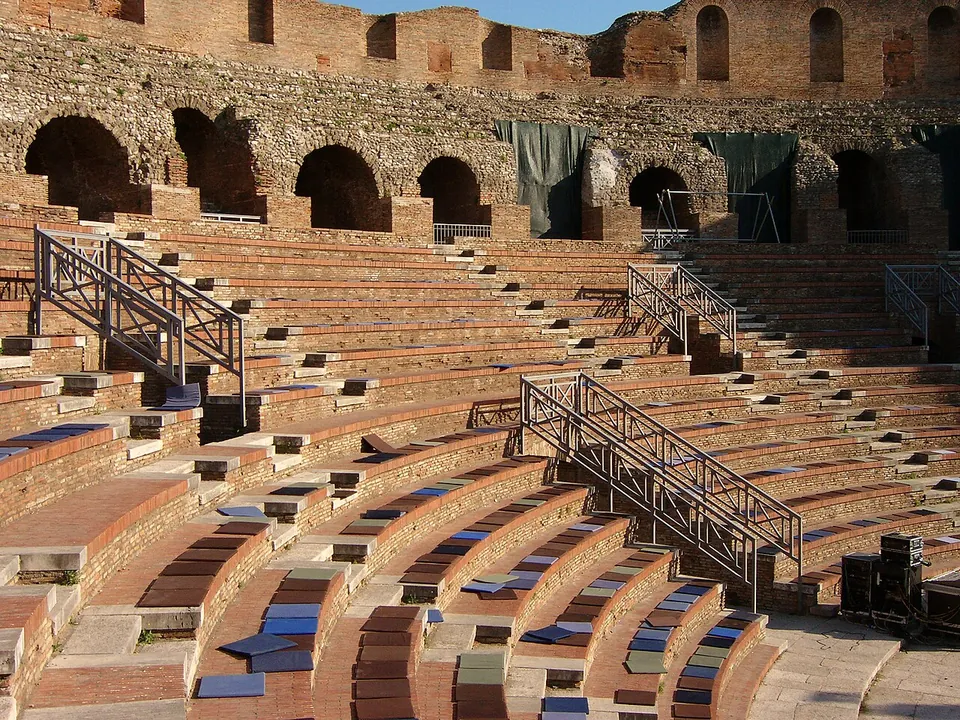
Photo: Simblek at Italian Wikipedia · Public domain · Commons
theatre · Campania
The seating is the centrepiece: a semicircle 90–98 m across (published figures differ) around an orchestra of 30 m, built in concrete faced with limestone blocks and brick (the operator; it.wikipedia).
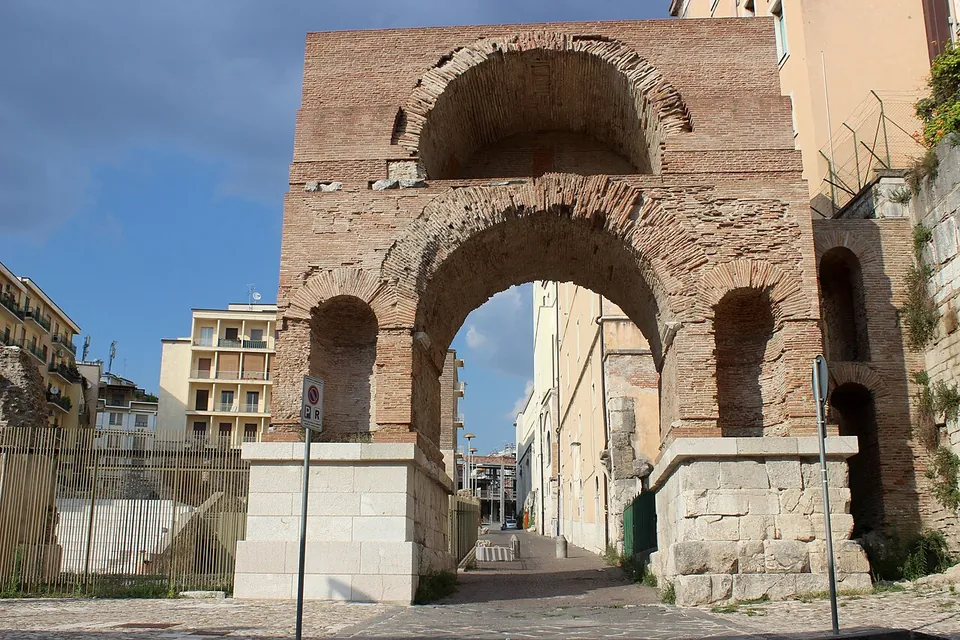
Photo: Miguel Hermoso Cuesta · CC BY-SA 4.0 · Commons
arch · Campania
The arch stands over Via Carlo Torre: a tall brick structure on two bases of squared stone, with the main opening flanked by an arched niche on each side and a second, recessed arch above it.
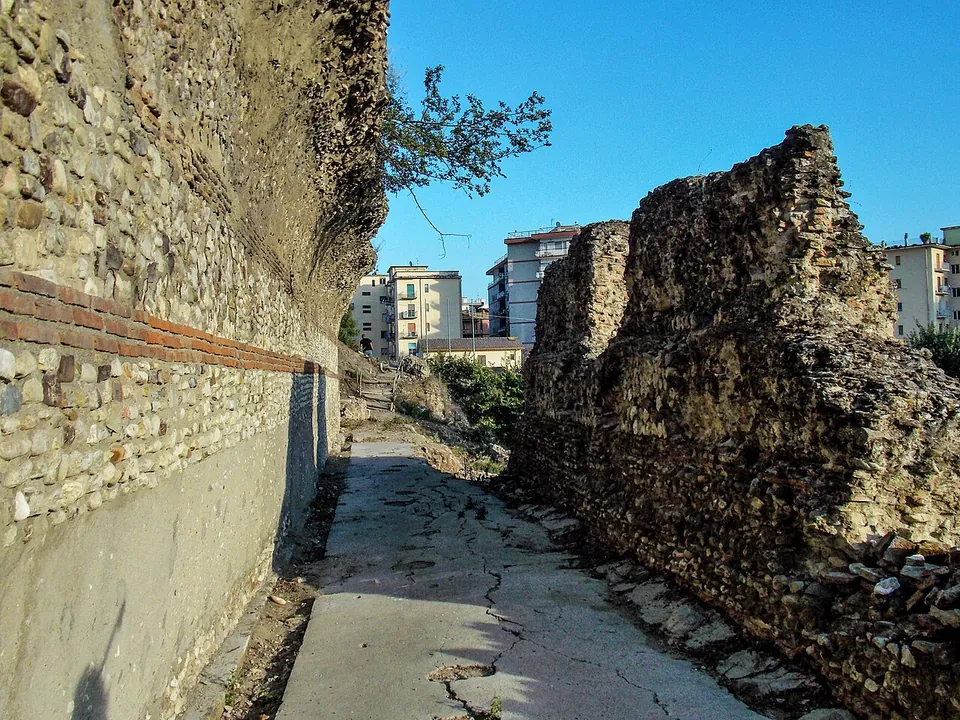
Photo: Decan · CC BY-SA 4.0 · Commons
Benevento was Roman Beneventum, a Latin colony from 268 BC on the Via Appia, and it keeps one Roman monument of the first rank: the Arch of Trajan, among the best-preserved Roman triumphal arches anywhere, its reliefs largely intact. Around it the town adds a 2nd-century theatre still used for performances, a second arch, a long vaulted cryptoporticus, the bridge that carried the Appia into town, and a museum collection of Egyptian sculpture from a lost temple of Isis. Until about March 2027, though, the arch stands in restoration scaffolding. It is free to see; the theatre is €5.
The stops below are grouped by where they are; each has its own page.
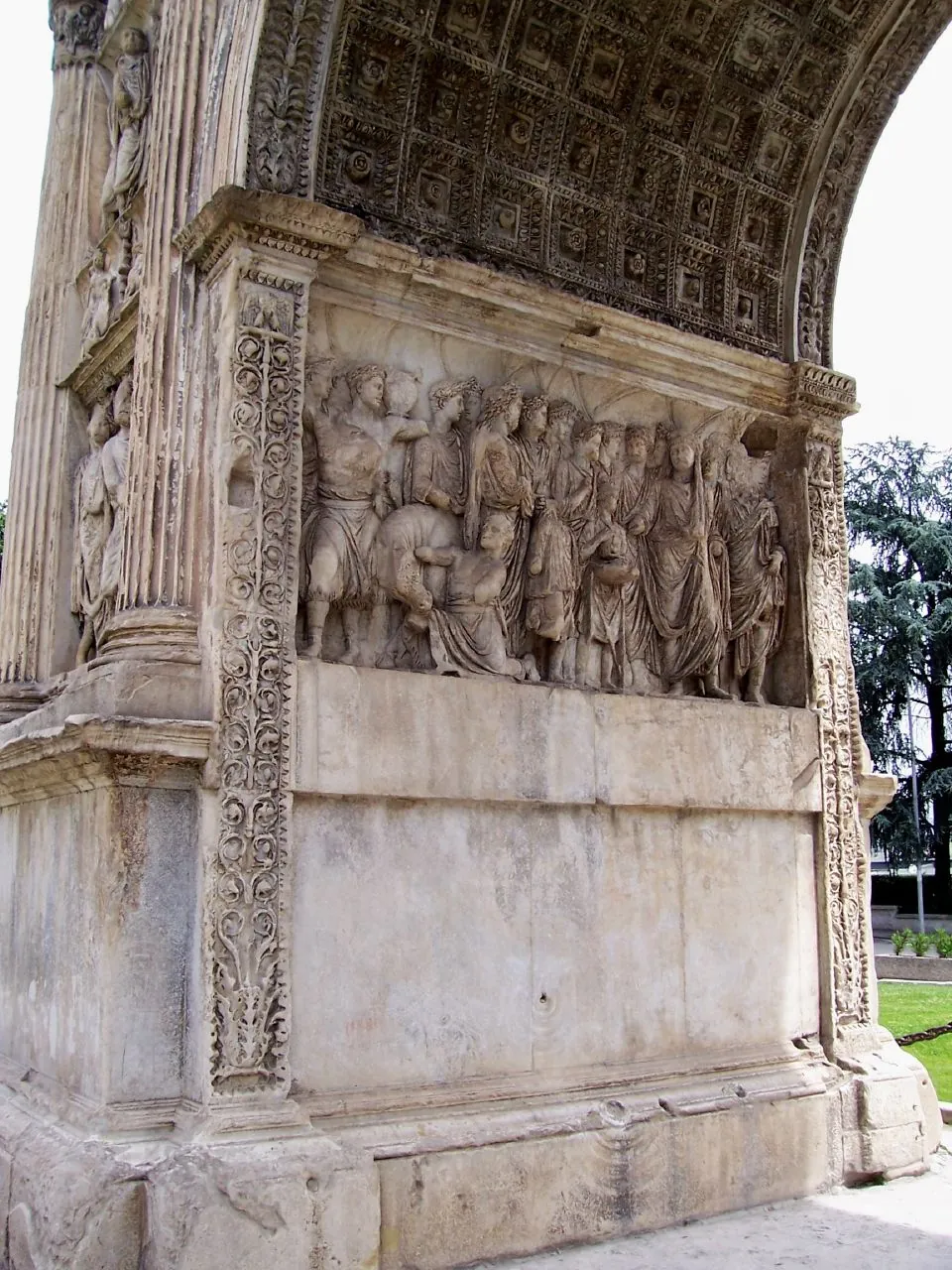
The arch and the museums, in the upper town. The Arch of Trajan was built between 114 and 117 at the start of the Via Traiana, Trajan’s shorter variant of the Appia from Benevento to Brindisi (it.wikipedia). It is a single arch 15.6 m high and 8.6 m wide, of limestone faced with Parian marble, and both main faces are covered in reliefs: the side facing the town shows Trajan’s works of peace and his care for its citizens, the outer side war and his care for the provinces; inside the archway two panels show Trajan in Benevento, sacrificing at the opening of the road and founding the alimenta, his scheme for the children of Roman Italy (it.wikipedia; en.wikipedia). The Lombards built it into the town walls as the Porta Aurea, which helped preserve it, and the houses that had grown against it were cleared in 1850 (it.wikipedia). Restoration of its stone surfaces began on 11 May 2026 (the Ministry of Culture), and a press report of 1 June 2026 shows it in scaffolding and expects the works to take ten months (Fanpage). About 70 m away, the former church of Sant’Ilario a Port’Aurea holds the Museo dell’Arco, a video presentation of the reliefs (the province’s museum network). The Temple of Isis that the emperor Domitian had built here in 88–89 has never been found, but the Egyptian sculpture recovered from it around the town since the late 19th century - priests, divinities, falcons, lions - led the Egyptologist Hans Wolfgang Müller to rank Benevento, with Rome, as the largest centre of Egyptian finds outside Egypt (it.wikipedia). It is shown in the Egyptian section of the Museo Arcos, on Corso Garibaldi; one of the temple’s two obelisks stands in Piazza Papiniano and the other is in the Museo del Sannio, in the cloister of the Lombard church of Santa Sofia; the museum also has statues of Trajan and his wife Plotina (the province’s museum network; it.wikipedia).
The theatre and the forum, in the south-west of the old town. The Roman Theatre, probably begun under Trajan and inaugurated by Hadrian between 125 and 128, was restored under the Severans (it.wikipedia). Of its three storeys only the lowest survives, a ring of 25 arches, with the seating and part of the stage building; published figures put the diameter of the seating at 90–98 m (it.wikipedia; en.wikipedia). Houses built into it in later centuries were cleared in excavations that began in 1923, and it reopened in 1957 and still stages performances (it.wikipedia; en.wikipedia). About 220 m away, the Arco del Sacramento, of the late 1st or early 2nd century, is a brick arch stripped of most of its marble facing that once led into the forum; its restoration exposed a bath complex beside it, and an urban archaeological route through the area opened in 2009 (it.wikipedia). Close by, in the Triggio district, the so-called Terme di San Cristiano are vaulted rooms of a probable 2nd-century bath building, built into houses and courtyards and partly used as storerooms (it.wikipedia).
Santi Quaranta and the Appia, at the western edge. The Santi Quaranta are the remains of a cryptoporticus, a system of vaulted corridors whose main gallery runs 60 m; their date and purpose are disputed, from the 1st century BC to the 3rd century AD (it.wikipedia). Bombing in the Second World War damaged it badly, and it is now looked after by a group of volunteers (it.wikipedia). In front of it, the Ponte Leproso carried the Via Appia from Capua across the Sabato into the city: of its six arches the two nearest the town keep Roman masonry, though much altered, while the rest are an 18th-century rebuild, and it has been closed to motor traffic since 2004 (it.wikipedia). Next to the Benevento Appia station are the excavated remains of the amphitheatre, found in 1985: foundations and stretches of its radial walls, from a building reconstructed at about 160 by 130 m, where Nero may have watched gladiators in 63 (it.wikipedia; OpenStreetMap).
Two bridges out of town. The Ponticello, about 550 m north-east of the arch, is a small single-arched Roman bridge, the first on the Via Traiana, now pedestrian and ringed by a roundabout (it.wikipedia). The Ponte delle Serretelle, 2.8 km south-west of the centre, is an ancient bridge beside the Serretelle stream, since diverted from under it, whose surviving fabric looks medieval and was probably restored in the early 19th century; one of its side arches has collapsed and by 2016 it was overgrown and decaying (Pleiades; it.wikipedia).
For the Arch of Trajan, yes, once its restoration scaffolding comes down, which a press report expects by March 2027 (Fanpage; the Ministry gives no end date). A whole programme of imperial reliefs still in place on the monument it was carved for, rather than in a museum, is rare, and this arch is counted among the best preserved in the Roman world (it.wikipedia). How much of the carving can be seen during the works is not published, so until then the theatre and the Egyptian collection are the surer reasons to come, and the Museo dell’Arco next to the arch shows its reliefs on video.
Be realistic about the rest. The Arco del Sacramento is a stripped brick core, the amphitheatre is foundations, the San Cristiano baths are rooms inside private property, and the Ponticello and the Serretelle bridge are for people who like bridges. A day covers everything worth seeing, and the main stops lie within about 1 km of each other in the old town.
Benevento’s railway station, on the Caserta–Foggia line, has direct trains from Rome (en.wikipedia) and lies about 1.3 km from the Arch of Trajan (OpenStreetMap). Bus stops named Arco Traiano and Teatro Romano are mapped about 60 m from the two main sights; drivers will find a free car park on Piazza Caio Ponzio Telesino, about 30 m from the theatre (OpenStreetMap).
The Arch of Trajan and the Arco del Sacramento stand in the street, with no ticket; the Arch of Trajan is in restoration scaffolding until about March 2027. Elsewhere (each operator’s page, read 17 October 2026):
No operator publishes visiting hours for the Santi Quaranta.
Before you go
Hours and prices checked 17 October 2026 on the operator's own site. Confirm before travelling.
Before Rome it was the Samnite town of Maleventum (Pleiades; en.wikipedia). Rome defeated Pyrrhus near it in 275 or 274 BC (published dates differ) and in 268 BC founded a Latin colony there, renaming the place Beneventum, since the old name sounded like “bad wind” (en.wikipedia; it.wikipedia). It stayed loyal through the Second Punic War, when two battles were fought nearby, and received new colonists under Augustus and again under Nero, after which it styled itself Colonia Julia Augusta Concordia Felix (en.wikipedia).
Its fortune was the road. Beneventum stood on the Via Appia, at the point where Trajan started the Via Traiana towards Brindisi, and en.wikipedia calls it probably the most populous city of southern Italy after Capua; Horace passed through on his journey to Brindisi, and emperors including Nero, Trajan and Septimius Severus visited (en.wikipedia). An earthquake in 369 left it almost entirely destroyed (it.wikipedia). In 545 the Gothic king Totila took the city and razed its walls, and by the late 6th century it was the seat of a Lombard duchy, traditionally from 576 (en.wikipedia), whose walls took in the arch as a gate. The city was heavily bombed in 1943, which destroyed half of it (en.wikipedia), and in 2024 the arch and the town centre around it, with the Ponte Leproso and the Ponticello, became part of UNESCO’s “Via Appia. Regina Viarum” World Heritage site (it.wikipedia).
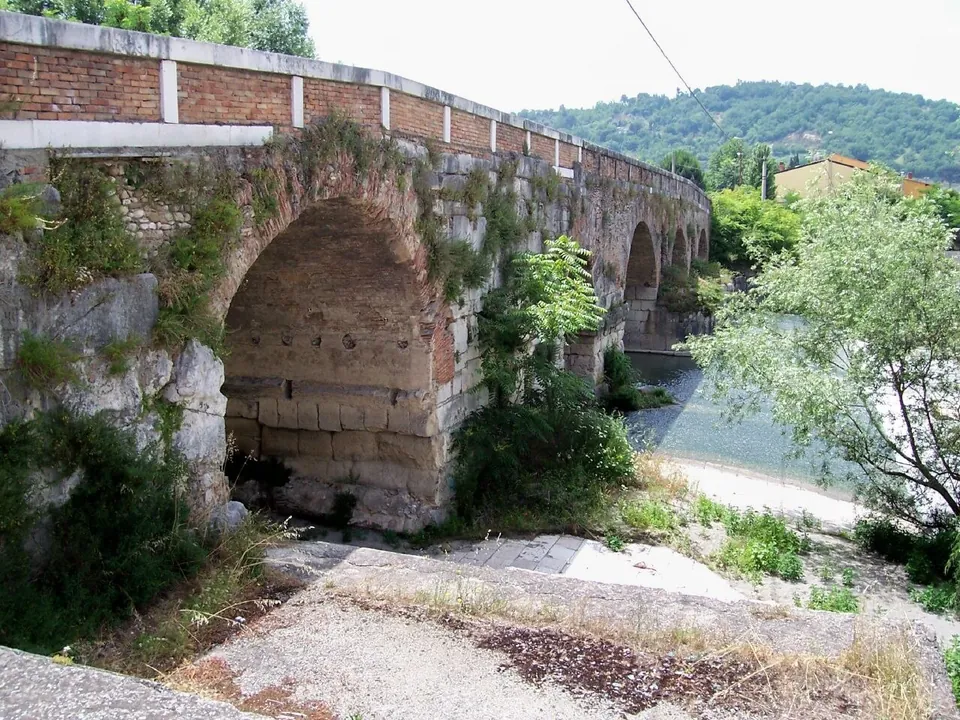
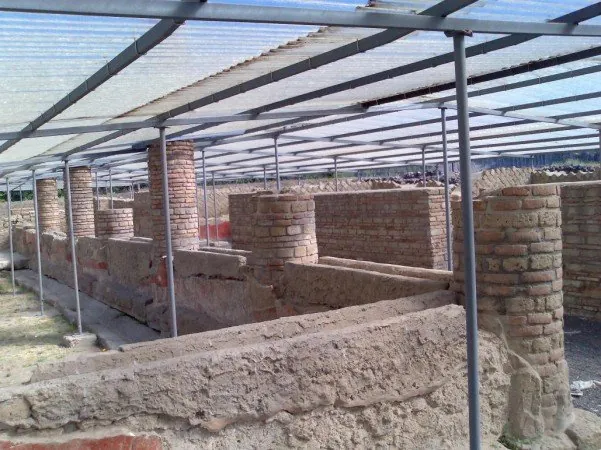
Photo: Razzairpina at Italian Wikipedia · Public domain · Commons
24 km · city · Campania
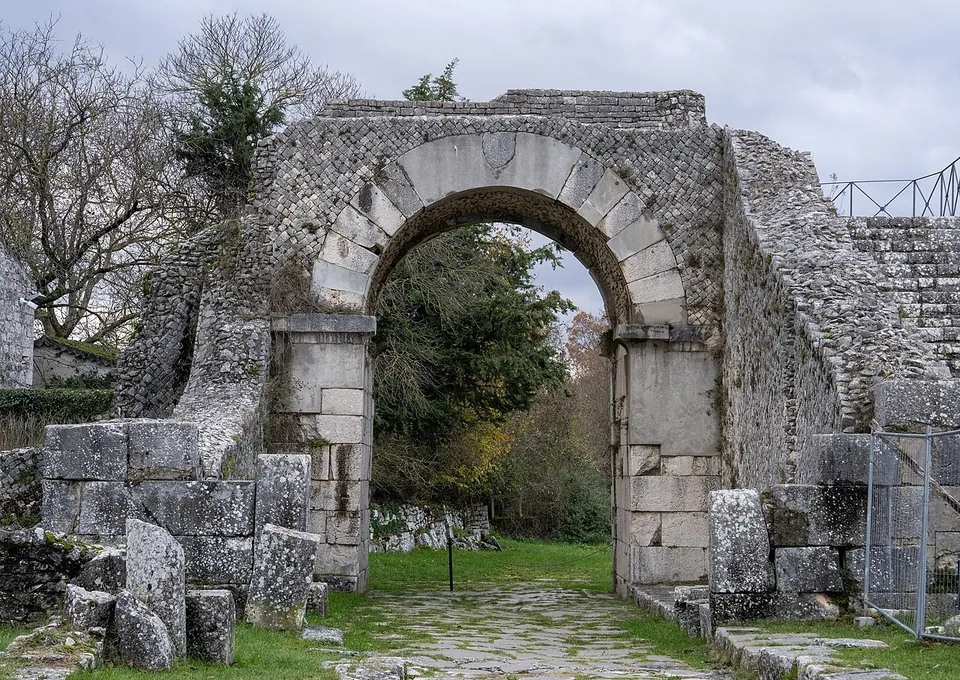
At the entrance, on the north side of the plateau, part of the Roman town wall still stands, built in opus reticulatum, a facing of small stones set in a diagonal net (the operator).
36 km · city · Molise
The walls are the first thing you see: a circuit of about 1,270 m in small-stone net-pattern masonry, punctuated by round towers, enclosing about 12 hectares, with a monumental gate at each end of the two main streets (it.wikipedia).
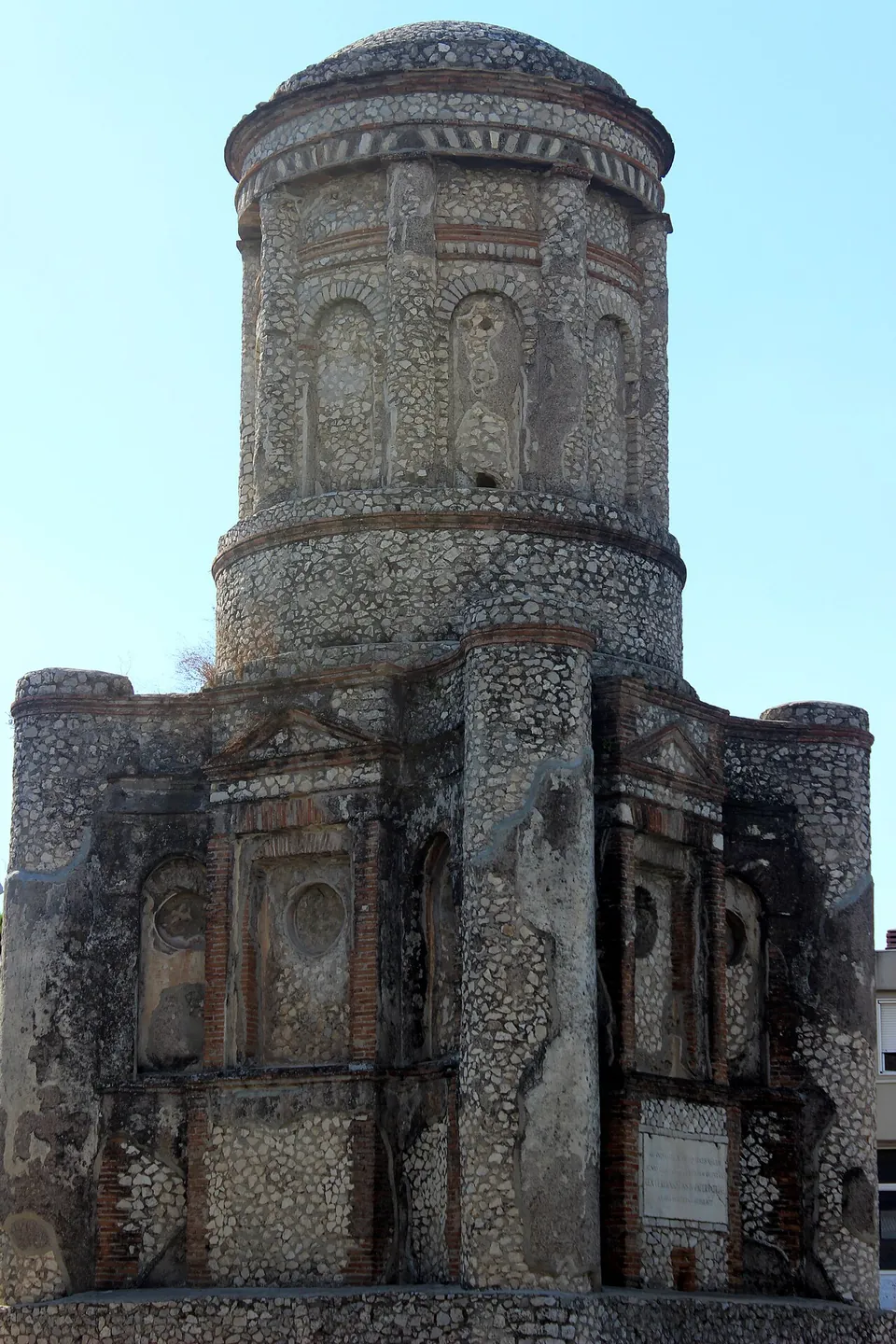
Photo: Miguel Hermoso Cuesta · CC BY-SA 4.0 · Commons
43 km · tomb · Campania
What you see is the outside of the tomb, standing on its own by a main road among modern buildings.
Straight-line distances.
Every fact on this page comes from the records below, each used under the licence noted.