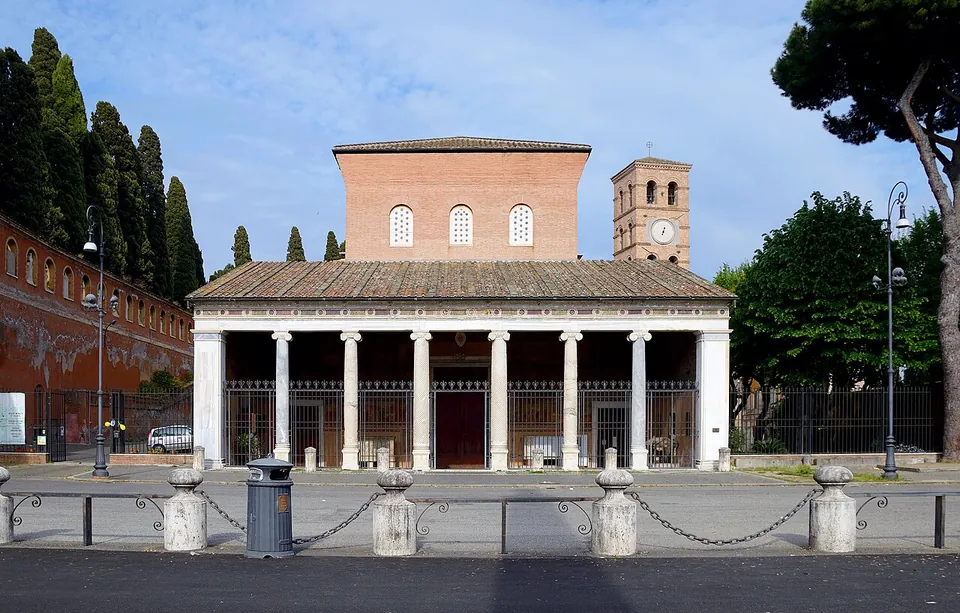


San Lorenzo fuori le Mura is a working church on the Via Tiburtina, beside Rome’s Verano cemetery, built over the grave of Lawrence, a deacon of the Roman church executed in 258 (en.wikipedia; it.wikipedia). Its altar end is the church Pope Pelagius II built in the late 6th century, which still stands almost complete except for its apse (de.wikipedia): a tall hall of reused marble columns with its original mosaic on the arch. It is open every day, the operator publishes no charge for it, and a tram stop is 150 m away, so it is easy to fit in for anyone curious what a church of the last Roman centuries looked like inside.
What is there today
The church you walk into is two buildings joined end to end, not quite on the same axis (it.wikipedia; Turismo Roma). The nave from the door is the 13th-century church of Pope Honorius III; at its far end two flights of steps climb to a raised choir, and that choir is the 6th-century church (it.wikipedia; de.wikipedia).
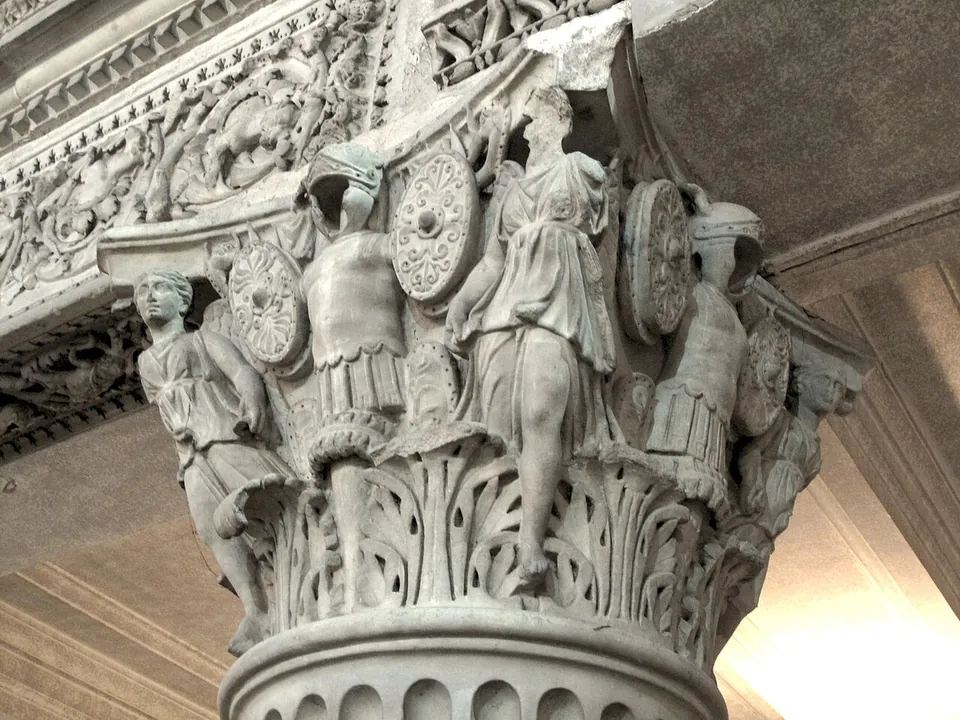
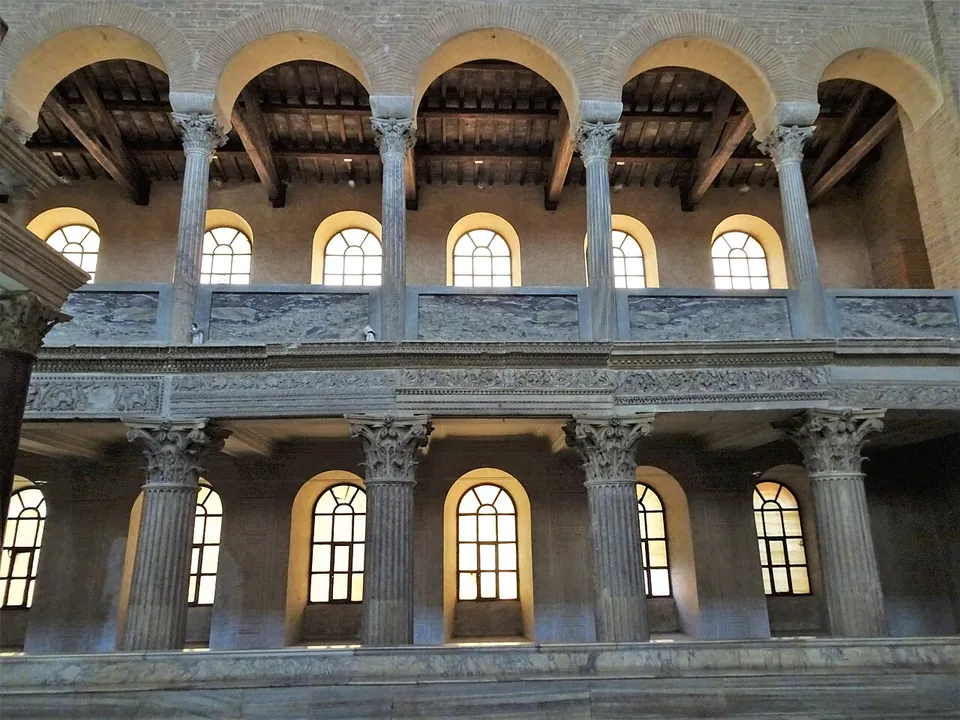
- Pelagius II’s church (579–590). A three-aisled hall about 32 m long and 21 m wide, with five columns a side and an upper gallery above the aisles (the operator; Turismo Roma), almost 20 m high (de.wikipedia). Every column and capital in it is reused from older buildings; the two capitals carved with arms and Victories at the western end of its nave are dated to the 3rd century (the operator). Pelagius dug the church into the hillside of the catacomb so that its sanctuary lay directly over the martyr’s grave (de.wikipedia).
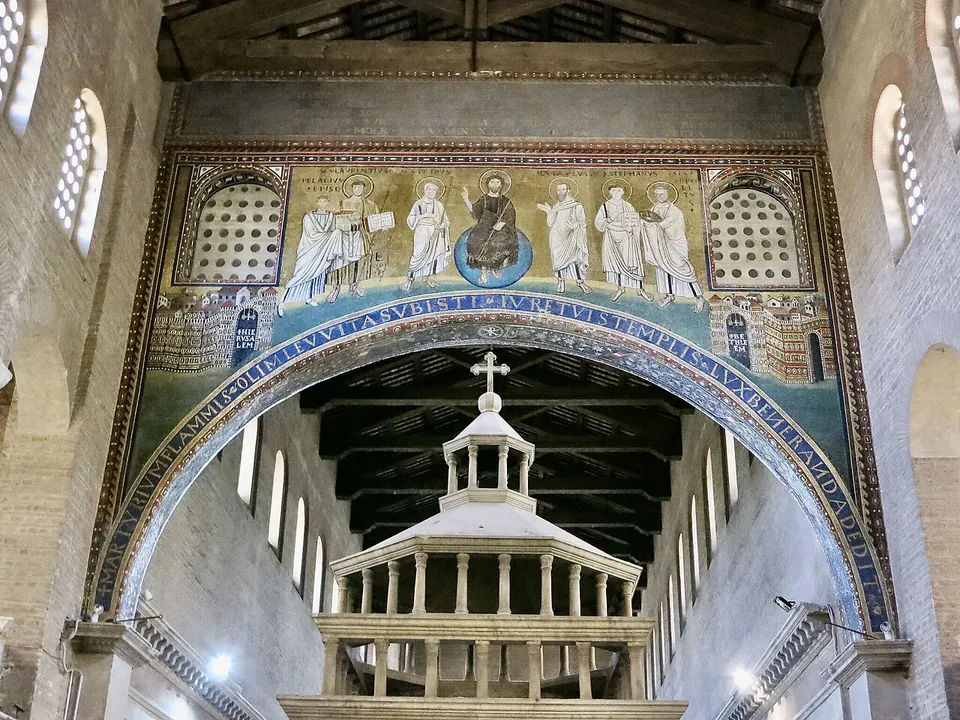
- The mosaic on the arch. The arch that once opened into Pelagius’s apse keeps its late 6th-century mosaic: Christ seated on a globe between Peter, Lawrence and Pelagius II, who holds out a model of his church, on one side, and Paul, Stephen and Hippolytus on the other (the operator; Turismo Roma), with Bethlehem and Jerusalem in the corners (de.wikipedia).
- The tomb of Lawrence. Below the choir, the confessio holds the tombs of Lawrence and of Stephen, the first martyr (it.wikipedia; en.wikipedia). The four small columns of green marble just past its stairs are held by tradition to come from the first monument Constantine raised over the grave, and a reused inscribed slab of the 5th or 6th century stands at its entrance (the operator).
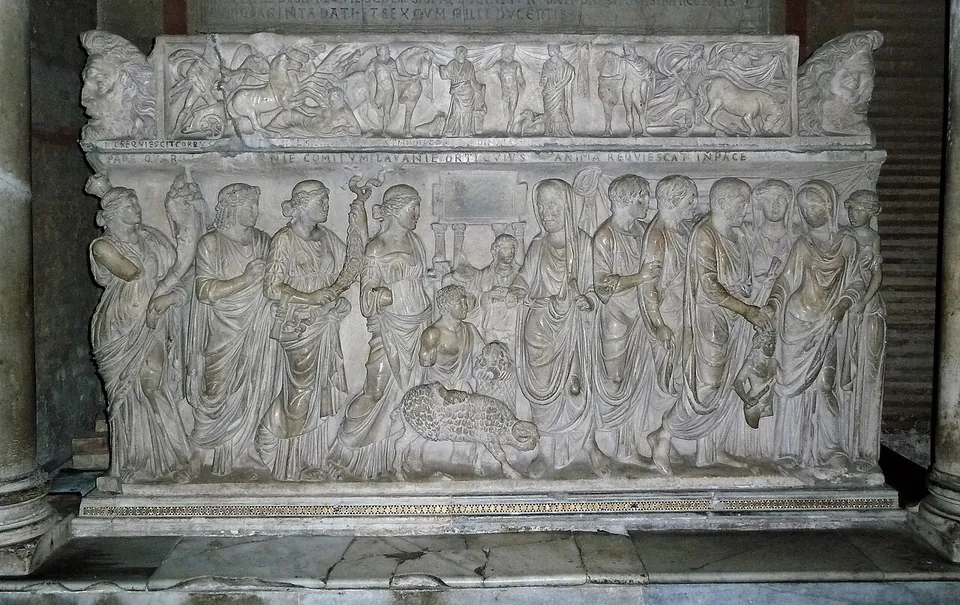
- Ancient stone in the later church. The 22 columns of the 13th-century nave, all different, may come from Constantine’s basilica (it.wikipedia; Turismo Roma), and so, probably, do the six reused columns of the portico outside (the operator). Inside the front wall, Cardinal Guglielmo Fieschi, who died in 1256, lies in a 3rd-century sarcophagus carved with a wedding scene (en.wikipedia; it.wikipedia), and the portico holds an ancient sarcophagus carved with putti picking grapes (en.wikipedia; Turismo Roma).
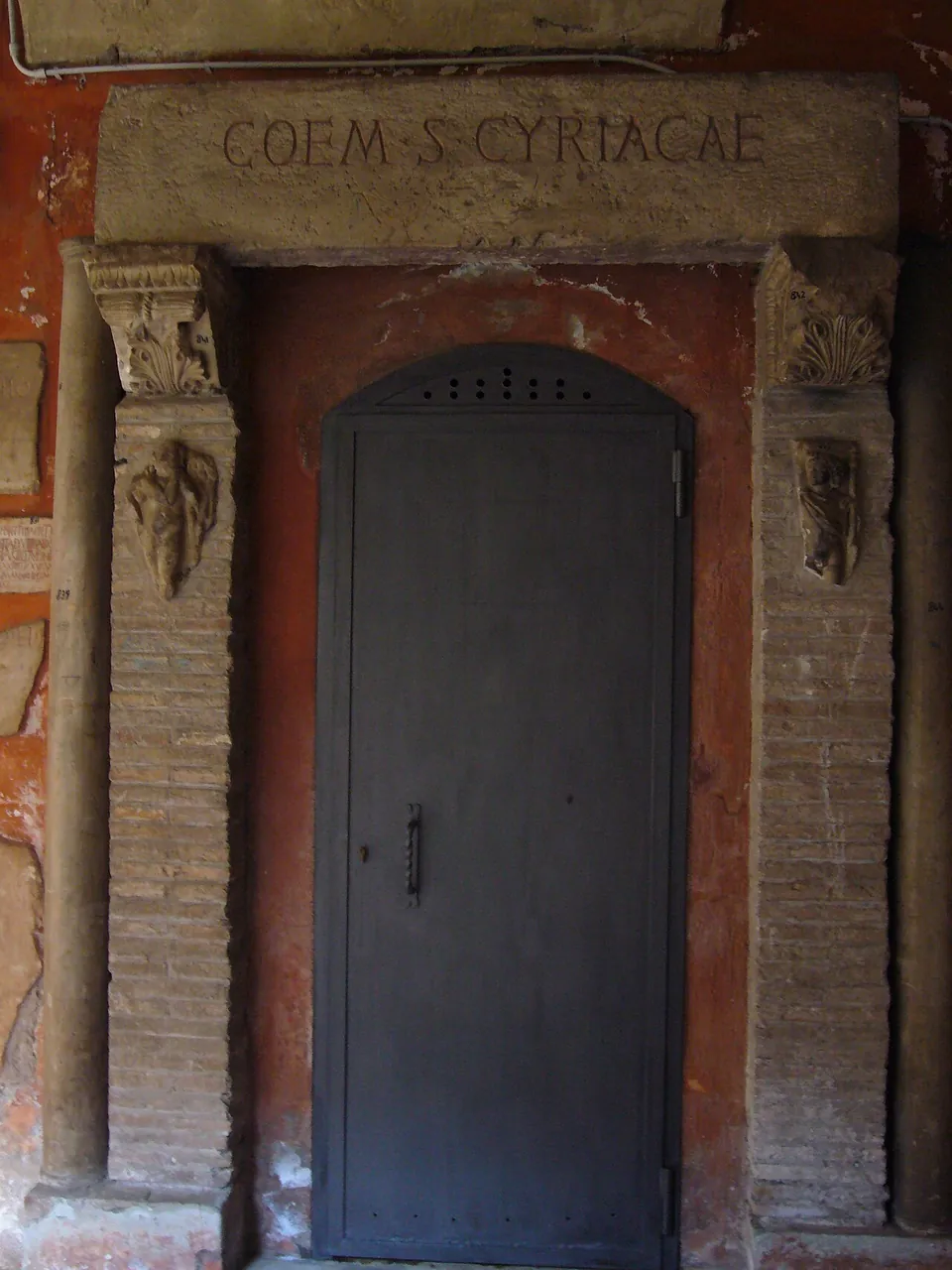
The catacomb. Lawrence was buried in the catacomb of Cyriaca, named after the woman whose land it was dug in (en.wikipedia; it.wikipedia). You go down into it from the cloister, and three entrances in the basilica reach it (it.wikipedia). Published counts give it four or five levels (it.wikipedia; the operator), and the operator says the top two were obliterated by the churches built over them. It is poorly preserved - pilgrims and relic hunters never stopped visiting it, and the Second World War bombing and the building of the Verano cemetery did the rest - and only a limited stretch can be visited (it.wikipedia). The shrine of two other martyrs, Abundius and Herennius, was found in it in 1947–1949 (it.wikipedia; en.wikipedia).
The cloister, built in the 12th or 13th century (it.wikipedia; the operator), displays Christian and pagan sarcophagi, 3rd-century sarcophagi carved with wavy fluting, and inscriptions from the catacomb and the cemetery above it, among them a marble inscription recording work done by Pope Damasus (366–384) (the operator).
What you will not see is Constantine’s own church. It was a large basilica with an aisle that curved round its apse, about 99 m long and 35 m wide, some 30 m south of the present church under what is now the Verano cemetery (de.wikipedia; the operator); it had probably fallen into ruin by the 12th century, and excavation found only a few remains (de.wikipedia).
Is it worth the trip?
Yes, if late Roman and early Christian Rome is what you came for. The raised choir is a 6th-century church still standing almost whole, with its columns, gallery and mosaic in place (de.wikipedia; the operator), and the visit costs nothing. Go in knowing that most of the building is medieval, that the front and portico were rebuilt after an Allied bombing raid in 1943 (it.wikipedia; the operator), and that the catacomb, the oldest part, is in poor condition and has no published visiting hours.
It lies about 3 km east of the Roman Forum in a straight line, so it is a trip of its own; go in the morning or after 16.00, because the church closes from 12.00 to 16.00.
Getting there and what it costs
The basilica stands on Piazzale del Verano, at the start of the Via Tiburtina outside the city (the operator; it.wikipedia). The tram and bus stop Verano is about 130–150 m away, and free car parks lie 100–150 m from the church (OpenStreetMap).
It is open every day from 07.00 to 12.00 and 16.00 to 19.00, and visits stop during services; Mass is at 08.00 and 18.30 on weekdays and at 09.30, 11.00 and 18.30 on Sundays and holidays. The operator publishes no ticket for the basilica. Guided visits are booked by phone on +39 06 491511, Monday to Saturday 09.15–11.45 and 16.15–17.30; no hours or price are published for the catacomb or the cloister (basilicasanlorenzofuorilemura.it, read 14 October 2026).
Visiting details
- Opening hours
- Basilica daily 07.00–12.00 and 16.00–19.00, closed at midday. Visits are suspended during services; Mass on weekdays at 08.00 and 18.30, on Sundays and holidays at 09.30, 11.00 and 18.30.
- Tickets
- The operator publishes no ticket or charge for the basilica. Guided visits are booked by phone on +39 06 491511, Monday to Saturday 09.15–11.45 and 16.15–17.30. No hours or price are published for the catacomb or the cloister.
- Parking
- Free surface car parks about 100–150 m from the basilica (OSM way/367010263, way/367010269, way/589971037, fee=no).
Before you go
- The church closes from 12.00 to 16.00 every day.
- It is a working parish church beside a major cemetery, the Verano, and holds many funerals; visits stop during services.
Hours and prices checked 14 October 2026 on the operator's own site. Confirm before travelling.
History
Lawrence was one of the seven deacons of Rome under Pope Sixtus II and was put to death in 258 in the persecution of the emperor Valerian (the operator; de.wikipedia). A mid-4th-century list of Rome’s martyrs, the Depositio martyrum, records his burial on 10 August “in Tiburtina” (it.wikipedia), on the road to Tibur, modern Tivoli (the operator); other sources place the grave in land belonging to a widow named Cyriaca (it.wikipedia; en.wikipedia).
The Liber Pontificalis credits Constantine’s time, under Pope Sylvester, with a basilica on the Via Tiburtina and with stairs down to the saint’s body (the operator; de.wikipedia). That building stood beside the grave rather than over it, joined to it by a gallery cut through the catacomb (the operator). In the 5th century Popes Zosimus, Sixtus III and Hilarius chose to be buried near the martyr, though no trace of their tombs has been found, and Hilarius added a monastery, baths for pilgrims and a library (it.wikipedia).
At the end of the 6th century Pelagius II (579–590) built a new church directly over the grave, cut into the hill so that pilgrims no longer had to reach it through dark, crumbling passages; an inscription from its lost apse mosaic says as much (de.wikipedia; it.wikipedia). For a time the two churches stood side by side, Constantine’s as the basilica maior and Pelagius’s as the basilica minor (it.wikipedia; the operator).
Honorius III (1216–1227) extended Pelagius’s church westwards with a new nave, reversed its orientation and turned the old church into the raised choir, which is the building that stands today (it.wikipedia; de.wikipedia). Virginio Vespignani restored it in 1855–1864 (it.wikipedia). On 19 July 1943, in the first Allied bombing of Rome, the church was badly hit; it was rebuilt with its original material by 1948, though the paintings on the upper front were lost for good (it.wikipedia).
More photographs



Nearby
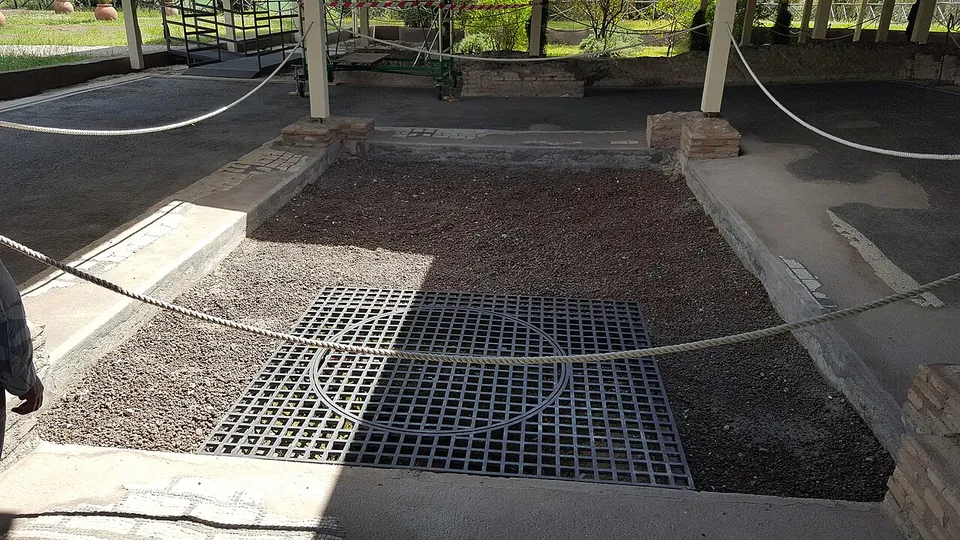
Photo: MumblerJamie · CC BY-SA 2.0 · Commons
11 km · villa · Lazio
Villa of Livia
The operator describes the private wing with the bedrooms of Livia and the emperor, an atrium and a small inner garden, and the large reception rooms that open onto a peristyle; the rooms once had painted walls and floors of mosaic and cut marble (Soprintendenza Speciale di Roma).
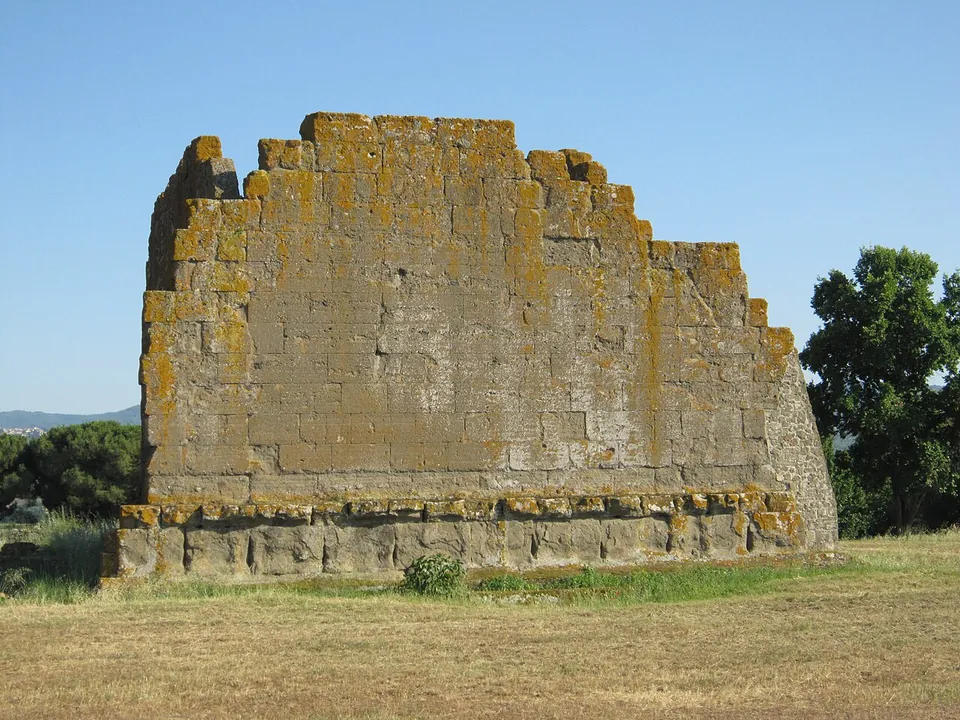
Photo: Carlomorino · CC BY-SA 3.0 · Commons
17 km · city · Lazio
Gabii
The park the state holds covers about 70 hectares on the southern rim of a volcanic crater whose lake was drained in the 19th century (the operator; en.wikipedia).
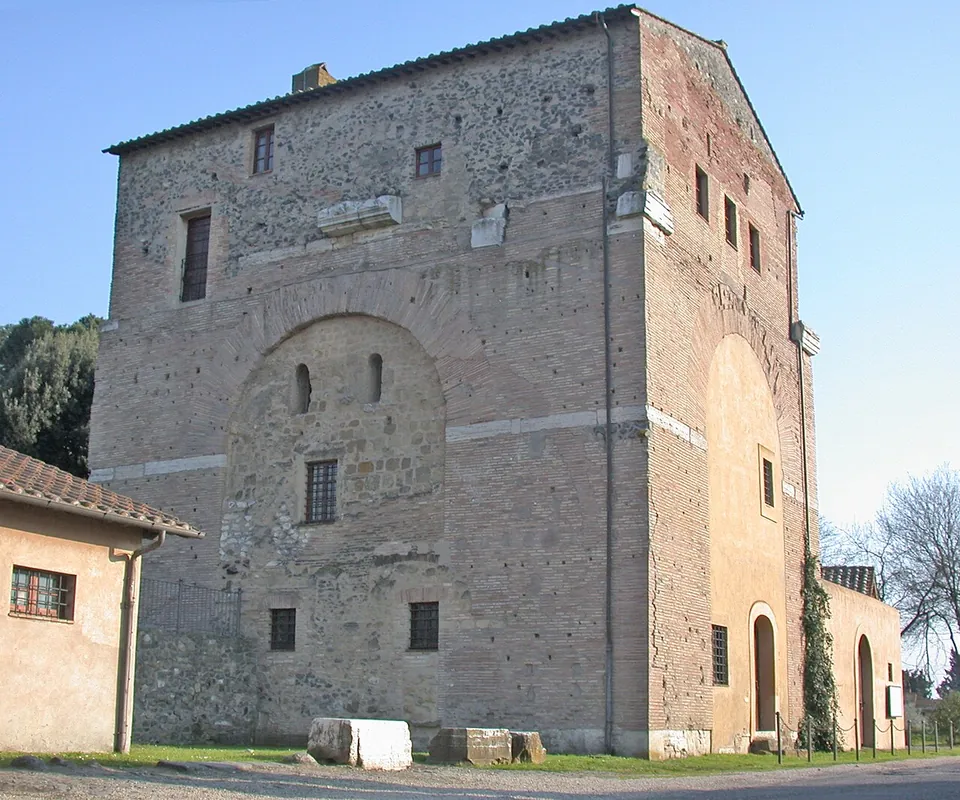
Photo: MM · Public domain · Commons
17 km · arch · Lazio
Arch of Malborghetto
At first sight you see an austere farmhouse rather than an arch (it.wikipedia).


Straight-line distances.
Sources
Every fact on this page comes from the records below, each used under the licence noted.