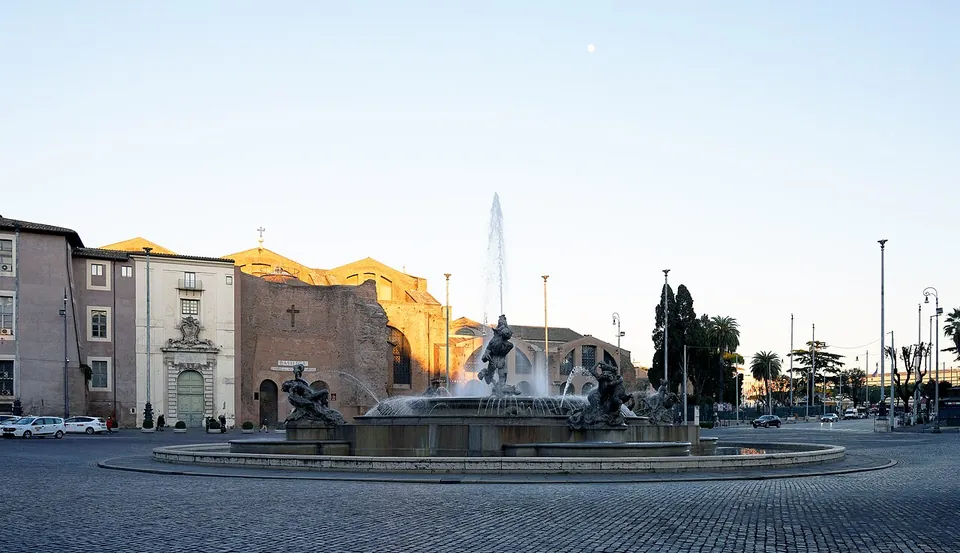
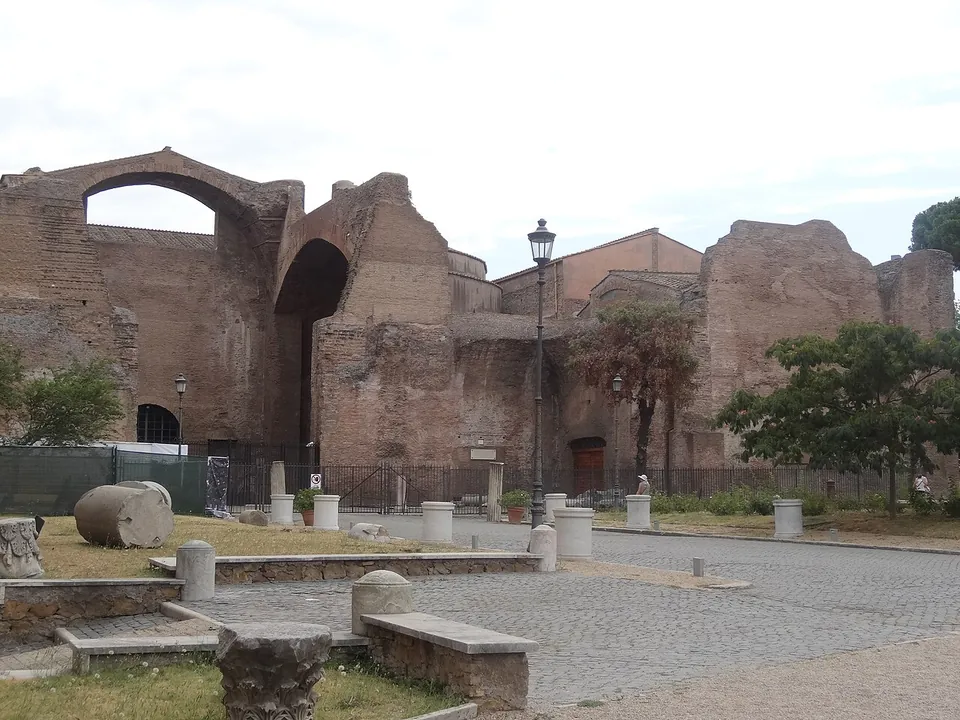
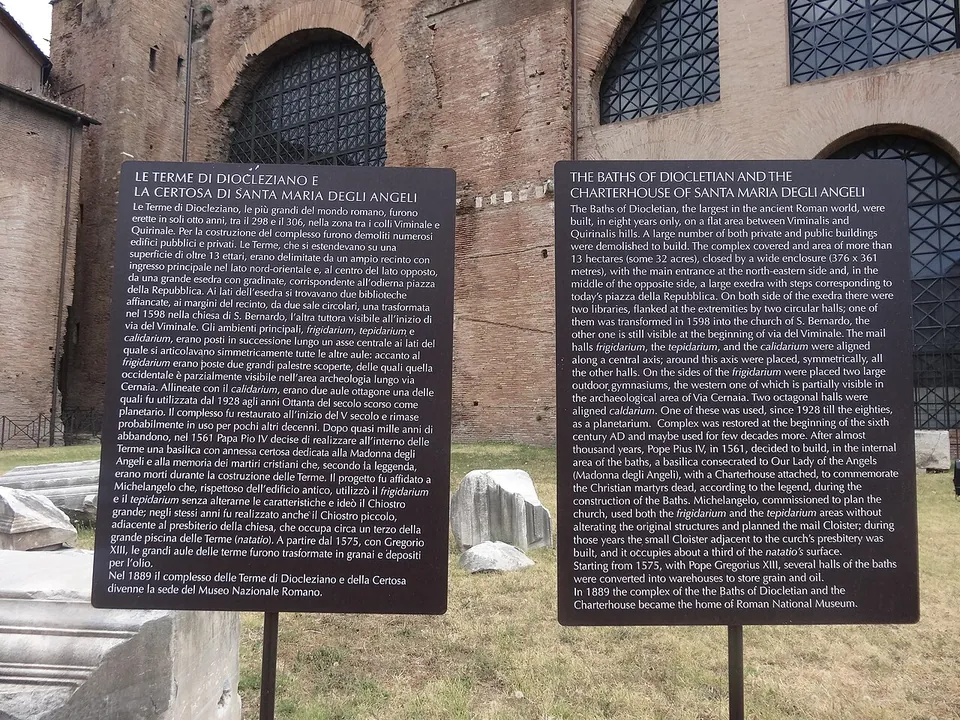


The Baths of Diocletian were the largest public baths ancient Rome ever built, and a surprising amount of them still stands around Piazza della Repubblica, beside Termini station: a church fills their central halls, a state museum occupies another wing, and the square itself keeps the curve of their great exedra (en.wikipedia; it.wikipedia). They are worth the short walk from Termini. The church is open every day and lists no entry charge; the museum’s €15 ticket covers all the sites of the National Roman Museum for a week, but since 9 October 2026 the baths’ great halls inside the museum are closed (Museo Nazionale Romano).
What is there today
The baths covered about 13 hectares (Museo Nazionale Romano), and what is left of them is now split between separate visits, each with its own door.
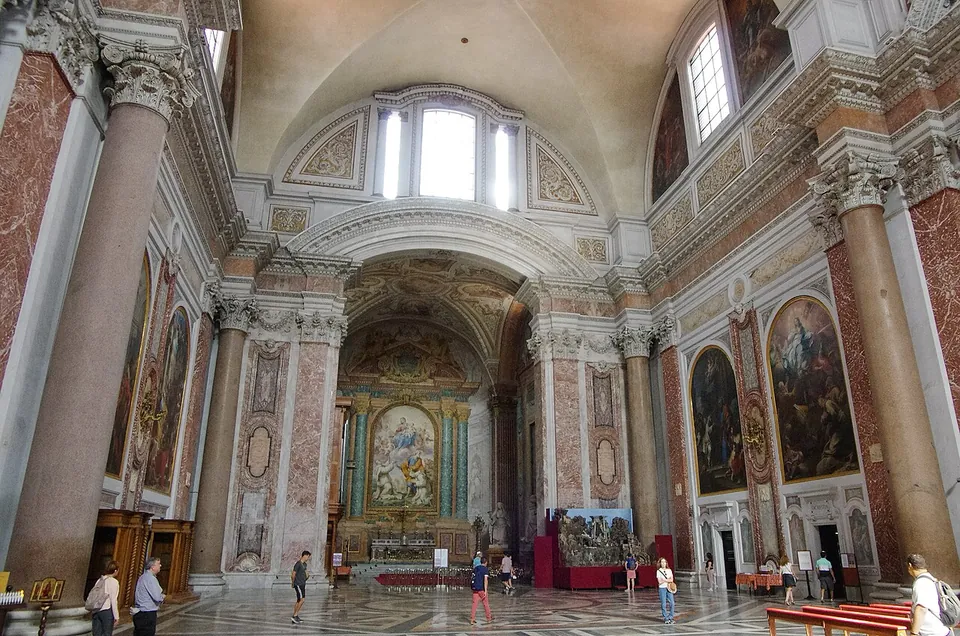
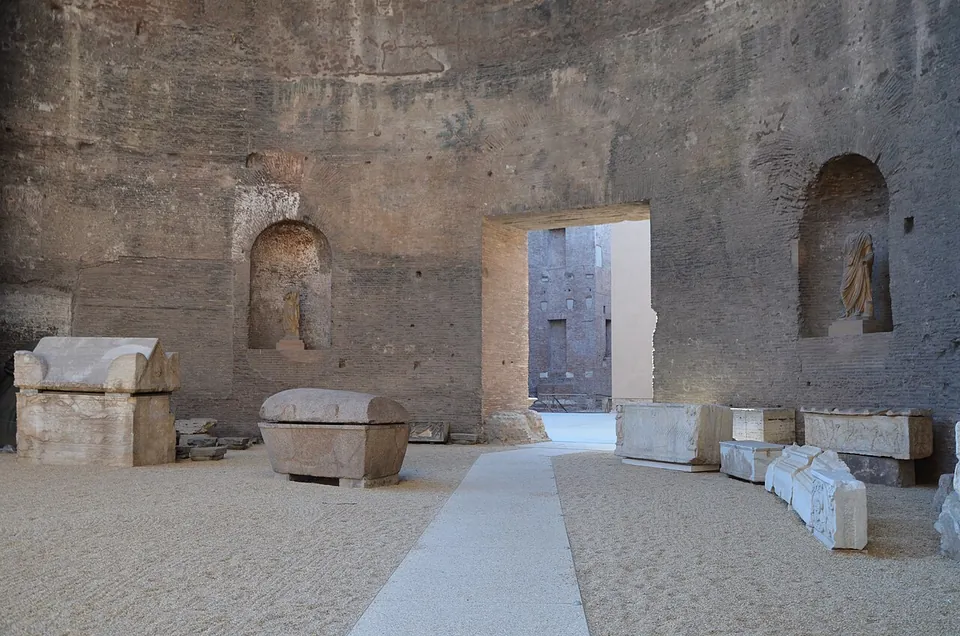
Santa Maria degli Angeli e dei Martiri, on Piazza della Repubblica, is the largest single piece. From 1561 Michelangelo designed the church by converting the tepidarium, the frigidarium and part of the natatio, the open-air pool (Museo Nazionale Romano). The frigidarium, the great cold hall, is now the church’s transept (en.wikipedia), and its three surviving cross vaults on eight huge monolithic granite columns are one of the few places that still show the original splendour of a Roman building; the raised floor and the brick columns made to look like granite are later additions by Michelangelo and Vanvitelli (it.wikipedia). It is a working church, open every day (the basilica).
The Museo Nazionale Romano at the Baths, entered from Via Enrico de Nicola, has been the national museum’s home since it was founded in 1889. The visit runs through the Giardino dei Cinquecento, the baths’ great halls (Aule X, XI and XI bis), the large cloister of the former Carthusian monastery, planned by Michelangelo (en.wikipedia), the small cloister, and the museum of written communication in the Roman world, one of the most important collections of inscriptions anywhere (Ministero della Cultura). From the garden part of the baths’ façade can be seen, and on its other side two exedrae of the enclosure’s north-eastern corner, one still with its original mosaic floor (it.wikipedia). Since 9 October 2026, though, Aule X, XI and XI bis are closed while a temporary exhibition is set up, and the natatio, Aula VIII and the protohistory section are closed until further notice (Museo Nazionale Romano).
The Aula Ottagona, on Via Romita, is a hall that is square outside and octagonal inside, under an “umbrella” dome; it was probably a secondary frigidarium (Ministero della Cultura). It later became a papal granary, and in 1928 Rome’s planetarium, of which a geometric metal framework on slender cast-iron columns remains. The ancient floor lay far below today’s, and in the level underneath, buildings that stood here before the baths can be seen (Ministero della Cultura). It now houses the Museo dell’Arte Salvata, changing displays of art recovered after theft, illegal export, war or earthquakes (Museo Nazionale Romano).
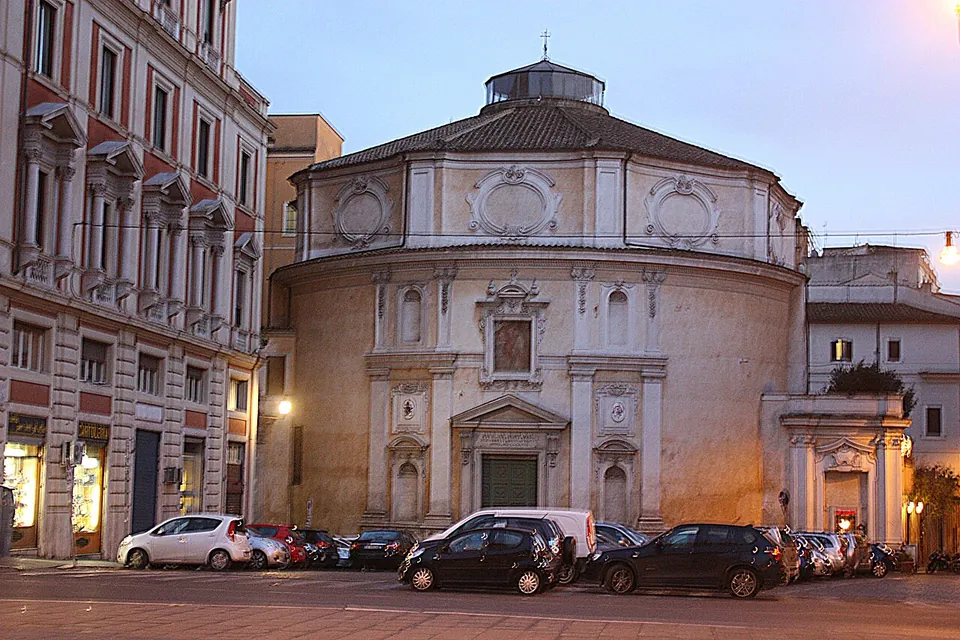
In the streets. Piazza della Repubblica, still often called Piazza dell’Esedra, keeps the shape of the baths’ exedra: the colonnaded buildings Gaetano Koch put up at the end of the 19th century follow its semicircle exactly (it.wikipedia). The round church of San Bernardo alle Terme stands in one of the two circular halls at the corners of the enclosure; the other can be seen from outside at the corner of Via del Viminale and Piazza dei Cinquecento. A good stretch of the enclosure’s north-western wall stands between Via Parigi and Via Orlando, and the remains of one of the caldarium’s apses are visible on the north-eastern side of the square (it.wikipedia). Remains of the western gymnasium are accessible at Via Cernaia (en.wikipedia).
Around the baths
The Servian Wall at Termini. The baths were built just inside the rampart (agger) of the Servian Wall (en.wikipedia), Rome’s early city wall. Ancient tradition dated it to the 6th century BC, but the parts that survive date from the 4th (de.wikipedia); it was built of volcanic tuff (en.wikipedia). Its most spectacular surviving piece is a 94 m stretch in front of the main entrance of Termini station (fr.wikipedia), about 300 m south-east of the baths (OpenStreetMap).
The Horti Lolliani were the gardens of Lollia Paulina, briefly the wife of Caligula, seized by Agrippina the Younger after she accused Paulina of black magic in AD 49. They are located only roughly, by two boundary stones found in 1883 at the Villa Peretti and in Piazza dei Cinquecento (en.wikipedia); no source describes anything of them left to see.
Is it worth the trip?
Yes, and it takes little effort: the baths are next to Termini station. The church alone justifies the stop. You walk into a Roman bath hall with its vaults still overhead, and it is open every day from 08.00 to 20.00 (the basilica).
The museum is a harder call this autumn. With the great halls, the natatio and Aula VIII closed (Museo Nazionale Romano), a €15 ticket buys the garden, the cloisters and the inscriptions here, though the same ticket also opens Palazzo Massimo, Palazzo Altemps and the Aula Ottagona within a week. For the octagonal hall alone there is a €5 ticket. Check the museum’s notices before you go.
Getting there and what it costs
Take metro line A or B to Termini (Museo Nazionale Romano); Repubblica station on line A is mapped about 100 m from the baths, and Termini about the same (OpenStreetMap). The museum’s entrance is at Via Enrico de Nicola 78 (Museo Nazionale Romano), the Aula Ottagona’s on Via Romita (Ministero della Cultura), and the church’s on Piazza della Repubblica.
From the operators’ pages, read on 14 October 2026:
- Museum hours: Tuesday to Sunday, 09.00 to 19.00; the ticket office closes at 18.00. Closed on Mondays (Museo Nazionale Romano). The Ministry lists the Aula Ottagona as open Tuesday to Sunday, 09.30 to 19.00, with no booking required.
- Museum tickets: one ticket for all the National Roman Museum’s sites, €15, gives one entry to each within a week of the first; Crypta Balbi is temporarily closed. €2 for EU citizens aged 18 to 25, free under 18. The Aula Ottagona alone is €5. Entry is free for everyone on the first Sunday of the month and on 1 and 4 November 2026. An MNR Card, €30 (€20 reduced), gives unlimited entry for a year (Museo Nazionale Romano; Ministero della Cultura). Tickets can be bought online on the Musei Italiani portal or on site.
- Access: the museum’s sites are fully accessible to visitors with reduced mobility, with lifts and ramps, and wheelchairs on request (Ministero della Cultura).
- The basilica: open every day, 08.00 to 20.00; its site lists no entry charge. Mass Monday to Saturday at 18.30, and on Sundays at 09.00 (in English), 10.30, 12.00, 17.00 (in Spanish) and 18.30. Guided tours in Italian on some Saturdays at 14.30, about two and a half hours, booking required, paid by a free offering; the “Diocletian’s staircase” and the terraces are temporarily closed to them (the basilica).
Visiting details
- Opening hours
- Museum at the Baths: Tuesday–Sunday 09.00–19.00, ticket office closes at 18.00; closed Mondays. Aula Ottagona: Tuesday–Sunday, 09.30–19.00 by the Ministry's listing. Basilica of Santa Maria degli Angeli: every day 08.00–20.00.
- Tickets
- Museo Nazionale Romano single ticket €15, one entry to each of the museum's sites within a week of the first (the Baths, the Aula Ottagona, Palazzo Massimo, Palazzo Altemps; Crypta Balbi is temporarily closed); €2 for EU citizens aged 18–25; free under 18. Aula Ottagona alone €5. Free for everyone on the first Sunday of the month and on 1 and 4 November 2026. MNR Card, unlimited entry for a year, €30 (€20 reduced). The basilica publishes no entry charge.
Before you go
- Since 9 October 2026 the baths' great halls in the museum (Aule X, XI and XI bis) are closed while a temporary exhibition is set up, and the natatio, Aula VIII and the protohistory section are closed until further notice.
- Santa Maria degli Angeli is a working church, with mass every evening at 18.30 and five masses on Sundays.
Hours and prices checked 14 October 2026 on the operator's own site. Confirm before travelling.
History
Maximian commissioned the baths on his return from Africa in the autumn of 298 and dedicated them to his fellow emperor Diocletian; they were finished between the two emperors’ abdication in 305 and the death of Constantius in July 306 (en.wikipedia; it.wikipedia). A whole district of houses and other buildings was bought up and demolished to make room, and the bricks all carry Diocletianic stamps (it.wikipedia). The water came from the Aqua Marcia (en.wikipedia). The museum puts their capacity at up to 3,000 people at once; the figure goes back to the ancient writer Olympiodorus and is disputed, since he never said how he arrived at it (Museo Nazionale Romano; en.wikipedia).
The baths were restored in the early 5th century and stayed in use until the siege of 537, when the Ostrogothic king Vitiges cut the aqueducts (en.wikipedia). For centuries afterwards they were a quarry; between 1586 and 1589 Pope Sixtus V had remains around the caldarium demolished, with explosives among other means, for his villa on the Esquiline (it.wikipedia).
In 1561 Pope Pius IV gave the ruins to a church and a Carthusian monastery and entrusted the design to Michelangelo. The church was dedicated to the Virgin of the Angels and to the Christian martyrs who, by tradition, had died building the baths; from 1575 Gregory XIII turned other halls into the papal granaries (Museo Nazionale Romano), and oil stores were dug beneath them after a shortage in 1763 (it.wikipedia). In 1749 Vanvitelli turned the church through 90 degrees and opened the present entrance in the caldarium (it.wikipedia). After Rome became Italy’s capital the area was rebuilt: Termini station, named after the baths, rose over their great cistern (it.wikipedia), and in 1889 the government set up the National Roman Museum in the baths and the former monastery (en.wikipedia).
More photographs



Nearby
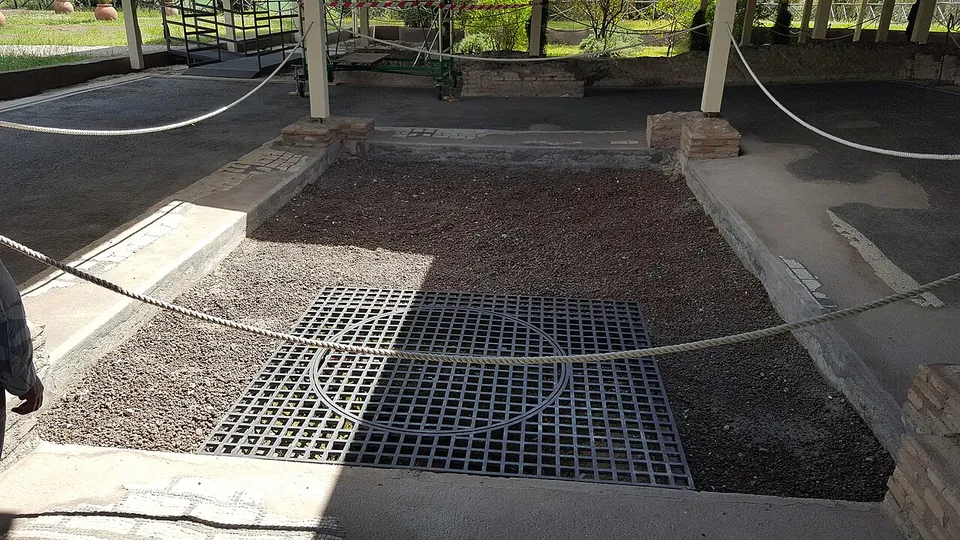
Photo: MumblerJamie · CC BY-SA 2.0 · Commons
11 km · villa · Lazio
Villa of Livia
The operator describes the private wing with the bedrooms of Livia and the emperor, an atrium and a small inner garden, and the large reception rooms that open onto a peristyle; the rooms once had painted walls and floors of mosaic and cut marble (Soprintendenza Speciale di Roma).
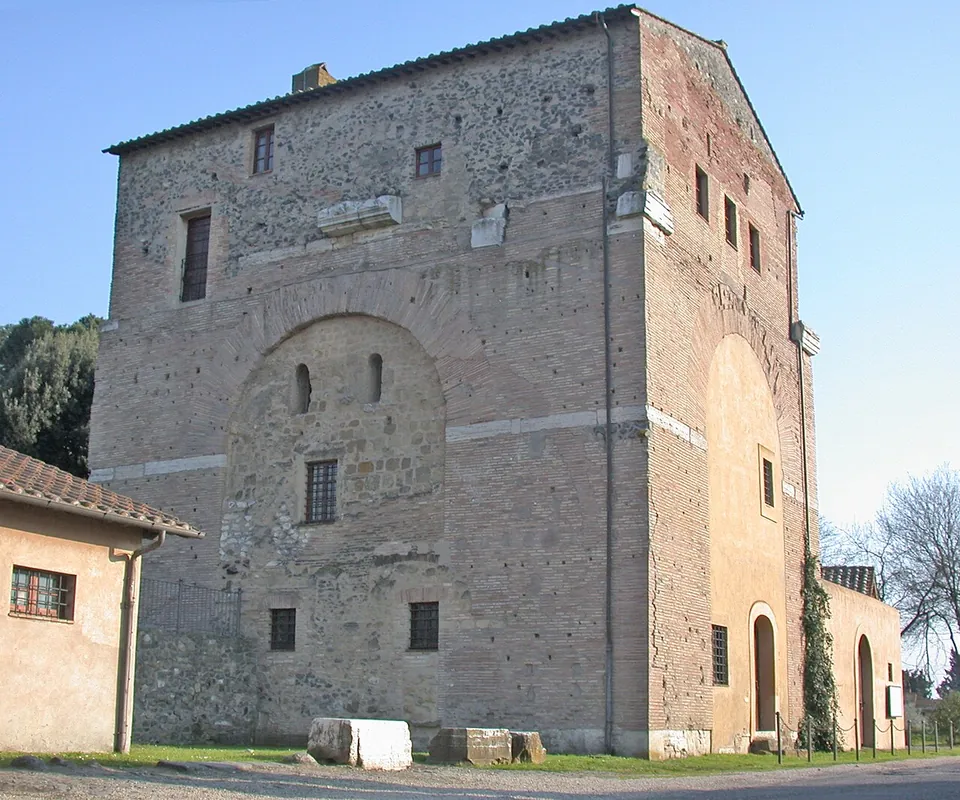
Photo: MM · Public domain · Commons
17 km · arch · Lazio
Arch of Malborghetto
At first sight you see an austere farmhouse rather than an arch (it.wikipedia).
Photo: Carlomorino · CC BY-SA 3.0 · Commons
18 km · city · Lazio
Gabii
The park the state holds covers about 70 hectares on the southern rim of a volcanic crater whose lake was drained in the 19th century (the operator; en.wikipedia).


Straight-line distances.
Sources
Every fact on this page comes from the records below, each used under the licence noted.