Under the church of Santa Maria della Sanità in Naples lies the city’s second-largest catacomb, an early Christian cemetery begun in the 4th–5th century and enlarged around the tomb of an African bishop buried here in the 450s. In the 17th century it was reused for macabre burials of the Neapolitan nobility.
What is there today
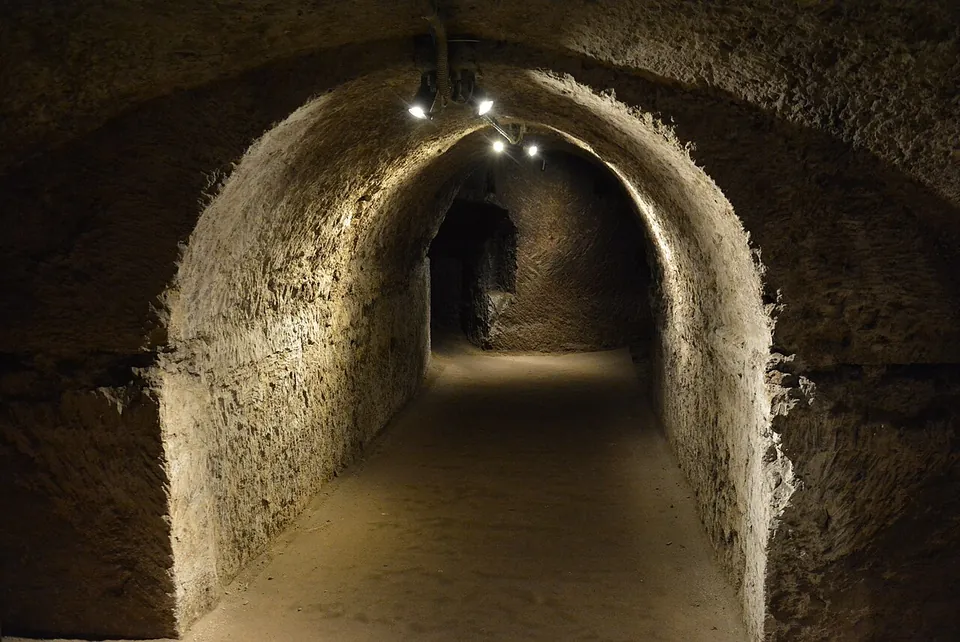
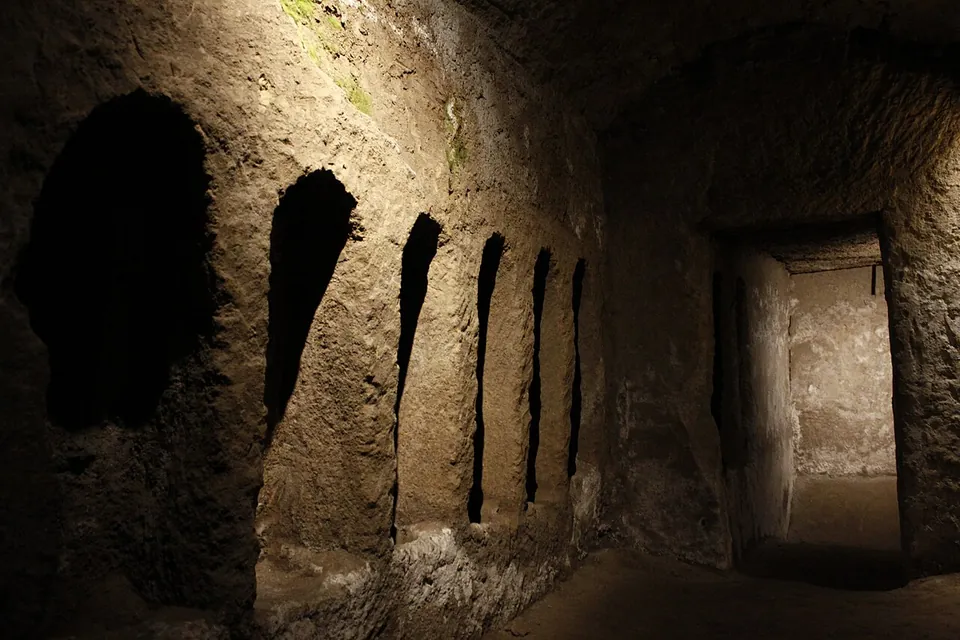
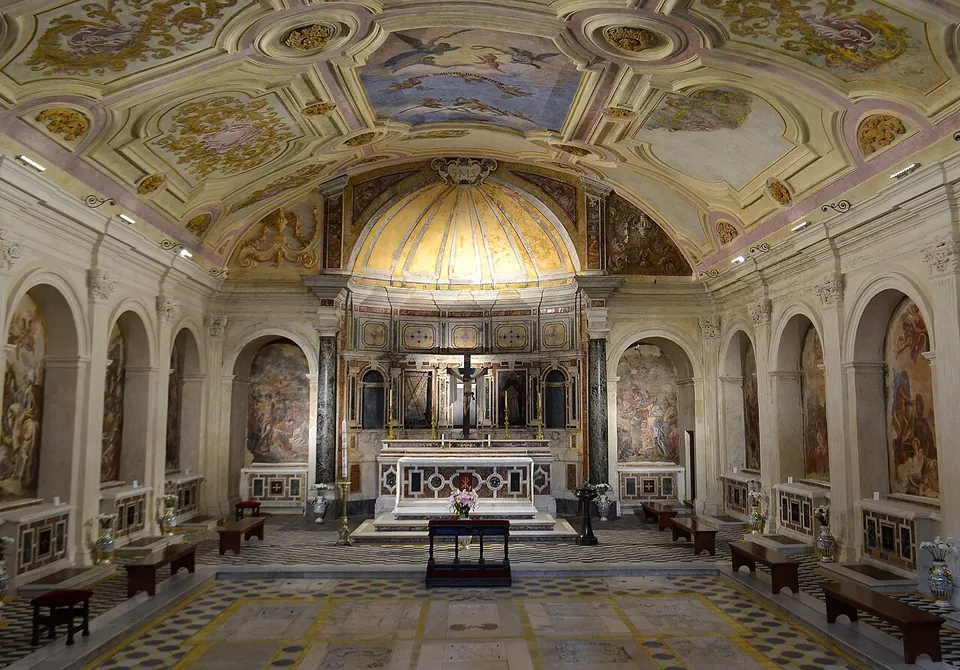
The visit starts in the crypt under the church’s raised choir, which was once a corridor of the catacomb and is now a chapel with ten side altars, painted with stories of the martyrs by Bernardino Fera (it.wikipedia; the operator). From there a guide takes you into the catacomb itself. Its central corridor is about 30 m long and 2–3 m wide, with thirteen burial chambers opening off it, and there is a cistern about 25 m long (the operator).
Two layers share these rooms, and it helps to know which is which.
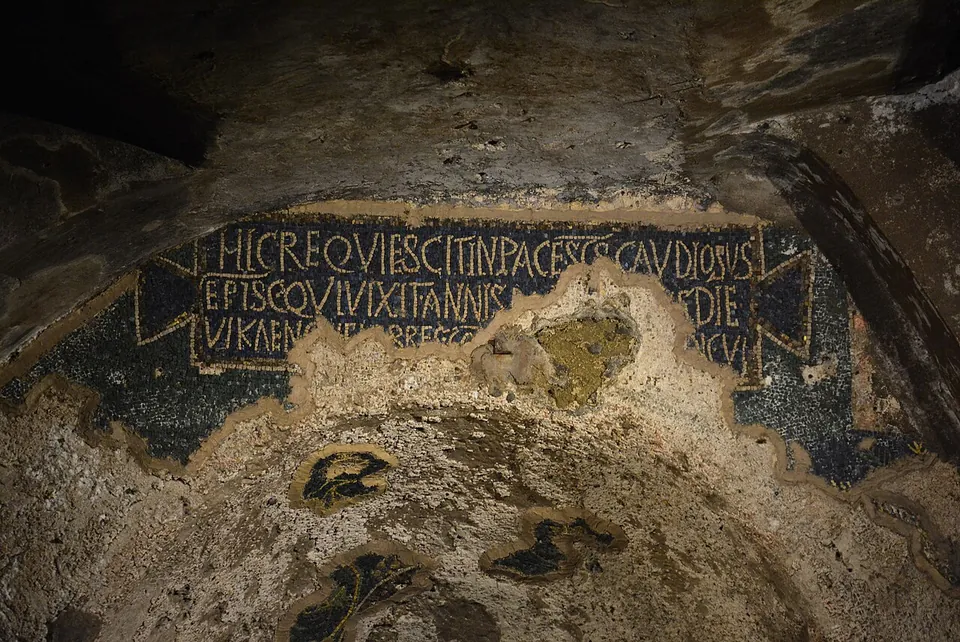
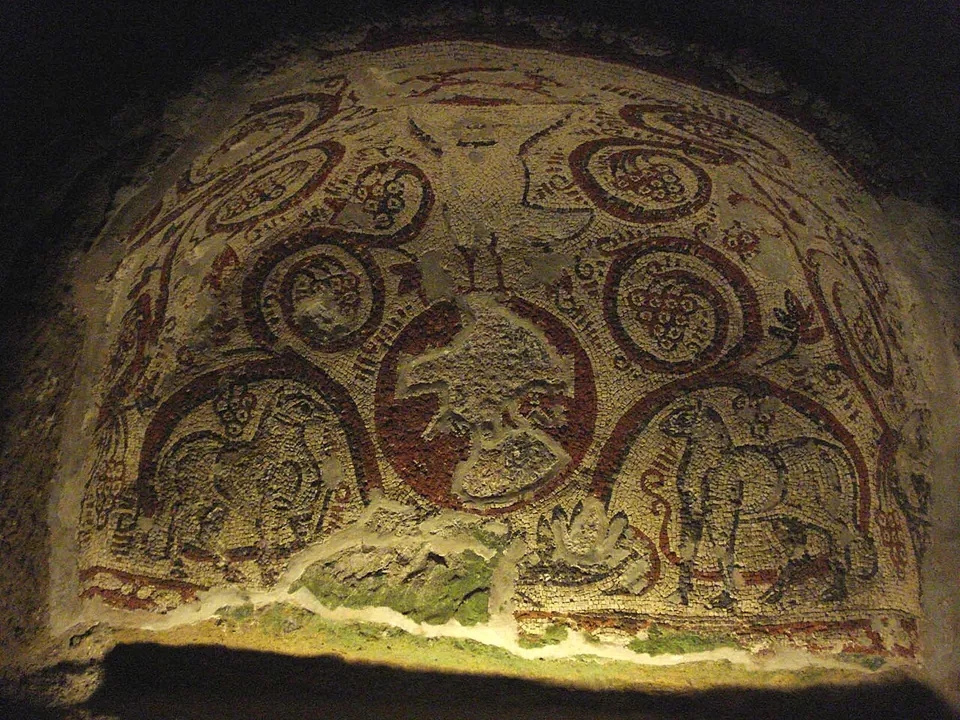
The late Roman, early Christian layer is the reason the site is in this atlas. The arched tomb of Saint Gaudiosus, near the entrance, keeps part of its 6th-century mosaic, with his name in the inscription. In the side chambers are frescoes of the 5th and 6th centuries, among them Saint Peter and Saint Sossius, a deacon of Pozzuoli, and a mosaic of about the end of the 5th century (it.wikipedia). The operator draws attention to vines, lambs and fish among the early Christian symbols, and to a 5th–6th-century fresco in which Saint Peter presents a dead man named Pascentius, probably to Saint Paul (the operator).
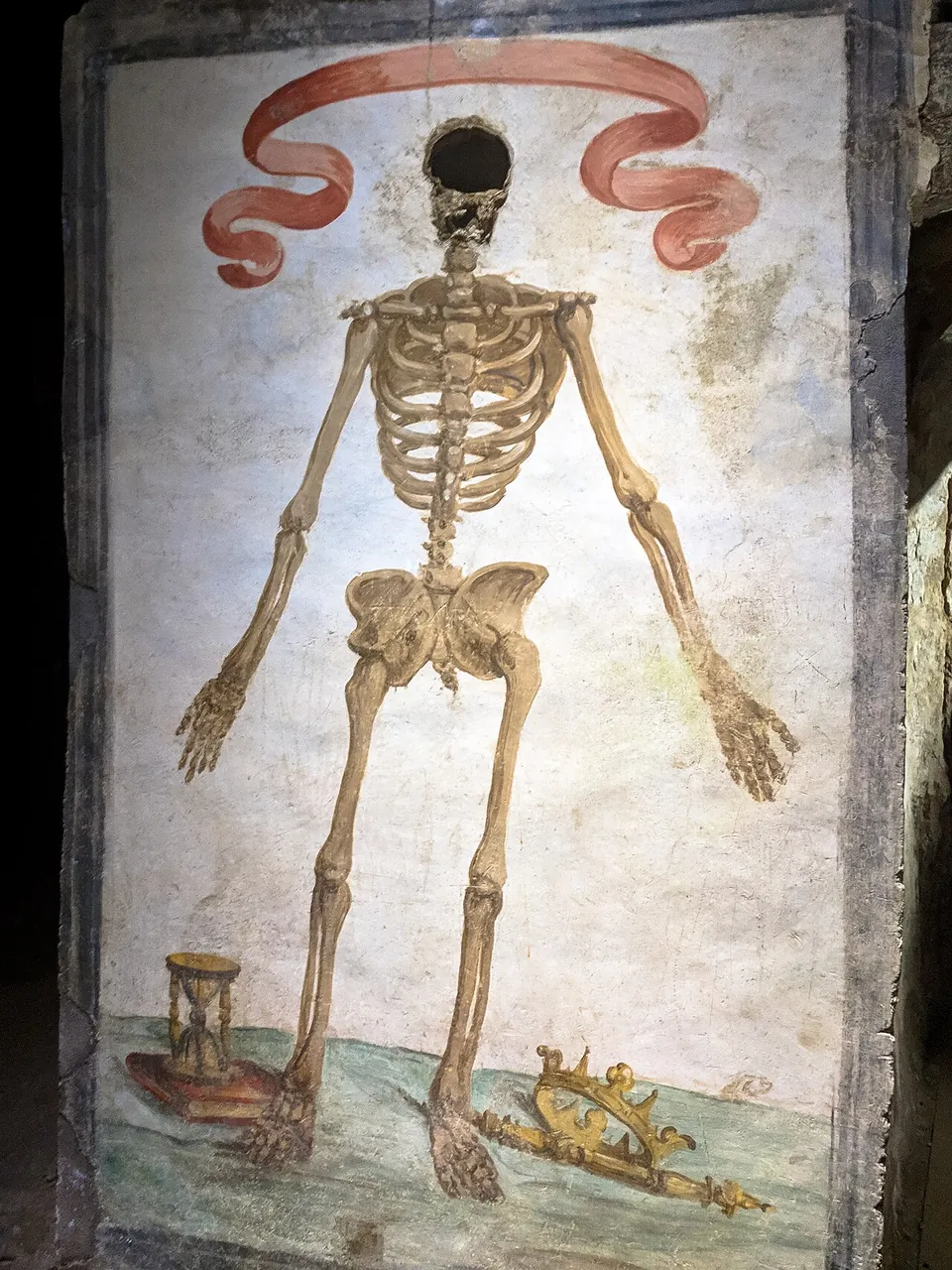
The 17th-century layer is what the operator advertises the visit with: “mysterious burials and macabre rituals”. Dominican friars brought the catacomb back into use for the burials of nobles and clergy. Bodies were first left to drain in stone niches; then the skull was set into the wall and a body painted below it, dressed and equipped to show what the dead person had been (it.wikipedia; the operator). Of the skulls set into the walls only the crowns remain, the rest lost to damp (it.wikipedia). None of this is Roman, and the building of the church over the catacomb altered it deeply and destroyed parts of it (it.wikipedia).
Is it worth the trip?
Yes, if you are visiting the Catacombs of San Gennaro, because one ticket covers both, and San Gaudioso is about 500 m away. Give it an hour, the length of the tour. Do not come for the Roman period alone: what survives from late antiquity is a tomb, some frescoes and a few mosaics, in a catacomb of which only a small part remains (it.wikipedia). The bigger and better-preserved early Christian catacomb is San Gennaro, and San Gaudioso is the strange, memorable second half of the same day.
The visit is a guided tour only, it must be booked, and it does not run on Wednesdays. The catacombs are not wheelchair accessible (OpenStreetMap).
Getting there
The catacombs are under the Basilica of Santa Maria della Sanità, on Piazza Sanità in the Rione Sanità, north of the old centre. The ticket office is at Via Sanità 123, and you enter through the basilica (the operator). A bus stop named for the basilica is about 70 m away, and the public lift Ascensore della Sanità, run by the city transport company ANM, about 90 m (OpenStreetMap). There is no car park by the church; the operator’s free car park is at the San Gennaro catacombs, Via Capodimonte 13.
Tours leave on the hour, every day except Wednesday, from 10.00 to 17.00, and the catacombs close on 25 December. Booking is compulsory (the operator, as archived on 17 October 2026). The last published ticket price was €13, with €9 for students and over-65s, €6 under 18 and free entry under 6; it also covers San Gennaro and is valid for 12 months (the operator, May 2024). Tours run in Italian and English. The operator’s site could not be read directly, so check prices and times when you book.
Visiting details
- Opening hours
- Guided tours only, on the hour, daily 10.00–17.00 (last tour 17.00); closed on Wednesdays and 25 December. Booking is compulsory. A tour lasts about an hour and runs in Italian and English.
- Tickets
- €13; €9 for students, over-65s and police; €6 under 18; free under 6 and for disabled visitors (a carer pays €9). The ticket also covers the Catacombs of San Gennaro, valid for 12 months. These are the operator's prices as last readable, in May 2024.
- Parking
- No car park is mapped by the basilica. The operator offers a free car park at the Catacombs of San Gennaro, Via Capodimonte 13, about 500 m away. The bus stop "Sanità - Basilica S.Maria della Sanità" is about 70 m from the church, and the public lift Ascensore della Sanità, run by the city transport company ANM, about 90 m (OpenStreetMap).
Before you go
- The catacombs can only be seen on a booked guided tour, and they are closed on Wednesdays.
- The operator's website refused automated reading on 24 October 2026. The hours are from its home page as archived on 17 October 2026, and the prices from an archived copy of May 2024, so they may have changed. Check when booking.
- OpenStreetMap marks the catacombs as not wheelchair accessible.
Hours and prices checked 17 October 2026 on the operator's own site. Confirm before travelling.
History
The catacomb probably grew on the site of an older Greek and Roman cemetery, in what was then an uninhabited valley outside the city (it.wikipedia). The operator places Hellenistic tombs and then early Christian catacombs in this valley, and dates the first part of the catacomb to the 4th–5th century.
It takes its name from Gaudiosus, bishop of Abitina in what is now Tunisia. According to the operator, when the Vandals conquered North Africa he refused to convert to Arianism, and King Genseric put him to sea with other exiled Christians in a ship without sails or oars, and chance brought them to Naples. He was buried here between 451 and 453, and his tomb soon became a place of worship (it.wikipedia; the operator); the cemetery also held the tomb of another bishop, Nostrianus (it.wikipedia).
In the 9th century the relics of the saints buried outside the walls, Gaudiosus among them, were moved into the city for safety after the theft of San Gennaro’s relics (the operator). Mudslides from the hill of Capodimonte, the “lave dei Vergini”, buried the valley, and it stayed largely deserted through the later Middle Ages (it.wikipedia). In the 16th century the district was settled again and the catacomb was used once more for burials. In the 17th century the basilica of Santa Maria della Sanità was built directly over the old church or chapel of San Gaudioso, which altered the catacomb deeply and destroyed parts of it (it.wikipedia). The church is dedicated to the Madonna della Sanità of a 5th–6th-century fresco of the Virgin, now kept in the first chapel on the right of the basilica (it.wikipedia).
The Neapolitan actor Totò was born in the Rione Sanità, not far from the catacombs, and one of their frescoes, of Death triumphing over all, is said to have inspired his poem ’A livella (the operator).
More photographs
Nearby
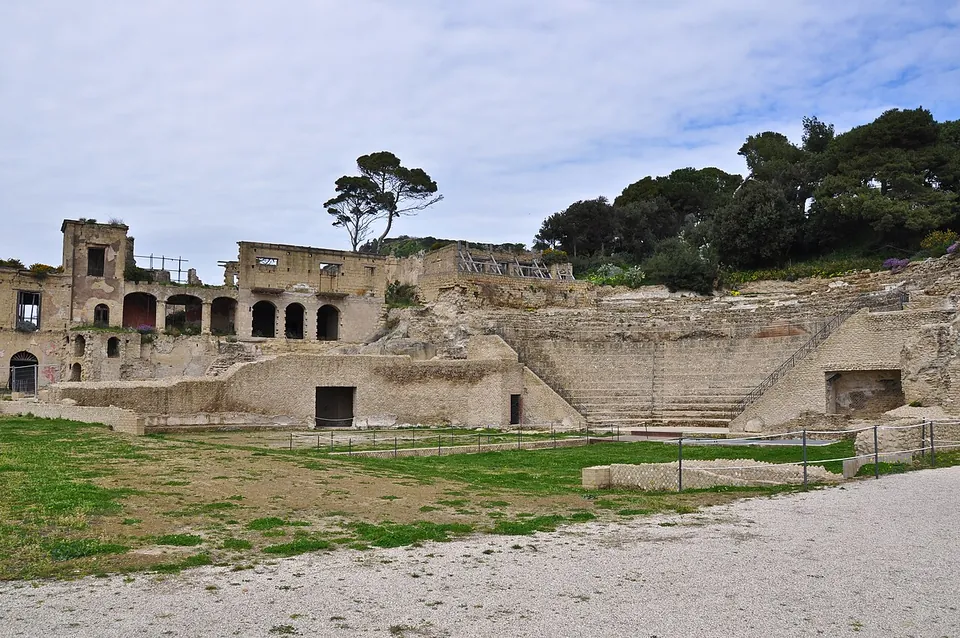
Photo: Armando Mancini · CC BY-SA 2.0 · Commons
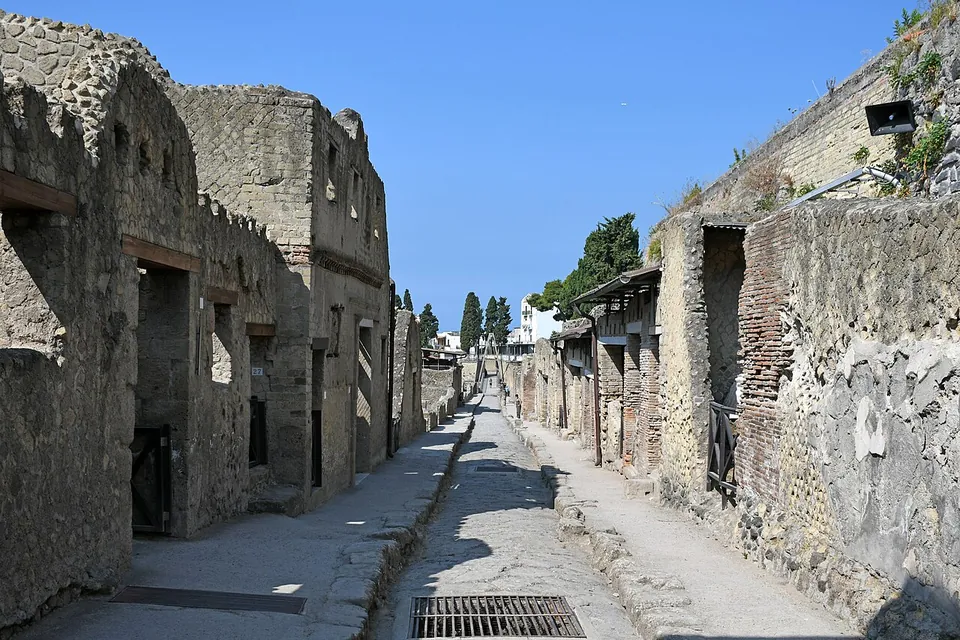
Photo: Phyrexian · CC BY-SA 4.0 · Commons
10 km · city · Campania
Herculaneum
Excavation has uncovered about 4 to 4.5 hectares of a town of roughly 20, so this is a compact site: four fully excavated blocks of houses and shops (insulae III to VI) and parts of others, between excavated streets, with the rest of ancient Herculaneum, including most of its forum and its temples, still under modern Ercolano (it.wikipedia, fr.wikipedia).
11 km · city · Campania
Puteoli – Pozzuoli
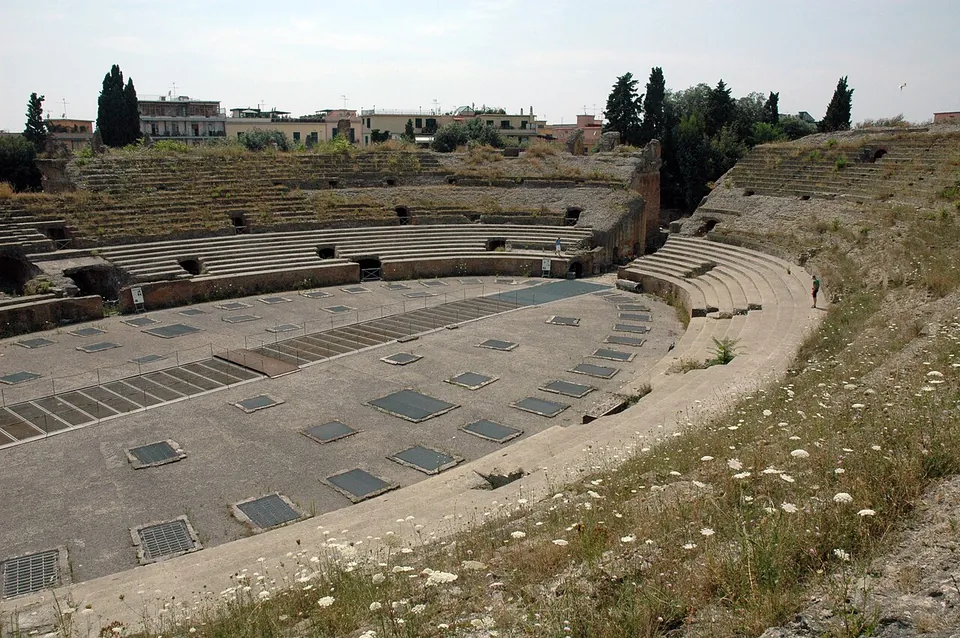
The Flavian Amphitheatre is the set piece: only the Colosseum and the amphitheatre of Capua are larger.


Straight-line distances.
Sources
Every fact on this page comes from the records below, each used under the licence noted.
| Source | Licence |
|---|---|
| Wikidata Q3663202 | CC0 |
| OpenStreetMap node/2866697526 | ODbL |
| Wikipedia (it) — Catacombe di San Gaudioso | CC BY-SA 4.0 |
| Wikipedia (en) — Catacombs of Saint Gaudiosus | CC BY-SA 4.0 |
| Catacombe di Napoli — home page with hours (the operator; archived copy of 17 October 2026) | licence not recorded |
| Catacombe di Napoli — Catacombe di San Gaudioso (the operator; archived copy of 13 July 2024) | licence not recorded |
| Catacombe di Napoli — plan your visit and tariffs (the operator; archived copy of 25 May 2024) | licence not recorded |