

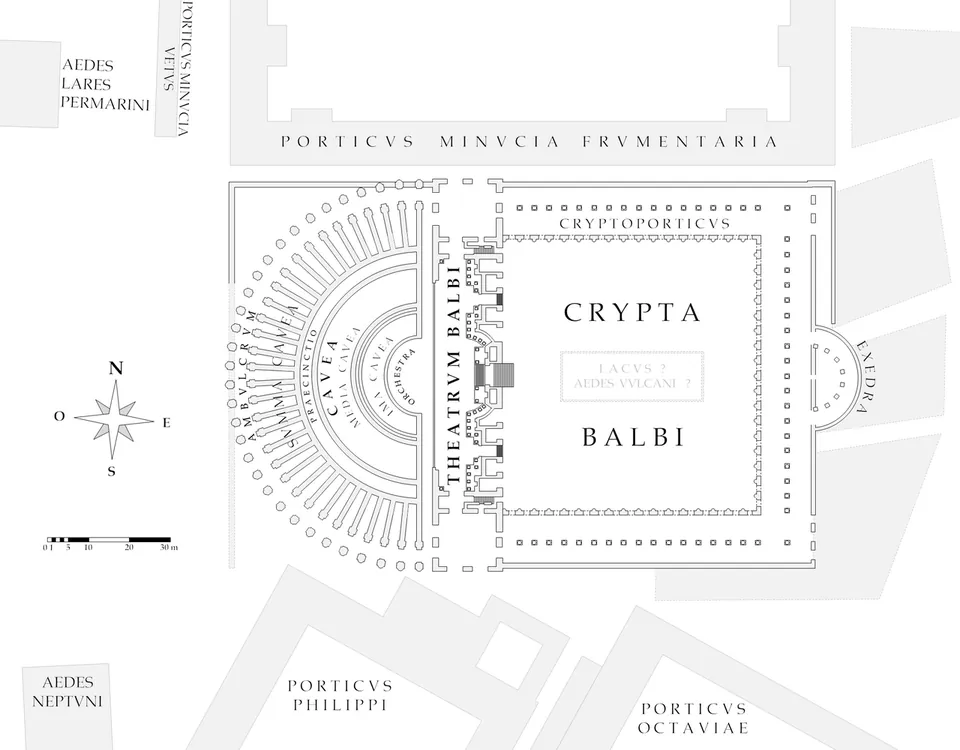
The Crypta Balbi is a branch of Rome’s National Roman Museum built over the porticus behind the Theatre of Balbus, the colonnaded courtyard where theatre-goers strolled between acts; the theatre was dedicated in 13 BC (the operator; en.wikipedia). It has been closed for building works since 9 January 2023, with no reopening date published, so for now what a visitor can see is the street outside and the two columns of the Temple of the Nymphs across the road.
What is there today
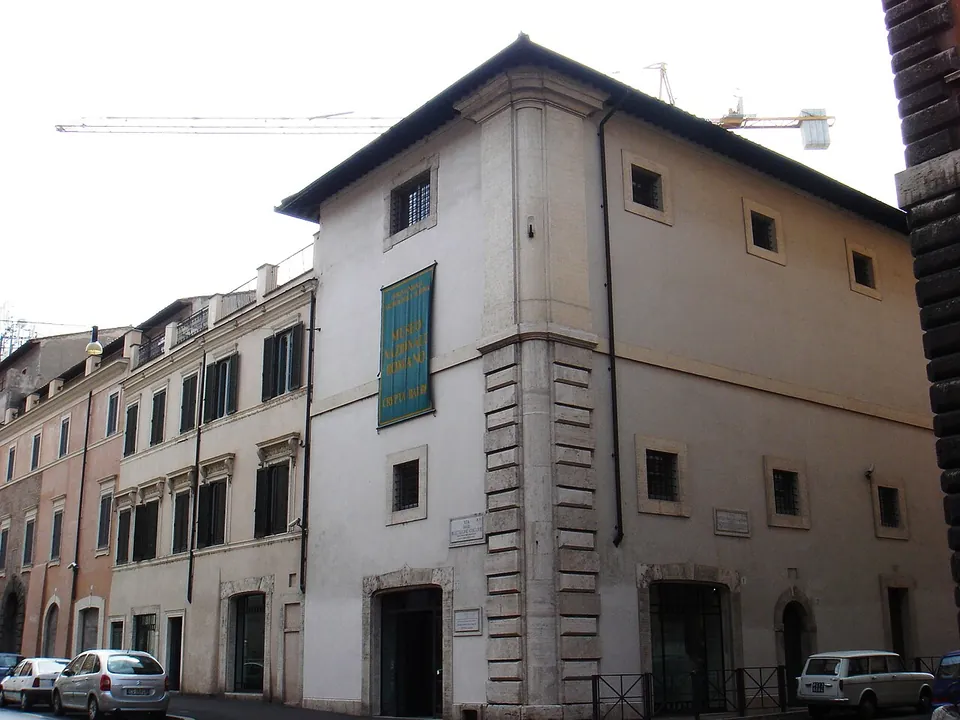
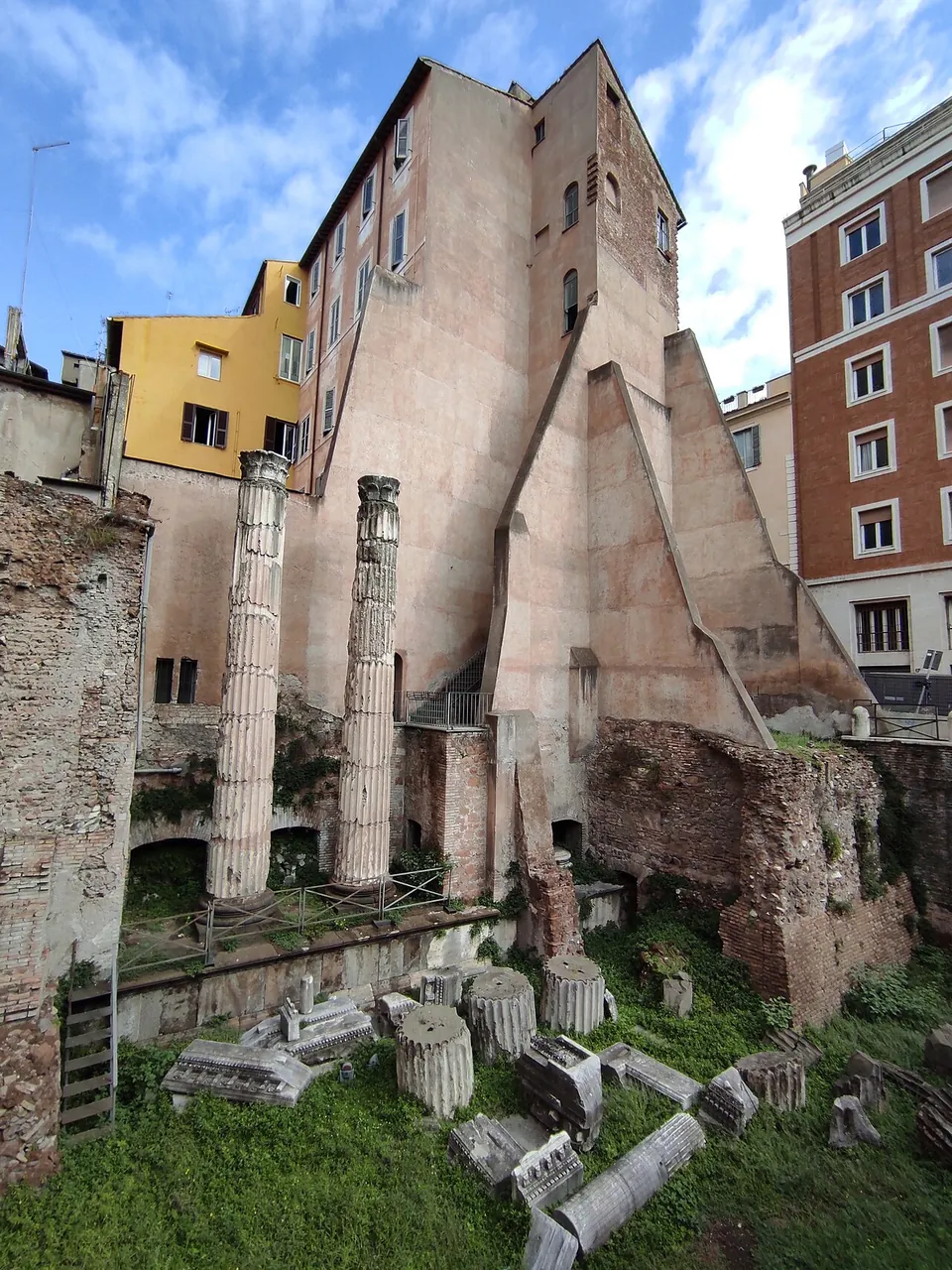
For now, the street. Across Via delle Botteghe Oscure from the closed museum, the two standing columns of the Temple of the Nymphs and remains of the Porticus Minucia lie in a sunken excavation that can be seen from the street (it.wikipedia; de.wikipedia). The museum’s own entrance, at Via delle Botteghe Oscure 31, stays shut (the operator).
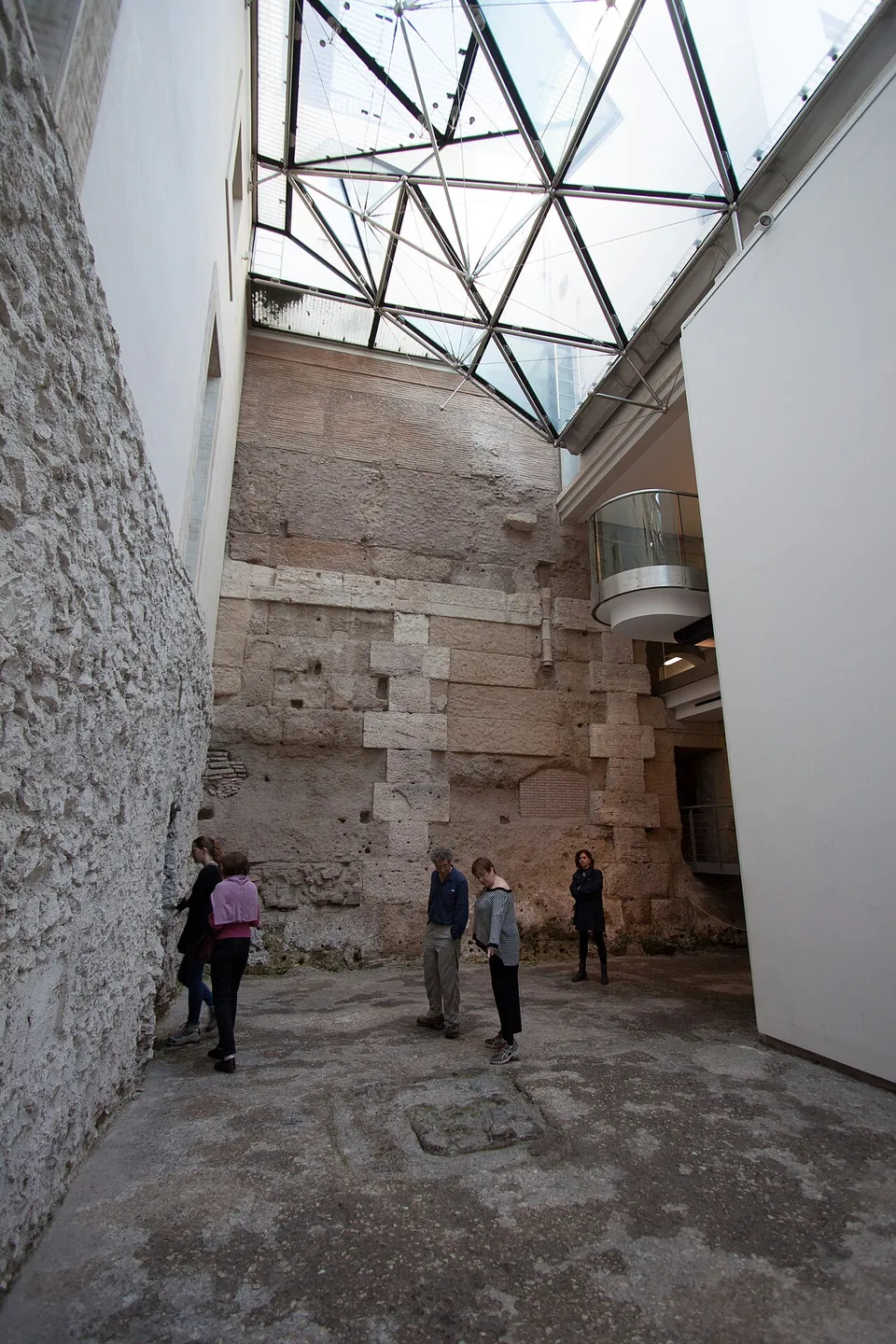
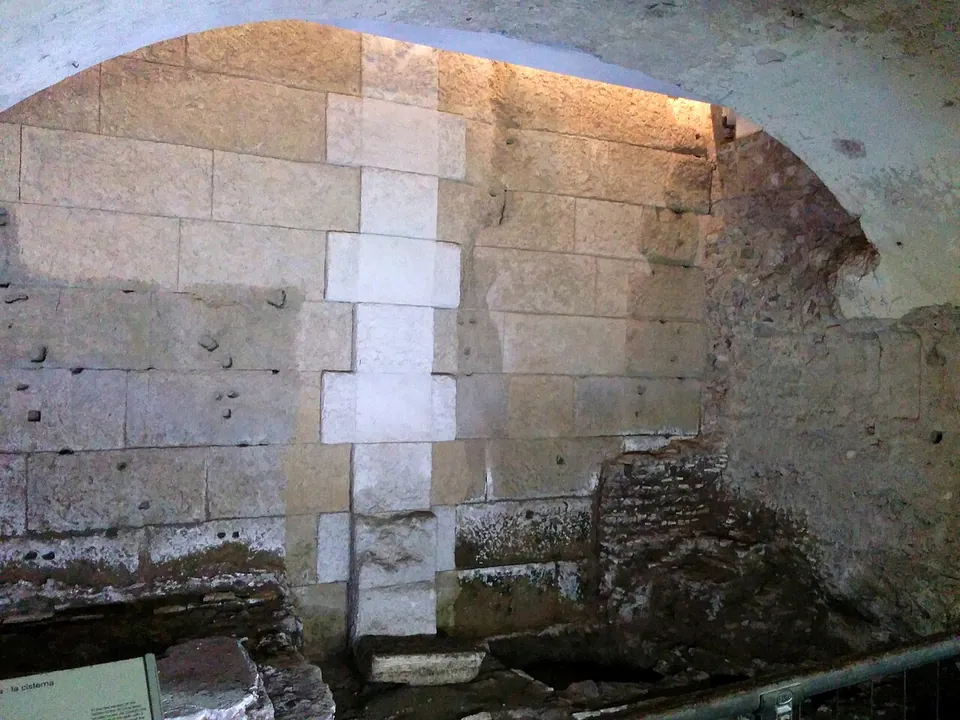
The museum, when it is open. The excavations that began here in 1981 uncovered the colonnaded courtyard of the theatre complex and the evidence of what was built on it afterwards, and a museum opened in 2001 shows them in place, in rooms above the Roman building (en.wikipedia; fr.wikipedia). Remains of the porticus’s outer galleries and of the exedra, a semicircular recess at its eastern end, survive on three sides (fr.wikipedia). It is a museum of urban archaeology: a ground-floor section follows this one city block from antiquity to the 20th century, and an upper floor, the Museum of Medieval Rome, shows how the city changed between the 5th and 10th centuries (en.wikipedia; the operator). The archaeological remains in the basement could be seen only on a guided tour (en.wikipedia).
Temple of the Nymphs
Across Via delle Botteghe Oscure, in a sunken excavation, stand the remains generally identified as the Temple of the Nymphs, a temple that ancient writers record in the Campus Martius (en.wikipedia). It was founded in the 3rd or early 2nd century BC, damaged by fire in the middle of the 1st century BC and probably again in the fire of AD 80 (en.wikipedia; it.wikipedia). Few remains survive, two columns among them (de.wikipedia), and those two standing columns are what you see from the street.
The mithraeum
Wikidata and The New Mithraeum, a database of Mithras monuments, record a mithraeum named after the Crypta Balbi, which the database places in the middle of a densely populated city block near the Theatre of Balbus. Neither the Wikidata item nor the database’s public entry describes what survives of it or whether it has ever been shown to visitors.
Is it worth the trip?
Not at the moment. The museum has been shut since January 2023, the open-worksite visits of 2025 ended in December, and the operator has published no date for reopening. Do not make a special journey.
If you are at Largo di Torre Argentina, under 200 m away, it costs two minutes to walk round to Via delle Botteghe Oscure and look at the columns of the Temple of the Nymphs. When the museum reopens it will be worth a slot on a Rome itinerary for a different reason from the Forum: among the National Roman Museum’s sites it is the one devoted to urban archaeology, following a single block of the city through its uses over the centuries (it.wikipedia).
Getting there and what it costs
The Crypta Balbi stands in the historic centre between Piazza Venezia and Largo di Torre Argentina (Turismo Roma), at Via delle Botteghe Oscure 31, on the corner of Via Michelangelo Caetani (en.wikipedia; the operator). The nearest mapped public-transport stop, Ara Coeli/Piazza Venezia, is under 200 m away (OpenStreetMap).
The museum is closed for building works, part of the URBS project, and the operator gives no reopening date (Ministero della Cultura, read 18 October 2026). Its page still lists the Museo Nazionale Romano’s single ticket for the site: €15, or €2 reduced, valid for a week with one entry to each of the museum’s sites. While the works continued, the operator opened the worksite on free guided visits, on Saturday mornings from July to December 2025 and after a talk on 17 June 2026; watch its events page for more. The Temple of the Nymphs can be seen from the street at any hour and costs nothing.
Visiting details
- Opening hours
- Closed to the public since 9 January 2023 for building works (the URBS project), and no reopening date is published. The ruins of the Temple of the Nymphs, across Via delle Botteghe Oscure, can be seen from the street.
- Tickets
- Nothing to pay while the museum is closed. The operator lists the Museo Nazionale Romano's single ticket for it, €15 or €2 reduced, valid for a week with one entry to each of the museum's sites.
Before you go
- The museum is closed for works and the operator gives no reopening date. Check the operator's page before planning a visit.
- Free guided visits to the worksite ran on Saturdays from July to December 2025, and a visit followed a talk on 17 June 2026. No later visits had been announced when this was checked.
Hours and prices checked 18 October 2026 on the operator's own site. Confirm before travelling.
History
Lucius Cornelius Balbus, a friend of Augustus, paid for a stone theatre in the Campus Martius from the spoils of his victory over the Garamantes of Libya, and dedicated it in 13 BC (it.wikipedia; the operator; The New Mithraeum). Other published dates are 15 BC (Pleiades) and 19 BC, the year of his triumph (fr.wikipedia). It was the smallest of ancient Rome’s three theatres and the most richly decorated (it.wikipedia). Published figures for its seating range from about 7,700 to 11,500; the higher number comes from a catalogue compiled at the end of the 4th century (it.wikipedia; en.wikipedia). It was destroyed by fire under Titus and then restored, probably by Domitian (it.wikipedia).
Behind the stage lay the porticus, a courtyard where the audience could walk and take refreshment between acts, with an underground gallery, a cryptoporticus, beneath it (en.wikipedia; fr.wikipedia). The name “Crypta Balbi” itself is recorded only in the Regionary Catalogues (Pleiades). Where the theatre stood was debated until fragments of the Severan marble plan of Rome were pieced together in the 1960s (en.wikipedia; fr.wikipedia). In the middle of the courtyard, traces of a building may belong to a temple of Vulcan recorded by an inscription found nearby (fr.wikipedia), and the operator reported new evidence in January 2026 on the precinct of the temple linked to the theatre (Ministero della Cultura).
The porticus was taken over by craftsmen’s workshops, among them renowned bronze-workers, and in the Middle Ages by rope-makers (funari), remembered in the names of Via dei Funari and the church of Santa Caterina dei Funari (fr.wikipedia). A late antique and early medieval deposit in the exedra has yielded thousands of objects from its 7th-century phase (the operator). In the early Middle Ages the church and convent of Santa Maria Domine Rose settled on the site, then came medieval houses, and in the mid-16th century the Conservatorio di Santa Caterina dei Funari, which Ignatius of Loyola founded for the daughters of Roman prostitutes (it.wikipedia; en.wikipedia). The Italian state bought the block in 1981, and excavations led by Daniele Manacorda began that year (it.wikipedia; en.wikipedia).
More photographs


Nearby
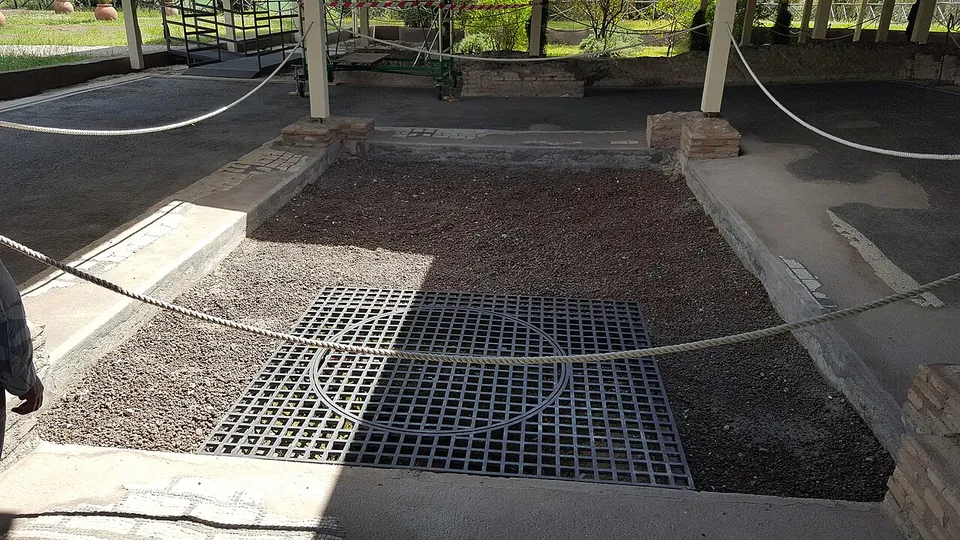
Photo: MumblerJamie · CC BY-SA 2.0 · Commons
12 km · villa · Lazio
Villa of Livia
The operator describes the private wing with the bedrooms of Livia and the emperor, an atrium and a small inner garden, and the large reception rooms that open onto a peristyle; the rooms once had painted walls and floors of mosaic and cut marble (Soprintendenza Speciale di Roma).
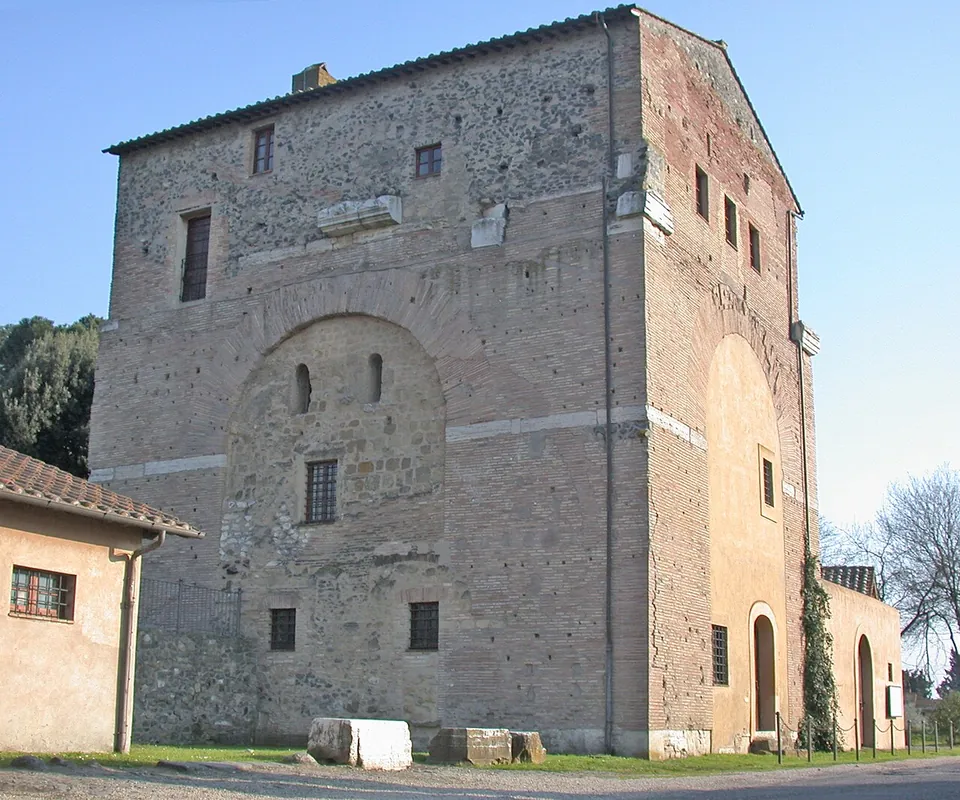
Photo: MM · Public domain · Commons
18 km · arch · Lazio
Arch of Malborghetto
At first sight you see an austere farmhouse rather than an arch (it.wikipedia).
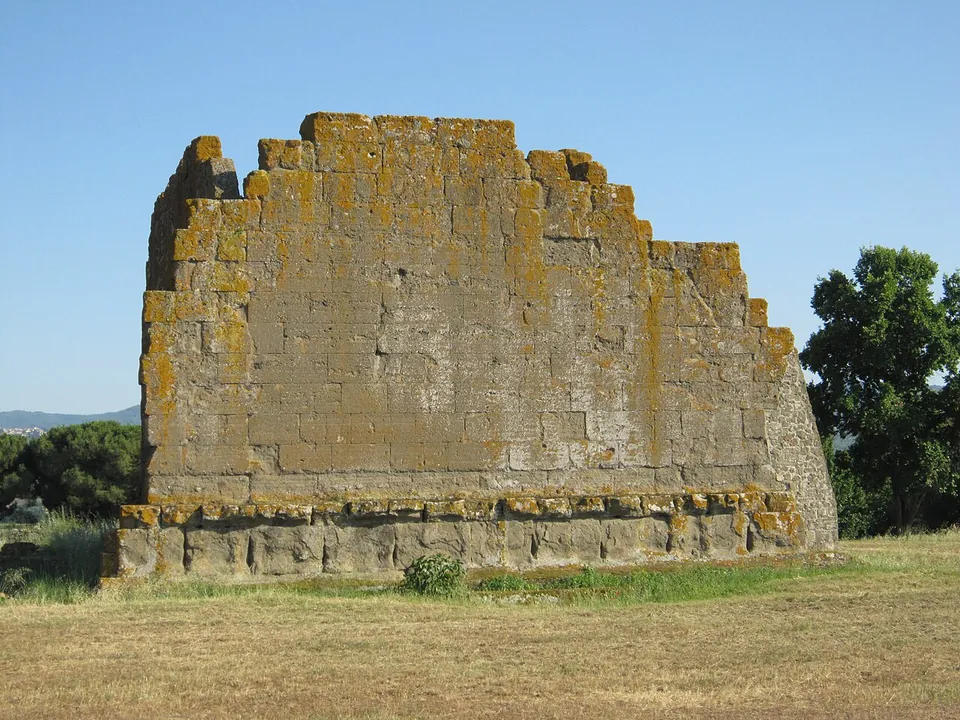
Photo: Carlomorino · CC BY-SA 3.0 · Commons
20 km · city · Lazio
Gabii
The park the state holds covers about 70 hectares on the southern rim of a volcanic crater whose lake was drained in the 19th century (the operator; en.wikipedia).


Straight-line distances.
Sources
Every fact on this page comes from the records below, each used under the licence noted.