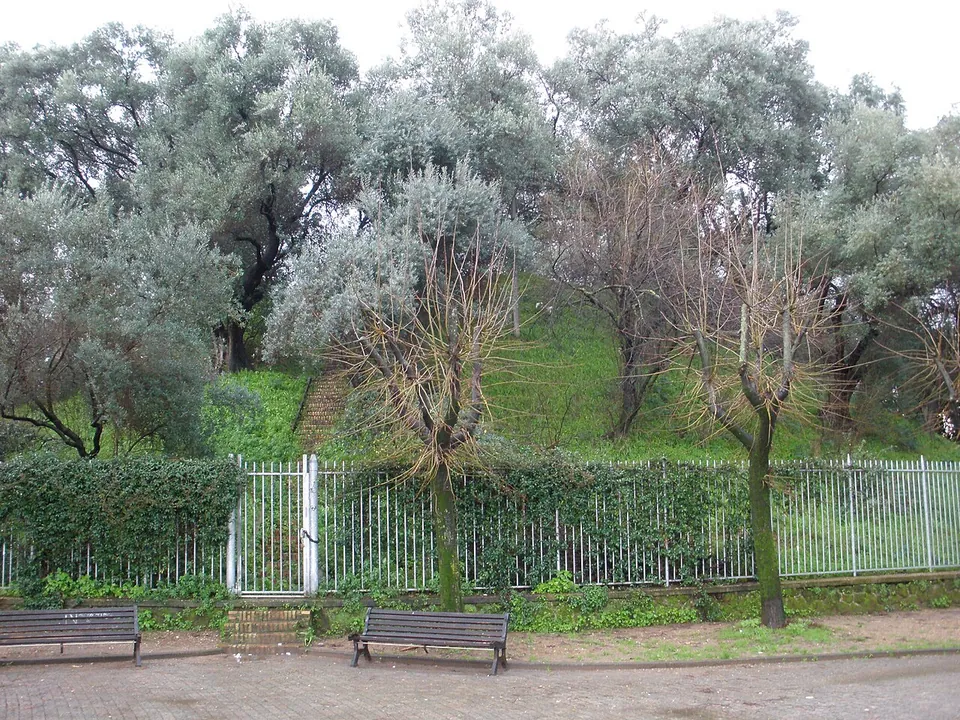


Monte del Grano is a great Roman tumulus tomb of the 2nd century AD, hidden under a mound of olive trees in a public park in Rome’s Tuscolano district (it.wikipedia), about 6 km south-east of the centre. Among Rome’s tumulus tombs only Hadrian’s and Augustus’s are larger (Turismo Roma). From the park you see a grassy hill about 12 m high (it.wikipedia); the tomb itself, a long corridor and a round chamber 10 m across, opens only on booked dates.
What is there today
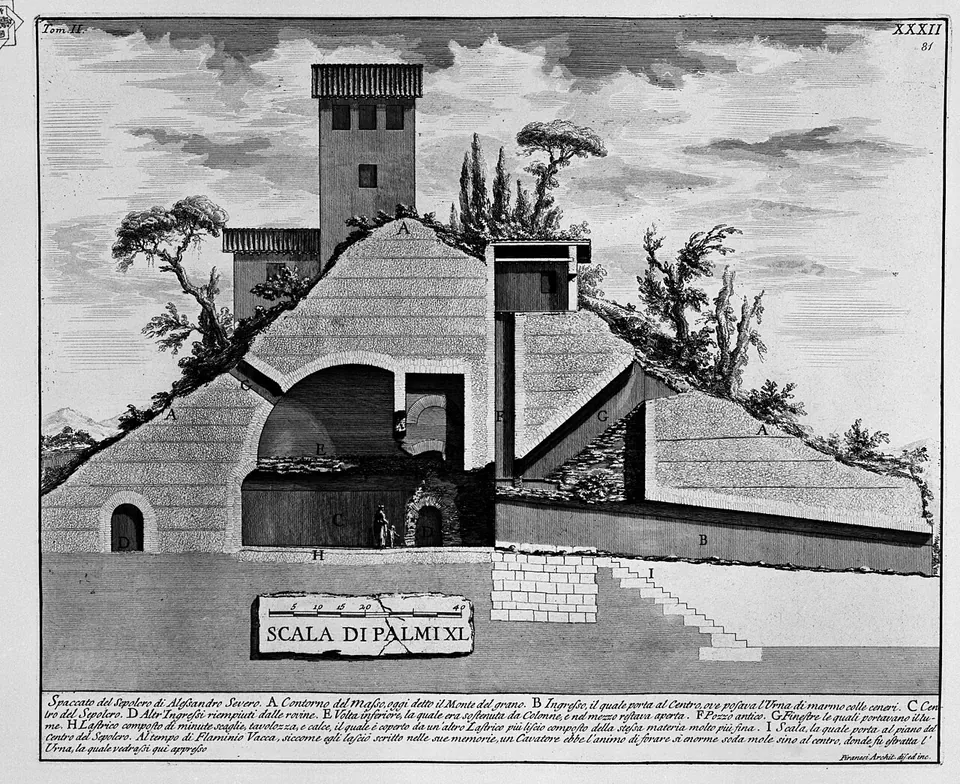
Outside. The mound sits behind its own railing in the Parco XVII Aprile 1944, a neighbourhood park with paths, lawns, a children’s play area and a dog area (Turismo Roma). In antiquity the tomb was probably ringed by a circular drum of travertine blocks carrying a mound in the shape of a truncated cone, covered in plants, on the Hellenistic model best known from the Mausoleum of Augustus (Sovrintendenza; Turismo Roma). That stone casing was stripped for lime at the end of the 14th century (Turismo Roma; it.wikipedia gives 1387), leaving the earth mound you see now.
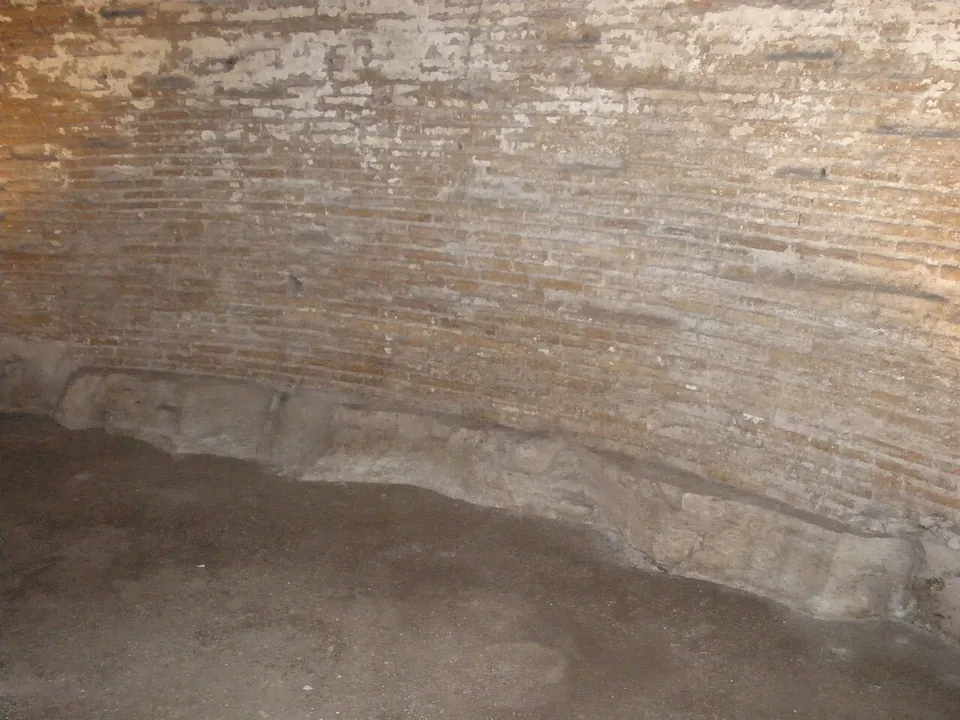
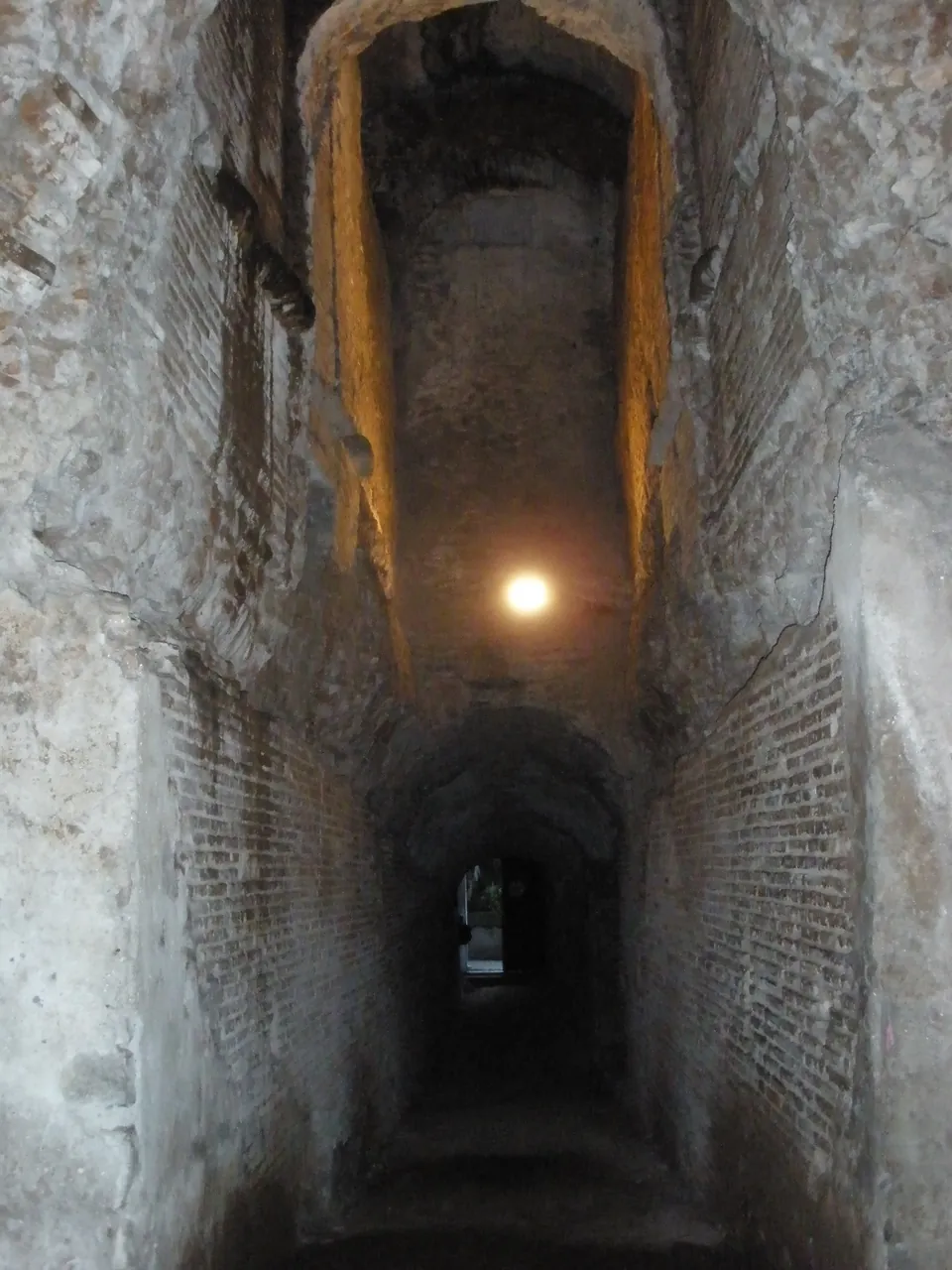
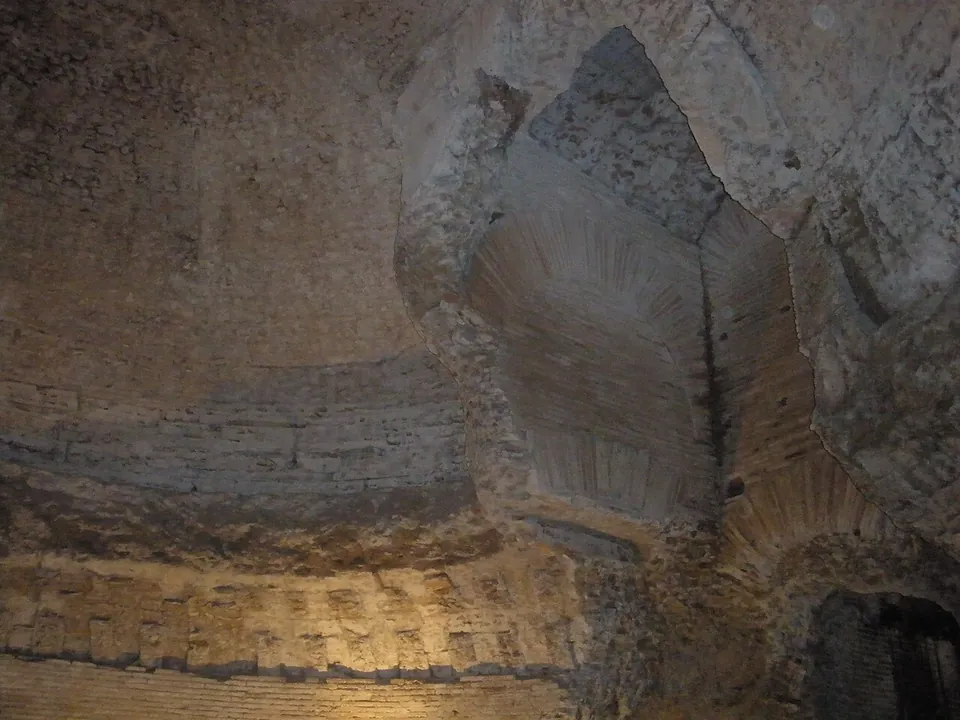
Inside. A marble doorway, which is not the original entrance, opens into a corridor 21 m long that ends in the circular burial chamber, 10 m in diameter. A vault once divided the chamber into two floors; it has collapsed, but the line where it sprang from the wall is still visible. A small upper room opened where the corridor meets the chamber, and two slanting shafts brought light and air into the corridor and the chamber (Sovrintendenza).
The best-known find is elsewhere: a large carved marble sarcophagus, taken from the tomb at the end of the 16th century, is now in the Capitoline Museums (Sovrintendenza; Turismo Roma).
Is it worth the trip?
Only with a booking. On an ordinary day this is a hill of olive trees behind a fence in a pleasant local park, and nothing on the outside shows the tomb within. On one of the operator’s open dates it is something else: a walk down a 21 m Roman corridor into the chamber of the third-largest tumulus tomb in Rome.
The catch is the calendar. Individual visits run on a few dates a year, announced each quarter; for October to December 2026 there was one, on 14 October (Sovrintendenza). If you are in Rome on such a date, or can join a group with its own guide, it is cheap and easy to reach. If not, it is a stop only for someone already in the neighbourhood, and the arches of the Aqua Marcia at the Mandrione are about a kilometre away.
Getting there
The mound stands in the public park of Piazza dei Tribuni (Sovrintendenza), at the fourth kilometre of the Via Tuscolana (Turismo Roma). Porta Furba/Quadraro station on metro line A is about 190 m away, and the Tuscolana/Mamili bus stop about 170 m (OpenStreetMap). A garage about 100 m from the mound and a car park on Largo dei Quintili about 175 m away are mapped (OpenStreetMap).
The interior is entered by the gate of the public park opposite Via Asconio Pediano 14, and it is accessible to wheelchair users. Every visit has to be booked on 060608 (daily 09.00–19.00): groups and associations of up to 30 with their own guide, or individual visitors on the dates in the quarterly calendar. A ticket is €4, reduced €3, paid in cash on site, and free for residents of Rome and its metropolitan area and for MIC Card holders; a guided tour is not included. Occasionally the Sovrintendenza runs free special openings with guides on hand, as on Sunday 7 June 2026 from 10.00 to 13.00 (Sovrintendenza, read 23 October 2026 — check before travelling). Rome’s tourism portal still reports the site closed since August 2024 for works under the national recovery plan, but the operator’s own access page of 24 September 2026 lists it as open to the public.
Visiting details
- Opening hours
- The park round the mound is a public park; no opening hours are published for it. The tomb's interior opens by booking only, on 060608 (daily 09.00–19.00) - groups of up to 30 with their own guide, or individual visitors on the dates the operator publishes each quarter. The only individual date for October to December 2026 was 14 October.
- Tickets
- €4, reduced €3, paid in cash on site; free for residents of Rome and its metropolitan area and for MIC Card holders. A guided tour is not included and has to be arranged separately. The occasional special openings with guides on hand are free.
- Parking
- A garage (Autorimessa Modestino) about 100 m from the mound and a car park on Largo dei Quintili about 175 m away (OpenStreetMap); the metro is easier.
Before you go
- The interior is not open on demand. Individual visits run on a handful of dates a year, announced quarterly on the Sovrintendenza's access page, and the next calendar (January to March 2027) was not yet published on 23 October 2026. Without a booked date you see the outside of the mound only.
- Rome's tourism portal still says the mausoleum has been closed since 1 August 2024 for works under Italy's recovery plan (PNRR). The operator's own access page, dated 24 September 2026, lists it among the sites open to the public and scheduled it for 14 October 2026; book through 060608 and they will confirm.
Hours and prices checked 23 October 2026 on the operator's own site. Confirm before travelling.
History
The tomb stood on a road, now lost, between the Via Labicana and the Via Latina, in a fertile stretch of the suburbs crossed by most of the aqueducts that supplied Rome (Sovrintendenza). Brick stamps in the walls of the chamber and corridor date its building to the 2nd century AD: the Sovrintendenza puts it in the middle of the century, Turismo Roma in the time of Hadrian. Who was buried here is not known. The size of the tomb and the richness of the sarcophagus point to someone of high rank, probably of the imperial family or a senatorial one (Sovrintendenza).
The sarcophagus was taken out in 1594, according to the humanist Flaminio Vacca. Its lid, shaped as a couch, carries two half-reclining figures that were identified with the emperor Alexander Severus (222–235) and his mother Julia Mamaea, and the tomb was dated to his time (Sovrintendenza; Turismo Roma). That identification has since been shown to be unfounded, and the brick stamps point to a building older than his reign (Sovrintendenza; Turismo Roma), although recent studies by Erminio Paoletta, cited by it.wikipedia, argue again that it was the emperor’s tomb. The sarcophagus is decorated with the story of Achilles on Scyros, and some accounts claim the Portland Vase was found inside it (it.wikipedia).
The popular name, known since the Middle Ages, comes from the tomb’s shape, like an upturned modius grani, a Roman grain measure (Sovrintendenza; Turismo Roma). It was in use by 1386, according to documents in the Archivio Storico Capitolino (it.wikipedia). In the Middle Ages the tomb lay within a large estate called the Casale delle Forme, after the nearby aqueducts (formae) (Sovrintendenza). A tower was built on its top in the 16th century and appears in Piranesi’s engraving; it fell in a storm in 1900 (Turismo Roma). As the city spread round it in the 20th century, the Comune di Roma expropriated the area in 1966 and made it a public park (Sovrintendenza). The park is named after 17 April 1944, the day German troops rounded up the Quadraro and deported more than 900 of its men (Turismo Roma).
More photographs


Nearby
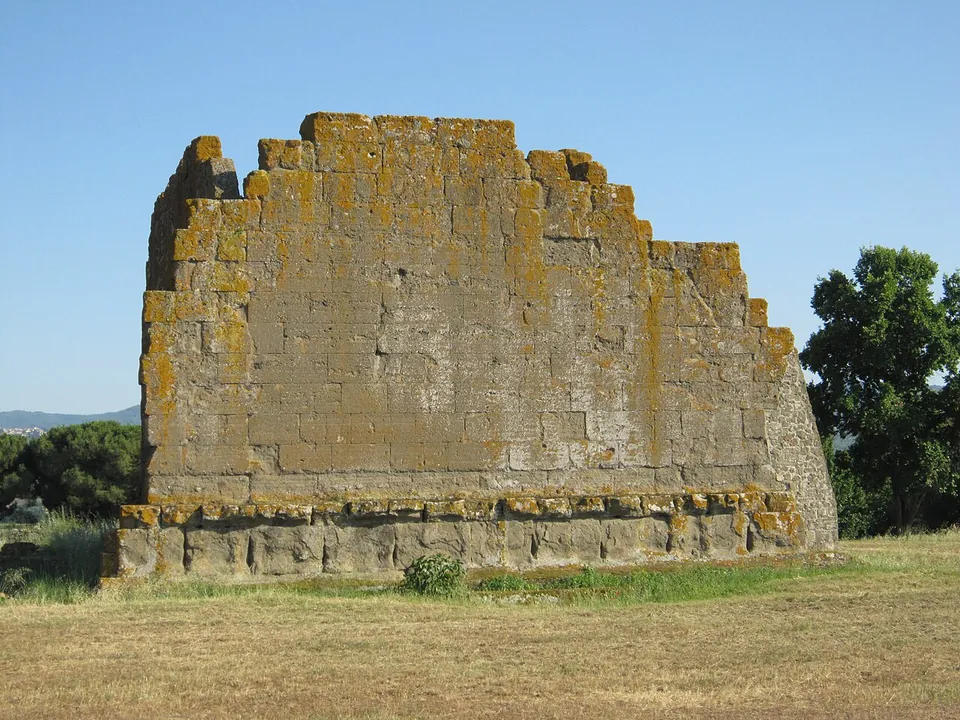
Photo: Carlomorino · CC BY-SA 3.0 · Commons
14 km · city · Lazio
Gabii
The park the state holds covers about 70 hectares on the southern rim of a volcanic crater whose lake was drained in the 19th century (the operator; en.wikipedia).
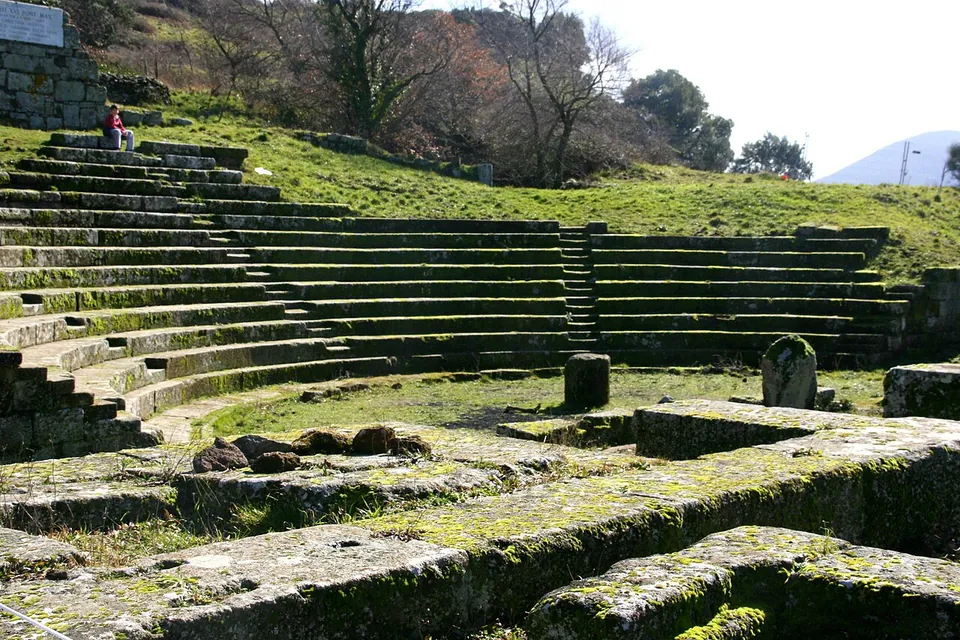
Photo: Luiza Serpa Lopes · Public domain · Commons
15 km · city · Lazio
Tusculum
The visitor route runs mainly through the forum, with the theatre halfway round (the operator).
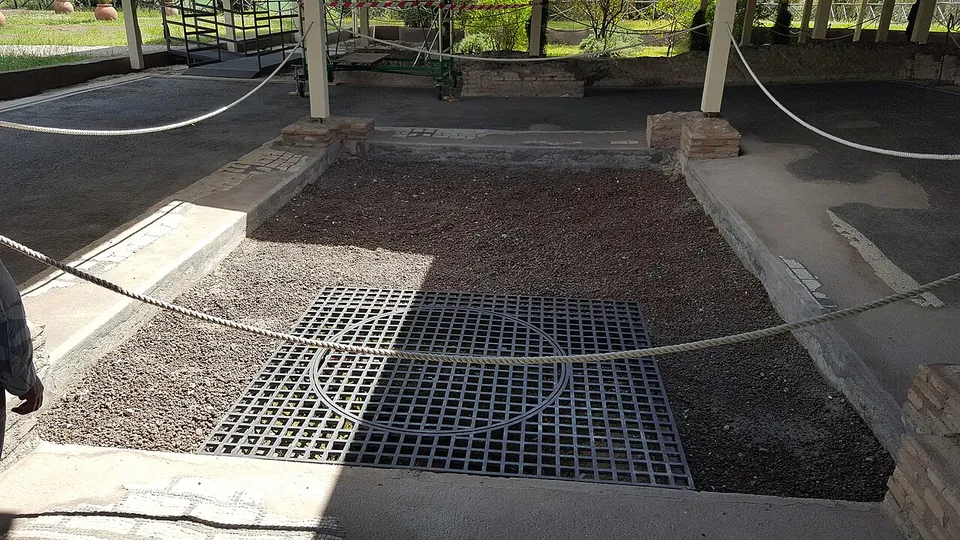
Photo: MumblerJamie · CC BY-SA 2.0 · Commons
16 km · villa · Lazio
Villa of Livia
The operator describes the private wing with the bedrooms of Livia and the emperor, an atrium and a small inner garden, and the large reception rooms that open onto a peristyle; the rooms once had painted walls and floors of mosaic and cut marble (Soprintendenza Speciale di Roma).


Straight-line distances.
Sources
Every fact on this page comes from the records below, each used under the licence noted.
| Source | Licence |
|---|---|
| Pleiades 422973 | CC BY |
| Wikidata Q3862149 | CC0 |
| OpenStreetMap way/317519597 | ODbL |
| Wikipedia (it) — Monte del Grano | CC BY-SA 4.0 |
| Sovrintendenza Capitolina — Mausoleo di Monte del Grano (the operator) | licence not recorded |
| Sovrintendenza Capitolina — access and booking for the city's monuments, 24 September 2026 (the operator) | licence not recorded |
| Sovrintendenza Capitolina — individual visiting dates, October to December 2026 (the operator) | licence not recorded |
| Sovrintendenza Capitolina — special opening, 7 June 2026 (the operator) | licence not recorded |
| Turismo Roma — Mausoleo di Monte del Grano (Roma Capitale's tourism portal) | licence not recorded |
| Turismo Roma — Monte del Grano Mausoleum, German edition (Roma Capitale's tourism portal) | licence not recorded |
| Turismo Roma — Giardino Via Monte del Grano - Parco XVII Aprile 1944 | licence not recorded |