

The Domus Aurea, the “Golden House”, is the palace Nero built over the ruins of central Rome after the fire of 64, and what you visit is its surviving wing on the Oppian Hill: a set of vaulted rooms buried under later baths and now underground, a few minutes’ walk from the Colosseum (en.wikipedia; the operator). It opens only on Fridays, Saturdays and Sundays, by booked visit, for €26 with the educational tour and virtual reality or €18 for the two plain visits a day.
What is there today
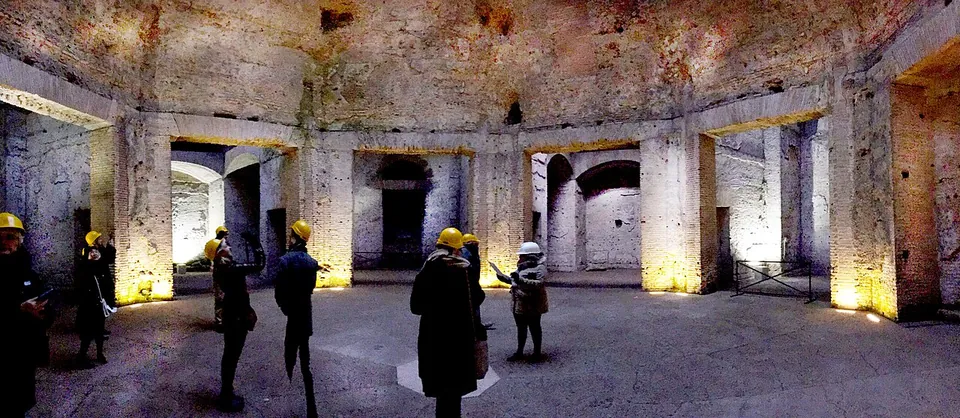
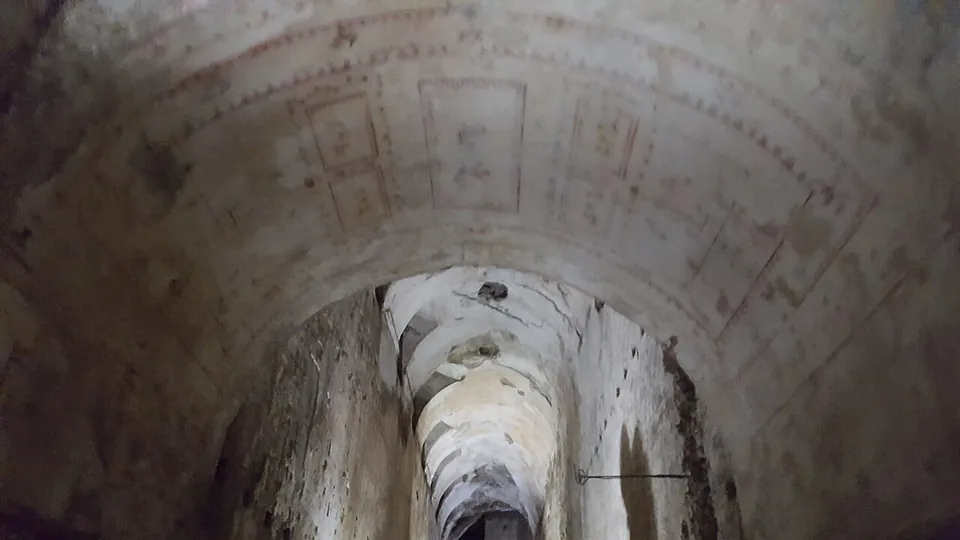
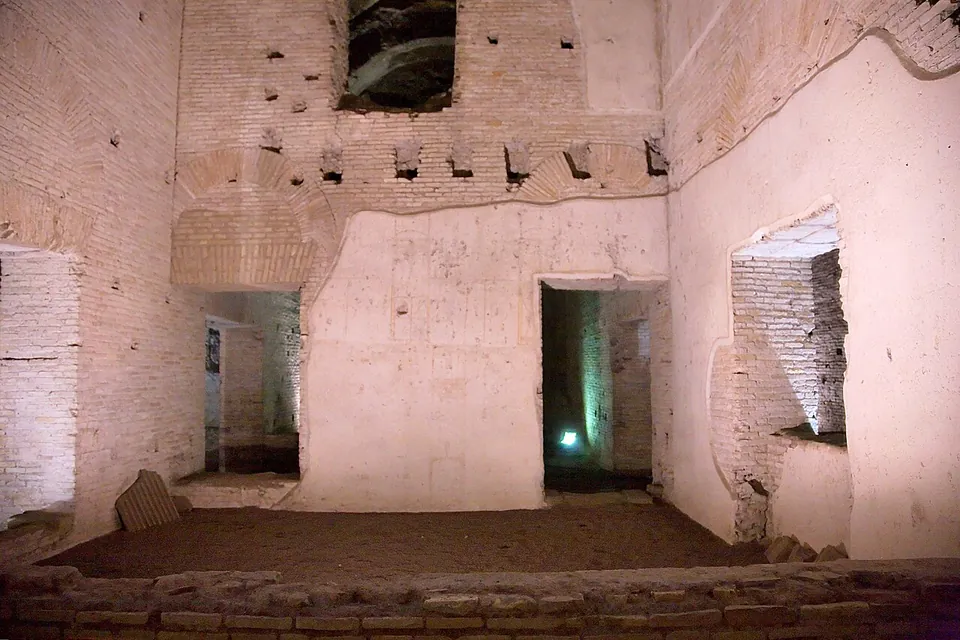
The Oppian pavilion. Of an estate that took in parts of the Palatine, the Esquiline and the Caelian, the part you can visit is one sector on the Oppian, a block about 300 m long and 190 m wide (it.wikipedia) with over 150 rooms, about a third of them open to the public (en.wikipedia); other remains lie beneath the later palaces on the Palatine (en.wikipedia). It survives because Nero’s successors stripped it and filled the rooms with earth up to the vaults to carry new buildings on top (the operator), so you walk through it as a series of high, dim chambers and corridors below ground. In the main rooms the marble that faced the lower walls has been taken away; the paintings that covered everything else remain in places, fragmentary and fading, on the vaults of several rooms (it.wikipedia). The western half is planned round a large rectangular courtyard; the eastern half, richer in design, is centred on an octagonal hall (en.wikipedia).
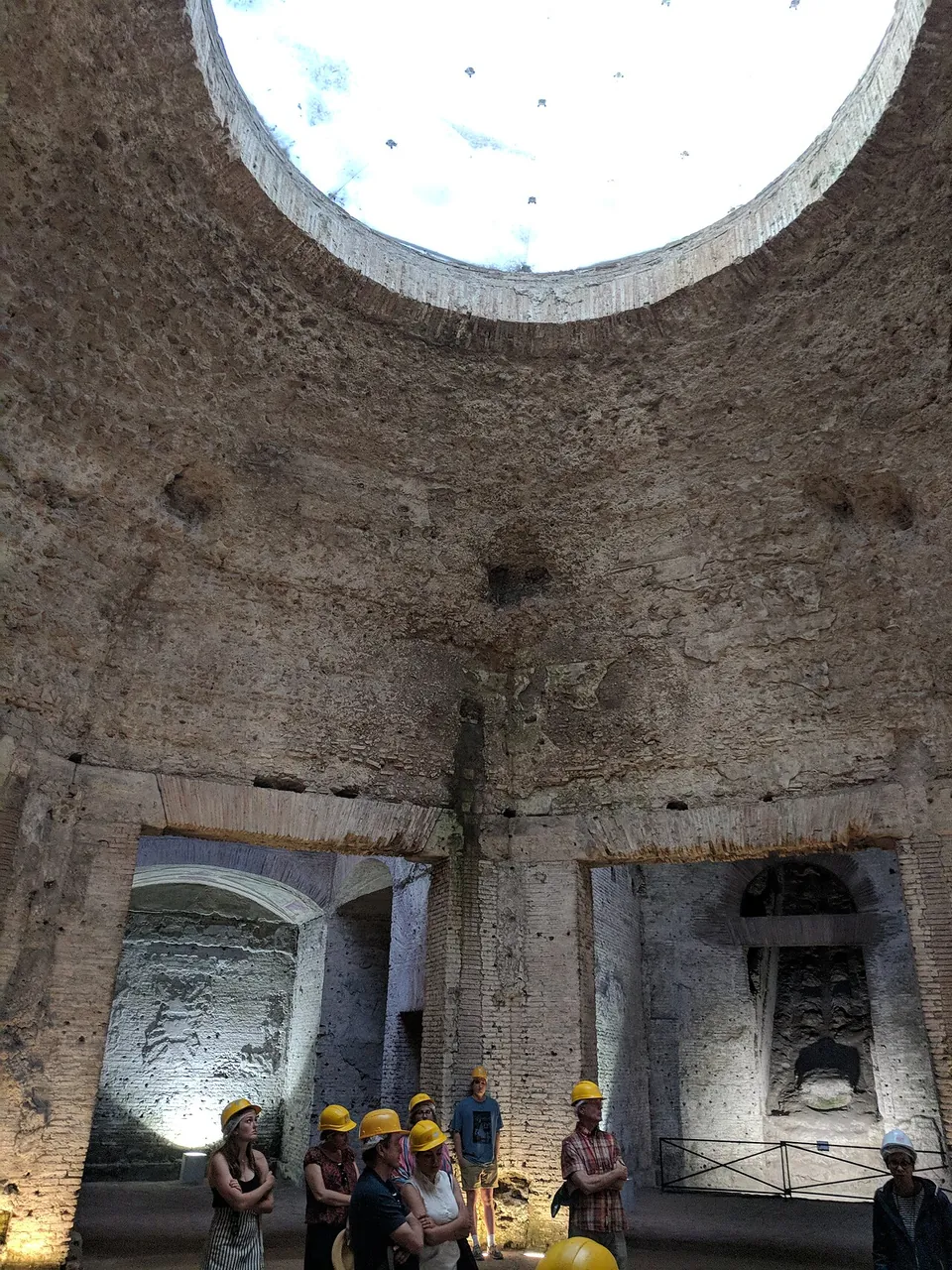
The octagonal room. This is the set piece: a domed dining hall with a large oculus in the centre, the dome built in concrete over an octagonal base, an early use of Roman concrete construction (en.wikipedia; it.wikipedia). Some scholars see it as a precedent for the Pantheon (en.wikipedia). Two suites open off its sides, known from their paintings as the room of Achilles on Skyros and the room of Hector and Andromache (en.wikipedia).
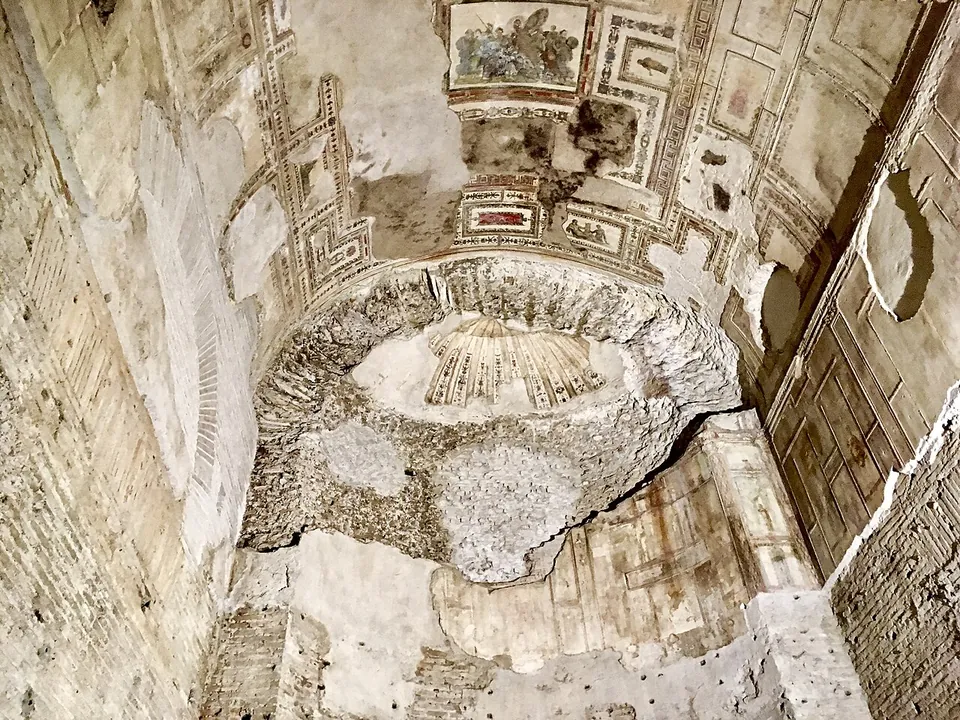
The paintings. The decoration was directed by the painter Fabullus (the operator; it.wikipedia; the name is also given as Famulus), in what is now called the Fourth Style (en.wikipedia). The vault of the nymphaeum of Polyphemus, with Ulysses offering the Cyclops a cup of wine, keeps part of one of the oldest, if not the oldest, vault mosaics in existence (it.wikipedia, Domus Aurea (colle Oppio)). In 2018–19, during restoration, a barrel-vaulted room never explored before was found, painted with Pan, centaurs, panthers and a sphinx; the published dates of the find differ by a few months (en.wikipedia; it.wikipedia).
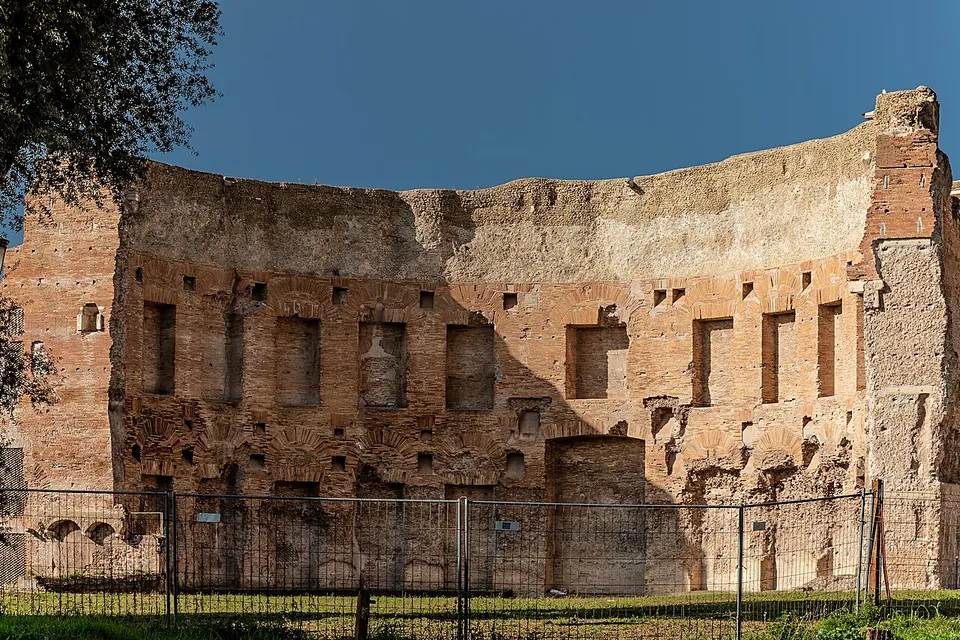
The Baths of Trajan, above. The park over the palace, the Parco del Colle Oppio, was laid out in 1935–36 over the baths that buried it (it.wikipedia, Terme di Traiano). Dedicated in 109, they covered about 330 m by 315 to 340 m; published figures differ (en.wikipedia; it.wikipedia). Their central building is gone, but parts of the enclosure stand in the park: the south-west exedra with two tiers of large niches, perhaps a library, the north-east exedra with eleven niches under a coffered half-dome, and the exedra of one of the palaestrae near the middle of the park (it.wikipedia, Terme di Traiano).
Is it worth the trip?
Yes, if you plan for it. Here you stand inside Nero’s palace, under its own vaults, rather than looking at a ruin from outside, and the domed octagonal room is the high point. The caveats are practical. It opens only three days a week, by a timed visit, so it has to be booked into a stay rather than added on the day; it is underground and cold, about 10 °C (the operator); and the painting is fragmentary, so this is a place of spaces and architecture more than of colour. It is a separate ticket from the Colosseum’s and on top of it.
Getting there and what it costs
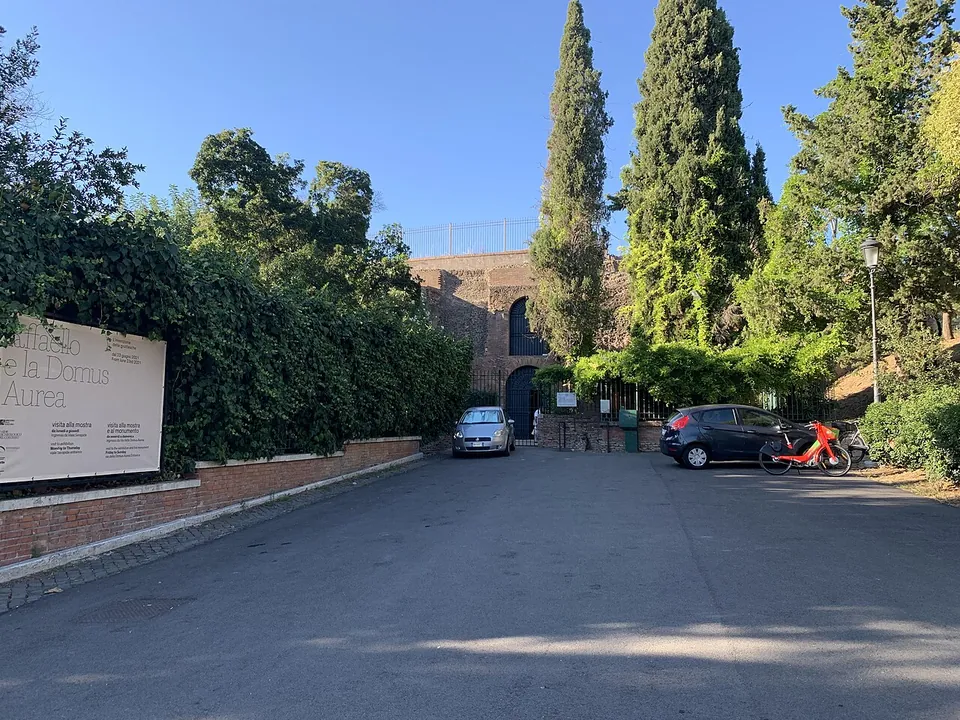
The entrance is on Viale della Domus Aurea, reached through the Colle Oppio park from the Via Labicana side (the operator), about 280 m from the Colosseum. The operator gives Colosseo metro station (line B) and Colosseo – Fori Imperiali (line C), buses 51, 85 and 87 and tram 3; a bus stop named Labicana/Colosseo is mapped 120 m from the site (OpenStreetMap). The operator lists the site as accessible, with toilets and a bookshop.
It is open on Fridays, Saturdays and Sundays only, and closed on the first Sunday of every month and on a list of further closing days on the operator’s page. The operator’s ticket page gives visits every 15 minutes from 09.00, with last entry at 15.30, plus two visits without the tour at 12.00 and 17.00; its page on the site gives 09.15 to 17.15. The time slots offered in the ticket shop are the ones that count.
- With the educational tour and virtual reality: €26.
- Without them, at 12.00 or 17.00: €18; €2 for EU citizens aged 18 to 24.
Free entry and the legal reductions apply only to the €18 part of the price. Tickets are booked online at ticketing.colosseo.it, are issued in the visitor’s name, and are checked against an identity document (colosseo.it, read 14 October 2026).
Visiting details
- Opening hours
- Fridays, Saturdays and Sundays only. The operator's ticket page gives visits every 15 minutes from 09.00, last entry 15.30, plus two visits without the tour at 12.00 and 17.00; its Domus Aurea page gives 09.15–17.15. Closed on the first Sunday of every month and on further closing days listed on the operator's page.
- Tickets
- €26 with the educational tour and virtual reality; €18 for the 12.00 and 17.00 visits without them, €2 for EU citizens aged 18–24. Free entry and the legal reductions apply only to the €18 part of the price. A separate ticket from the Colosseum, Forum and Palatine one, booked online at ticketing.colosseo.it.
Before you go
- The rooms are underground and about 10 °C inside, whatever the weather; the operator asks visitors to wear comfortable shoes and suitable clothing.
- Not open Monday to Thursday, and closed on the first Sunday of the month, the Colosseum's free day.
- Tickets for the park are issued in the visitor's name; carry an identity document to show with the ticket.
Hours and prices checked 14 October 2026 on the operator's own site. Confirm before travelling.
History
The fire of 64 destroyed a large part of the city, and Nero took the cleared ground for a new palace, replacing and extending his first one, the Domus Transitoria (en.wikipedia). It was less a palace than a landscaped estate (de.wikipedia): buildings set among gardens, woods and vineyards around an artificial lake in the valley where the Colosseum now stands, designed by the architects Severus and Celer (the operator). Published estimates of its extent run from about 40 to 260 hectares, since much of it has never been excavated (en.wikipedia; it.wikipedia; de.wikipedia). A colossal bronze statue of Nero, between 30 and 35.5 m high by different accounts, stood outside the main entrance in a porticoed atrium (en.wikipedia). Construction was nearly complete when Nero died in 68, according to en.wikipedia; it.wikipedia thinks it was probably never finished. Suetonius has Nero say, when he dedicated it, that he had at last begun to live like a human being (en.wikipedia).
His successors erased it. The lake was drained for the Flavian Amphitheatre, the Colosseum, and the statue was later moved beside it by Hadrian, possibly giving the amphitheatre its name (en.wikipedia). The Oppian building stayed in use, Vitellius living there in 69, until it burned under Trajan in 104 (en.wikipedia). His architect, Apollodorus of Damascus (Pleiades), then demolished its upper floor and used the rooms below, filled with earth, as the platform for the Baths of Trajan (it.wikipedia). The baths were used until the early 5th century; a cemetery was in use in front of one exedra from the 5th to the 7th century (en.wikipedia, Baths of Trajan).
Buried, the rooms were forgotten until the end of the 15th century, when a young Roman fell through a cleft in the hillside into what looked like a painted grotto (en.wikipedia). Artists including Pinturicchio, Ghirlandaio, Raphael and Giulio Romano had themselves let down to copy the paintings (the operator), and the “grotesques” named after these grottoes spread through Renaissance art, most visibly in Raphael’s loggias in the Vatican (en.wikipedia). Later visitors scratched their names into the frescoes, Casanova and the Marquis de Sade among them (en.wikipedia). Exposure let in the damp: humidity inside can reach 90%. The site closed at the end of 2005, part reopened in 2007 and closed again in 2008, 60 m² of a gallery vault collapsed in 2010, and it reopened in 2014 (en.wikipedia). The surviving part of the Domus Aurea is on UNESCO’s World Heritage List with the historic centre of Rome, since 1980 (it.wikipedia).
More photographs




Nearby
Photo: MumblerJamie · CC BY-SA 2.0 · Commons
12 km · villa · Lazio
Villa of Livia
The operator describes the private wing with the bedrooms of Livia and the emperor, an atrium and a small inner garden, and the large reception rooms that open onto a peristyle; the rooms once had painted walls and floors of mosaic and cut marble (Soprintendenza Speciale di Roma).
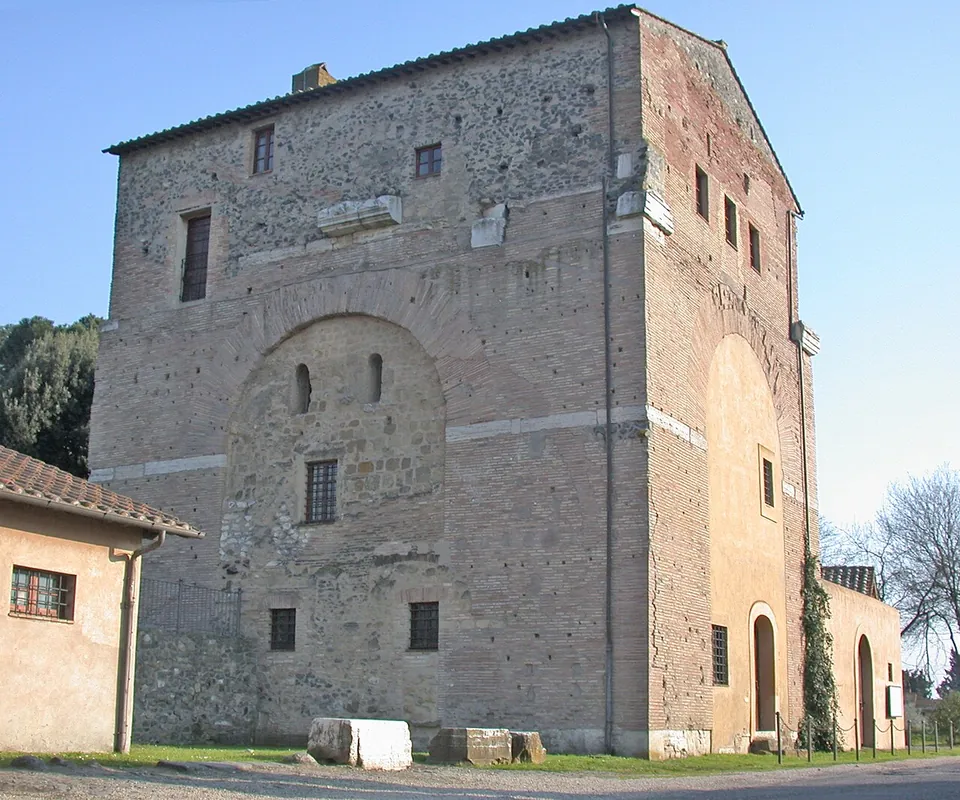
Photo: MM · Public domain · Commons
18 km · arch · Lazio
Arch of Malborghetto
At first sight you see an austere farmhouse rather than an arch (it.wikipedia).
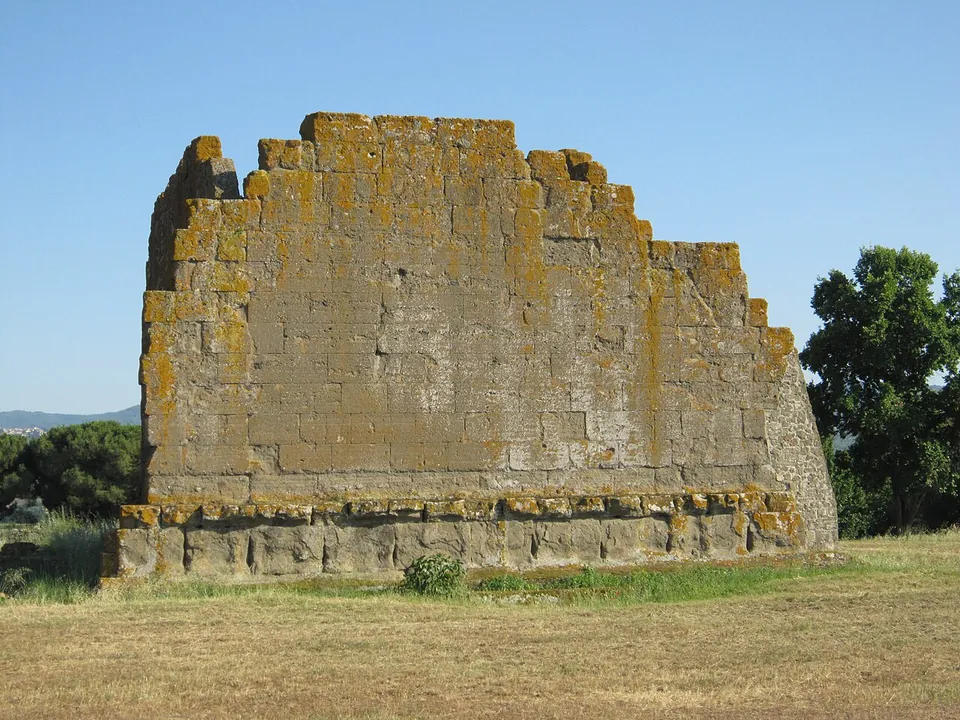
Photo: Carlomorino · CC BY-SA 3.0 · Commons
19 km · city · Lazio
Gabii
The park the state holds covers about 70 hectares on the southern rim of a volcanic crater whose lake was drained in the 19th century (the operator; en.wikipedia).


Straight-line distances.
Sources
Every fact on this page comes from the records below, each used under the licence noted.
| Source | Licence |
|---|---|
| Pleiades 410440793 | CC BY |
| Wikidata Q622438 | CC0 |
| Vici.org 10119 | CC BY-SA (text), CC0 (metadata) |
| OpenStreetMap node/13119048948 | ODbL |
| Wikipedia (en) — Domus Aurea | CC BY-SA 4.0 |
| Wikipedia (it) — Domus Aurea | CC BY-SA 4.0 |
| Wikipedia (it) — Domus Aurea (colle Oppio) | CC BY-SA 4.0 |
| Wikipedia (de) — Domus Aurea | CC BY-SA 4.0 |
| Wikipedia (fr) — Domus aurea | CC BY-SA 4.0 |
| Wikipedia (en) — Baths of Trajan | CC BY-SA 4.0 |
| Wikipedia (it) — Terme di Traiano | CC BY-SA 4.0 |
| Wikidata — Domus Aurea on the Oppian (Q21328958) | licence not recorded |
| Pleiades — Thermae Traiani | licence not recorded |
| Parco archeologico del Colosseo — Domus Aurea (the operator) | licence not recorded |
| Parco archeologico del Colosseo — Domus Aurea ticket | licence not recorded |
| Parco archeologico del Colosseo — hours and tickets | licence not recorded |