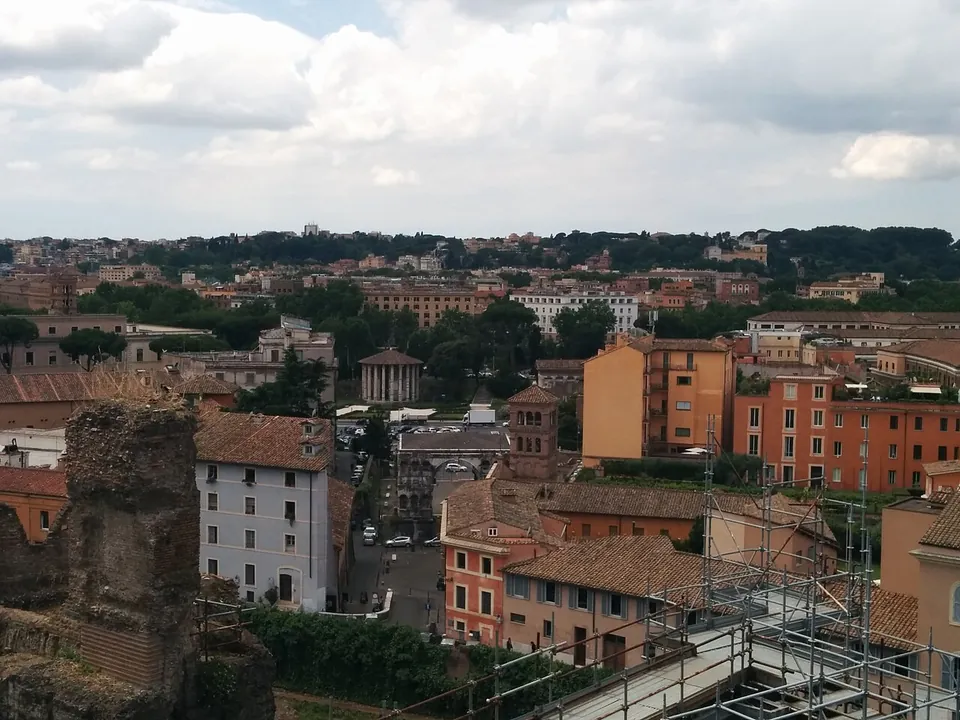


The Forum Boarium was ancient Rome’s cattle market, by the Tiber between the Capitoline, Palatine and Aventine hills, and two temples of the Roman Republic still stand there nearly intact, a few steps apart in a public garden on Piazza della Bocca della Verità (en.wikipedia; it.wikipedia; OpenStreetMap). You see them from outside, for nothing, and two Roman arches, what is left of Rome’s first stone bridge and the Mouth of Truth are all within a few minutes’ walk.
What is there today
Two temples of the Republic stand in the garden at the heart of the forum, and two Roman arches, the remains of a Roman bridge and the outlet of the city’s great drain lie within about 200 m of them.
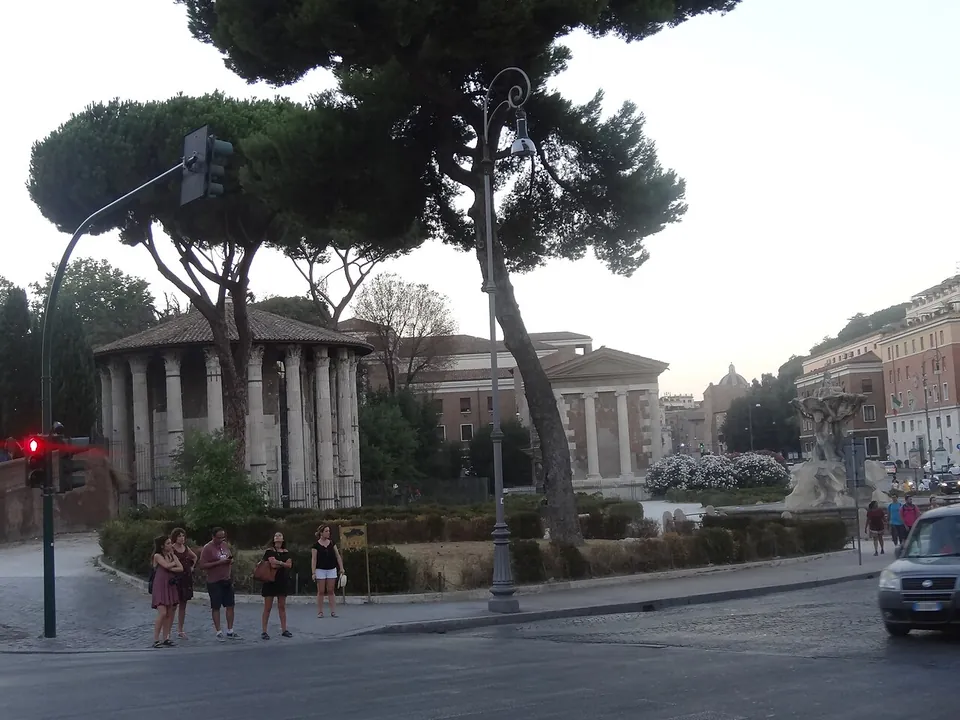
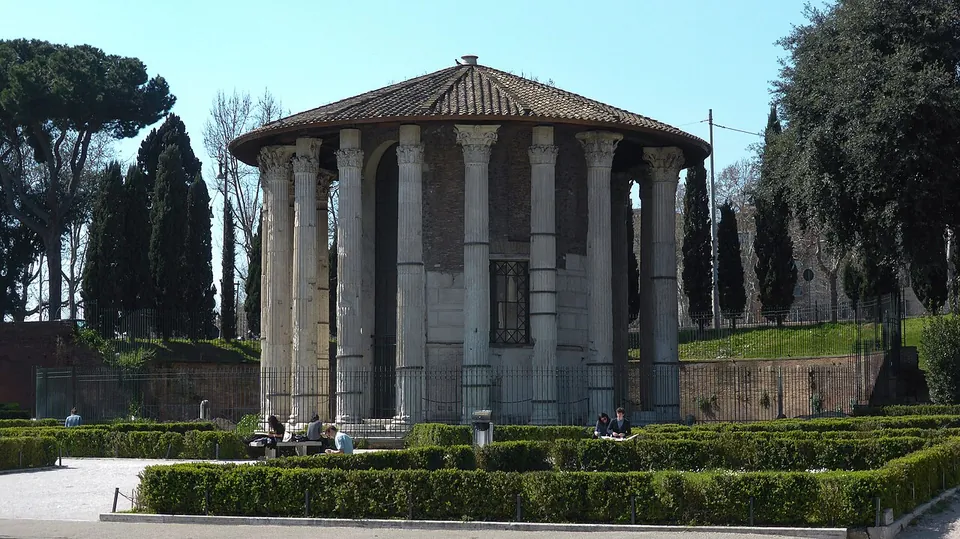
The two temples. The round Temple of Hercules Victor is considered the oldest marble building surviving in Rome. A Roman olive-oil merchant, Marcus Octavius Herennus, had it built towards the end of the 2nd century BC, probably to a design by a Greek architect, and an inscription naming Hercules Olivarius, Hercules of the oil traders, settled who it belonged to (the operator). Twenty columns ringed it, 14.8 m across, and nineteen still stand; the entablature has gone, and the present tiled roof is a rebuilding of 1996 (en.wikipedia; it.wikipedia). Because it is round, it was long taken for a temple of Vesta (the operator).
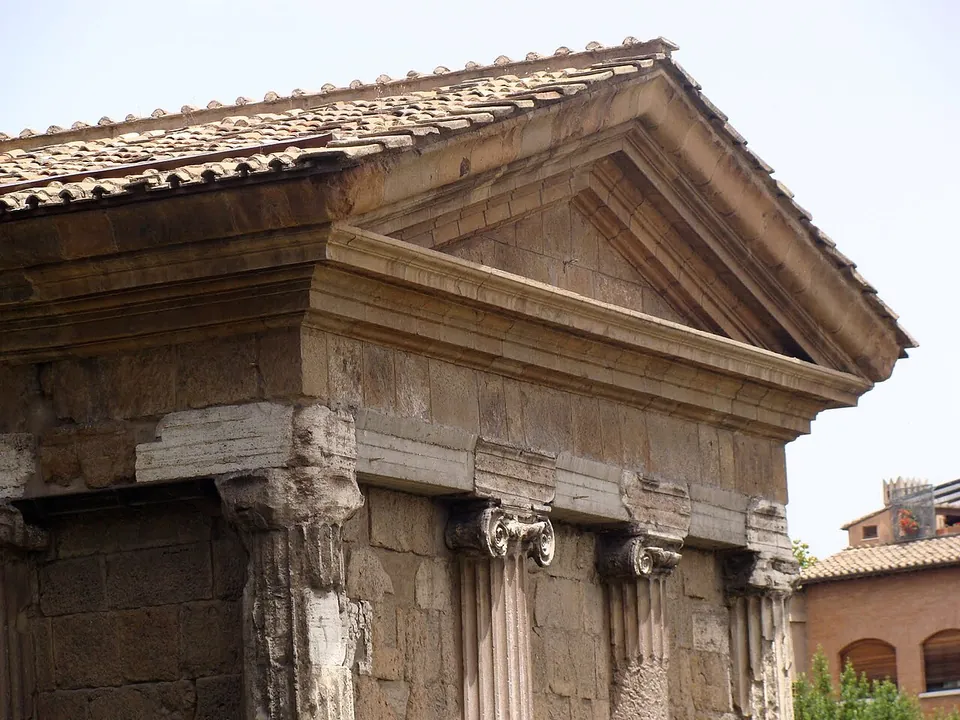
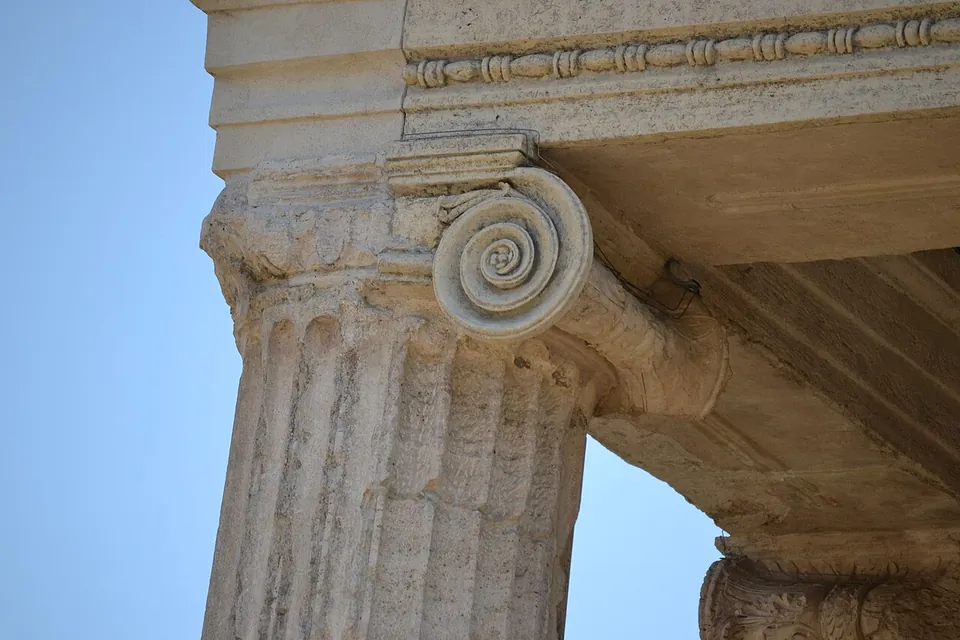
A few steps away, the rectangular Temple of Portunus, a river god, is one of the best-preserved buildings of ancient Rome: four Ionic columns across the front and half-columns set into the walls of the cella, built between 80 and 70 BC to replace an older temple of the late 4th or early 3rd century BC (the operator). It was known for centuries as the Temple of Fortuna Virilis (en.wikipedia). Both temples owe their survival to having been turned into churches in the Middle Ages (it.wikipedia).
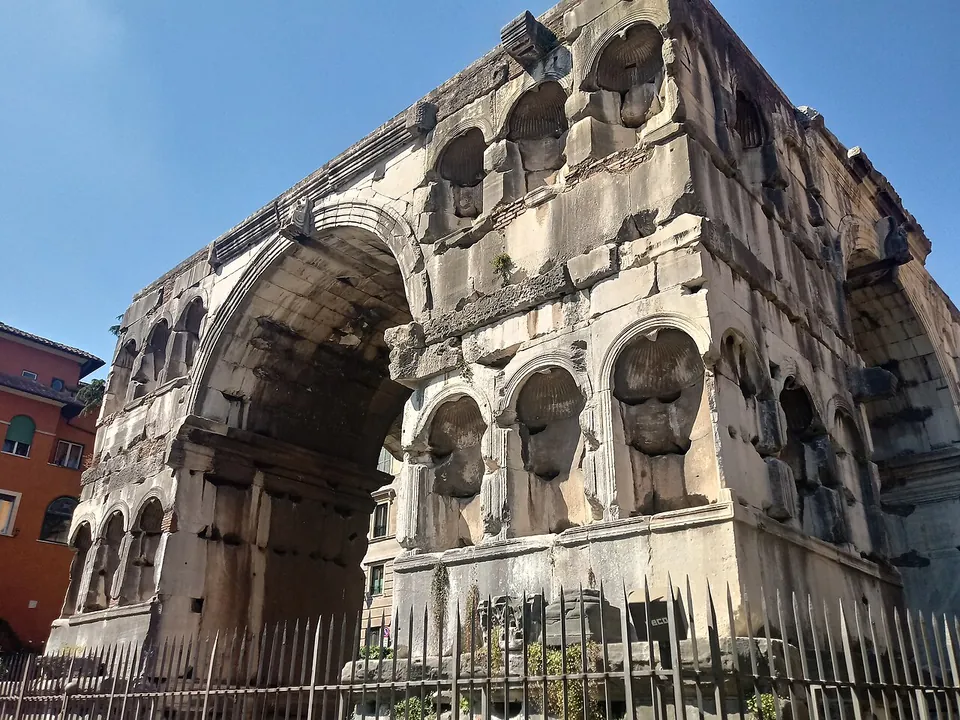
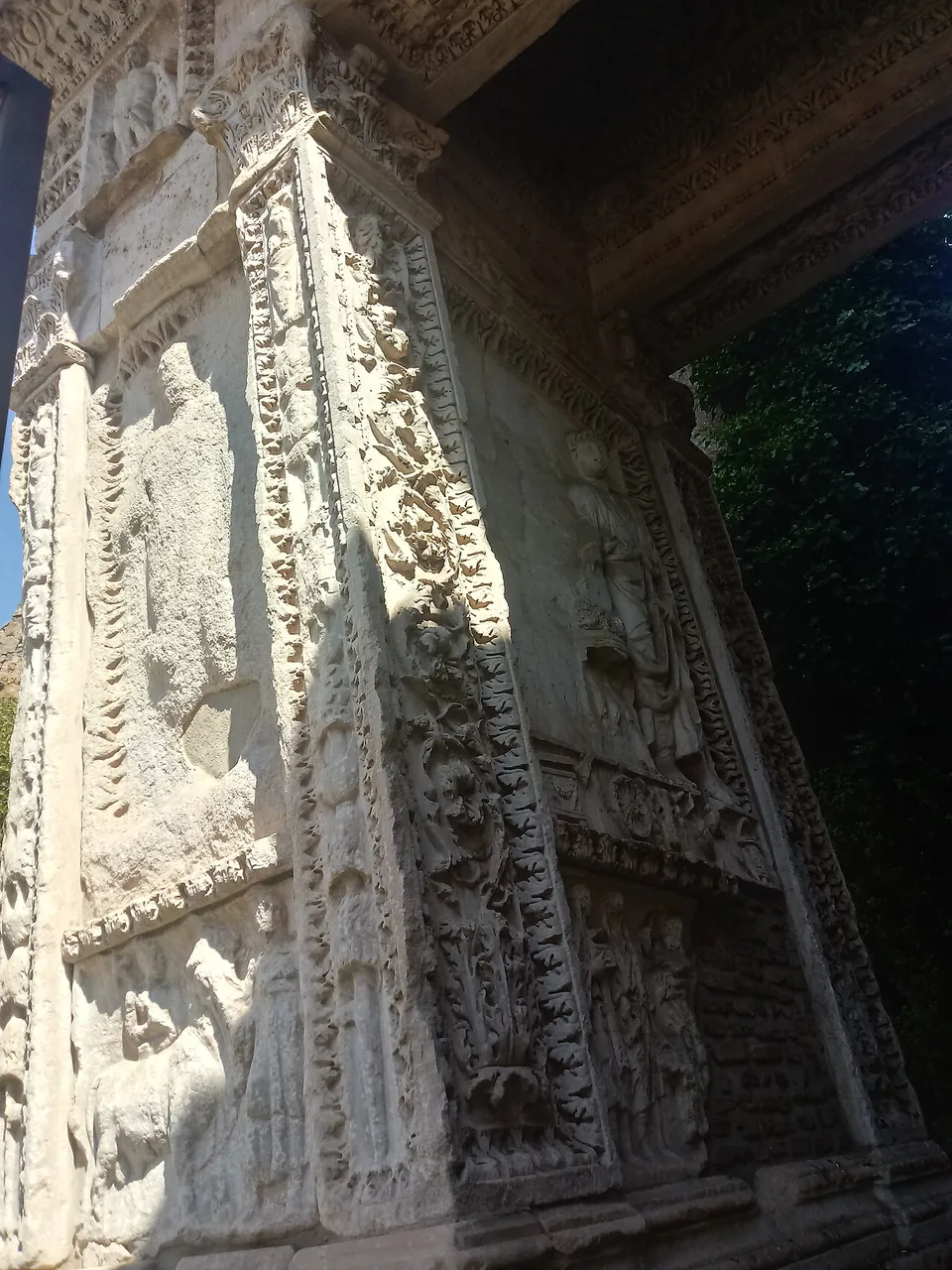
The arches. About 150 m north-east, where the forum met the Velabrum, stands the Arch of Janus, a massive four-sided arch of the 4th century AD and the only one of its kind in Rome (the operator; en.wikipedia). It was built largely of marble taken from older monuments; the niches in its piers stand empty, and its upper storey was pulled down in the 19th century in the belief that it was medieval (en.wikipedia; it.wikipedia). Beside it, with one of its piers built into the church of San Giorgio in Velabro, is the much smaller Arcus Argentariorum, the arch of the bankers, a gateway the bankers and cattle traders of the market dedicated to Septimius Severus and his family in 204, its surfaces covered in carving. The names of Geta and of Caracalla’s wife Plautilla were chiselled out of its inscription after their fall (it.wikipedia).
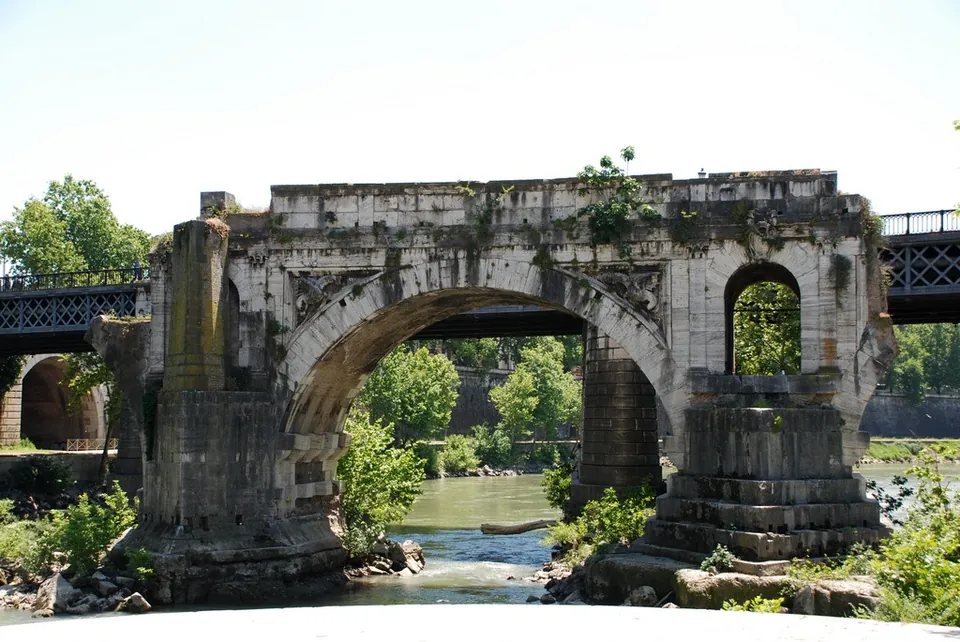
By the river. In the Tiber beside the forum, a single arch in mid-stream is all that stands of the Pons Aemilius, Rome’s first stone bridge, now called the Ponte Rotto, the “broken bridge” (en.wikipedia). The arch itself is from a 16th-century rebuilding; its piers are the bridge’s original ones of the 2nd century BC (it.wikipedia). Near it, by the Ponte Palatino, the outlet of the Cloaca Maxima, the great drain of the city, can still be seen (it.wikipedia).
In the churches. Across the road from the temples, the church of Santa Maria in Cosmedin keeps the Bocca della Verità, the Mouth of Truth, in its portico: a large marble disc carved with a bearded face, probably a Roman drain cover, which legend says will bite the hand of a liar (en.wikipedia; Turismo Roma; the basilica). In the church’s crypt, a platform of tuff blocks has been tentatively identified as the base of the Great Altar of Hercules, the oldest place of Hercules’ cult in Rome (en.wikipedia). San Giorgio in Velabro, a 7th-century church built with columns taken from Roman buildings, keeps fragments of a monumental inscription that may come from the Arch of Janus (en.wikipedia; it.wikipedia).
Is it worth the trip?
Yes, and it costs nothing but a short walk. The temples are the reason: they are standing buildings from the Republic, columns and walls intact, not foundations. With the Arch of Janus, the Ponte Rotto and the Mouth of Truth so close, the area makes an easy stop between the Theatre of Marcellus, about 360 m away, and the Circus Maximus, about 500 m away.
The honest limit is that it is a look from outside. Neither temple can be entered on an ordinary visit, and the Arch of Janus is behind railings (the operator; as the photographs show). The Mouth of Truth, in the church portico, is the one thing here you can go right up to, and it is one of the best-known sights in Rome (Turismo Roma).
Getting there and what it costs
The forum lies on Piazza della Bocca della Verità, about 930 m west of the Colosseum and 600 m from the Roman Forum. Bus stops named Bocca della Verità are 50 to 70 m from the temples (OpenStreetMap), served by lines 44, 83, 170, 716 and 781 (the operator). A paid car park is mapped about 80 m away (OpenStreetMap).
Seeing it from outside is free. The temples’ interiors are not regularly open: the operator has suspended visits to the round temple for works on the area, and opens the Temple of Portunus only for special openings and events (Soprintendenza Speciale di Roma, read 17 October 2026). It has published projects to make both temples accessible, with ramps, walkways and video installations inside, and to restore the Arch of Janus, but no dates (the operator). The Mouth of Truth keeps the hours of Santa Maria in Cosmedin; the church’s own site does not publish them, and Rome’s official tourist site gives daily 09.30 to 13.00 and 14.00 to 17.50, advising a check with the church (Turismo Roma).
Visiting details
- Opening hours
- The temples and arches are seen from outside, from the public garden on Piazza della Bocca della Verità and the streets around it. The temples' interiors are not regularly open - visits to the round temple are suspended for works on the area, and the Temple of Portunus opens only for special openings and events.
- Tickets
- Free to see from outside. No tariff is published for the temples' interiors, since there are no regular openings.
- Parking
- A paid surface car park is mapped about 80 m from the temples (OSM way/123971467).
Before you go
- Neither temple can be entered on an ordinary visit; the operator publishes no regular opening calendar for either.
- The Arch of Janus stands behind railings, and the Soprintendenza has a restoration project for it in hand; no current opening calendar is published.
Hours and prices checked 17 October 2026 on the operator's own site. Confirm before travelling.
History
The Forum Boarium lay on level ground by the Tiber between the Capitoline, Palatine and Aventine hills (Pleiades; en.wikipedia). It grew up as the market of the early city where the routes along the Tiber valley met those between Etruria and Campania, at the river crossing by the Tiber Island. Port and market lay outside the oldest walls and were open to foreign traders (it.wikipedia), and fr.wikipedia suggests that Greek or Phoenician merchants were here by the 7th century BC. A very ancient sanctuary stood here, the Great Altar of Hercules, whom legend made the slayer of the giant Cacus on this spot, after Cacus stole the cattle Hercules was driving (en.wikipedia; it.wikipedia). The first bridge over the Tiber, the wooden Pons Sublicius, was built here in the age of the kings (it.wikipedia; fr.wikipedia).
With the river port, the Portus Tiberinus, and later the Pons Aemilius beside it, the market saw intense commercial activity (en.wikipedia). The first gladiatorial combat in Rome was held here in 264 BC, at the funeral games of a member of the Junius Brutus family (en.wikipedia; it.wikipedia). Fires and floods struck the area repeatedly; from the 2nd century BC the port moved downstream to the foot of the Aventine and housing spread over the forum, but trade went on, and the Arch of Janus was built in the 4th century AD, probably to serve it (it.wikipedia).
In the Middle Ages the temples became churches, Santa Maria Egiziaca and, the round one, Santo Stefano and later Santa Maria del Sole, and the Frangipane family turned the Arch of Janus into a fortress (en.wikipedia; it.wikipedia). The church was cleared from the Temple of Portunus in the early 20th century, and the work uncovered a cycle of early medieval frescoes inside (the operator; en.wikipedia). Both temples were conserved from the late 1990s by the state archaeological service with the World Monuments Fund (en.wikipedia). In 1993 a car bomb exploded in front of San Giorgio in Velabro and brought down its 12th-century portico; the church was restored, with some damage left unrepaired as a memorial (en.wikipedia).
More photographs





Nearby
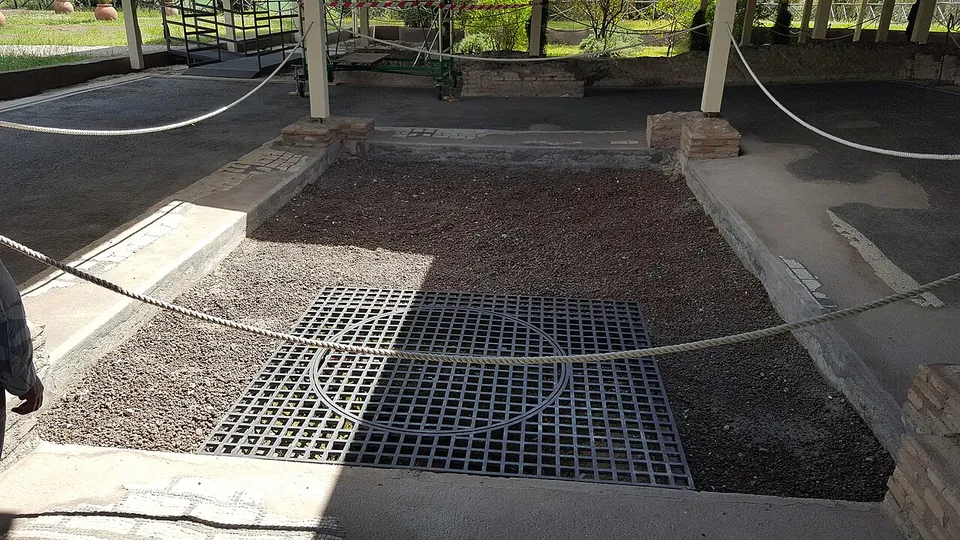
Photo: MumblerJamie · CC BY-SA 2.0 · Commons
13 km · villa · Lazio
Villa of Livia
The operator describes the private wing with the bedrooms of Livia and the emperor, an atrium and a small inner garden, and the large reception rooms that open onto a peristyle; the rooms once had painted walls and floors of mosaic and cut marble (Soprintendenza Speciale di Roma).
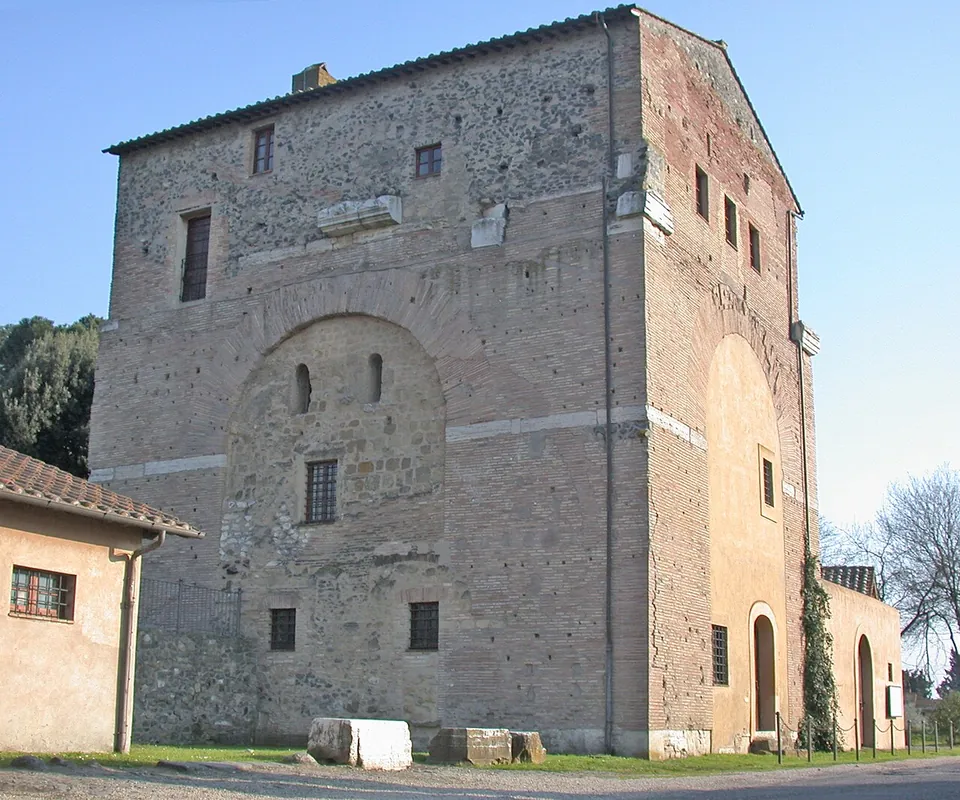
Photo: MM · Public domain · Commons
18 km · arch · Lazio
Arch of Malborghetto
At first sight you see an austere farmhouse rather than an arch (it.wikipedia).
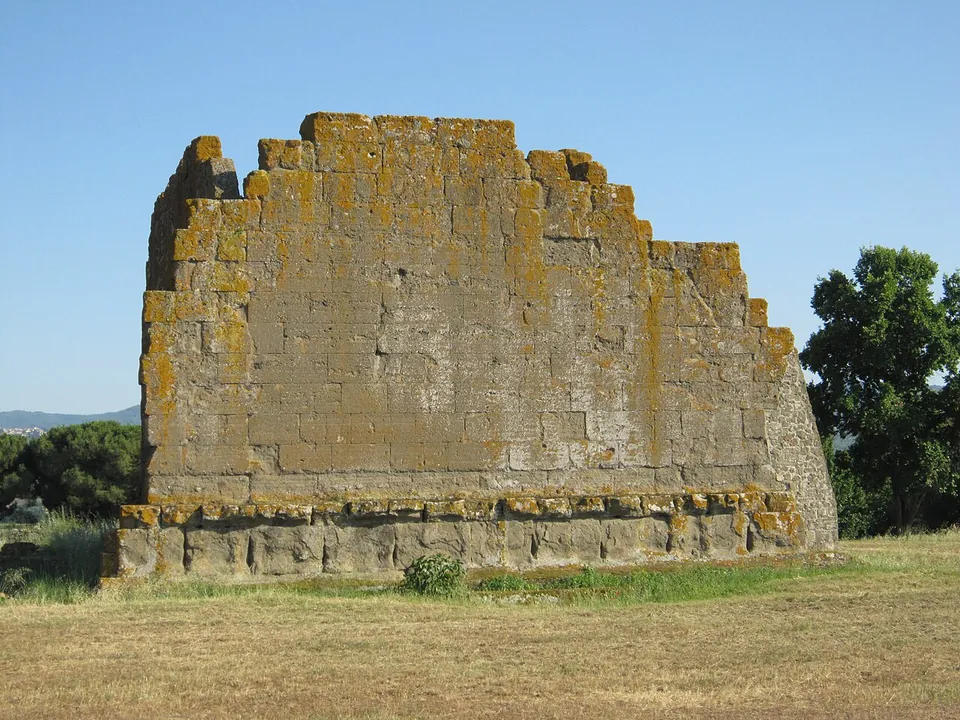
Photo: Carlomorino · CC BY-SA 3.0 · Commons
20 km · city · Lazio
Gabii
The park the state holds covers about 70 hectares on the southern rim of a volcanic crater whose lake was drained in the 19th century (the operator; en.wikipedia).


Straight-line distances.
Sources
Every fact on this page comes from the records below, each used under the licence noted.