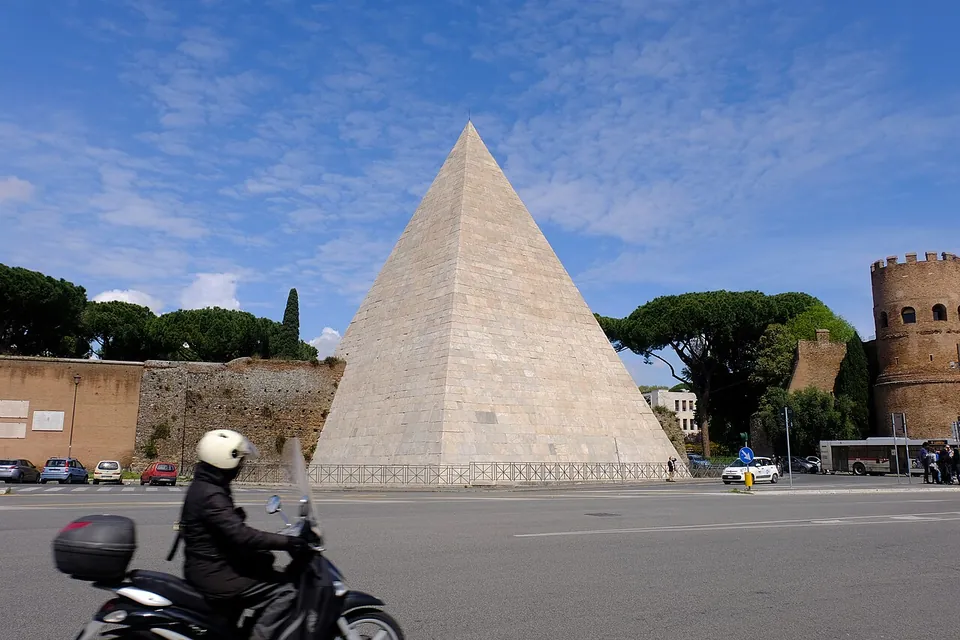
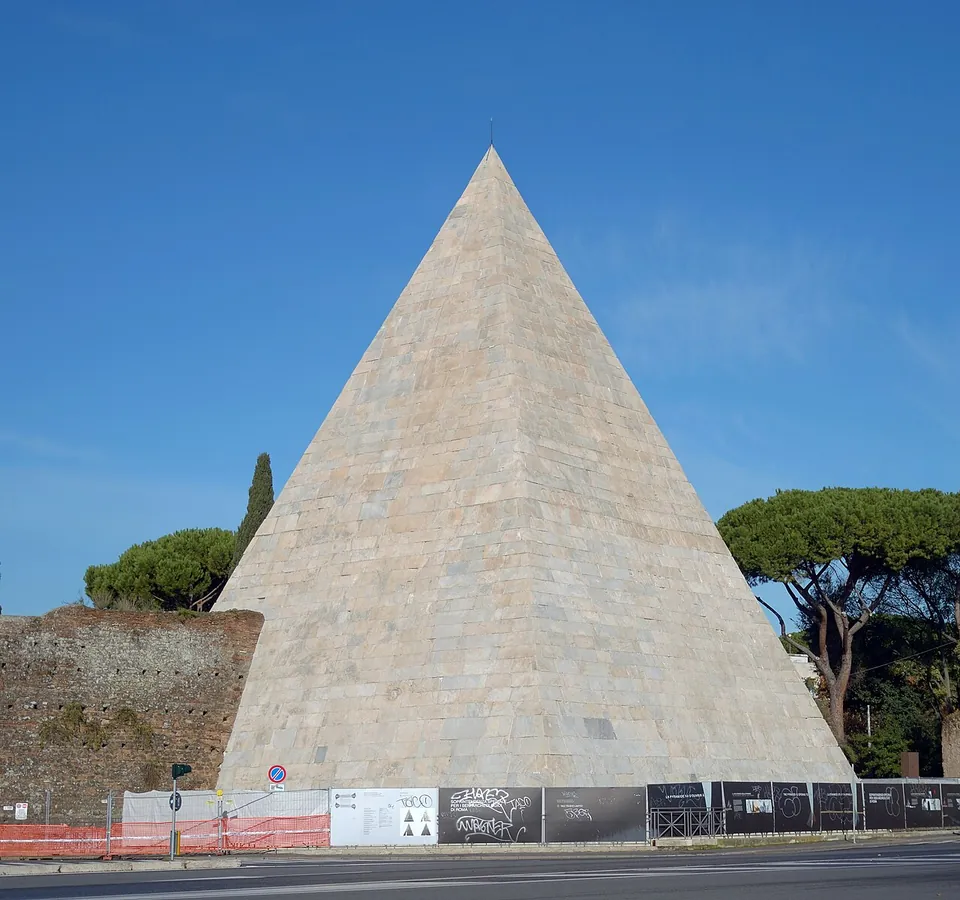


The Pyramid of Cestius is a Roman tomb in the shape of a steep marble pyramid, built about 18–12 BC for a magistrate named Gaius Cestius and later built into Rome’s city walls (en.wikipedia). It is one of the best-preserved ancient buildings in Rome, and you can see it free from the square beside it at any hour. The burial chamber inside opens only on scheduled days, booked in advance.
What is there today
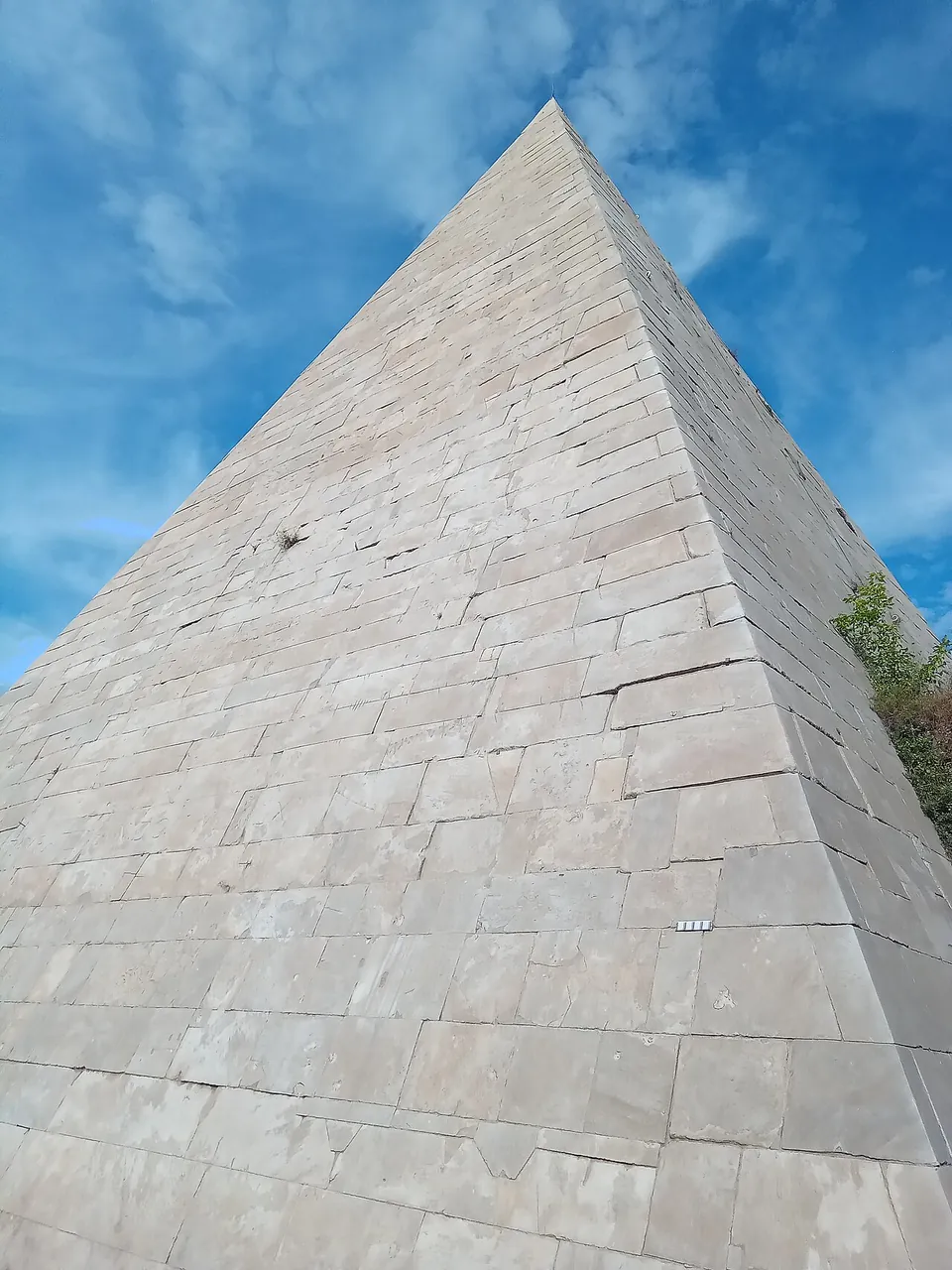
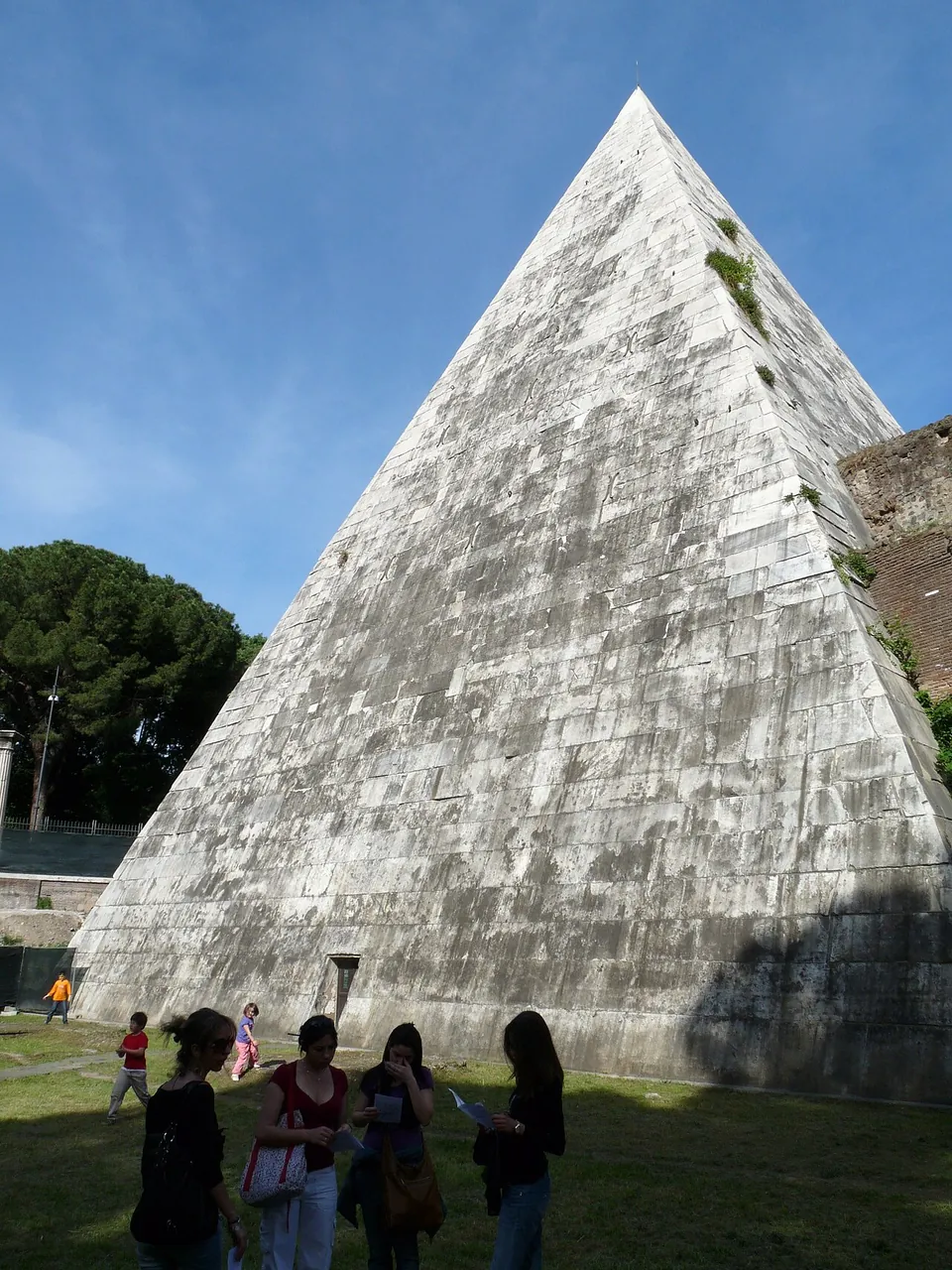
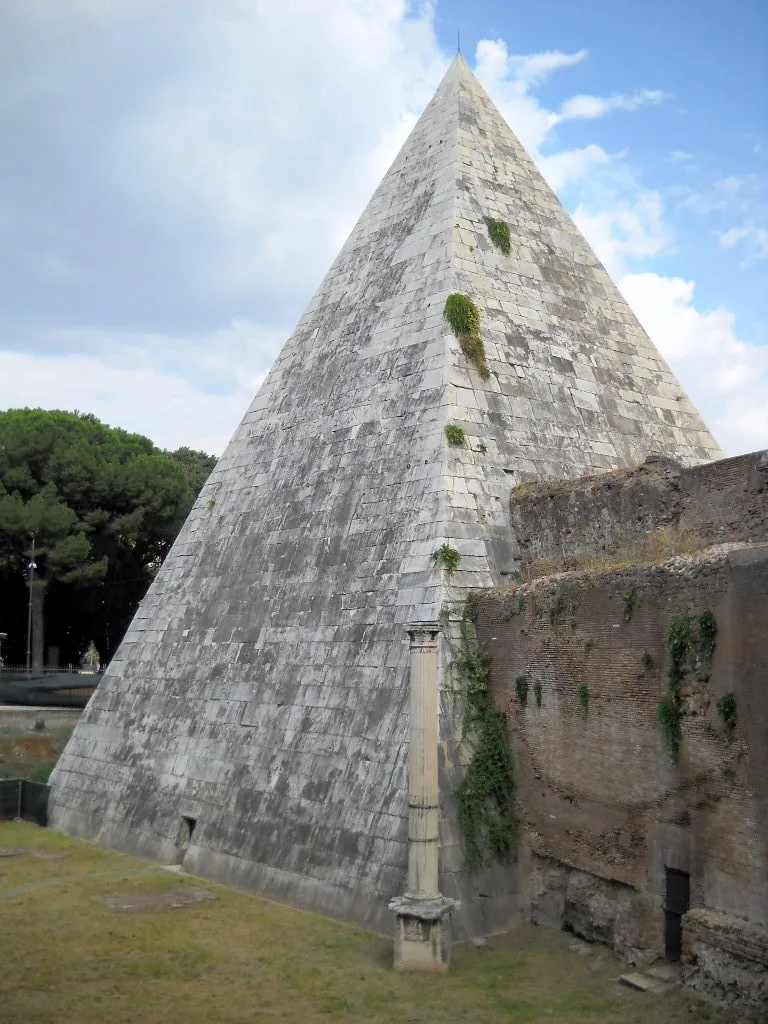
The pyramid itself, complete: published heights are 36.4 to 37 m on a square base of about 29.5 m a side, of brick-faced concrete clad in white marble (en.wikipedia; it.wikipedia). Its sides rise at about 68°, far steeper than Cheops’s pyramid at Giza at about 52° (it.wikipedia). The inscription naming Cestius and his offices is carved on two faces, and a second one on the east face records that the tomb was finished in 330 days, as his will required (it.wikipedia). The restoration of the marble surfaces was completed in December 2014 (it.wikipedia).
It still forms part of a well-preserved stretch of the Aurelian Wall: when the wall was built in the 270s the pyramid became one of its bastions, and that is why it is so well preserved (en.wikipedia). Part of the tomb’s tufa enclosure can be seen around it, and two of the four columns that once stood at its corners were set upright again after excavations in the 1660s (it.wikipedia).
Inside is a single barrel-vaulted burial chamber of about 23 m² (it.wikipedia). Its frescoes show panels with female figures and vases, and winged Victories in the corners of the vault; the centre of the vault was lost when the tomb was first broken into (it.wikipedia). en.wikipedia describes what survives as scant traces. The chamber is reached through a low tunnel (the operator).
Is it worth the trip?
Yes, and from outside it costs nothing to see: it stands on a busy square with a metro station named after it, and the outside is the main thing. It is the only survivor of the pyramid tombs that were built in Rome in the 1st century BC (it.wikipedia). It is also an easy place to combine with other sights: Porta San Paolo, one of the best-preserved gates of the walls, is a few steps away, and the Protestant Cemetery lies at the pyramid’s foot, inside the walls, where John Keats and Percy Bysshe Shelley are buried (it.wikipedia).
The honest caveat is the inside. The chamber opens only on the operator’s scheduled days, and the dates left in 2026 are three Saturdays in October; none have been published after that. If you cannot book one, you are still seeing the best of it from the street.
Getting there and what it costs
Piramide metro station takes its name from the pyramid (en.wikipedia), and OpenStreetMap maps the stop “P.le Ostiense-Piramide” about 80 m from it. The way into the fenced area is from Via Raffaele Persichetti (the operator). It lies about 1.8 km in a straight line south of the Roman Forum.
Looking at the outside costs nothing. The fenced area and the chamber reopened on 4 September 2026, after about three years closed for work that made the access staircase safe, reorganised the planting of the garden and added new lighting and information panels (it.wikipedia; the operator). Visits are free but must be booked, on Eventbrite through the operator’s announcement. Each visit lasts 45 minutes, and you should arrive at least 10 minutes early. The dates left in 2026 are Saturdays 17, 24 and 31 October, with entries at 16.30, 17.30 and 18.30 and up to 50 people each, without a guide (Soprintendenza Speciale di Roma, read 16 October 2026). Check the Soprintendenza’s site for any dates after that.
Visiting details
- Opening hours
- The outside can be seen from Piazzale Ostiense at any time. The fenced area and the burial chamber open only on scheduled days, on 45-minute visits booked in advance. The dates left in 2026 are Saturdays 17, 24 and 31 October, with entries at 16.30, 17.30 and 18.30 for up to 50 people each, without a guide. No dates after 31 October 2026 have been published.
- Tickets
- Free, but booking is required, on Eventbrite through the operator's announcement. Enter from Via Raffaele Persichetti at least 10 minutes before the booked time.
Before you go
- The inside opens only on the operator's scheduled days. Outside them, the pyramid can be seen only from the street.
- The burial chamber is reached through a tunnel, taken one at a time with the head lowered (the operator).
- The Museo della Via Ostiense inside Porta San Paolo is listed as closed, and no reopening date is published.
Hours and prices checked 16 October 2026 on the operator's own site. Confirm before travelling.
History
Gaius Cestius Epulo was a praetor, a tribune of the plebs and one of the septemviri epulones, the priests in charge of sacred banquets; almost all that is known of him comes from the tomb’s own inscriptions (en.wikipedia; it.wikipedia). The tomb went up beside the Via Ostiensis, outside the city as it then was, where a road branched off towards the river port on the Tiber (it.wikipedia). The date comes from two clues: a sumptuary law of 18 BC stopped his heirs from placing precious cloths in the chamber, and Agrippa, who died in 12 BC, is named among the beneficiaries of his will (it.wikipedia).
The pyramid shape belongs to the fashion for Egyptian things that followed Rome’s conquest of Egypt in 30 BC (it.wikipedia). Its steepness has suggested Nubian pyramids, such as those of Meroë, as the model rather than Giza, perhaps because Cestius served in the Roman campaign against Meroë (en.wikipedia); it.wikipedia notes that no document supports this directly. A larger pyramid of the same kind once stood near the Vatican and was demolished around the turn of the 16th century (en.wikipedia; it.wikipedia).
Under Aurelian, in the 270s, the tomb became a bastion of the new city walls, which is held to be why its marble escaped the stripping that other ancient buildings in Rome suffered (it.wikipedia). The tomb was plundered and its burial urn lost: in antiquity, according to en.wikipedia, and probably in the Middle Ages through a tunnel on the north side, according to it.wikipedia. In the Middle Ages people took the pyramid for the tomb of Remus, an error Petrarch repeated (en.wikipedia). Pope Alexander VII’s excavations of 1660–1663 cleared the overgrowth, uncovered the inscriptions, opened the chamber and found the bases of two bronze statues of Cestius, now in the Capitoline Museums (en.wikipedia; it.wikipedia). From the 18th century foreigners who were not Catholic were buried at its foot, the origin of the Protestant Cemetery (it.wikipedia). Grand Tour travellers made it an essential stop, and Shelley called it “one keen pyramid with wedge sublime” in Adonaïs, his 1821 elegy for Keats (en.wikipedia).
Porta San Paolo
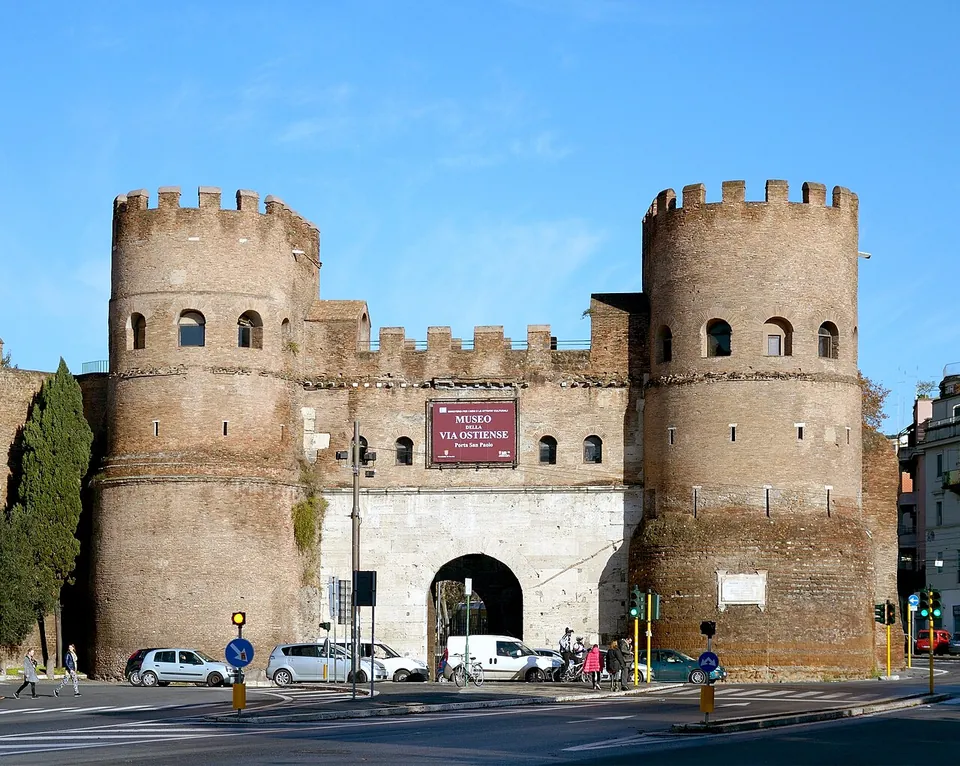
A few steps east of the pyramid, this is the gate in the Aurelian Walls where the Via Ostiensis left the city for Ostia; in antiquity it was the Porta Ostiensis (Pleiades; de.wikipedia). It is among the most imposing and best-preserved original gates of the walls (it.wikipedia). It began with two travertine arches between two semicircular brick towers. It was remodelled under Honorius, or possibly only in the 6th century: the towers were raised and the outer face was rebuilt with a single passage, while the city side kept its two arches (de.wikipedia). It took the name San Paolo by the 6th century, as the way out to St Paul’s basilica (de.wikipedia). On 10 September 1943 Italian soldiers and civilians fought German troops here; Raffaele Persichetti, who fell in the battle, gave his name to the street by the pyramid (de.wikipedia).
The gatehouse holds the Museo della Via Ostiense, with casts of inscriptions and reliefs, sarcophagi, mosaics and frescoes from a tomb, but Rome’s tourism office lists it as closed, with no reopening date (Turismo Roma). The towers and arches can be seen from the street at any time.
More photographs



Nearby
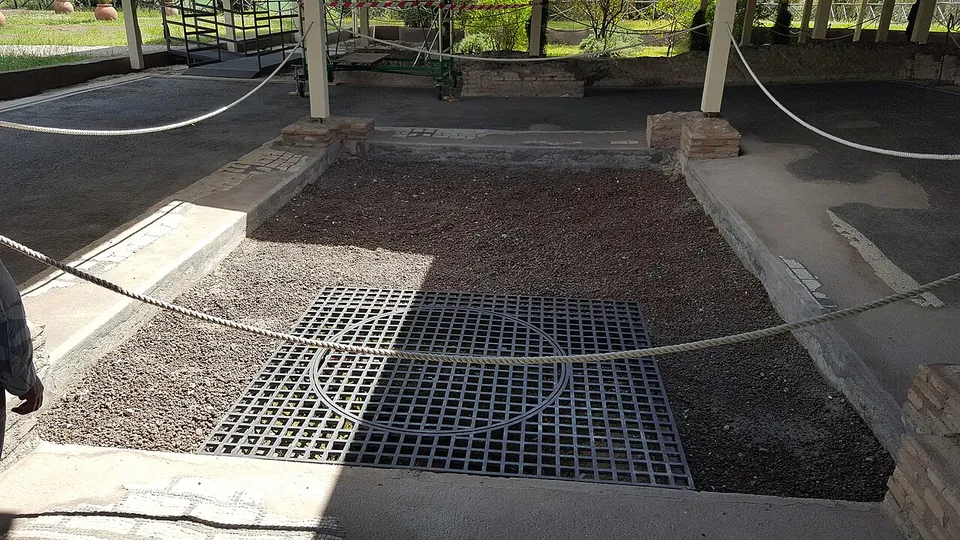
Photo: MumblerJamie · CC BY-SA 2.0 · Commons
14 km · villa · Lazio
Villa of Livia
The operator describes the private wing with the bedrooms of Livia and the emperor, an atrium and a small inner garden, and the large reception rooms that open onto a peristyle; the rooms once had painted walls and floors of mosaic and cut marble (Soprintendenza Speciale di Roma).
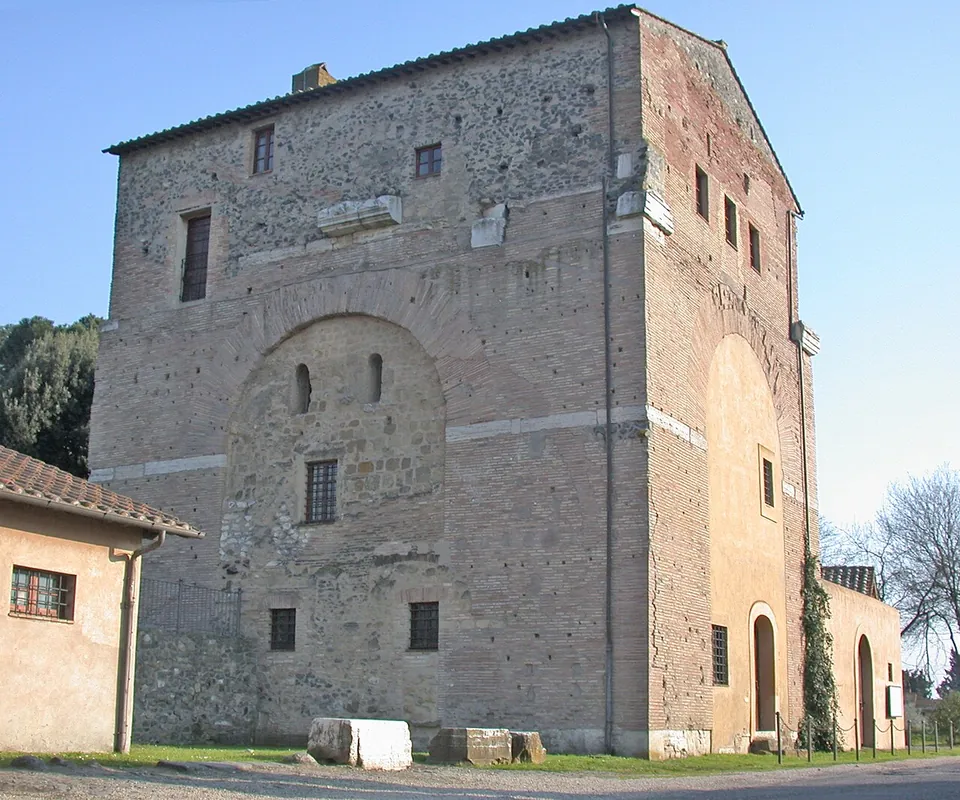
Photo: MM · Public domain · Commons
20 km · arch · Lazio
Arch of Malborghetto
At first sight you see an austere farmhouse rather than an arch (it.wikipedia).
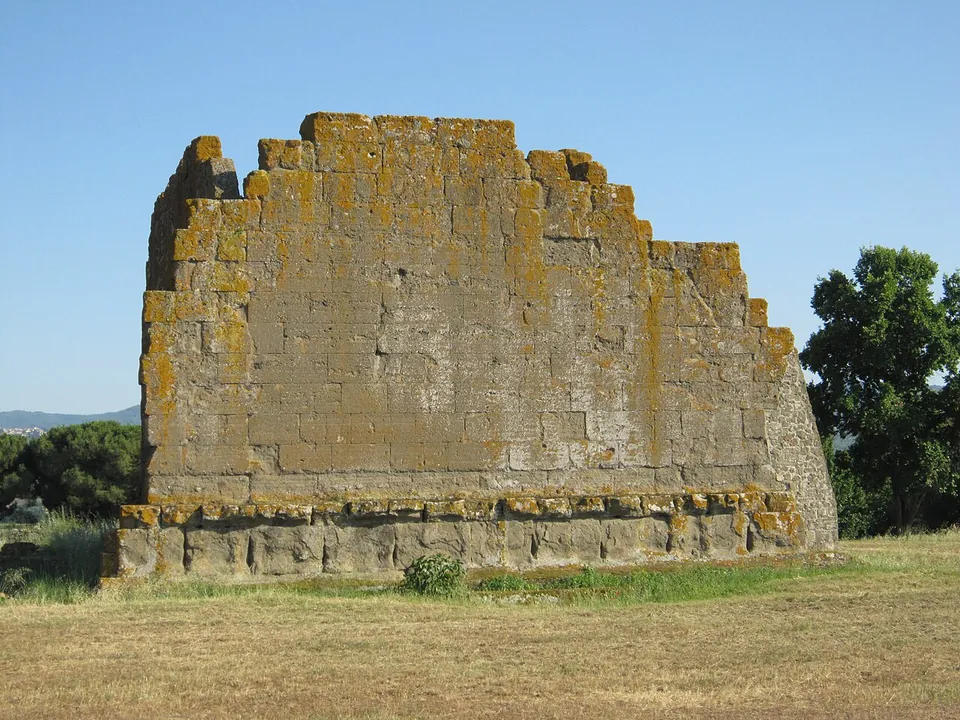
Photo: Carlomorino · CC BY-SA 3.0 · Commons
20 km · city · Lazio
Gabii
The park the state holds covers about 70 hectares on the southern rim of a volcanic crater whose lake was drained in the 19th century (the operator; en.wikipedia).


Straight-line distances.
Sources
Every fact on this page comes from the records below, each used under the licence noted.
| Source | Licence |
|---|---|
| Pleiades 195092807 | CC BY |
| Wikidata Q725404 | CC0 |
| Vici.org 7875 | CC BY-SA (text), CC0 (metadata) |
| OpenStreetMap way/432946457 | ODbL |
| Wikipedia (en) — Pyramid of Cestius | CC BY-SA 4.0 |
| Wikipedia (it) — Piramide Cestia | CC BY-SA 4.0 |
| Wikipedia (de) — Cestius-Pyramide | CC BY-SA 4.0 |
| Pleiades — Porta Ostiensis (Porta San Paolo) | licence not recorded |
| Wikipedia (de) — Porta San Paolo | CC BY-SA 4.0 |
| Wikipedia (en) — Porta San Paolo | CC BY-SA 4.0 |
| Wikipedia (it) — Porta San Paolo | CC BY-SA 4.0 |
| Soprintendenza Speciale di Roma — Piramide Cestia, a new cycle of openings after the PNRR works (the operator) | licence not recorded |
| Eventbrite — Piramide Cestia visits, September and October 2026 (booking linked by the operator) | licence not recorded |
| Turismo Roma — Piramide Cestia, a new cycle of openings | licence not recorded |
| Turismo Roma — Museum of the Via Ostiense-Porta San Paolo | licence not recorded |