

San Sebastiano fuori le mura is a church on the Appian Way, about 5 km south-east of the Forum, built over a Roman cemetery; what brings you here is underground, where a guided visit takes you through catacomb galleries to three 2nd-century tombs that still have their paintings and stucco (it.wikipedia; the operator). The cemetery was known in antiquity as ad catacumbas, and the word went on to name every underground cemetery (it.wikipedia; de.wikipedia).
What is there today
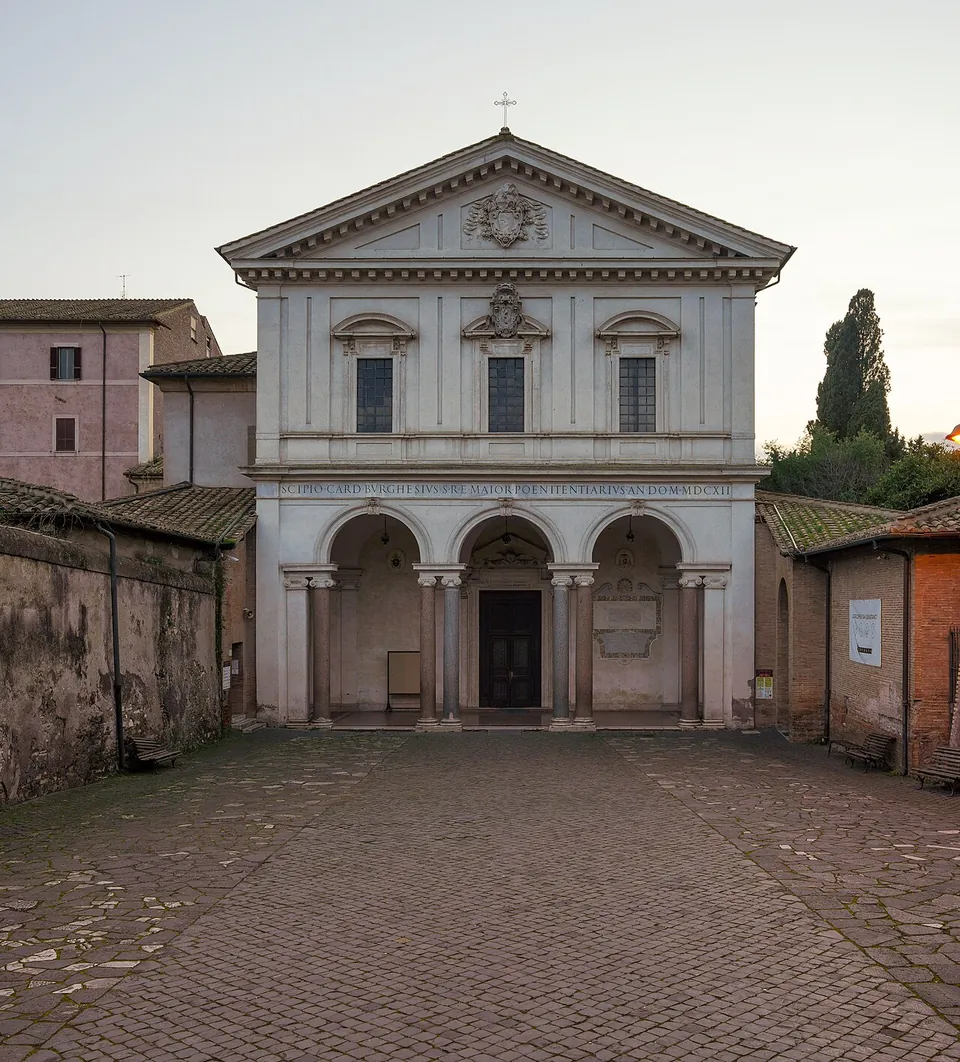
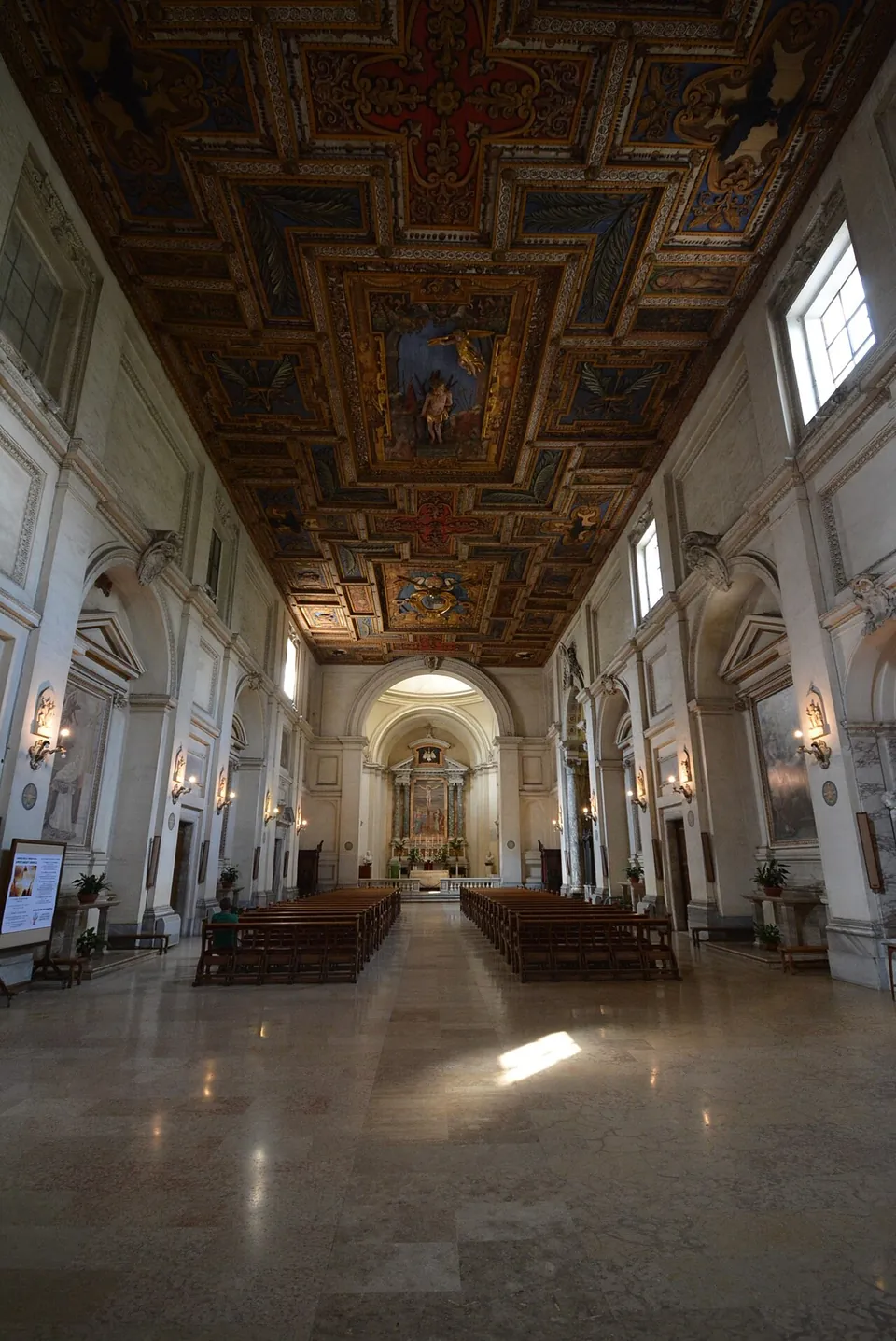
The church you walk into is largely 17th-century: Cardinal Scipione Borghese had it rebuilt in the early 1600s, keeping only the nave of the 4th-century basilica that stood here (en.wikipedia; de.wikipedia; the operator). The arches of its portico rest on granite columns taken from that older basilica (it.wikipedia). Inside, left of the entrance, is a 4th-century inscription, Pope Damasus’s poem in honour of the martyr Eutychius, carved by Furius Dionysius Filocalus, whose lettering is famous in its own right (it.wikipedia; the operator). In a niche on the right is Bernini’s bust of Christ the Saviour, rediscovered in 2001 in the convent next door (it.wikipedia). The aisles were rebuilt in 1933 using the ambulatory of the 4th-century basilica; the right-hand one holds sarcophagi found in the excavations, mostly 4th-century, and the way down into the catacomb (it.wikipedia).
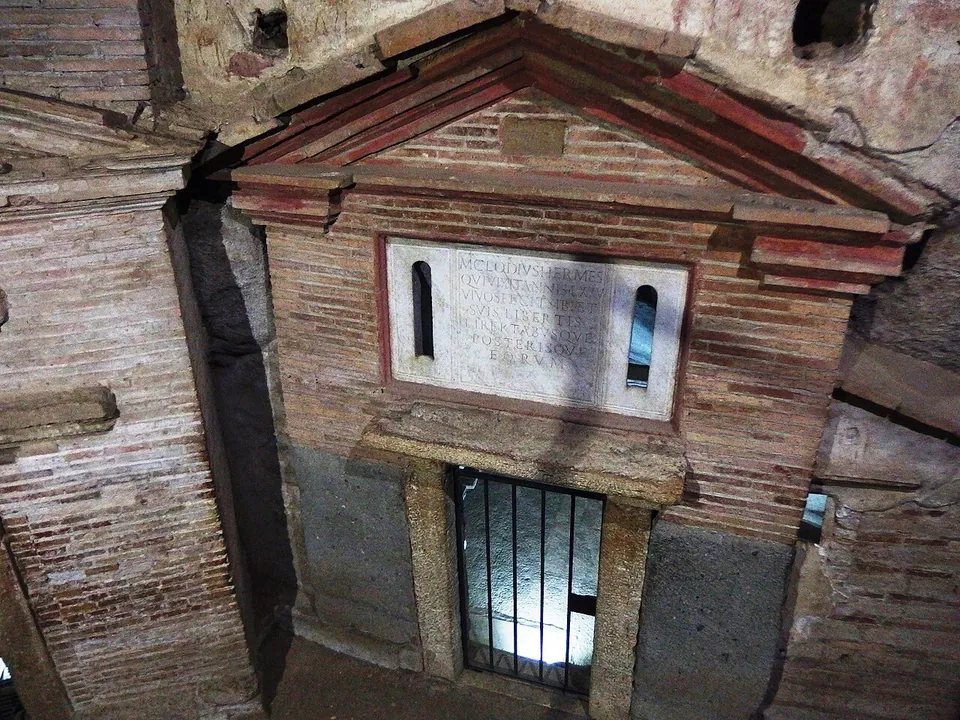
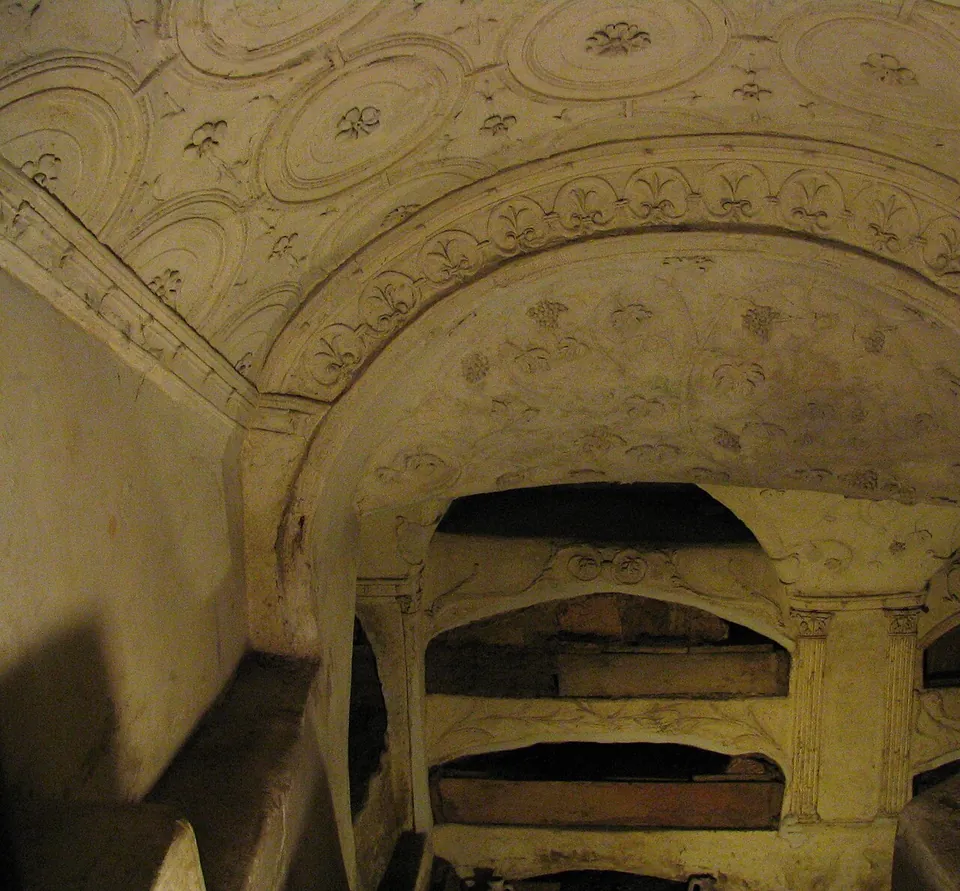
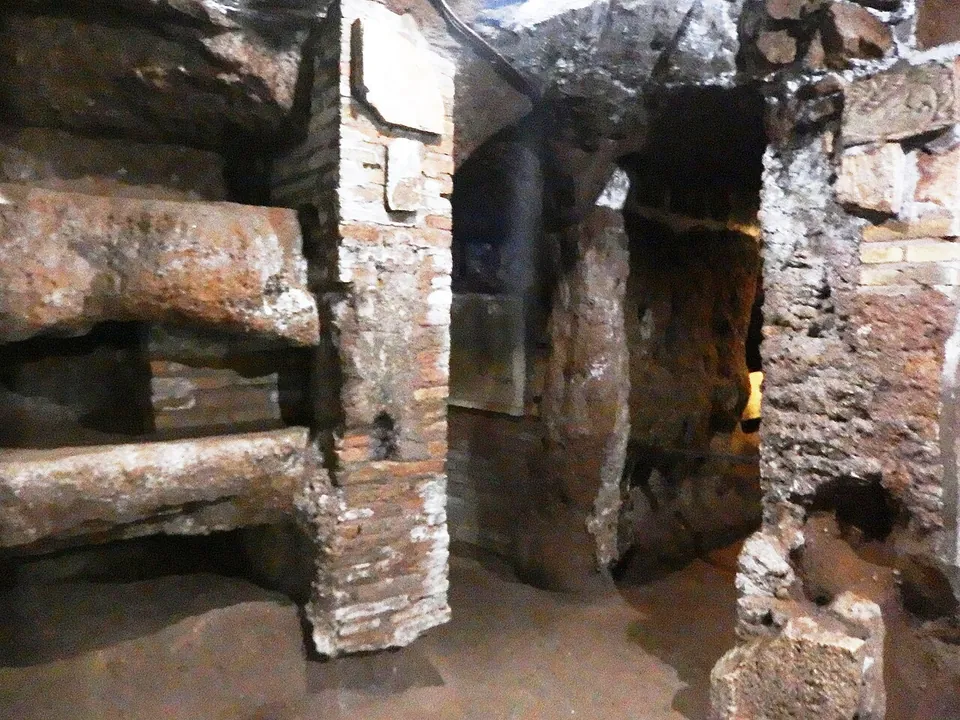
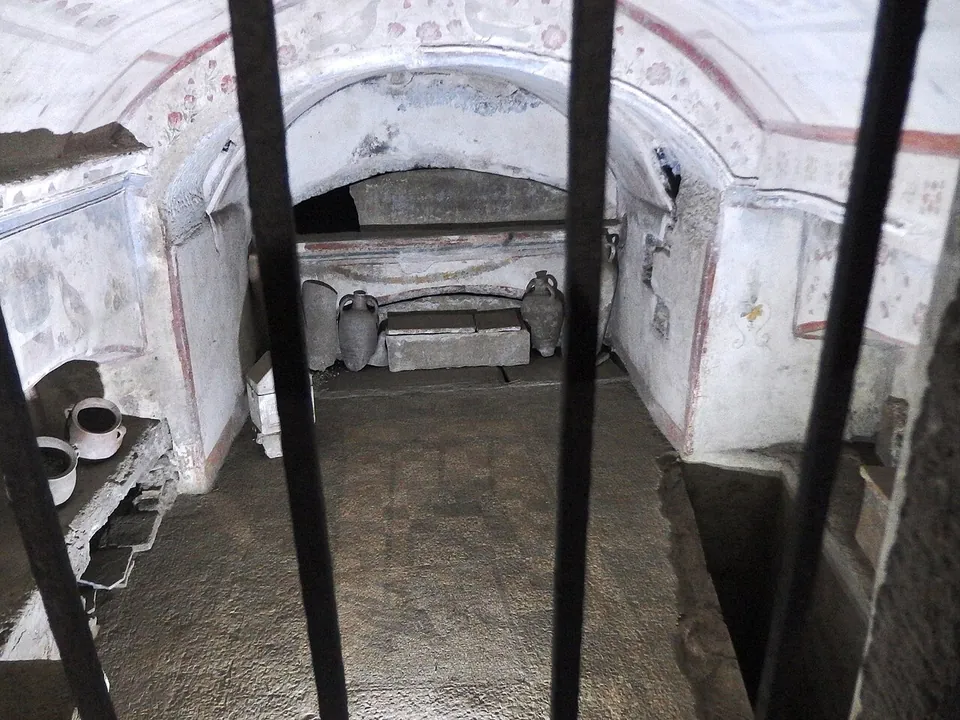
The ticket is for the visit below. The galleries run on three levels (it.wikipedia), and the guided route covers the galleries of the Christian cemetery, the crypt of St Sebastian, and a pagan necropolis with three 2nd-century mausolea, ending back in the church (the operator). The tombs open onto a small square that had been an open-cast quarry, and their masonry fronts are much alike, each with a door under an inscription naming its owners (it.wikipedia; the operator). The first is painted outside with funeral banquets and the healing of the Gerasene demoniac, carries the name of its owner, Marcus Clodius Hermes, and has a gorgon’s head on its vault. The second belonged to a burial club, the Innocentiores, and has a vault of fine stucco and a graffito of the Greek initials for “Jesus Christ, Son of God, Saviour”. The third, the Mausoleum of the Adze, is named after the tool shown on its front (it.wikipedia). Above them is the so-called triclia, a hall for funeral banquets whose plastered walls were scratched with hundreds of prayers to the apostles Peter and Paul; some of these graffiti can still be seen (it.wikipedia; the operator).
Is it worth the trip?
Yes, if you are on the Appian Way. This is one of the very few early Christian cemeteries that have always remained accessible (it.wikipedia), and beyond the galleries of burial niches, the mausolea put you at the doors of Roman tombs with their original painting and stucco. The Villa of Maxentius and the Tomb of Caecilia Metella are both within about 600 m, so it fits easily into a day on the road.
Know what you are signing up for. The catacomb is seen only on a guided tour of 40 to 45 minutes, in a group, in Italian, English, French, German or Spanish, with no photographs allowed; the route has 70 to 100 steps, no lift and nowhere to sit, and it is not possible in a wheelchair. It is a steady 16 to 18 °C underground all year, so bring a light layer in summer (the operator). If you come only for the church, what you see is a 17th-century building with a few Roman pieces in it. The catacomb is closed on Mondays, and so are the Appia Antica park’s own sites, the Tomb of Caecilia Metella among them (Parco Archeologico dell’Appia Antica), so avoid a Monday for this stretch of the road.
Getting there and what it costs
The address is Via Appia Antica 136. Buses 118 (from Colosseo or Circo Massimo on Metro line B) and 660 (from Arco di Travertino on Metro line A) stop in front of the entrance, at “Basilica e Catacombe di San Sebastiano”; bus 218 from San Giovanni (Metro A) stops at the Fosse Ardeatine, 300 m away along the Vicolo delle Sette Chiese (the operator). A free car park is mapped about 80 m from the church, with free public toilets and a bar within about 50 m (OpenStreetMap). If you drive, note that OpenStreetMap tags the Via Appia Antica here as open only to authorised motor traffic on Sundays and public holidays, from 09.00 to 16.00 in winter and to 18.00 in summer.
The catacomb is open Tuesday to Sunday, 09.15 to 17.15, with the last tour at 16.45. It is closed on Mondays, on 25 December, 1 January and Easter Sunday, and for an annual break from 7 to 27 December 2026. A ticket is €10, including the guided visit; €7 for ages 7 to 16, school groups, students of archaeology, architecture or art history under 25 and clergy; free for children up to 6. You can book a time and language free of charge online and pay on arrival, as long as you are there 15 minutes before the tour, or pay online in advance at €12, which includes a €2 booking fee (catacombe.org, read 17 October 2026 — check before travelling). The church itself opens 08.15 to 18.00 from October to March and 08.15 to 19.00 from April to September (the parish).
Visiting details
- Opening hours
- Catacombs, by guided visit only: Tuesday to Sunday 09.15–17.15, last tour 16.45; closed on Mondays, 25 December, 1 January and Easter Sunday, and from 7 to 27 December 2026. The church above: 08.15–18.00 from October to March, 08.15–19.00 from April to September.
- Tickets
- €10 full, €7 reduced (ages 7–16, school groups, students of archaeology, architecture or art history under 25, clergy, with proof); free for children up to 6, visitors with a disability above 74% and licensed tour guides. The guided visit is included. Book free online and pay on arrival (the booking holds until 15 minutes before the tour), or pay online in advance at €12 / €9, which includes a €2 booking fee.
- Parking
- A free surface car park is mapped about 80 m from the church (OSM way/225219129, fee=no).
Before you go
- The catacomb can be seen only on a guided visit with the catacomb's own staff, about 40–45 minutes; no one may go in alone or with an outside guide.
- Photographs and video are not allowed in the catacomb.
- The route has 70 to 100 steps, with no lift and nowhere to sit, and cannot be done in a wheelchair.
- Closed from 7 to 27 December 2026 for the annual break.
Hours and prices checked 17 October 2026 on the operator's own site. Confirm before travelling.
Nearby
The Villa of Maxentius is about 300 m away and the Tomb of Caecilia Metella about 600 m, both further out along the Appian Way; the Catacomb of Callixtus is about 500 m and the Catacombs of Domitilla about 900 m to the north-west (straight-line distances between the sites’ mapped points). Latin inscriptions found in 1792 between the second and third mile of the road, near San Sebastiano, name a garden tomb belonging to one Claudia Semne (Pleiades); no source describes anything of it to see.
History
The ground here was a pozzolana quarry. When it was abandoned, the Romans used it for pagan burials: simple graves of slaves and freedmen, and the three mausolea dug into the walls of the old open-cast pit. Christian symbols in them, the anchor and the fish, suggest Christians were later buried there too, and the first catacomb galleries were dug in the same period (it.wikipedia). Around the middle of the 3rd century the square was filled in and the triclia built on top, with a marble-lined shrine that archaeologists take to be where the relics of Peter and Paul were kept for a time (it.wikipedia). The Depositio Martyrum, a mid-4th-century list of martyrs’ feasts, records Peter “in catacumbas”, and a 5th-century martyrology places both apostles there in 258; whether their relics really came here in the 3rd century, and when they went back, is still debated (it.wikipedia).
In the first half of the 4th century that level too was buried to make the platform for a large basilica built under Constantine, first dedicated to the apostles (it.wikipedia; de.wikipedia). It was circus-shaped, with three aisles and a large square forecourt, the plan also used for the basilicas Constantine built at Sant’Agnese and San Lorenzo (it.wikipedia). Sebastian, a martyr of the persecution under Diocletian, was buried in the catacomb, and his cult eventually gave the cemetery and the church their name (it.wikipedia). His relics were taken to St Peter’s in 826 for fear of a Saracen raid; the raid came and the church was destroyed, to be rebuilt under Pope Nicholas I (858–867) (en.wikipedia; it.wikipedia). The present church is Cardinal Borghese’s rebuilding of the early 17th century; published start dates run from 1608 to 1612 (the operator; en.wikipedia; de.wikipedia). San Sebastiano was long one of the seven pilgrim churches of Rome, which pilgrims visited in a single day (en.wikipedia).
More photographs



Nearby
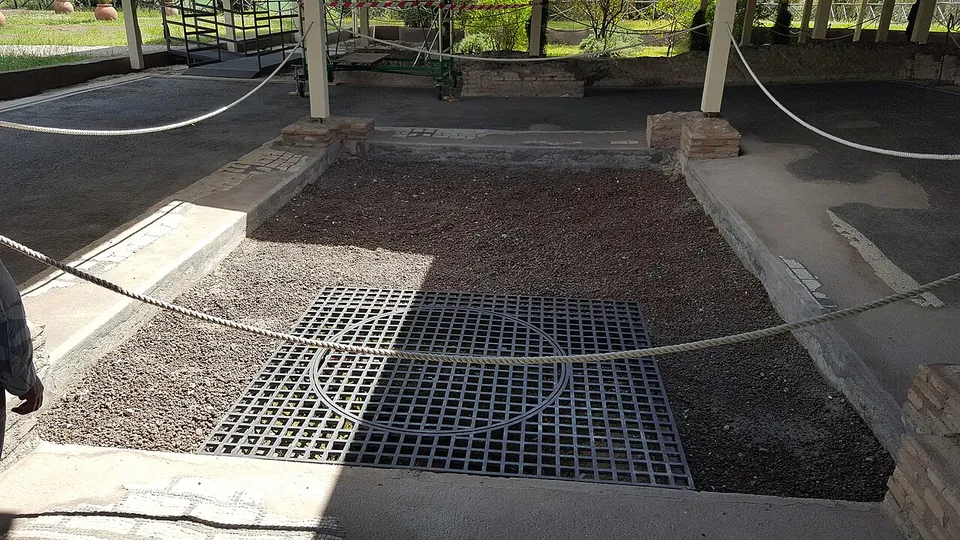
Photo: MumblerJamie · CC BY-SA 2.0 · Commons
16 km · villa · Lazio
Villa of Livia
The operator describes the private wing with the bedrooms of Livia and the emperor, an atrium and a small inner garden, and the large reception rooms that open onto a peristyle; the rooms once had painted walls and floors of mosaic and cut marble (Soprintendenza Speciale di Roma).
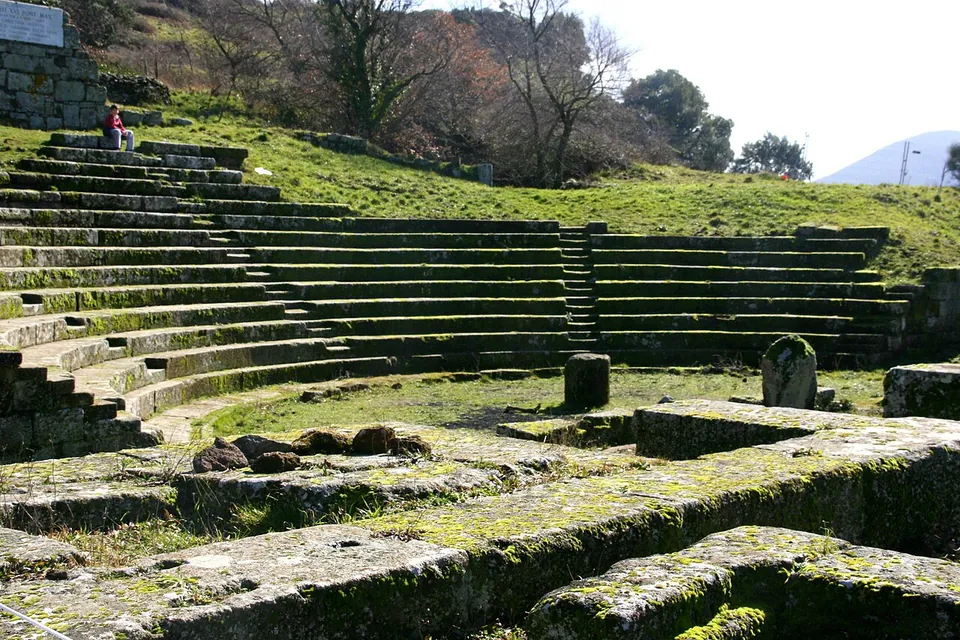
Photo: Luiza Serpa Lopes · Public domain · Commons
17 km · city · Lazio
Tusculum
The visitor route runs mainly through the forum, with the theatre halfway round (the operator).
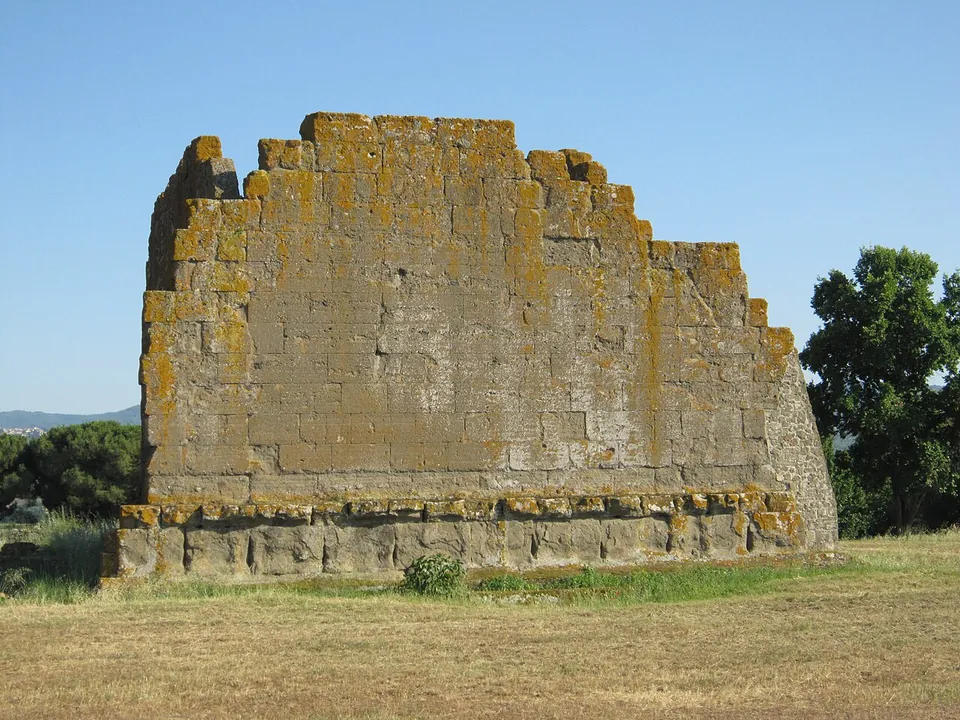
Photo: Carlomorino · CC BY-SA 3.0 · Commons
17 km · city · Lazio
Gabii
The park the state holds covers about 70 hectares on the southern rim of a volcanic crater whose lake was drained in the 19th century (the operator; en.wikipedia).


Straight-line distances.
Sources
Every fact on this page comes from the records below, each used under the licence noted.