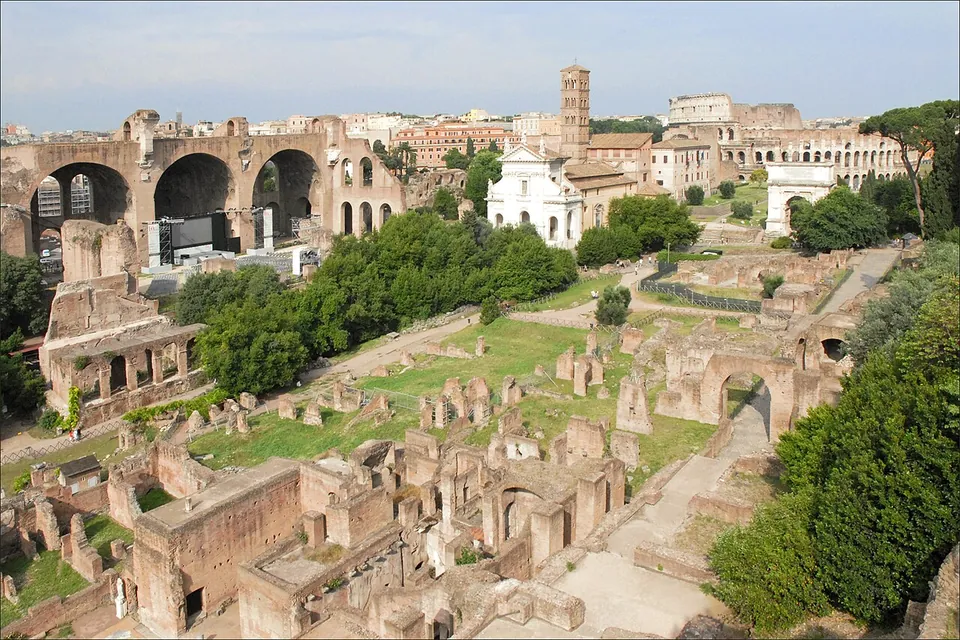
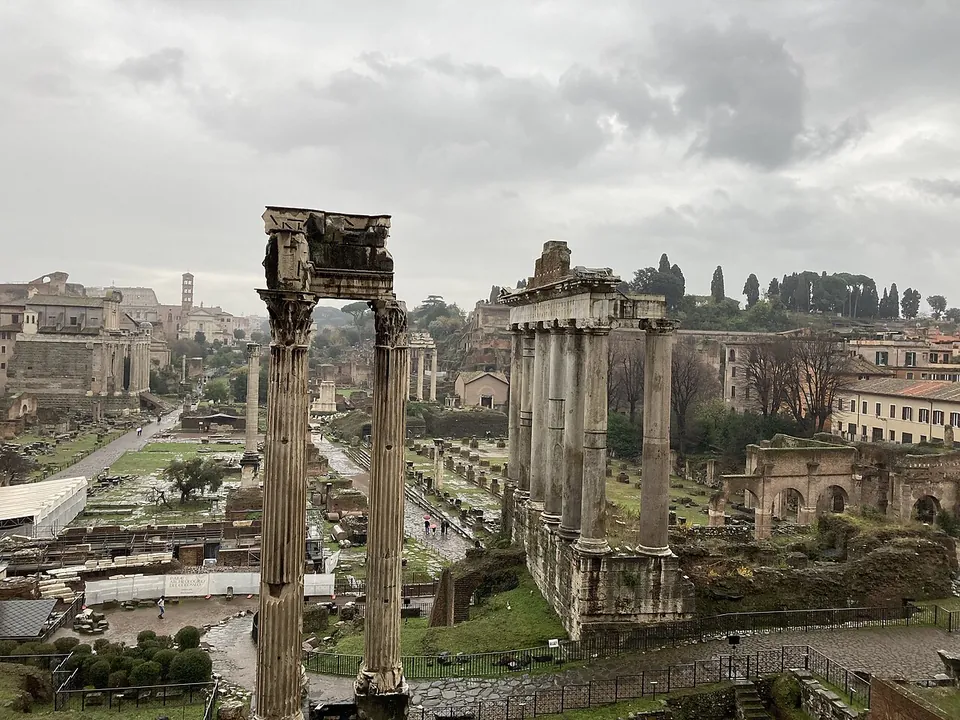


The Roman Forum was the main square of ancient Rome, in the small valley between the Palatine and Capitoline hills, where for centuries the city held its elections, trials, public speeches and triumphal processions (en.wikipedia). Today it is a long field of ruins: two triumphal arches and a senate house still stand, most of the temples survive as groups of columns, and much of the rest is foundations and scattered fragments. It is on the same €18 ticket as the Colosseum and the Palatine.
What is there today
The Forum is, in the words of its English Wikipedia article, “a sprawling ruin of architectural fragments and intermittent archaeological excavations”. It reads best walked from one end to the other, taking the standing monuments as landmarks.
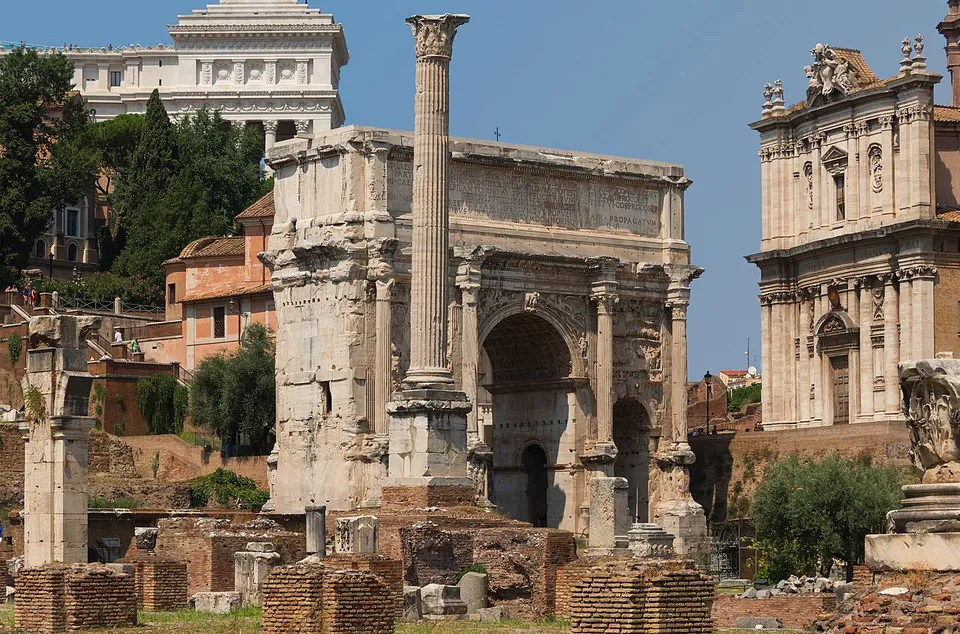
The west end, under the Capitoline. The white marble Arch of Septimius Severus, dedicated in 203 for the emperor’s victories over the Parthians, stands at the Forum’s north-western corner; references to Geta were removed from it after his brother Caracalla had him killed (en.wikipedia). Beside it are the Rostra, the speakers’ platform named after the rams of enemy warships captured in 338 BC, and, behind them, the Umbilicus Urbis, the symbolic centre of the city, now a brick core about 2 m high (en.wikipedia). The black paving of the Lapis Niger covers an altar and one of the earliest known Latin inscriptions, from around 570–550 BC (en.wikipedia). At the foot of the hill stand the ruins of the Temple of Saturn and the Temple of Vespasian and Titus, begun by Titus in 79 and completed by Domitian about 87 (en.wikipedia), and the Portico Dii Consentes, re-erected in 1835 (en.wikipedia). Above them, the Tabularium, Rome’s record office, can now be reached only from inside the Capitoline Museums, and still gives a panoramic view over the Forum (en.wikipedia). The Curia Julia, the senate house completed by Augustus in 29 BC, is one of the few Roman buildings that survive mostly intact, because it became a church in the 7th century; its roof, upper side walls and rear façade date from a remodelling in the 1930s (en.wikipedia). At the foot of the Capitoline, beneath the church of San Giuseppe dei Falegnami, is the Mamertine Prison, the ancient Tullianum (en.wikipedia).
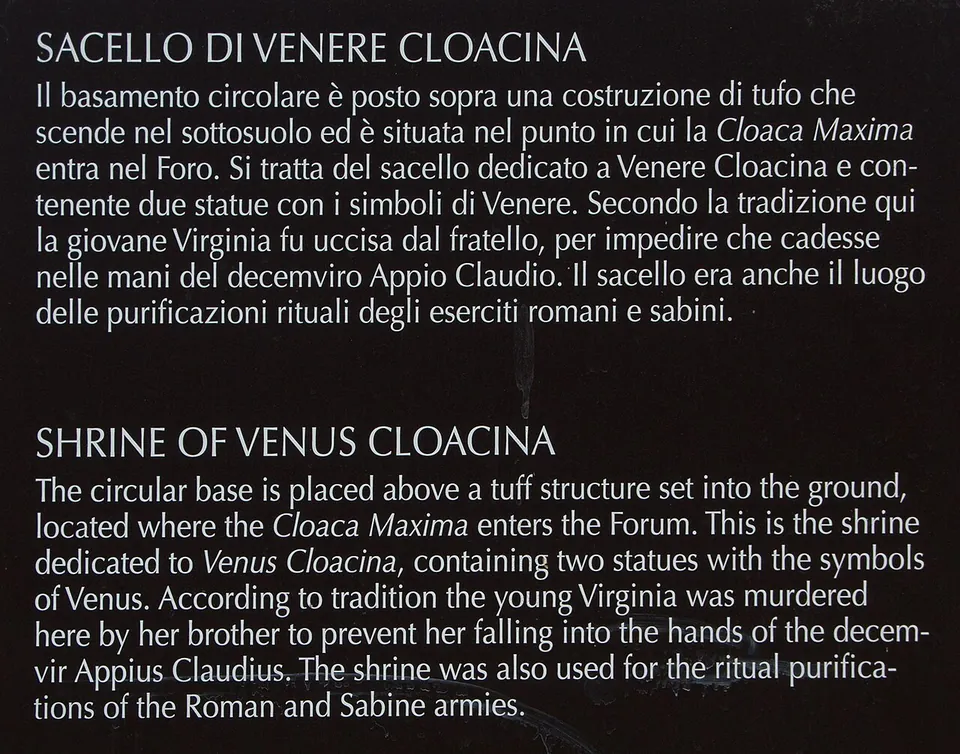
The square and its long sides. Of the Basilica Julia, begun by Julius Caesar in 46 BC, the excavations show foundations and corner walls of the Augustan building with pillars, plinths and columns from Diocletian’s rebuilding (en.wikipedia). Of the Basilica Aemilia only fragments of the plan and colonnade remain; part of its sculpted frieze is shown in the cloister of Santa Francesca Romana (en.wikipedia). Between the Basilica Aemilia and the Curia, the Argiletum left the Forum, the street of the booksellers that ran through the Subura; under the emperors its first stretch was replaced by the Forum of Nerva, and its line is today’s Via Leonina and Via della Madonna dei Monti (it.wikipedia; en.wikipedia). West of the basilica’s steps, a circular marble base is all that is left of the Shrine of Venus Cloacina (it.wikipedia). At the south-east corner, the Temple of Castor and Pollux, first built in gratitude for the victory at Lake Regillus, stands beside the Spring of Juturna, a sacred pool and shrine (en.wikipedia; it.wikipedia; Pleiades). A single tall column on the square honoured the Byzantine emperor Phocas in 608 and was the last monument put up in the Forum (the operator).
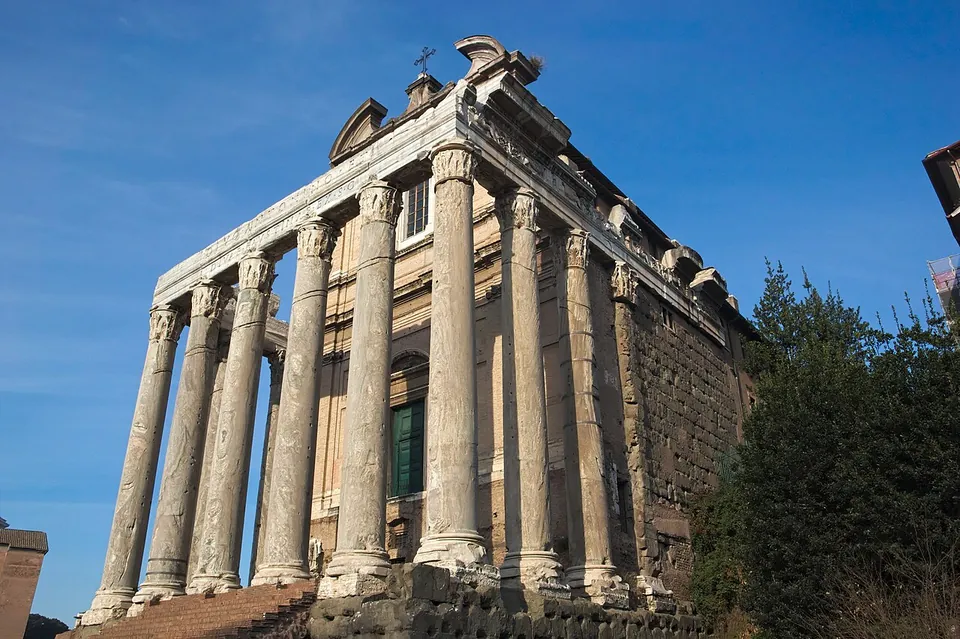
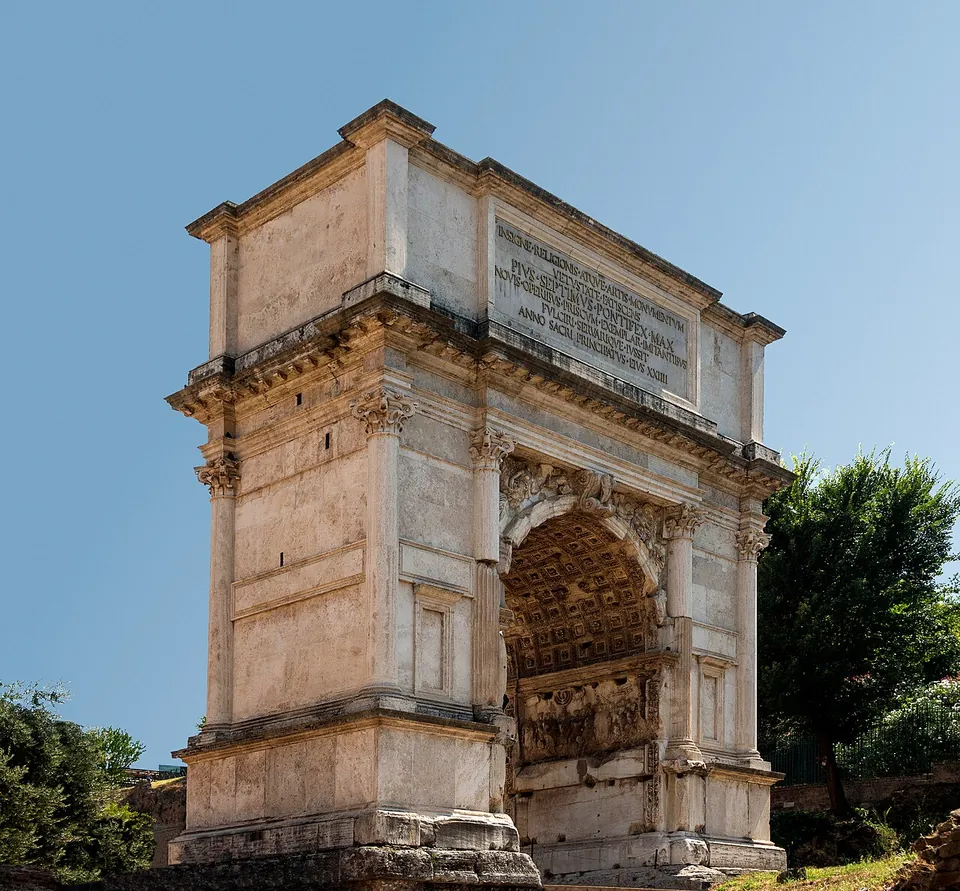
The east end, towards the Colosseum. The remains of the altar of the Temple of Caesar, built by Augustus for the deified Julius Caesar, are still a place of pilgrimage: flowers are left there daily, and on 15 March there are commemorations (en.wikipedia; Pleiades). Close by are the foundations of the Regia, the kings’ house and later the office of the chief priest; the round Temple of Vesta, where the sacred fire was kept, its ruins showing Corinthian columns; and, behind it, the House of the Vestal Virgins (en.wikipedia). The Temple of Antoninus and Faustina, later converted into the church of San Lorenzo in Miranda (en.wikipedia), still stands to its full height, its columns in front of the church façade. Further on are the Temple of Romulus, built by Maxentius for his son (Pleiades; the operator), and the Basilica of Maxentius, the largest building in the Forum when it was built and the last Roman basilica in the city (en.wikipedia). The Arch of Titus, put up by Domitian around 81, carries reliefs of the triumph of 71 after the fall of Jerusalem, among the few contemporary images of objects from the Temple in Jerusalem (en.wikipedia). Beyond it, the Temple of Venus and Roma, begun by Hadrian in 121, is thought to have been the largest temple in ancient Rome (en.wikipedia). At the foot of the Palatine, Santa Maria Antiqua, built in the 5th century, is the oldest Christian monument in the Forum and holds the earliest Roman image of the Virgin as a queen, from the 6th century (en.wikipedia).
Is it worth the trip?
Yes. This was the centre of the city’s public life for more than a thousand years (the operator), and a single walk passes the senate house, two triumphal arches and some of Rome’s oldest shrines (en.wikipedia). The honest caveat is that much of it is low ruin, and the Forum draws 4.5 million or more visitors a year (en.wikipedia). The layout is easier to read from above, so it pays to see it from the Palatine, which is on the same ticket, or from the Tabularium in the Capitoline Museums (en.wikipedia). The Imperial Fora, which took over much of its business, lie just to the north and are a stop of their own (en.wikipedia).
Getting there and what it costs
The Forum is in the centre of Rome, with the Palatine rising above its south side and the Colosseum about 400 m to the east. Bus stops named Fori Imperiali and Colosseo – Fori Imperiali are mapped about 230–260 m away (OpenStreetMap). The operator lists five entrances to the Forum and Palatine: at the Arch of Titus, Largo della Salara Vecchia, Via del Tulliano, Via del Foro Romano and Via di San Gregorio; the old entrance by Trajan’s Column is no longer in use (colosseo.it).
The Forum and Palatine open at 09.00 every day. Until 24 October 2026 the park closes at 18.30, with last entry at 17.30; from 25 October 2026 to 28 February 2027 it closes at 16.30, last entry 15.30. It is closed on 25 December and 1 January (colosseo.it, read 13 October 2026).
There are two ways in, both €18 (€2 for EU citizens aged 18 to 24; free under 18, with a ticket booked online):
- Colosseum, Roman Forum and Palatine: valid 24 hours, with one entry to the Forum and Palatine on the day of your booked Colosseum slot or within 24 hours of it.
- Forum Pass SUPER: the Forum, the Palatine and the Imperial Fora for one day, without the Colosseum. It also lists Santa Maria Antiqua, the Curia Julia and the Temple of Romulus, which take limited numbers from 09.30 until an hour before closing.
Entry is free for everyone on the first Sunday of the month and on 25 April, 2 June and 4 November (colosseo.it). The operator lists toilets, an information point, audio guides, a refreshment point, a bookshop and a lift at the Forum, and the ticket includes the Forum’s own museum.
Visiting details
- Opening hours
- The Forum and Palatine open at 09.00 every day. The park closes at 18.30 (last entry 17.30) until 24 October 2026, and at 16.30 (last entry 15.30) from 25 October 2026 to 28 February 2027. Closed 25 December and 1 January. Hours from March 2027 were not yet published when checked.
- Tickets
- €18 for the Colosseum, Roman Forum and Palatine ticket, valid 24 hours, with one entry to the Forum and Palatine on the same day as the booked Colosseum slot or within 24 hours of it; or €18 for the Forum Pass SUPER (Forum, Palatine and Imperial Fora, no Colosseum, one day), which also lists Santa Maria Antiqua, the Curia Julia and the Temple of Romulus. €2 for EU citizens aged 18–24 on either ticket; free under 18 with a ticket booked online. Free for everyone on the first Sunday of the month and on 25 April, 2 June and 4 November.
- Parking
- Paid on-street parking is mapped about 210 m from the Forum (OSM way/551245392); in the centre, walking or public transport is the practical way in.
Before you go
- The entrance at Trajan's Column is no longer in use. The Forum and Palatine entrances are at the Arch of Titus, Largo della Salara Vecchia, Via del Tulliano, Via del Foro Romano and Via di San Gregorio.
- Santa Maria Antiqua, the Curia Julia and the Temple of Romulus admit limited numbers, from 09.30 until an hour before closing.
Hours and prices checked 13 October 2026 on the operator's own site. Confirm before travelling.
History
The valley was marshy ground, crossed by a stream (de.wikipedia). The operator dates its draining, and the beginning of the Forum, to the late 7th century BC, though the archaeological record reaches back probably to the 8th (de.wikipedia): in front of the Temple of Antoninus and Faustina excavators found a cemetery of forty-one protohistoric burials (it.wikipedia). The Regia and the Temple of Vesta go back to the 8th and 7th centuries BC, and at the north-west corner archaic shrines such as the Vulcanal developed into the Comitium, the assembly place where the Senate, and the government of the Republic, began (en.wikipedia).
Civil basilicas for the law courts were added in the 2nd century BC (the operator), and judicial business moved into the new Basilica Aemilia, built in 179 BC (en.wikipedia; Pleiades). Some 130 years later Julius Caesar built the Basilica Julia and a new senate house, the Curia Julia, giving the Forum its final form (en.wikipedia). By the end of the Republic the square was too small for its role (the operator), and much business moved to the larger Imperial Fora to the north (en.wikipedia). The emperors added temples to their deified predecessors and the Arch of Septimius Severus; Maxentius built the Temple of Romulus and the great basilica in the early 4th century (the operator), and in 608 the Column of Phocas was the last monument raised here (the operator).
After a decline that began in late antiquity, the Forum was stripped of its stone and its buildings were put to other uses, until by the 16th century it was almost completely buried and used as cattle pasture, the Campo Vaccino (it.wikipedia). Some buildings lived on as churches, the Curia Julia and the Temple of Antoninus and Faustina among them (en.wikipedia). Santa Maria Antiqua was abandoned in 847, built over in 1617 and uncovered again when the later church was demolished in 1899 (it.wikipedia). Systematic excavation began only after the unification of Italy (the operator). The Forum has been on UNESCO’s World Heritage List since 1980 (OpenStreetMap).
More photographs




Nearby
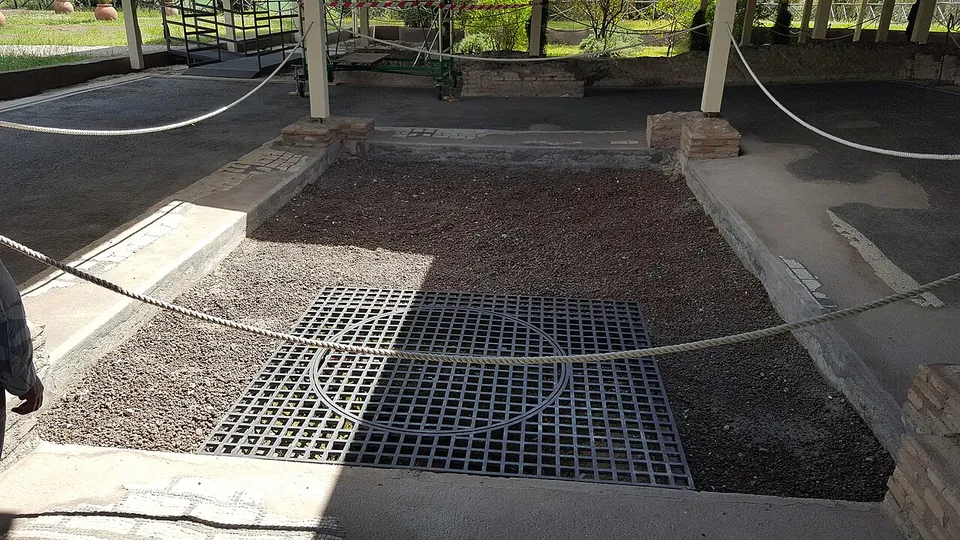
Photo: MumblerJamie · CC BY-SA 2.0 · Commons
12 km · villa · Lazio
Villa of Livia
The operator describes the private wing with the bedrooms of Livia and the emperor, an atrium and a small inner garden, and the large reception rooms that open onto a peristyle; the rooms once had painted walls and floors of mosaic and cut marble (Soprintendenza Speciale di Roma).
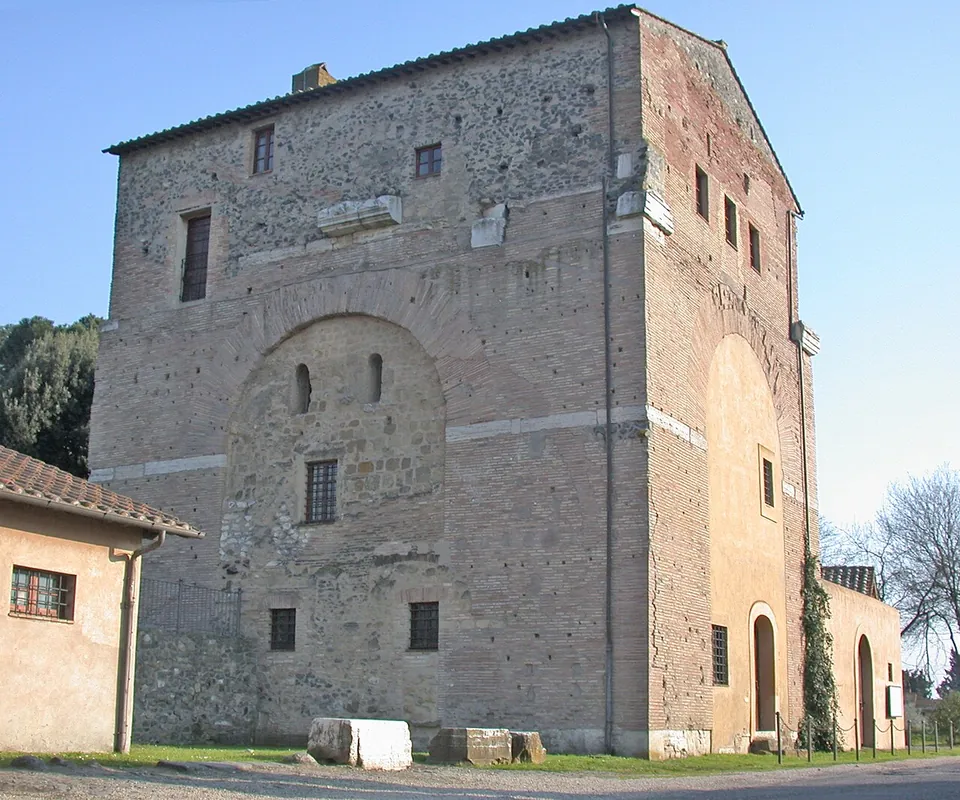
Photo: MM · Public domain · Commons
18 km · arch · Lazio
Arch of Malborghetto
At first sight you see an austere farmhouse rather than an arch (it.wikipedia).
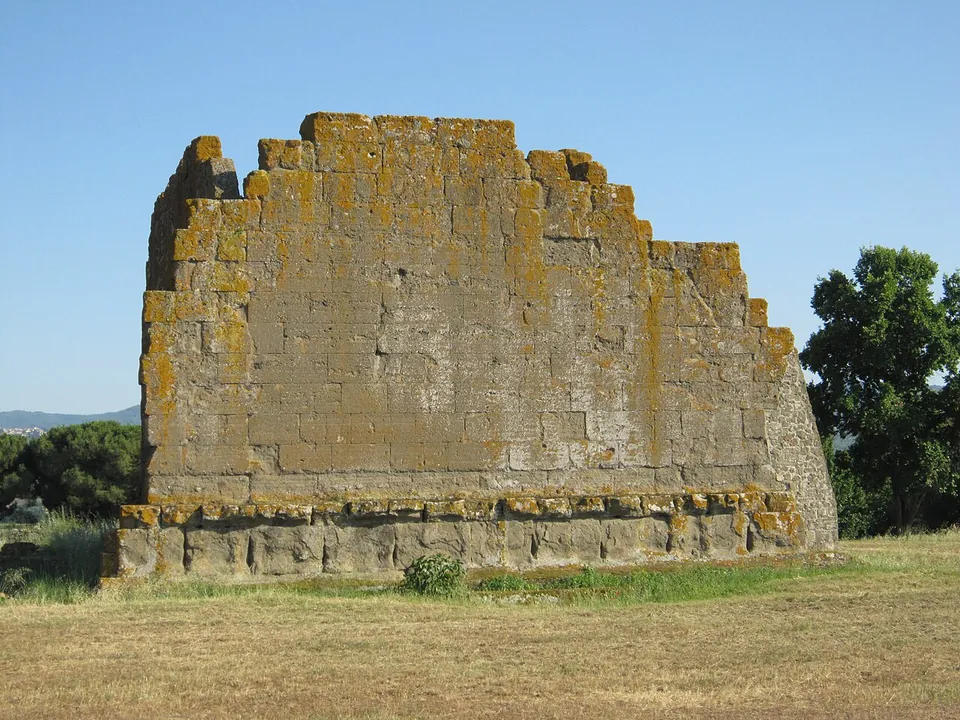
Photo: Carlomorino · CC BY-SA 3.0 · Commons
19 km · city · Lazio
Gabii
The park the state holds covers about 70 hectares on the southern rim of a volcanic crater whose lake was drained in the 19th century (the operator; en.wikipedia).


Straight-line distances.
Sources
Every fact on this page comes from the records below, each used under the licence noted.