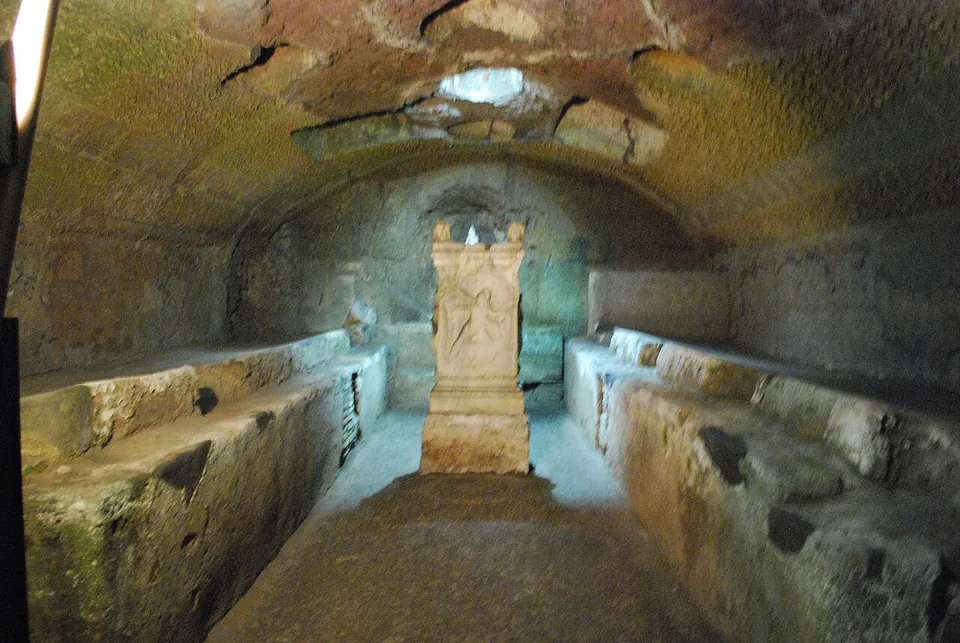
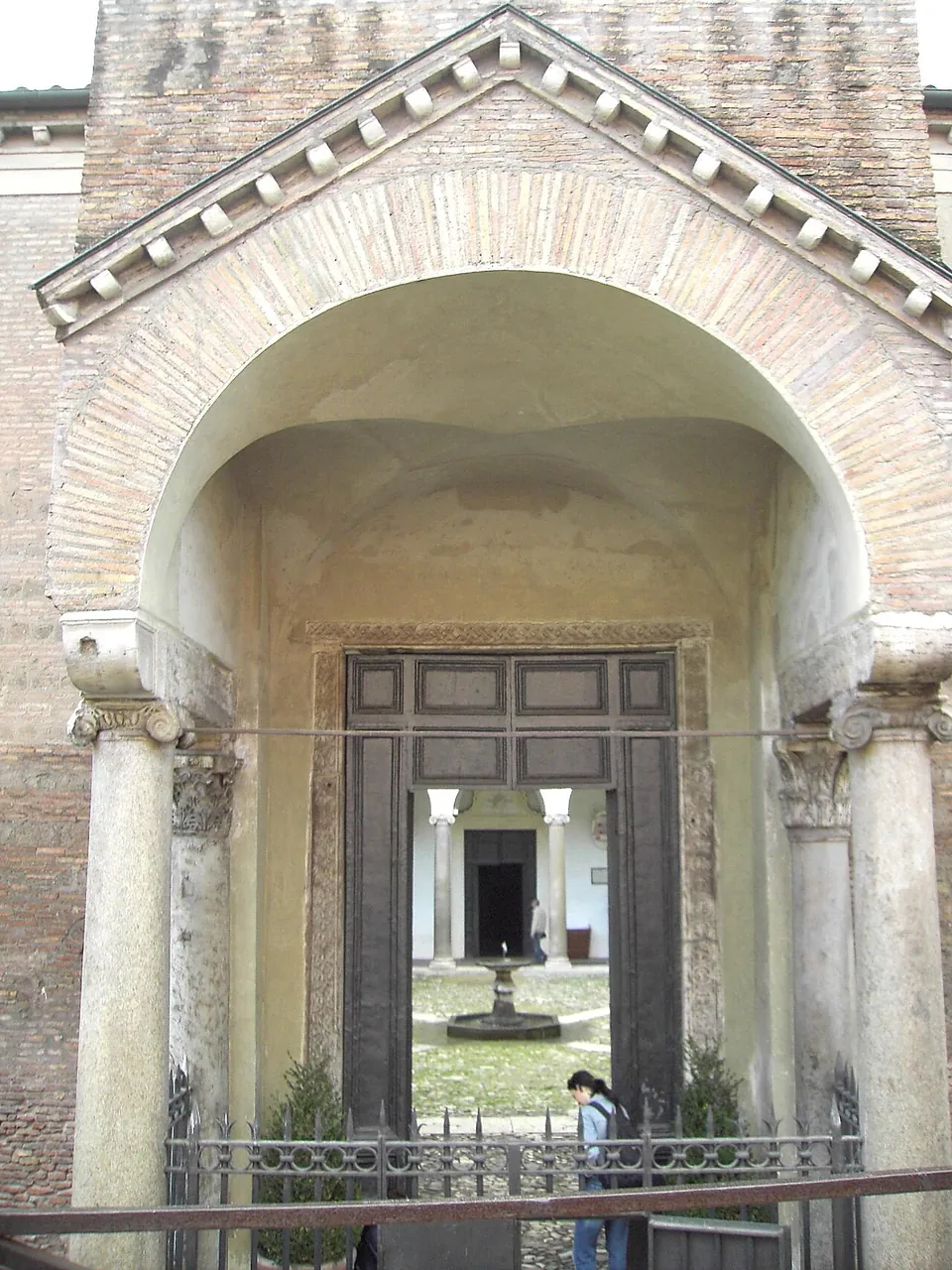


Under the church of San Clemente, about 450 m east of the Colosseum, two levels down, is a shrine of the god Mithras set into a Roman house: a low vaulted room with benches along both walls and, still in place, the altar carved with Mithras killing the bull (en, it and fr.wikipedia). One ticket takes you down through a 4th-century church and into the Roman buildings beside the shrine. It is worth the time if you are at the Colosseum anyway. Entry to the excavations costs €10 and has to be booked online (the operator).
What is there today
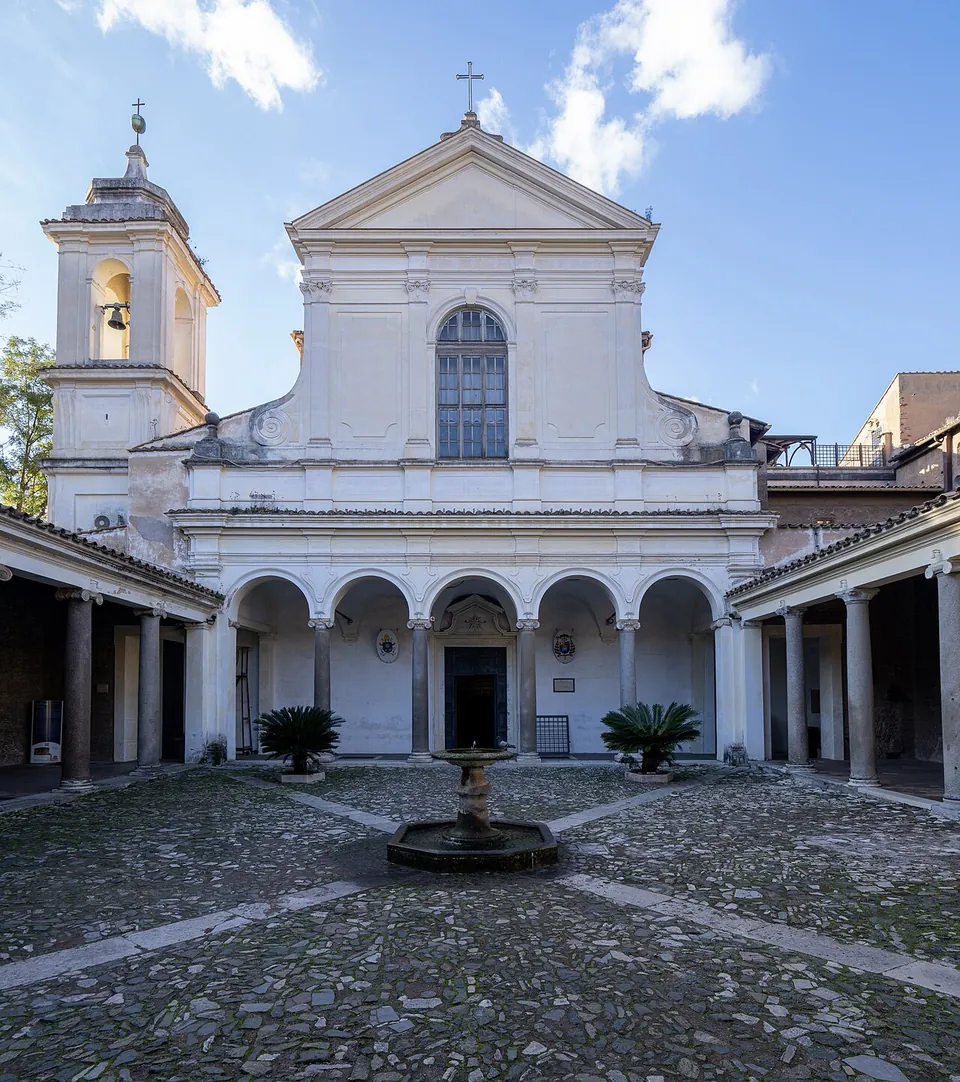
The visit is a descent through three layers (the operator; en.wikipedia). At street level is the present basilica, built about 1099–1120 (en.wikipedia). Below it is the 4th-century basilica, which keeps a series of wall paintings from the 8th to the 11th centuries and the tomb of St Cyril, apostle of the Slavs (the operator). One of the 11th-century scenes, the legend of Sisinnius, carries one of the earliest examples of written Italian (en.wikipedia; the operator). Going down again by an ancient staircase brings you to the Roman level (the operator).
The mithraeum’s main cult room, about 9.6 m long and 6 m wide (en.wikipedia), was set up in the courtyard of a Roman house under a low barrel vault, once decorated with stars (it and fr.wikipedia). Masonry benches run along the walls where the worshippers sat. At the far end, a shallow apse was trimmed with pumice to make it look like a cave (en.wikipedia). The altar, shaped like a sarcophagus, shows Mithras slaying the bull on its front and the torchbearers Cautes and Cautopates on its sides, and its inscription names the donor, the pater Cnaeus Arrius Claudianus (en and fr.wikipedia). A bust of Sol and a figure of Mithras born from the rock, both found here, are still on display (en.wikipedia).
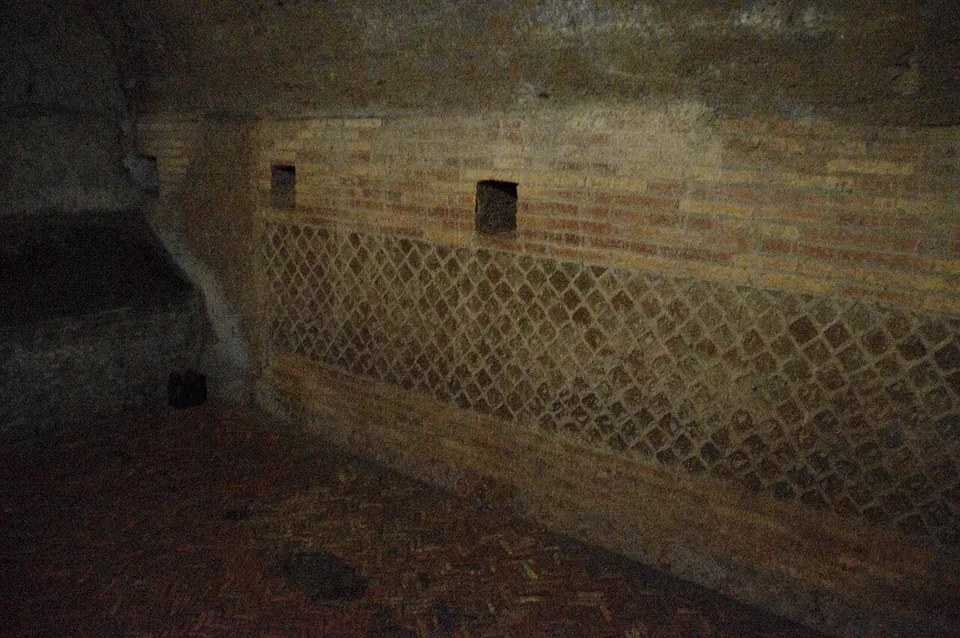
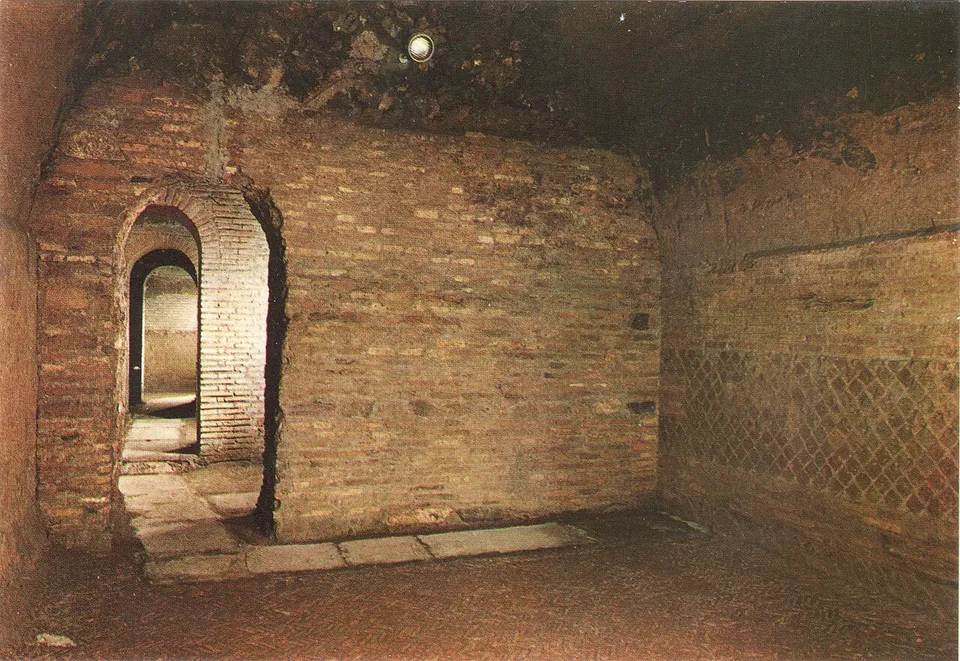
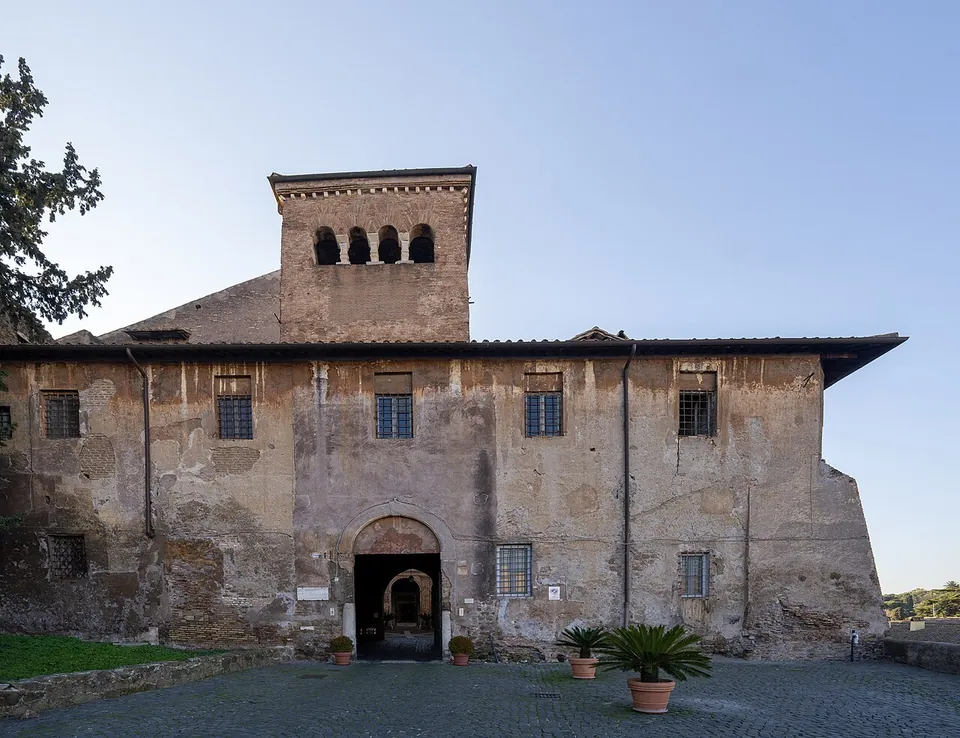
Across a narrow Roman alley is a large building with outer walls of great tuff blocks, where the route runs through a long series of rooms (the operator). It is now taken to be part of the imperial mint, an identification argued by the archaeologist Filippo Coarelli (the operator; en and fr.wikipedia). Water still flows around its foundations (the operator).
Is it worth the trip?
Yes, for most visitors to central Rome. The going down is the experience: from a medieval church to a late Roman one, and down again to the Roman buildings, with a cult room at the bottom that still has its benches and its altar where they stood. It is a short walk from the Colosseum.
Know what you are booking, though. This is a set of dim underground rooms, not open-air ruins, and the mithraeum itself is one small room. The operator lets guided groups spend 30 minutes in the excavations, which gives a sense of how long the visit takes. You cannot take photographs inside, you need a booked time slot, and there is no wheelchair access to the lower levels (the operator).
Getting there and what it costs
The church stands in the valley between the Esquiline and the Caelian, on the road from the Colosseum to the Lateran (it.wikipedia). The Labicana bus and tram stop is about 60 m away, and Colosseo metro station about 550 m (OpenStreetMap). The entrance to the basilica and the excavations is on Piazza di San Clemente (the operator).
The basilica and the excavations open Monday to Saturday from 09.00 to 12.30 (last entry 12.00) and from 14.00 to 18.00 (last entry 17.30), and on Sundays and public holidays from 12.00 to 18.00 (last entry 17.30); changes are posted on the operator’s calendar. Entry to the excavations is €10, or €5 for students under 26 with a student card and for school groups. Under-16s go free with their parents, provided at least one full ticket is bought, as do disabled visitors and their carers. Book online for a date and time slot, and be at the entrance 10 minutes before it. You get a brochure with the route at the entrance; the basilica runs no guided tours of its own, and licensed guides need no booking (basilicasanclemente.com, read 18 October 2026). Food, drink and bulky items such as luggage are not allowed in (the operator).
Visiting details
- Opening hours
- The basilica and the excavations open Monday to Saturday 09.00–12.30 (last entry 12.00) and 14.00–18.00 (last entry 17.30); Sundays and public holidays 12.00–18.00 (last entry 17.30). Changes are posted on the operator's calendar.
- Tickets
- Excavations €10; €5 for students under 26 with a student card and for school groups; free for under-16s with their parents (only together with at least one full ticket), and for disabled visitors and their carers. Entry to the excavations is booked online for a date and time slot.
- Parking
- Paid parking is mapped 43 m from the church (OSM relation/1883788) and along the street 61 m away (relation/1883789).
Before you go
- The excavations can only be entered with an online booking, and daily numbers are limited. Be at the entrance 10 minutes before the time on the ticket.
- Photography and filming are not allowed in the basilica or in the excavations.
- The excavations cannot be reached in a wheelchair.
Hours and prices checked 18 October 2026 on the operator's own site. Confirm before travelling.
Nearby
Santi Quattro Coronati, 140 m up the Caelian, is a church complex whose first church tradition credits to Pope Miltiades in the 4th century, over a Roman villa whose structure can be traced under the church (en.wikipedia; Pleiades). What stands now is the smaller church Pope Paschal II built after Norman troops burned the earlier basilica in 1084, consecrated in 1116, with a 13th-century cloister and the chapel of St Sylvester, consecrated in 1247 with frescoes of Sylvester and Constantine (en.wikipedia). Its opening hours were not found on any page of its own.
About 300 m east, between Via Labicana and Via Merulana (on Via Pasquale Villari), one massive stretch of wall is all that can still be seen of the Temple of Isis on Via Labicana, a large sanctuary of Isis and Serapis that gave its name to the city’s third region (it.wikipedia).
The map also marks the Porta Querquetulana, a gate in the Servian Wall. Nothing of it survives, and where it stood is disputed (en and it.wikipedia).
History
The oldest remains on the lowest level are traces of a building that may go back to the Republic and may have been destroyed in the Great Fire of 64 (en.wikipedia). The tuff-walled building across the alley is harder to date: its outer walls of large tuff blocks suggested a Republican building to some, while Coarelli dates its interior after the fire of 64 and sees in it the Moneta, the mint, moved here under Domitian after the Capitol burned in 80 (fr.wikipedia). The brick house beside it dates from Domitian’s reign, about 90–96, by the stamps on its bricks (fr.wikipedia), though it.wikipedia puts it in the second half of the 2nd century.
The mithraeum was fitted into the house’s courtyard later. Published dates run from the 2nd century to the second quarter of the 3rd (the operator; en, fr and it.wikipedia). It was abandoned towards the end of the 4th century, probably when the site was turned into a Christian basilica (fr.wikipedia). That church was standing by 392, when St Jerome wrote of a church dedicated to St Clement, and councils met in it in 417 and 499 (en.wikipedia). Its proportions have been read as a sign of an early date, which would make it the oldest surviving three-aisled Christian basilica (it.wikipedia). Early in the 12th century it was filled in and the present church built on top (en.wikipedia).
The buried levels were found in the 19th century by Joseph Mullooly, prior of the Irish Dominicans at San Clemente, from 1857 (it.wikipedia; en.wikipedia gives the 1860s). The year the mithraeum itself came to light is given variously as 1861, 1867 and 1869 (it, en and fr.wikipedia). Flooding kept it from being explored until a drainage tunnel 600 m long, dug 14 m below ground to an ancient sewer near the Colosseum between 1912 and 1914, drained it; the prior Louis Nolan then excavated the house around it (fr.wikipedia).
More photographs



Nearby
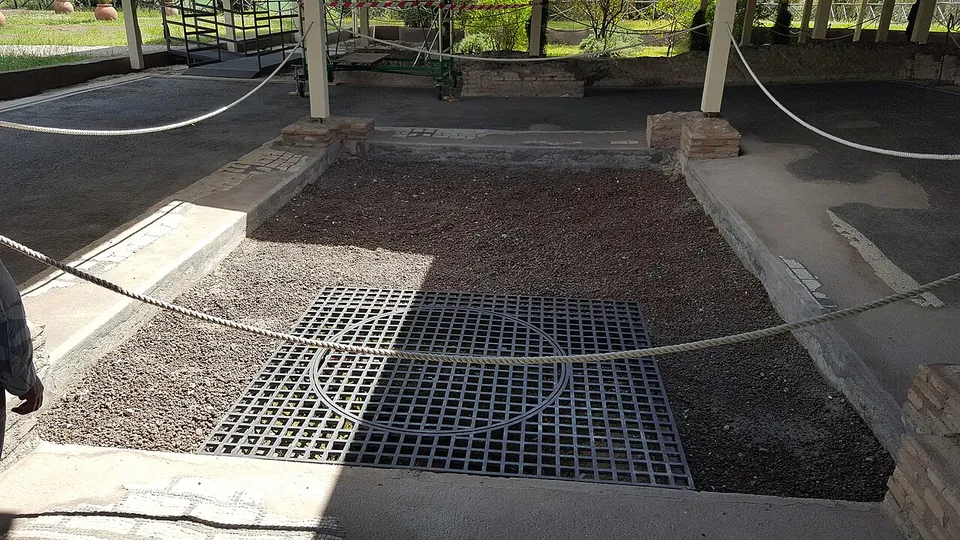
Photo: MumblerJamie · CC BY-SA 2.0 · Commons
13 km · villa · Lazio
Villa of Livia
The operator describes the private wing with the bedrooms of Livia and the emperor, an atrium and a small inner garden, and the large reception rooms that open onto a peristyle; the rooms once had painted walls and floors of mosaic and cut marble (Soprintendenza Speciale di Roma).
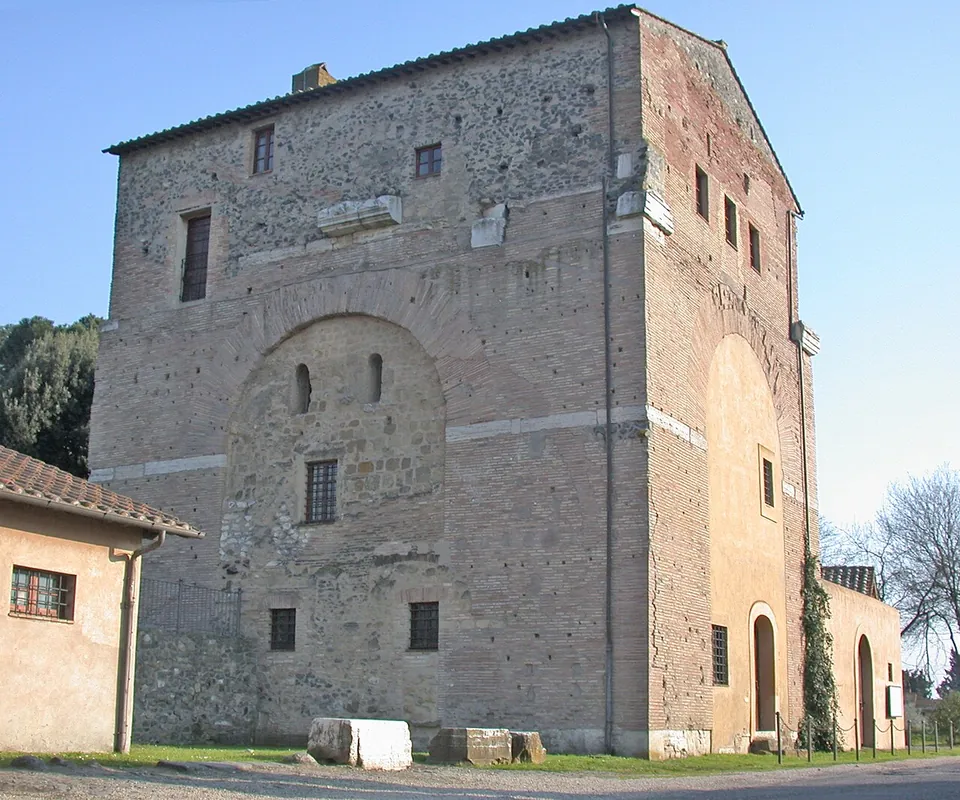
Photo: MM · Public domain · Commons
18 km · arch · Lazio
Arch of Malborghetto
At first sight you see an austere farmhouse rather than an arch (it.wikipedia).
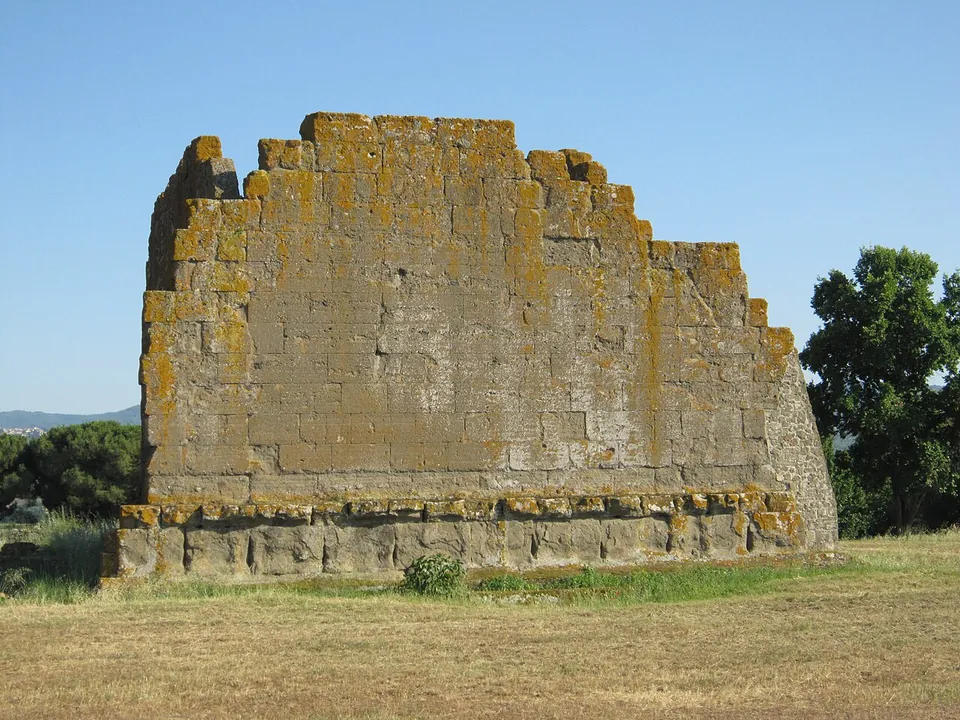
Photo: Carlomorino · CC BY-SA 3.0 · Commons
18 km · city · Lazio
Gabii
The park the state holds covers about 70 hectares on the southern rim of a volcanic crater whose lake was drained in the 19th century (the operator; en.wikipedia).


Straight-line distances.
Sources
Every fact on this page comes from the records below, each used under the licence noted.
| Source | Licence |
|---|---|
| Wikidata Q3859478 | CC0 |
| Vici.org 23522 | CC BY-SA (text), CC0 (metadata) |
| OpenStreetMap node/5615949445 | ODbL |
| Wikipedia (it) — Mitreo di San Clemente | CC BY-SA 4.0 |
| Wikipedia (fr) — Mithraeum (San Clemente) | CC BY-SA 4.0 |
| Wikipedia (en) — San Clemente, Rome | CC BY-SA 4.0 |
| Wikipedia (it) — Basilica di San Clemente al Laterano | CC BY-SA 4.0 |
| Basilica di San Clemente — opening hours and information (the operator) | licence not recorded |
| Basilica di San Clemente — prepare your visit (the operator's rules for visitors) | licence not recorded |
| Basilica di San Clemente — the basilica and the excavations (the operator) | licence not recorded |
| Wikipedia (en) — Santi Quattro Coronati | CC BY-SA 4.0 |
| Pleiades — Santi Quattro Coronati | licence not recorded |
| Wikipedia (it) — Tempio di Iside a via Labicana | CC BY-SA 4.0 |
| Wikipedia (en) — Porta Querquetulana | CC BY-SA 4.0 |
| Wikipedia (it) — Porta Caelimontana e Porta Querquetulana | CC BY-SA 4.0 |