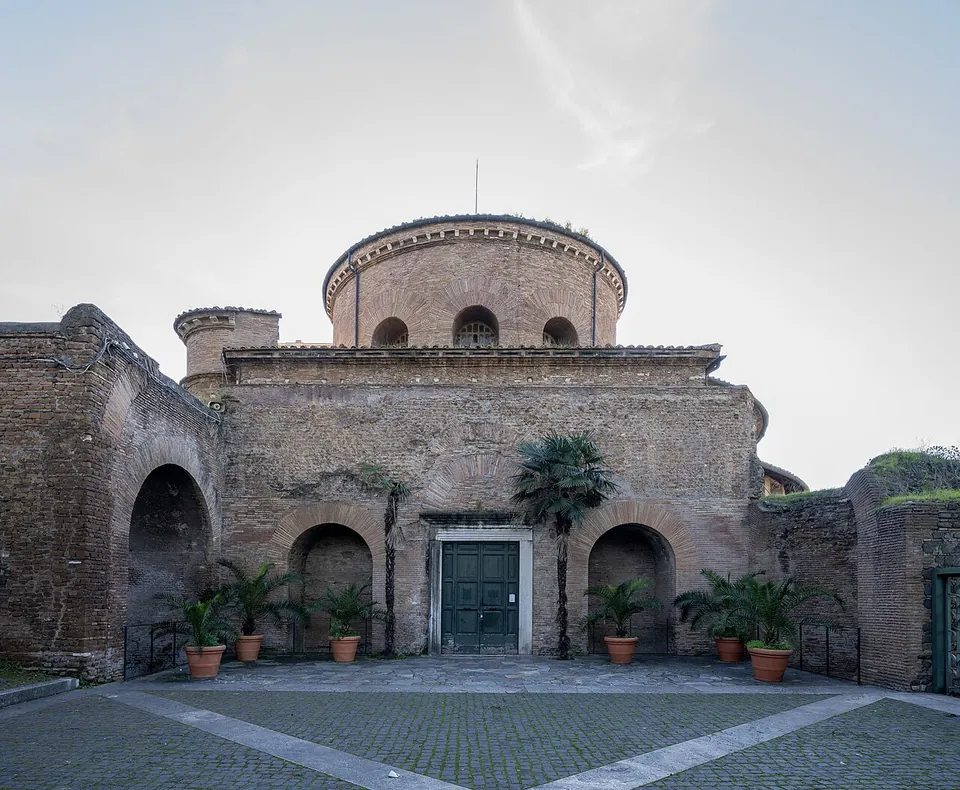


Santa Costanza is the round mausoleum built in the middle of the 4th century for Constantina, daughter of the emperor Constantine, beside the Via Nomentana about 4 km north-east of the Forum. It is one of the best-preserved buildings of late antiquity left in Rome, and the vault of its ambulatory still carries its original 4th-century mosaics (en.wikipedia). For anyone interested in early Christian or late Roman art it is worth the ride out: the parish that runs it lists no ticket for the mausoleum, which opens every morning and afternoon, and the catacombs of Saint Agnes next door can be seen on a €10 guided tour.
What is there today
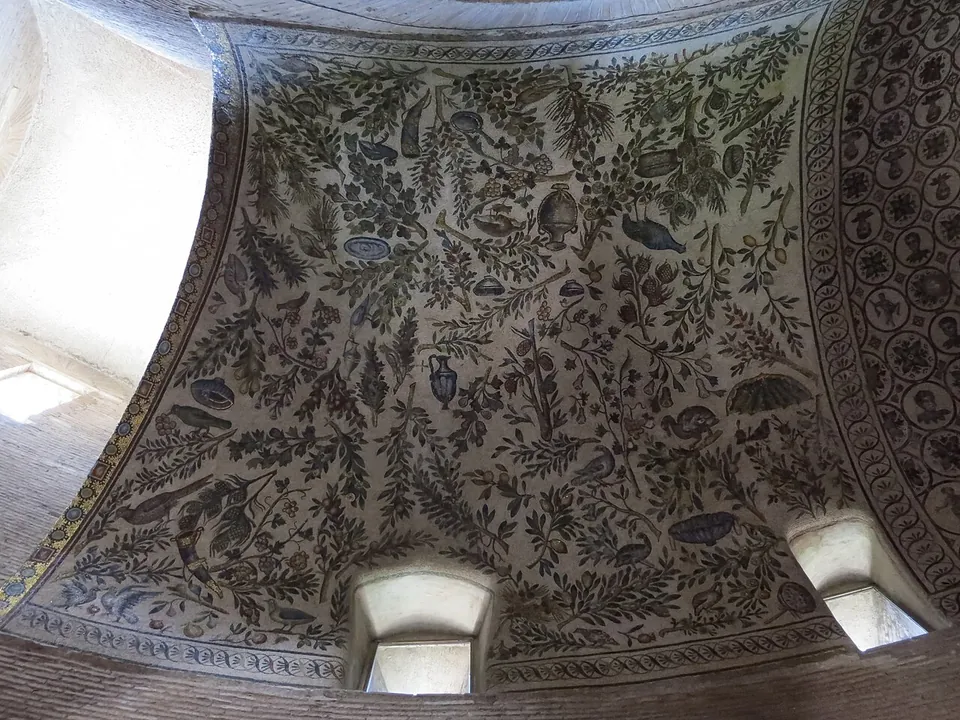
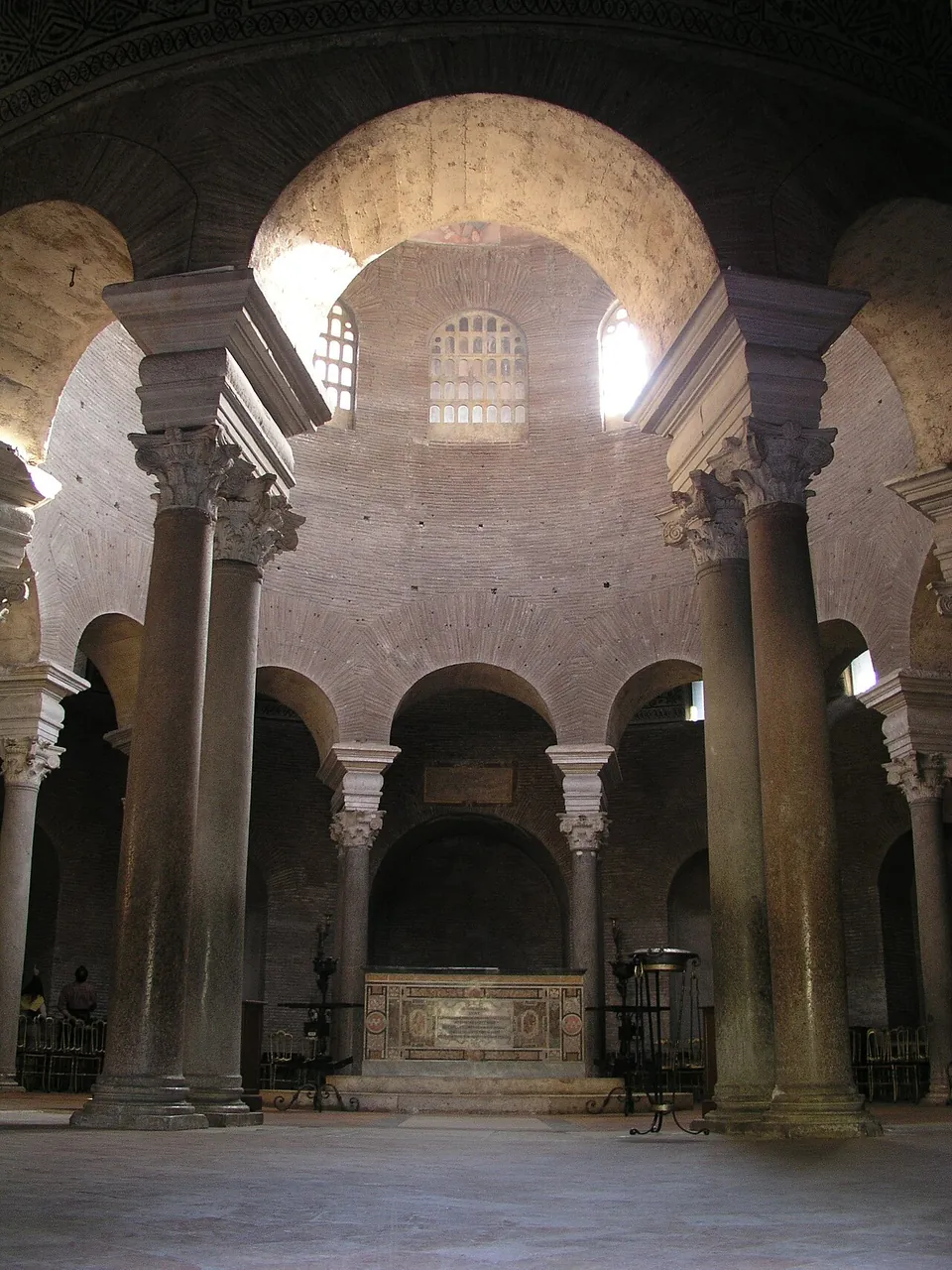
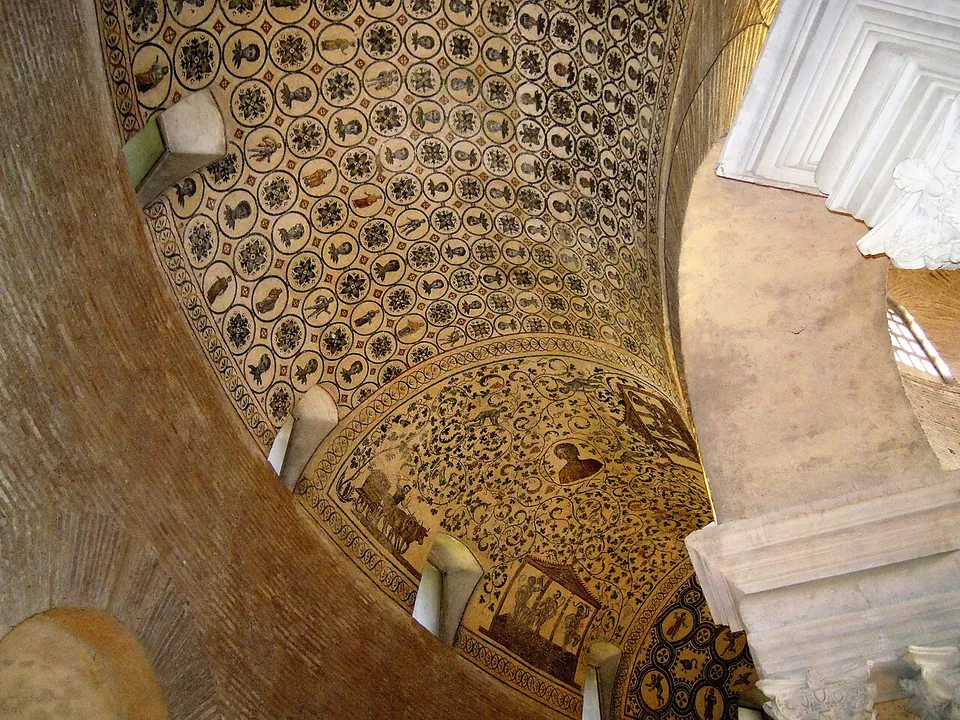
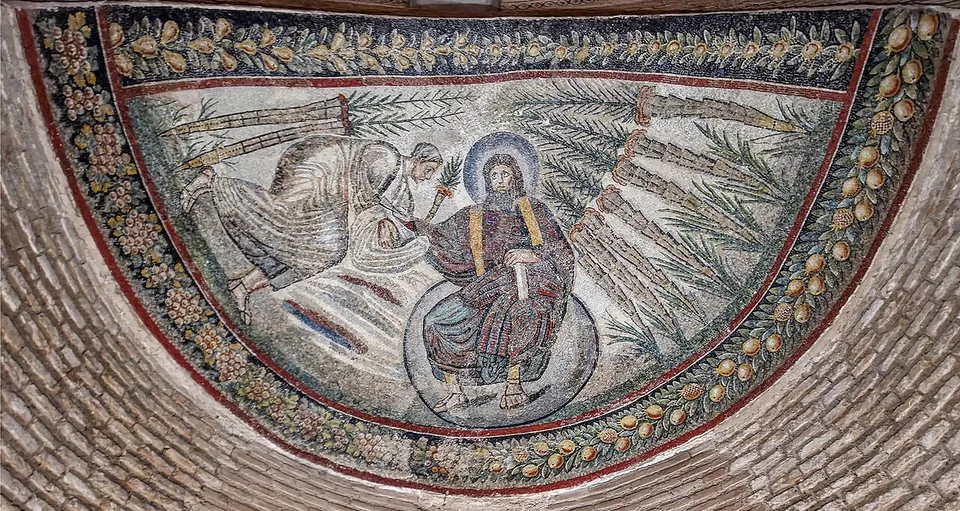
The mausoleum. It is a circular building of brick-faced concrete: a high central space under a shallow dome raised on a drum, lit by twelve windows and carried on twelve pairs of granite columns with composite capitals, ringed by a darker, barrel-vaulted ambulatory (en.wikipedia; the capitals are reused, it.wikipedia). The ambulatory vault is the reason to come. Its mosaics are contemporary with the building and secular in feel: vine scrolls, geometric patterns, birds, vessels and branches, and a panel of cupids harvesting grapes and making wine, the scenes that led Renaissance visitors to take the place for a temple of Bacchus (en.wikipedia; it.wikipedia). They rank among the oldest monumental Christian mosaics surviving in Rome (Turismo Roma). Two small apses in the ambulatory wall hold mosaics of Christ handing a scroll to Saint Peter, one inscribed DOMINUS PACEM DAT, “the Lord gives peace”; both have been much restored, and whether they belong to the 5th or the 7th century is long debated (en.wikipedia; it.wikipedia). The dome’s own mosaics are gone, destroyed around 1620 and known from watercolour copies made in 1538–1540 (it.wikipedia; en.wikipedia). The great porphyry sarcophagus is in the Vatican Museums; a cast copy stands in the ambulatory (en.wikipedia).
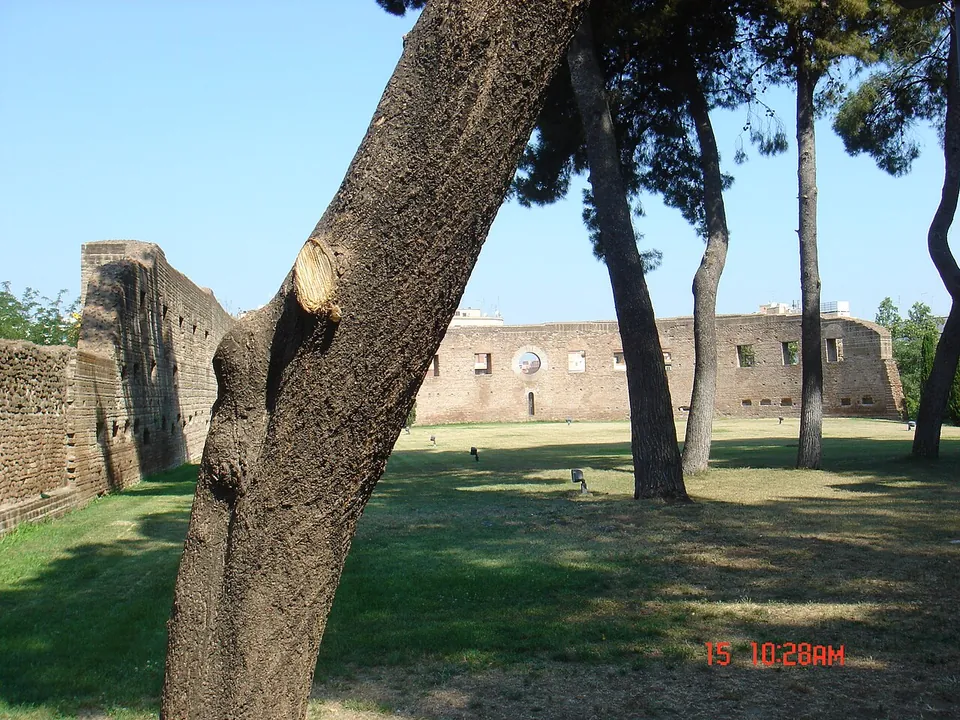
The Constantinian basilica. Beside the mausoleum lie the ruins of the very large funerary basilica built under Constantine from 338, to which the mausoleum was joined (en.wikipedia). The lower walls of part of it and its apse still stand (en.wikipedia). Its archaeological area is entered only on the parish’s private guided tour (the operator).
Sant’Agnese fuori le mura. A short walk away, the present church of Saint Agnes was built by Pope Honorius I in the 7th century, over what was held to be her grave (Pleiades; en.wikipedia). It keeps much of its original structure, and its apse mosaic, less restored than most of its date, shows Agnes in the dress of a Byzantine empress between Honorius, who offers a model of the church, and a second pope whose identity is uncertain. A long staircase lined with inscriptions from the catacombs and other ancient buildings leads down from the street to the church floor (en.wikipedia), and the marble plaque carved with Pope Damasus’s 4th-century poem on Agnes is set in its narthex (en.wikipedia, Catacombs of Saint Agnes).
The catacombs of Saint Agnes. Agnes was buried in this underground cemetery under the church. It runs on three levels and has no significant paintings, but it is rich in inscriptions; the oldest dated one, the epitaph of a man named Sisinnius, is from 314 (en.wikipedia). Visits are by guided tour only (the operator).
Catacomba Maggiore. Also on the Via Nomentana, with its entrance on Via Asmara, the Coemeterium Maius began around the middle of the 3rd century as two separate burial grounds whose union made it the largest catacomb in Rome; one of its galleries, nearly 200 m long, is among the longest underground in the city, and a crypt keeps remains of frescoes, the oldest from the first half of the 4th century (it.wikipedia). No public visiting hours are published for it.
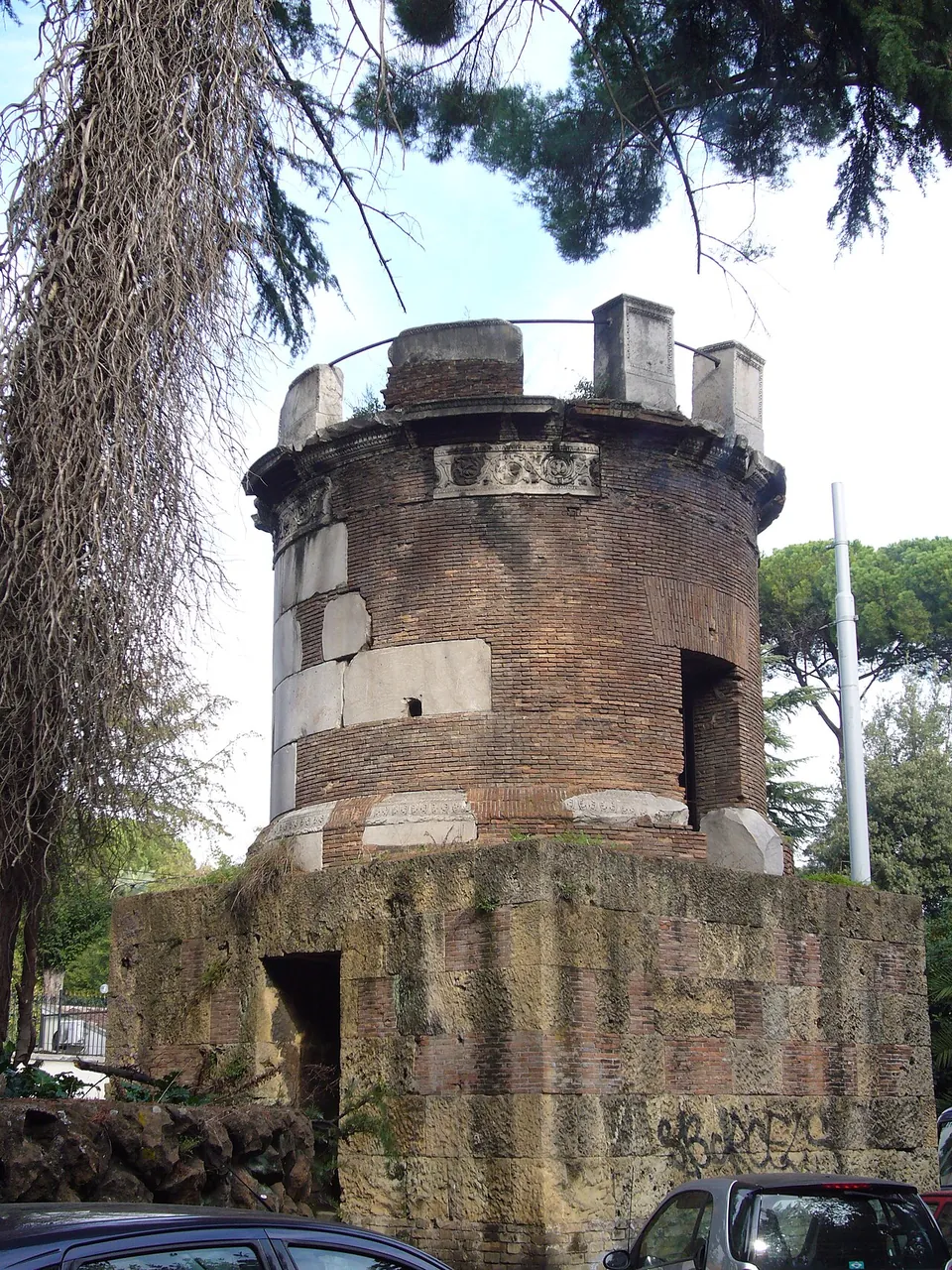
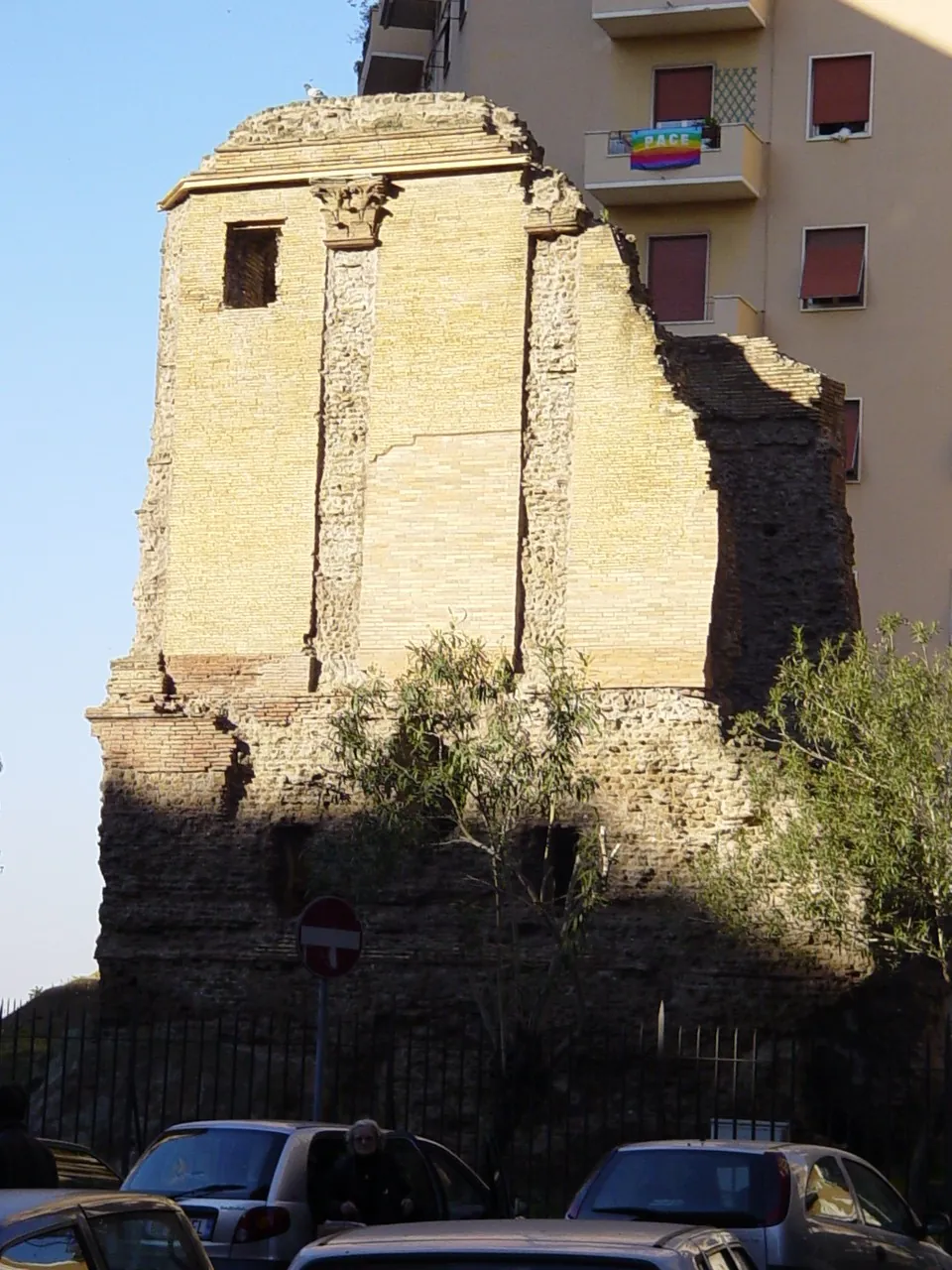
Two tombs by the road. About 300 m along the Via Nomentana stands the so-called Mausoleum of Tor di Quinto. It was built at Tor di Quinto, by the ancient Via Flaminia, as twin marble-faced drums on a high podium; its marble facing, partly recovered in excavations in the 1870s, was later reassembled here by the archaeologist Giacomo Boni, who rebuilt one drum with a new red-brick base and core, decorated with the original garland frieze. It dates from the 1st or 2nd century AD (Sovrintendenza Capitolina). About 900 m to the north-east, in Piazza Elio Callistio, the “Devil’s Chair” is a two-storey temple-tomb from the first half of the 2nd century. Its front has collapsed and three sides survive, which give it the look of a huge chair with armrests; the attribution to Aelius Callistion, a freedman of Hadrian, is disputed (Sovrintendenza Capitolina). Both can be seen only from outside (Sovrintendenza Capitolina).
Is it worth the trip?
Yes, if late Roman or early Christian art is part of why you came to Rome. The ambulatory mosaics are 4th-century work still in place, on one of the best-preserved late antique buildings in Rome. The building itself is one round room and its ambulatory, so on its own it is a short visit; with the basilica of Sant’Agnese and a catacomb tour in the same complex it becomes a proper outing.
The caveats are practical. The mausoleum closes between 12.00 and 15.00 and to visitors during services, the catacombs close on Sundays and from 16 November to 6 December 2026, and the two roadside tombs are views from the pavement, not visits (the operator; Sovrintendenza Capitolina). The catacombs are not accessible to wheelchair users.
Getting there and what it costs
Metro line B1 to S. Agnese–Annibaliano and use the entrance on Via di S. Agnese 3, or take bus 60 express from Piazza Venezia or 90 from Termini to Nomentana/XXI Aprile and use the entrance at Via Nomentana 349 (the operator). A bus stop named S. Costanza/Nomentana is about 120 m from the mausoleum, and there is street parking about 110 m away (OpenStreetMap).
Hours and prices are from the parish’s own page, read 17 October 2026:
- Mausoleum: daily 09.00 to 12.00 and 15.00 to 18.00, closed to visitors during services. No ticket is listed.
- Basilica of Sant’Agnese: Monday to Saturday 09.00 to 12.00 and 15.00 to 19.00, Sunday 15.00 to 19.00. No ticket is listed.
- Catacombs: a 30-minute guided tour, Monday to Saturday, on the hour at 10.00, 11.00, 12.00, 15.00, 16.00 and 17.00, each slot in one of Italian, English, French or German. €10, €7 reduced (ages 7 to 16, students of archaeology, architecture, art history and cultural heritage up to 25, and clergy), free up to age 6 and for disabled visitors with a companion. The 60-minute tour of the whole complex costs €2 more, paid on the day. At most 20 people a tour; booking, by e-mail or through the Omnia Vatican-Rome portal the parish links to, is recommended, and required for groups of more than ten. Closed Sundays, 1 January, Easter, 15 August, Christmas and the mornings of religious holidays.
- Private tours for up to five people cost €80, and are the only way into the Constantinian basilica’s archaeological area and the women’s gallery of Sant’Agnese.
Visiting details
- Opening hours
- Mausoleum daily 09.00–12.00 and 15.00–18.00, closed to visitors during services. Basilica of Sant'Agnese Monday–Saturday 09.00–12.00 and 15.00–19.00, Sunday 15.00–19.00. Catacombs by guided tour only, Monday–Saturday, tours at 10.00, 11.00, 12.00, 15.00, 16.00 and 17.00 (the language changes by slot); catacombs closed on Sundays, 1 January, Easter, 15 August, Christmas and the mornings of religious holidays.
- Tickets
- No ticket is listed for the mausoleum or the basilica. Catacombs, 30-minute guided tour, €10; €7 reduced (ages 7–16, students of archaeology, architecture, art history and cultural heritage up to 25, clergy); free up to age 6 and for disabled visitors with a companion. The 60-minute tour of the whole complex is €2 more, paid on the day. Private tours, the only way into the Constantinian basilica's archaeological area, cost €80 for up to five people.
- Parking
- Street-side parking about 110 m from the mausoleum (OSM way/1357823637).
Before you go
- The catacombs close for their annual break from 16 November to 6 December 2026, and on the afternoon of 24 December and on 31 December 2026; the mausoleum's own hours are not affected.
- The catacombs can only be visited with a guide, at most 20 people a tour, and are not accessible to wheelchair users. Booking is recommended and is mandatory for groups of more than ten.
Hours and prices checked 17 October 2026 on the operator's own site. Confirm before travelling.
History
Agnes, a girl of twelve or thirteen by the published accounts, was martyred in one of the persecutions of the 3rd or early 4th century and buried in a cemetery already in use on the Via Nomentana (the operator; en.wikipedia). Constantine took over the ground above part of it and built the great funerary basilica from 338; early Christians believed that burial near a martyr benefited the soul, which almost certainly drew burials to the hall (en.wikipedia).
The mausoleum followed in the middle of the century; published dates run from 340–345 (it.wikipedia) to about 350, the date excavations in 1992 pointed to (en.wikipedia). Constantina, who died in 354, and her sister Helena, wife of the emperor Julian, were both buried here (it.wikipedia), Constantina’s body brought back from Bithynia and Helena’s from Gaul (en.wikipedia). Which of the two porphyry sarcophagi held which sister is now disputed (en.wikipedia).
The mausoleum belonged to the emperors, not the church; it served as the baptistery of Sant’Agnese and became a church in its own right in 1254 under Pope Alexander IV (it.wikipedia). The name Santa Costanza is first recorded in 865, when Pope Nicholas I said mass there (en.wikipedia). The Constantinian basilica fell into ruin and was replaced in the 7th century by Honorius I’s smaller church over Agnes’s grave (en.wikipedia). In the Renaissance the mausoleum drew great interest from architects, while its harvest mosaics had it taken for a temple of Bacchus (it.wikipedia); the dome mosaics were destroyed around 1620 (it.wikipedia), and the larger sarcophagus went to the Vatican in the late 18th century (en.wikipedia).
More photographs





Nearby
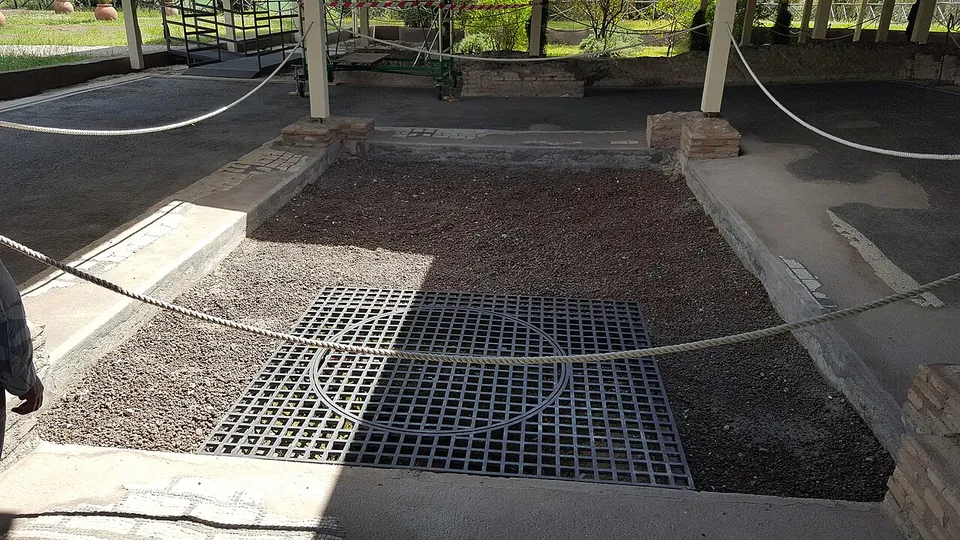
Photo: MumblerJamie · CC BY-SA 2.0 · Commons
9 km · villa · Lazio
Villa of Livia
The operator describes the private wing with the bedrooms of Livia and the emperor, an atrium and a small inner garden, and the large reception rooms that open onto a peristyle; the rooms once had painted walls and floors of mosaic and cut marble (Soprintendenza Speciale di Roma).
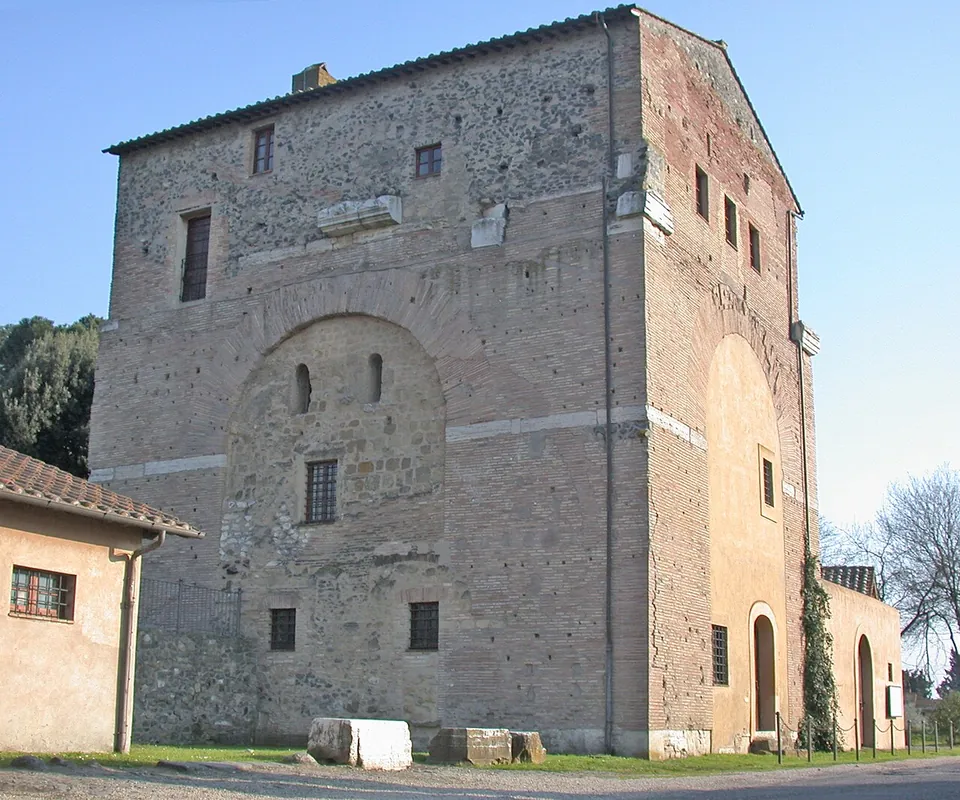
Photo: MM · Public domain · Commons
15 km · arch · Lazio
Arch of Malborghetto
At first sight you see an austere farmhouse rather than an arch (it.wikipedia).
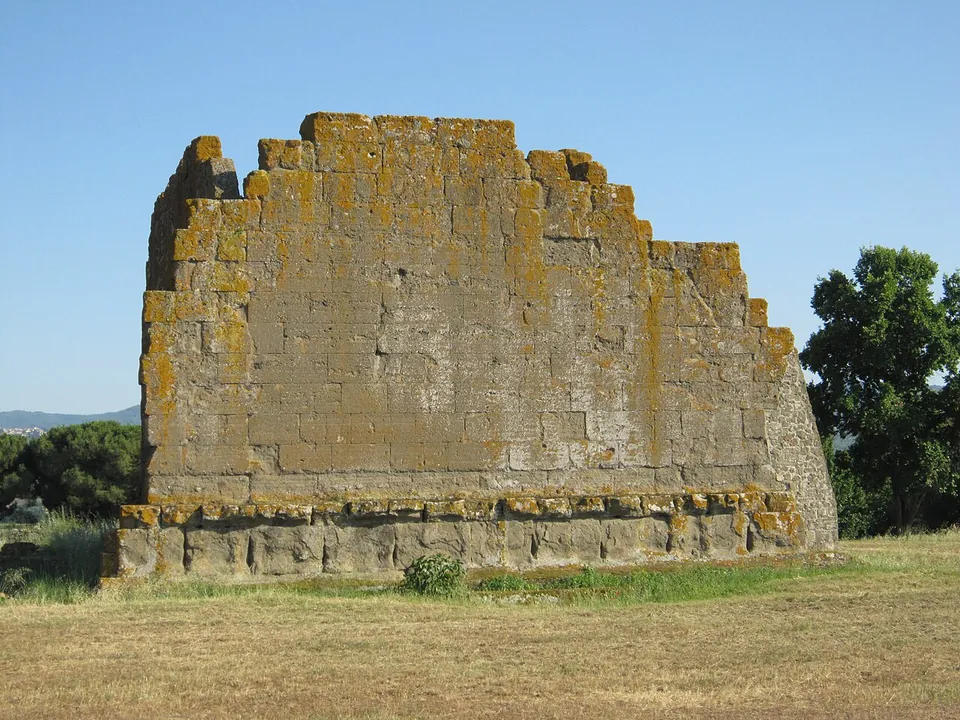
Photo: Carlomorino · CC BY-SA 3.0 · Commons
17 km · city · Lazio
Gabii
The park the state holds covers about 70 hectares on the southern rim of a volcanic crater whose lake was drained in the 19th century (the operator; en.wikipedia).


Straight-line distances.
Sources
Every fact on this page comes from the records below, each used under the licence noted.
| Source | Licence |
|---|---|
| Pleiades 528606605 | CC BY |
| Wikidata Q831361 | CC0 |
| OpenStreetMap way/35306502 | ODbL |
| Pleiades — S. Agnese (the church and cemetery the mausoleum belongs to) | licence not recorded |
| Wikipedia (en) — Mausoleum of Constantina | CC BY-SA 4.0 |
| Wikipedia (it) — Mausoleo di Santa Costanza | CC BY-SA 4.0 |
| Wikipedia (en) — Sant'Agnese fuori le mura | CC BY-SA 4.0 |
| Wikipedia (en) — Catacombs of Saint Agnes | CC BY-SA 4.0 |
| Wikipedia (it) — Catacomba Maggiore | CC BY-SA 4.0 |
| Wikipedia (it) — Sedia del Diavolo | CC BY-SA 4.0 |
| Parrocchia di S. Agnese fuori le mura — catacombs and mausoleum, hours and tickets (the operator) | licence not recorded |
| Turismo Roma — Basilica of Sant'Agnese outside the Walls and Mausoleum of Santa Costanza | licence not recorded |
| Sovrintendenza Capitolina — Mausoleo di Tor di Quinto | licence not recorded |
| Sovrintendenza Capitolina — Sepolcro di Elio Callistio | licence not recorded |