

What is there today
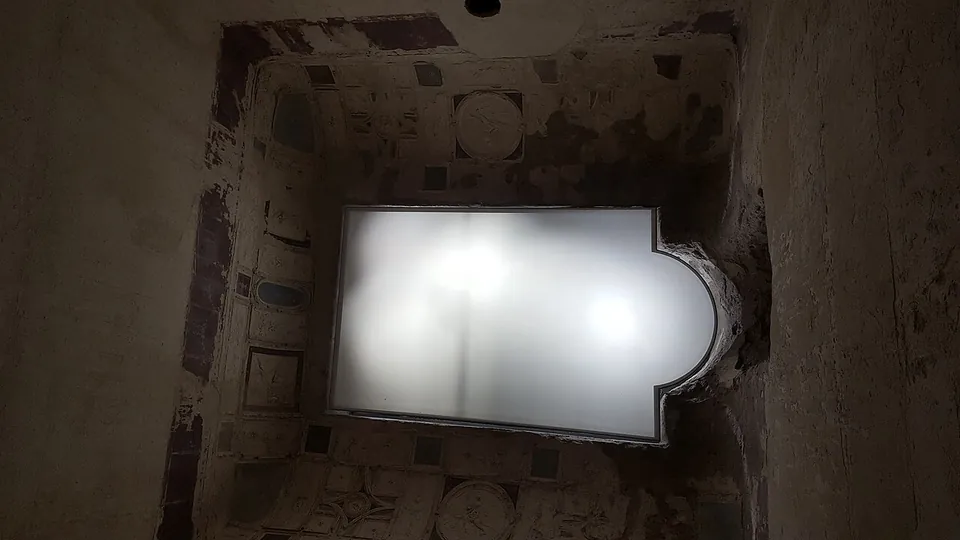
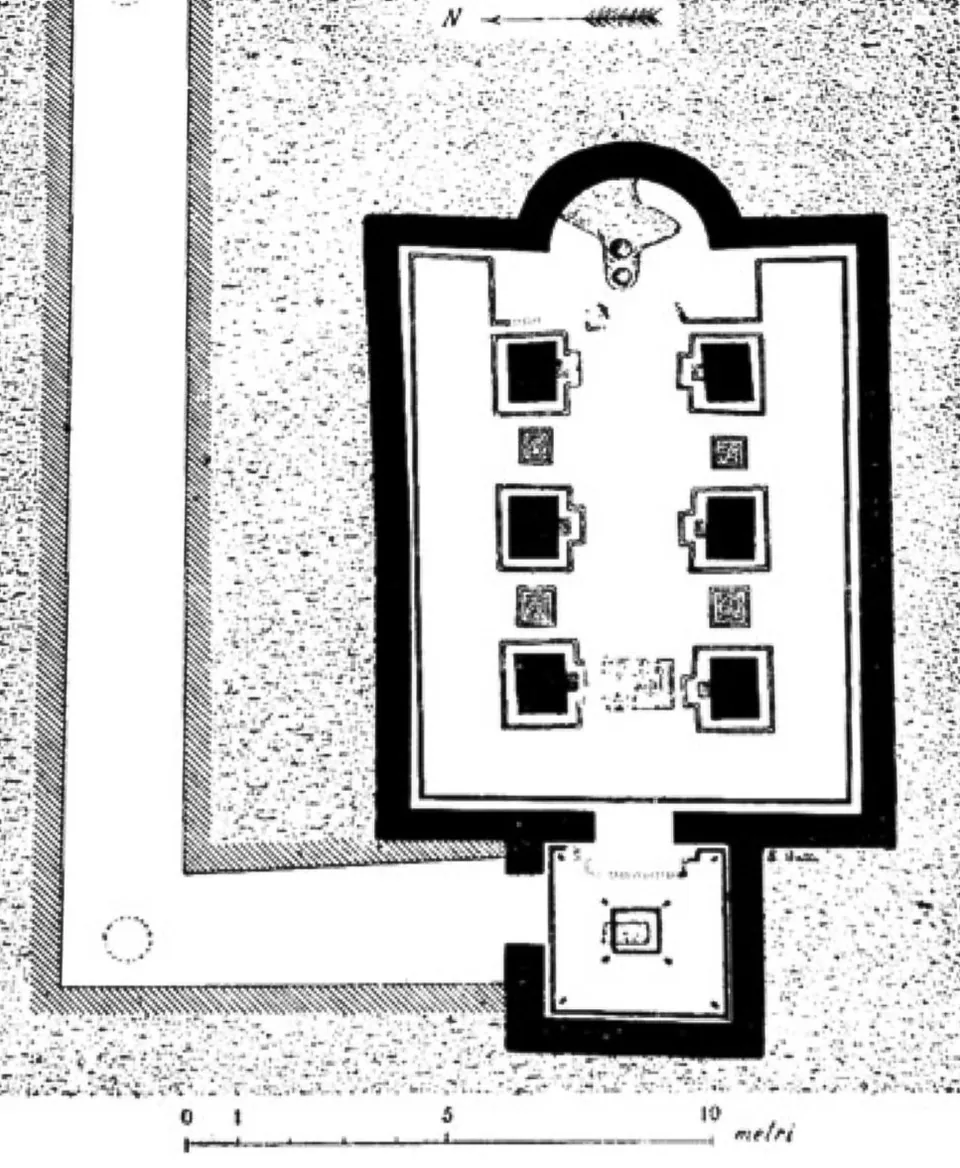
The whole building is underground and survives almost entire: the last stretch of the original access corridor, a square vestibule about 3.6 m across whose vault is pierced by a skylight, and the main hall, 12 by 9 m, divided by six pillars into three barrel-vaulted aisles, the central one ending in a semicircular apse (Ministry of Culture). Published figures for its depth range from about 7 to 13 m below today’s street (Ministry of Culture; en.wikipedia; Coopculture); in practice it is a flight of modern steps down from the Via Prenestina (fr.wikipedia).
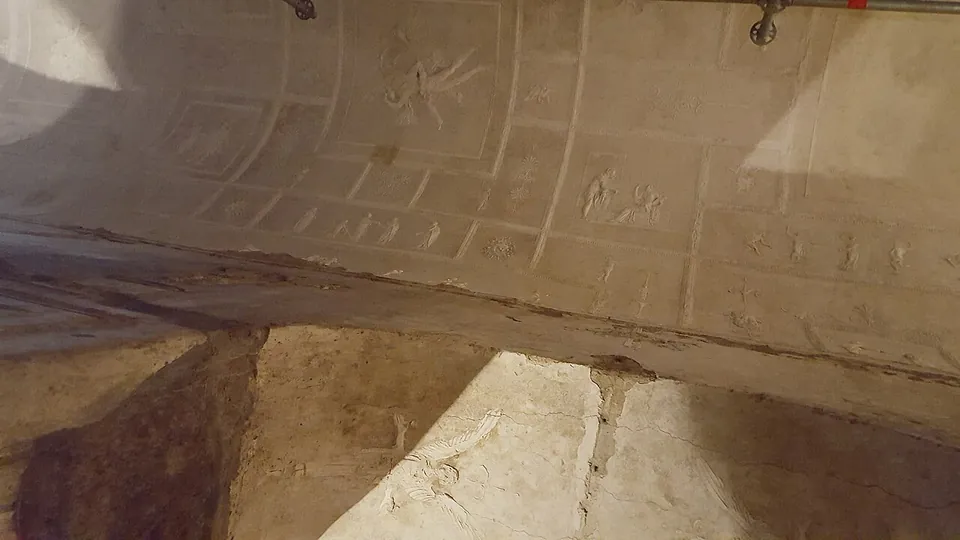
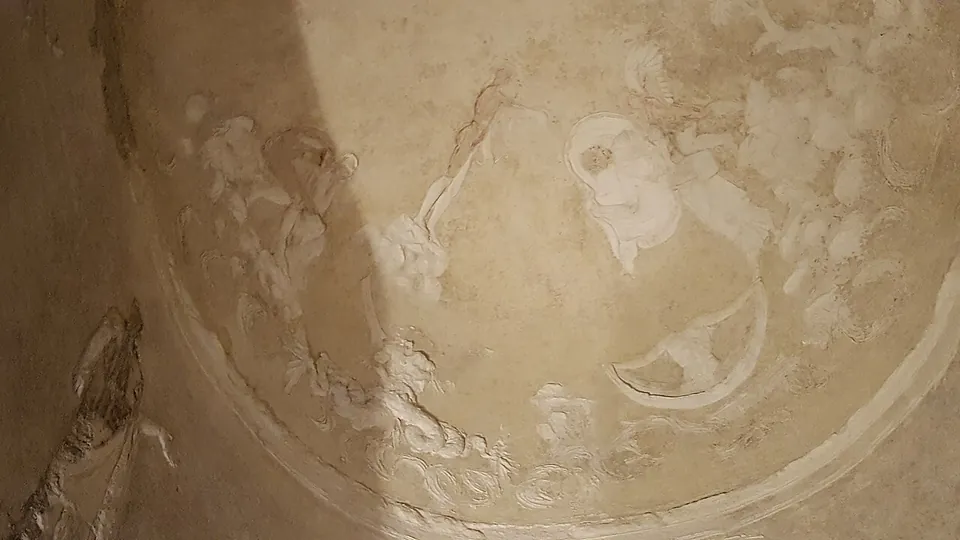
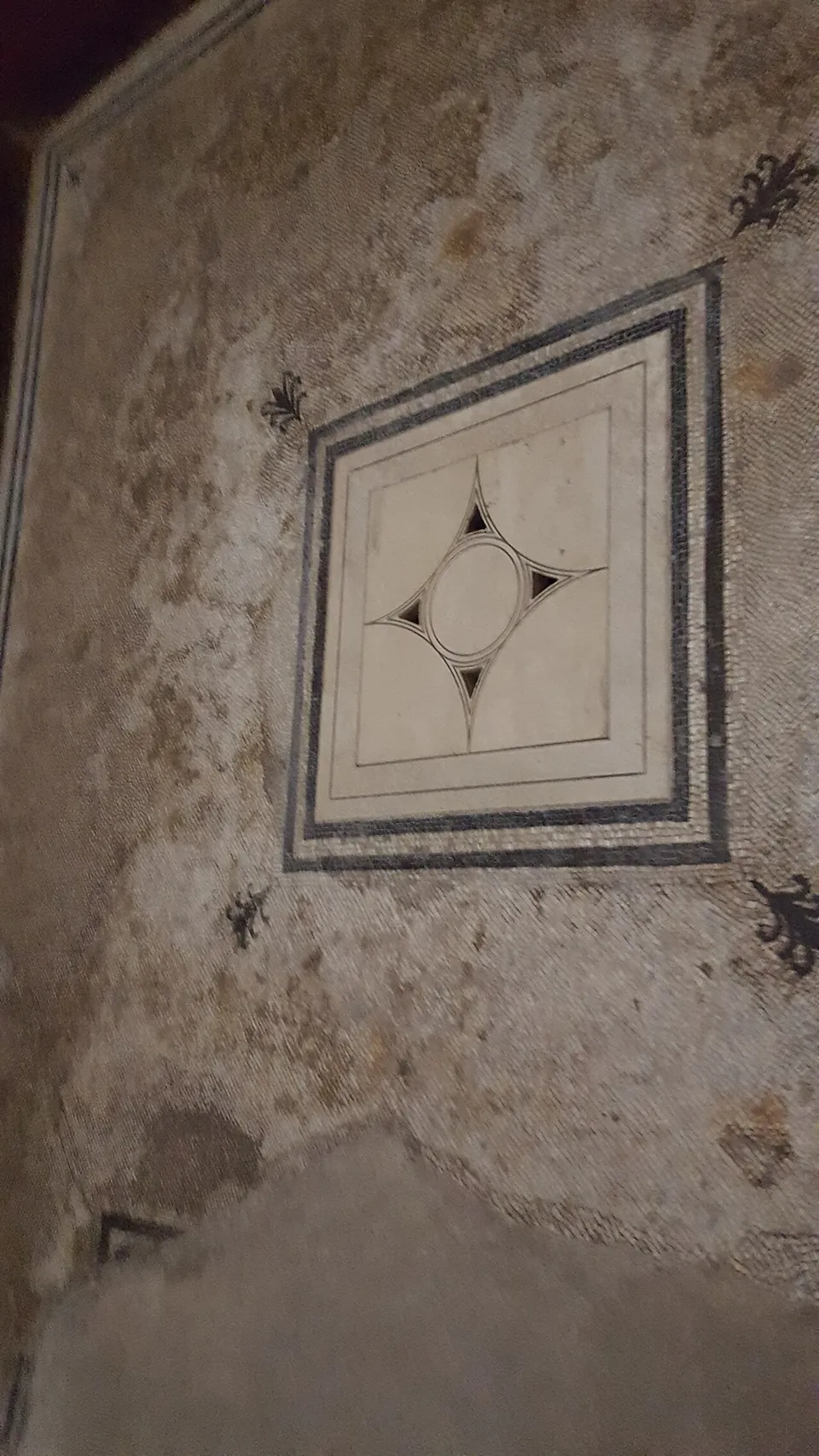
What people come for is the decoration. The floors are black-and-white mosaic, and the walls and vaults are covered in white stucco (Ministry of Culture). The scenes include Ganymede carried off by Zeus, Medea offering a potion to the dragon that guards the Golden Fleece, a scene usually read as the poet Sappho throwing herself into the sea, winged Victories, Medusa heads, children at play and souls being led to the underworld (it.wikipedia; fr.wikipedia, which notes that the Sappho reading is not unanimous). The vestibule’s panels are set on a coloured ground, with a Victory and maenads riding panthers (fr.wikipedia). The stucco is so well kept because the building was in use only briefly (fr.wikipedia). Since 1951 the ancient structure has sat inside a reinforced-concrete shell that protects it from the vibration of the trains overhead and from seeping water, and its temperature and humidity are held steady by an air-handling system (it.wikipedia; Ministry of Culture).
Is it worth the trip?
For the decoration, yes, if you can get a place. The Ministry of Culture calls it the oldest basilica-plan building yet found in Rome, and it.wikipedia the oldest pagan basilica in the West.
The catch is getting in. Visits are guided, booked in advance and in small groups, and at present the operator publishes no regular dates: the last notice gave the second, third and fourth Sundays of the month, but the ticket office it pointed to no longer lists the site, and the openings the Ministry has announced lately are one-off heritage days with slots of 15 people. Since the building is entirely underground, a walk past shows nothing of it. Treat it as a prize for a planned trip rather than a stop on a walk, and check soprintendenzaspecialeroma.it before going. The route down is not suitable for wheelchair users (Coopculture).
Getting there
The entrance is on Piazzale Labicano, just outside Porta Maggiore (Ministry of Culture). The tram and bus stop Labicano/Porta Maggiore is beside the gate (OpenStreetMap), and Coopculture’s page for the site gave metro line A to Manzoni, buses 50 and 105 and trams 3, 5, 8, 14 and 19 (archived copy of April 2024). The gate itself, with the Tomb of Eurysaces the Baker beside it, is on its own page. About 500 m to the south, around the church of Santa Croce in Gerusalemme, are the remains of an imperial palace and the Amphitheatrum Castrense.
A ticket is €5.50 plus a €2.00 booking fee (Ministry of Culture, read 21 October 2026; the listing was last updated in January 2023). The Soprintendenza’s own site is the place to confirm the price and the dates.
Visiting details
- Opening hours
- Guided visits only, booked in advance; no regular calendar is currently published. The Soprintendenza's notice, in its copy archived on 4 October 2025, gives visits on the second, third and fourth Sunday of each month, booked through Coopculture, but Coopculture's page for the basilica has been withdrawn. Special openings are held on heritage days, in slots of at most 15 visitors (13 June 2025, at 15.00, 16.00 and 17.00).
- Tickets
- €5.50, plus a €2.00 booking fee (Ministry of Culture listing, last updated January 2023).
Before you go
- The basilica cannot be visited without a booked guided visit, and the operator does not currently publish dates; check soprintendenzaspecialeroma.it before planning a day round it.
- The route down is not accessible to wheelchair users (Coopculture).
Hours and prices checked 21 October 2026 on the operator's own site. Confirm before travelling.
History
The basilica was found by chance on 23 April 1917, when one of its vaults gave way under the works for the railway viaduct into Termini station (it.wikipedia). It was built in an unusual way: the shapes of its supports were dug into the ground and filled with concrete, which once set carried the vault, and only then was the earth inside dug out (it.wikipedia). Published dates differ: it.wikipedia puts it in the reign of Tiberius or Claudius, between AD 14 and 54, and the Ministry of Culture in the 1st century AD, while en.wikipedia’s summary gives the 1st century BC. It is thought to have been built by the Statilius family; Titus Statilius Taurus, its head, was accused by the Senate of what Tacitus calls “addiction to magical superstitions”, and killed himself in AD 53 (en.wikipedia). The building was abandoned less than half a century after it was built (fr.wikipedia).
What it was for is not known. It may have been a tomb or a funerary basilica, or a nymphaeum used for its coolness in summer, but the stucco themes, the fate of the soul and initiation into the Mysteries, make a meeting place of the Neopythagoreans the most likely reading (fr.wikipedia; it.wikipedia). It has been open to small, booked groups since April 2015 (en.wikipedia; it.wikipedia).
More photographs


Nearby
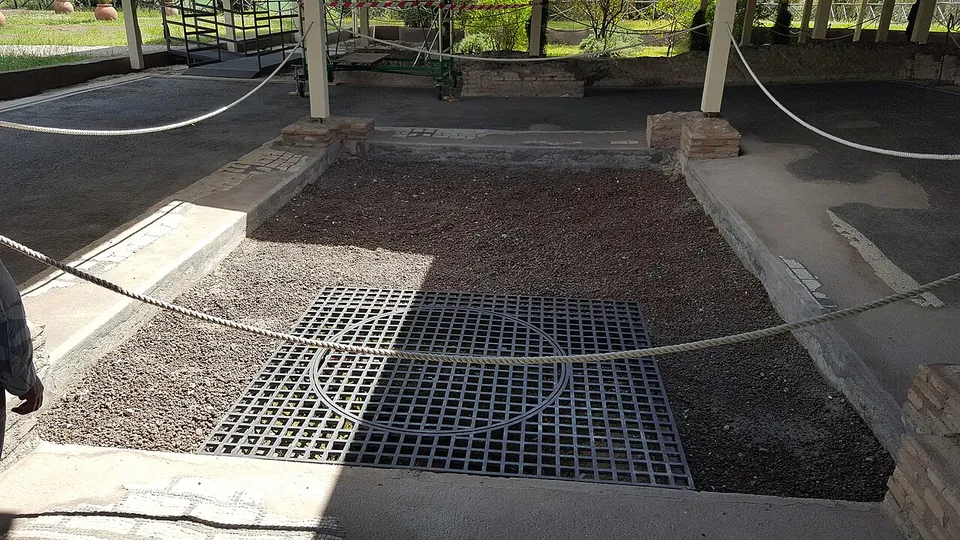
Photo: MumblerJamie · CC BY-SA 2.0 · Commons
12 km · villa · Lazio
Villa of Livia
The operator describes the private wing with the bedrooms of Livia and the emperor, an atrium and a small inner garden, and the large reception rooms that open onto a peristyle; the rooms once had painted walls and floors of mosaic and cut marble (Soprintendenza Speciale di Roma).
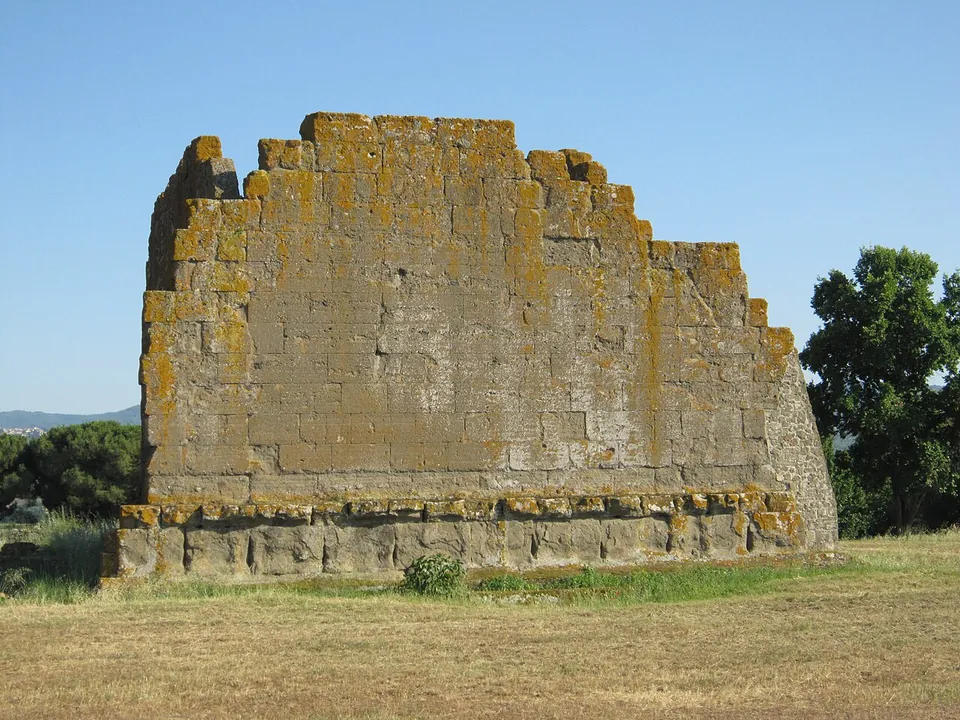
Photo: Carlomorino · CC BY-SA 3.0 · Commons
17 km · city · Lazio
Gabii
The park the state holds covers about 70 hectares on the southern rim of a volcanic crater whose lake was drained in the 19th century (the operator; en.wikipedia).
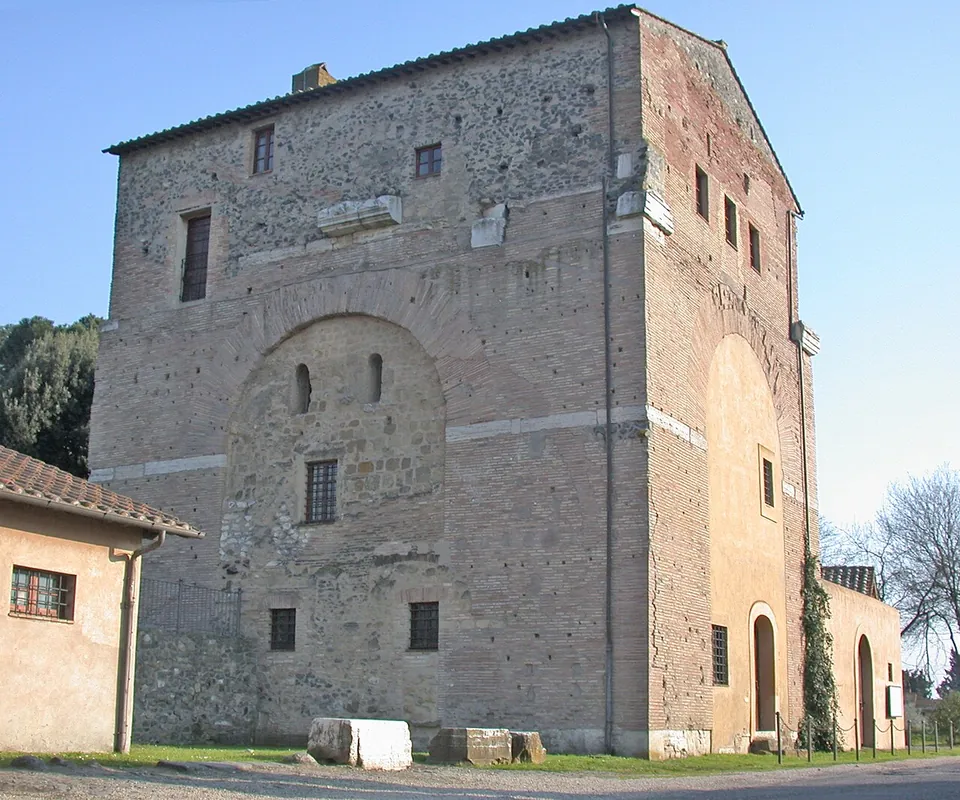
Photo: MM · Public domain · Commons
18 km · arch · Lazio
Arch of Malborghetto
At first sight you see an austere farmhouse rather than an arch (it.wikipedia).


Straight-line distances.
Sources
Every fact on this page comes from the records below, each used under the licence noted.
| Source | Licence |
|---|---|
| Pleiades 806345695 | CC BY |
| Wikidata Q2887175 | CC0 |
| Vici.org 84478 | CC BY-SA (text), CC0 (metadata) |
| OpenStreetMap way/382363018 | ODbL |
| Ministry of Culture — Basilica sotterranea di Porta Maggiore (opening, booking, ticket) | licence not recorded |
| Ministry of Culture — Giornate Europee dell'Archeologia 2025, special opening of the basilica | licence not recorded |
| Ministry of Culture — GEP 2024, special opening of the basilica | licence not recorded |
| Soprintendenza Speciale di Roma — notice on the resumption of visits (Wayback copy of 4 October 2025) | licence not recorded |
| Coopculture — Basilica Sotterranea di Porta Maggiore (Wayback copy of 20 April 2024) | licence not recorded |
| Wikipedia (it) — Basilica sotterranea di Porta Maggiore | CC BY-SA 4.0 |
| Wikipedia (fr) — Basilique souterraine de la porte Majeure | CC BY-SA 4.0 |
| Wikipedia (en) — Porta Maggiore Basilica | CC BY-SA 4.0 |