

San Crisogono is a parish church in Trastevere, and under it, about 6 m down, lies the church it replaced: a single-nave early Christian basilica built on Roman walls, with its apse, side rooms and fragments of medieval wall painting. The church above is a 12th-century building refitted in the 1620s. The lower church is reached by a staircase from the sacristy, but no hours or price are published for it, so ask at the church.
What is there today
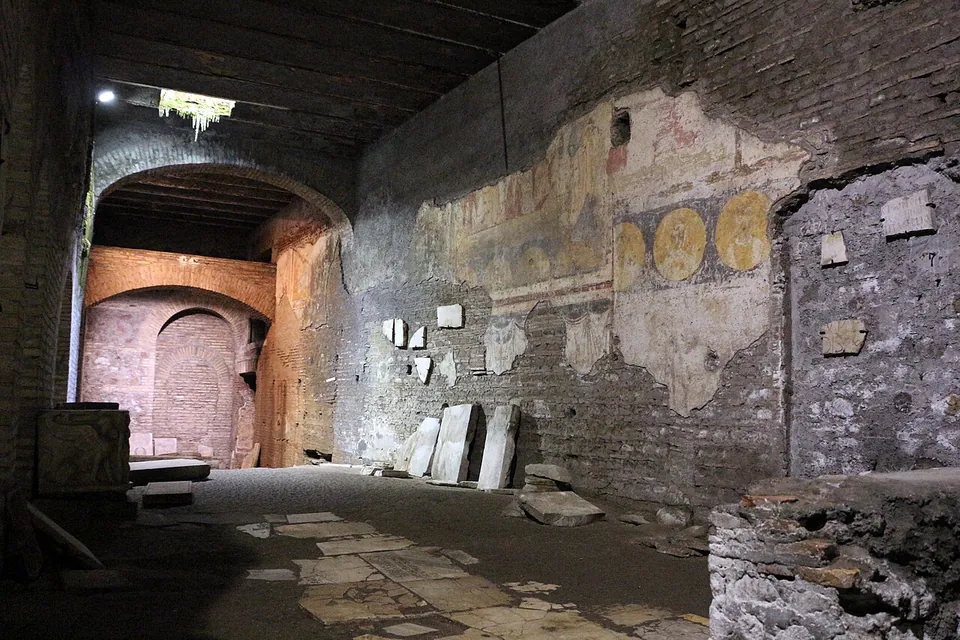
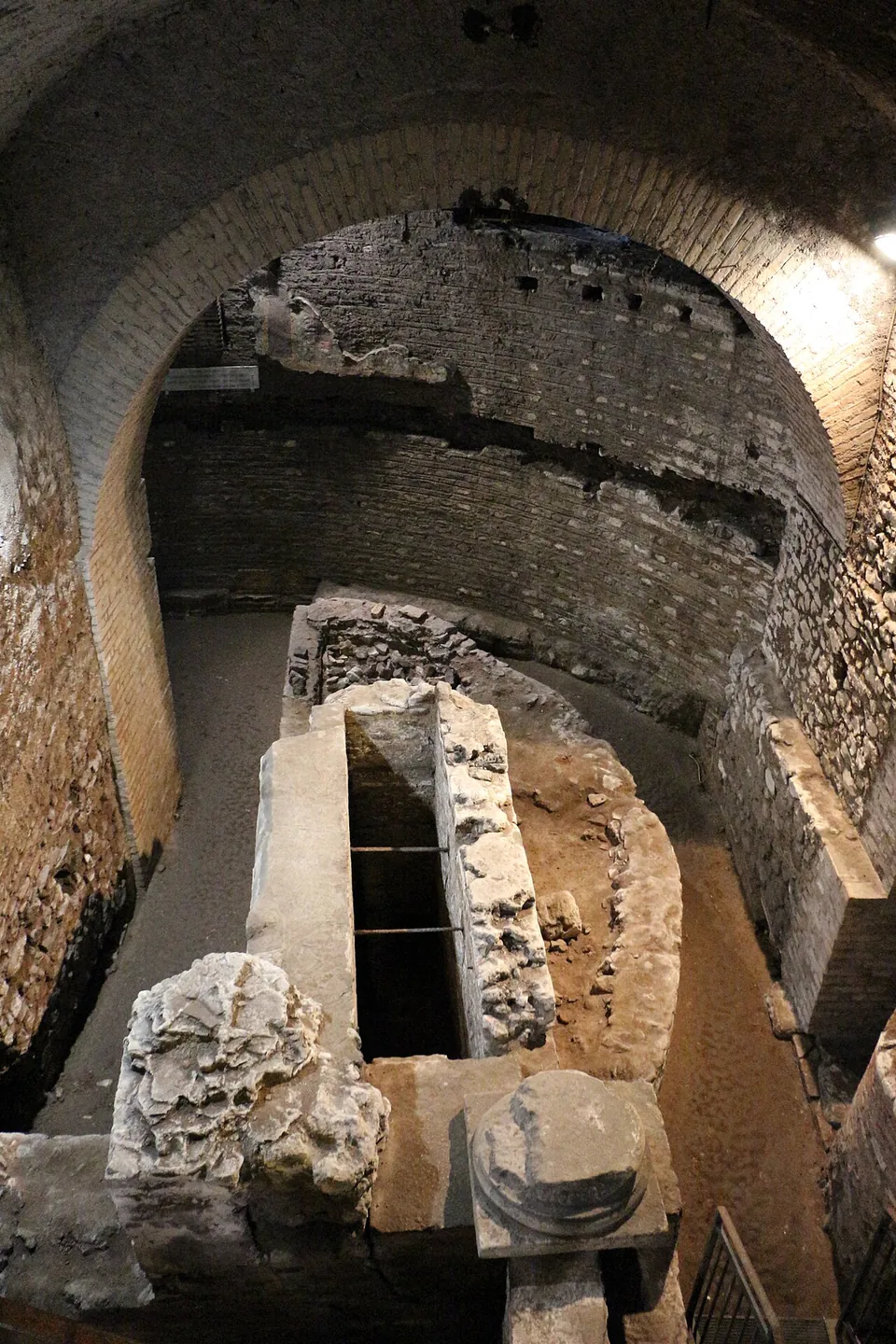
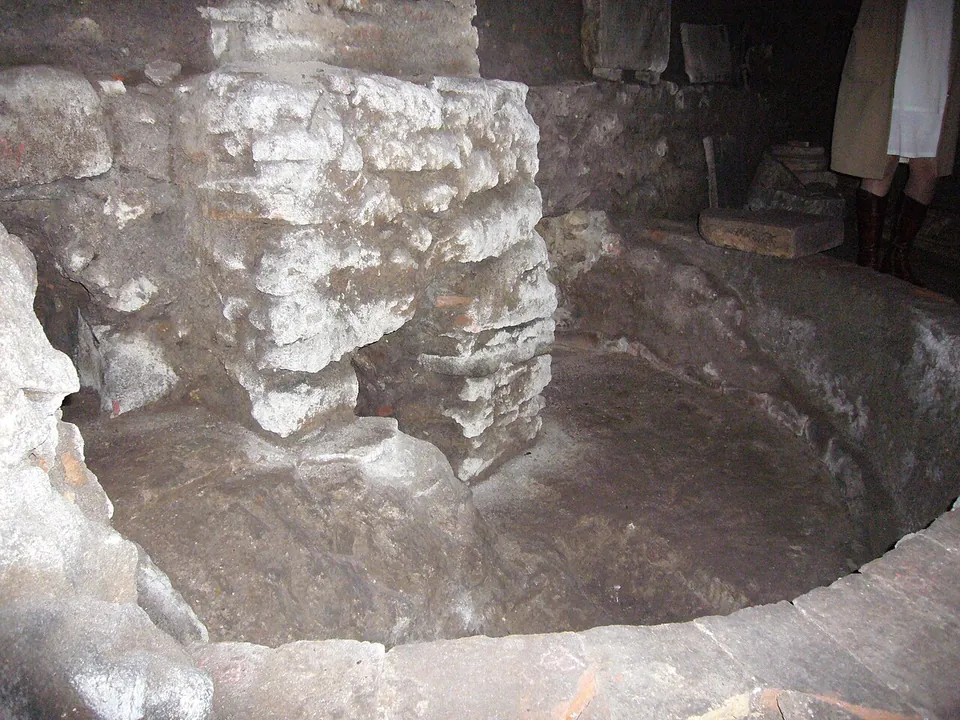
Below the church is a wide underground space: the early church, excavated in 1907, 1914 and 1923–24 (de.wikipedia). It was a single hall with an apse at the west end. On either side of the apse is a side room of the kind found in eastern churches, one probably a sacristy, the other with a basin read as a baptismal font (de.wikipedia; en.wikipedia). Several basins have been found here. One reading is that the building began as a fullonica, a laundry and dyeworks, which would fit what was then a commercial district (en.wikipedia; it.wikipedia). In the 8th century the presbytery was raised and a crypt was built inside the apse: a passage runs round its inner curve to the confessio over the martyr’s grave, where a small window let the faithful reach the relics (de.wikipedia; Soprintendenza Speciale di Roma).
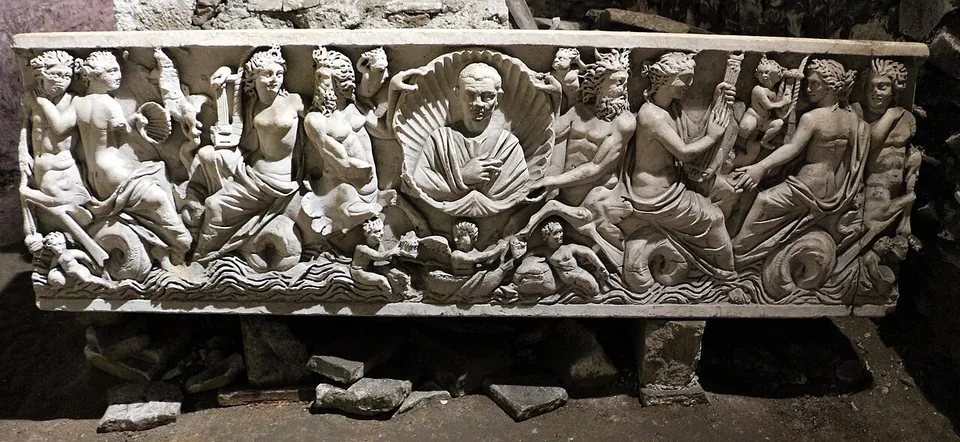
Most of what catches the eye is later. Wall paintings of the 8th to the 11th centuries survive on the walls, among them scenes from the life of St Benedict, Pope Sylvester capturing the dragon and St Pantaleon healing a blind man (en.wikipedia; de.wikipedia). The Soprintendenza puts the painted surface at almost 100 m². Several sarcophagi are kept down here, some richly carved (en.wikipedia), and below the first church are remains of earlier Roman houses (en.wikipedia). One thing makes the place hard to take in: the foundations of the church above cut across the old hall, so its plan cannot be read as a whole (Soprintendenza Speciale di Roma).
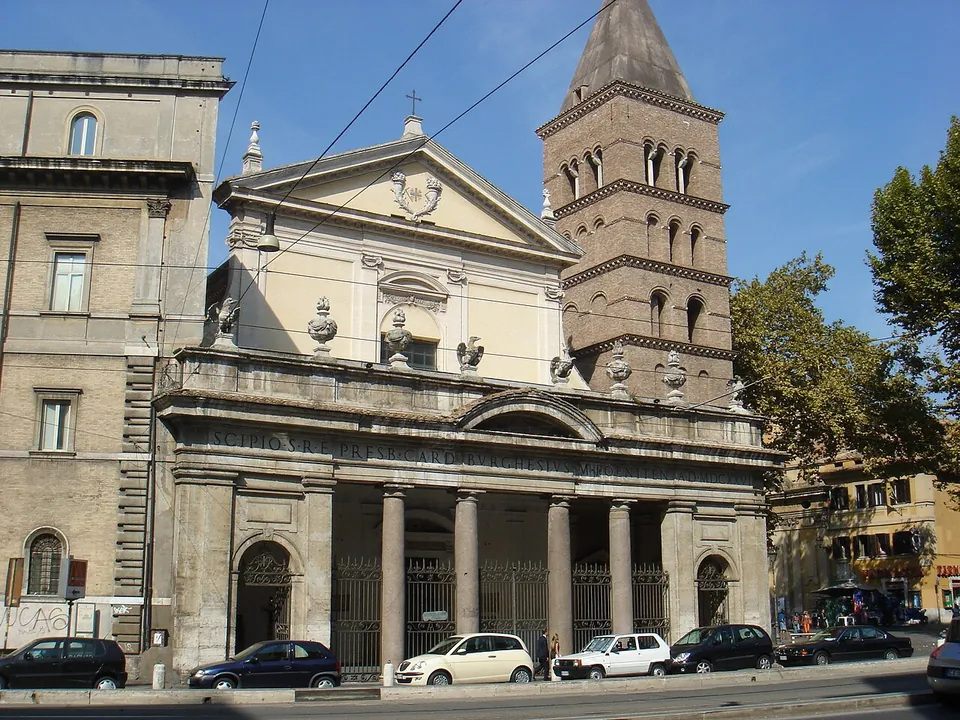
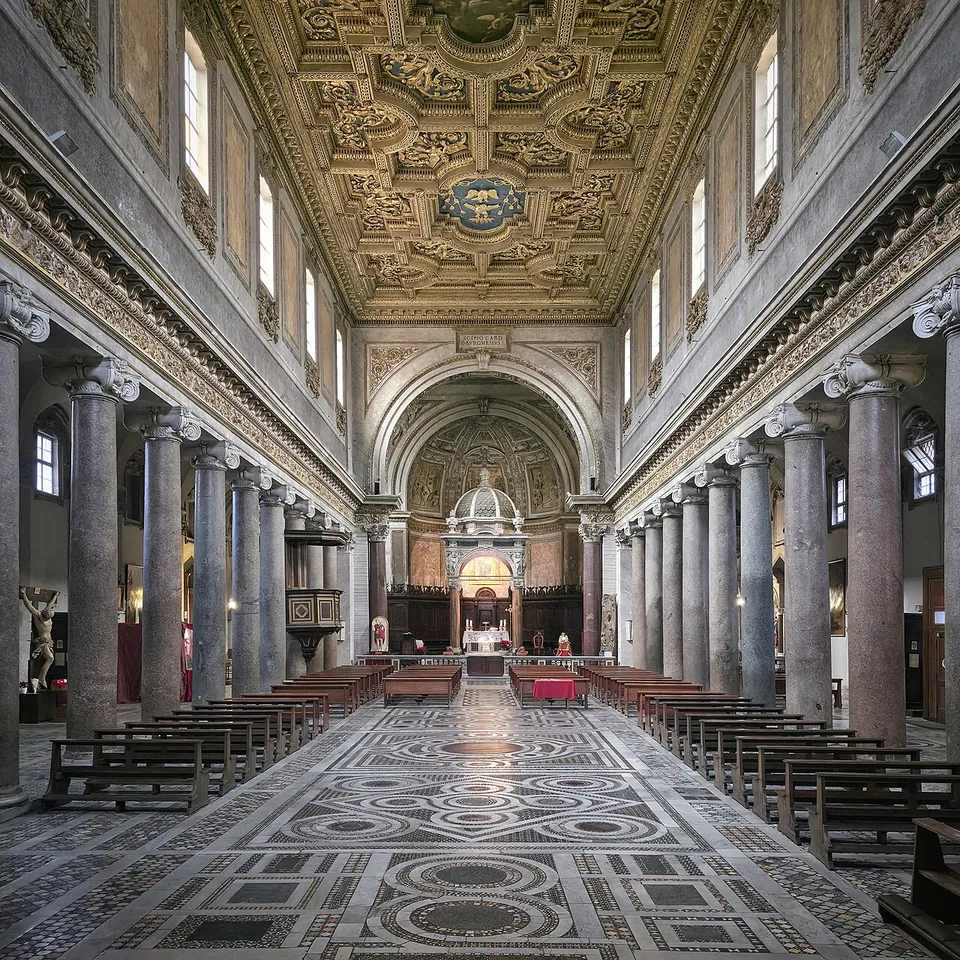
Upstairs, the present basilica was begun in 1123. The bell tower is from that rebuilding, the Baroque fittings from the 1620s (de.wikipedia; en.wikipedia). The 22 granite columns of the nave are reused ancient columns (en.wikipedia), and the apse mosaic of the Virgin and Child is from the school of Pietro Cavallini (Diocese of Rome; Turismo Roma).
Is it worth the trip?
Only if you get into the lower church. That is the Roman and late-antique part, and it is large - the Soprintendenza calls it an underground space of great size: the remains of an early church under a living one, with its baptistery basin and its medieval paintings. The church upstairs, on its own, is a Baroque interior with ancient columns, not a Roman site.
The difficulty is getting in. No one publishes when the lower church can be seen or what it costs, and the Soprintendenza has a project to turn it into a museum route, with no dates given. It is easy to fit in if you are in Trastevere anyway, but ring first rather than make a detour on spec.
Getting there and what it costs
The church is at Piazza Sidney Sonnino 44, at the start of Viale di Trastevere (it.wikipedia; Turismo Roma). The public transport stop Sonnino/S. Gallicano is about 70 m away, and a free surface car park is mapped about 130 m away (OpenStreetMap).
The parish publishes Mass times rather than opening hours. Masses are at 07.30, 10.00 and 18.00 from Monday to Saturday, and at 10.00, 12.00 and 18.00 on Sunday. The parish’s telephone is +39 06 5818225, and Turismo Roma advises contacting the church because times may change (Turismo Roma, read 24 October 2026). The lower church is reached by a staircase from the sacristy (en.wikipedia; de.wikipedia). No published source gives hours or a price for it.
Visiting details
- Opening hours
- Turismo Roma lists the parish's Mass times, not visiting hours - Monday to Saturday at 07.30, 10.00 and 18.00, Sunday at 10.00, 12.00 and 18.00. No hours are published for the lower church. The parish can be asked on +39 06 5818225.
- Tickets
- No tariff for the lower church is published by the parish, the diocese or the Soprintendenza; the church's listing on Turismo Roma mentions no ticket.
- Parking
- A free surface car park is mapped about 130 m away (OSM way/370186112); a public transport stop, Sonnino/S. Gallicano, is about 70 m away.
Before you go
- The early church lies about 6 m below the present one and is reached by a staircase from the sacristy; no opening hours for it are published, so ask at the church before counting on seeing it.
- In March 2026 the Soprintendenza Speciale di Roma published an EU-funded project to turn the lower church into a museum route, with its own entrance through the cloister and visits in small groups. It gives no dates and does not say whether the area stays open during the works.
Hours and prices checked 24 October 2026 on the operator's own site. Confirm before travelling.
History
San Crisogono is one of the oldest parish churches (tituli) of Rome. Its priests signed the Roman synod of 499 as the titulus Chrysogoni (en.wikipedia; Diocese of Rome). The first church is attributed to Pope Sylvester I (314–335); Pleiades calls that likely (Pleiades; it.wikipedia; en.wikipedia). The saint is Chrysogonus, a martyr of Aquileia, probably in the persecution under Diocletian. Whether the church was named for him from the start or for a founder of the same name is not known (en.wikipedia).
The excavated remains give a fuller picture. In the early 4th century a hall of a 2nd-century house, 34 by 18 m, was in use for worship. Around the middle of the 5th century it was extended into a single-nave church about 50 m long, with a horseshoe apse, a narthex and a portico. Around 600 a confessio and a choir enclosure were added. Pope Gregory III (731–741) then built the ring crypt and founded a monastery beside the church (de.wikipedia).
The Tiber’s floods damaged the low church again and again (Soprintendenza Speciale di Roma). In 1123 a new three-aisled basilica was begun on its north side, by Cardinal Giovanni da Crema (en.wikipedia; Diocese of Rome) under Pope Calixtus II (de.wikipedia). It was finished in 1129, with the floor raised about 5 m to the new ground level (de.wikipedia). The old church lay partly filled in until the early 20th century (Soprintendenza Speciale di Roma). The upper church was refitted in the 1620s by Giovanni Battista Soria for Cardinal Scipione Borghese; de.wikipedia gives 1620–1623, it.wikipedia 1626. The Trinitarians have run the parish since 1847 (Diocese of Rome).
More photographs



Nearby
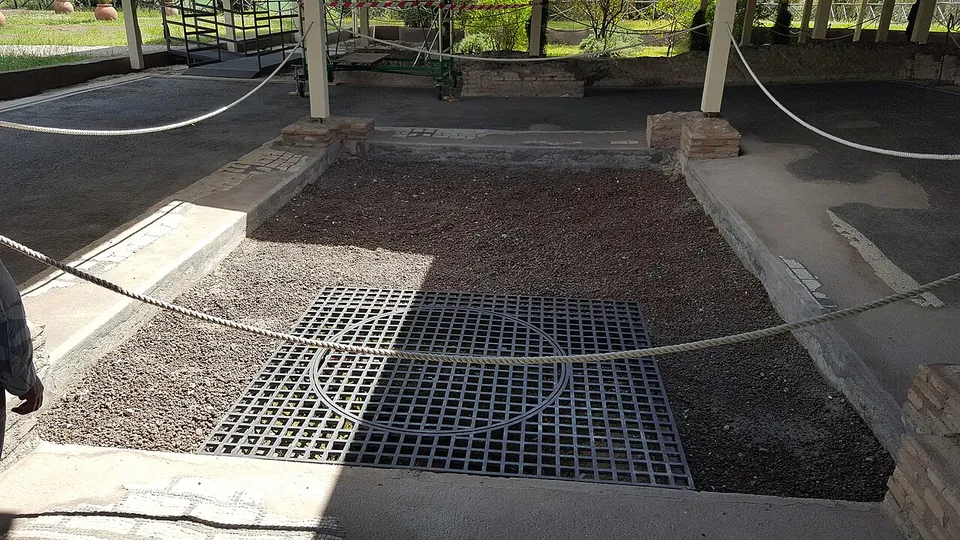
Photo: MumblerJamie · CC BY-SA 2.0 · Commons
13 km · villa · Lazio
Villa of Livia
The operator describes the private wing with the bedrooms of Livia and the emperor, an atrium and a small inner garden, and the large reception rooms that open onto a peristyle; the rooms once had painted walls and floors of mosaic and cut marble (Soprintendenza Speciale di Roma).
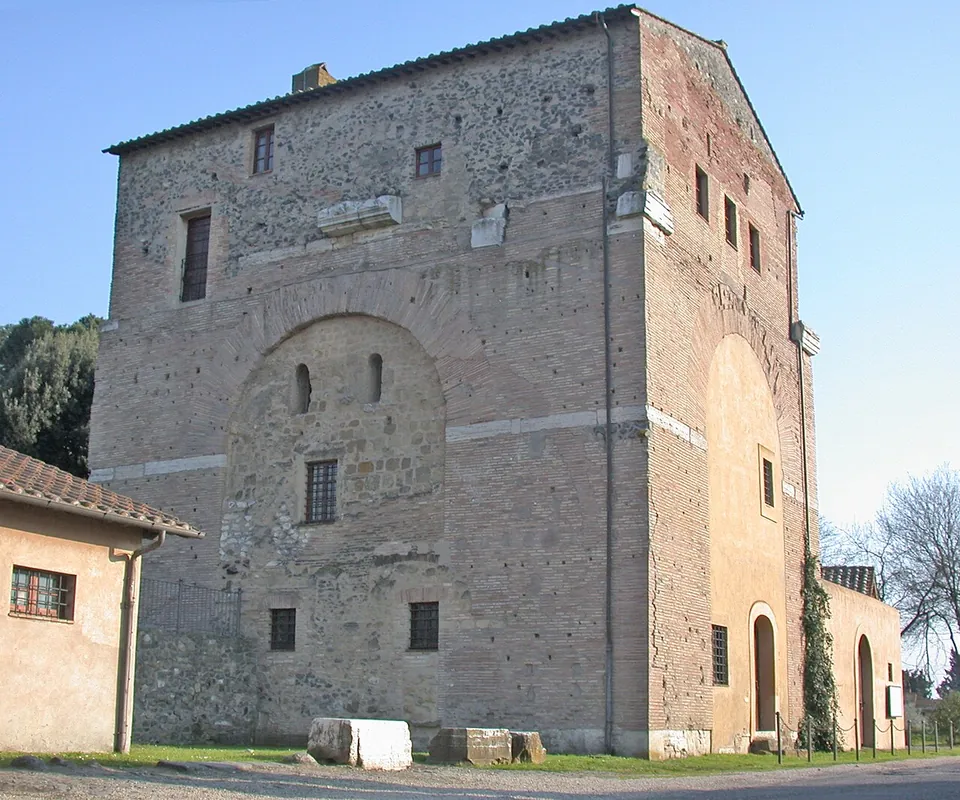
Photo: MM · Public domain · Commons
18 km · arch · Lazio
Arch of Malborghetto
At first sight you see an austere farmhouse rather than an arch (it.wikipedia).
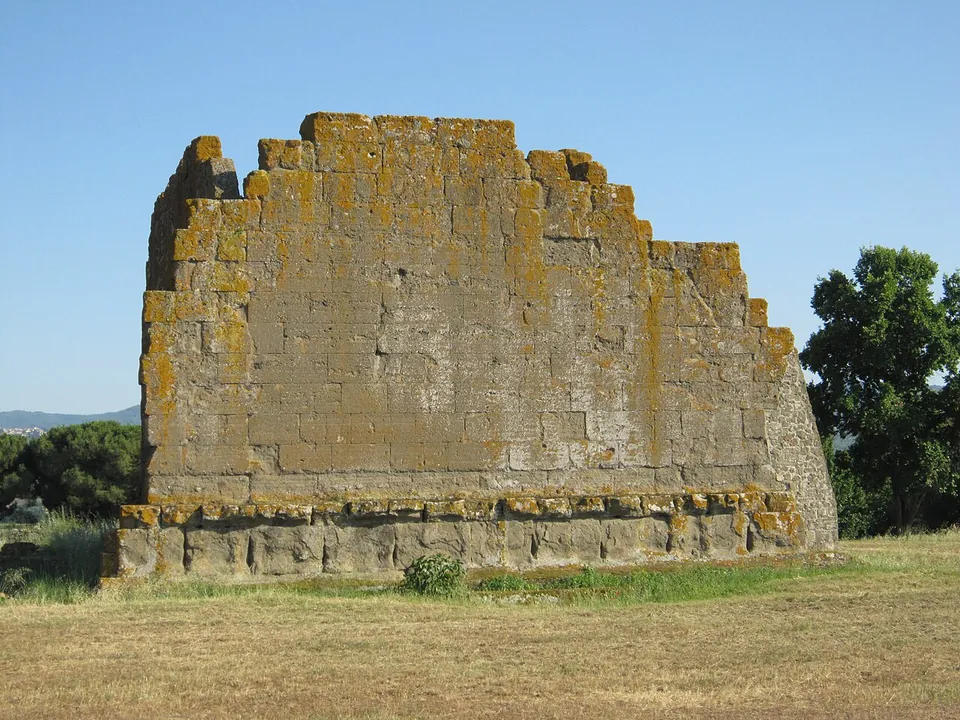
Photo: Carlomorino · CC BY-SA 3.0 · Commons
20 km · city · Lazio
Gabii
The park the state holds covers about 70 hectares on the southern rim of a volcanic crater whose lake was drained in the 19th century (the operator; en.wikipedia).


Straight-line distances.
Sources
Every fact on this page comes from the records below, each used under the licence noted.
| Source | Licence |
|---|---|
| Pleiades 883684762 | CC BY |
| Wikidata Q1631638 | CC0 |
| Wikipedia (de) — San Crisogono | CC BY-SA 4.0 |
| Wikipedia (en) — San Crisogono | CC BY-SA 4.0 |
| Wikipedia (it) — Basilica di San Crisogono | CC BY-SA 4.0 |
| Wikipedia (fr) — Basilique San Crisogono | CC BY-SA 4.0 |
| Turismo Roma (Roma Capitale) — Basilica di San Crisogono, Mass times and parish contacts | licence not recorded |
| Soprintendenza Speciale di Roma — 114, Chiesa S. Crisogono, area archeologica (project sheet, March 2026, PDF) | licence not recorded |
| Diocesi di Roma — Parrocchia San Crisogono (parish record; archived copy of 20 January 2025) | licence not recorded |