

What is there today
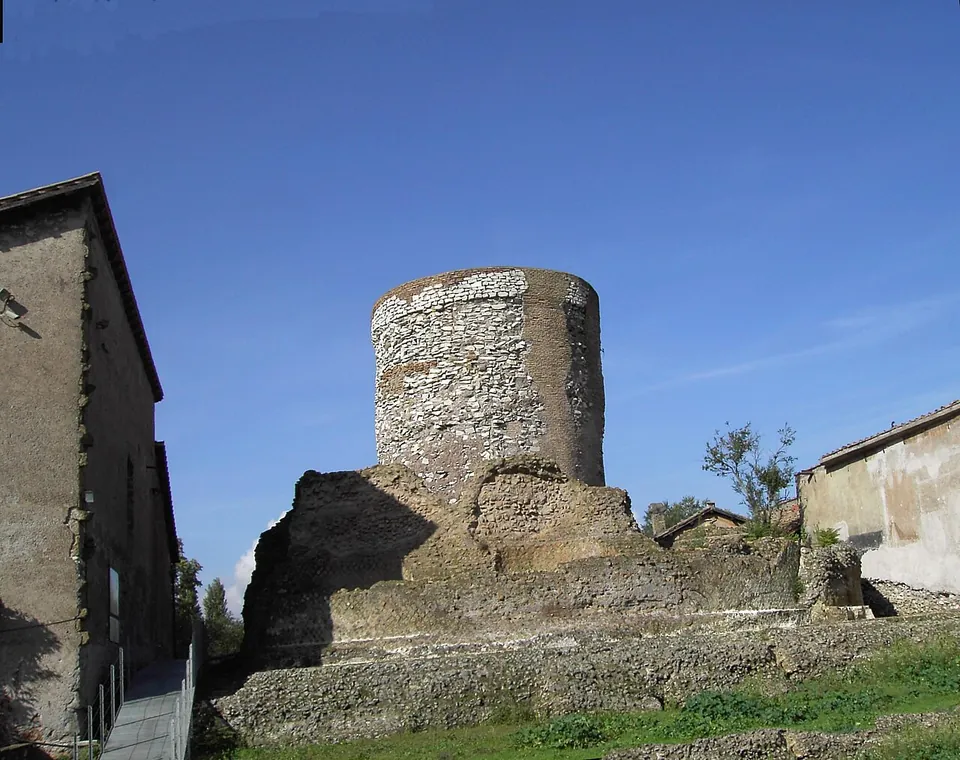
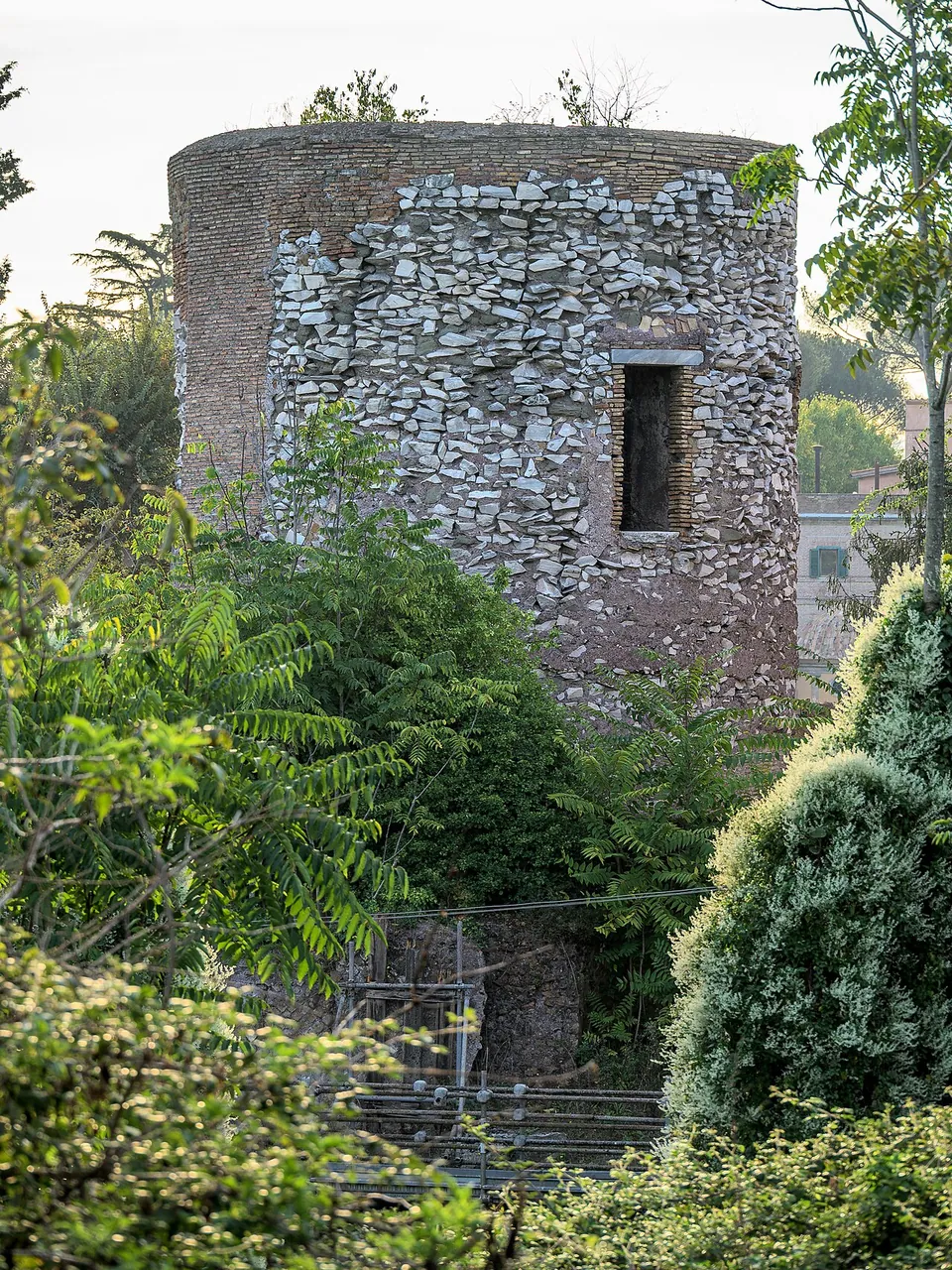
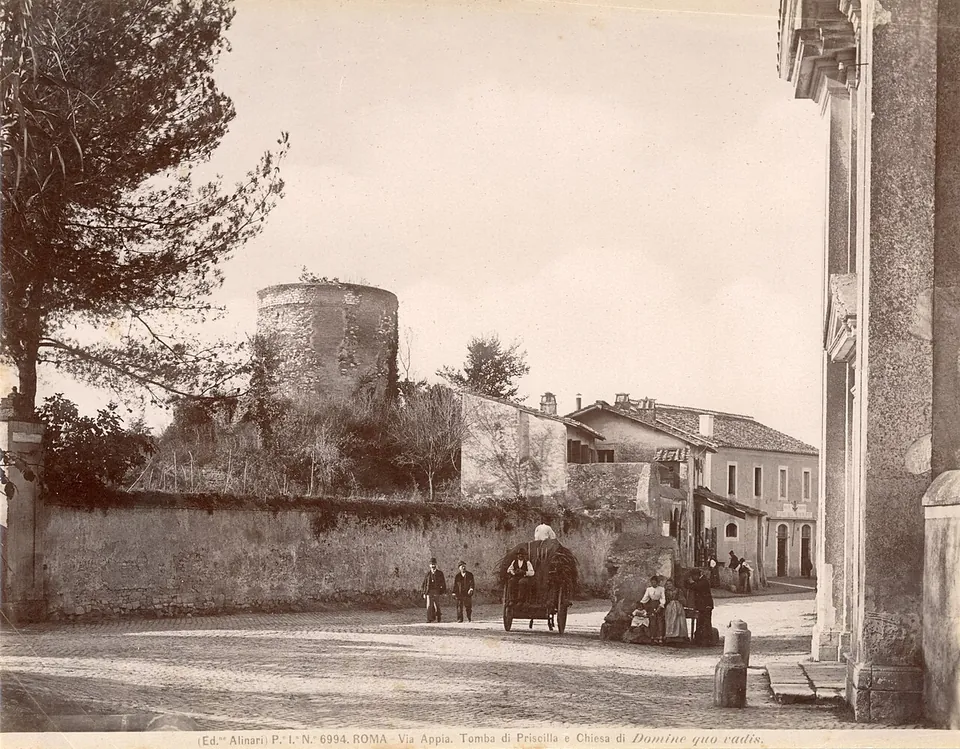
From outside you see a ruin wedged between two modern farmhouses that stand on its structures. The four-sided base, faced with travertine blocks, is still largely preserved, and two cylindrical drums of tufa reticulate rise above it. The upper drum once held 13 niches for statues of Priscilla in the guise of goddesses and heroines. In the middle of it stands the “Torre Petro”, a medieval tower about six metres high, roughly built from reused material (Sovrintendenza Capitolina).
The best part is inside. Through the basement of one of the farmhouses you reach the original corridor, under a barrel vault, which leads into the burial chamber, also vaulted and dimly lit by the opening at the top of the medieval tower. Three of its sides have niches for sarcophagi, and the wooden fittings from its years as a cheese store still stand against the walls (Sovrintendenza Capitolina).
Is it worth the trip?
Only if you can go inside, and that takes planning: the tomb opens on Sundays from March to June and from September to December, and to groups on request (Parco Regionale dell’Appia Antica; Sovrintendenza Capitolina). On any other day it is a few minutes’ look from outside, and the tower that crowns it is medieval rather than Roman.
As a stop on a walk down the Via Appia it earns those few minutes, and its story is better than its ruin. It stands on the stretch the park describes from Porta Capena out to the Tomb of Caecilia Metella, so it pairs with the Aurelian Walls at Porta San Sebastiano, about 800 m back towards the city, and with the Catacomb of Callixtus (about 1 km), the Villa of Maxentius (about 1.8 km) and the Tomb of Caecilia Metella (about 2.2 km) further out, all in a straight line. The Tomb of Annia Regilla is about 1.1 km away in the Caffarella valley. See Rome for the rest of the city.
Getting there
The tomb stands opposite the Domine Quo Vadis church, at the fork of the Via Appia Antica and the Via Ardeatina (Sovrintendenza Capitolina), about 3 km from the centre of Rome in a straight line. A bus stop named Appia Antica/Domine Quo Vadis is mapped about 65 m away, and Appia Antica/Caffarella, the stop the park gives for bus 118, about 170 m away (OpenStreetMap; Parco Regionale dell’Appia Antica). The park’s information point at Via Appia Antica 60 is about 50 m away (OpenStreetMap).
The Via Appia Antica is closed to motor traffic on Sundays and public holidays, from 09.00 to 16.00 in winter time and to 18.00 in summer time. On those days the park advises leaving the car around Largo Galvaligi and walking through the small Parco Scott, which comes out on the Appia by the Quo Vadis church. On other days it gives a free car park at Via Appia Antica 50, open except on Sundays until 18.00 (Parco Regionale dell’Appia Antica).
The tomb is open on Sundays from March to June and from September to December (Parco Regionale dell’Appia Antica, read 24 October 2026); neither the park nor the Sovrintendenza Capitolina publishes the times or an admission price. Groups can ask for a visit on other days on 06 5135316 (Sovrintendenza Capitolina).
Visiting details
- Opening hours
- Open on Sundays from March to June and from September to December; the times are not published. On other days the tomb can be visited by groups on request, by telephone on 06 5135316.
- Tickets
- Neither the Sovrintendenza Capitolina nor the regional park publishes a fee.
- Parking
- A free car park at Via Appia Antica 50, which the park gives for its Via della Caffarella entrance, is open every day except Sunday until 18.00. On Sundays and public holidays the park advises leaving the car around Largo Galvaligi and walking through the small Parco Scott, which reaches the Via Appia at the Domine Quo Vadis church, opposite the tomb.
Before you go
- The burial chamber is reached through the basement of a modern farmhouse and opens only on Sundays in the months above, or to groups by arrangement. On other days there is only the outside to see, partly hidden between two farmhouses.
- The Via Appia Antica is closed to motor traffic on Sundays and public holidays, 09.00–16.00 in winter time and 09.00–18.00 in summer time, which covers the tomb's open days.
Hours and prices checked 24 October 2026 on the operator's own site. Confirm before travelling.
History
The tomb is identified with the one Titus Flavius Abascanto, a freedman of Domitian, had built for his wife Priscilla, who died young (Sovrintendenza Capitolina; Pleiades). Abascanto was a wealthy man, the emperor’s secretary for correspondence (ab epistulis), and owned land and a bath building near the Almone river (it.wikipedia).
The identification rests on the poet Statius, whose Silvae include a funeral poem for Priscilla. He describes her as embalmed rather than cremated, a practice rare but not unknown in the Roman world, wrapped in Tyrian purple and laid in a marble sarcophagus in a mausoleum on the Via Appia just past the Almone, decorated inside like a house, with niches and bronze statues of heroines and goddesses given Priscilla’s face (it.wikipedia). A marble slab found by the tomb in 1773 supports it: set up by Tito Flavio Epafrodito, keeper of the tomb for his patrons Abascanto and Priscilla, for the burial of a young slave, Afrodisio (names as it.wikipedia gives them). It is now in the civic lapidarium of Ferrara (it.wikipedia).
Published dates for the building differ. Turismo Roma puts it in the second half of the 1st century BC; the Italian Wikipedia dates the inscription, and with it the building of the tomb, to Domitian’s time in the second half of the 1st century AD, while also suggesting that Abascanto took over an existing tomb on his land and adapted it. Either way it is a tomb of the 1st century BC or AD, and it is Priscilla’s story it is known by.
At some unknown date it was plundered and stripped of its facing and bronzes. From the 11th century it was used as a fortress, with the tower built on the upper drum, and it belonged to the counts of Tusculum and then to the Caetani. In the 18th century it was wrongly taken for the tomb of the Scipios, and Piranesi studied its plan and engraved it. In modern times two farmhouses were built against it, one of them the “osteria dell’Acquataccio”, and the chamber served for maturing cheese (it.wikipedia; Sovrintendenza Capitolina). The Sovrintendenza has since restored it (it.wikipedia).
Nearby
Photo: MumblerJamie · CC BY-SA 2.0 · Commons
15 km · villa · Lazio
Villa of Livia
The operator describes the private wing with the bedrooms of Livia and the emperor, an atrium and a small inner garden, and the large reception rooms that open onto a peristyle; the rooms once had painted walls and floors of mosaic and cut marble (Soprintendenza Speciale di Roma).
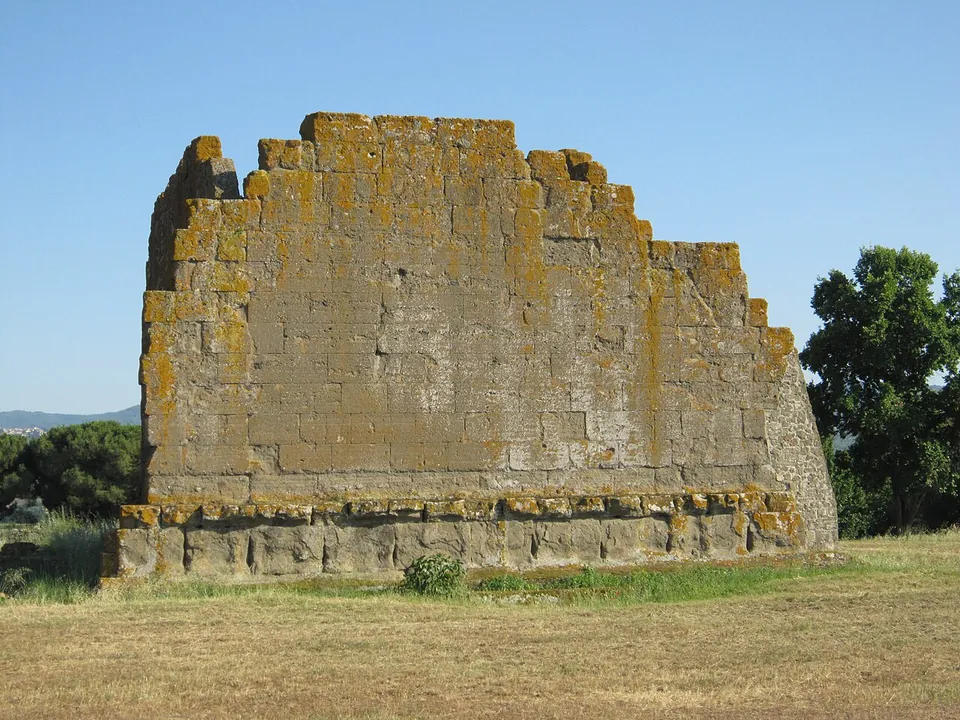
Photo: Carlomorino · CC BY-SA 3.0 · Commons
18 km · city · Lazio
Gabii
The park the state holds covers about 70 hectares on the southern rim of a volcanic crater whose lake was drained in the 19th century (the operator; en.wikipedia).
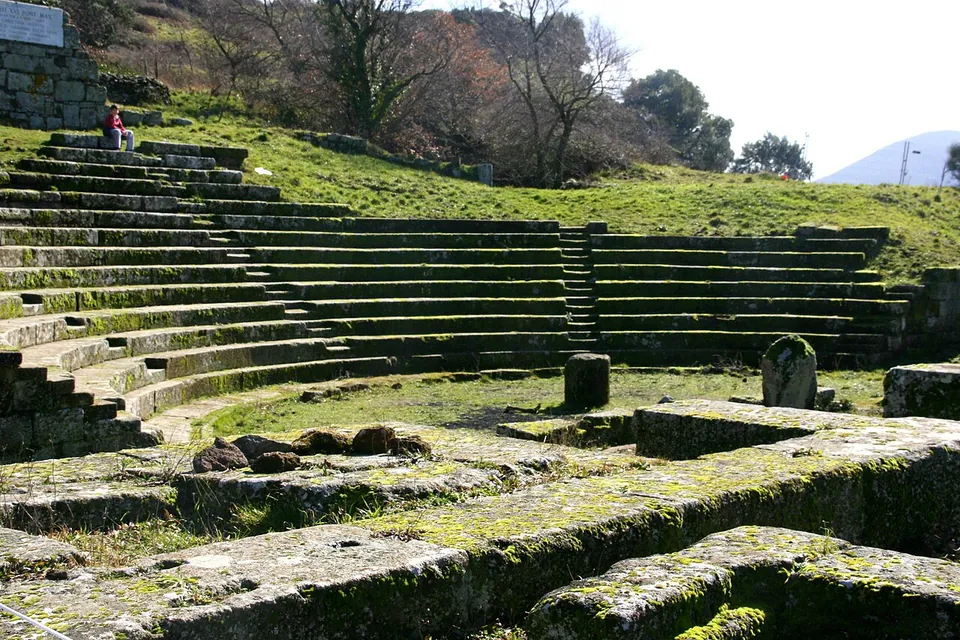
Photo: Luiza Serpa Lopes · Public domain · Commons
19 km · city · Lazio
Tusculum
The visitor route runs mainly through the forum, with the theatre halfway round (the operator).


Straight-line distances.
Sources
Every fact on this page comes from the records below, each used under the licence noted.
| Source | Licence |
|---|---|
| Pleiades 50864839 | CC BY |
| Wikidata Q3955654 | CC0 |
| Vici.org 58460 | CC BY-SA (text), CC0 (metadata) |
| OpenStreetMap relation/2112290 | ODbL |
| Sovrintendenza Capitolina — Sepolcro di Priscilla | licence not recorded |
| Parco Regionale dell'Appia Antica — Aree e siti monumentali (opening) | licence not recorded |
| Parco Regionale dell'Appia Antica — Come arrivare | licence not recorded |
| Turismo Roma — Sepolcro di Priscilla | licence not recorded |
| Wikipedia (it) — Sepolcro di Priscilla | CC BY-SA 4.0 |
| Wikipedia (en) — Tomb of Priscilla | CC BY-SA 4.0 |