

What is there today
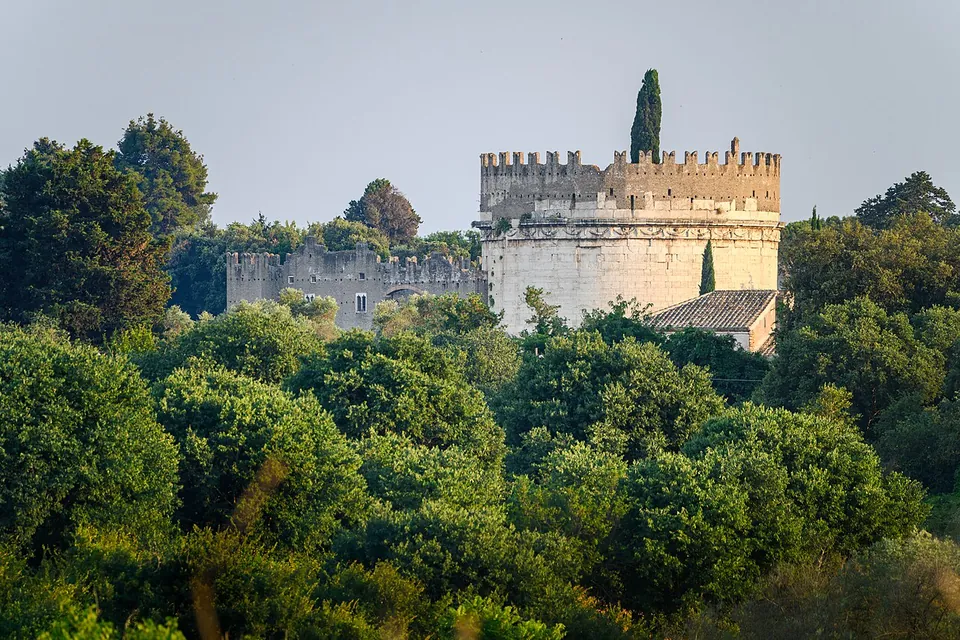
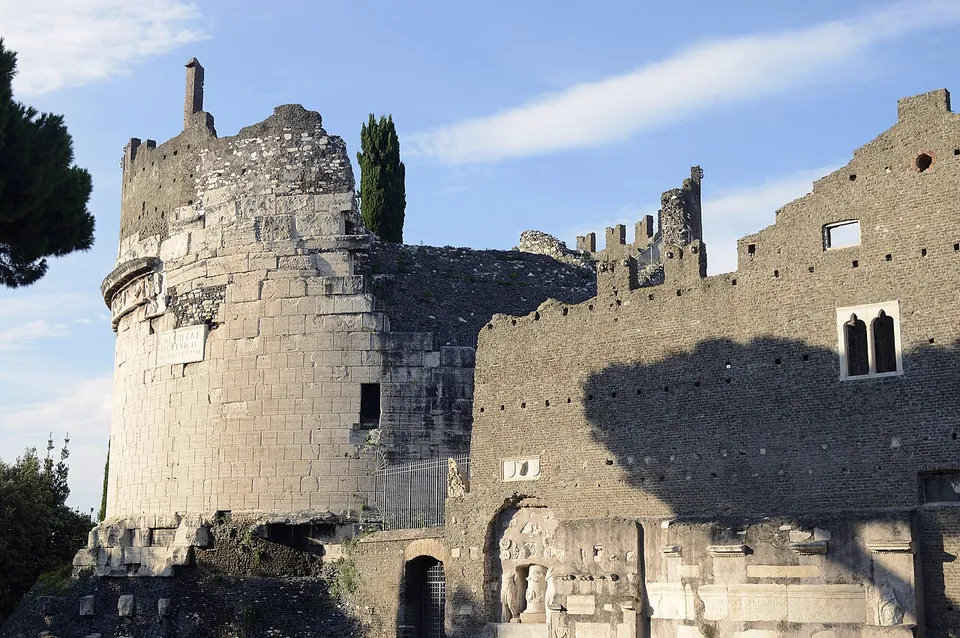
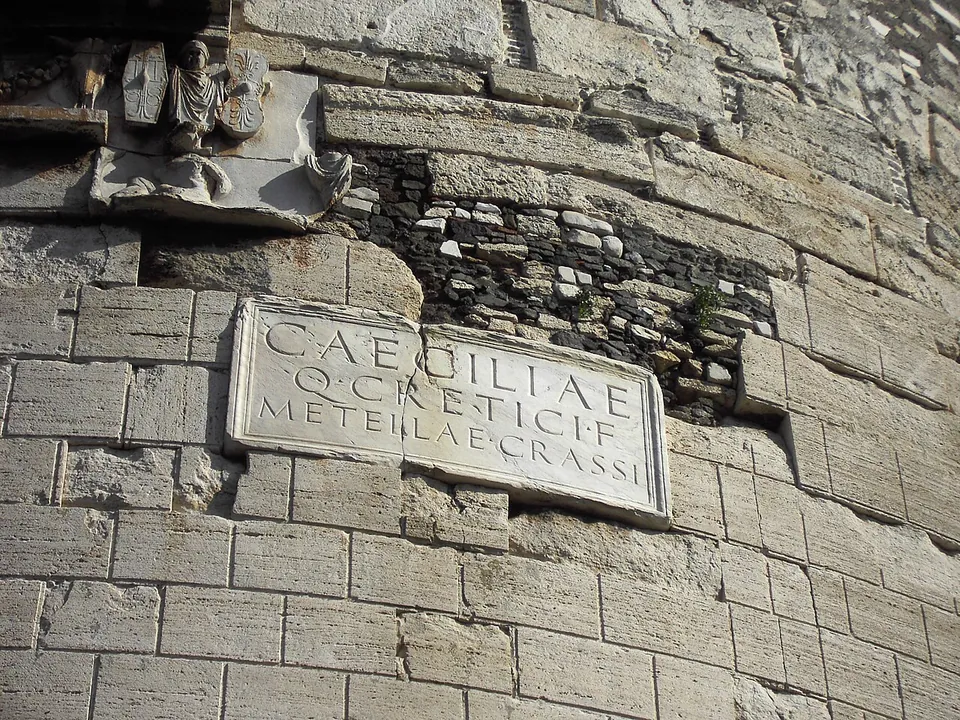
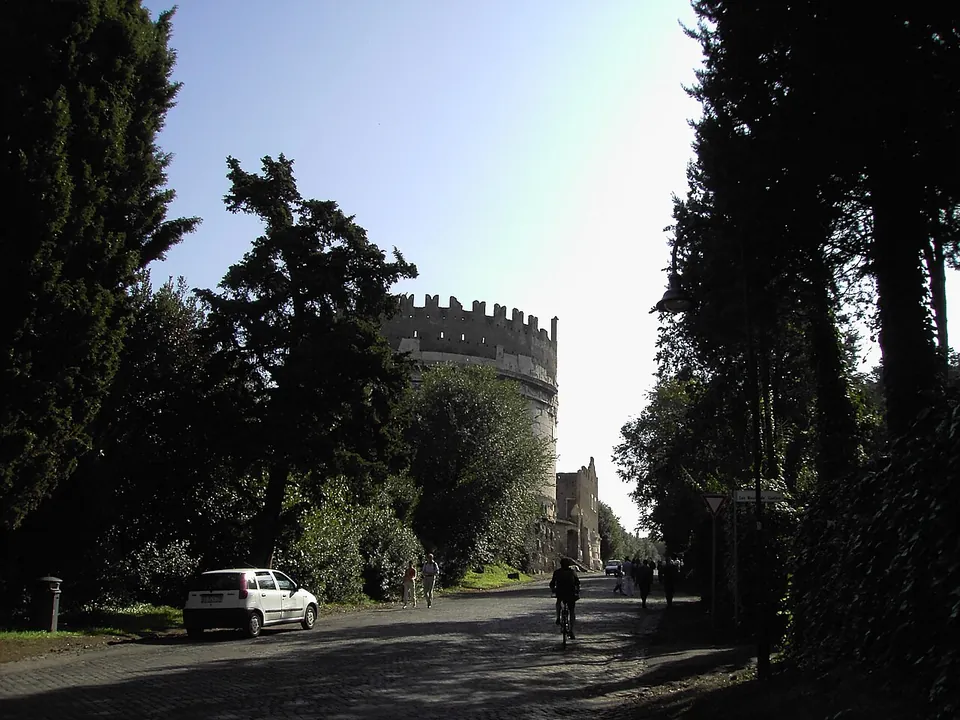
The tomb itself is a tall cylinder on a square base, its drum about 30 m across (en.wikipedia; fr.wikipedia). Published heights for the drum run from 11 to 12 m, on a base of about 8 m (en.wikipedia; de.wikipedia). Part of the travertine facing has been stripped away (fr.wikipedia), and the base survives mostly as its concrete core (the operator). High on the drum you can still read the dedication, CAECILIAE Q·CRETICI·F METELLAE·CRASSI, “to Caecilia Metella, daughter of Quintus Creticus, [wife] of Crassus”, under a frieze of ox skulls and garlands (en.wikipedia). The battlements on top are medieval (en.wikipedia).
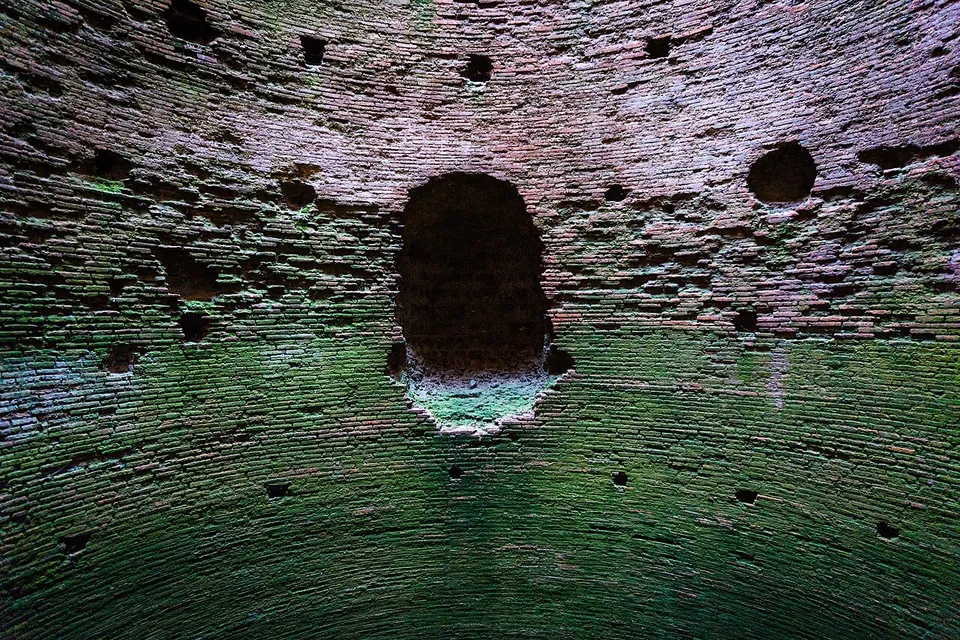
The ticket also takes you inside. A passage through the base leads into the burial chamber, a conical shaft that runs the whole height of the building and opens to the sky through an oculus, now fitted with holographic projections (the operator; it.wikipedia). Around 1300 the Caetani family built a castle against the tomb, the Castrum Caetani, and the visit takes in the rooms of its palace, with its battlements and paired arched windows, and the church of San Nicola, of which only the walls stand (the operator; it.wikipedia). The palace now houses the “Museo dell’Appia”, statues, sarcophagi, inscriptions and reliefs from the funerary monuments that lined the road (the operator).
Is it worth the trip?
Yes, if you are spending time on the Appian Way. This is one of the best-known and best-preserved monuments along the road (en.wikipedia), and it shows two eras in one building: a Roman tomb you can stand inside and a medieval castle built against it.
On its own it is a single monument, and the €8 ticket currently buys less than it says: it also covers the baths at Capo di Bove, which have been closed since June 2026 (the operator). It makes most sense as one stop of a day on the Appia, with the Villa of Maxentius just before it on the road (it.wikipedia).
Getting there and what it costs
The address is Via Appia Antica 161 (the operator). The operator gives two routes by public transport: Metro A to Arco di Travertino, then bus 660; or bus 118 from the historic centre (the operator gives the stop as “S. Gregorio”). OpenStreetMap maps a stop named Cecilia Metella about 350 m from the tomb, and the 118 and 660 both stop within about 600 m. A small car park is mapped about 60 m away, but the operator warns that parking in the park is limited and recommends coming on foot, by public transport or by bicycle.
It is open Tuesday to Sunday and closed on Mondays: 09.00 to 19.15 from April to September, 09.00 to 18.30 in March and October, and 09.00 to 16.30 from November to February, with last entry 30 minutes before closing. A ticket is €8, valid on the same day for the tomb and Capo di Bove; EU citizens aged 18 to 24 pay €2, Roma Pass holders €4, and under-18s go free. The park ticket, €12, covers all six of the Appia Antica park’s sites over seven days, but has to be booked. Entry is free on 1 November 2026. Tickets are sold online through Musei Italiani or at the entrance machine, which takes cards only. On the first Sunday of the month the operator expects crowds and does not offer the 3D headsets that are otherwise part of the visit (parcoarcheologicoappiaantica.it, read 16 October 2026 — check before travelling).
Visiting details
- Opening hours
- Tuesday to Sunday, closed Mondays. 09.00–19.15 from 1 April to 30 September, 09.00–18.30 in March and in October, 09.00–16.30 from 1 November to the end of February. Last entry 30 minutes before closing.
- Tickets
- €8 full, a same-day ticket that also covers the Capo di Bove complex (closed since 22 June 2026); €2 for EU citizens aged 18–24; €4 with a 48- or 72-hour Roma Pass; free under 18. The Appia Antica park ticket, €12, covers all six of the park's sites over seven days and must be booked. Free entry on 1 November 2026. Tickets online (Musei Italiani) or at the card-only machine at the entrance.
- Parking
- A small surface car park is mapped about 60 m from the tomb (OSM way/430598336); the operator warns that parking in the park is limited.
Before you go
- Capo di Bove, which the same ticket covers, has been closed since 22 June 2026 for restoration, and the operator gives no reopening date.
- Closed on Mondays, like the park's other sites.
Hours and prices checked 16 October 2026 on the operator's own site. Confirm before travelling.
Nearby on the Appian Way
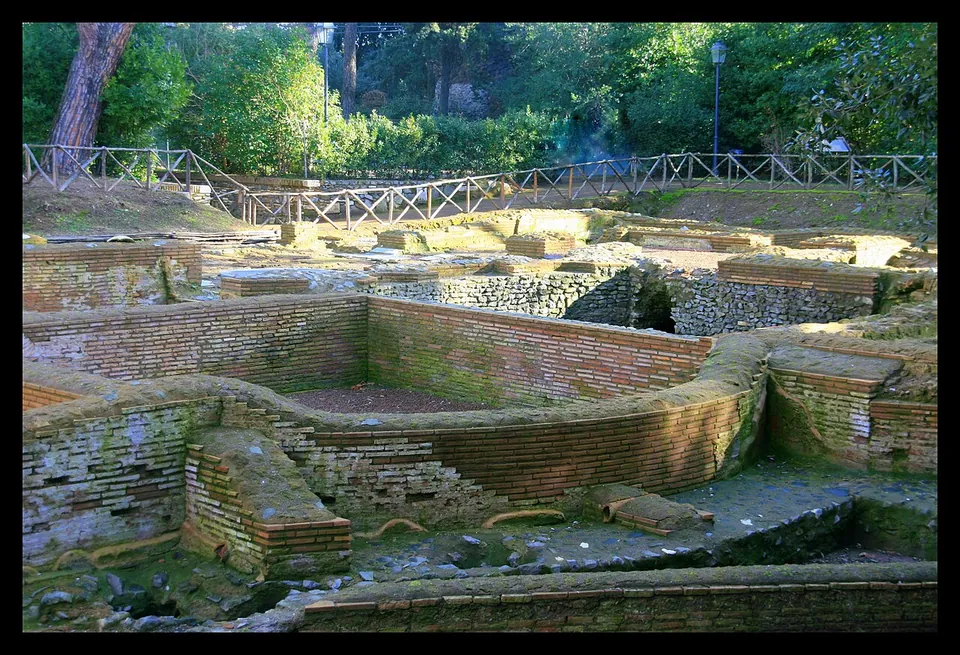
Capo di Bove, about 500 m further along the road, is the excavated bath house of a large estate that probably belonged in the 2nd century AD to Herodes Atticus and his wife Annia Regilla (it.wikipedia). The baths date to the middle of the 2nd century and were used until at least the 4th; mosaics survive (en.wikipedia). The site is on the same ticket but has been closed since 22 June 2026 for work on the visitor building, the gardens and the bath area, with no reopening date given (the operator).
About 1.6 km further out along the road, OpenStreetMap maps two roadside tombs: the so-called Tomb of Seneca and the tomb of Marcus Servilius Quartus, which Pleiades dates to about AD 100. An inscription found beside the road near the tomb in 1851 names a garden tomb belonging to one Aurelius Inachus (Pleiades); no source describes anything of it to see.
History
Caecilia Metella was the daughter of Quintus Caecilius Metellus Creticus, consul in 69 BC, and probably the daughter-in-law of Marcus Licinius Crassus, who formed the First Triumvirate with Caesar and Pompey (the operator; en.wikipedia). Nothing else is known of her life (it.wikipedia). The tomb was probably built between 30 and 10 BC, most likely by her son, another Marcus Licinius Crassus (the operator for the dates; en.wikipedia and de.wikipedia for the son). The war scenes carved beside the inscription suggest it was built to celebrate the family far more than the woman buried in it (it.wikipedia). Originally the drum was probably crowned with a cone of earth (en.wikipedia; fr.wikipedia).
The ox skulls of the frieze gave the area its medieval name, Capo di Bove, “ox head” (the operator; en.wikipedia). In 1302–1303 the Caetani, the family of Pope Boniface VIII, bought the estate and built their fortified castrum on the road, raising the tomb into its main tower and using the fort to levy tolls on traffic along the road (en.wikipedia; Pleiades). The castle passed to the Savelli and the Orsini, then to the Roman Senate after 1435 (en.wikipedia). A marble sarcophagus now in Palazzo Farnese has long been called Caecilia Metella’s, but a recent study dates it to AD 180–190, and cremation was the custom in her time (en.wikipedia). Lord Byron wrote of the tomb in the fourth canto of Childe Harold’s Pilgrimage (en.wikipedia).
More photographs



Nearby
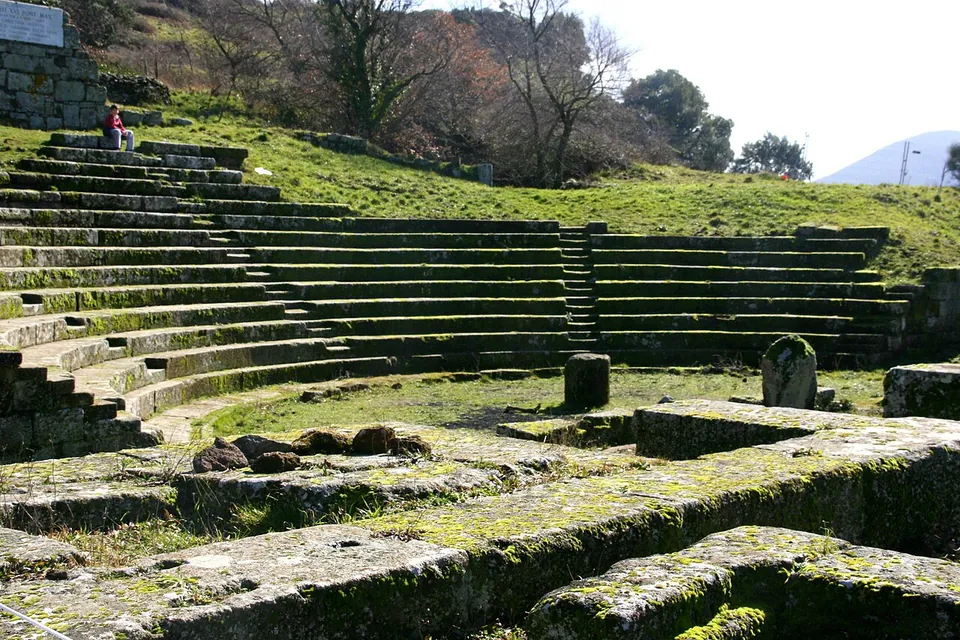
Photo: Luiza Serpa Lopes · Public domain · Commons
17 km · city · Lazio
Tusculum
The visitor route runs mainly through the forum, with the theatre halfway round (the operator).
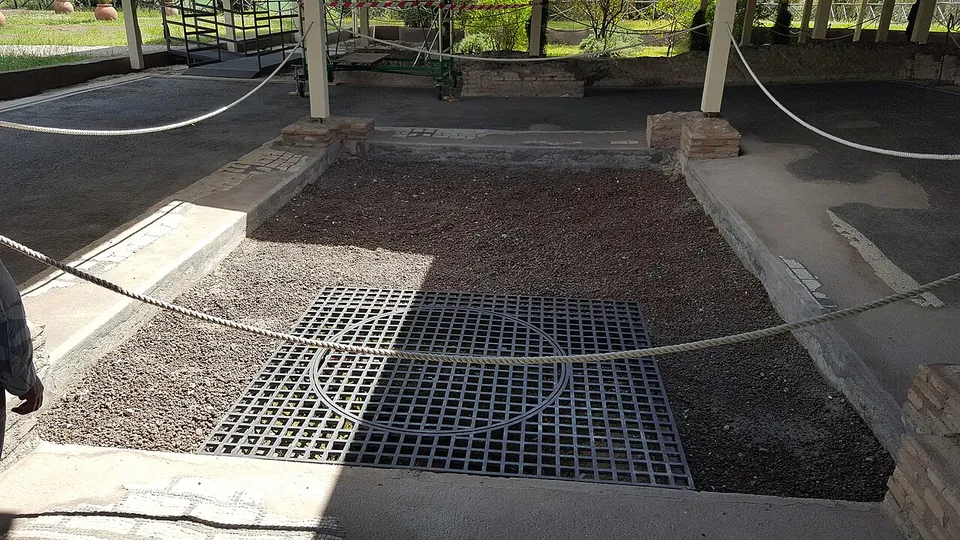
Photo: MumblerJamie · CC BY-SA 2.0 · Commons
17 km · villa · Lazio
Villa of Livia
The operator describes the private wing with the bedrooms of Livia and the emperor, an atrium and a small inner garden, and the large reception rooms that open onto a peristyle; the rooms once had painted walls and floors of mosaic and cut marble (Soprintendenza Speciale di Roma).
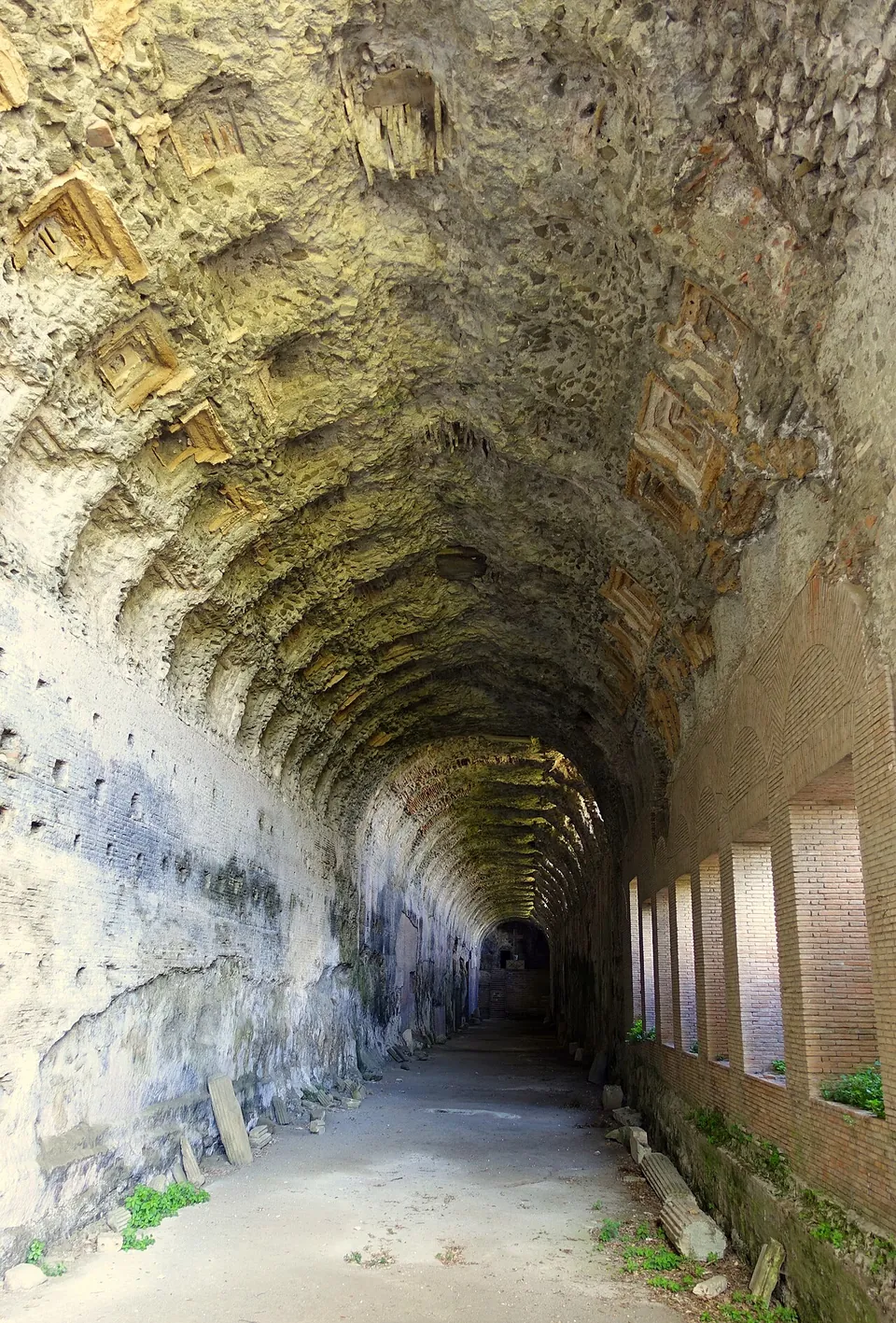
Photo: Daderot · Public domain · Commons
17 km · villa · Lazio
Villa of Domitian
Most of the remains lie inside the Pontifical Villas, an extraterritorial property of the Holy See.


Straight-line distances.
Sources
Every fact on this page comes from the records below, each used under the licence noted.
| Source | Licence |
|---|---|
| Pleiades 423064 | CC BY |
| Wikidata Q1540920 | CC0 |
| Vici.org 14971 | CC BY-SA (text), CC0 (metadata) |
| OpenStreetMap relation/5267846 | ODbL |
| Wikipedia (en) — Tomb of Caecilia Metella | CC BY-SA 4.0 |
| Wikipedia (it) — Mausoleo di Cecilia Metella | CC BY-SA 4.0 |
| Wikipedia (de) — Grabmal der Caecilia Metella | CC BY-SA 4.0 |
| Wikipedia (fr) — Mausolée de Caecilia Metella | CC BY-SA 4.0 |
| Wikipedia (en) — Capo di Bove | CC BY-SA 4.0 |
| Wikipedia (it) — Capo di Bove | CC BY-SA 4.0 |
| Pleiades — Capo di Bove | licence not recorded |
| Pleiades — Tomb Garden of Aur(elius) Inachus | licence not recorded |
| Pleiades — Tomb of Marcus Servilius Quartus | licence not recorded |
| Parco Archeologico dell'Appia Antica — Mausoleo di Cecilia Metella, Castrum Caetani e Chiesa di San Nicola (the operator) | licence not recorded |
| Parco Archeologico dell'Appia Antica — park information, hours and tickets (the operator) | licence not recorded |