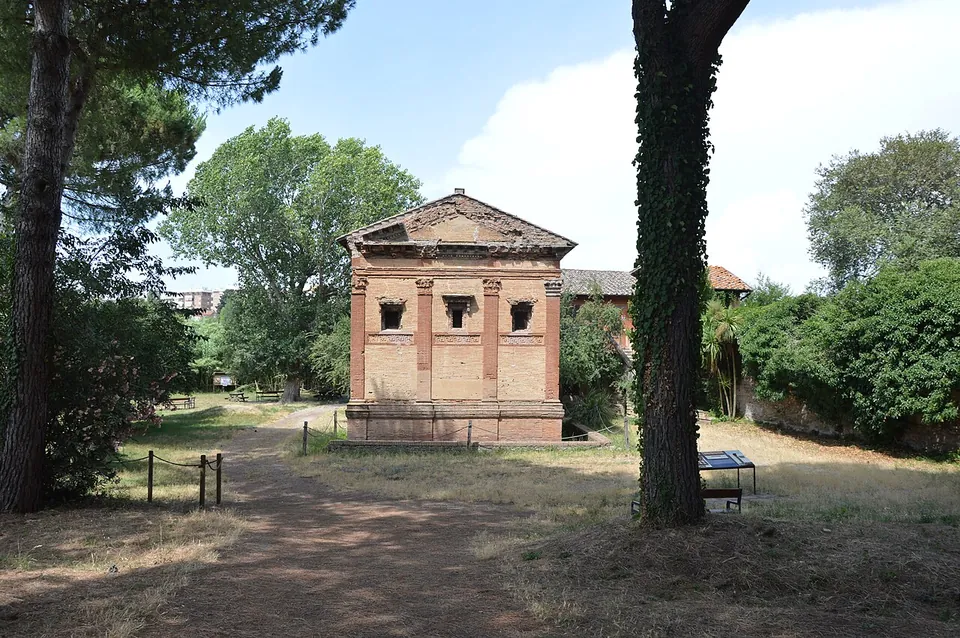
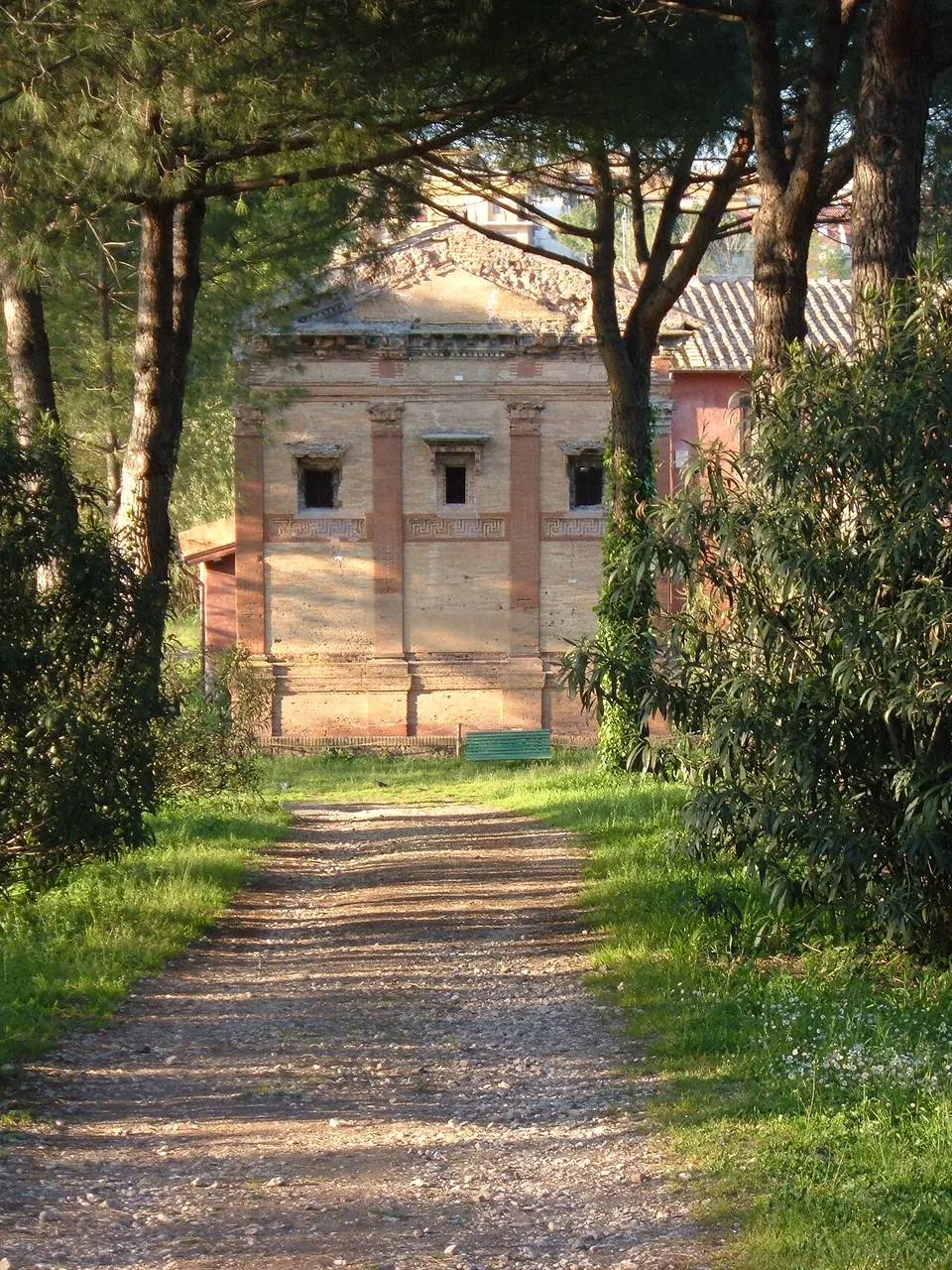


The Tomb of Annia Regilla is a small Roman funerary building of the 2nd century AD, shaped like a temple in yellow and red brick, standing in the Caffarella valley in Rome’s Appia Antica park. It is well preserved and still stands to its roof.
What is there today
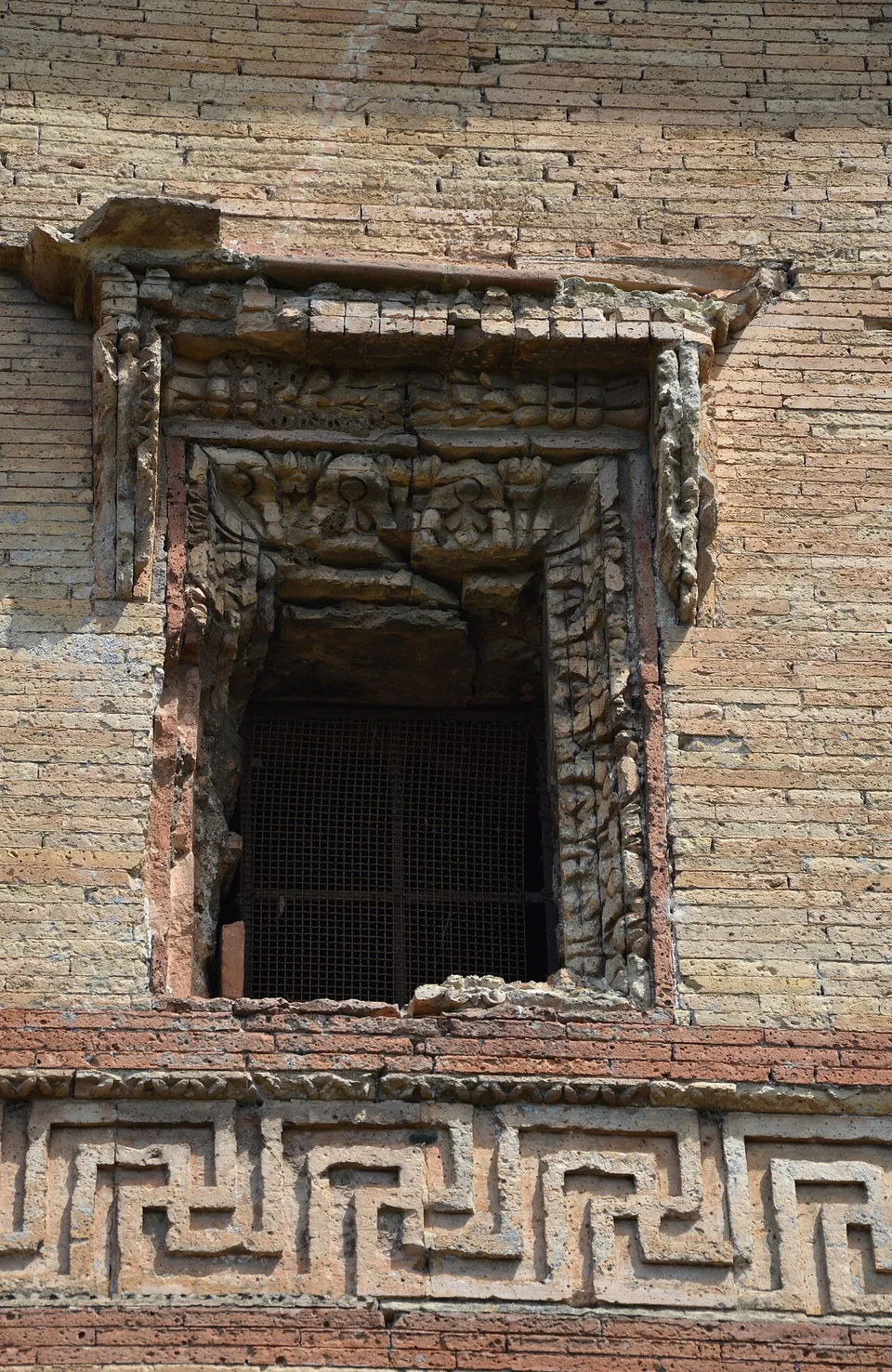
One building, but a complete one. It is a square block of about 8 by 8.5 metres on a high podium, in two storeys, with a pitched roof and a pediment (it.wikipedia). What makes it worth looking at is the brickwork: the walls are of yellow brick, while the pilasters, architraves and pediment are picked out in red, the pilasters have Corinthian capitals, and a meander frieze runs round the walls at half height with small windows above it (it.wikipedia). The south wall is the most richly decorated, with the door of the upper chamber at its centre (it.wikipedia). The columns that once stood in front of it have been lost (it.wikipedia).
Inside are several niches, probably meant for the burials of several people. The floor that divided the two storeys has collapsed (it.wikipedia); the operator does not say whether visitors go inside on open days.
The tomb stands next to the Casale dell’ex Mulino, the farmhouse of a former mill, in an area that the regional park looks after and opens at set times (Parco Regionale dell’Appia Antica; OpenStreetMap).
Is it worth the trip?
As a stop on a walk through the Caffarella valley, yes. On its own it is a single building you can take in within a few minutes, and its opening is restricted: weekends only, and not at all in January, July or August. The Caffarella valley around it is part of the Appia Antica regional park, which the park itself describes as always open and free to enter, with Roman, medieval and farm buildings scattered across it (en.wikipedia; the park). Pair the tomb with the Nymphaeum of Egeria in the same valley, or with the sites towards the Via Appia, between about 0.8 and 1.5 km away in a straight line: the Tomb of Caecilia Metella, the Villa of Maxentius and the Catacomb of Callixtus. See Rome for the rest of the city.
Getting there
The tomb lies on the left of Via della Caffarella, down a lane that descends to an old mill (Sovrintendenza Capitolina), about 4 km from the centre of Rome in a straight line. The park gives bus 118, stop Appia Antica/Caffarella, for its Via della Caffarella entrance, and a free car park at Via Appia Antica 50, open every day except Sunday until 18.00. Another entrance, at Largo Tacchi Venturi (the Casa del Parco), is served by Metro A at Colli Albani and by buses 87, 590, 663, 664 and 671 (Parco Regionale dell’Appia Antica). The park does not give walking times from its entrances to the tomb.
It is open on Saturdays and Sundays, 10.00 to 18.00 from the last Sunday of March to the last Saturday of October and 10.00 to 16.00 for the rest of the year. In October, November and December it also opens on Tuesdays and Thursdays from 10.00 to 13.00. It is closed in January, July and August (Sovrintendenza Capitolina, read 22 October 2026). Neither the Sovrintendenza nor the park publishes an admission price for the tomb.
Visiting details
- Opening hours
- Saturdays and Sundays 10.00–18.00 from the last Sunday of March to the last Saturday of October, and 10.00–16.00 for the rest of the year; in October, November and December also Tuesdays and Thursdays 10.00–13.00. Closed in January, July and August.
- Tickets
- Neither the Sovrintendenza Capitolina nor the regional park publishes a fee for the tomb. The Appia Antica regional park itself is always open and charges no entry.
- Parking
- The park lists a free car park at Via Appia Antica 50 for its Via della Caffarella entrance, open every day except Sunday until 18.00.
Before you go
- Closed all of January, July and August; open only at weekends for the rest of the year, with two extra weekday mornings in October to December.
- The Via Appia Antica 50 car park is closed on Sundays, one of the tomb's two regular opening days.
Hours and prices checked 22 October 2026 on the operator's own site. Confirm before travelling.
History
The tomb is usually attributed to Annia Regilla, of the noble Roman family of the Annii, who married the wealthy Greek Herodes Atticus, tutor of the future emperors Marcus Aurelius and Lucius Verus, around 140, and brought him large estates on the Via Appia as her dowry. She died in 160 (Sovrintendenza Capitolina), in Greece; her brother accused Herodes of having her killed, and he was acquitted (en.wikipedia; it.wikipedia).
The attribution rests on a sanctuary in the Appia area called the Triopion, which Herodes dedicated to his wife’s memory, and on inscriptions naming Regilla found near the basilica of San Sebastiano and the tomb of Caecilia Metella. Some scholars have recently rejected it, arguing that these inscriptions mention a hero’s shrine rather than a tomb, and that Regilla’s burial place, like Herodes’, was in Greece (Sovrintendenza Capitolina). The Italian Wikipedia calls the building a cenotaph, a memorial without a body, and the English Wikipedia says it is not certain the tomb is hers.
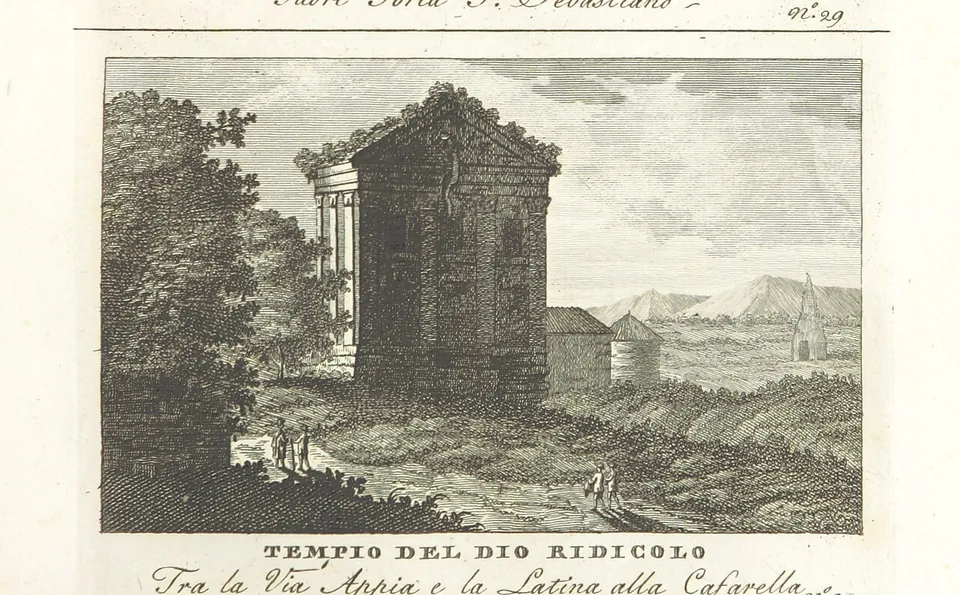
The building has long been admired. Renaissance architects including Antonio da Sangallo the Younger and Baldassarre Peruzzi admired it, and Piranesi and Labruzzi drew it. For centuries it served as a hay barn, which damaged some of its original features but kept it standing through constant upkeep (it.wikipedia). In the 17th and 18th centuries it was taken for the “Temple of the god Rediculus”, the god who protected Romans returning to their city, after a legend that placed his sacred field here (Sovrintendenza Capitolina); the name stuck, and Pleiades still files the place under “Redicolo”.
The Nymphaeum of Egeria
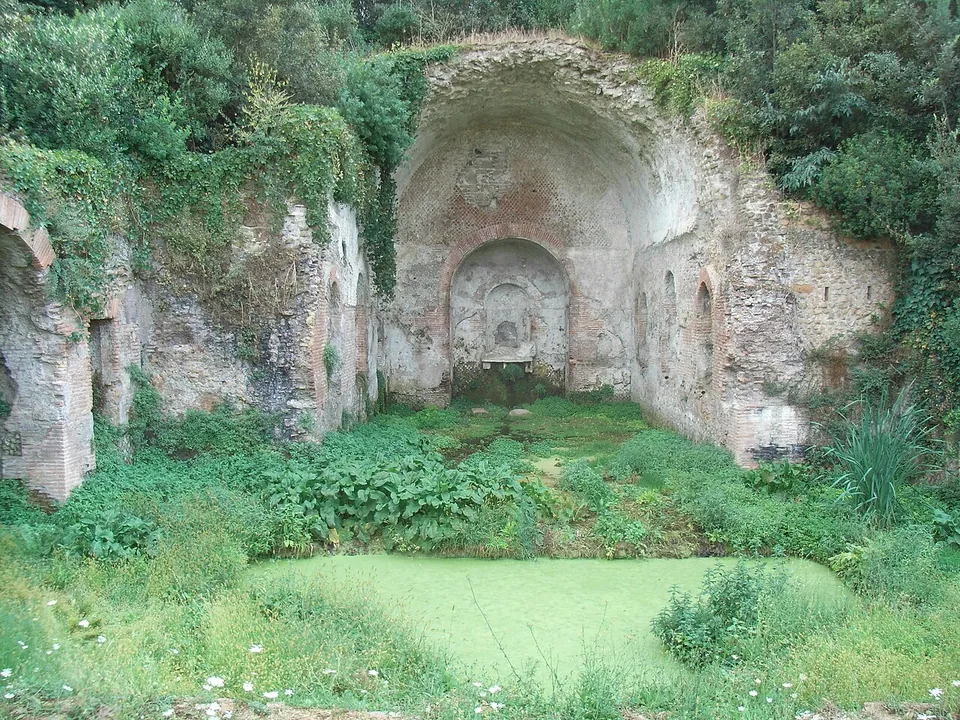
About 900 metres away in the same valley is the Nymphaeum of Egeria, a spring whose grotto was rebuilt in Roman times as a vaulted, apsed chamber (it.wikipedia). Legend made Egeria the nymph who advised King Numa Pompilius. In the 2nd century AD, when Herodes Atticus, acquitted of Regilla’s murder, remodelled a nearby villa, the natural grotto was turned into a vaulted building with a statue of Egeria in a niche, lined with green and white marble (it.wikipedia). Its brickwork dates it to the middle of the 2nd century, and water still flows from the back wall beneath a now-headless reclining statue of the river god Almo (en.wikipedia; it.wikipedia). It can still be visited in the Caffarella park (it.wikipedia).
More photographs


Nearby
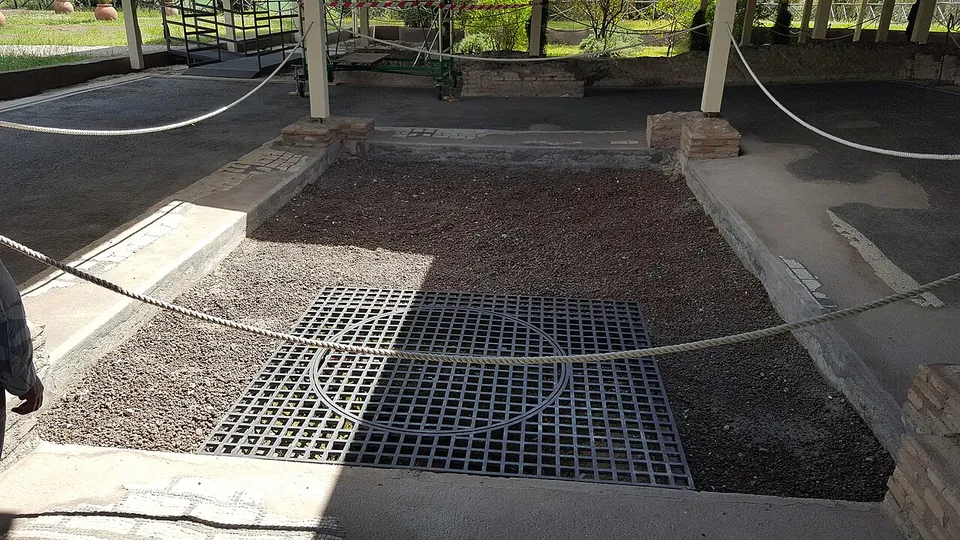
Photo: MumblerJamie · CC BY-SA 2.0 · Commons
15 km · villa · Lazio
Villa of Livia
The operator describes the private wing with the bedrooms of Livia and the emperor, an atrium and a small inner garden, and the large reception rooms that open onto a peristyle; the rooms once had painted walls and floors of mosaic and cut marble (Soprintendenza Speciale di Roma).
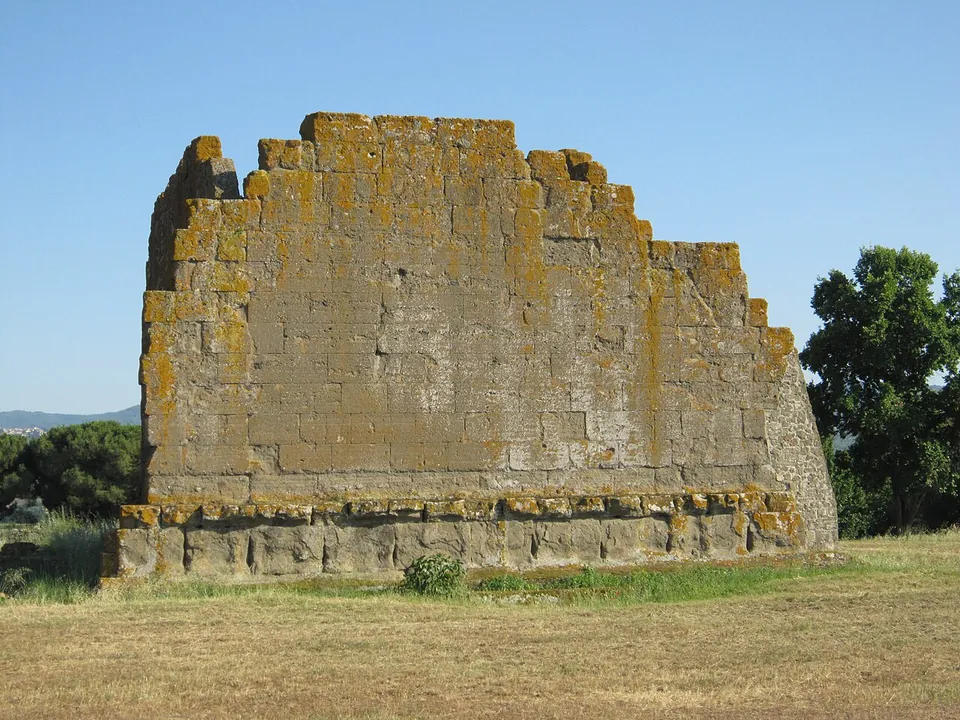
Photo: Carlomorino · CC BY-SA 3.0 · Commons
17 km · city · Lazio
Gabii
The park the state holds covers about 70 hectares on the southern rim of a volcanic crater whose lake was drained in the 19th century (the operator; en.wikipedia).
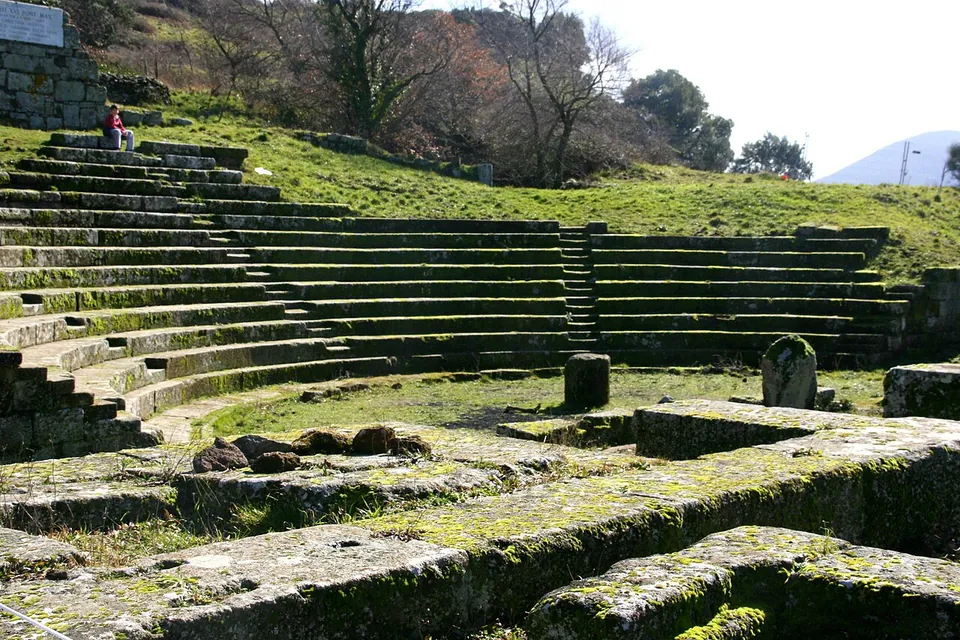
Photo: Luiza Serpa Lopes · Public domain · Commons
17 km · city · Lazio
Tusculum
The visitor route runs mainly through the forum, with the theatre halfway round (the operator).


Straight-line distances.
Sources
Every fact on this page comes from the records below, each used under the licence noted.
| Source | Licence |
|---|---|
| Pleiades 423022 | CC BY |
| Wikidata Q3664410 | CC0 |
| OpenStreetMap way/23956865 | ODbL |
| Sovrintendenza Capitolina — Annia Regilla, Sepolcro (description and opening hours) | licence not recorded |
| Parco Regionale dell'Appia Antica — Aree e siti monumentali | licence not recorded |
| Parco Regionale dell'Appia Antica — Come arrivare | licence not recorded |
| Wikipedia (it) — Cenotafio di Annia Regilla | CC BY-SA 4.0 |
| Wikipedia (en) — Park of the Caffarella | CC BY-SA 4.0 |
| Wikipedia (en) — Appia Annia Regilla | CC BY-SA 4.0 |
| Wikipedia (it) — Ninfeo di Egeria | CC BY-SA 4.0 |
| Pleiades — Nymphaeum of Egeria | licence not recorded |