

What is there today
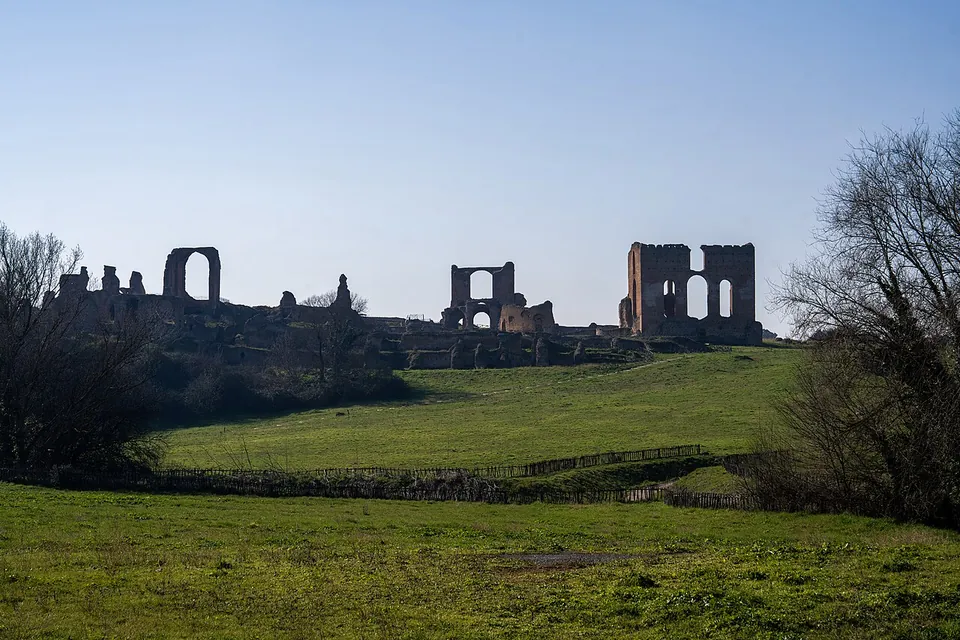
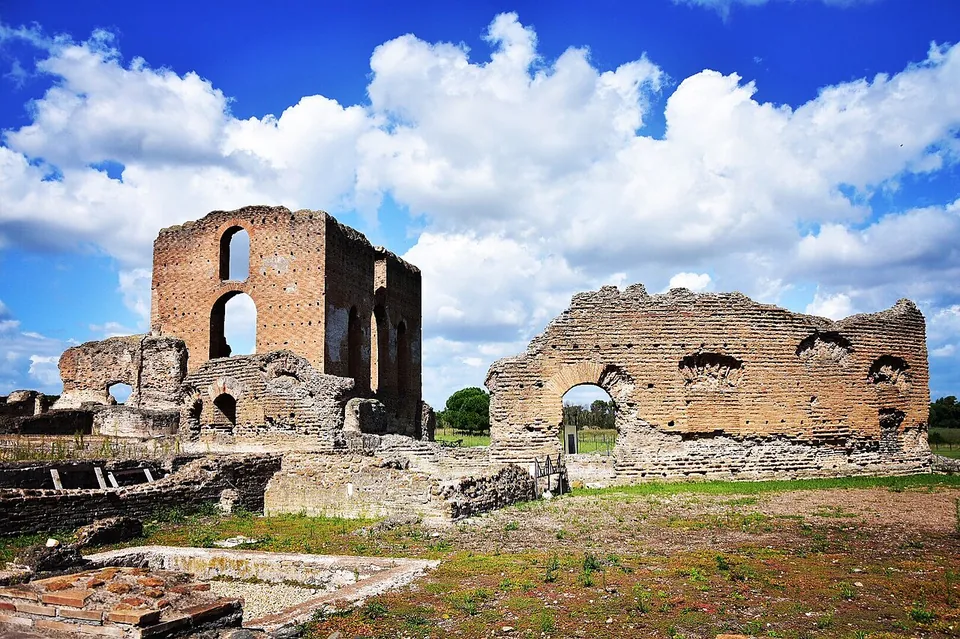
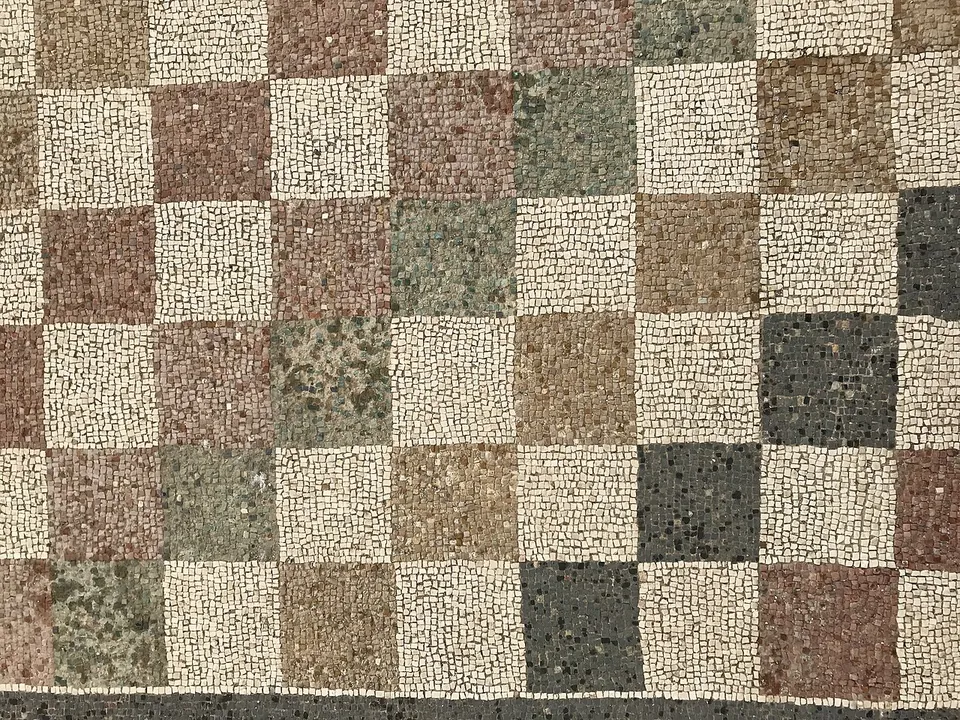
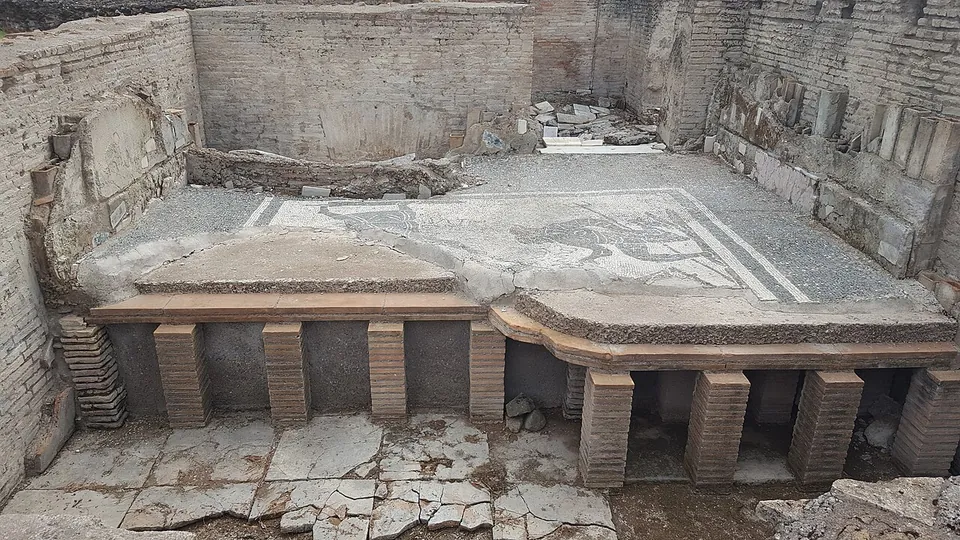
The ruins cover so much ground that, when the site was first dug, locals called it “Roma Vecchia”, Old Rome, as if it must have been a town (en.wikipedia). They spread between the Via Appia Antica and the Via Appia Nuova (de.wikipedia), with the main block on a hill (the operator). Tall brick walls still stand there, and among them are courtyards, reception rooms and the great baths: a cold hall that keeps its inlaid marble floor, a hot room with enormous window openings and, between them, the warm rooms (en.wikipedia). Several of the guest rooms keep exceptionally well-preserved mosaic floors of the 2nd century (en.wikipedia), and the operator describes the coloured marble on the walls and floors as still splendidly preserved. An elliptical building long called the “Maritime Theatre” turned out to be a small amphitheatre that Commodus began for gladiators and animal hunts and never finished (en.wikipedia; OpenStreetMap maps it as Teatro Marittimo).
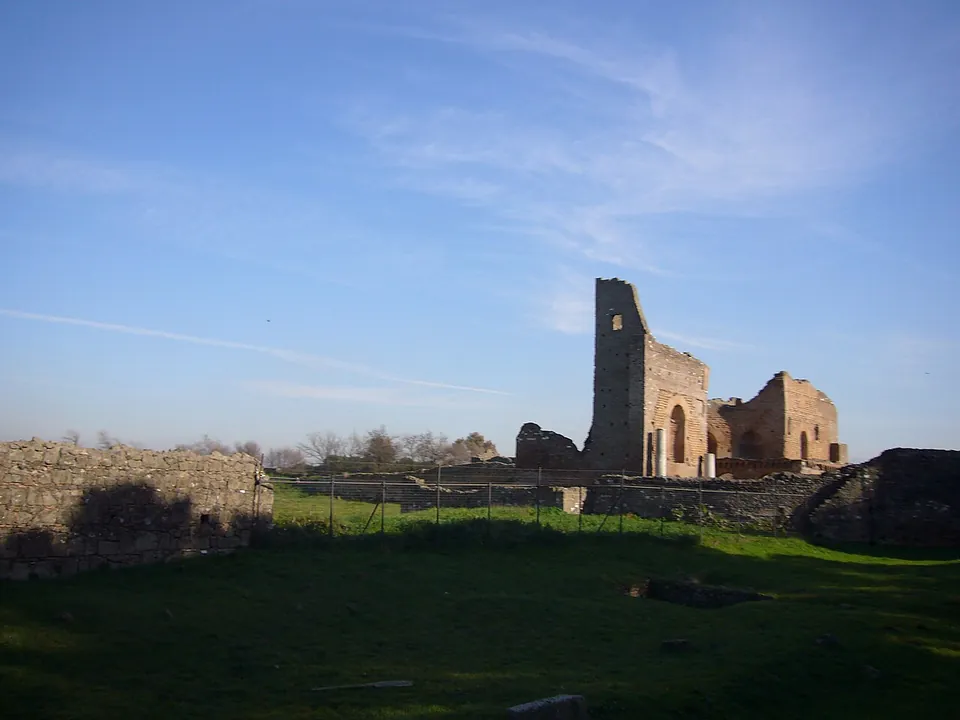
On the Appia Antica side stands the nymphaeum, the monumental fountain Commodus built at the villa’s original entrance (en.wikipedia; the operator). Three of the four marble columns of its opening survive (en.wikipedia), but today it is deeply altered by the medieval fortification and watchtower built on its walls (the operator; de.wikipedia). Between the nymphaeum and the hill ran a garden with covered porticoes almost 300 m long for walking and running (en.wikipedia; it.wikipedia).
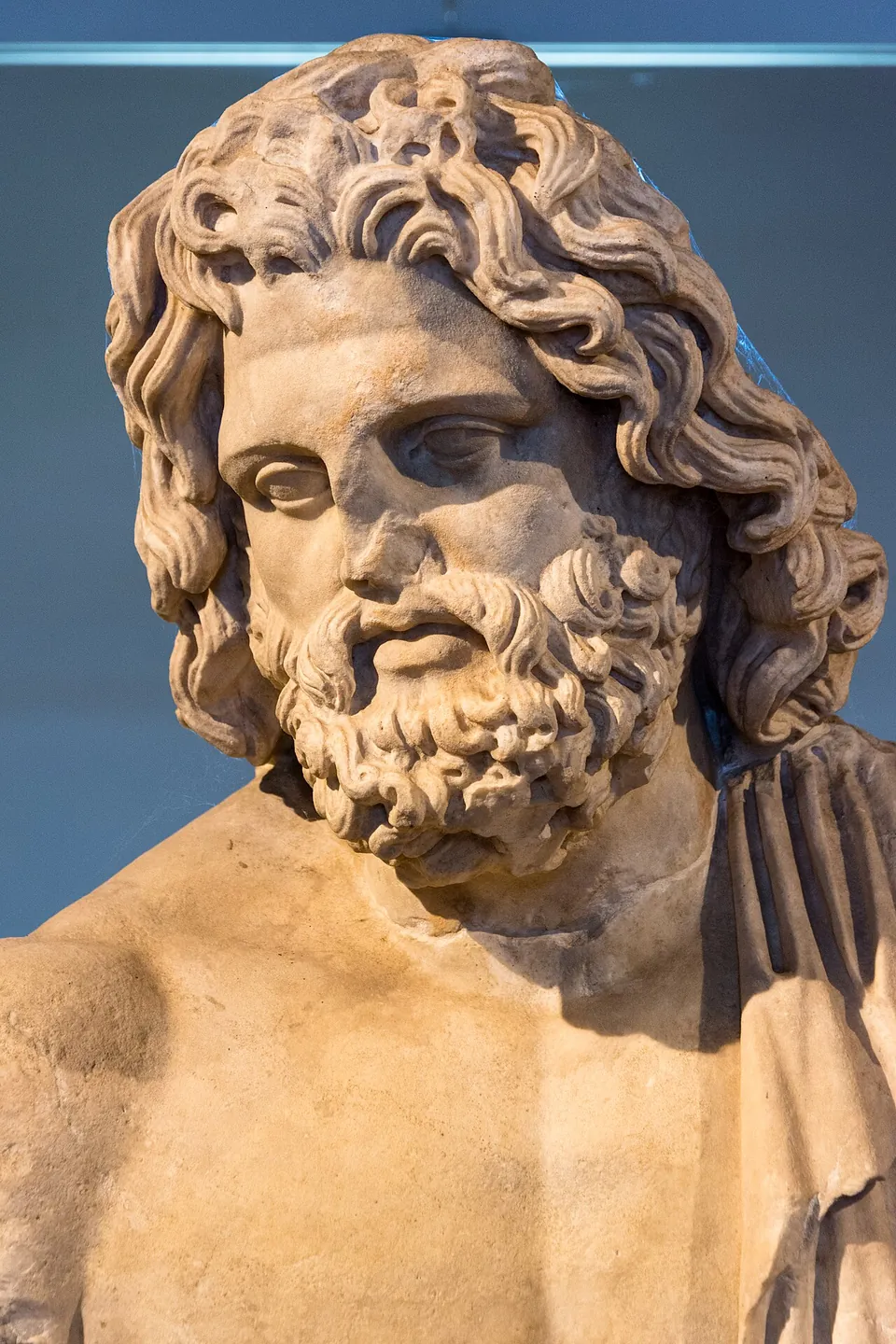
The ticket also covers Santa Maria Nova next door: three hectares of countryside with ruins around a farmhouse built over a Roman cistern, now a visitor point and exhibition space. In a bath building there, two black-and-white mosaic floors are perfectly preserved and on view, one showing a gladiator named Montanus with a referee awarding him victory, the other four horses paired around a tree (the operator). In the farmhouse on the Via Appia Nuova, the Antiquarium shows sculpture and architecture from the villa and the road, including a colossal statue of Zeus from Hadrian’s time, a statue group of Niobe and panels reassembled from the villa’s coloured marble inlays (it.wikipedia; the operator).
Is it worth the trip?
Yes, if you have a day for the Appian Way, and especially if you like your ruins with space around them. Here you walk through an emperor’s villa, with standing walls, marble floors and mosaics still where they were laid. It is not a crowded site: in 2018 it and the Tomb of Caecilia Metella together recorded 44,136 visitors (it.wikipedia).
The honest caveats: it is a long way out, the site is spread over open fields about 700 m across, and much of what you see is the shell of buildings rather than rooms. Of the circus Commodus built, most lies under private land (en.wikipedia). If you have only a day or two in Rome, the centre comes first.
Getting there and what it costs
There are two entrances: Via Appia Nuova 1092, where the car park, the Antiquarium and the buses are, and Via Appia Antica 251, on the old road (the operator). By public transport the operator suggests Metro A to Colli Albani and then bus 664 or 663, or bus 118 from the Celio/Vibenna stop in the historic centre to Appia/Squillace. OpenStreetMap maps the stops Appia/Squillace and Appia/Villa dei Quintili within about 100 m of the Antiquarium. A small car park is at the Appia Nuova entrance (the operator).
It is open Tuesday to Sunday and closed on Mondays: 09.00 to 19.15 from April to September, 09.00 to 18.30 in March and October, and 09.00 to 16.30 from November to February. Last entry is 75 minutes before closing, against 30 minutes at the park’s other sites. A ticket is €8, valid for the day for the villa and Santa Maria Nova; EU citizens aged 18 to 24 pay €2, Roma Pass holders €4, and under-18s go free. The park ticket, €12, covers all six of the Appia Antica park’s sites, the Tomb of Caecilia Metella among them, over seven days, with booking. Entry is free on 1 November 2026. Tickets are sold online through Musei Italiani or at the machine at the entrance, which takes cards only. There are drinks and snack machines, and a rest area under the olive trees to the left of the farmhouse where a snack may be eaten (parcoarcheologicoappiaantica.it, read 17 October 2026 — check before travelling).
Visiting details
- Opening hours
- Tuesday to Sunday, closed Mondays. 09.00–19.15 from 1 April to 30 September, 09.00–18.30 in March and in October, 09.00–16.30 from 1 November to the end of February. Last entry 75 minutes before closing.
- Tickets
- €8 full, a same-day ticket for the villa and Santa Maria Nova; €2 for EU citizens aged 18–24; €4 with a 48- or 72-hour Roma Pass; free under 18. The Appia Antica park ticket, €12, covers all six of the park's sites over seven days, with booking. Free entry on 1 November 2026. Tickets online (Musei Italiani) or at the card-only machine at the entrance.
- Parking
- A small car park at the Via Appia Nuova 1092 entrance (the operator), mapped beside the Antiquarium (OSM way/331242888).
Before you go
- Closed on Mondays, like the park's other sites.
- There are two entrances, Via Appia Nuova 1092 (car park, Antiquarium, buses) and Via Appia Antica 251 (on the old road), on opposite sides of a site that runs about 700 m from one road to the other.
Hours and prices checked 17 October 2026 on the operator's own site. Confirm before travelling.
Nearby on the Appian Way
About 1.5 km back towards Rome, at the fourth mile, stands the Tomb of Hilarus Fuscus, a late Republican tomb of about 30 BC with carved portrait figures, restored by Luigi Canina in the mid-19th century; the sculptures there now are copies, the originals being in the National Museum of the Baths of Diocletian (en.wikipedia; Pleiades). Close by are the Tomb of the Licinii, which yielded marble busts now mostly in the Ny Carlsberg Glyptotek in Copenhagen, a famous portrait of Pompey among them, and the “Doric” tomb, shaped like an altar and named for the frieze along its top (it.wikipedia), as well as the tombs of Tiberius Claudius Secundus and of the sons of Sextus Pompeius Justus (OpenStreetMap; Pleiades; Wikidata) and remains that Pleiades identifies, with a question mark, as a temple of Jupiter.
A few hundred metres beyond the nymphaeum, OpenStreetMap maps the Tomb of Septimia Galla, at the sixth mile (Pleiades). The villa’s own aqueduct, which ran on about 120 arches for some 700 m (en.wikipedia), can be seen from the Via Appia Nuova near the ring road (it.wikipedia).
History
The villa belonged to the brothers Sextus Quintilius Condianus and Sextus Quintilius Valerius Maximus, of a senatorial family and both consuls in AD 151; their names were found on a lead water pipe (the operator; it.wikipedia). Brick stamps date the first villa to the reign of Hadrian (117–138) (en.wikipedia; it.wikipedia), though de.wikipedia gives about 150. In 182 or 183 Commodus had both brothers killed on a charge of plotting against him and took the estate (the operator). He and later emperors lived there and enlarged it (the operator; en.wikipedia), adding the nymphaeum, the theatre and a circus for chariot races about 500 m long; after Commodus’s death and the condemnation of his memory the circus was razed to its foundations (en.wikipedia). It seems to have remained an imperial residence through the 3rd century (it.wikipedia). Under Gordian III (238–244) a lavish winery was built over the circus’s starting gates, with marble-clad treading floors and fountains of wine, surrounded by dining rooms where the emperor could entertain guests around the spectacle of the wine-making (en.wikipedia). It was excavated in 2018 (en.wikipedia; it.wikipedia).
From the end of the 4th century the villa served as a quarry for bricks, stone and marble (en.wikipedia), although parts were still in use in the 6th century (it.wikipedia). In the Middle Ages the estate passed to church institutions, from the 12th century to Santa Maria Nova, today Santa Francesca Romana (it.wikipedia), and the Counts of Tusculum turned the nymphaeum into a fortress controlling the road (de.wikipedia). Digs for works of art from the mid-18th century, and papal excavations in 1783–1792, sent its sculptures to the Vatican Museums, the Glyptothek in Munich and the Louvre; the Torlonia family, who bought the estate in 1797, dug on for their private collection (it.wikipedia). Systematic campaigns by the state’s archaeological service from 1998 opened the main remains to visitors (it.wikipedia), and the state bought Santa Maria Nova in 2006; it has been visitable with the villa since 2013 (the operator).
More photographs



Nearby
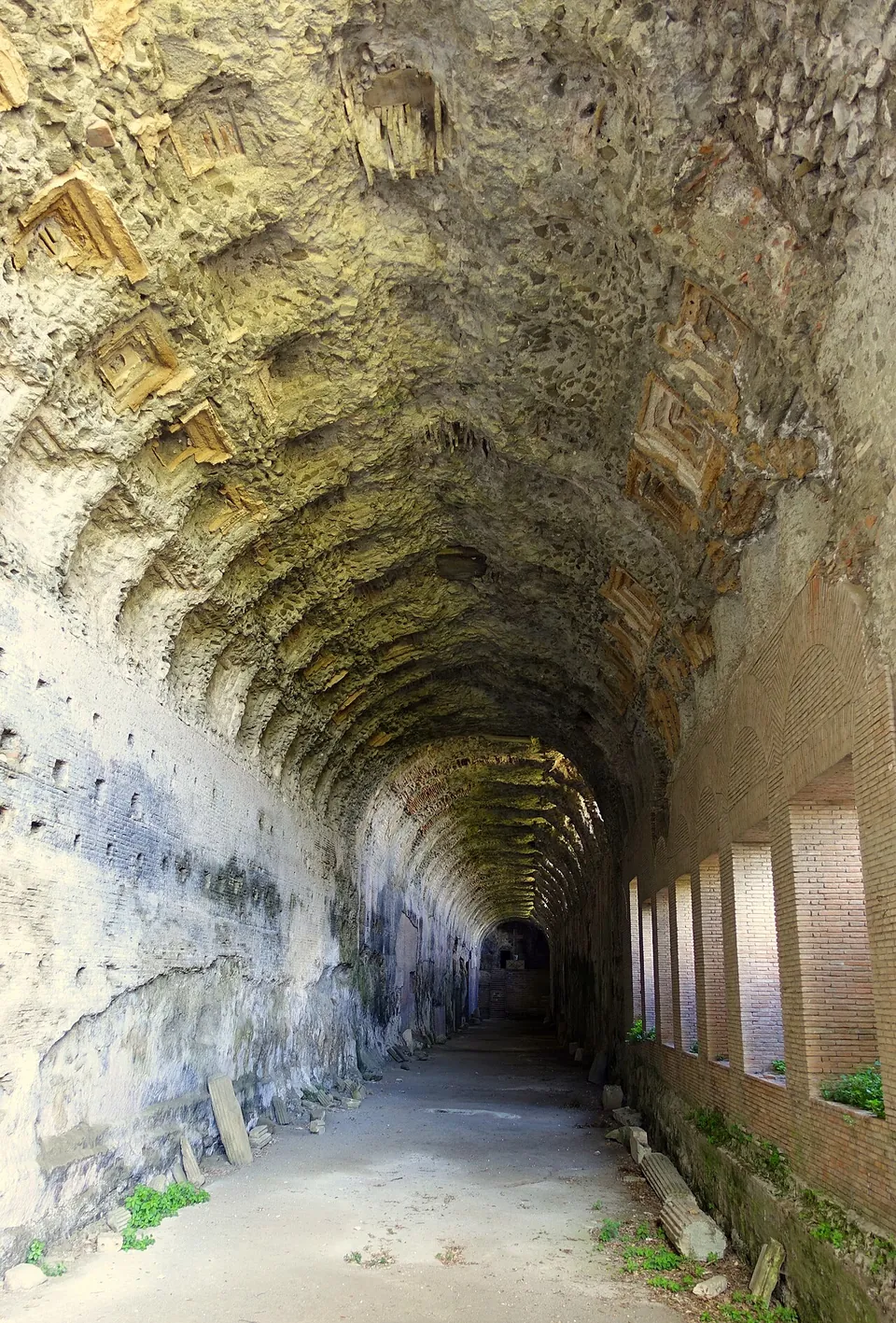
Photo: Daderot · Public domain · Commons
13 km · villa · Lazio
Villa of Domitian
Most of the remains lie inside the Pontifical Villas, an extraterritorial property of the Holy See.
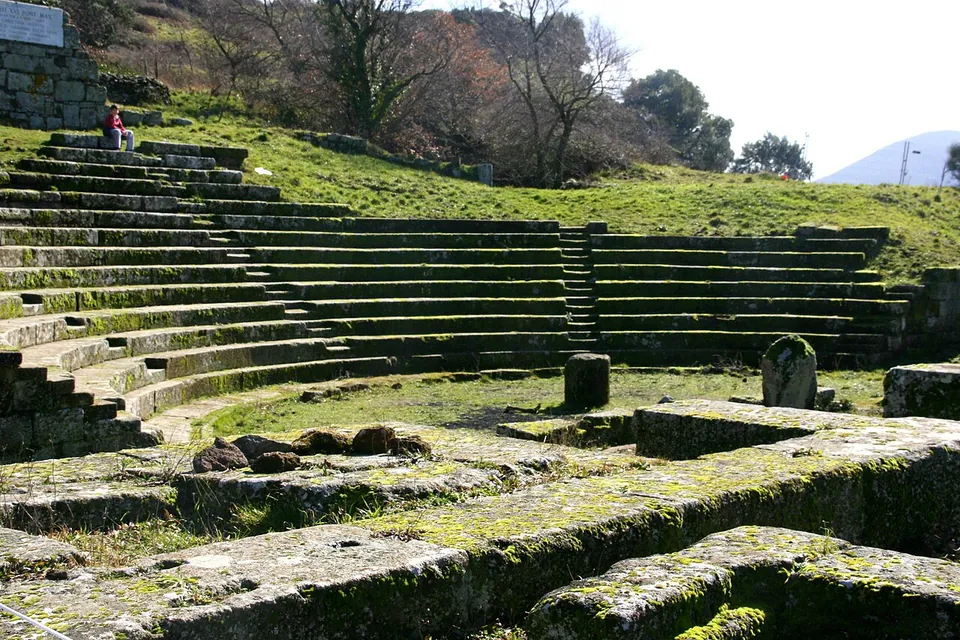
Photo: Luiza Serpa Lopes · Public domain · Commons
13 km · city · Lazio
Tusculum
The visitor route runs mainly through the forum, with the theatre halfway round (the operator).
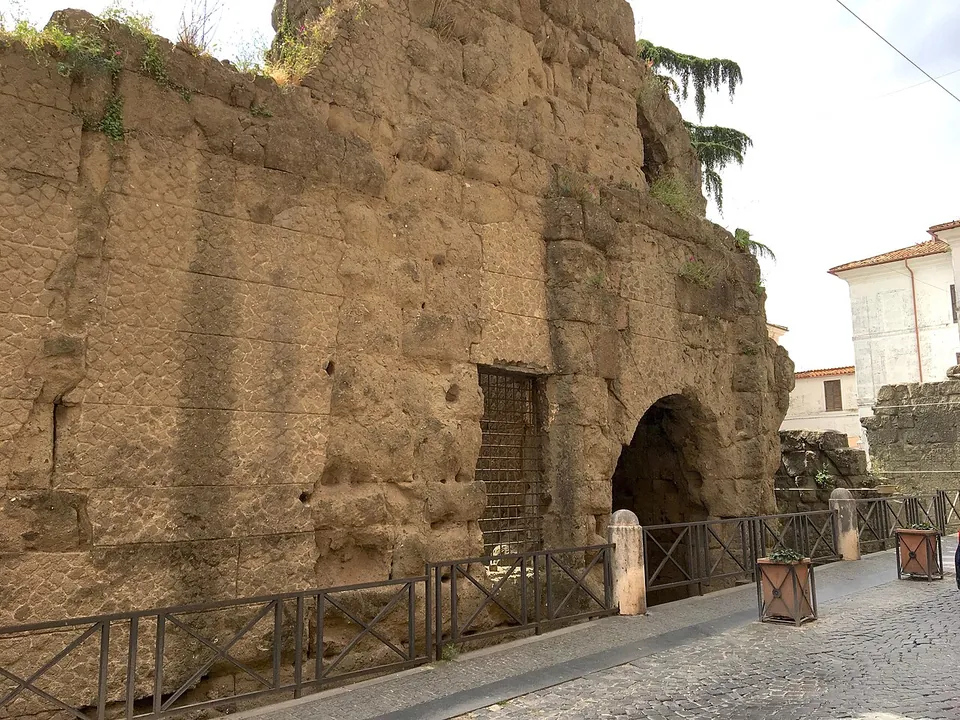
Photo: Rjdeadly · CC BY-SA 4.0 · Commons
14 km · fort · Lazio
Castra Albana
The set piece is the Porta Praetoria, the main gate, which faced the Via Appia.


Straight-line distances.
Sources
Every fact on this page comes from the records below, each used under the licence noted.