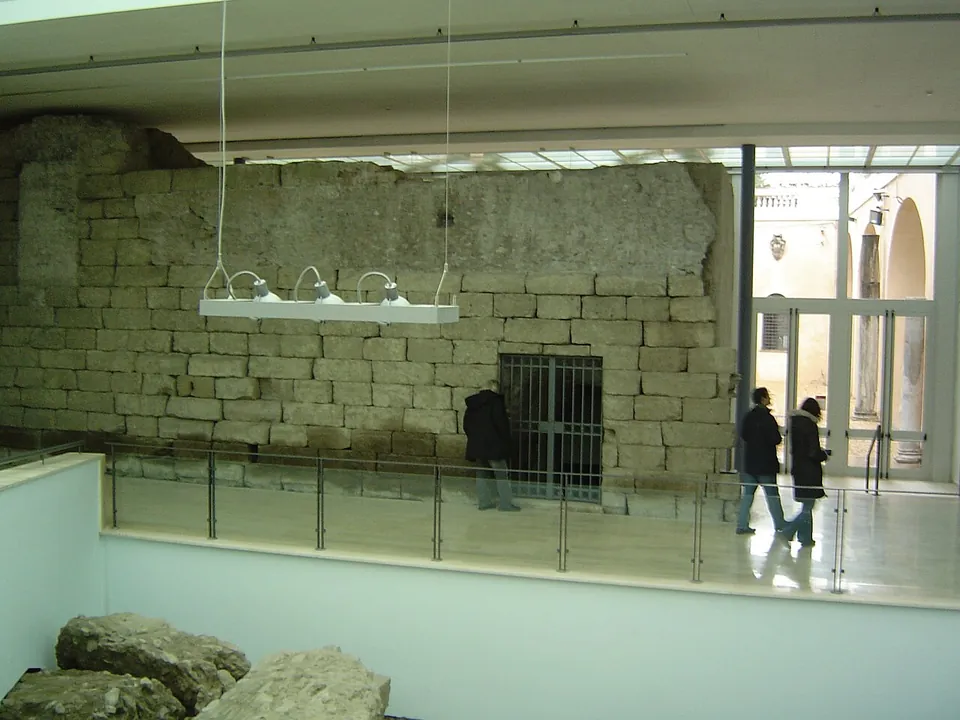
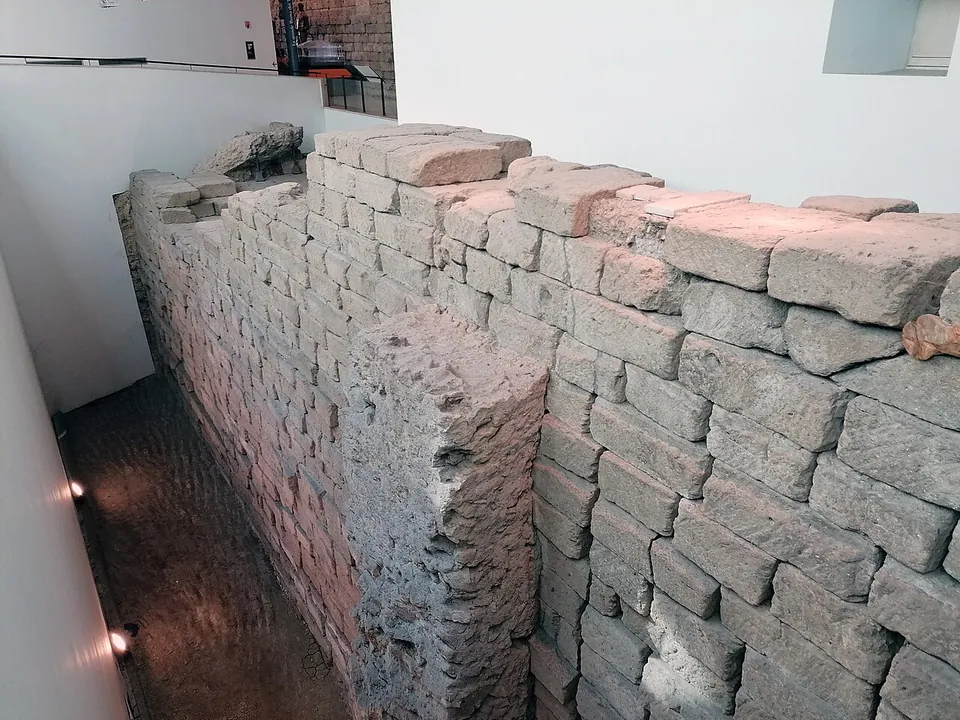
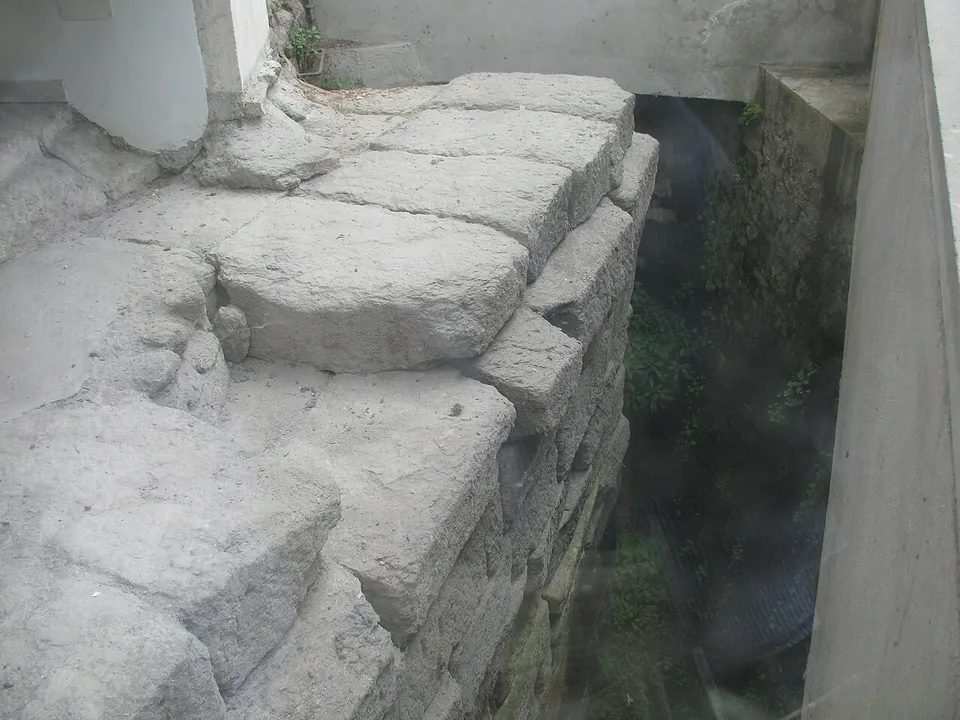


The Temple of Jupiter Optimus Maximus was ancient Rome’s most important temple, the seat of Jupiter, Juno and Minerva on the Capitoline Hill (en.wikipedia). The temple itself is gone. What you can see are the foundations it stood on: long walls of grey tufa blocks, shown in their own hall inside the Capitoline Museums, with one more corner visible from a street on the hill.
What is there today
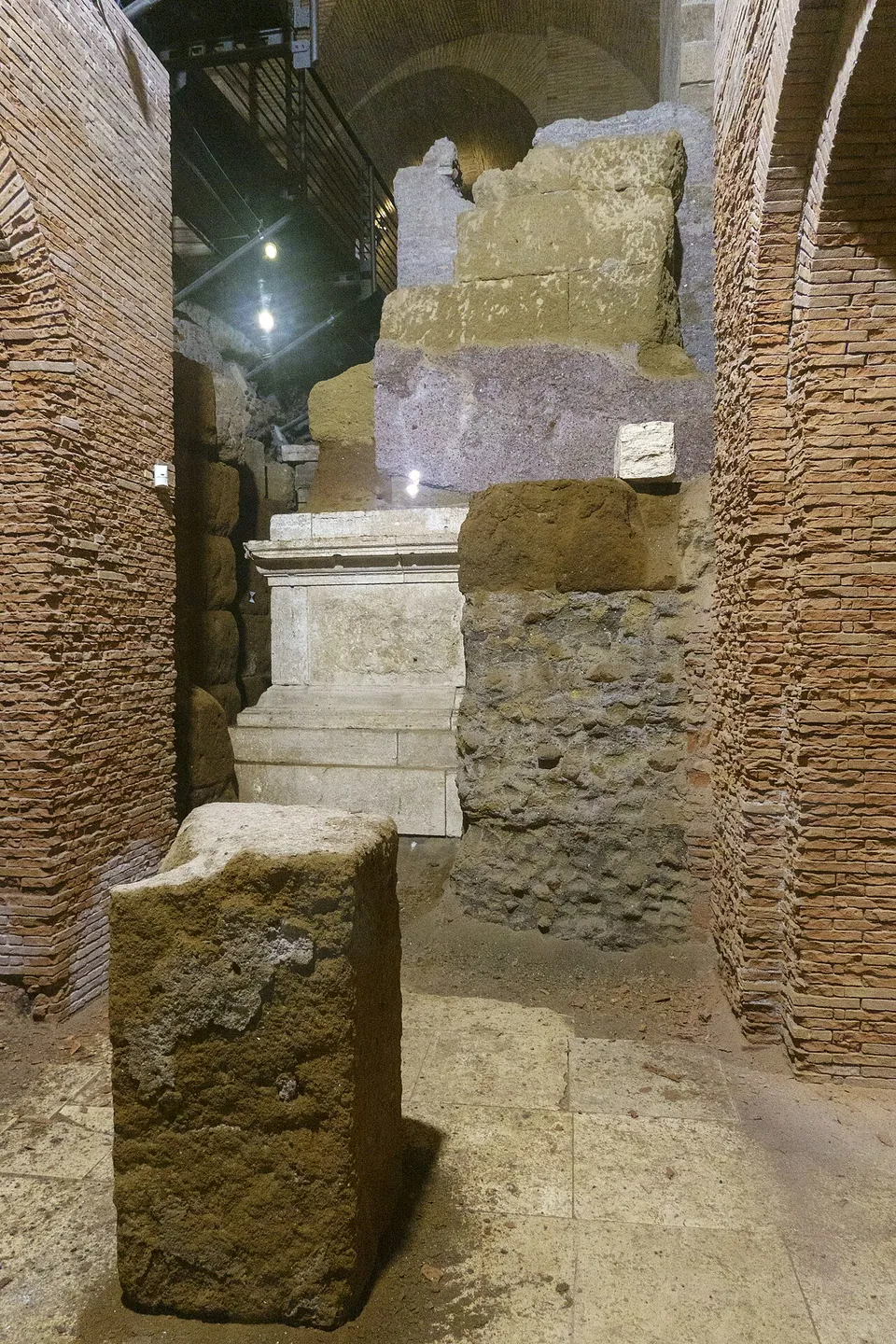
Only parts of the foundations and the podium survive. Three corners and large stretches of the substructures remain, standing up to 19 courses high, made of blocks of grey tufa known as cappellaccio (it.wikipedia; the operator). The largest stretch is in the Capitoline Museums, in the Palazzo dei Conservatori. Excavations there, finished in 2000 in the Giardino Romano, where the Exedra of Marcus Aurelius now stands, uncovered the foundations of the temple’s eastern side. A gallery opening onto the Caffarelli garden presents the results with reconstruction drawings and models. One section, the “Roman Wall”, is the only part of the podium that survives to its full height (the operator). Outside the museum, more blocks can be seen on the Piazzale Caffarelli, and the front right-hand corner of the temple is visible in Via del Tempio di Giove (de.wikipedia; it.wikipedia).
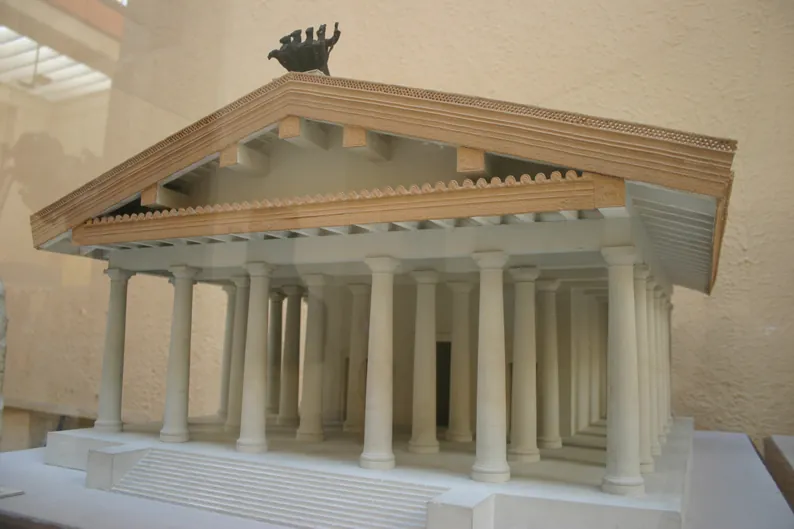
The foundations show how big the temple was. The museum puts its base at about 55 by 60 m (the operator), and it.wikipedia calls it the largest Etruscan or Italic temple known so far. What stood on that base is still debated. Five different plans have been published, the ancient figures may describe either the podium or the building, and the estimate of almost 60 m square for the first temple is hotly disputed (en.wikipedia).
Is it worth the trip?
As part of the Capitoline Museums, yes. You come for the museum, and the foundations are a striking room within it. As a temple, be ready for what is left. There are no columns and no standing rooms, only courses of stone that once carried the most important building in the city. The museum’s reconstruction drawings and models help you picture what stood on top. If you are not going into the museum, the corner in Via del Tempio di Giove costs nothing and takes a minute. It is enough to say you have seen the temple, but not much more than that.
Getting there and what it costs
The Capitoline Museums are at Piazza del Campidoglio 1 (the operator), on the hill above Piazza Venezia. The nearest mapped bus stops, Piazza Venezia / Foro Romano and Teatro Marcello, are about 90 to 100 m from the temple site (OpenStreetMap), and the Roman Forum is about 500 m away.
The museums open daily from 09.30 to 19.30, with last admission an hour before closing. On 24 and 31 December they close at 14.00, and they are closed on 1 May and 25 December. A ticket is €15 (concessions €9.50) when no exhibition is on. While an exhibition is running, as from 7 September to 1 November 2026, it is €16.50 (concessions €11). Booking online or by phone adds a €1 fee. Entry is free for residents of Rome and its metropolitan area, and for holders of the Roma MIC card. An audio guide is €4 and a video guide €6 (museicapitolini.org, read 20 October 2026; check before you go, since exhibition prices change).
Visiting details
- Opening hours
- The Capitoline Museums, which hold the main remains, open daily 09.30–19.30; 24 and 31 December 09.30–14.00. Last admission one hour before closing. Closed 1 May and 25 December.
- Tickets
- Capitoline Museums €15 (concessions €9.50) when no exhibition is on; from 7 September to 1 November 2026, with the current exhibition, €16.50 (concessions €11). €1 pre-sale fee for tickets bought online or by phone. Free for residents of Rome and its metropolitan city and for Roma MIC card holders. Audio guide €4, video guide €6. The corner in Via del Tempio di Giove is in a public street.
Hours and prices checked 20 October 2026 on the operator's own site. Confirm before travelling.
Around the temple
The temple stood in a sacred precinct, the Area Capitolina, among minor temples, shrines, altars, statues and trophies (en.wikipedia; it.wikipedia). Some of them are known only from texts: the Aedes Tensarum, where the sacred processional chariots were kept, is attested only in a military diploma (en.wikipedia). A few remains survive on the hill and at its foot.
Temple of Veiovis. In the saddle between the hill’s two summits, the Temple of Veiovis was vowed in 200 BC and dedicated in 192 BC. It was rebuilt when the Tabularium went up in 78 BC, and that is the form you can see today. Its remains were uncovered in 1939, while the passage that now links the Palazzo dei Conservatori and the Palazzo Nuovo under the piazza was being built. They can be seen in the Tabularium, beneath the Capitoline Museums. Its cella, 15 m wide and 8.90 m deep, is wider than it is deep, which is unusual (en.wikipedia; it.wikipedia). The headless marble cult statue found inside it is in the museums’ Galleria Lapidaria (it.wikipedia).
The lost temples of the precinct. Augustus dedicated a small Temple of Jupiter Tonans, “the Thunderer”, in 22 BC, probably at the entrance to the Area Capitolina. Nothing of it survives, except perhaps a small part of its foundations (en.wikipedia). The Temple of Fides, the goddess of good faith, stood on the south side of the precinct (en.wikipedia), and the Temple of Mens, dedicated in 215 BC, stood in the south-eastern corner of the hill (it.wikipedia). A square concrete foundation in Via del Tempio di Giove, found in the 19th century when the street was cut through it, has been read by some scholars as the podium of the Temple of Jupiter Custos, which Domitian built. Its shape suits a temple poorly, though, and the Aedes Tensarum or an altar of the Julian family has been proposed instead (en.wikipedia; it.wikipedia).
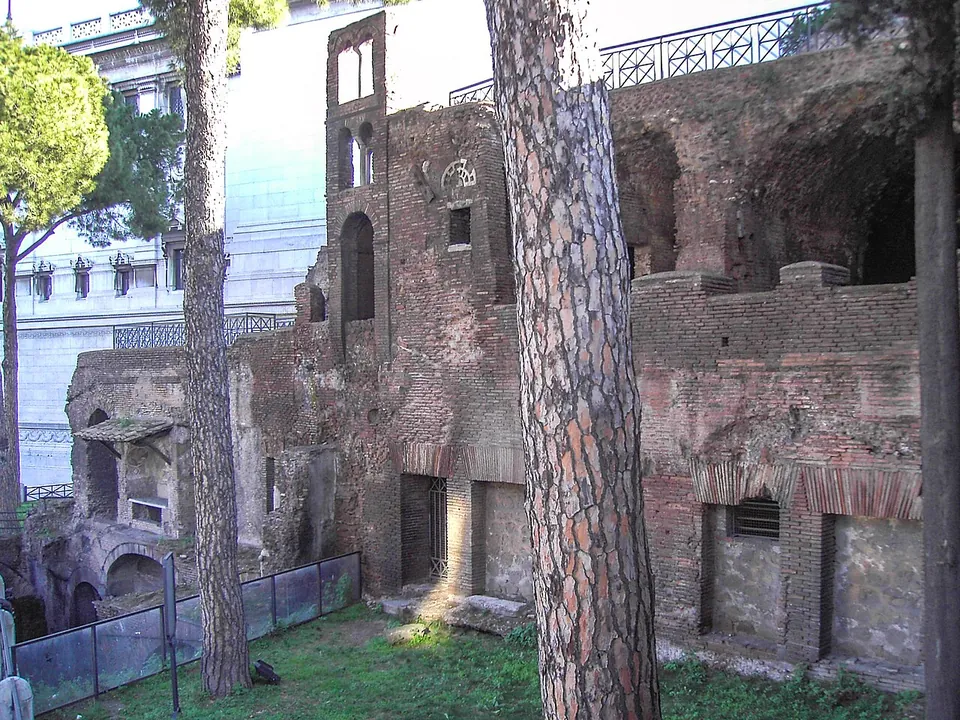
At the foot of the hill. The Sacred Area of Sant’Omobono, with the oldest known temple remains in Rome, has a page of its own. Also at the foot of the hill, the Insula dell’Ara Coeli is a Roman apartment block of the 2nd century AD. It came to light in the 1930s, when a church built over it was taken down. Four of its floors survive, and it may have housed about 380 people (it.wikipedia; en.wikipedia). Nearby, outside the Vittoriano on the Piazza Venezia side, stands the Republican tomb of Gaius Publicius Bibulus. Only the west wall of its cella survives above a mostly buried base, and it was restored between November 2024 and February 2025 (it.wikipedia).
History
According to Roman tradition, Tarquinius Priscus vowed the temple and began the terracing for it. The last king, Tarquinius Superbus, completed most of it. It was dedicated on 13 September 509 BC, the first year of the Republic, by the consul Marcus Horatius Pulvillus. Dionysius of Halicarnassus puts the consecration in 507 BC instead (en.wikipedia). Etruscan craftsmen worked on it, among them Vulca of Veii, who was credited with the cult statue of Jupiter and the terracotta four-horse chariot on the roof (en.wikipedia; the operator). Each god of the triad had a cella of its own: Jupiter in the middle, Juno on the left and Minerva on the right (en.wikipedia). Fragments of the original painted terracotta decoration, found in 2014, have allowed the earliest phase to be reconstructed. Until the 2nd century BC, its decorative scheme was taken up in the terracotta decoration of many temples in Italy (en.wikipedia; it.wikipedia).
Fire destroyed the temple three times, and each time it was rebuilt on the same foundations. The wooden first temple burned in 83 BC, taking the Sibylline Books with it. Quintus Lutatius Catulus dedicated its successor in 69 BC. That one burned on 19 December AD 69, in fighting on the hill between Vespasian’s troops and the city’s defenders. Vespasian’s rebuild was dedicated in 75 and burned in 80. Domitian’s, the most lavish, was completed in 82, and Plutarch puts the cost of its gilding alone at 12,000 talents (en.wikipedia; it.wikipedia). Triumphal ceremonies ended in front of the temple, the Senate held solemn sessions there, and it kept the archives on foreign relations as well as the Sibylline Books (it.wikipedia).
Domitian’s temple is thought to have lasted largely intact for more than three hundred years, until Theodosius I closed the pagan temples in 392. In the 5th century Stilicho stripped gold from its doors, and the Vandals carried off half its gilded bronze roof tiles in 455. Cassiodorus still counted it among the wonders of the world in the early 6th century, and Narses removed many of its statues in 571. The ruins were still well preserved when Poggio Bracciolini saw them in 1447. What was left was destroyed in the 16th century, when Giovanni Pietro Caffarelli built the Palazzo Caffarelli on the site (en.wikipedia).
More photographs



Nearby
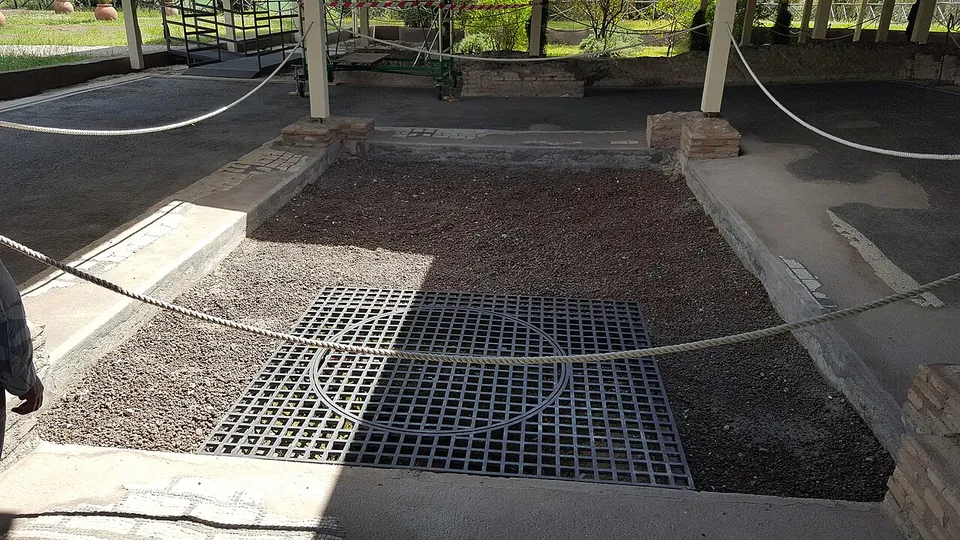
Photo: MumblerJamie · CC BY-SA 2.0 · Commons
12 km · villa · Lazio
Villa of Livia
The operator describes the private wing with the bedrooms of Livia and the emperor, an atrium and a small inner garden, and the large reception rooms that open onto a peristyle; the rooms once had painted walls and floors of mosaic and cut marble (Soprintendenza Speciale di Roma).
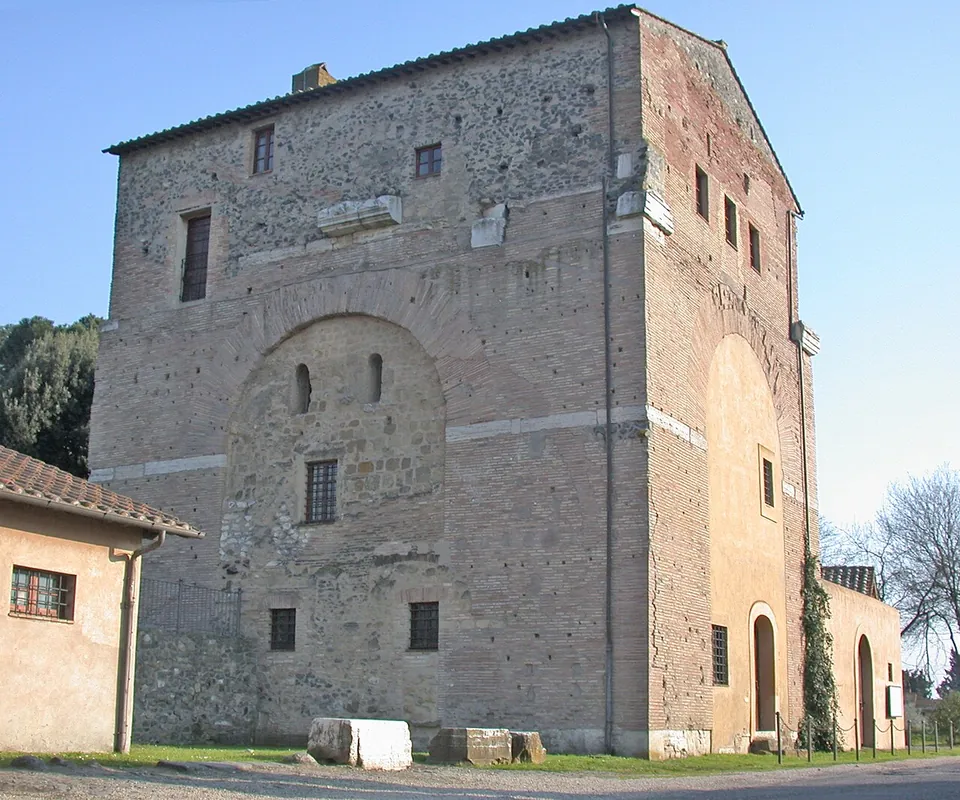
Photo: MM · Public domain · Commons
18 km · arch · Lazio
Arch of Malborghetto
At first sight you see an austere farmhouse rather than an arch (it.wikipedia).
Photo: Carlomorino · CC BY-SA 3.0 · Commons
20 km · city · Lazio
Gabii
The park the state holds covers about 70 hectares on the southern rim of a volcanic crater whose lake was drained in the 19th century (the operator; en.wikipedia).


Straight-line distances.
Sources
Every fact on this page comes from the records below, each used under the licence noted.