Ravenna was the capital of the Western Roman Empire for most of the 5th century, until its fall
in 476, and what it keeps from those centuries is not ruins but whole buildings: eight churches,
baptisteries and mausolea of the 5th and 6th centuries, most of them decorated with mosaics,
which UNESCO lists together as the Early Christian Monuments of Ravenna. If late antique mosaic
is what you want to see, few places in Europe compare. The diocese’s recommended ticket, €12.50,
covers San Vitale, the Mausoleum of Galla Placidia, the Baptistery of Neon and Sant’Apollinare
Nuovo.
What is there today
Almost everything here is late antique or early Byzantine rather than classical Roman. The
buildings date from the 5th and 6th centuries, built under the last Western emperors, the
Ostrogothic kings who followed them, and the Eastern Roman (Byzantine) empire that
conquered the city in 540 (UNESCO; en.wikipedia). The stops below are sorted by where they are;
each has its own page.
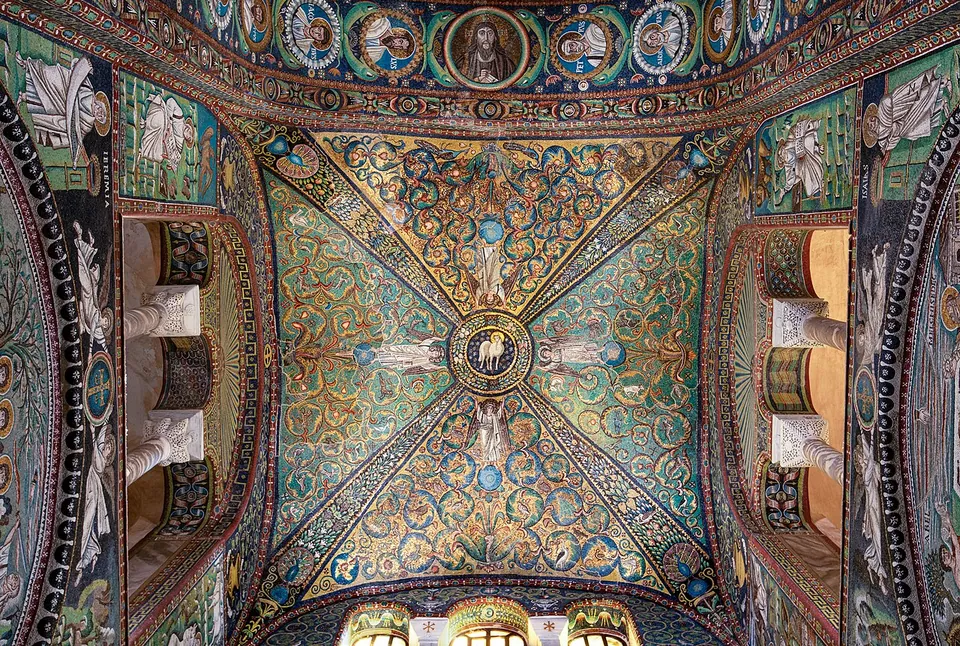
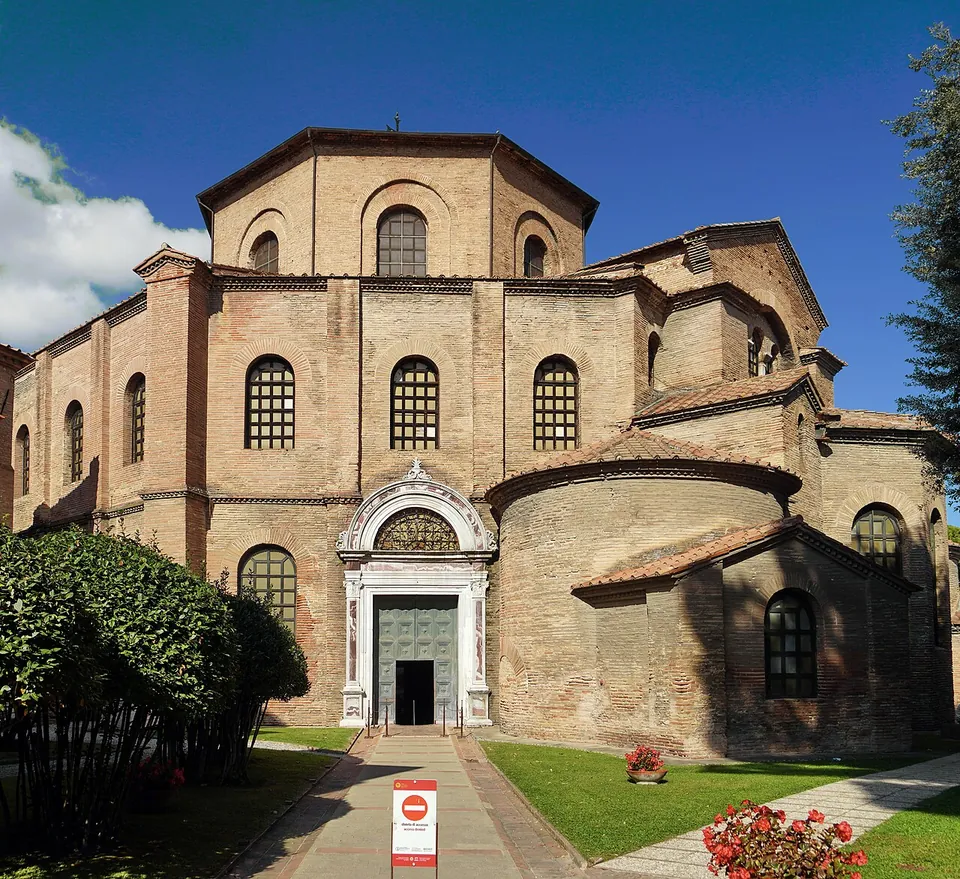
Around San Vitale. San Vitale, begun between 526 and the late 530s (published dates differ)
and consecrated in 547, is a centrally planned church and an important surviving example of
early Byzantine art and architecture (Pleiades; en.wikipedia). Its mosaics, famous above all for
the portraits of the emperor Justinian and his wife Theodora (de.wikipedia), are among the most
studied works of Byzantine art (en.wikipedia). The Mausoleum of Galla Placidia, close by, is a small building of the first half of the 5th
century, lavishly decorated inside with mosaics against a dark blue ground (UNESCO); despite the
name, the empress was buried in Rome, not here (en.wikipedia). About 100 m from San Vitale, the
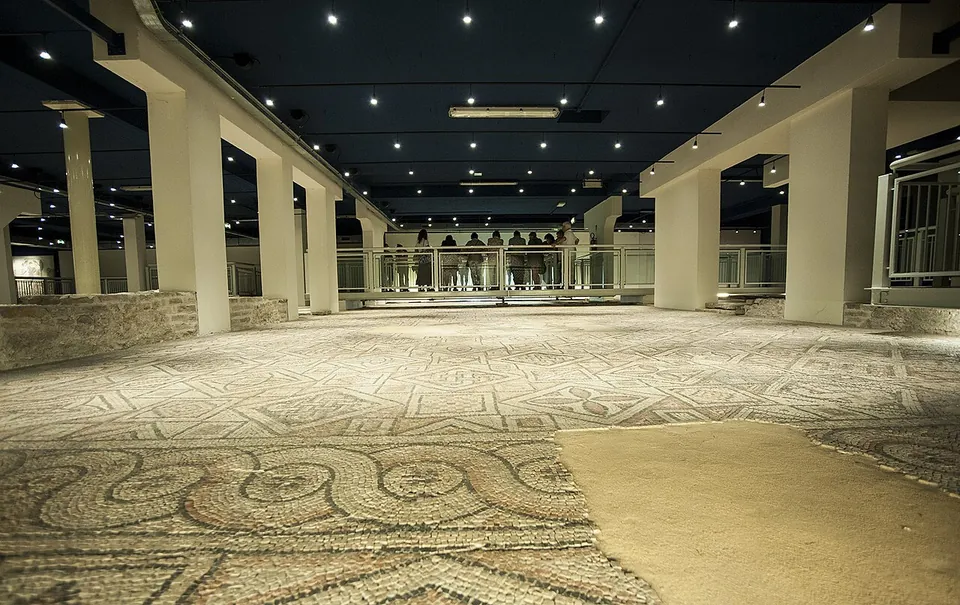
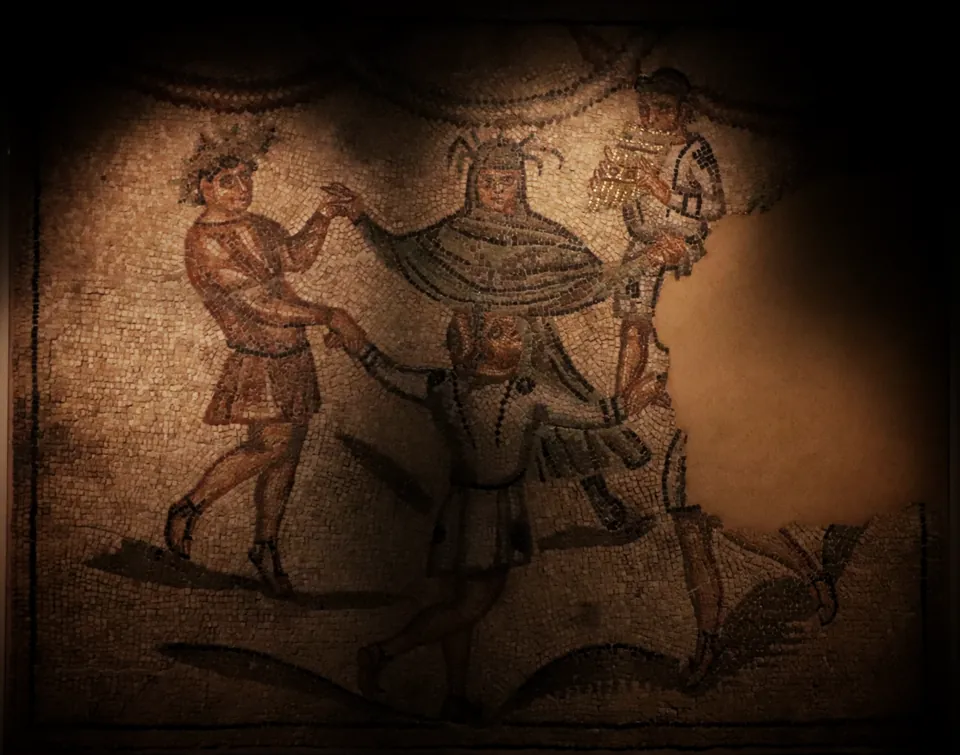
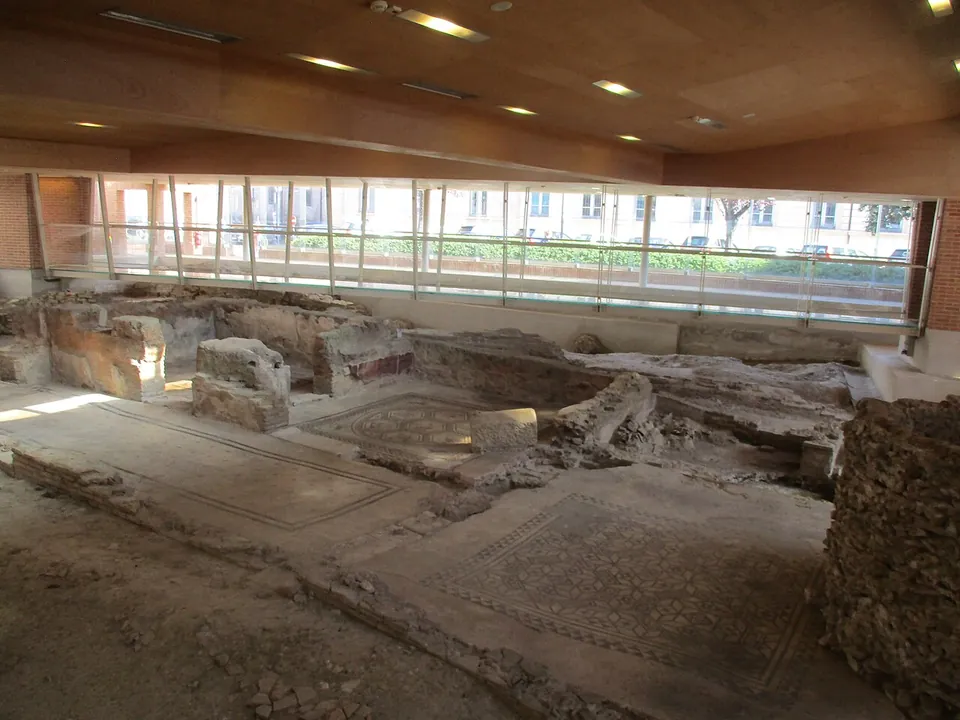
Domus dei Tappeti di Pietra, the “house of the stone carpets”, is a 5th–6th-century house found
in 1993: more than 400 square metres of mosaic and marble floors, seen from a walkway 3 m below today’s
street, reached through the small 18th-century church of Sant’Eufemia (RavennAntica;
de.wikipedia).
Around the cathedral. The Baptistery of Neon, begun by Bishop Ursus at the end of the 4th or
the start of the 5th century, is the oldest monument still standing in the city (Pleiades;
en.wikipedia); UNESCO calls it the finest and most complete surviving early Christian
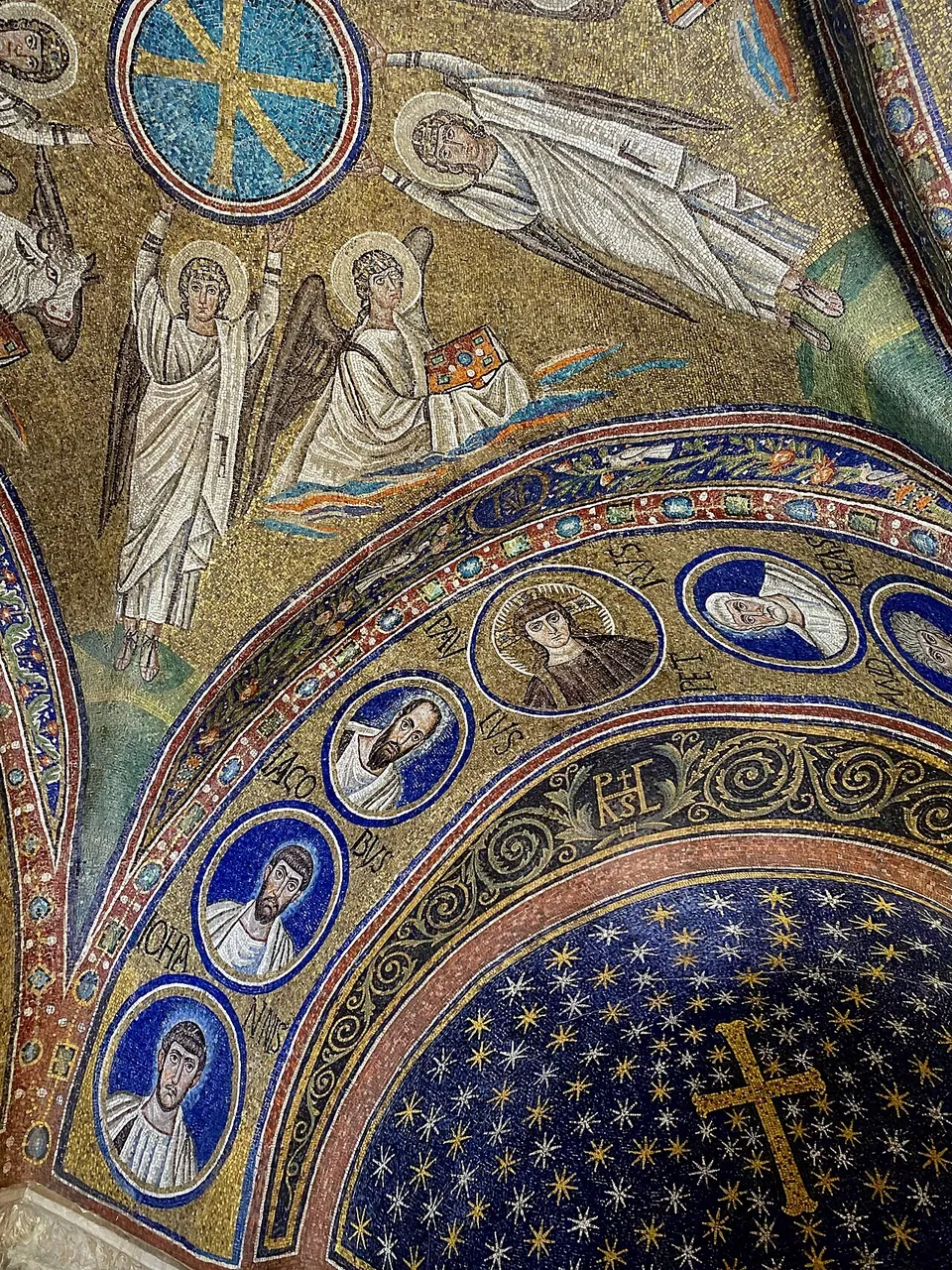
baptistery. Next to it, the Archbishop’s Chapel, built by Archbishop Peter II soon after 495 on
the first floor of the bishops’ palace, is the smallest of the city’s mosaic sites and is seen
through the Archbishop’s Museum (en.wikipedia; fr.wikipedia).
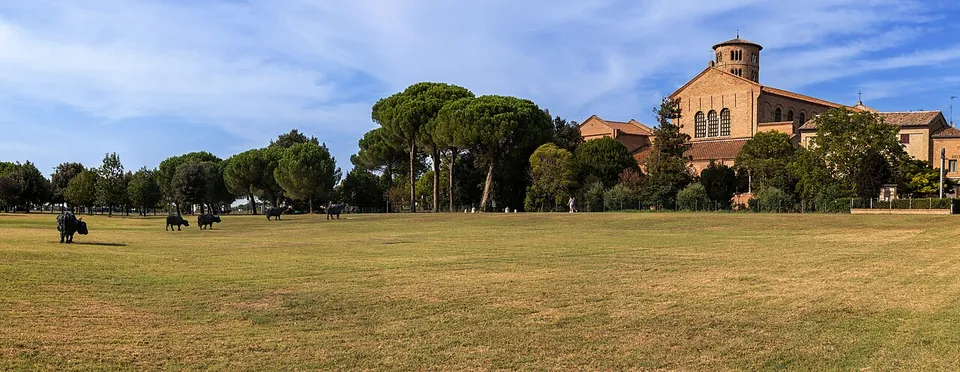
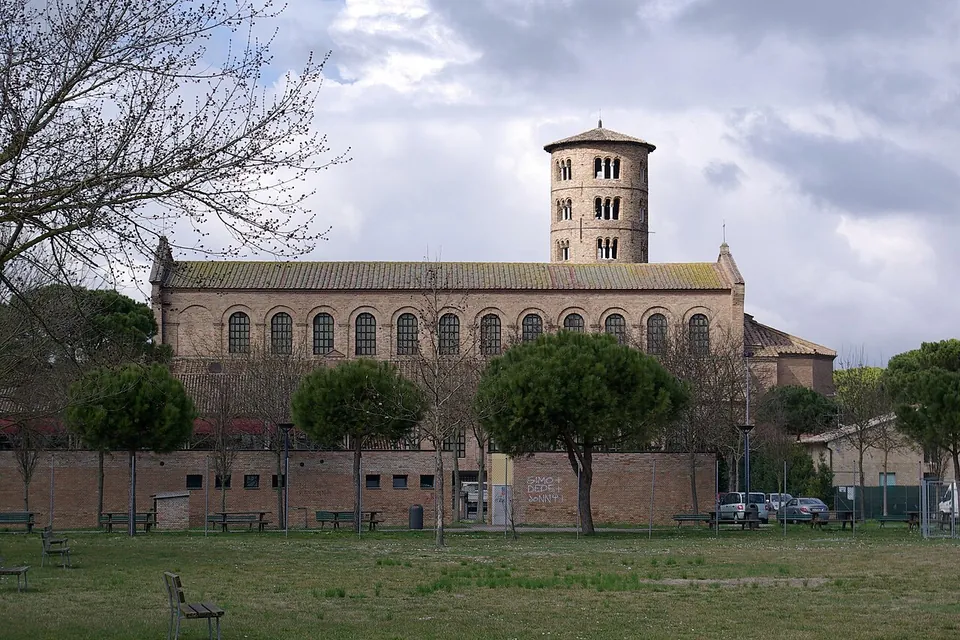
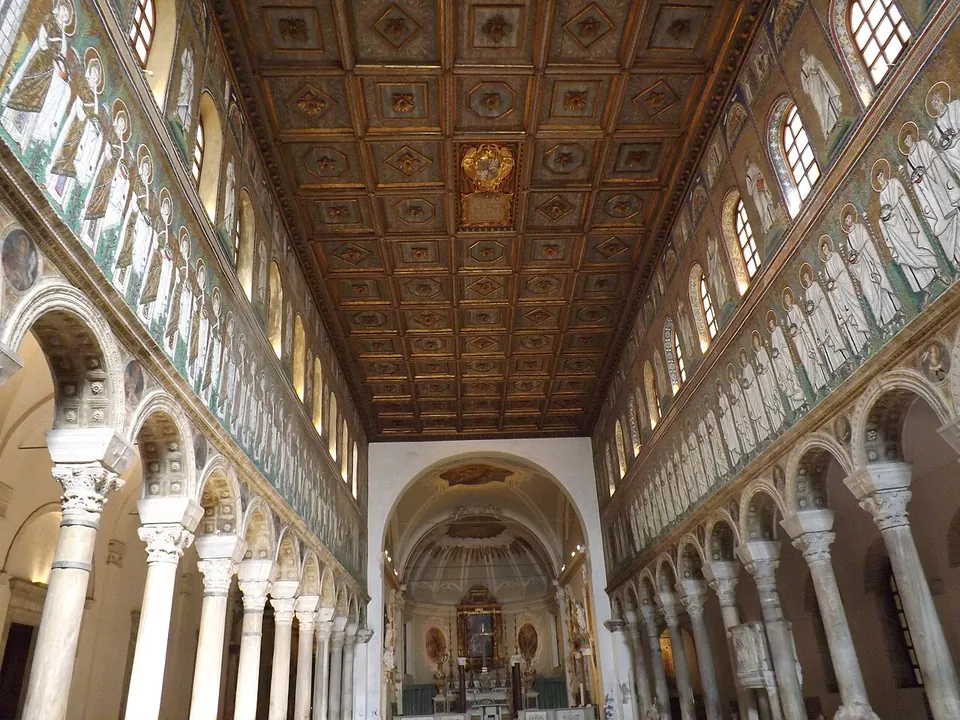
Theodoric’s buildings. The Ostrogothic king Theodoric built Sant’Apollinare Nuovo as his
palace church and dedicated it in 504; the mosaics of its side walls and its 24 columns
are preserved, while the façade portico is 16th-century and the apse a reconstruction after damage
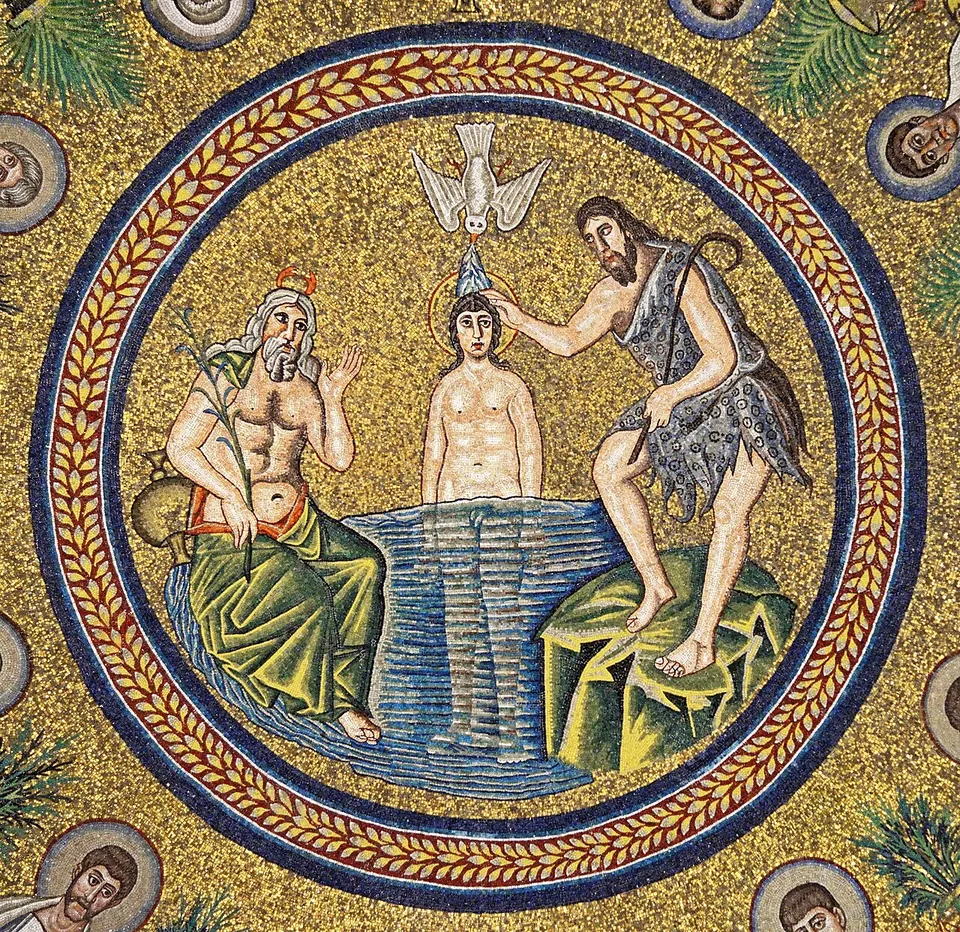
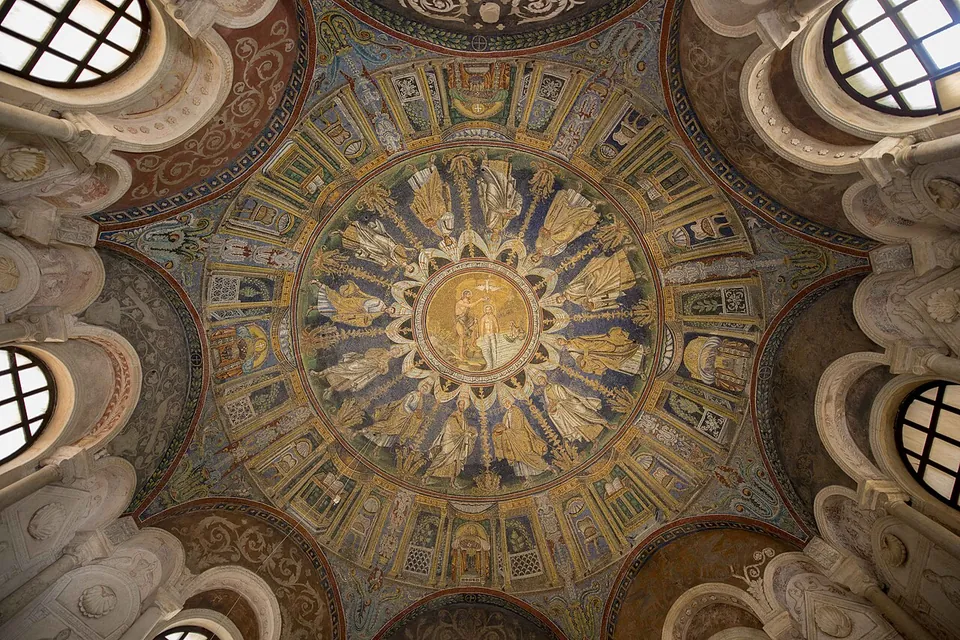
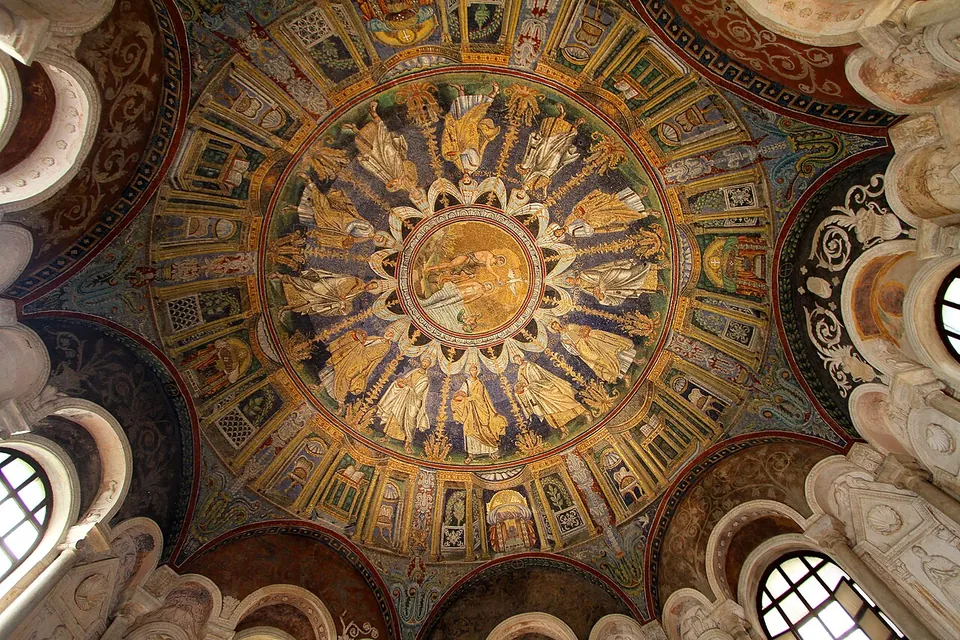
in the Second World War (en.wikipedia). About 300 m away, the Arian Baptistery, built for
Theodoric’s Arian Christians between the end of the 5th century and the start of the 6th, keeps
only the mosaic of its dome, with the baptism of Christ at the centre (en.wikipedia; Ministero della Cultura).
Classe, the old port. Sant’Apollinare in Classe, consecrated in 549, is UNESCO’s “outstanding example of the early Christian
basilica”, with 24 columns of Proconnesian marble and an apse mosaic of Saint Apollinaris in a
green landscape (en.wikipedia; Ministero della Cultura). About 2 km nearer the town is the
excavated port of Classis, where Octavian based the Roman fleet of the Adriatic by 12 BC
(Pleiades); the open-air site opened in 2015 (RavennAntica), and stretches of Roman paved road are mapped
across it (OpenStreetMap).
The road. Ravenna lay on the Via Popilia, the road begun in 132 BC that ran up the Adriatic
coast from Rimini (Pleiades; sl.wikipedia). No source records a visible stretch of it in the town.
Is it worth the trip?
Yes, for the mosaics, which are the reason to come and are among the best surviving examples of
the art in Europe (UNESCO). Be clear about what kind of Roman site this is: none of the stops is a
forum, a theatre or a bath of the early empire. Roman Ravenna in that older sense is the port
excavation at Classe, which the operator opens only to booked groups and school parties (RavennAntica). What the
town offers instead is the Roman world turning Christian and Byzantine, in buildings you walk
into rather than ruins.
It is also compact. Apart from the two sites at Classe, the stops lie within about 700 m of the cathedral, so the
centre is a walking visit, and the diocesan ticket is valid for seven days, one entry per
monument (Opera di Religione). The two small mosaic rooms, the Mausoleum of Galla Placidia and
the Baptistery of Neon, are entered at a booked time and at busy times, and for groups, allow only
five minutes inside (Opera di Religione).
Getting there and what it costs
The centre’s stops are on foot from one another. The square in front of Ravenna’s railway
station, Piazza Farini with its bus stop named Stazione FS, is about 1 km from the cathedral and
400 m from the Arian Baptistery; Sant’Apollinare in Classe is about 300 m from Classe station,
and buses 4 and 176 run from Ravenna station out to the ancient port (OpenStreetMap;
RavennAntica). Drivers will find a large car park, Largo Imperatore Giustiniano, about 120 m from
the Mausoleum of Galla Placidia, and car parks about 100 m from the basilica at Classe
(OpenStreetMap).
The monuments are run by three operators, each with its own tickets (each operator’s page, read
14 October 2026):
- The diocese’s five (San Vitale, Galla Placidia, the Baptistery of Neon, Sant’Apollinare
Nuovo, the Archbishop’s Museum and Chapel): sold as combined itineraries, valid seven days.
San Vitale and Sant’Apollinare Nuovo €10.50; the four churches and mausoleum €12.50; all five
€14.50. Students and groups of more than 20 pay €1 less on each; children under 6 go free
(under 11 on the two-church ticket). Open daily 09.00–19.00 until 2 November 2026, then 10.00–17.00 until
6 March 2027; closed on Christmas Day and New Year’s Day (Opera di Religione della Diocesi di
Ravenna).
- The state sites: Sant’Apollinare in Classe €6, Monday to Saturday 08.30–19.30 and on Sunday
and holiday afternoons; the Arian Baptistery €3, daily 09.00–17.00 (Ministero della Cultura). A
€14 ticket, valid seven days, adds the Mausoleum of Theodoric, the National Museum and the
Palazzo di Teodorico to those two, and €9 covers Classe with the Classis Ravenna museum
(RavennAntica). The Mausoleum of Theodoric, the eighth UNESCO building, is €6 on its own and
opens daily 08.30–19.00 (Ministero della Cultura).
- Domus dei Tappeti di Pietra: €6, 10.00–17.00, daily until 8 November and then closed on
Mondays, last entry 20 minutes before closing (RavennAntica).
History
Ravenna’s origins are pre-Roman: en.wikipedia names the Umbri as its first settlers, and Pleiades
suggests an Etruscan centre. It came under Roman control in 89 BC, and Octavian built the
military harbour of Classis beside it; the city remained an important Adriatic port into the early
Middle Ages (en.wikipedia).
Its great century began in 401 or 402, when the emperor Honorius moved his court here from Milan
(published dates differ by a year); Ravenna was the capital of the Western Roman Empire until 476
(en.wikipedia; Pleiades). After the fall of the Western Empire it was the capital of Odoacer and
then of the Ostrogothic kingdom of Theodoric, who built Sant’Apollinare Nuovo, the Arian
Baptistery and, around 520, his own mausoleum (en.wikipedia). In 540 Belisarius took the city for
the Byzantine Empire, and Ravenna became the capital of Byzantine Italy; San Vitale and
Sant’Apollinare in Classe were consecrated in 547 and 549 (en.wikipedia; Pleiades).
The eight early Christian monuments were inscribed on UNESCO’s World Heritage List in 1996
(en.wikipedia). With so many mosaics in one town, the city has long been associated with workshops and schools
of mosaic, and is often called the “capital of mosaics” (en.wikipedia).